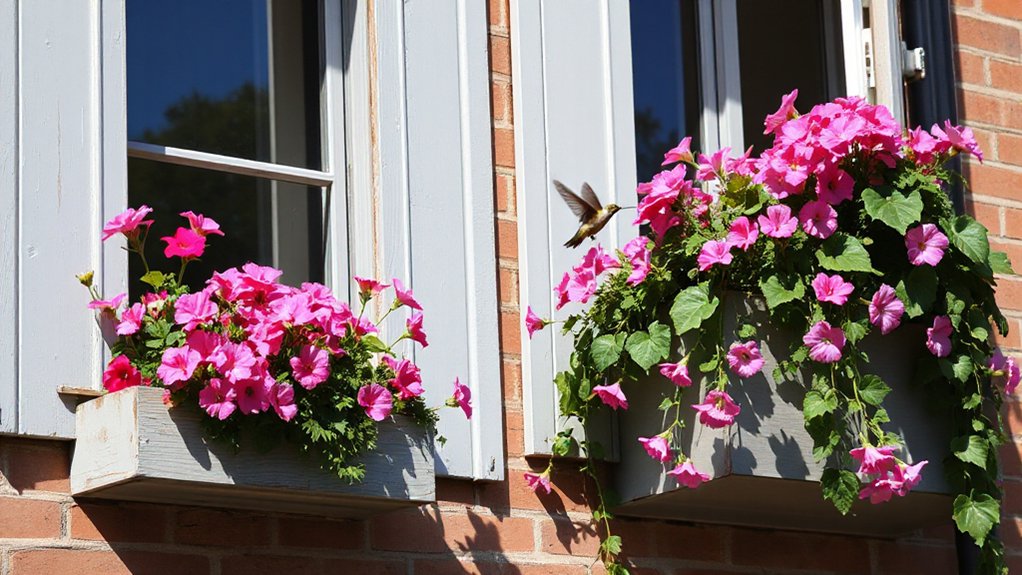

Adding window boxes with flowers is an easy, budget-friendly way to boost curb appeal and create seasonal focal points. Start by choosing sturdy, weatherproof boxes with good drainage, then plant based on your light: full sun favorites or shade-tolerant varieties. Use a lightweight soil mix, add slow-release fertilizer sparingly, and water deeply rather than often. Arrange plants to back tall, cascading front, and rotate blooms to maintain color. More practical tips await if you continue to explore.
Key Takeaways
- Plan window boxes by sun exposure, airflow, and root health to ensure robust plant performance and visual flow.
- Choose plants based on light: full sun, partial sun, or shade, matching water needs and bloom times.
- Use lightweight, well-draining soil mixes with drainage holes and seasonal fertilization for healthy growth.
- Arrange plants with taller back, cascading front, and cohesive color palettes for depth and impact.
- Maintain boxes with sturdy mounting, regular pruning, watering, and seasonal refreshes to sustain appeal.
What Window Boxes Do for Your Home (and Why They Matter)
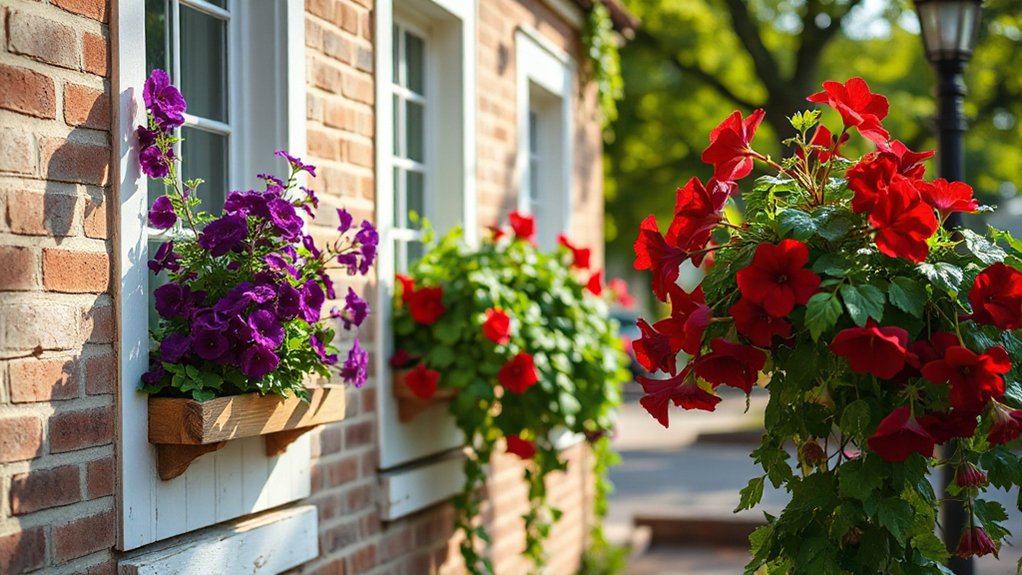
Window boxes instantly elevate curb appeal by adding color, texture, and a touch of nature to your exterior. You’ll notice instant charm when flowers frame your windows, creating visual depth and a welcoming rhythm along the façade.
Beyond aesthetics, window boxes enhance perceived property value and can improve microclimate by shading sills and intercepting wind. They’re practical for seasonal changes, letting you swap blooms with minimal effort.
Historical significance ties these features to historic streetscapes where masonry contracted with horticulture, signaling care and ownership.
Cultural symbolism emerges as colors and plant choices convey mood or tradition, from heritage palettes to modern, eco-conscious themes.
When you plan, consider scale, maintenance, and drainage; thoughtful placement fuses function with style, proving window boxes matter beyond surface appeal.
Choosing the Right Window Box Style for Your Façade
Choosing the right window box style starts with your façade’s architecture and your planting goals. Your selection should harmonize with historical architecture cues, whether you favor clean lines or ornate details.
Start by observing proportion: width, height, and depth must fit the sill and the visual weight of the façade.
Choose window box materials that withstand local weather and echo your home’s era—wood for a classic vibe, metal for a modern edge, or composite for low maintenance.
Finish and color matter: matte tones stay subtle, bright hues highlight features; neutral palettes blend gracefully.
Consider installation: a secure mounting system that preserves siding and eliminates wobble.
Finally, plan drainage and accessible maintenance to ensure flourishing plant life without constant fuss.
Sun vs Shade: Pick Plants by Your Window’s Light
Before you pick plants, assess how much light your window actually receives. Light exposure governs which species thrive and which struggle, so map the daily sun patterns before you shop.
If mornings are bright but afternoons are shady, choose plants that tolerate variable light or favor partial sun. For full sun spots, look for compact bloomers and drought-tolerant choices that resist sun scorch.
In shaded windows, select plants with high shade tolerance and rich foliage to maximize contrast without crowding.
Consider plant adaptability as you compare varieties; some perform well in fluctuating light, others require steadier conditions.
Tailor selections to the window’s rhythm, not your imagination, for reliable color and longevity in your arrangement.
Soil, Drainage, and Growing Conditions for Window Boxes
Good soil and proper drainage are the foundations of thriving window boxes, so start by choosing a medium that stays light yet holds moisture without becoming soggy. You want a balanced mix: peat or coconut coir for water retention, perlite or pumice for aeration, and a small amount of compost for nutrients.
Consider soil composition to guarantee roots aren’t waterlogged. Use a lightweight, well-draining blend if you’re in a hot climate, and add slow-release fertilizer sparingly to avoid buildup.
Drainage systems matter: make certain pots have holes and, if necessary, a tray with a bit of buffer to prevent standing water. Check moisture daily in warm weather and adjust watering to keep medium consistently moist, never soggy.
Choose Containers for Your Window and Budget
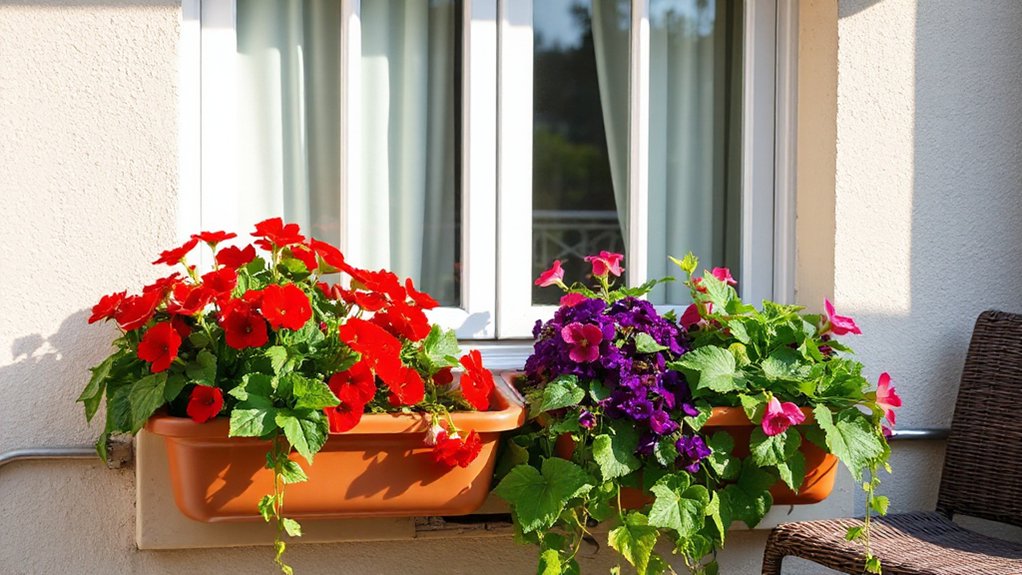
If you want clean, long-lasting window boxes, pick containers that fit your space, weight limits, and budget from the start. Start with scale: measure sill depth and height, then choose sturdy materials that won’t bow or crack under moisture and sun.
Prioritize container durability—look for reinforced corners, UV-resistant finishes, and drainage that suits your plants. Consider weight when filled with soil; durable plastics, powder-coated metals, or fiberglass offer balance between lightness and strength.
For budget-friendly options, mix high-performance components with economical choices, such as using inserts or liners to extend life. Assess maintenance needs; lighter options may save upfront costs but require more frequent replacement.
Plan for drainage, accessibility, and potential theft risk, then finalize a cohesive, reliable setup.
Plant Combinations: Color Schemes That Pop
Color harmony is your quickest path to eye-catching boxes, so start with a bold starter color and build with complementary or analogous partners.
Use Seasonal Flower Pairings to time blooms for continuous impact, swapping in cool- and warm-toned accents as the weather shifts.
Keep a simple rule of three colors at most to maintain clarity and make each punch feel intentional.
Color Harmony Quick Wins
How can you make window boxes sing with color? Color Harmony Quick Wins focuses on practical pairings that read clearly from a distance and up close.
Start with a strong backbone plant—evergreen or a bold perennial—that anchors your scheme and provides year-round structure.
Introduce a secondary color drift with mid-height annuals to create depth without crowding.
Use color contrast to make focal blooms pop: cool and warm tones next to each other sharpen perception and guide the eye.
Consider bloom timing so you don’t have gaps; stagger flowering windows with early, mid, and late-season varieties.
Keep leaf texture varied but cohesive, avoiding clashes that muddle the palette.
Water consistently, and prune lightly to sustain compact form and continuous color impact.
Seasonal Flower Pairings
Start with a backbone of a long-lasting foliage plant for structure, then add a flower variety that peaks at different times to extend continuous interest.
Keep contrast in mind: pair cool-toned flowers with warm accents to create visual pop without chaos.
Consider texture: glossy leaves against soft petals, or spiky forms next to rounded blooms for dimension.
Limit to three to five varieties to avoid crowding and maintain air movement.
Texture and Foliage: Mix Leaf Shapes for Depth
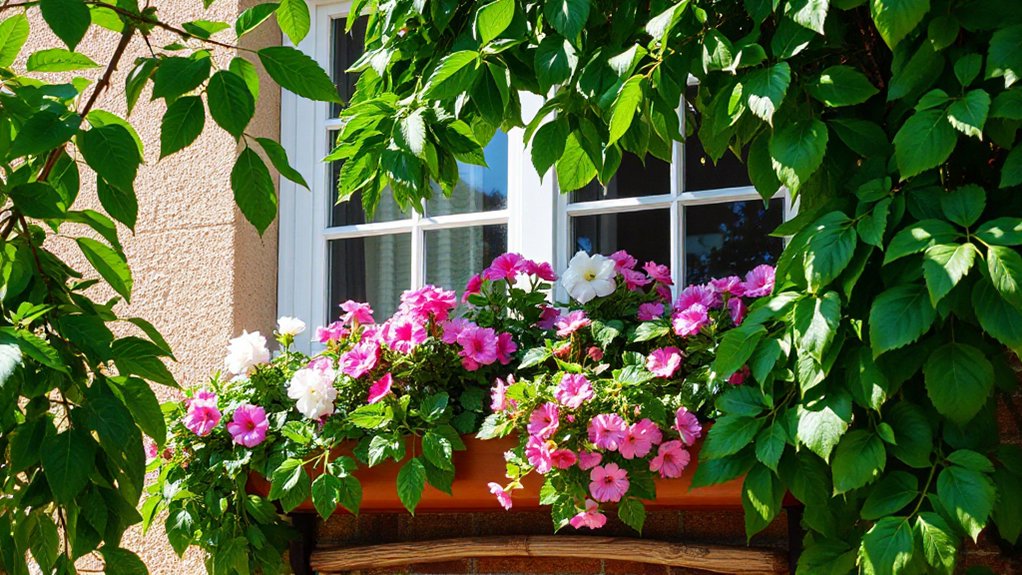
To add depth to your window boxes, mix leaf shapes so the foliage reads as a layered tapestry rather than a flat mass. You’ll create visual interest by pairing broad, rounded leaves with slender, lobed, or serrated forms, letting each shape catch light differently.
Focus on Texture variation as you select plants, balancing matte and glossy surfaces to avoid uniform shine. Place taller, feathery varieties toward the back and place mid-sized, textured leaves midplane to draw the eye through the display.
Ground-covering greens should tuck into gaps, filling space without crowding focal blooms. Aim for a cohesive rhythm: repeat a few leaf silhouettes in varied scales, then punctuate with smaller accents.
Regularly trim to maintain defined edges and prevent crowded growth from dulling depth.
Seasonal Display: What to Plant Throughout the Year
A well-planned seasonal display keeps your window boxes vibrant year-round, with plants chosen to complement each season’s light, temperature, and color shifts. You’ll balance color, texture, and height so every progression feels intentional.
- Seasonal blooms: choose core species that perform well across several weeks, swapping accents as needed.
- Light and soil awareness: tailor selections to your window’s sun exposure and drainage for steady health.
- Plant maintenance: prune faded blooms, pinch back leggy growth, and refresh compost to sustain vigor.
- Color rhythm: rotate complementary hues to reflect الموسم or mood, keeping a cohesive look while you vary textures.
Planter Placement for Best Growth and Flow
Placing your window boxes thoughtfully sets the stage for growth and flow. Planter placement influences air circulation, sun exposure, and root health, so be deliberate about alignment and spacing.
Position boxes to balance sightlines from inside and outside, avoiding crowding on narrow sills. Consider window box materials to guarantee durability under seasonal shifts and weight, selecting lightweight, sturdy options when possible.
Verify each planter has access to unobstructed light, but group varieties with similar sun needs to minimize stress.
Account for plant height variation when arranging plants in each box, placing taller specimens toward the back and dwarf or cascading forms forward to create depth.
Check drainage and soil depth recommendations early, as proper setup reduces maintenance and promotes consistent, attractive growth.
Easy Watering and Drainage Tricks for Healthy Boxes
Ever wondered how to keep window boxes thriving with minimal effort? You can simplify watering and drainage with a smart routine and simple tweaks that protect plants and balconies.
- Water deeply, not often, using a drip or soak method to encourage deep root growth.
- Add drainage saucers or liners to prevent waterlogging and protect casings.
- Use a self-watering or capillary mat system to extend intervals without stressing roots.
- Mulch lightly to retain moisture, suppress weeds, and reduce evaporation.
Remember water conservation and pest prevention go hand in hand: dry, stressed soil invites pests, while balanced moisture discourages them.
Inspect regularly, remove spent blooms, and keep foliage dry to minimize disease pressure.
Soil Mix and Fertilizer for Lasting Color
A good soil mix sets the foundation for lasting color, combining drainage-friendly elements with nutrients your plants can access over time. Start with a lightweight base that stays fluffy but holds moisture.
Then tailor it with slow-release fertilizer to match your flowers’ feeding schedule. Consider timing and placement for ideal growth, using the mix and fertilizer rhythm to maximize bloom and minimize transplant shock.
Soil Mix Essentials
Healthy soil is the foundation for lasting color in window boxes, so start with a balanced mix that drains well yet holds moisture. Your goal is soil composition that supports roots and steady growth, plus a nutrient balance that keeps plants vibrant. Keep these essentials in mind:
1) Choose a base with high-quality topsoil or potting mix to guarantee structure.
2) Add organic matter (compost or well-rotted manure) to improve moisture retention without becoming soggy.
3) Include perlite or coarse sand for drainage and aeration.
4) Top with a light mulch or mulch-like cover to regulate moisture and temperature.
- Maintain consistent watering and check for compacting.
- Refresh soil each season to sustain nutrient balance and soil composition.
Fertilizer Timing Tips
Timing matters: when you feed matters as much as what you feed. For window boxes, schedule fertilizer timing around growth spurts and bloom cycles, not a rigid calendar.
Start with a light, frequent approach using diluted solutions to prevent salt buildup and root burn.
In midsummer, shift to a slightly stronger dose only if plants show signs of nutrient deficiency, like pale leaves or poor flowering.
Use organic fertilizers to feed soil life and maintain color without harsh residues.
Consider companion planting strategies to optimize nutrient use and pest management, pairing sturdy, deep-rooted plants with shallow-root companions.
Apply fertilizers at root level, avoiding foliage contact to reduce burn.
Always water well after feeding, and monitor for steady, lasting color.
Mounting Window Boxes Safely: Quick Guide
Mounting window boxes safely begins with choosing sturdy brackets and proper mounting points. You’ll guarantee weight distribution, avoid ledges that flex, and prevent wobble. Use weatherproof screws, pilot holes, and a level to align each box. Safety tips, mounting techniques, and deliberate preparation keep your display secure and pleasing.
- Inspect walls for studs or solid masonry, choosing anchors rated for outdoor use.
- Mark level, evenly spaced mounting points, and test fit before drilling.
- Tighten fasteners firmly, but not over-torque, to avoid stripping.
- Use silicone or exterior-grade sealant at brackets to deter water intrusion.
Regular checks after installation help you catch looseness early, preserving both structure and flowers.
Maintenance Routines That Save Your Window Boxes
Maintenance routines keep your window boxes thriving and secure. You’ll establish a simple schedule that blends seasonal pruning with proactive checks, so plants stay vigorous without overgrowth.
Each month, inspect soil moisture and drainage; adjust watering to prevent root rot and fungal issues. Remove spent blooms and dead foliage promptly to reduce disease risk and maintain airflow around stems.
Implement pest prevention by scouting for signs of aphids, mites, or caterpillars, applying targeted, label-approved treatments only when needed.
Clean the box’s exterior and rinse accumulated debris to deter mildew. Refill mulch or compost as needed, ensuring adequate drainage holes remain clear.
Record observations and actions, refining your routine season to season for consistent performance and longer-lasting, attractive window boxes.
Troubleshooting Common Window Box Problems
Window boxes can suffer from a few predictable issues, but most are manageable with targeted fixes. When problems arise, you’ll stay proactive and precise, avoiding wasteful trials.
- Pest control: inspect for chewing, droppings, and nests; seal gaps and treat with safe repellents to protect blooms.
- Overwatering: check soil moisture daily; guarantee drainage holes aren’t blocked and adjust watering to weather.
- Frost damage: shield containers in winter with insulating wraps or move to sheltered spots; trim damaged growth in spring.
- Fungal spots: remove affected leaves, improve air circulation, and avoid overhead watering to prevent spread.
Regular checks during peak growing and winter protection create resilient, thriving boxes.
Foliage, Herbs, and Edibles for Window Boxes
Foliage, herbs, and edibles bring window boxes to life beyond color, so choose plants that suit light, wind, and container depth. You’ll optimize texture and function by mixing compact foliage with culinary or aromatic selections.
For sun, prioritize fragrant herbs like thyme, oregano, and rosemary for low-water performance and fragrance; cabbage family edibles work if you need a focal point.
In partial shade, use hostas, ornamental grasses, and leafy greens to create structure while saving edibles for a kitchen garden.
Guarantee adequate drainage, and rotate plants to balance growth and light exposure. Water deeply but infrequently, and feed with a balanced fertilizer during peak season.
Herbal fragrances elevate daily use, and Edible herbs extend your harvest beyond aesthetics.
Real-Life Window Box Makeovers: Inspiring Transformations
Transforming a window box can turn a modest outdoor space into a vivid focal point, and real-life makeovers prove how small changes yield big impact. You’ll notice how designers blend form and function, respecting Window box history while embracing fresh plant choices that suit your climate and light.
These transformations reveal cultural significance: windows become storytelling frames, and colors echo local moods.
1) Assess the site: light, wind, and railing constraints shape plant selection.
2) Prioritize structure: sturdy boxes, drainage, and tidy wiring keep installations durable.
3) Pick a color arc: cohesive hues unite blossoms with foliage for lasting appeal.
4) Maintain with intention: seasonal swaps and simple pruning sustain visual momentum.
Frequently Asked Questions
How Often Should I Prune Flowering Window Box Plants?
Prune every 3–4 weeks during peak flowering for a steady show, and trim after flushes to maintain shape. This pruning schedule supports flowering maintenance, keeps plants tidy, and guarantees you enjoy continuous blooms with minimal effort.
Can Window Boxes Attract Pests to My Home?
Pests can be attracted if you neglect sanitation and plant health, so you should act proactively. Practice pest prevention by removing debris, inspect regularly, and use proper insect control methods—keep containers clean and seal gaps around windows.
Are Plastic Boxes Better Than Wood for Durability?
Plastic boxes generally win on durability, but consider wood if you want natural look; they resist weather differently. Material comparison favors plastic for longevity and low maintenance, though treated wood can last with proper sealing and seasonal care.
What’s the Best Deterrent for Watered-Down Soil Leaching?
A good deterrent for watered-down soil leaching is improving soil composition with organic matter and consistent watering frequency you can maintain. Use mulch, proper drainage, and monitor moisture to protect roots and stabilize nutrient loss.
Do I Need a Drainage Layer for Every Box?
No—you don’t need a separate drainage layer for every box. Ironically, you’ll maximize soil moisture control and plant nutrition by aligning drainage with each box’s needs, ensuring balanced aeration, avoiding waterlogging, and simplifying maintenance.
Conclusion
Here’s the truth in summary: window boxes aren’t just décor; they test your habits, budgets, and expectations. When you match light, soil, and weekly care, plants flourish and your façade gains life—proof that small choices compound. If a theory says beauty is superficial, this challenges it: containers reveal micro-climates, resist neglect, and reward consistency. Stay practical: select right plants, guarantee drainage, and maintain routines. Your home blooms, curb appeal rises, and your confidence grows with every season.