
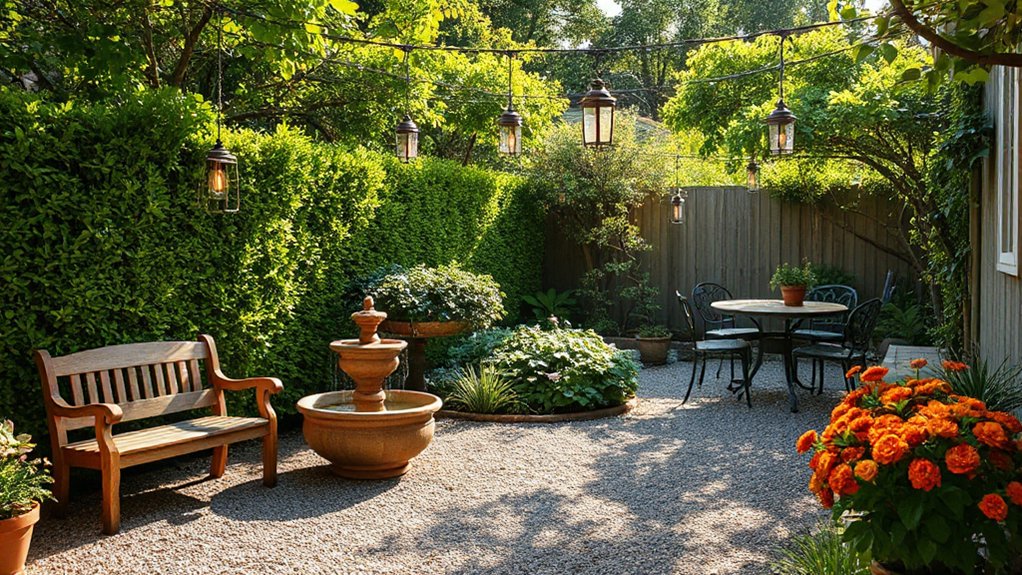

Summer garden projects can boost property value by up to 12% in just a season, and you’ll feel the difference every day. You’ll want a space that’s calm, functional, and easy to maintain, yet stylish enough to invite you outside without effort. From cozy seating to shaded zones and soothing water features, you’ll see how small updates can transform your outdoor area into a personal retreat—but the best part is just ahead, where practical tips meet lasting tranquility.
Key Takeaways
- Plan a seasonal layout by mapping sun/shade and traffic flow to create a cohesive, retreat-worthy garden zone.
- Add quick-win focal elements (edging, mulch, seating, art) to establish style with minimal effort.
- Create cozy outdoor seating with weatherproof furniture, shade, and outdoor rugs for flexible lounging.
- Enhance ambiance with layered lighting (solar paths, wall fixtures, string lights) and warm color temperatures.
- Incorporate water features and container gardens to boost tranquility and visual interest in small spaces.
Assess Your Space: Sunlight, Shade, and Traffic
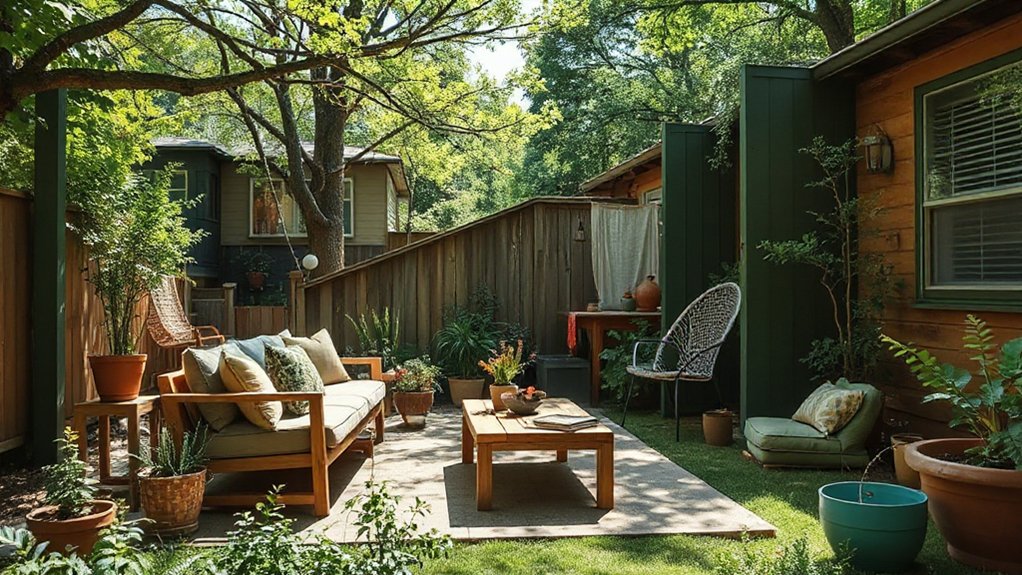
Before you plant a single seed, take a careful look at your space: determine how much sun and shade it gets throughout the day and note any foot traffic that could affect plant choices.
You’ll craft a practical garden layout by mapping sunlit pockets and shaded zones, then align plant positions with their sunlight needs. Evaluating sunlight exposure now prevents late replanting and reduces maintenance later.
Observe seasonal shifts, noting how trees, structures, or fences alter exposure as days lengthen or shorten.
Consider traffic patterns that will influence path widths and plant safety. Use this assessment to guide placement, ensuring vibrant color and consistent growth.
A precise plan strengthens your garden layout and optimizes sunlight exposure for lasting, low-stress results.
Set a Realistic Budget for a Weekend Retreat
Set a realistic budget first, so you can plan a cohesive weekend retreat without surprises.
Prioritize weekend projects that deliver the most impact in the shortest time, and set clear start and finish targets.
Allocate a small buffer fund to cover unexpected costs and keep the plan flexible.
Set a Realistic Budget
Creating a realistic budget is essential to guarantee your weekend retreat stays enjoyable without overcommitting financially. You’ll define scope, identify priorities, and avoid impulse purchases that derail plans.
Begin with budget planning by listing must-haves and nice-to-haves, then assign a practical cost to each item. Use cost estimation to forecast materials, tools, and services, plus a contingency of about 10–15% for surprises.
Set a hard ceiling for total spend and track every expense in real time. Consider non-monetary savings, like DIY options or off-season discounts, without compromising safety or aesthetics.
Prioritize quality where it matters most, and plan for incremental improvements over a season rather than a single binge buy.
Finally, review your plan weekly to stay aligned and avoid creeping costs.
Prioritize Weekend Projects
After you’ve laid out a solid budget, zero in on which weekend projects will deliver the biggest return on effort and enjoyment. Prioritize tasks that elevate daily use and visual impact without overextending your time or wallet.
Identify a core sequence: quick wins that set the tone, mid-range updates that multiply comfort, and a final, cohesive touch that ties everything together. Focus on reproducible, low-maintenance efforts that feel premium, such as garden art placements and targeted outdoor decor compounds, rather than sprawling upgrades.
Limit purchases to essentials and adaptable pieces you can move-seasonally. Schedule projects along a realistic cadence, allowing reserve time for weather, materials delays, and inspection.
This disciplined approach keeps your weekend retreat affordable, purposeful, and consistently rewarding.
Allocate Buffer Funds
Allocating buffer funds is about building a realistic safety net for your weekend retreat. You set aside a cushion for unforeseen hiccups, ensuring your plans don’t derail when surprises arise.
Begin with a clear ceiling for what you’ll spend and a contingency percentage—5 to 15% often works, depending on project scope. Use budget planning to map essential elements: tools, materials, and any rentals.
Track every dollar with expense tracking, keeping receipts and updating totals weekly. Prioritize tasks that enhance ambiance and functionality without piling debt.
Reassess mid‑project to reallocate funds if needed, preserving progress. Once you lock in the buffer, you gain peace of mind and speed.
A disciplined approach protects momentum, letting your weekend retreat evolve smoothly rather than stall.
Choose Plants That Beat the Summer Heat
If you want your garden to stay vibrant through peak heat, prioritize heat-tolerant picks and drought-resistant options. Choose plants that endure hot days without constant watering.
Pair them with smart mulch and soil care to conserve moisture. This approach sets the foundation for a thriving summer landscape that requires less maintenance and still looks polished.
Heat-Tolerant Plant Picks
Heat-tolerant plants keep your summer garden thriving when temperatures soar, so choosing varieties with proven heat resistance is essential. In this section, you’ll select robust performers that endure heat without sacrificing color or structure.
Favor species with deep root systems, reflective foliage, or drought-adaptive traits to reduce irrigation needs while maintaining vigor. Prioritize consistent bloom and texture to anchor your garden layout and keep progressions smooth as the season peaks.
When planning, consider plant pairing to optimize microclimates: shade-tolerant understorey companions near heat-stressed edges, and taller specimens to cast beneficial shadows. Groupings should reinforce your design goals, not clutter them.
Choose low-maintenance candidates first, then introduce accent hues for focal points. With deliberate choices, your garden remains vibrant, orderly, and resilient all summer.
Drought-Resistant Garden Options
Looking for plants that withstand drought without sacrificing color or texture? You can curate a resilient palette with xeriscape planting principles in mind.
Choose drought-tolerant shrubs to anchor borders and reduce irrigation needs, then layer with perennials that bloom in waves rather than all at once. Consider heat-loving grasses for movement and texture, plus ornamental succulents for sculptural interest.
Groupings should reflect sun exposure and soil type, ensuring efficient watering and maintenance. Mulch deeply to conserve moisture and suppress weeds, minimizing upkeep.
Native species often excel, adapting to local climate while supporting pollinators. Pair vibrant foliage with subtle blossoms to maintain year-long visual appeal.
Plan watering routines that align with rainfall patterns, and prioritize species known for low irrigation requirements and long-term garden health.
Build Cozy Seating Nooks on Any Patio
Want a welcoming retreat right on your patio? You can craft cozy seating nooks that invite lingering without crowding your space. Begin with a simple lounge corner: a compact loveseat or two armless chairs, plus a low-profile coffee table. Layer with Cozy cushions for immediate softness and support, then add stylish throws within reach for temperature shifts or a pop of color.
Choose weather-resistant fabrics and durable frames to keep edges crisp season after season. Define the area with a rug or outdoor mat to anchor the setup, and guarantee good sight lines to focal plants or a fire pit.
Opt for modular pieces so you can rearrange for gatherings, sun, or shade, keeping the layout flexible and inviting.
Add Shade Without Sacrificing Style
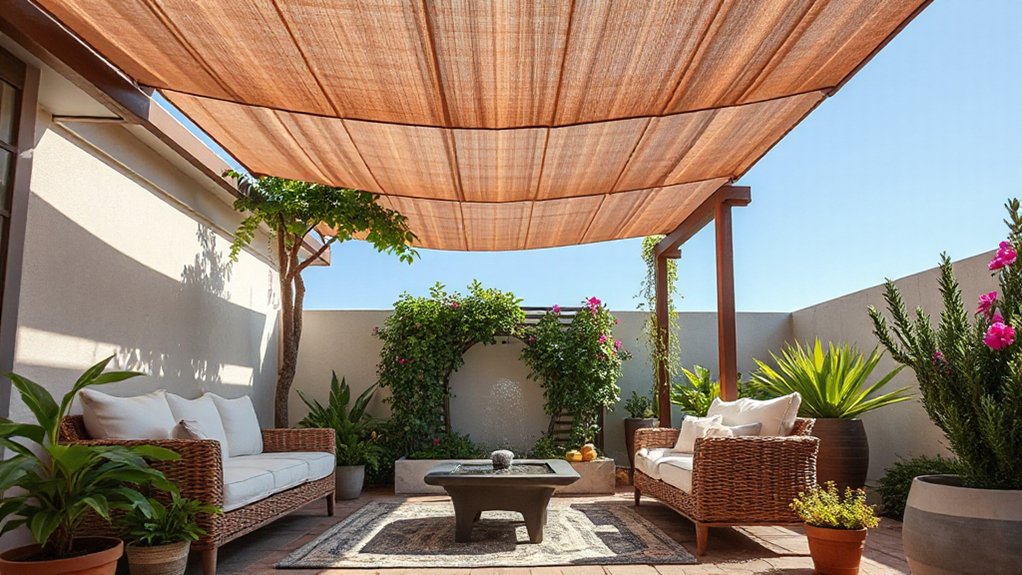
After you’ve set up cozy seating, shading becomes the next essential layer that preserves comfort without overpowering your design. Choose shade solutions tuned to your space: a lightweight sail, a compact pergola, or a retractable awning that melds with the architecture.
Prioritize proportion, so the shade enhances, not dominates, the scene. For quick impact, opt for stylish canopies in breathable fabrics and neutral tones that echo plantings and furniture finishes.
Consider placement to maximize sun protection where you linger and allow light where you work. Maintenance matters: select durable fabrics, weather-sealed frames, and simple cleaning routines.
Finally, mix textures—wood, metal, fabric—to keep the canopy visually integrated with your outdoor rooms.
Create Ambient Lighting for Evening Enjoyment
To savor evenings outdoors, layer ambient lighting that blends function with mood. You’ll want a cohesive scheme that guides movement and highlights focal spots without glare.
Begin with solar lanterns along paths or on railings to provide soft, low-dose brightness that won’t drain your battery. Elevate corners with wall-mounted fixtures or string lights draped overhead to create a warm canopy for dining or lounging.
Balance intensity by pairing brighter task lighting near seating with dimmer, indirect accents for atmosphere. Use timers or smart switches so lights transition with dusk, conserving energy and reducing maintenance.
Prioritize weatherproof designs and color temperature around 2700–3000K for a natural glow. Keep fixtures unobtrusive, ensuring the space remains inviting, functional, and easy to enjoy after sunset.
Introduce Calm With Simple Water Features
Water is a natural antidote to heat and noise, so add a simple water feature to your garden to cultivate calm without crowding the space. You’ll create a soothing focal point with minimal maintenance by choosing a compact feature that complements your layout. Use natural textures and quiet water flow to encourage lingering observation and reduce overall noise levels.
Incorporate garden waterfalls for motion and sound, while koi ponds offer reflective surface and subtle activity when you’re ready for a deeper touch. Prioritize energy efficiency and easy access for routine upkeep. Position features where you’ll see them from seating areas and paths.
- Choose a compact waterfall kit that suits your space
- Pair koi ponds with layered plants for balance
- Use adjustable flow to control sound
- Place features where you’ll enjoy them daily
Design Versatile Container Gardens
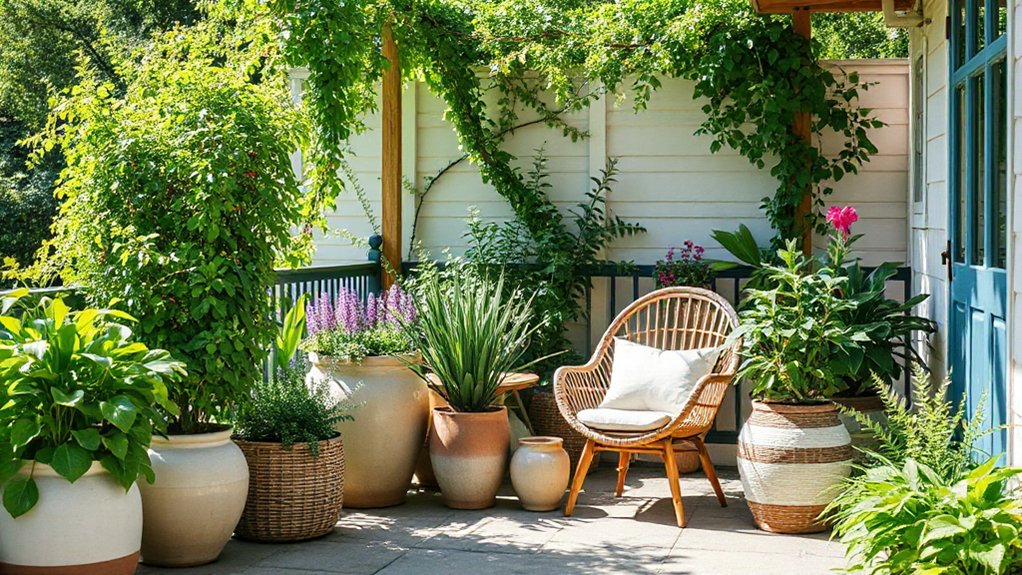
Use space-saving tricks like stacking, vertical planters, and grouped containers to maximize impact without clutter.
Mix and Match Plants
- Group by shared conditions for reliability and ease
- Vary height with tall centerpieces and trailing edges
- Repeat color accents across pots
- Use contrasting textures to sharpen the view
Seasonal Color Combinations
Start with a core seasonal palette—warm tones in summer, cooler tones in spring—then layer texture with foliage color as a unifier. You’ll achieve depth by alternating bold flower arrangements with quieter greens, ensuring contrast without clutter.
Consider bloom times so color persists; repeat a signature hue in two or three containers to anchor the scene. Balance saturation with light, using airy plants to prevent overcrowding.
Plan for dramatic evenings with reflective foliage or pale blooms that glow at dusk. Seasonal palettes evolve, inviting you to refresh containers as colors shift.
Space-Saving Container Tricks
You’ve got a lush container display from Seasonal Color Combinations—now tighten the footprint with space-saving tricks that multiply impact. Space-saving container tricks refine placement, curb clutter, and boost visual drama through smart layering and compact varieties. You’ll prioritize vertical interest, multi-tix plantings, and modular pots that couple easily for flexibility.
Container customization lets you tailor scale, color, and texture to your space, while space optimization keeps walkways clear and airflow unblocked. Choose deep, narrow containers for root health and stackable planters for height without crowding.
Use drainage, reflectors, and cohesive palettes to amplify light and cohesion.
- Stackable planters for height without crowding
- Vertical trellises integrated with pots
- Cohesive color and texture across modules
- Streamlined drainage and accessibility considerations
Add Edible Touches for Flavor and Fun
To add edible touches that elevate flavor and fun in your garden, choose herbs, fruits, and edible flowers that thrive in your climate and companion plants that deter pests. You’ll maximize yield by pairing a compact herb garden with fruit trees placed near pollinator-friendly blossoms.
Prioritize drought-resistant varieties and succession plantings to guarantee continuous harvests. Integrate edible flowers into salads, garnishes, and teas, selecting colors and scents that enhance experience without overwhelming flavor.
Maintain healthy soil with compost and mulching, then rotate crops to prevent disease buildup. Install a simple trellis for climbing herbs and small fruiting vines, keeping pathways clear for maintenance.
Regularly prune for airflow, monitor pests, and harvest at peak flavor for a consistently fruitful, low-maintenance edible landscape.
Plan Effortless Outdoor Dining Spaces
With your edible garden thriving, it’s natural to plan a dining space that’s as effortless as it’s inviting. You’ll want a setup that works from sundown to full sun, with minimal upkeep and maximum impact.
Focus on smart furniture arrangements that encourage conversation and easy circulation, and choose durable pieces that weather seasonal use. Use outdoor lighting to extend meals into golden hours and after-dark ambiance without clutter.
Invest in a simple shade solution and a compact prep area to keep everything within reach. Keep the color palette cohesive with natural tones that complement your garden.
Rotate seating to suit gatherings, and simplify cleanup with location-based staging.
- Minimalist furniture layouts for flow
- Weather-ready materials and care
- Subtle outdoor lighting strategies
- Centralized prep and serving zone
Craft Relaxation Zones: Hammocks, Swings, and Lounges
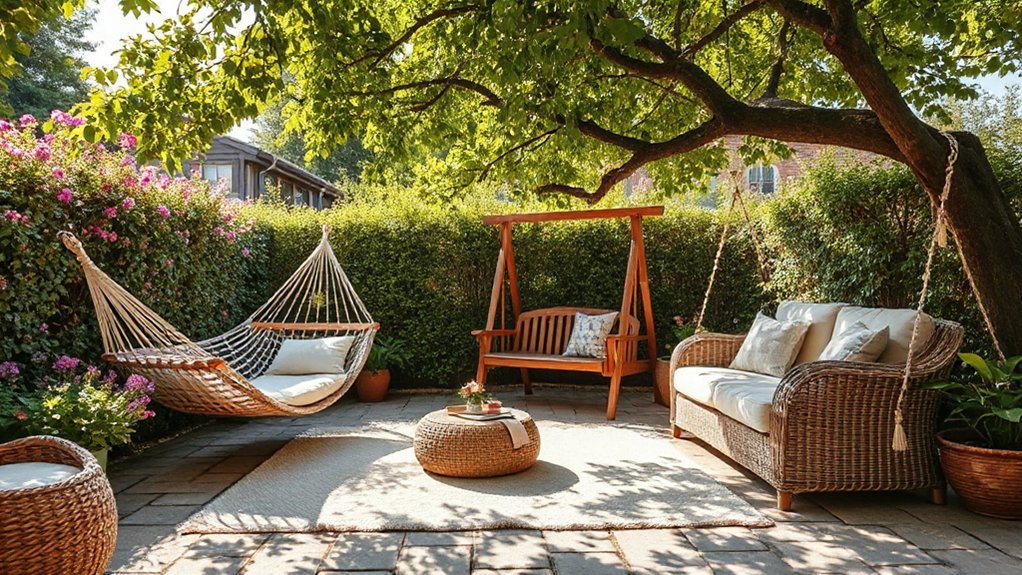
Dreaming of a serene retreat right in your yard? Craft relaxation zones that blend form and function. Choose hammocks, swings, and loungers with sturdy support and weathered finishes that resist sun and rain. Prioritize seat height, back support, and fabric quality to boost seating comfort, and guarantee frames are securely anchored.
Integrate DIY decor accents—ruffled cushions, woven throws, and simple planters—to personalize the space without clutter. Position hammocks between trees or on freestanding stands for flexible layouts, and hang a porch swing where conversation naturally unfolds.
Select low-maintenance fabrics in dark tones to hide stains while maintaining a polished look. Keep lighting subtle and functional, like solar lanterns, to extend use after dusk. This approach delivers a relaxing, cohesive zone without sacrificing style.
Maintain Your Space With Low-Muss, Low-Fuss Routines
Keep your space tidy with quick weekly tidyups and simple maintenance tips that fit your schedule. You’ll stay on top of debris, weeds, and minor repairs without a big effort.
Quick Weekly Tidyups
To keep your space under control, adopt quick weekly tidyups that require little effort but yield consistent order. You’ll stay ahead of clutter and keep beds looking intentional, with minimal time spent daily. Focus on targeted, repeatable actions that support garden health and curb surprises.
- Tidy entryways and paths, clearing debris and tripping hazards
- Quick inventory: tools in their places, irrigation checked, and hoses stored
- Crop checks: remove spent blooms, prune lightly, and monitor soil preparation
- Quick pest watch: note signs of garden pests and address early
These routines reinforce a calm space, prevent overgrowth, and preserve the aesthetic of your mini retreat.
Consistency beats intensity, and clarity keeps your garden thriving.
Low-Muss Maintenance Tips
Low-muss maintenance focuses on simple, repeatable tasks that protect your space with minimal effort. You’ll install a routine that fits your week, not your calendar.
Begin with a durable irrigation plan, checking emitters and mulch depth to prevent waste and disease. Prioritize mulching to suppress weeds, regulate soil moisture, and reduce labor over time.
Schedule quick, monthly checks for plant health, pruning only what’s necessary to maintain shape and airflow. Practice proactive monitoring for garden pests; early detection minimizes intervention and damage.
Incorporate soil testing at least once per season to tailor feeding, avoiding overfertilization. Use slow-release amendments aligned with your findings, then let nature do the rest.
This approach delivers steady color, resilience, and effortless enjoyment.
Quick Win Projects to Kick Off the Retreat Today
With a retreat underway, you can kick things into gear right away by tackling a few high-impact, quick-win garden projects that set a productive tone for the days ahead. You’ll build momentum with simple changes that feel deliberate and lasting, using garden art and outdoor decor to anchor the space.
- Install a focal piece: a bold sculpture or wind sculpture that catches attention at entry points
- Refresh borders: crisp edging, mulch, and color accents to sharpen the skyline
- Create a seating vignettes: compact, weatherproof chairs around a small table
- Hang or lean focal art: lightweight statements that suit the mood and season
These fast wins establish style, function, and a retreat-ready vibe from day one.
Final Tips for Sustaining Your Summer Retreat
You’ve set a strong foundation with quick-win projects, and now it’s time to guarantee your summer retreat endures beyond opening weekend. To sustain momentum, schedule regular checks on growing spaces, irrigation, and shading to prevent slips from seasonal change.
Prioritize durable, low-maintenance choices that age gracefully, so you don’t chase constant fixes. Integrate garden decor that adapts with the year’s rhythms—moveable planters, weatherproof cushions, and seasonal blooms—to keep the space feeling fresh without heavy lifting.
Curate outdoor art thoughtfully, selecting pieces that tolerate sun and rain while reinforcing your retreat’s vibe. Establish a simple maintenance routine: weekly water, biweekly pruning, and annual repaint or reseal.
Document lessons learned, adjust layouts, and refresh lighting to extend usability into shoulder seasons. Your retreat stays inviting, coherent, and well-loved.
Frequently Asked Questions
How Can I Maximize Small-Space Privacy Quickly?
Vertical fencing and privacy screens quickly maximize small-space privacy. You install vertical fencing along sightlines, then add slim privacy screens to block gaps, create corners, and break wind. You’ll enjoy a secluded retreat without crowding your yard.
Which Low-Maintenance Perennials Thrive in Heat?
You should choose perennial planting that features heat tolerant flowers, thriving with minimal fuss. You’ll find sturdy options like daylilies, catmints, and agastache, delivering reliable color all summer. Maintain mulch, water deeply, and monitor for drought stress.
What Are Fast-Growing Ground Covers for Sun-Exposed Areas?
You want fast-growing ground covers for sun, try pest resistant plants like creeping thyme and sedum, plus drought tolerant groundcovers such as lantana and Portulaca. They’ll fill gaps quickly while you enjoy a low-maintenance, resilientscape.
How Do I Create DIY Irrigation on a Budget?
Yes, you can: set up rainwater harvesting barrels and a simple drip irrigation line, hooking emitters to plant zones. Use soaker hoses, gravity feed, and filters to minimize costs while efficiently delivering water where it’s needed.
What Compact Lighting Creates Evening Ambiance Fast?
You can create instant evening ambiance with solar lanterns and string fairy lights. You’ll mount solar lanterns for focal glow and drape string fairy lights for overhead charm, delivering fast, compact lighting that feels polished and inviting.
Conclusion
Transform your outdoor space into a retreat you’ll actually use. By carving cozy seating, adding soothing water features, and shading stylishly, you’ll boost daily mood and curb stress. Did you know people who spend just 20 minutes outdoors daily report a 40% decrease in perceived stress? Start with one quick win today—set up a shaded seating nook or a simple hammock—and build outward. With a little weekly maintenance, your summer sanctuary stays calm, inviting, and effortlessly yours.