
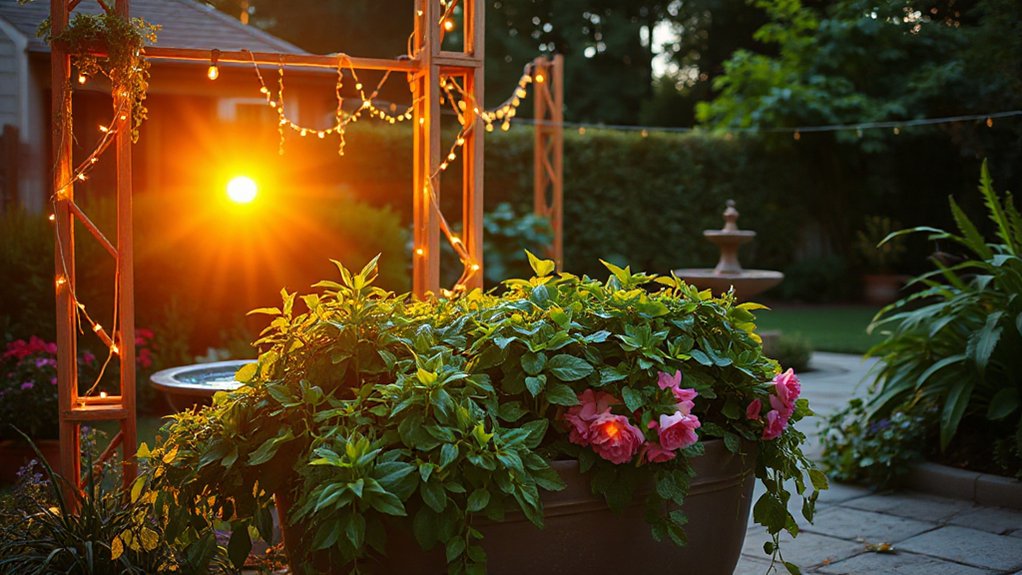

Sunlight fades across your garden as lanterns glow to life, casting warm pools of color over stone paths and bold foliage. You’ve got a plan that’s practical, not fussy, and it fits a busy summer routine. Start with simple upgrades that amplify safety, charm, and ease, then let your space evolve with little effort. Curious which tweaks deliver the biggest impact for evenings that feel effortless and inviting? Let’s map them out.
Key Takeaways
- Prioritize high-impact, low-cost updates like mulch, native plants, and a rain barrel to boost soil health and water efficiency.
- Create a cohesive evening glow with layered solar lighting, warm 2700–3000K tones, and defined seating near a focal point.
- Use container groups with varied heights, textures, and complementary colors for continuous color and easy maintenance.
- Implement a rain garden approach and drip irrigation with smart sensors to manage runoff and conserve water.
- Maintain weekly micro-tasks: prune spent blooms, check mulch depth, monitor soil moisture, and tidy debris for sustained beauty.
Define Your Summer Garden Glow-Up: Goals, Budget, and Quick Wins
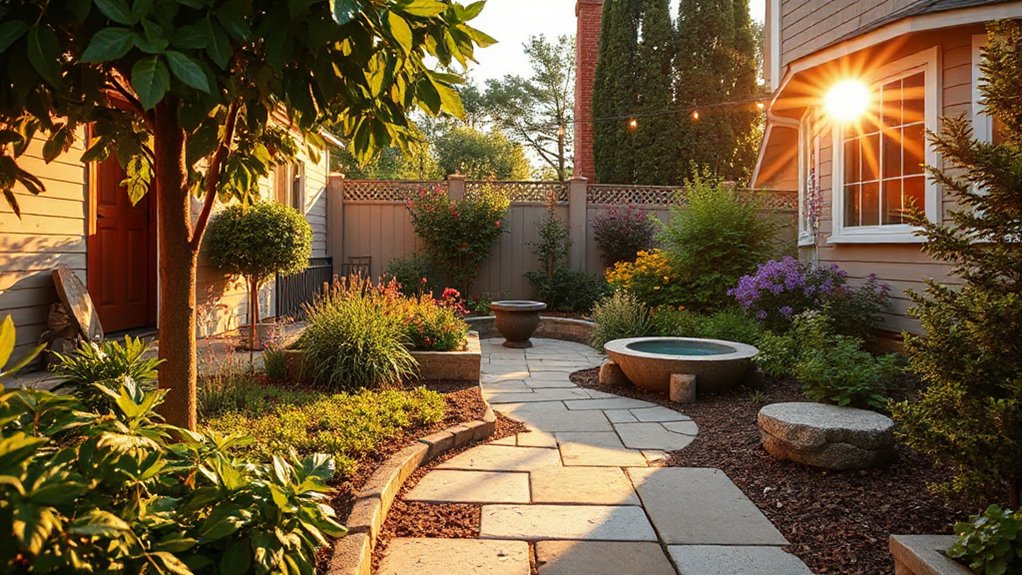
Define your summer garden glow-up by setting clear goals, a realistic budget, and a few quick wins you can implement now. You start with a Rain garden strategy to manage runoff and attract pollinators, framing a practical scope for the season.
Identify 2–4 measurable goals—e.g., bloom variety, soil health, and habitat stability—that align with your space and climate.
Budget smartly by prioritizing high-impact, low-cost changes: mulch, native plants, and a compact irrigation boost.
Choose quick wins that deliver fast momentum: stain or refresh containers, prune overgrown areas for airflow, and install a rain barrel for ongoing efficiency.
Design with wildlife habitat in mind, ensuring plant choices support local fauna while maintaining your overall aesthetic.
Track progress weekly, adjust as needed, celebrate small wins, and stay focused.
Easy Lighting Tweaks to Extend Your Evenings
Enhancing evening usability starts with a practical lighting plan that extends your outdoor time without draining your energy bill. Prioritize a layered approach: accent, task, and path lighting. Use warm, low-glare fixtures that guide moves without overpowering the space.
Opt for solar lighting along walkways and near seating to reduce installation effort and maintenance. If you have a patio or deck, strike a balance between fixtures: one statement light, plus dimmable ambient options to set a mood without washing out detail.
Choose color temperatures around 2700–3000K for nighttime ambiance, not harsh brightness. Place lights to highlight focal plants and architectural lines, then test timing with a simple evening run.
Revisit seasonal placement as shadows shift, ensuring consistent, welcoming glow throughout the long evenings.
Container Upgrades That Make Plants Pop
Container upgrades can transform a garden statement by making each plant’s color, texture, and form stand out. You’ll choose containers that complement plant traits and create visual rhythm across beds and balconies.
Prioritize sturdy materials with good drainage and wind resistance, then consider color and finish that echo your overall palette.
Container styling hinges on consistent scale and thoughtful layering: group two or three pots of varied height, add a trailing specimen for softness, and place focal plants where you’ll pass most often.
For plant selection, mix bold foliage with flowering partners for year-round impact, rotating seasonal accents to maintain interest.
Elevate texture with ribbed, matte, or metallic finishes, and guarantee irrigation is simple.
With deliberate container styling and smart plant selection, your display feels intentional and vibrant.
Cozy Seating and Clear Pathways for Entertaining
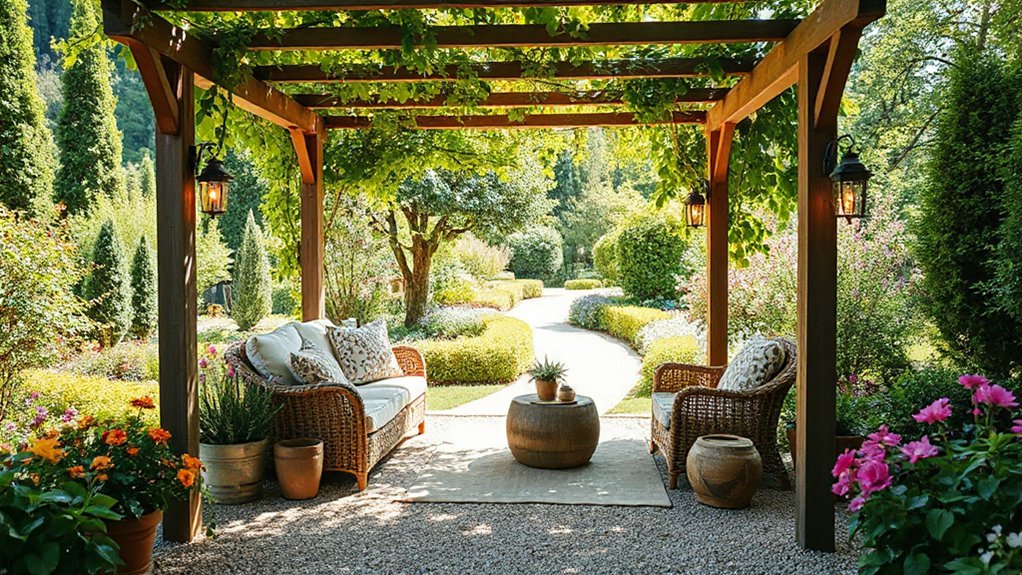
Cozy seating and clear pathways turn a garden into a welcoming, functional space you’ll actually use. Start with a simple layout: a defined seating area near a focal point, and a clear, unobstructed path to access every zone.
Choose outdoor furniture that fits the space and withstands weather; low-profile chairs and a compact sofa can feel generous without crowding. Position seating to encourage conversation, facing a fire pit for warmth and ambiance.
Define walkways with hardscape materials or gravel that resist wear and stay tidy. Keep sightlines open and avoid clutter by limiting decor to a few purposeful pieces.
Good lighting, from step lights to string lamps, extends usability after dark and elevates safety and charm.
Plan for Continuous Color: Bloom Timing and Plant Pairings
You can maximize continuous color by coordinating bloom timing with reliable plant pairings that complement each other across the season. Use a Bloom Timing Synergy approach to pair early, mid, and late bloomers so one section stays vibrant from spring through fall.
Refer to a Color Pairing Guide as you plan Sequential Planting Plans to keep textures, hues, and heights balanced and engaging.
Bloom Timing Synergy
Achieving continuous color starts with a thoughtful bloom timing strategy: select a mix of plants that stagger their peak blossoms, and pair them to bridge gaps between flushes. You should map bloom windows across spring to late summer, then combine early, mid, and late-season bloomers for steady color.
Choose species with complementary textures and compatible cultural needs, so you can maintain a cohesive display without extra effort. Prioritize Pollinator attraction by including some flowering natives that attract bees and butterflies, aligning with habitat-friendly goals.
Native plant selection should be purposeful but practical: mix drought-tolerant perennials with seasonal annuals for shorter-lived peaks. Space plants for air circulation and easy maintenance, and rotate bed borders yearly to refresh color rhythm while avoiding gaps.
Color Pairing Guide
To maintain continuous color, synchronize bloom timing with thoughtful plant pairings that bridge gaps between peak periods. You’ll pair early-spring and late-summer fixtures with midseason performers to create seamless progressions.
Use Color psychology to guide contrasts: pair cool blues and greens for calm interludes, then inject warm yellows and corals as blooms shift, energizing the border.
Build seasonal palettes that repeat across beds, ensuring repeated motifs—foliage shape, leaf color, and scent—tie the display together.
Consider height, bloom shape, and texture so companions don’t compete; instead, they complement. Choose persistent foliage for persistence in color during lulls.
Maintain soil health and consistent watering to sustain vibrancy. By mapping bloom windows and harmonized pairings, you achieve a dynamic, cohesive garden that remains engaging all season.
Sequential Planting Plans
A well-planned sequence keeps color moving through the season by aligning bloom windows and pairing plants with complementary textures and forms. Sequential planting plans guide you to continuous color, avoiding gaps. Begin with early-spring bloomers, then stagger mid-season varieties so each week delivers visual interest, fragrance, and structure.
Group plants by sun exposure, water needs, and growth habit to simplify maintenance and maximize success. Combine textures—fine foliage with bold blooms—to create depth without crowding. Incorporate companion pairings that deter pests and support performance, while rotating plant families to reduce disease pressure.
Use composting techniques to recycle yard waste into nutrient-rich soil, stabilizing fertility across successive plantings. Implement regular monitoring for pest control, rewarding you with steady color, healthier plants, and a streamlined garden routine.
Mulch, Texture, and Color on a Budget
Mulch Magic basics set the tone, defining your beds and suppressing weeds without breaking the bank.
Pair simple textures with color highlights—think shredded bark with dark mulch or gravel accents—to add depth and interest on a budget.
We’ll explore practical, cost-conscious combos that maximize impact while keeping maintenance low.
Mulch Magic Basics
Mulching isn’t just about covering soil; it’s a strategic step that shapes texture, color, and overall curb appeal on a budget. You choose mulch types with purpose: shredded bark for texture, pine straw for softness, or rock for a modern edge.
Apply a uniform layer 2 to 3 inches thick, and keep mulch away from stems to prevent rot. For color, mix inorganic with organic options to extend longevity and reduce replacement costs.
Before laying mulch, amend soil where needed with soil amendments to improve drainage or fertility; this boosts plant vigor without extra irrigation.
Mulch also aids pest control by creating barriers and reducing weed competition. Regularly rake surface annually to reveal healthy layers and maintain a tidy, cohesive garden look.
Textural Color Combos
Building on mulch fundamentals, you can shape texture and color on a budget by mixing materials for depth and contrast. Textural Color Combos shows how mulch, stone, and groundcovers create cohesive layers without overspending.
Aim for textural contrast: pair fine mulch with larger gravel or slate chips to emphasize edges and pathways. Use color blending by selecting mulch in warm cocoa or reddish tones and offset with cool stones or gray pavers.
Introduce plant foliage with variegated or silvery leaves to enhance the palette without added cost. Reuse leftover bricks or timbers to build low borders that frame beds and highlight progressions.
Maintain balance: a single dramatic element anchors the scene, while supporting textures whisper rather than shout. Your garden reads polished, intentional, and budget-smart.
Water-Smart Upgrades for Easy, Low-Maintenance Care
To make watering effortless and cost-effective, embrace water-smart upgrades that fit active, low-maintenance gardens. Start with a drip irrigation system wired to a programmable controller, reducing waste and overwatering. Pair it with a smart rain sensor so your schedule adapts to real conditions, not guesswork.
Mulch generously to cut evaporation and keep roots cool. For water reuse, install rain barrels or a compact cistern to capture rainwater that feeds irrigation and containers, minimizing mains use.
If you have a pond, implement simple pond maintenance practices: keep the filter clean, monitor pond levels, and use appropriate beneficial bacteria to prevent stagnation. Choose durable, UV-resistant components and schedule annual inspections to preserve performance with minimal effort.
This approach delivers lush, resilient growth with straightforward care.
15-Minute Weekly Glow-Ups: Maintenance Rhythm
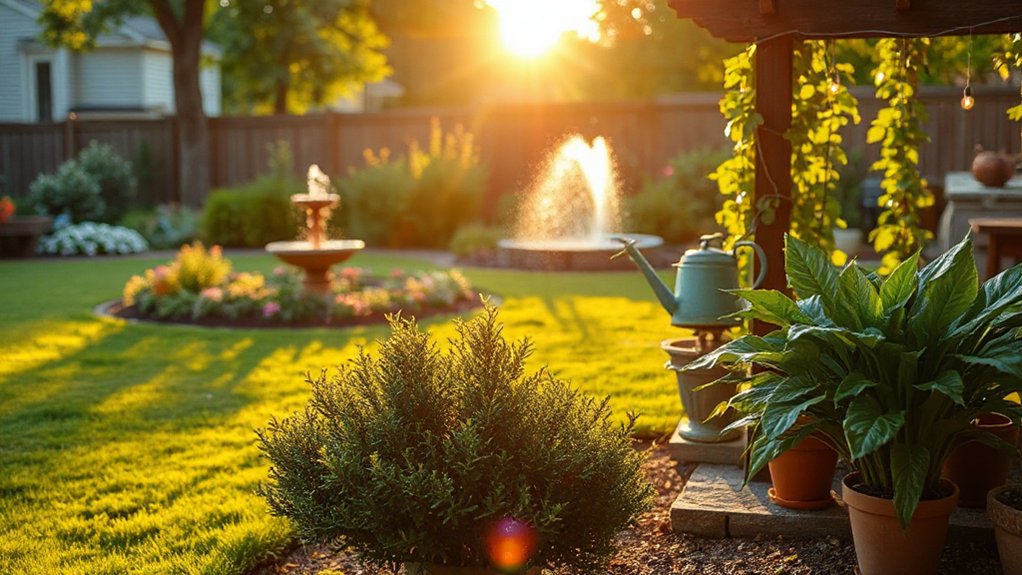
Even with a busy schedule, you can keep your garden thriving by dedicating just a minute each week to a targeted maintenance rhythm. Set a simple sequence: quick clip, mulch check, water audit, and debris removal.
Start by trimming spent blooms and dead growth to encourage new vigor without stressing plants. Next, inspect mulch depth and adjust to keep soil moisture steady while suppressing weeds. Do a rapid water check—soil should feel evenly moist at root level, not soggy.
Clear fallen leaves or spent stems that harbor pests, then sweep paths to reduce hidden snags. Use this ritual to reinforce your garden art and wildlife habitat: tidy edges highlight focal pieces, and a clean, healthy bed invites pollinators.
Consistency beats intensity, delivering lasting glow-up with minimal time.
Frequently Asked Questions
How Can I Measure ROI on a Garden Glow-Up?
To measure ROI, track costs and benefits: quantify garden maintenance time saved, increased property value, and energy savings from better plant selection. Use before/after photos, and compare ongoing maintenance costs to resale boosts from improved curb appeal.
What Permit Considerations Apply to Outdoor Upgrades?
You should verify permit requirements and zoning regulations before any outdoor upgrades, because failing to do so can stall your project. Check local building departments, apply for permissions early, and plan accordingly to avoid costly delays.
Which Color Palettes Boost Perceived Garden Size?
You’ll boost perceived garden size by using cool, expansive tones and light neutrals. Color psychology suggests blues and greens, with accents in pale yellows. Seasonal color schemes keep contrasts subtle, avoiding heavy, dense palettes for openness.
How Do I Choose Drought-Tolerant Species for Here?
Choosing drought-tolerant species starts with native plants that survive on little water; juxtapose lush greenery with sandy pockets. You’ll assess soil preparation, drainage, and sun exposure, selecting resilient natives that minimize irrigation and thrive with your climate.
What Safety Checks for Electric Lighting in Rain?
Yes, you must unplug before rain and inspect for damaged cords. Check Electrical safety, use rainproof fixtures, GFCI protection, and weather-rated enclosures; avoid metal ladders, keep connections off ground, and follow manufacturer guidelines for safe operation.
Conclusion
As the sun sinks, your garden becomes a whispering invitation—the glow guiding footsteps, the fragrant blooms a soft chorus. You’ve built a scene that’s both practical and poetic: low-maintenance charm, warm lighting, and thoughtful paths that invite lingering conversations. Each sigh of evening air reveals texture, color, and rhythm, reminding you that simple choices yield lasting impact. Stay steady, tend gently, and watch your summer sanctuary glow brighter with every mindful minute you invest.