
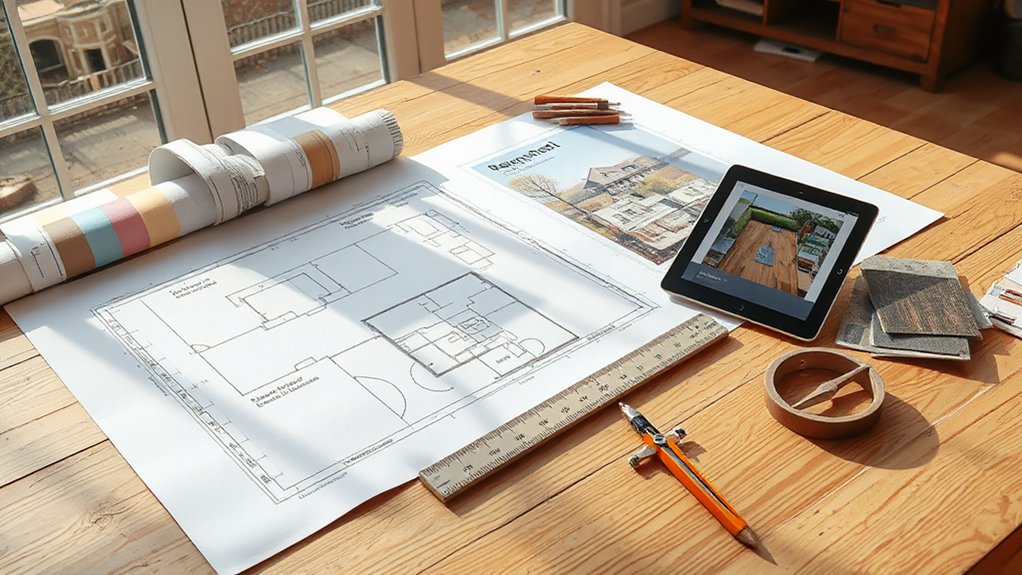

Define success from the start with a clear scope, fixed budget, and strict constraints. Build a design brief that captures non-negotiables, aesthetics, and performance, linking choices to durability and maintenance. Set a realistic budget before ordering, including 10–15% contingencies, and map a master timeline with defined owners. Create a practical project plan and rigorous documentation using a single source of truth. Maintain quality checks, manage changes transparently, and secure a flawless handover—with more insights to come if you stay with us.
Key Takeaways
- Define success upfront with a detailed scope, fixed budget, clear deliverables, and 10–15% contingency for unknowns.
- Build a design brief linking aesthetics to performance, durability, and maintenance with measurable criteria.
- Create a master timeline with milestones, owners, dependencies, and regular check-ins to keep the plan actionable.
- Prioritize high-impact spending on kitchens, bathrooms, flooring, and siding; lock in reliable suppliers and unit prices.
- Establish a single source of truth: document decisions, track changes, and use formal change orders to prevent scope creep.
Define Success: Scope, Budget, and Constraints
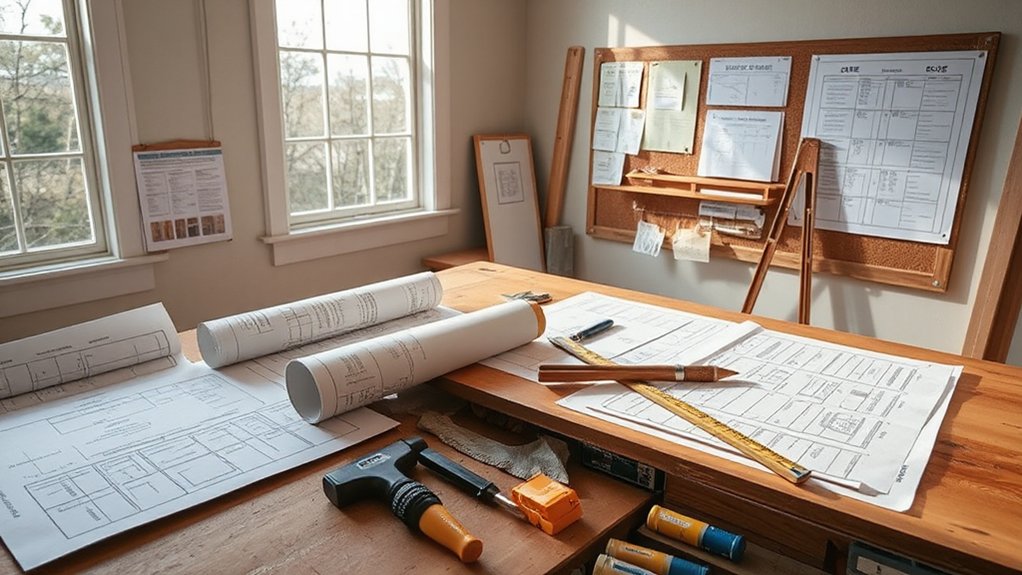
Defining success begins with clear scope, budget, and constraints. You set the project’s boundaries, then align every decision to them. Start by detailing deliverables, timelines, and required approvals to prevent scope creep.
Establish a realistic budget by itemizing trades, materials, contingencies, and permitting costs, and reserve a 10–15% buffer for unknowns.
Constraints matter too: structural realities, site access, and neighborhood restrictions shape choices and sequencing. You’ll translate design inspiration into practical steps, ensuring ideas are feasible within your resources.
Track progress with milestone reviews and burn-down estimates, holding stakeholders accountable.
For sourcing, you’ll plan Material sourcing early to secure quality and price. Document decisions, adjust as needed, and maintain a single source of truth.
Your disciplined approach minimizes surprises and keeps the project on track.
Build Your Design Brief: Non-Negotiables, Aesthetics, and Performance
Your design brief starts with your non-negotiables, clearly defining what must stay and what can bend.
Then balance aesthetics with performance, so looks align with durability, energy use, and daily practicality.
Set this framework upfront to guide decisions and keep the project focused as you move from concept to build.
Non-Negotiables First
Non-negotiables set the foundation for your design brief: they capture what must be included, how you’ll use each space, and the constraints you won’t compromise on.
Your next step is to translate these guardrails into actionable criteria that guide decisions throughout the project. Define must-haves for layout, utilities, and finishes, then map them to measurable performance targets, budgets, and timelines.
Prioritize items by impact on function and safety, ensuring you can justify every choice to stakeholders.
For Material sourcing, establish approved material families, durability requirements, and supplier reliability.
For Contractor selection, set criteria on past project quality, communication cadence, and warranty terms.
Document compromises and trade-offs in writing, so your team remains aligned when design details tighten and decisions intensify.
Maintain clarity, consistency, and uncompromising focus on essential outcomes.
Aesthetic-Performance Balance
Aesthetic choices must align with performance targets established earlier, ensuring that every visual decision supports function, durability, and budget. You’ll balance form with measurable outcomes by prioritizing aesthetic harmony that reinforces room use, material resilience, and maintenance cycles.
Define how lines, textures, and color evoke clarity while not compromising durability or cleanability, and tie each element to a performance metric like ease of cleaning or thermal efficiency. This approach drives performance optimization without sacrificing style, keeping spend predictable and upgrade paths clear.
Align decisions with metadata from your design brief, and validate choices against real-world scenarios before finalizing.
- Prioritize durable finishes and easy maintenance that complement your aesthetic goals
- Match color and texture to functional zones for improved usability
- Predefine performance criteria to guide material selections and budget confidence
Set a Realistic Budget Before You Order
Set a realistic budget first so you don’t run out of funds later.
Prioritize essential costs—like structure, safety, and permits—and spell out what must be covered before any ordering.
Build in contingencies to handle surprises without derailing the project.
Set a Realistic Budget
Establishing a realistic budget before you order anchors every decision to your finances. You’ll set clear caps, account for unforeseen costs, and prevent scope creep from derailing progress. Start with a hard target for each phase, then map procurement to those limits. Track every purchase against your budget in real time to catch overruns early.
Prioritize material selection and safety protocols to avoid future spend, and reclassify items only if genuine value is proven.
- Material selection aligns with budget, durability, and installability
- Safety protocols reduce risk and hidden costs during construction
- Contingency allowance protects the plan from price shifts and delays
Prioritize Essential Costs
You must translate planning into action by framing a tight, disciplined budget. This is cost prioritization in practice: identify nonnegotiables, verify unit prices, and lock supplier terms before ordering.
You’ll establish a baseline for daily operations and avoid scope creep by documenting what’s included in the core package. Maintain strict budget allocation across trades, timelines, and approved substitutions, and resist early upgrades that don’t drive essential value.
Track all commitments against the initial estimate, updating stakeholders with factual, current figures. Keep communication clear and anchored in reality to prevent overruns, misaligned expectations, or delayed milestones.
Build in Contingencies
To guard against cost overruns, build in contingencies by establishing a realistic budget before you order a single item. You’ll account for unexpected delays and price shifts, smoothing the path from planning to completion.
Set a primary budget cap and assign percentages for materials, labor, and permits, with a documented contingency of 10–15%. Require written estimates, verify scope, and lock in unit costs where possible to minimize contractor negotiations later.
Track changes with a formal change order process, and reserve funds for unknowns, such as site conditions or code updates. Stay disciplined, review monthly, and adjust as-needed to maintain control over the project timeline and quality.
Your proactive budgeting reduces risk and keeps the renovation on track.
- Establish a primary budget cap with a discretionary contingency
- Require written estimates and formal change orders
- Monitor and adjust monthly to control costs and timelines
Map a Master Timeline With Milestones and Owners
Creating a master timeline with milestones and owners clarifies every task, its due date, and who’s responsible, so the project stays on track from day one. You’ll align sequence logic with trade dependencies, ensuring critical path clarity and continuous workflow.
Assign owners for each milestone, set authoritative due dates, and define decision gates that pause or advance work. Use concrete deliverables to avoid ambiguity when coordinating tasks like Kitchen lighting and Flooring materials.
Break the plan into phases: design, procurement, demolition, rough-in, finishes, and closeout, each with explicit milestones and owners. Implement regular check-ins to verify progress and reallocate resources as needed.
Document changes formally, preserve auditable records, and communicate updates promptly to all stakeholders to sustain momentum and accountability. Maintain a concise, actionable master timeline for everyone involved.
Create a Project Plan You Can Actually Follow
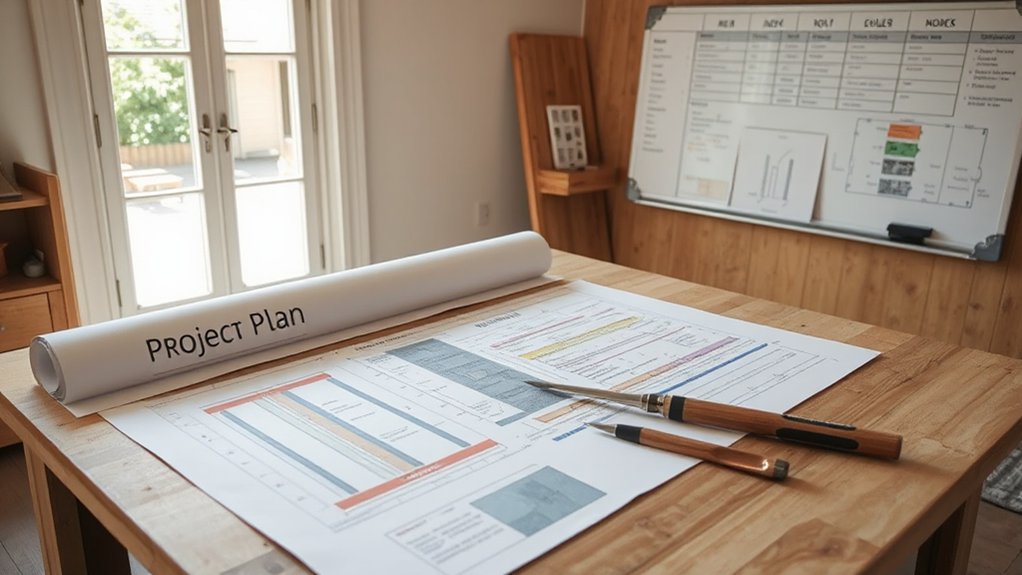
You should define clear milestones, so you can measure progress without guessing.
Prioritize tasks effectively to prevent bottlenecks and keep the plan lean.
Establish realistic timelines that you can actually meet, and hold yourself to them.
Define Clear Milestones
Establish a clear project plan by defining measurable milestones, each tied to specific tasks, deadlines, and owners. You’ll map phases to outcomes, not just dates, ensuring accountability and traceability throughout the renovation.
Define success criteria for every milestone, so progress is visible and decisions are data-driven. Keep dependencies explicit so a delay in one area doesn’t derail the whole schedule.
Align milestones with design innovation and material sourcing, ensuring feasibility within budget and time constraints. Use simple cadence checks to validate scope, quality, and risk before proceeding.
- Assign owners and due dates for each milestone
- Review progress weekly with objective metrics
- Reassess scope only when criteria are unmet or risks escalate
Prioritize Tasks Effectively
How do you guarantee you tackle the right tasks first? You build a prioritized, paged plan that translates goals into actions. Start with must-do dependencies, then sequence tasks by impact and risk. Break large jobs into actionable steps with clear deliverables, owners, and check-ins.
Establish gates: complete foundational work before refinements, verify permits and safety compliance, then advance to finishing touches. Use a color-coded system to track status, constraints, and critical-path items.
Align procurement and scheduling in advance: confirm material sourcing timelines, order lead times, and buffer allowances for delays. Document decisions and revisions transparently, so your team remains aligned without micromanagement.
In contractor negotiations, anchor scopes, timelines, and payment milestones to the plan, not assumptions, ensuring accountability and steady progress.
Establish Realistic Timelines
To create a project plan you can actually follow, map each task to a realistic duration, assign clear owners, and set fixed milestones. You’ll build momentum by anchoring estimates to concrete constraints—permits, deliveries, and crew availability—so timelines stay credible.
Use contingency buffers sparingly, but position them where risk is highest. Track progress with daily check-ins and weekly reviews, updating forecasts as realities shift.
Align schedule with design inspiration decisions and material sourcing lead times to prevent bottlenecks. Communicate plainly, so every stakeholder understands responsibilities and deadlines.
Refine the plan as you learn, but never abandon it. A disciplined timetable becomes your project compass, guiding scope, cost, and quality without overpromising outcomes.
- Design inspiration
- Material sourcing
- Milestone reviews
Evaluate Materials by Longevity, Maintenance, and Value
When evaluating materials, focus on longevity, maintenance needs, and overall value to avoid costly swaps later. You’ll compare lifecycle costs, not just upfront price. Prioritize material durability and maintenance ease, noting how each option ages under your climate and usage.
Assess wear resistance, stain tolerance, and cleaning requirements, then project repainting or refinishing cycles. Consider warranties, replacement intervals, and supplier support as part of value.
Balance initial cost against expected lifespan and performance in high-traffic or moisture-prone zones. Document maintenance tasks you’ll perform regularly and those you’ll defer.
Favor options with consistent performance across similar installations rather than one-off advantages. Choose materials that reduce disruption during future updates and deliver predictable, long-term results.
This disciplined approach minimizes surprises and strengthens project outcomes.
Vet Permits, Codes, and Compliance Early
Start early by confirming which permits, codes, and regulations apply to your project, then map each requirement to a concrete action plan. You’ll establish the permitting process upfront, aligning each task with jurisdictional milestones. This prevents backtracking and keeps timelines tight, while ensuring compliance standards are met from day one.
- Identify applicable permits and fees, then schedule submissions and inspections.
- Review local codes and state amendments, documenting compliance checklists for each trade.
- Assign responsibilities, set deadlines, and track progress against permit approvals and re-inspection triggers.
This disciplined approach minimizes delays and clarifies accountability.
Plan for Risk: Contingency Buffers That Protect Your Schedule
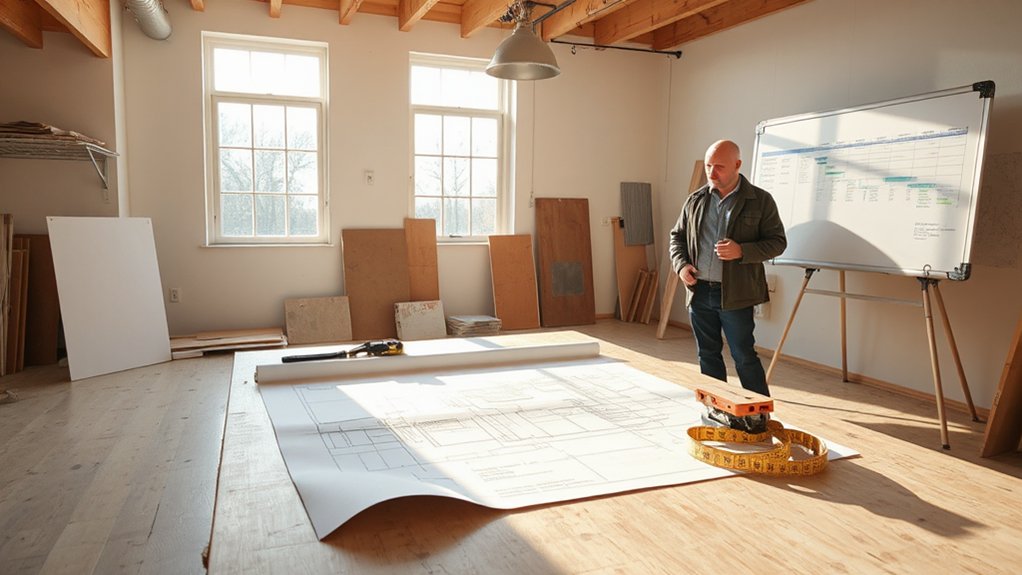
Anticipate disruptions and embed buffers into every phase of the build, so delays don’t derail your timeline. You’ll implement risk assessment early, mapping potential causes, durations, and impact on milestones.
Structure this as a formal workflow: identify high-probability risks, assign owners, and quantify consequences with clear thresholds. Build contingency planning into the schedule, allocating time reserves, budget cushions, and alternative sequences for critical tasks.
Favor data over guesswork; review historical data, subcontractor reliability, and permit lead times to calibrate buffers transparently. Communicate plans to stakeholders, linking buffers to decision points and approvals.
Regularly revalidate risk profiles as work progresses, adjusting reserves in real time. The result: a resilient schedule, fewer surprises, and steady progress toward your renovation goals.
Assemble Your Trades Team and Define Sub’s Roles
Start by defining each trade’s role clearly, so responsibilities don’t overlap or get skipped.
Align the scope of every subcontractor to your project goals, timelines, and budget, and document it all.
This upfront clarity sets a solid foundation for coordination and accountability as you move forward.
Define Roles Clearly
To avoid gaps and guarantee accountability, assemble your trades team early and define each subcontractor’s role with precision. You’ll map responsibilities, establish reporting lines, and set deliverables aligned with the project schedule. This clarity prevents overlap, minimizes risk, and maintains momentum from demo to finish.
Focus on a tight scope for every contract, detailing milestones, payment triggers, and inspection points. Material sourcing and contractor selection should inform decisions, ensuring capabilities and timelines match your plan. Communicate expectations in writing, then reinforce them with brief check-ins to confirm progress.
Your goal is a seamless workflow, predictable costs, and high-quality outcomes.
- Define scope-specific duties and interfaces for each trade
- Specify approvals, timelines, and payment milestones
- Document change processes and escalation paths
Align Trade Scope
Assemble your trades team now and define each subcontractor’s role with precision. Start by mapping the entire project scope and confirming which trades touch each phase.
Then assign responsibilities clearly: plumbing, electrical, HVAC, structural, insulation, drywall, finishes, and specialty work. Establish interfaces where one trade’s work depends on another’s completion, and specify required inputs, approvals, and handoffs.
Create a single source of truth for the trade scope, with documented responsibilities and deadlines. Communicate expectations on quality, codes, and safety, and lock in performance metrics to measure alignment clarity.
Require written confirmations from each sub, detailing scope boundaries and exclusions. Schedule regular check-ins to track progress, resolve conflicts, and update the plan.
This disciplined alignment minimizes rework and accelerates the renovation timeline.
Coordinate Approvals and Handoffs to Keep Work Flowing
Coordinating approvals and handoffs is essential to keep your renovation on schedule; clear handovers between trades prevent bottlenecks and miscommunications. You’ll set up streamlined approval processes and precise handoff procedures to maintain momentum. Documented checklists, sign-offs, and shared schedules keep everyone aligned, from permits to material timelines.
Emphasize roles, expectations, and review points to minimize rework. Use digital tools for real-time updates and traceable decisions, so approvals don’t stall progress. Establish a single point of contact for each trade to avoid confusion and guarantee rapid responses.
Track milestones, color-code task status, and schedule contingency buffers for critical phases.
- Define approval processes and respond-to-approval timelines
- Standardize handoff procedures with clear deliverables
- Maintain centralized communication and updated schedules
Budget Finishes: What to Splurge and Where to Save
Balancing budget with finishes isn’t about trimming essentials; it’s about prioritizing where quality matters most. You should allocate budget deliberately, separating high-impact surfaces from cosmetic tweaks.
Start with core systems and frequent touchpoints—kitchens, bathrooms, durable flooring, and siding—where daily use warrants longevity. For these, invest in dependable materials and reputable brands, and avoid discount-only choices that show wear early.
In contrast, you can save on ornamental details, fixtures, and non-load-bearing accents that influence perception more than performance.
Material selection matters: choose resilient countertops and tiles for high-moisture zones, but implement cost-effective, stylish options in secondary rooms.
Document decisions, compare samples, and track costs to prevent scope creep, ensuring finished spaces meet both function and value expectations.
Schedule Trades to Minimize Downtime and Conflicts
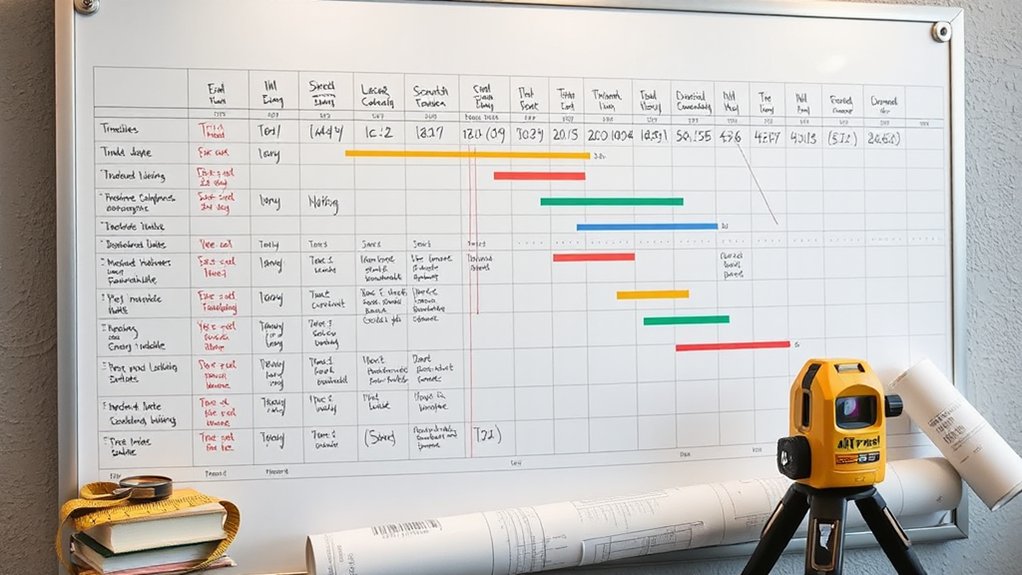
To minimize downtime and conflicts, map your trade schedule early and secure in critical path work first. You’ll align trades around dependencies, sequencing musts, and permit windows, so crews don’t wait idle.
Use a single master calendar and share it with every contractor, supplier, and you. Establish clear lead times for ordering materials and for access to spaces, then tighten buffers to avoid cascading delays.
Prioritize trades that unlock others, and document decisions to support conflict resolution if disputes arise.
- Coordinate sequencing, lead times, and access with a centralized schedule
- Identify potential conflicts early and implement rapid conflict resolution steps
- Align permit dates, material deliveries, and crew availability to minimize downtime
Quality Control Routines You Can Run Weekly
Weekly quality control routines keep your renovation on track by catching issues before they escalate. You establish a fixed day each week to verify progress against the project plan, drawings, and specifications.
Begin with a concise site walk: check framing accuracy, fastener counts, and alignment. Then review installed materials for quality and finish consistency.
Use a standardized checklist to verify measurements, tolerances, and scope adherence. Document deviations with photos and timestamps, assign owners, and set remediation deadlines.
Prioritize safety, containment, and cleanliness to prevent rework.
Evaluate key design decisions, including innovative lighting placements and integration, ensuring they meet performance criteria and code.
Confirm supplier deliveries align with staging needs, and track eco-friendly materials usage to maximize sustainability while maintaining schedule.
End with actionable next steps.
Change Orders: Handling Scope Shifts Gracefully
When a change order arises, you assess the impact on schedule, budget, and quality to determine if it’s necessary.
Communicate promptly with stakeholders, documenting scope adjustments and approval paths so everyone stays aligned.
Use clear, structured processes for scope adjustment and decision-making to minimize disruption and keep the project on track.
Manage Change Orders
Change orders are inevitable in any renovation, but handling them gracefully keeps projects on track and budgets intact. You’ll protect timelines by documenting every change, cost implications, and approved approvals before work resumes.
Establish a transparent process: submit requests in writing, review with your contractor, and secure client sign-off prior to施工. Track design flexibility against budgeted costs to prevent cost escalation from derailing milestones.
Maintain a centralized change log and update schedules accordingly.
- Define scope changes clearly with dimensions, materials, and finish details
- Tie every alteration to a revised budget and timeline
- Communicate promptly to all stakeholders and obtain written approvals
Scope Adjustment Strategies
Scope shifts test a project’s discipline, so you should address them with a formal, repeatable process. You’ll implement a documented pathway for evaluating, approving, and costing changes, minimizing disruption to schedule and cash flow.
Begin with a clear change request template, detailing scope, rationale, impact, alternatives, and preferred solution. Require stakeholder sign-off on both scope and budget before action, and log every amendment in a centralized ledger.
Assess each change for scope creep—distinguish essential from optional enhancements, and quantify effects on timeline and resources. Maintain budget flexibility by reserving contingency funds and revisiting the estimate after each notable shift.
Communicate decisions promptly, attach traceable justification, and track variance against baseline. Close the loop with updated baselines and formal project closure criteria.
Communication With Stakeholders
Effective communication with stakeholders is essential when change orders arise, because timely, transparent dialogue prevents misalignment and costly delays. You’ll establish clear channels, document decisions, and verify approvals to maintain momentum and trust.
Before any scope shift, identify impacted parties, outline alternatives, and assess budget and schedule implications with precision. Your approach hinges on proactive Stakeholder Engagement and robust Communication Strategies that prioritize consistency and accountability.
Use concise summaries, confirm measurements, and assign owners for each action item to avoid duplication or ambiguity.
- Define change scope, rationale, and cost impact in plain language
- Confirm approvals and updated milestones with written receipts
- Monitor progress, flag risks early, and adjust plans collaboratively
Clear Communication Habits That Keep Everyone Aligned

Clear communication is the foundation for a smooth renovation, and establishing routines early keeps all parties aligned. You set expectations by defining channels, cadence, and response times, so issues don’t escalate. Use concise briefs before each phase, and confirm decisions in writing to prevent drift.
Active listening anchors collaboration: repeat back summaries, ask clarifying questions, and acknowledge constraints. This reinforces shared understanding and speeds problem-solving.
Build feedback loops into every milestone—short, structured check-ins assess progress, surface risks, and adjust plans promptly. Keep meetings purposeful: agendas, timeboxes, and assigned owners ensure accountability.
Document decisions in a shared space, link them to deadlines, and flag deviations early. With these habits, you maintain alignment, minimize rework, and sustain momentum throughout the project.
Documentation Habits That Protect Your Timeline and Budget
Documentation habits protect your timeline and budget by codifying decisions and tracking changes in real time. You establish a single source of truth for decisions, approvals, and scope shifts, so misunderstandings don’t derail progress.
You’ll standardize file names, timestamps, and versioning, making audits straightforward and fast. You identify and mitigate documentation pitfalls before they become delays or cost overrords, preserving accountability and clear ownership.
You implement record keeping essentials: contracts, change orders, permits, and receipts, stored securely and accessible to stakeholders.
- Documentation pitfalls: unclear ownership, missing approvals, duplicate records
- Record keeping essentials: contracts, change orders, permits, receipts
- Practices: consistent naming, centralized storage, timely updates
Your discipline protects schedule integrity and budget adherence with precision and discipline.
Final Walkthroughs and Snagging for a Spotless Handover
Before the handover, you conduct a thorough final walkthrough and snagging to guarantee every detail meets the agreed scope. You approach this with a checklist-driven mindset, aligning results to contract specs, drawings, and quality standards.
During the final walkthroughs, you verify finish quality, alignment, and functional performance, recording deviations clearly. You implement the snagging process immediately, prioritizing safety fixes, operability, and cosmetic touch-ups, and you assign responsibilities with strict timelines.
Communicate findings concisely to trades and the client, confirming remediation deadlines and verification methods. Maintain organized records, including photos and itemized logs, to support sign-off.
Ascertain utilities, fixtures, and warranties are in place, and that the handover package is complete. A spotless handover reflects disciplined project management and precise workmanship.
Post-Project Review: Learning for the Next Renovation
Post-project reviews distill lessons learned into actionable improvements for the next renovation. You capture what worked, what didn’t, and why, then translate findings into concrete, measurable changes. Use a structured debrief to align stakeholders, refine budgets, and tighten timelines for the next cycle.
Focus on how Creative decor choices or Smart technology decisions performed in practice, not just theory, and document any misalignments with initial goals. Establish a formal owner’s log, assign responsibility, and set clear follow-up dates to ensure accountability.
Prioritize repeatable processes, better supplier communication, and risk mitigation based on actual outcomes. This disciplined reflection drives smoother execution and higher satisfaction in future projects.
- Capture metrics for design, cost, and schedule
- Document outcomes for Creative decor and Smart technology
- Assign owners and schedule follow-ups
Quick-Start Checklist: Your 30-Day Action Plan
Starting now, implement a focused 30-day action plan that kickstarts your renovation with momentum and clarity. This Quick-Start Checklist guides you to immediate, measurable steps, keeping you on schedule and within budget.
Day 1–3: confirm scope, assemble your team, and set milestone dates.
Day 4–10: establish a firm budget, secure permits, and finalize timelines.
Day 11–20: gather creative inspiration and compile material selection lists, prioritizing durability and return on investment.
Day 21–25: secure samples, compare vendors, and lock in orders with lead-time buffers.
Day 26–30: review contracts, create a notification system for changes, and implement a daily progress tracker.
Monitor risks, adjust priorities, and communicate clearly. This approach guarantees decisive action and steady momentum throughout the renovation journey.
Frequently Asked Questions
How Do I Prioritize Renovations by Impact and Cost?
Prioritize by impact and cost: identify high-value improvements, estimate budgets, and compare ROI. Allocate budget to essential updates first, then nice-to-haves. Track Project timeline meticulously, adjust allocations as needed, and guarantee budget allocation aligns with phased milestones.
What Are Hidden Costs Not Listed in Quotes?
Unexpected fees quietly creep in; plan for them. You’ll face cost overruns if you don’t include contingencies, owner-supplied materials, permit delays, and contractor substitutions in your budget and timeline. Budget with buffers, track changes, stay proactive.
How Can I Verify Contractor Credentials Effectively?
To verify credentials, you should perform contractor background checks and licensing verification promptly. You’ll contact licensing boards, request proof, review past projects, confirm insurance, and compare quotes to guarantee legitimacy before signing any contract.
What Metrics Measure Renovation Success Post-Completion?
Completion quality, schedule adherence, and post-renovation satisfaction track your success. You’ll compare budget allocation against realized costs and measure design aesthetics impact, durability, and user comfort, adjusting plans as needed to maintain value and functional fairness.
How Do I Secure Temporary Housing During a Major Remodel?
Temporary housing options include short-term rentals, corporate housing, or extended-stay hotels as you relocate. Plan relocation logistics early, secure permits, and set a moving window. You’ll compare options, budget precisely, and coordinate with contractors for seamless interim living.
Conclusion
As you close the door on day one’s chaos, imagine the space exhaling into clarity: lines align, light finds its corner, and every task tightens into purpose. You’ve defined success, mapped a realistic rhythm, and built a plan you can actually follow. With tight documentation, honest milestones, and a finished handover, you’re not just renovating—you’re mastering the craft. Step back, breathe, and trust the process that transforms vision into tangible, enduring calm. Your project, precisely completed.