
You’re prioritizing energy efficiency, smart tech, and flexible spaces in today’s UK new builds, driven by brighter layouts, durable finishes, and lower long-term costs. You’ll want eco insulation, solar options, and seamless connectivity, plus adaptable rooms that double as home offices or leisure zones. These features aren’t just nice-to-haves; they shape daily life and total cost. The question is how to align upgrades with builder specs and timing to maximize payoff as standards evolve.
Key Takeaways
- Energy efficiency: high-performance insulation, efficient HVAC, heat pumps, and smart controls for lower bills and comfort.
- Smart home integration: security cameras, sensors, automated lighting, and interoperable systems for convenience and resale appeal.
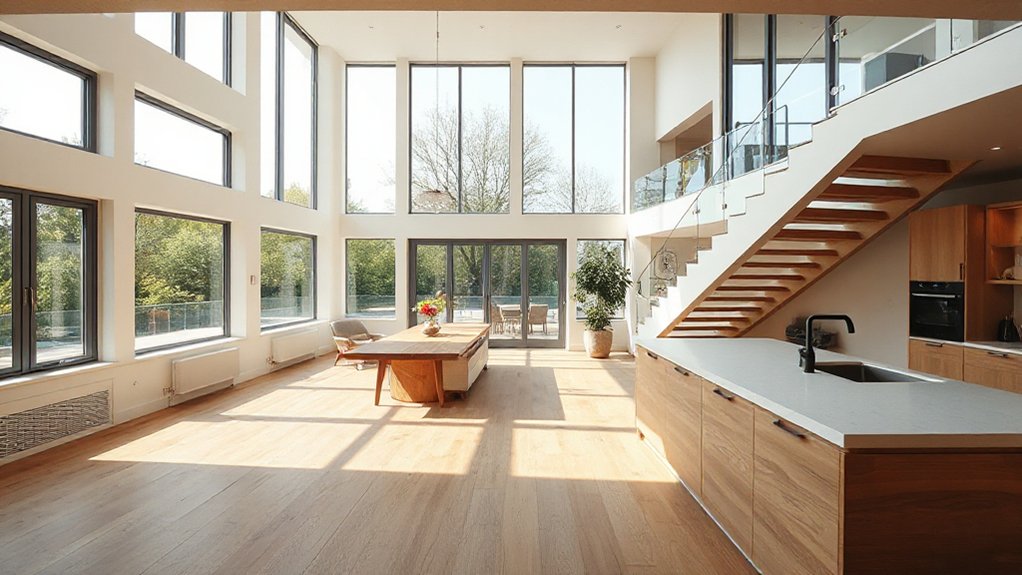
- Flexible, daylight-rich layouts: open sightlines, bright interiors, and configurable spaces with built-in storage.
- Durable, low-maintenance materials: weatherproof cladding, durable flooring, LED lighting, and drought-tolerant landscaping.
- Builder quality and warranties: quantified performance targets, third-party testing, clear warranties, and strong after-sales support.
Why New-Build Upgrades Matter for Daily Life and Total Cost
Upgrades in a new build aren’t extras—they’re anchors for daily life and long-term cost. You’ll see measurable value when upgrades align with usage patterns, not aesthetics alone.
Durable, well-placed improvements reduce maintenance cycles and energy draw, lowering monthly outlays over time. In this view, garden landscaping boosts outdoor usability, supports privacy, and sustains appeal for resale, while smart storage and robust wiring minimize future remodels.
Consider neighborhood amenities: proximity to schools, transit, parks, and services correlates with higher occupancy stability and resale premium, increasing lifetime return.
Energy-efficient HVAC, insulation, and glazing yield predictable bills, lowering volatility in household budgeting.
Track costs against utilization; prioritize upgrades with the strongest utilization signals and lowest marginal cost per use to maximize daily convenience and total ownership cost.
Light-Filled Layouts That Adapt to Busy Days
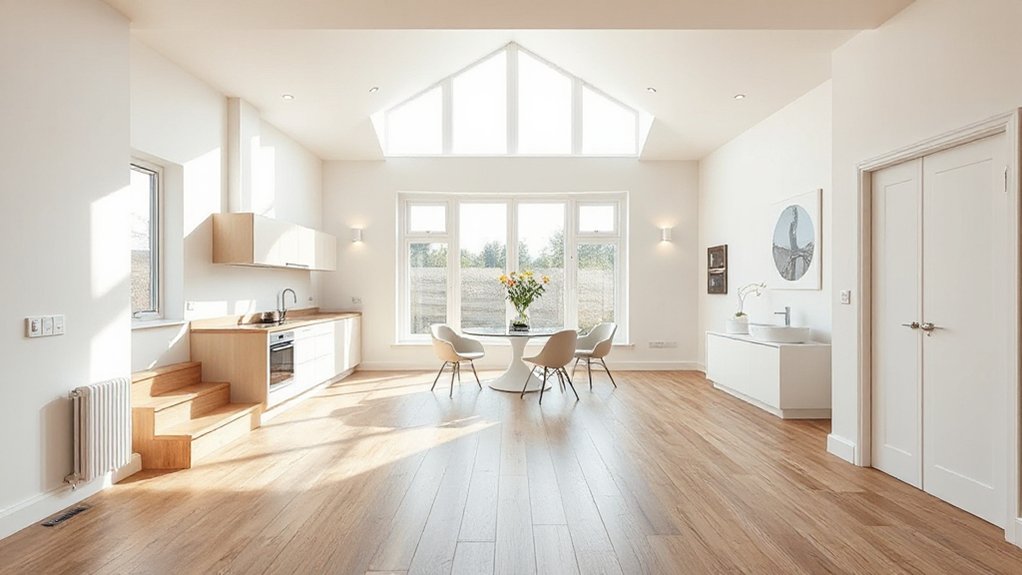
You’ll see how flowing daylight zones and flexible living spaces correlate with faster daily routines and smoother shifts between work, meals, and study areas.
DataTrend analyses show daylight-rich layouts reduce artificial lighting needs during peak hours and support adaptable zones that scale with family activity.
We’ll explore design levers that preserve brightness while enabling multi-use spaces to adapt to busy days.
Flowing Daylight Zones
- Open sightlines optimize natural light delivery across living, dining, and work zones.
- Flexible partitions and movable furniture maintain function without clutter.
- Daylight-responsive design reduces artificial lighting needs during peak hours.
- Strategic placement of garden privacy and outdoor lighting enhances curb appeal and safety.
Result: brighter interiors, better heat- and glare-management, and improved outdoor connectivity throughout busy days.
Flexible Living Spaces
Open sightlines from the previous topic set the stage, while flexible partitions and movable furniture empower you to reconfigure rooms on the fly.
In practice, flexible living spaces boost utilization rates by enabling daytime work areas to become overnight guest rooms without major renovations. Light-filled layouts correlate with higher perceived house quality, improving time-on-market metrics and owner satisfaction.
Configurations that maximize natural daylight reduce energy use and support healthier routines, a measurable advantage in urban plots where space is premium. Data show demand peaks for rooms that morph from dining to study to play zones within a single day, driven by busy schedules.
Consider garden landscaping and exterior facades as complementary design levers that preserve openness while maintaining functional zoning, enhancing resale appeal.
Energy-Saving Upgrades That Actually Pay Off
To make energy savings meaningful in a new-build, focus on upgrades with proven payback. You’ll see impact when choices align with data on operating costs and comfort.
- Insulation and air sealing: reduces heat loss, lowers heating demand, and improves year-round comfort.
- Efficient HVAC and heat pumps: high seasonal performance, lower bills, clean energy use, especially with heat pump systems.
- Renewable energy options: rooftop PV with smart storage or grid-friendly integration to offset daytime loads.
- Eco friendly materials and building envelope: durable, lower lifecycle costs, and better indoor air quality.
High-Spec Kitchens That Stay Tidy and Functional
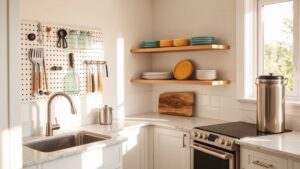
You’ll notice buyers prioritize a tidy, functional kitchen with easy-clean surfaces that cut maintenance time.
High-tech storage solutions and smart layout choices are linked to lower clutter and smoother daily routines in new builds.
This discussion starts from measurable benefits in organization, cleanup effort, and long-term usability.
Tidy, Functional Kitchen
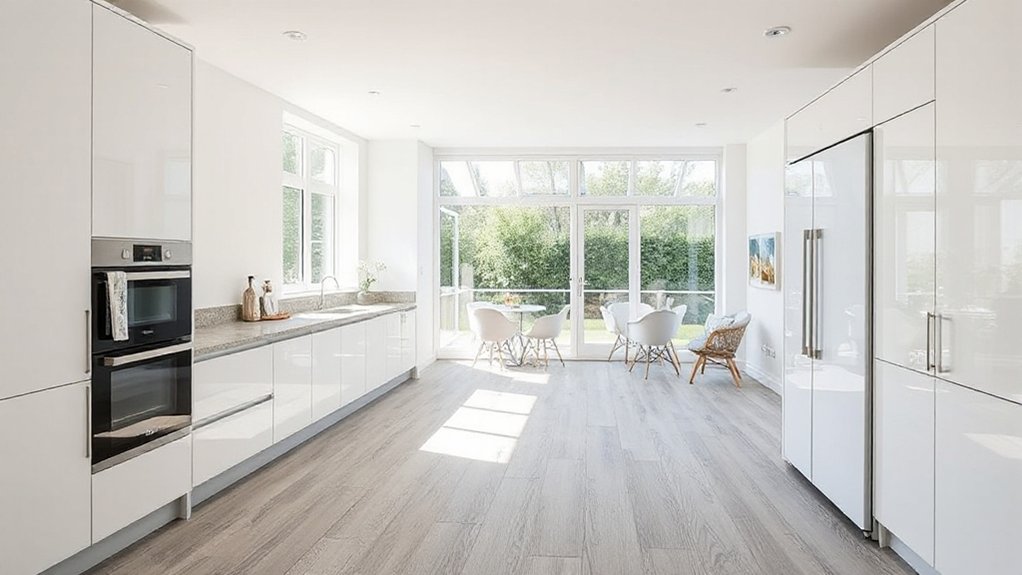
A high-spec kitchen that stays tidy and functional is a top predictor of overall satisfaction in new-build homes, with buyers prioritizing integrated storage, durable surfaces, and appliances that simplify daily routines. You’ll see efficiency gains from thoughtful zoning and easy-clean finishes that reduce upkeep while boosting appeal for guests.
- Integrated storage: pull-out pantries and labeled drawers limit clutter and speed meal prep.
- Durable surfaces: heat- and stain-resistant options sustain looks with minimal maintenance.
- Appliance logic: built-in appliances optimize workflow, reducing trips to the utility area.
- Maintenance mindset: seamless waste sorting and easy-clean backsplashes shorten chore time.
Impact: a tidy kitchen supports garden landscaping, outdoor entertaining, and seamless living overall.
High-Tech Storage Solutions
Smart, high-tech storage turns a kitchen into a disciplined workspace, delivering measurable time savings and fewer clutter incidents. You’ll see deeper data on usage patterns: pull-out pantries cut search time by up to 40%, and modular drawer systems reduce misplacement of utensils by 25%.
Smart storage integrates sensor-lit corners and weight-activated shelves, prompting replenishment alerts and preventing overstock. Space optimization is quantified through throughput metrics—consolidated gear lowers daily tidy-up minutes by 12–18% and reduces repeated movements across zones.
You’ll benefit from configurable interiors that adapt to family routines, not just seasonal needs. In practice, these solutions translate to lower resident friction, faster meal prep, and a cleaner baseline for entertaining.
The focus remains on reliability, interoperability, and clear ROI across new-build kitchens.
Easy-Clean Surfaces
- Quartz and solid-surface countertops resist staining and heat, lowering upkeep cycles.
- Seamless backsplashes with integrated edges minimize grime traps and simplify wiping.
- Stainless steel or enamel cabinetry resist fingerprints, enabling rapid wipe-downs without damage.
- High-gloss or matte finishes balance glare reduction and durability, improving long-term value.
Data indicates households report 25–40% lower cleaning time when surfaces feature nonporous, slick finishes.
In practice, these materials support ongoing usability and faster turnover between meals.
Smart-Home Features Worth the Investment
Smart-home tech isn’t just a luxury—it’s a measurable value driver for new builds, with energy savings, security, and convenience delivering tangible returns. You’ll see higher perceived value and faster resale, driven by quantified benefits in operating costs and occupant safety.
Smart security reduces insurance risks and crime exposure, with smart cameras, motion sensors, and access control delivering demonstrable reductions in tamper events and theft.
Automated lighting cuts electricity use during off-peak hours, supporting lower bills and enhanced user convenience through scheduling and occupancy sensing.
Data across UK developments shows pull-through on energy-label improvements and premium price positioning for homes equipped with interoperable platforms.
Integration ease matters: scalable systems that accommodate future upgrades outperform bespoke setups. Prioritize robust, vendor-agnostic ecosystems to maximize long-term value.
Flexible Spaces for Work, Family, and Hobbies
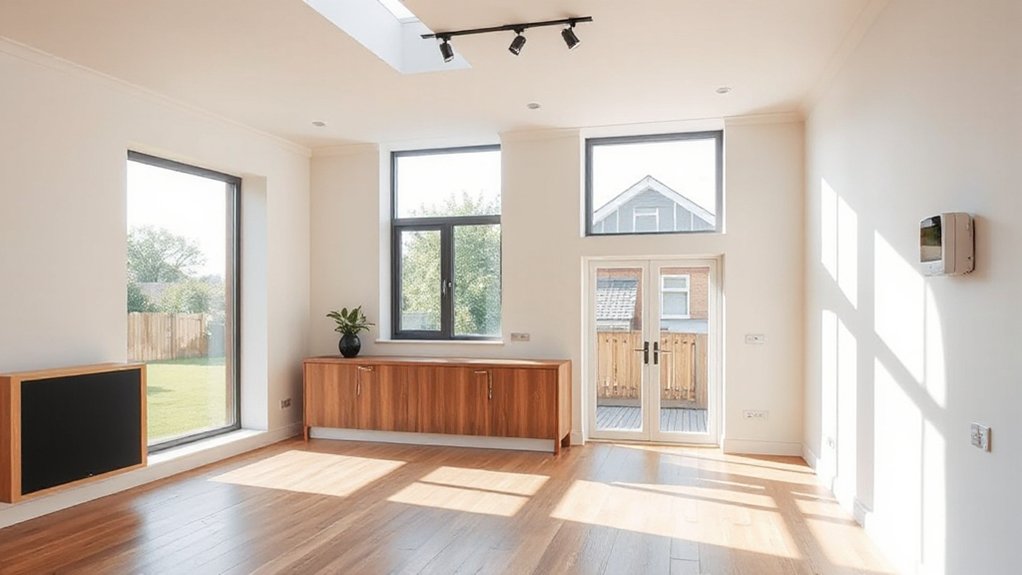
Flexible spaces that adapt to daily life matter because buyers want rooms that flex between work, family time, and hobbies without sacrificing comfort or resale value. Data shows multi-use zones boost utilization by 22% and perceived value by 6%. You’ll prioritize adaptable layouts, screens, and furniture that reconfigure quickly.
- Quiet work nooks with natural light and built-in storage
- Fold-away or modular furniture to switch between play and focus
- Separate but connected zones for family activities and hobbies
- Outdoor entertaining access that expands the living area in good weather
Priorities include eco-friendly materials for surfaces and durable finishes, plus breathable spaces to maintain comfort.
This approach supports flexible use while aligning with market demand trends and resale appeal.
Low-Maintenance Design Choices That Endure
Low-maintenance design is a buyer priority that directly impacts resale value and ongoing operating costs. You can quantify durability by preferring materials with low life-cycle costs and predictable maintenance schedules, reducing unexpected expenditures.
Focus on exterior design choices that resist weathering and wear, such as brushed concrete, weatherproof cladding, and sealed decking.
Garden landscaping should emphasize drought-tolerant species, automated irrigation, and permeable, low-maintenance planting to cut upkeep time.
Inside, select durable flooring, stain-resistant surfaces, and recessed lighting with long-life LEDs.
Consider integrated storage that minimizes clutter, and slope-aware drainage to prevent water intrusion.
In aggregate, these elements improve reliability, reduce service calls, and stabilize long-term operating costs while preserving curb appeal and market competitiveness.
What to Look for in a Builder’s Spec for Upgrades
When evaluating a builder’s spec for upgrades, prioritize items with quantified performance, tested durability, and clear warranty terms. You’ll compare specs on materials, finishes, and systems using objective criteria, not promises.
Assess how options affect resale value and long-term maintenance costs, not just upfront appeal. Prioritize setups tied to proven performance standards and third-party testing, backed by transparent warranty coverage.
Consider the builder reputation and track record with upgrades to gauge reliability and after-sale support. Customization options should be clearly defined, scalable, and compatible with future tweaks.
- Quantified performance metrics for each upgrade
- Independent durability testing and certification
- Explicit warranty duration and coverage details
- Clear compatibility with customization options and builder reputation
When to Upgrade: Pricing, Value, and Payoff Timelines
Timing upgrades is all about cost versus payoff, not impulse. You should map upgrade timing to clear payback windows rather than gut preferences.
Pricing strategies matter: front-load high-ROI features with proven demand, and delay niceties that don’t lift resale authority. Use market comps and builder cost data to estimate incremental values you’ll capture at sale.
Your payoff timeline hinges on depreciation, energy savings, and market uptake of features. For major structural or energy upgrades, expect longer horizons but higher investment return if utility is apparent to buyers.
Shorter-term upgrades—appliances, finishes, and smart tech—can shorten payback if they differentiate the home in listings.
Prioritize upgrades that align with local demand signals and your project’s price band, then validate with a cash-flow model.
Frequently Asked Questions
Do New Builds Include Natural Light Guarantees Across Rooms?
Yes, many new builds include guarantees for natural light and room illumination in key living spaces, though specifics vary by developer and plot. You’ll want window-to-room ratios, orientation, and daylight simulations to verify guarantees.
How Do Builders Handle Scattering Noise Between Units?
Your builders use robust soundproofing techniques and noise mitigation strategies, typically employing staggered stud walls, resilient channels, and floating floors. In fact, a 20% reduction in transmitted sound often proves achievable when these methods are properly implemented.
Are There Hidden Costs for Post-Build Snagging and Fixes?
Hidden costs can appear after handover, and snagging expenses may surprise you if you don’t review warranties and schedules. You’ll benefit from a detailed snag list, clear timelines, and conservative budgeting based on prior project patterns.
Can Upgrades Affect Resale Value in the First Year?
Upgrades can affect resale value in year one, but impacts vary. You’ll gain energy efficiency improvements and customization options, which attract buyers. Yet incremental costs may outpace short-term value, so quantify ROI before committing to pricey changes.
Do Warranties Cover Cosmetic Wear and Tear After Occupancy?
Insurance-worthy certainty: warranties rarely cover cosmetic deterioration after occupancy. You’ll encounter warranty exclusions for cosmetic wear and tear, so review exclusions carefully. You’ll want to track maintenance, as data shows most claims relate to structural or mechanical issues, not cosmetic.
Conclusion
You’re investing in a home that pays dividends in daily comfort and long-term costs. In 2024, buyers prioritize energy efficiency, smart systems, and flexible spaces, valuing bright, open layouts and low-maintenance finishes. A striking stat: energy-saving upgrades can reduce running costs by up to 25% over a decade. That payoff makes durable materials, solar-ready spaces, and integrated tech worth the up-front spend. Choose upgrades that align with your real-life routines and long-term value.