
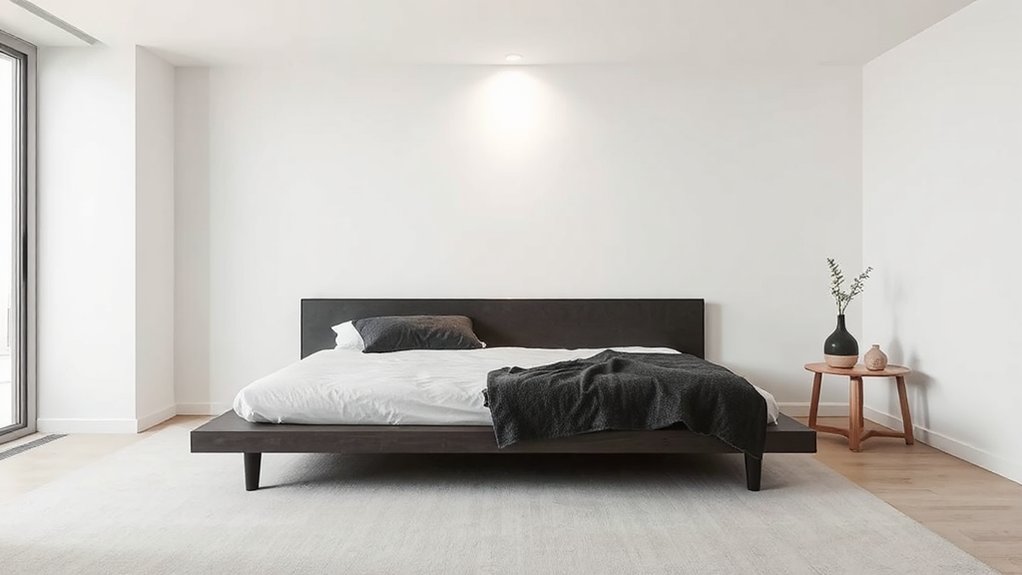

A calm, clutter-free bedroom starts with a soft-neutral foundation: off-whites, muted blues, and natural textures. Choose minimalist furnishings with hidden storage and multipurpose use, and map your routines to decide what truly belongs. Layer textures for coziness, from cotton sheets to a lightweight throw, and add purposefully placed accents. Use warm, dimmable lighting and seal noise gaps to support sleep. Embrace sustainable materials and a few meaningful personal touches—and you’ll gain access to steadier days ahead as you discover more.
Key Takeaways
- Create a calming color palette of soft neutrals, muted blues, and greens with minimal, cohesive decor to reduce visual noise.
- Choose multifunctional, streamlined furnishings with hidden storage to maintain clean lines and open space.
- Implement simple lighting with dimmable, warm-toned lights to support circadian rhythm and relaxed evenings.
- Prioritize decluttering rituals and intentional possessions; keep surfaces clear and rotate a few meaningful items.
- Use sound management and night-friendly routines (white noise, quiet electronics, mindful prep) to improve sleep quality.
Calm Bedroom Color: Start With the Right Foundation
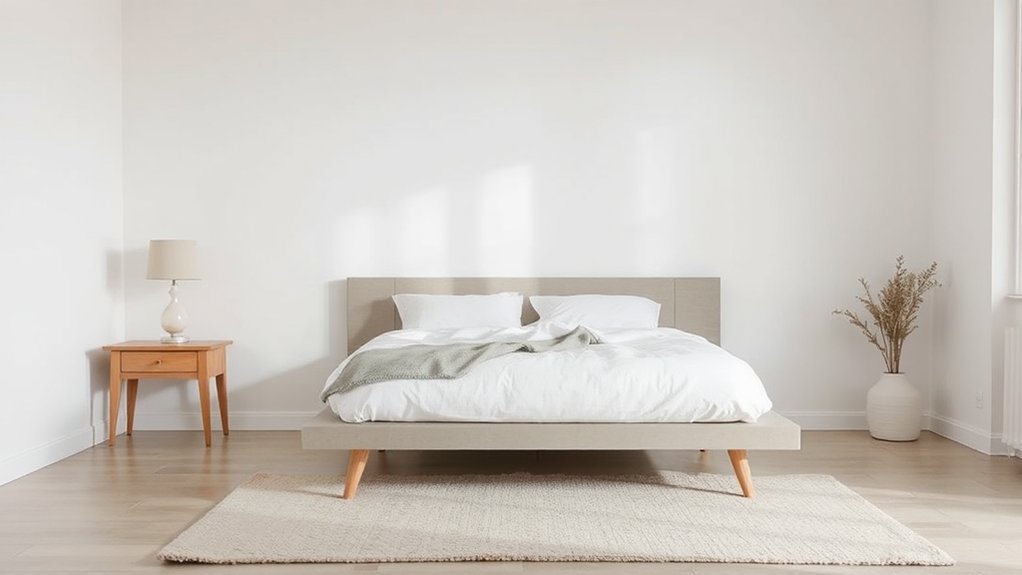
Choosing the right foundation starts with calm, neutral tones. In calm bedroom color, you pick a base that supports focus and rest. You’ll set walls and larger surfaces in off-whites, soft beiges, or pale greys, avoiding high-contrast schemes that trigger alertness. This foundation lets your accents breathe and keeps clutter visually quiet.
Next, consider bedroom feng shui: place the bed with a solid headboard against a wall, avoid direct alignment with doors, and keep nightstands balanced.
Select textiles and finishes with low saturation to reduce glare.
Finally, integrate calming scent strategies—gentle, consistent aromas from a diffuser or sachets—so you instinctively relax when you enter.
The result is a tranquil, cohesive space, where color supports sleep, focus, and simple, restful routines.
Choose Minimalist Furnishings That Pay Off
Smart, streamlined furnishings pay off by reducing clutter and keeping your space calm. When you choose minimalist pieces, prioritize function over ornament. Pick furniture with clean lines, hidden storage, and modest profiles that don’t crowd the room.
Favor neutral tones and natural materials that endure beyond seasons, so you won’t chase fleeting trends. Consider multipurpose items: a bed with drawers, a slim desk that doubles as a vanity, a bench at the foot of the bed. This approach supports a calmer mood and easier maintenance.
Stay aware of furnishing trends, but resist impulse buys that add noise. Use decorative accents sparingly—one or two meaningful pieces max—to personalize without overpowering. Your goal: intentional collections, not excess.
Smart Storage Principles for a Clutter-Free Space
A clutter-free space starts with smart storage that works with your habits. To begin, map daily routines and identify frequent clutter hotspots before choosing storage solutions.
Prioritize multifunctional pieces: a bed with drawers, a dresser that doubles as a nightstand, and wall-mounted shelves that free floor space.
Embrace closet organization tactics like zones, labeled bins, and adjustable hanging rods to maximize capacity without bulk.
Use vertical space thoughtfully; install slim organizers inside doors and stackable containers on high shelves.
Cull relentlessly; keep only items you truly use, rotate seasonal pieces, and maintain a simple, visible system.
Regular 5‑minute resets prevent buildup and sustain calm.
In short, practical storage solutions reinforce minimalist calm and long-term order.
Layer Textures for Quiet Comfort

Layering textures adds quiet depth without bulk. In a calm bedroom, you layer textures to invite tactile calm without visual noise.
Start with a solid foundation: a low-profile mattress and simple sheets in a muted tone. Add dimension with a duvet, a lightweight throw, and a textured blanket for contrast, ensuring each piece sits neatly without cramping the space.
Choose materials that feel different but look cohesive—cotton, linen, wool, or a smooth cotton blend. Place one set of cozy blankets at the foot or draped over a chair for easy access, avoiding excess bulk.
Limit patterns to one subtle accent to maintain serenity. Keep surfaces clear, so layer textures contribute, not compete with, the room’s minimalist calm.
layer textures, cozy blankets.
Soft, Purposeful Lighting for Sleep
Set your evening scene with warm glow timers that ease you into rest and keep outings out of the room.
Create dimmable lamp zones so you can lower light for winding down without sacrificing task needs.
Aim for a soft nighttime ambience that signals sleep while preserving a calm, minimalist mood.
Warm Glow Timers
Use a timer to reduce ambient brightness over 30 to 60 minutes, aligning with your pre-sleep routine. Choose bulbs or smart lights that warm from 2700K to 1800K as darkness approaches, ensuring a gentle *shift*.
Keep controls simple: a single timer, one or two presets, no clutter. Focus on consistency: nightly timing adjustments create predictable cues that protect circadian rhythm.
Avoid harsh glare in the bedroom’s main zones, letting light support wind-down rather than activity. This approach preserves calm and prepares you for restful, uninterrupted sleep.
Dimmable Lamp Zones
Place dimmable lamps at bedside, desks, and reading nooks so you can lower brightness for winding down and raise it for focused activity. Use warm color temperatures to reinforce relaxation and avoid blue-heavy tones late in the evening.
Name zones like “read” and “relax” and assign simple controls or scenes for quick adjustments. This approach reduces clutter and leverages light as a functional decor element.
With intentional dimming, you preserve atmosphere, minimize disruption, and maintain a tranquil, sleep-friendly bedroom environment.
Soft Nighttime Ambience
Limit blue light after dusk; avoid bright overheads as a default. Create zones where lighting cues winding down, not energy, so you stay relaxed as you move through the room. Pair light routines with calm activities—dream journaling or light night meditation—to reinforce rest signals.
Keep cords tucked, fixtures simple, and color palettes muted to preserve calm. Rehearse a brief lighting sequence before sleep: soften, lower, and non-distract. This consistent softness supports deeper, restorative rest.
Sleep-First Arrangements: Make the Bed a Sanctuary
Start with Sleep-First bed comfort: choose a mattress and pillows that support your spine and soothe pressure points.
Then layer sanctuary-worthy linens and pillows to feel calm the moment you crawl in.
Finally, establish quiet nighttime routines that protect the bed as your sanctuary and set a clear boundary for rest.
Sleep-First Bed Comfort
A sleep-first bed is a sanctuary you can retreat to at the end of the day, so prioritize comfort and function over clutter. Start with a quality mattress that supports your posture and reduces disruption. Choose low-profile, breathable sheets and a comforter that matches seasonality to maintain consistent bed comfort.
Keep pillows aligned with your sleep position, and avoid over-piling—one or two supportive options are enough. Implement a simple, dark, quiet environment: blackout curtains, a cool room, and minimal electronics nearby.
Establish a nightly routine that signals winding down, reinforcing sleep quality. Tidy the area each morning to prevent dust and distractions from creeping back in. With intention and consistency, your sleep-first setup becomes calmer, more restorative, and easier to maintain.
Sanctuary Pillows And Linens
To create a true sanctuary, choose pillows and linens that support your sleep position and climate needs, then keep them simple and well-maintained.
You’ll boost calm by selecting a pillow config aligned to your preferred spine alignment and a breathable linen bedding set that suits your environment. Add decorative throw pillows sparingly, purely for texture or soft contrast, and remove excess clutter to preserve serenity.
Prioritize warmth without bulk: layer with a lightweight duvet or duvet cover and a breathable top sheet. Wash linens regularly to prevent buildup and maintain a crisp, inviting feel.
Opt for solid colors or restrained patterns to reduce visual noise while still offering subtle depth. Emphasize consistency—same setup nightly—to reinforce a dependable sanctuary.
Quiet Nighttime Routines
Keeping a bed sanctuary starts with a simple habit: set conditions that cue rest as soon as you lie down.
Quiet nighttime routines center you fast and keep sleep predictable. You’ll want a deliberate sequence that signals winding down and protects sacred sleep space.
- meditative breathing for two minutes to calm the mind and slow racing thoughts.
- nighttime journaling to unload worries and set a clear sleep intention.
- dim lights and silence notifications to reduce stimulation.
- bed-first activities only—no screens, no work, just rest and intention.
This approach makes the bed a sanctuary, not a placeholder. Maintain consistency, adjust timing gradually, and you’ll notice quicker sleep onset, higher quality rest, and a calmer morning.
Decluttering Rituals That Keep the Calm
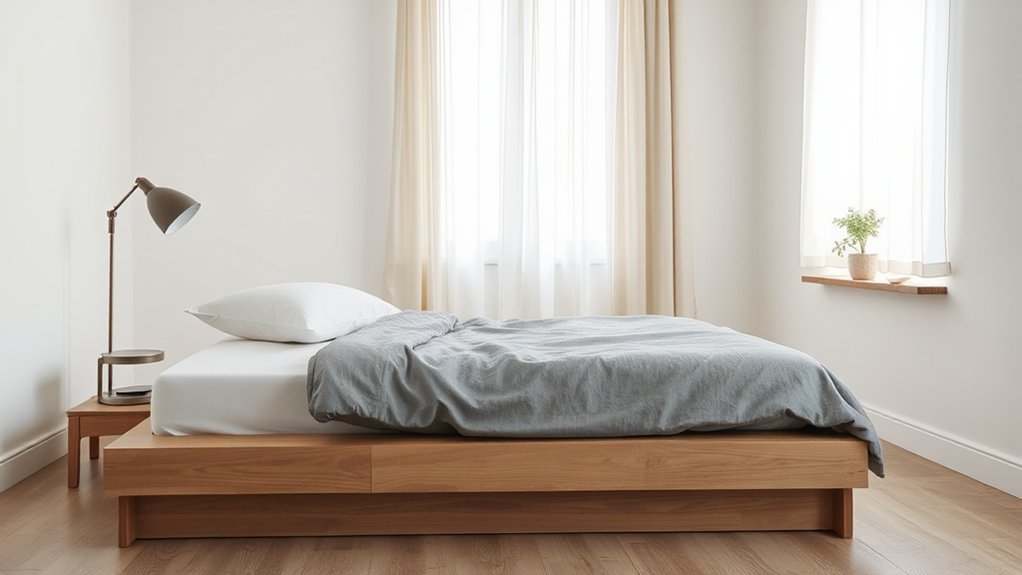
Each day, skim surfaces, empty the shallow clutter, and return items to their homes. Use a two-minute sweep after work and a five-minute reset before bed to prevent buildup.
Make decisions once: keep, donate, or discard, and label bins or bags accordingly.
When you feel overwhelmed, pause for mindful journaling or a brief daily meditation to reset your focus before you act.
Track progress with a simple checklist to reinforce habit formation. Avoid perfectionism; aim for steady improvement.
Calming Decor: Intentional Artwork and Accessories
Artwork and accessories can shape mood without clutter: choose pieces that echo a single calm color palette, simple forms, and meaningful meaning. You’ll create balance by pairing intentional artwork with curated accessories that reinforce serenity rather than distraction.
- Select intentional artwork featuring soft tones and minimalist motifs that resonate personally.
- Limit framed pieces to a cohesive set, avoiding visual noise.
- Use curated accessories—lanterns, vases, or textiles—in a consistent texture and hue.
- Place items to guide the eye toward negative space and restful symmetry.
Maintain deliberate spacing, and avoid overloading surfaces. This approach keeps your room breathable and focused, reinforcing calm through purposefully chosen decor.
Your calm space hinges on thoughtful selection, not quantity, making every piece count.
Manage Night Noise With Simple Sleep Soundproofing
You can start with basic soundproofing by sealing gaps around doors and windows to cut outside noise.
Use a quiet corridor strategy by guiding foot traffic away from your room and adding soft, absorbent materials in adjacent hallways.
Keep sound practical and actionable by focusing on simple, low-cost fixes that improve sleep without clutter.
Soundproof Sleep Basics
Ever wonder how much night noise affects your sleep? You’ll notice tagging sounds less when you apply basic soundproofing concepts.
- Focus on entry points, sealing gaps around doors and windows to reduce drafts and transmission.
- Use soundproof windows or secondary glazing where outside noise is persistent.
- Place acoustic panels in key zones—walls near your head of bed and adjacent to noisy spaces.
- Add a consistent white-noise source to mask irregular disturbances and support deeper rest.
These steps create a calmer baseline without overhauling your room. You’ll sleep cleaner, wake refreshed, and maintain a minimalist aesthetic.
Soundproof windows and acoustic panels offer tangible benefits with minimal footprint, and they pair well with simple furniture and soft textures.
Quiet Corridor Tactics
Quiet corridors don’t have to scream for attention. You can curb night noise with simple, practical sleep soundproofing tactics.
Start by sealing obvious gaps around doors and baseboards to cut transmission from adjacent rooms. Add a tight door sweep and consider a soft-closing hinge to minimize clicks and thumps that wake you.
Use dense, lightweight textiles on curtains and rugs to dampen footsteps and sound reflections in the hallway. A portable white-noise device or a fan can create consistent, non-invasive masking for disturbances.
Position furniture to diffuse echoes: a slim console or bench near the entry helps absorb sound, while plants add mass and reduce harsh reflections.
With these steps, you’ll achieve quiet corridor and hallway serenity without clutter.
Restful Color Palettes That Support Waking Refresh
A restful color palette sharpens morning alertness by guiding the eye and easing tension before you start the day. You’ll feel steadier when hues support circadian cues, signaling wakefulness without jarring contrasts.
- Start with soft neutrals as base, then introduce muted blues or greens for centered focus.
- Use warm whites with cream undertones to reflect natural light and prevent stark contrast.
- Choose low-saturation accents in coral or amber to energize without overstimulating.
- Pick paint finishes that balance glow and longevity—matte walls with satin trim reduce glare and highlight details.
Color psychology guides mood, while paint finishes control texture and light. Keep palettes cohesive, avoiding busy pattern clashes to sustain calm wakefulness.
Sustainable Materials for Longevity and Peace of Mind

Choosing eco-friendly materials builds your confidence that furniture lasts.
Favor timeless durability, so your pieces stay reliable through years of daily use.
Opt for low-impact options that align with minimalist living and peace of mind.
Eco-Friendly Build Confidence
Eco-friendly materials aren’t just buzzwords; they’re the foundation for long-lasting, low-maintenance builds. You’ll gain confidence by choosing durable, low-toxicity options that age well and reduce upkeep.
- Prioritize responsible sourcing: verified recyclability, certified timber, and low-emission finishes.
- Favor modular components: easy replacements, less waste, longer system life.
- Opt for durable surfaces: solid woods, recycled composites, and ceramic or stone where appropriate.
- Plan for upkeep: easy-to-clean finishes, repairable details, and predictable resale value.
Your approach boosts sustainability with recycling initiatives woven into daily use. It also supports eco-friendly cleaning by reducing harsh chemicals and simplifying care.
With deliberate material choices, you’ll sleep soundly knowing your room stays calm, clean, and resilient.
Timeless Durability Choices
If you want enduring calm in your bedroom, start with materials built to last: solid woods, responsibly sourced timber, and durable composites that resist wear and age gracefully. You prioritize timeless durability, selecting boards and finishes that endure without frequent replacement.
Choose solid hardwoods from well-managed forests, with low-VOC finishes to protect indoor air quality. Engineered options like structured plywoods or high-density fiberboard offer stability and impact resistance when properly sealed.
Metal hardware should be corrosion resistant and sized for long service life. Look for joints and fasteners designed for longevity, not ease of replacement.
Prioritize timeless durability over trend, ensuring long lasting materials perform consistently under daily use. Proper care, sensible finishes, and measured refurbishments extend lifespan while maintaining a calm, uncluttered space.
Low-Impact Material Options
Aimed at longevity and peace of mind, low-impact materials reduce environmental footprint without sacrificing durability. You’ll choose options that endure, resist wear, and stay timeless in a minimalist space. Eco conscious choices guide each pick, while non toxic finishes protect indoor air quality. Use practical, straightforward materials that age well and simplify upkeep.
- Reclaimed wood for supports and furniture, offering character without new-forest impact.
- Low-VOC finishes on surfaces, preserving air quality and reducing odor.
- Recycled metal hardware with durable welds, cutting landfill waste.
- Certified bamboo or cork flooring, balancing resilience with a lighter ecological footprint.
Keep mobility and repair in mind: opt for modular pieces and finish compatibility. This approach sustains calm, clarity, and lasting value.
Personalize Your Space Without Clutter (Zen Details)
To personalize a minimalist bedroom without adding clutter, choose a few meaningful details that reflect your taste—think a single, well-chosen art print, a handmade planter, or a fabric swatch you love.
Start with personal touches that feel intentional, not decorative filler. Prioritize items you genuinely use or admire, and place them where they’ll be seen daily.
Practice clutter control by limiting holdings to quality pieces in a cohesive palette. Keep surfaces clear; designate a small, dedicated spot for a single item you cherish, like a photo card or small sculpture.
Rotate pieces seasonally to keep the look fresh without expanding your collection. This approach maintains calm, supports focus, and preserves the minimalist ethos while adding personality.
Smart Tech for Calm Living
Smart tech can calm a bedroom without clutter. You can use devices that streamline routines while preserving a serene space. Opt for single-purpose gadgets and hide cables to maintain visual calm. Focus on data-minimized settings that support your goals: digital detox and mindful meditation.
- Use a minimal smart speaker with routine timers to guide breathing or a short meditation without loud music or notifications.
- Choose a single bedside display or clock with dimmable, offline-friendly features to reduce screen time at night.
- Install a simple automation hub that limits wakeups and silences alerts during sleep.
- Pick a high-quality, wireless charging pad to reduce cords and clutter.
Smart tech should serve calm, not demand attention.
Morning Routines to Sustain Calm All Day
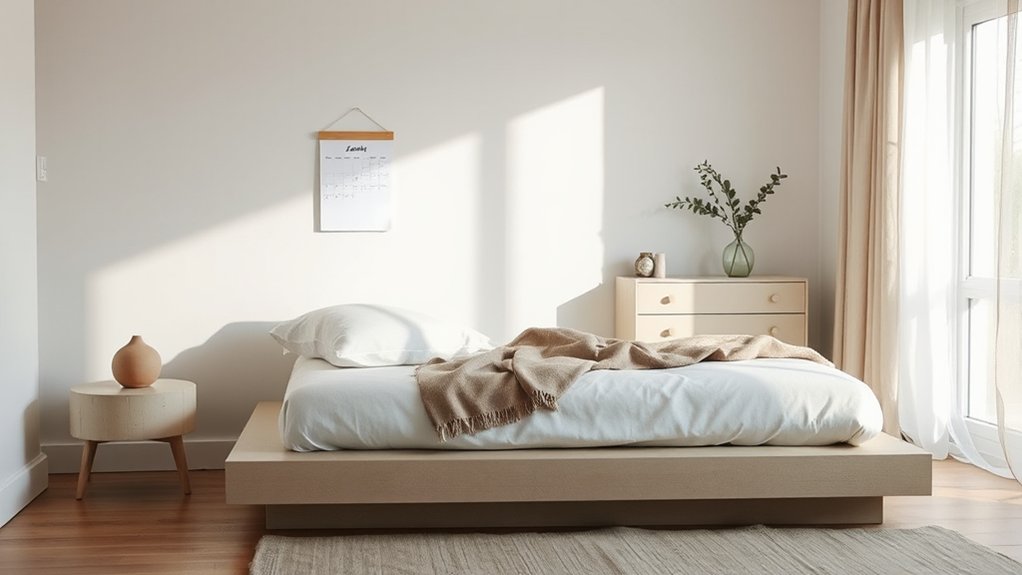
Morning routines set the tone for a calm day. You start with a brief inhale, exhale, and a clear intention to prioritize simplicity.
Begin with Morning mindfulness: notice surrounding sounds, air temperature, and your body’s cues without judgment. This awareness prevents morning chaos from seeping in.
Move to a quick, practical plan for the day, listing two to three achievable tasks that align with your low-clutter goals.
Use Daily affirmations to reinforce focus and resilience: “I handle what matters,” “I prioritize calm,” “I finish what I start.”
Keep hydration, light stretch, and a neutral workspace setup nonnegotiable.
Consistency matters more than intensity, so stick to a compact routine.
Revisit your stance at midday to reset and sustain calm.
Frequently Asked Questions
How Can I Switch Bedrooms to a Perpetual Calm With Minimal Effort?
Yes, switch to a perpetual calm by simplifying surfaces, so you sleep better tonight. Pick a muted color palette and optimize lighting choices with warm bulbs, dimmers, and blackout curtains for steady, restful ambiance you’ll actually notice.
What Small Changes Create a Big Calm in a Busy Room?
A calming fact: 70% of people feel more peaceful in rooms with color harmony and clutter reduction. You’ll achieve it by swapping bright accents for muted tones, simplifying surfaces, and choosing a single, soothing focal point for the space.
Can Budget Items Still Feel Luxurious in a Minimalist Bedroom?
Yes, you can, since luxury textures and affordable elegance elevate a minimalist look. You’ll mix quality basics, tactile fabrics, and refined finishes, keeping lines clean while you invest thoughtfully in key pieces that feel premium.
How Do I Maintain Calm When Guests Visit or Sleep Over?
Coincidence: you calmly set boundaries by planning guest etiquette and sleepover organization, so interruptions stay minimal. You greet warmly, then streamline spaces, provide essentials, keep routines, and handle clutter quietly, ensuring your calm persists throughout visits.
What Mindset Helps Sustain a Serene Bedroom Long-Term?
You cultivate a serene bedroom by adopting mindful decluttering and intentional lighting daily, you stay consistent. Prioritize simplicity, routine resets, and calm rituals, so you sustain a peaceful space; your mindset supports balance, focus, and deliberate, tranquil choices.
Conclusion
You’ll feel the difference the moment you step into a truly calm bedroom. Minimalist choices slice chaos like a razor, and suddenly mornings start with coffee, not clutter. Your bed becomes a sanctuary, not a stage for stuff. Thoughtful lighting, sustainable materials, and serene textiles aren’t decoration—they’re a way of life, magnifying peace until you practically glide through your day. Commit to this simpler setup, and calm won’t just visit—it’ll stay, everywhere you go.