
Which Home Improvements Will Be Popular In 2024?
As we move into 2024, the home improvement market is being shaped by a combination of forces that have been building for several years: sustained high mortgage rates that have persuaded many homeowners to invest in their existing properties rather than move, energy costs that remain elevated compared to pre-2021 levels, and a working-from-home culture that has permanently changed how people use their domestic space.
The result is a home improvement market that is both substantial — homeowners have been spending on their properties at historically high rates — and increasingly focused on specific priorities. Function over fashion, long-term value over short-term style, and a clear-eyed assessment of what genuinely improves daily life and property value rather than what simply looks good in an Instagram photograph.
Here are the home improvements that property professionals, builders, architects, and interior designers expect to be most in demand through 2024.
1. Energy Efficiency Improvements: From Optional to Expected
Energy efficiency improvements will be among the most significant home improvement categories in 2024, driven by a combination of financial motivation and evolving regulatory pressure.
Household energy bills remain dramatically higher than they were in 2021. The average UK household energy bill, while reduced from the extreme peaks of late 2022, is still running at approximately double pre-crisis levels. Insulation, double or triple glazing upgrades, smart heating controls, and heat pump installations directly reduce these costs — and homeowners have become far more financially literate about the relationship between their home’s specification and their monthly energy expenditure.
The regulatory pressure is building. The government’s commitment to requiring rental properties to reach EPC C by 2030 — a requirement that will affect around 52% of the private rented sector — is beginning to concentrate landlord minds. While 2024 is early in the compliance programme, landlords who plan strategically are beginning to assess their portfolios and commission the improvements that will be required. This creates a market for energy efficiency retrofit across a significant portion of the UK’s housing stock.
The specific improvements: Loft insulation upgrades (still one of the highest-return retrofit investments, often eligible for government support through the Energy Company Obligation), cavity wall insulation, smart thermostats and heating controls, and heat pump installations where properties are suitable. The Boiler Upgrade Scheme’s £7,500 grant for air source heat pumps continues to stimulate uptake, and installer capacity — which constrained the market in 2022–2023 — is gradually expanding.
2. The Kitchen Extension and Open-Plan Living: Still the Biggest Project Category
The open-plan kitchen-dining-living extension is entering 2024 as the home improvement project category with the largest volume of committed and planned spend. It has been the defining residential project of the 2010s and early 2020s, and while the growth rate has moderated from its pandemic-era peak, the pipeline of projects remains substantial.
The combination of bifold doors, a flat roof with rooflights or a lantern, an island, and quality materials continues to be the aspiration for UK homeowners who are upgrading their family homes rather than trading up. Estate agents continue to identify this configuration as the single most reliable value-adding investment for a three or four-bedroom family home.
What is changing in 2024 is the specification level within the project category. Having seen a decade of broadly similar kitchen extensions — bifolds, island, rooflights, concrete-effect porcelain tile — buyers are becoming more discerning about quality. The budget kitchen extension with UPVC bifolds and a mid-range kitchen is facing more competitive pressure from homeowners who want something that looks and performs differently. Better sliding door systems, bespoke kitchen cabinetry, natural stone worktops, and higher-specification glazing are becoming the differentiators within a category where the basic elements are now familiar.
3. Home Offices: From Makeshift to Permanent
The working-from-home revolution of 2020–2022 was accommodated in many households by repurposing a spare bedroom, a corner of a dining room, or a dining table. As remote and hybrid working has settled into a permanent feature of working life for a significant proportion of the UK workforce, the makeshift home office is being replaced with a properly designed one.
In 2024, home office improvements fall into two categories:
Dedicated room conversion: A spare bedroom converted to a proper home office — with desk space designed for the equipment used, adequate power and data connectivity, acoustic treatment to manage noise from the rest of the house, and a door that closes when work is done. In households where a spare bedroom exists and remote working is established, this conversion offers significant daily quality-of-life improvement.
Garden office: The prefabricated garden room or garden office — a standalone, insulated, connected structure in the garden that provides genuine physical separation between work and home — has grown from a niche product to a mainstream home improvement. Quality garden offices from established manufacturers provide year-round usable workspace, broadband connectivity, and the psychological separation between work and domestic life that many remote workers find essential for productivity and mental health. The market for garden offices in 2024 is broad — from budget timber structures at £5,000–£10,000 to architectural, fully insulated, thermally-efficient buildings at £25,000–£50,000.
Planning permission considerations are worth noting: many garden offices fall within permitted development provided they do not exceed 2.5 metres in height within 2 metres of a boundary and meet other standard criteria. This makes them an accessible improvement for most householders.
4. Bathroom Renovation: Elevated Specification
The bathroom renovation has been among the most consistently strong home improvement categories for years, and 2024 shows no sign of any weakening. What is changing is the specification level that homeowners expect.
The bathroom trends that will be most prominent in 2024 reflect an elevation in expectation driven by social media, by the renovation programmes that continue to dominate UK television, and by the experience of hospitality-grade bathrooms that homeowners encounter in hotels and holiday lets.
Walk-in showers and wet rooms continue to replace bath-and-shower combinations in many primary bathrooms, particularly in properties where the main bedroom and en-suite are the renovation focus. The walk-in shower — no tray, no screen, a drain in the floor, and a large rainfall head — is the specification that most homeowners have experienced in good hotels and want to replicate at home.
Freestanding baths retain strong appeal as a focal point in larger bathrooms. The combination of a walk-in shower for daily use and a freestanding bath as a weekly luxury is the format that drives the highest bathroom valuations in property marketing.
Heated floors and heated towel rails — electric underfloor heating in tiled bathrooms and quality heated towel rail specification — have moved from premium to standard expectations in renovation-level bathrooms. The cost is modest relative to the total project cost, and the comfort differential is significant.
Large-format tiles in warm stone tones, charcoal, and deep blues continue to dominate bathroom design in 2024. The movement away from white subway tile and toward large-format warm-toned tile has been building for several years and is now established across a wide range of price points.
5. Curb Appeal and Exterior Improvements
A pattern that emerged strongly in 2022–2023 and continues into 2024 is homeowners investing in exterior improvements — the visible front of the property — in ways that had previously been deprioritised relative to interior renovation.
Front door replacement is the single highest-ROI exterior improvement available to most properties. A high-quality front door in a bold colour — dark blue, dark green, black, deep red — with quality ironmongery can dramatically improve a property’s kerb appeal at a cost of £1,500–£4,000. Estate agents consistently report that a property’s front door is one of the first things buyers notice and one of the strongest signals of how well-maintained the rest of the property is.
Window replacement — particularly replacing dated UPVC windows with timber or high-quality aluminium alternatives in period properties where UPVC is contextually inappropriate — has been growing in popularity as homeowners become more attuned to the character of their houses and less willing to accept the compromise that mass-market UPVC imposes on period facades.
Landscaping and driveway improvement — block paving replacement, the addition of permeable paving to address puddle accumulation, the removal of dated concrete hardstandings — are seeing increased demand from homeowners who are treating the exterior space as an extension of the home’s design rather than purely functional.
6. Loft Conversions: The Space Creation Priority
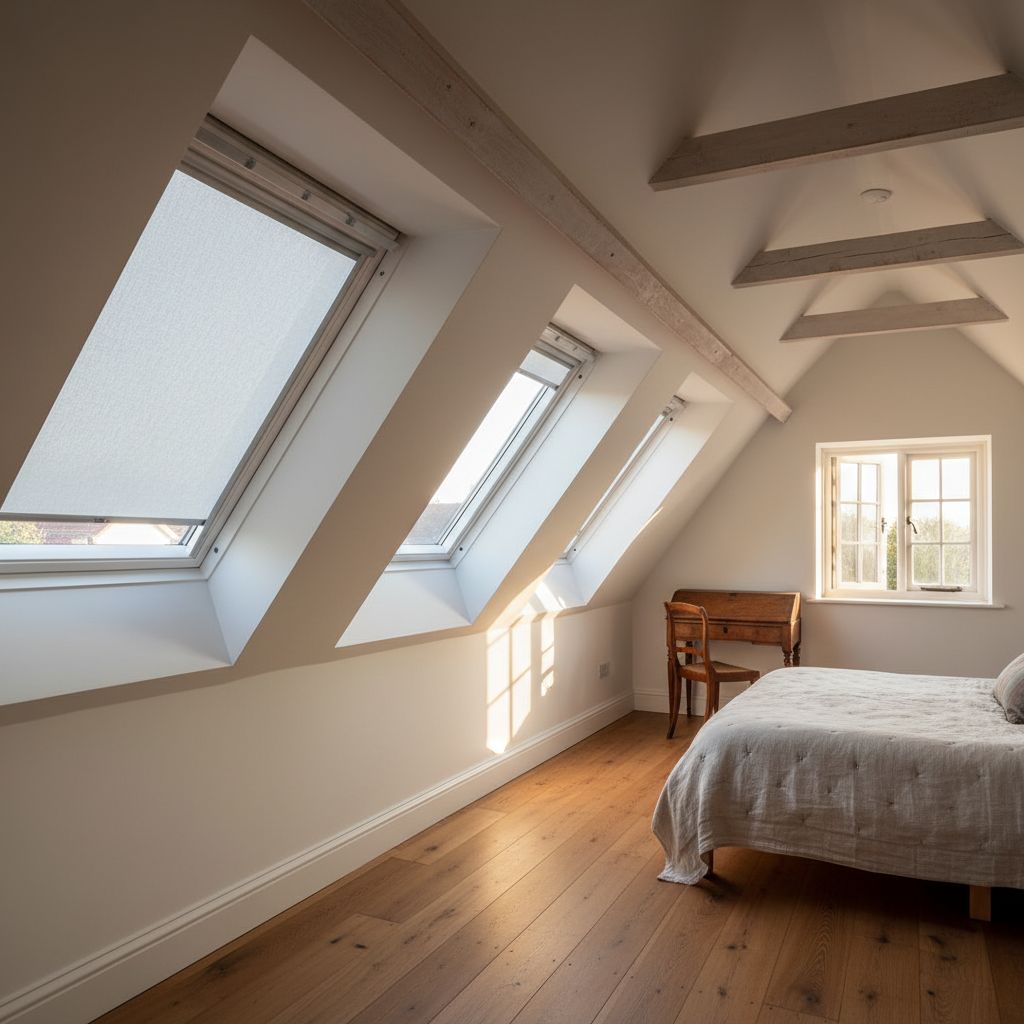
Loft conversions will be one of the most in-demand structural home improvement projects of 2024. The combination of high stamp duty and moving costs (stamp duty on a £500,000+ property can exceed £15,000–£20,000) and the premium attached to a larger property in most markets has made creating space within the existing property — rather than buying a larger one — the financially rational choice for many families.
The loft conversion market in 2024 is being shaped by two specific pressures: the cost of construction (which has remained elevated post-pandemic) and the expectation of quality (which has risen as loft conversions have become more common and buyers can distinguish a quality conversion from an adequate one).
The bedroom-plus-en-suite configuration remains the dominant format — it is the combination that generates the most value uplift (up to 20–24% according to Nationwide Building Society research) and the most buyer appeal. Projects that add a bedroom without a bathroom are valued less strongly, and the incremental cost of plumbing a bathroom into a loft conversion is consistently recovered in the value uplift.
7. Smart Home Technology: Mainstream but Purposeful
Smart home technology is entering 2024 in a more mature and more purposeful phase than the novelty-driven adoption of the mid-2010s. Homeowners who installed smart speakers, smart bulbs, and voice-controlled everything in 2016–2018 have filtered out what they actually use from what seemed exciting but proved impractical.
The smart home technology with genuinely strong uptake in 2024:
Smart heating controls — Hive, Nest, Tado — have established themselves as mainstream home improvements that a majority of homeowners are either planning or have already installed. The energy cost environment of 2022–2023 focused attention on heating control in a way that commercial messaging never achieved, and the smart thermostat is now an expected feature of a well-maintained home.
Video doorbells and smart security — Ring, Nest Doorbell, Arlo — have strong uptake across all age groups and are particularly popular with urban homeowners concerned about parcel theft and security. The combination of visual deterrence and remote monitoring has made video doorbells one of the most widely adopted smart home products.
Smart lighting and EV charging — the growing uptake of electric vehicles is driving demand for home EV chargers that is not captured in traditional home improvement surveys but represents a significant category of domestic installation spending. Government grants (the OZEV EVHS scheme) have supported uptake.
8. Accessory Dwelling Units and Multi-Generational Living
A trend that is growing in visibility in 2024, though still minority in total volume, is the adaptation of properties for multi-generational living — the creation of self-contained or semi-self-contained spaces within or adjacent to the main house for parents, adult children, or other family members.
The economic pressures that make this relevant are significant: rising care costs for elderly parents, the housing affordability challenges facing young adults, and the financial logic of family support and cost-sharing. The “granny annexe” — whether a converted garage, a rear extension with its own entrance, or a purpose-built garden structure with a bedroom, bathroom, and kitchenette — is being approached in 2024 with more architectural seriousness than was typical in previous generations.
Planning permission is required where a self-contained residential unit is being created. The definition of “self-contained” — and the distinction between an annexe and a second dwelling — is an area where planning guidance varies by local authority, and early-stage conversations with the planning department are essential for any project where a truly independent living unit is intended.
The Pattern Across All Eight Categories
Looking across these eight home improvement categories, a consistent pattern emerges that reflects the character of the 2024 market.
Homeowners are making home improvements for function rather than fashion. The kitchen extension that will be popular in 2024 is one that genuinely improves daily life and adds long-term property value, not one that is fashionable this month. The bathroom that will be invested in is one that provides a genuinely better experience for the household, not one that mirrors a hotel aesthetic that doesn’t suit the rest of the house.
The 2024 home improvement market is also a quality-aware market. Having watched a decade of renovation programmes and scrolled through a decade of before-and-after content, UK homeowners are increasingly able to distinguish a well-specified project from an adequate one — and increasingly willing to extend the timeline and the budget to achieve the former.
The homeowners who will be most satisfied with their 2024 home improvements are those who are honest about the function the improvement needs to serve, realistic about the budget required to do it well, and patient enough to find the right professionals rather than the fastest or cheapest ones.
The home that emerges from a well-planned programme of improvements in 2024 is not just more valuable. It is more genuinely liveable — better suited to how its occupants actually want to live — and that is the improvement that matters most.