
Start by diagnosing your bathroom clutter: inventory items, separate essentials from duplicates, and set goals to reduce duplicates and create zones. Use a zone-based system for shaving, skincare, and storage to keep daily items within reach. Opt for simple, uniform storage—clear containers, labeled spots, and rotating items seasonally. Declutter with a minimalist pass and 5-minute daily cleanups, plus a 15-minute reset to maintain calm. Ready to transform your space and simplify routines? More tips await.
Key Takeaways
- Do a quick bathroom audit to remove unused or duplicate items and keep only daily essentials in reach.
- Create functional zones (shaving, skincare, storage) to streamline routines and reduce clutter.
- Use uniform containers, clear labels, and matching lids to achieve a cohesive, tidy look.
- Implement a 5-minute daily cleaning routine and weekly purges to sustain organization.
- Reclaim counter space with vertical storage, under-sink dividers, and wall-mounted dispensers for a stylish, airy feel.
Identify Your Bathroom Clutter: Quick Diagnostics and Goals
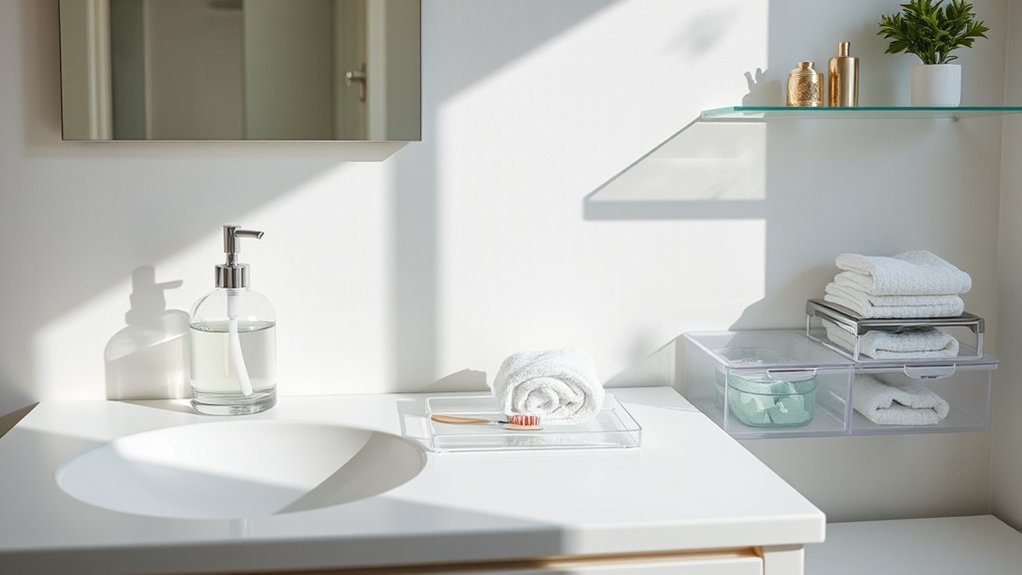
Start by taking a quick inventory of what actually lives in your bathroom. You’ll identify items you use, seldom-touched products, and duplicates you don’t need. Separate essentials from clutter: everyday staples, grooming gear, and cleaning supplies should be reachable; excess bottles belong elsewhere.
Set concrete goals: reduce duplicate products, streamline tools, and create clear zones for vanity, bath, and storage. Assess space efficiency and maintainability, noting how bathroom lighting affects visibility and mood, and how plumbing maintenance must stay straightforward to avoid future mess.
Prioritize items by frequency of use and condition. Keep only what serves a purpose, maintains hygiene, or brings calm.
Document a daily 5-minute reset routine to sustain progress, and schedule a quarterly purge to prevent buildup.
Define Your Calm: The Minimalist Declutter Method
A calm bathroom starts with a single, intentional pass: identify every item’s purpose, keep only what serves daily needs or genuine joy, and organize by zone so essentials stay reachable without chaos.
Your minimalist method centers on eliminating redundancy, not perfection. Audit each category—daily-use items stay, duplicates go, unopened extras surrender. Implement a quick criteria: is it used weekly? does it spark satisfaction? if no, bin it or donate.
As you streamline, consider Bathroom feng shui: create balance, uncluttered sightlines, and breathable air. Apply color psychology by keeping a cohesive palette that signals calm—soft neutrals with a single accent hue to boost mood, not overwhelm.
Reassess seasonally, then maintain with a 5-minute weekly sweep to prevent buildup and preserve calm.
Zone By Zone: Create Use Areas for Easy Maintenance
Zone-by-zone organization starts with clear use zones that map to daily routines. By designating distinct areas, you streamline tasks and reduce clutter, making maintenance feel automatic. Focus on where you perform, store, and dispose of items, then refine with lighting and accessibility in mind.
Prioritize Bathroom lighting to guarantee safety and speed when you need it most, and schedule quick checks to catch issues early. Integrate Plumbing maintenance tasks into each zone so small problems don’t escalate. Your routine becomes repeatable, not repetitive, and you’ll notice a calmer, more efficient space.
- Define zones by function (shaving, skincare, storage) to minimize wandering.
- Align containers, brushes, and products with each zone for instant access.
- Schedule simple, periodic checks to sustain order and prevent surprises.
Clear the Counter: Simple, Purposeful Storage Solutions
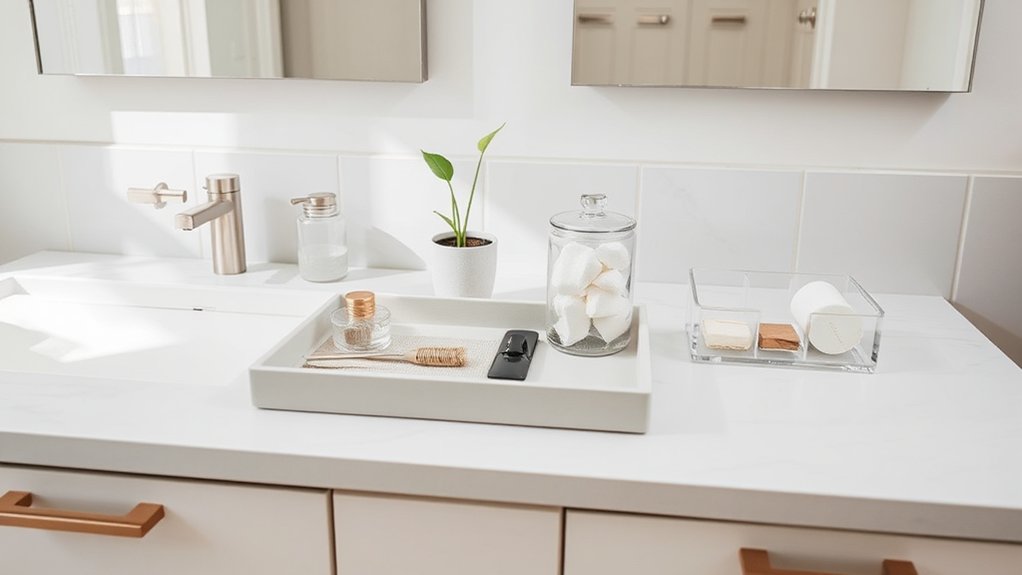
Clear the counter by reclaiming surface space with simple, purposeful storage that supports your daily routines. You’ll keep essentials accessible without clutter, using vertical and under-surface options to maximize real estate.
Choose a slim tray or dish for daily needs, ensuring items stay grouped and easy to grab. Integrate countertop decor that also serves function—mirrored trays or matte organizers add polish while reducing visual noise.
Prioritize cosmetic organization with uniform containers, labeling where helpful, and designate a single stash for brushes, creams, and tools. Use clear acrylics or soft-toned jars to maintain a cohesive look, easing maintenance.
Limit items to what you truly use daily, and rotate seasonally to sustain tidy, efficient counter surfaces.
Cabinets and Drawers: Smart Organization Inside
Stack and separate your items to maximize cabinet and drawer space. Then use clear labeling so you can find things at a glance.
Stack and Separate
When you open cabinets and drawers, start by stacking like items together and separating them by function, so you can see at a glance what you actually use. In practice, group daily essentials, backup supplies, and seasonal items, then store them in clearly labeled zones. This minimizes digging and frees counter space for decorative accents that elevate the room.
- Group by frequency: daily, weekly, occasional.
- Use uniform containers for a clean, cohesive look.
- Color-coordinate lids, towels, and organizers for a calm vibe.
Color coordination and decorative accents matter most when you choose finite, simple setups. Keep only what serves a routine, and rotate seasonal pieces out of sight. This disciplined approach creates a streamlined, polished bathroom you’ll actually enjoy using.
Label and Vision
Ever wonder how a label-and-vision approach can revolutionize cabinet and drawer use? Start with labeling techniques that map every category—daily essentials, backups, and seasonal items. Use clear, durable tags and color cues to reduce search time and decision fatigue.
Then establish a vision board—either digital or on a wall—that illustrates preferred layouts, open spaces, and accessibility goals. Align labels with the board so what you see matches what you store.
While you reorganize, group related items, favor uniform containers, and keep frequently used products front and center. Regularly review and prune to maintain momentum.
This method creates mental shortcuts, improves accuracy, and fosters mindful, sustainable organization you’ll actually sustain.
Tame the Towel Rack: Lazy Laundry and Fresh Linens
Taming the towel rack starts with a simple, practical routine: designate a spot for clean towels, a separate bin for dirty ones, and a quick daily refresh to keep everything breathable and accessible. You control clutter by pairing usage with storage, ensuring towels dry fully between uses, and rotating linen sets to prevent pinch points in laundry. Establish cadence, not chaos, so laundry habits stay predictable and efficient.
1) Define a clean/dirty boundary and stick to it.
2) Fold and store towels as a routine, not a reaction.
3) Schedule a lightweight wash cycle aligned with your week.
This approach keeps the towel rack neat, reduces odor, and simplifies laundry, promoting consistent, low-effort freshness. Towel rack, laundry habits.
Hold the Line on Toiletries: A 3-Bin System for Health, Beauty, First Aid
Set up a Health-Careful Inventory to know what you actually use, discard duplicates, and flag expired items.
Define Beauty Bin Boundaries so beauty products stay organized by purpose and access priority.
Establish a First-Aid Accessibility Plan that keeps essentials visible and within reach, so you can grab what you need in a pinch.
Health-Careful Inventory
To start your Health-Careful Inventory, set a firm boundary: gather every health, beauty, and first-aid item in your bathroom and sort it into three bins—Keep, Use Soon, and Toss. This disciplined approach protects your space and your routine, ensuring you only rely on essentials.
As you categorize, consider safety, expiration dates, and compatibility with your current regimen. Keep items with a clear purpose; Use Soon items deserve immediate attention; Toss anything questionable.
Integrate practical upgrades like bathroom lighting and water saving fixtures to reinforce efficiency during ongoing audits.
- Prioritize items that align with your health goals and daily rituals.
- Note expiration dates and replace as needed.
- Consolidate duplicates into a single, compatible set.
Beauty Bin Boundaries
When you reach for an item, you instantly know where it lives and how long to keep it. Regularly audit each bin, discarding empty containers, expired products, and duplicates.
For clutter control, place frequently used items at eye level in the Beauty bin, while less-used products retire to the back or a labeled shelf. Maintain consistency by returning items after each use.
This approach reinforces discipline, streamlines routines, and preserves a clean, purposeful bathroom space.
First-Aid Accessibility Plan
First-Aid accessibility is non-negotiable: keep a dedicated, clearly labeled First Aid bin within easy reach, so you can grab what you need without hunting. You’ll move fast in an emergency, minimizing stress and delay.
This bin holds essentials for quick care, and it doubles as a reminder to check expiration dates regularly. Pair it with a visible, up-to-date emergency kit plan so every household member knows where to go and what to grab.
1) Store bandages, antiseptics, and gloves together for rapid access.
2) Include a simple, readable list of items and renewal dates.
3) Place the bin near the exit or between medicine cabinet and shower for swift reach.
Under-Sink Magic: Hidden Storage Hacks That Spark Joy
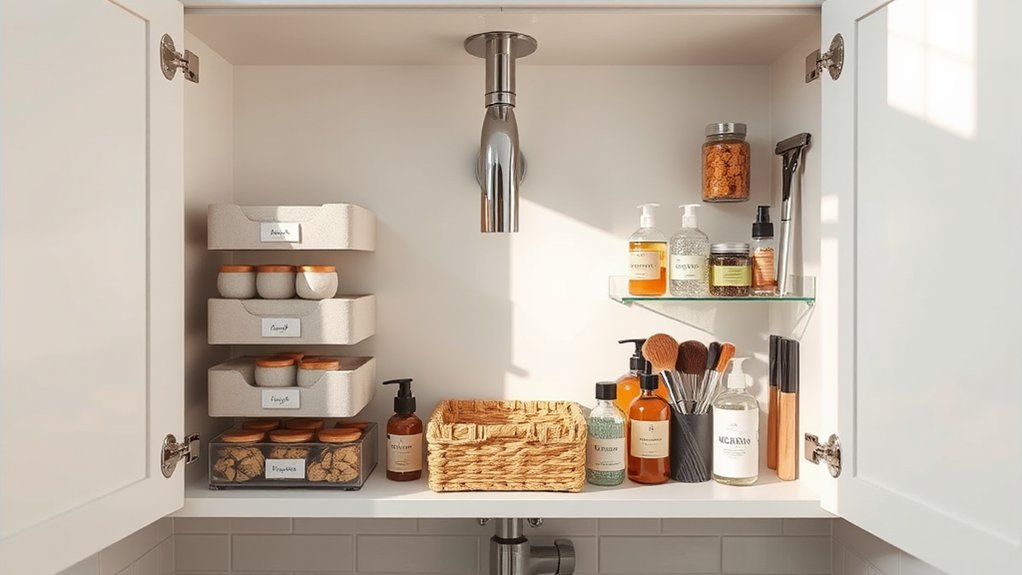
Under-sink storage can transform a cluttered cabinet into a peak of organization, so you can find what you need without digging. You’ll maximize space with hidden compartments that keep daily items out of sight yet instantly accessible.
Use stackable bins and a slim pull-out tray to group cosmetics, cleaners, and spare supplies by frequency of use. Install a shallow divider to separate categories, then label each section for quick recognition.
Consider a magnetic strip for metal tools and small containers, freeing shelf space for larger bottles. Secret compartments or inconspicuous organizers create dedicated nooks for travel-size items and backups, reducing bulk.
Regularly purge unused products, rotate essentials, and return items after each use to sustain a neat, joyful under-sink zone.
Make Cleaning a Breeze: Tools and Tasks You’ll Actually Use
Keep cleaning simple by choosing tools you’ll actually reach for and tasks you’ll actually finish. You’ll streamline routines by selecting ergonomic brushes, refillable cleaners, and microfiber cloths that demand less effort and yield better results. Favor essentials over gimmicks, and pair each tool with a concrete task to avoid overthinking.
- Use eco friendly products and a single multi-surface cleaner for daily wipe-downs, saving time and reducing waste.
- Assign a quick 5-minute cadence for each area, applying water saving tips like turning off taps between steps and tackling one zone per session.
- Stow tools near their tasks, so you finish cleanups faster and stay motivated to maintain tidy spaces.
This approach keeps your bathroom pristine, efficiently and sustainably.
Quick Style Upgrades That Reduce Visual Clutter
To reduce visual clutter fast, start with simple style upgrades that feel like instant upgrades. Opt for a unified color palette and streamlined storage to create cohesion. Choose minimalist containers, invest in matching lids, and tuck cords away behind a vanity panel.
Prioritize Bathroom lighting that emphasizes clean lines and even illumination, avoiding harsh shadows that amplify mess. Swap bulky holders for wall-mounted dispensers and a single tray for daily items. Replace mismatched accessories with a cohesive set to visually shrink clutter.
Integrate Water saving fixtures that look intentional, such as a compact faucet and low-profile aerator, to reduce gear visibility. Keep surfaces clear by storing rarely used products out of sight, reinforcing a streamlined, purposeful bathroom aesthetic.
The 15-Minute Reset: A Repeatable Bathroom Routine
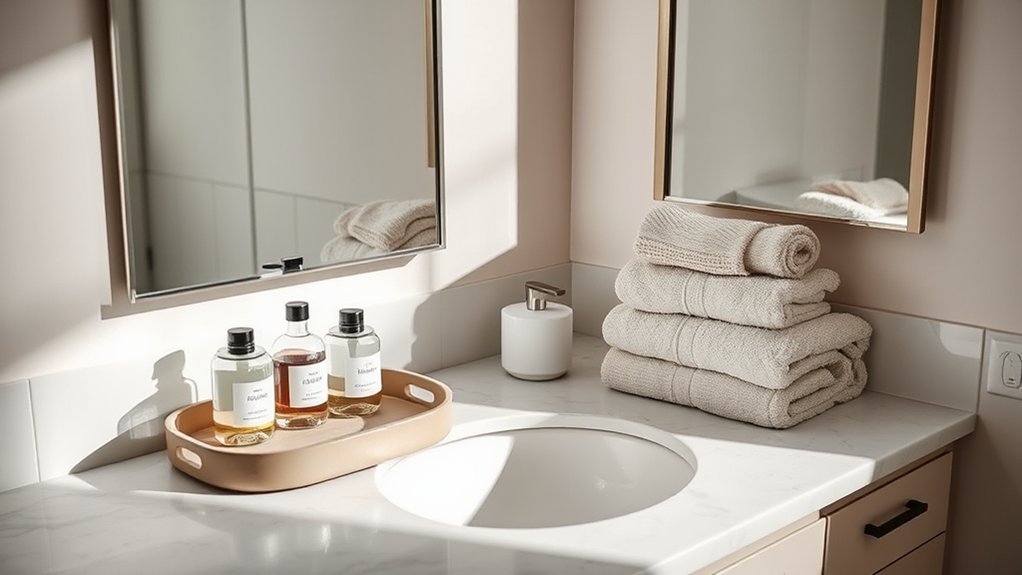
After setting up a cohesive, clutter-free look, you’ll find a 15-minute reset makes upkeep effortless. This repeatable routine targets daily chaos before it grows, reinforcing steady habits and preserving Bathroom lighting and plumbing maintenance standards that matter most.
- Clear surfaces in under five minutes, wipe spills, and quick-dry to prevent residue and mold growth.
- Check a single fixture or valve for leaks, then re-seat or tighten as needed to protect water and energy use.
- Tidy essentials, return items to designated spots, and note any refresh needs to keep your space polished.
Minute-by-minute discipline compounds results: you maintain brightness, extend hardware life, and enjoy calm, functional mornings.
Real-Life Checklists: What to Keep, What to Toss
Keep or toss: focus on essentials and avoid duplicates. You’ll decide what truly gets daily use versus what hides in drawers.
Start with a simple checklist of must-haves and one-time items to declutter, then trim as needed.
Keep or Toss: Essentials
When deciding what to keep or toss in your bathroom, focus on essentials that you actually use weekly. The goal is to support personal hygiene and skincare routines without clutter. Keep items that show regular use and clear value, and remove duplicates or expired products.
Prioritize quality over quantity, and choose multitaskers when possible.
1) Essentials you reach for every day
2) Products with clear expiration dates or safety seals
3) Tools that stay in the rotation because they improve your routine
Don’t-Need Duplicates Today
You likely already use the core items daily, so it’s time to weed out duplicates that sneak in. Start by locating clutter hotspots: under the sink, medicine cabinet, and vanity drawers.
Identify duplicate items—two bottles of shampoo, multiple moisturizers, several face cleansers. If two products serve the same purpose, keep the better performer and discard the rest. Consider expiration dates as a quick triage filter; toss anything past date.
Consolidate like with like, choosing one representative product for each category (wash, toner, treatment). Audit tools and accessories too—excess brushes, razors, and cotton pads create visual noise and waste space.
Reorganize what’s left into labeled containers, so you can spot duplicates at a glance. Maintaining discipline prevents duplicate items from becoming clutter hotspots.
Before-and-After Blueprint: Measuring Calm, Not Just Space
Begin by framing measurements as a mood, not a metric. In this blueprint, you track calm, not just space, so your bathroom feels intentional, not cramped. You’ll measure outcomes like ease of use, visual balance, and daily ritual flow, then map those to real changes in layout and storage. This is space planning with intention, where data supports serenity, not just square footage.
1) Prioritize routes and accessibility to reduce friction in your routines.
2) Align surfaces, lighting, and emptier counters to create breathing room.
3) Label zones by function, so upgrades reinforce calm, not clutter.
Your 2-Week Declutter Plan: Track, Tweak, Thrive
Your 2-week declutter plan starts now: track what you use, tweak what slows you down, and thrive as you reclaim space that serves daily rituals.
Over the next 14 days, document what you reach for most, what sits unused, and why. Create a brief audit each day: remove duplicates, relocate essentials to visible spots, and label containers for quick access.
Prioritize Bathroom ventilation—ensure vents aren’t blocked and routines don’t rely on crowded shelves.
Streamline your routine by grouping products functionally (skincare, cleansing, grooming) and removing items that delay you. If you notice slowdowns, tweak storage heights or accessibility.
Embrace water conservation: seal leaks, limit running taps, choose multi-use products.
Finish with a compact, intentional cabinet that’s easy to maintain.
Frequently Asked Questions
How Long Does a Full Bathroom Declutter Typically Take?
A full bathroom declutter typically takes 2–6 hours, depending on the space and your goals. You’ll streamline with organizing tools and storage containers, sorting items quickly, then discarding, donating, or repurposing what’s unnecessary for a cleaner, efficient setup.
What’s the First Item to Toss in a Cluttered Cabinet?
Grab the first toss: expired meds or old cosmetics. Then you’ll organize with organizational tools and storage containers, creating instant order. This simple purge frees space and sets momentum for a systematic declutter routine you’ll maintain.
Can I Declutter Without Buying New Storage Solutions?
You can declutter without new storage by using symbolism: imagine a calm, clear cabinet as a lighthouse. Try storage hacks and debunk Decluttering myths, organizing with what you already have, and you’ll reclaim space without buying extra. You’ll succeed.
How Do I Maintain Calm After Decluttering for Good?
You’ll maintain calm after decluttering by making mindfulness routines part of daily life and prioritizing stress reduction. Commit to brief, consistent practices, notice impulses, breathe deeply, and schedule regular check-ins to preserve clarity and intentional space.
What Budget-Friendly Hacks Maximize Space Impact Quickly?
You maximize space fast with budget storage like over-door organizers and modular bins. Use Creative organization to group items, vertical stacks, and labeled containers. Keep frequently used products accessible, and reclaim counter space for a calmer, more efficient bathroom.
Conclusion
Declutter isn’t a grand remodel; it’s a quiet refinement. You swap chaos for clarity, clutter for calm, haste for happenstance-free flow. It’s a clean countertop and a confident drawer—the contrast you feel after a quick reset. You’ll notice fewer decisions, more breathing room, and time saved for the things that matter. From chaos to composure, your bathroom becomes a disciplined sanctuary—where every item earns its place, and less truly is more.