
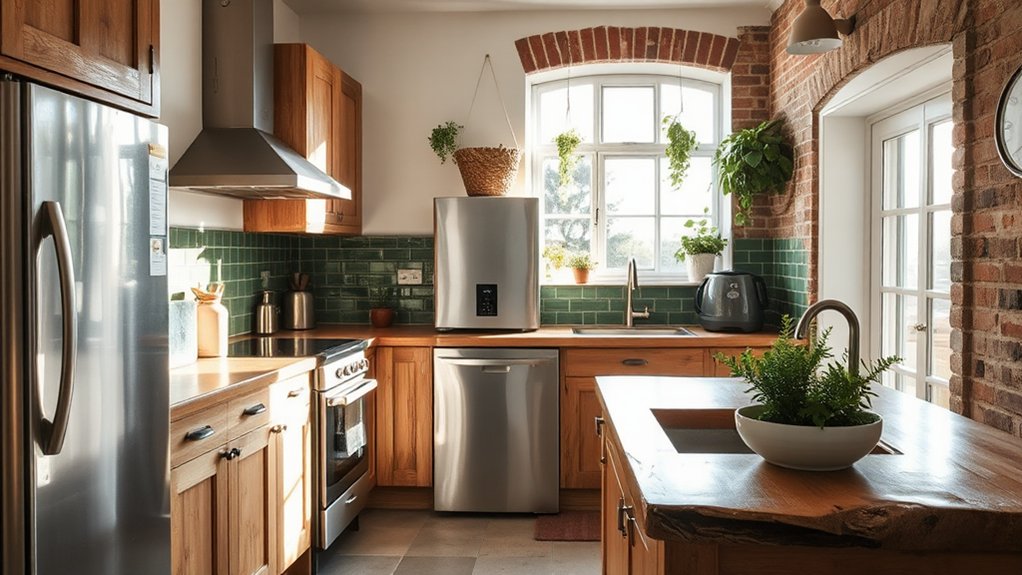

Green home renovations in the UK start with practical energy efficiency and indoor air quality. Seal leaks, upgrade insulation, and choose efficient heating to cut bills fast. Prioritize airtight, continuous insulation for walls, lofts, and floors, plus draught-proofing of windows and doors. Use low-VOC paints, timber from certified sources, and solar or rainwater where suitable. Add smart controls, zoning, and heat recovery ventilation to boost comfort. If you keep going, you’ll uncover more actionable steps and real-world results.
Key Takeaways
- Prioritize energy efficiency upgrades (insulation, airtightness, and draught-proofing) to lower UK energy bills and improve comfort.
- Use low-VOC, durable materials with certified sourcing, focusing on timber, engineered wood, and low-embodied-energy finishes.
- Implement smart heating and controls (condensing boilers, zoning, occupancy-aware automation) for reduced waste and better comfort.
- Ensure proper weatherproofing and regulatory compliance (planning permissions, energy statements, and continuous envelope performance).
- Enhance indoor air quality with ventilation solutions (MEV/ERV), indoor plants, and regular maintenance routines.
UK Home Sustainability 101: What to Prioritize First
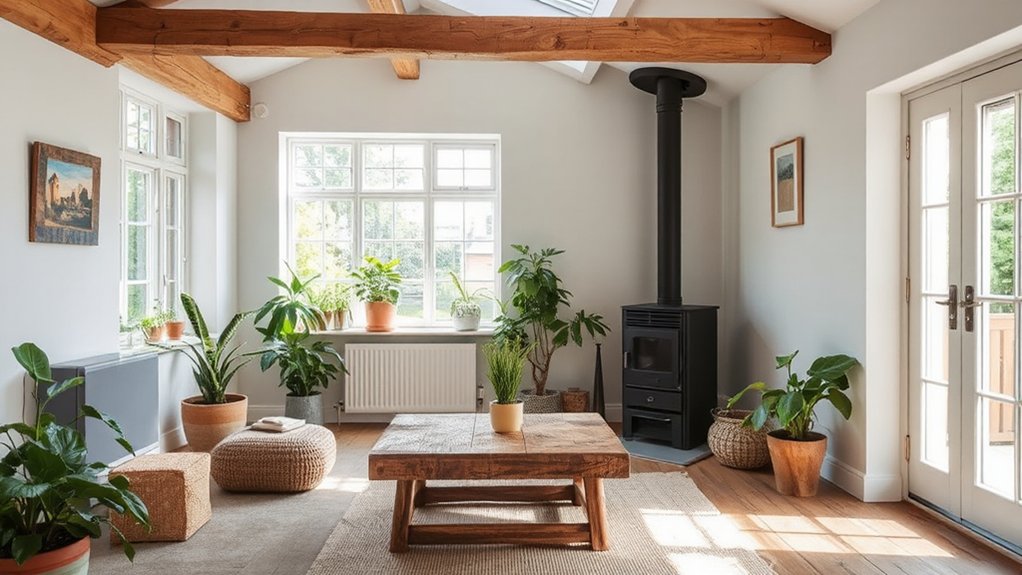
When you’re tackling UK home sustainability, start by prioritizing energy efficiency upgrades that deliver fast, tangible results. Focus on sealing leaks, upgrading insulation, and choosing efficient heating solutions to cut bills quickly. Tackle windows and doors with draught-proofing and consider low U-value replacements where appropriate.
Next, address indoor air quality and aesthetics without compromising efficiency: introduce indoor plants to improve humidity balance and oxygen levels, while choosing low-VOC, eco friendly paints for any walls you refresh.
Prioritize dependable, certified products and document ideal operating temperatures to avoid waste. Track energy usage with a smart meter and set realistic targets for monthly reductions.
This pragmatic approach keeps you grounded, precise, and ready to scale improvements as budget and weather allow.
How to Set a Practical Green Renovation Budget
To set a practical green renovation budget, start by defining your scope and fixed constraints: list the projects that deliver the biggest energy and health returns, assign realistic cost ranges, and set a hard cap for total spend.
Prioritize high-impact upgrades—insulation improvements, efficient heating, and air quality measures—so you isolate cost drivers early.
Allocate contingency funds for unexpected issues, but cap them at a sensible percentage of the total.
Use transparent supplier quotes and document unit costs to compare options objectively.
When selecting finishes, choose eco-friendly paints and sustainable flooring that meet durability, maintenance, and minimal VOC criteria, ensuring long-term savings.
Track progress weekly, reforecast monthly, and adjust only when justified by measurable performance gains and revised bids.
Maintain accountability with a clear approval process for any scope changes.
Weatherproofing Your UK Home: Foundations, Walls, and Roof
Weatherproofing starts at the foundations, where tightness matters most, so you’ll tighten joints, seal gaps, and check for moisture intrusion.
Move up to the roof and walls to evaluate insulation essentials, choosing materials that resist UK weather while keeping heat in and cold out.
With a clear plan for foundations tightening techniques and roof and wall insulation essentials, you’ll set a reliable, energy-efficient baseline for your whole home.
Foundations Tightening Techniques
Foundations tightness importance because small gaps and shifting soils can let in damp and drafts, so you should start with a clear plan.
You’ll begin with a structural survey to identify movement patterns and moisture ingress, then target tightening with controlled measures.
Foundation testing is essential to verify crack widths, settlement rates, and soil bearing capacity before any intervention.
Choose minimally invasive methods first, like underpinning or slab-jacking only where necessary, to avoid over-stressing the structure.
Address drainage at the foundation perimeter to prevent future settlement, and install damp-proofing where required.
Soil stabilization may be needed if soils are collapsible or highly clayey, using lime or cement stabilization tailored to local conditions.
Document every step, monitor post-work performance, and guarantee compliance with UK building standards.
Roof and Wall Insulation Essentials
Roof and wall insulation isn’t optional in the UK; it’s the backbone of a durable, energy-efficient home. You’ll prioritize continuous thermal envelopes, sealed joints, and appropriate cavity fills to reduce draughts and heat loss.
Start with loft insulation to proven depths, then address external or internal wall insulation based on building fabric and budget. Choose high-performance materials with low environmental impact, and guarantee vapour barriers don’t trap moisture.
Install robust air barriers to control infiltration without compromising ventilation. When upgrading, plan for solar panels integration and wiring routes, preserving roof integrity and avoiding thermal bridging.
Consider rainwater harvesting connections alongside insulation improvements to maximise efficiency. Document performance gains with after-install audits, and maintain gaps, seals, and inspections for long-term durability.
Insulation That Cuts Bills and Carbon
You’ll see how insulation choices impact upfront costs and long-term savings, with careful attention to each option’s payback time.
We’ll quantify carbon reduction potential and compare it to energy bills so you can gauge value across different products and installation methods.
We’ll also review appraisal implications to help you understand how better insulation factors into property value and long-term financial planning.
Insulation Cost Savings
If you’re aiming to lower monthly bills and shrink your carbon footprint, focus on insulation that delivers real savings. You’ll quantify value by payback period, not just upfront cost, and compare materials with documented U-values and installation ease. Target gaps most affecting heat loss: walls, lofts, and floors.
Choose products with proven thermal performance and long-term durability, then account for professional fit to prevent thermal bridging. Insulation myths persist, so verify claimed R-values, emissions, and end-of-life recycling.
Prioritise airtight, continuous insulation to minimize drafts without compromising ventilation. Consider incentives, energy Performance Certificate impacts, and maintenance needs that sustain performance over time.
Carbon Reduction Benefits
Can insulation truly slash both bills and emissions? Yes, when you target thermal shells, you reduce heat loss and energy demand, cutting both running costs and carbon output. You’ll see steadier indoor temperatures, fewer frequent heating cycles, and a smaller carbon footprint per year.
In practice, combine high-performance solutions—dense loft insulation, wall cavities, and airtight doors—to maximize envelope efficiency. If you’re retrofitting, prioritize gaps, leaks, and thermal bridges first; later, layer in materials with low embodied energy to avoid negating gains.
Note that adjacent measures influence overall impact: solar panels lower grid reliance, while rainwater harvesting reduces utility demand for non-potable uses. Together, these strategies amplify savings and demonstrate tangible carbon reductions across an UK home.
Appraisal and Payback Time
Focus on energy usage reductions, comfort gains, and potential subsidies or grants that affect payback. Apply appraisal methods that quantify heat loss, U-values, and retrofit constraints, then translate results into actionable numbers.
Consider seasonality, occupancy, and your heating system’s efficiency to avoid skewed outcomes. Payback analysis should compare total installation costs, including labor, against annual bill savings and maintenance shifts.
Factor in carbon savings as a secondary, but related, metric. Reported timelines must reflect realistic delays or incentives, ensuring decisions align with budget, climate goals, and property value.
Smart Heating for UK Homes: Efficient Boilers, Controls, Zoning
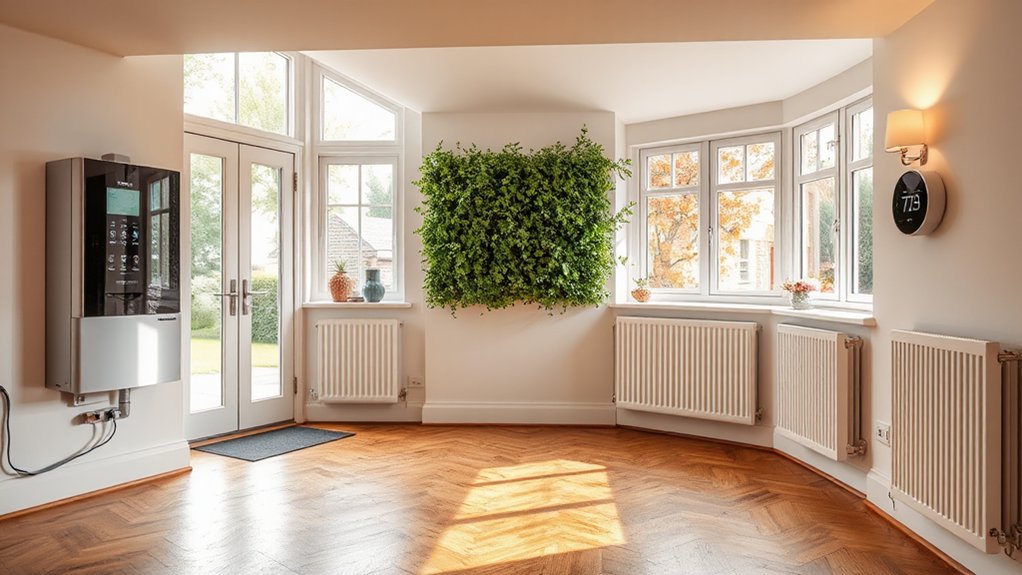
Smart heating in UK homes hinges on choosing efficient boilers, smart controls, and effective zoning. You’ll benefit from selecting condensing boilers with high seasonal efficiency (SAP A+), paired to proven modulation.
Prioritise smart controls that learn occupancy, adapt to weather, and offer remote access; this reduces waste and aligns heat output with real need.
Zoning optimization lets you heat only occupied areas, so you don’t waste energy on empty rooms. Implement a thermostat strategy: separate living, sleeping, and work zones, with clear setpoints and automatic setback overnight.
For radiators, combine TRVs with a digital thermostat for responsive balance across zones.
Regular service, bleed radiators, and check for leaks; a well-tuned system maintains comfort while cutting running costs.
Maximizing Daylight: Natural Lighting Strategies for UK Homes
Maximizing daylight in UK homes starts with strategic design choices and practical tweaks that boost natural illumination without compromising thermal comfort. You’ll optimize layouts, glazing, and shading to admit light deeper inside, avoiding glare and heat loss.
Focus on window placement to maximize corner and side-light capture, and configure rooms to align with sun paths. Integrate daylight sensors to adjust artificial lighting, preserving ambience while cutting energy use.
Use mirrors and light-coloured surfaces to reflect brightness without increasing heat gain.
- Window placement planning to exploit low-angled winter sun and high summer sun
- Strategic glazing choices coupled with interior finishes for even diffusion
- Daylight sensors paired with dimmable LEDs for responsive, efficient lighting
Low-Impact Materials for UK Renovations: Timber, Alternatives, and Finishes
Low-impact materials matter as you plan UK renovations, especially when you’ve just refined daylighting and energy use. You’ll choose timber with care, prioritising certified sources and predictable performance, so long-term durability isn’t sacrificed for aesthetics.
Consider timber preservation techniques that extend life without harsh chemicals, and document provenance to support reuse or phased replacement.
When exploring alternatives, compare sustainably grown engineered wood, bamboo composites, and low-embodied-energy plastics where appropriate, ensuring carbon footprints stay low from sourcing through installation.
For finishes, prioritise low-VOC paints, natural oils, and waterborne sealants that tolerate UK humidity.
Evaluate compatibility with existing structures to minimise waste, and specify finishes that resist wear in high-use areas.
Remember timber preservation and alternative finishes together shape a low-impact, durable renovation.
Ventilation and Indoor Air Quality: Options That Work
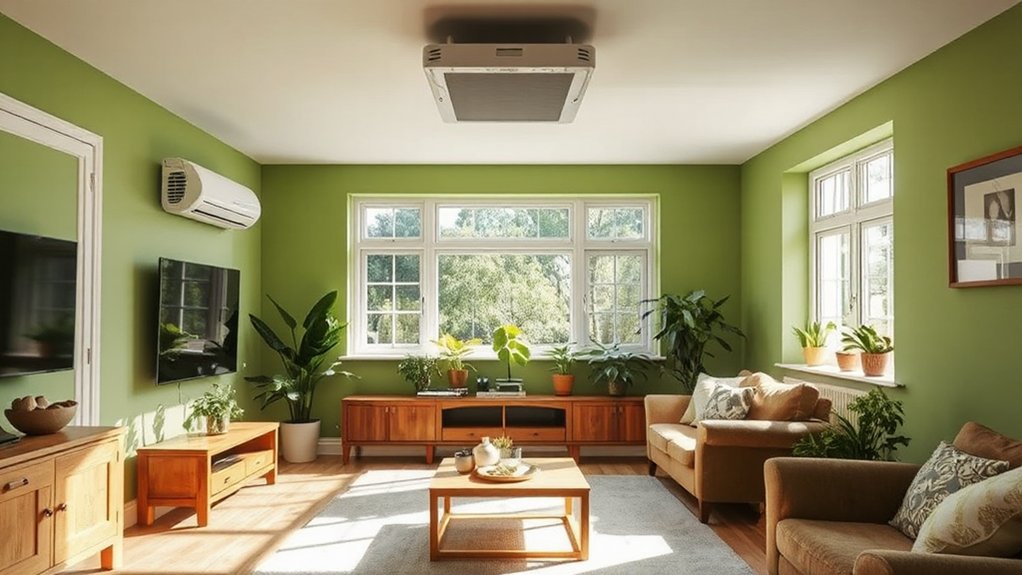
Good indoor air quality starts with ventilation that suits your home’s design and climate, balancing fresh air delivery with energy efficiency. You’ll optimize comfort and control by matching systems to room usage, airtightness, and seasonal needs.
Practical options include targeted ventilation, heat recovery where feasible, and maintaining ducts for minimal resistance.
- Use mechanical ventilation with heat recovery to reduce energy loss while supplying fresh air.
- Fit intermittent extractor fans in moisture-prone zones and balance with supply points.
- Add indoor plants and air purifiers to enhance filtration and humidity stability.
Indoor plants contribute to microclimate balance, while air purifiers help reduce pollutants and allergens.
Regular maintenance, filter checks, and commissioning tests ensure consistent performance and IAQ visibility.
Renewable Energy Options for UK Homes: PV, Heat Pumps, and More
Solar energy is practical for UK homes when you combine PV panels, heat pumps, and supportive technologies; together they cut bills, boost resilience, and lower emissions.
You’ll assess system sizes based on daily demand, climate, and roof orientation, then select PV capacity that avoids overproduction.
Pair PV with a high-efficiency air-source or ground-source heat pump, ensuring proper insulation and smart controls to maximize use of low-cost electricity.
Add a thermal store or hybrid inverter to smooth fluctuations and reduce standby losses.
Consider microgeneration grants, tariffs, and service life of components, plus ongoing maintenance.
For home upgrades, choose eco-friendly gardening practices around installations and avoid volatile solvents; use biodegradable paints for any exterior touches.
This approach supports practical, durable renewables without unnecessary complexity.
Water Savings in the Home: Greywater and Efficient Fixtures
Greywater reuse and high-efficiency fixtures deliver tangible water savings without sacrificing convenience. You can integrate Greywater recycling for toilets and laundry graywater with simple filtration and minimal pumping, reducing mains water demand.
Combine that with Water efficient fixtures to curb daily usage without compromising comfort. In practice, select certified taps, showerheads, and appliances that meet low-flow standards, and install timers or pressure regulators where appropriate.
Guarantee proper maintenance to prevent odors or clogs and confirm local regulations permit greywater systems. Plan for adequate space, drainage, and backflow protection from the mains.
Implementing these measures lowers bills, lowers resource strain, and supports a more resilient home.
- System selection and zoning
- Filtration, safety, and code considerations
- Routine maintenance and monitoring
Reducing Waste: On-Site Swaps and Material Repurposing
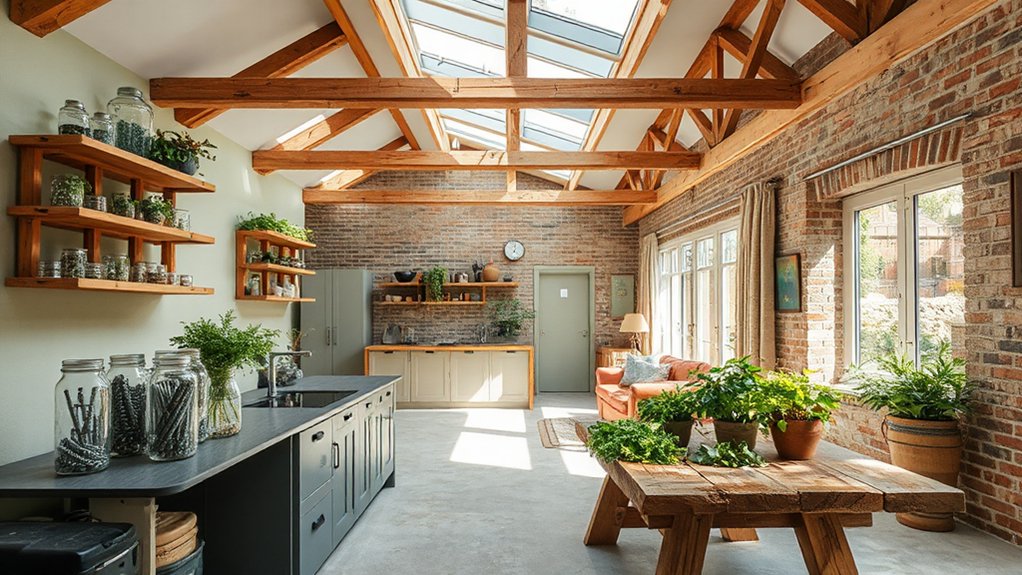
You can start swapping materials on site by prioritizing items you already have, like doors, cabinetry, or countertops, before buying new.
Consider simple repurposing tactics, such as sanding and refinishing, rearranging layouts, or using removable hardware to extend their life.
This approach minimizes waste, saves costs, and sets a practical baseline for ongoing on-site swaps and repurposing strategies.
On-Site Swaps
- Assess materials with potential for immediate reuse and label them for easy retrieval.
- Align structural or finish components with current specifications, avoiding conversions.
- Track waste reductions and cost savings to refine on-site reuse processes.
Keywords: On site swaps, material reuse.
Material Repurposing Strategies
To reduce waste and maximize value from on-site work, you’ll repurpose materials by turning reusable components into ready-to-use resources rather than discarding them. In practice, assess stock from demolished areas, identify components with structural or aesthetic potential, and set aside salvaged items for later integration.
Prioritize Material reuse by cataloging dimensions, conditions, and compatibility with current designs, enabling quick matching to new applications. Employ targeted upcycling techniques—planed timber becomes shelving, reclaimed bricks form feature walls, and scrap metal yields brackets or supports—while preserving safety standards.
Document provenance and use reversible methods where possible, so future renovations can unwind changes without waste. Establish a buddy-review system to reduce impulse disposal and encourage continuous improvement, ensuring on-site decisions minimize embodied energy without compromising quality.
Grants, Subsidies, and Certifications for UK Renovations
Understanding UK grants, subsidies, and certifications for renovations is essential to reduce costs and guarantee compliance. You’ll discover practical programs that support upgrades without overextending your budget, focusing on energy efficiency, water conservation, and quality standards.
By targeting the right schemes, you align with current policy aims and avoid unnecessary expenditures. Follow clear steps to verify eligibility, apply on time, and monitor outcomes. Keep documentation organized to maximize funding chances and secure compliant installations.
Embrace certification requirements early to streamline inspections and market-ready results.
- Identify eligible schemes for renewable energy installations and insulation improvements.
- Compile proof of income, property details, and project scope to speed approvals.
- Schedule post-work certifications to confirm compliance and activate ongoing incentives.
DIY-Friendly Green Upgrades for First-Timers
If you’ve explored grants and certifications for UK renovations, you’ll find DIY-friendly green upgrades that save money and boost efficiency without requiring a full contractor team. Start simple: replace inefficient bulbs with LED retrofit kits and seal gaps around doors and windows to cut drafts.
Choose eco friendly paints for small walls or touch-ups, ensuring low VOC formulas to improve air quality. Indoor plants aren’t décor fluff; they help regulate humidity and improve ambience with minimal effort.
Install a programmable thermostat and basic weather stripping to maintain consistent temperatures, then track energy use to verify savings.
Opt for repurposed or sustainably sourced materials for shelves or storage units. Plan tasks in 1–2 weekend sessions to stay on budget and avoid scope creep.
Hiring Eco-Conscious Tradespeople: How to Vet and Hire
Hiring eco-conscious tradespeople matters from the outset: vetting their sustainability stance, certifications, and work practices saves time, money, and headaches down the line. You’ll want clear criteria, verifiable credentials, and close attention to track record.
Start by confirming insurance, warranties, and compliance with UK building standards. Assess communication, scheduling reliability, and sustainable material choices for each trade.
Prioritize suppliers who use eco-friendly paint and offer low-emission options. For flooring, confirm sourcing, lifecycle impact, and waste management.
Preserve energy efficiency through airtight workmanship and proper detailing during installation. Ask for a written plan with milestones, costs, and environmental targets. Then verify references and site visits.
1) Demand transparent sustainability commitments
2) Check product specs and lifecycle data
3) Obtain binding warranties and post-completion support
Case Studies: Real UK Homes Going Green
Case studies from real UK homes illustrate practical, real-world results of going green. You’ll see how homeowners cut bills through targeted insulation upgrades, like draught-proofing doors and sealing loft gaps, paired with energy-efficient boilers.
In compact spaces, one family swapped traditional lighting for LED solutions and smart controls, tracking occupancy to reduce wasteful usage.
Eco friendly landscaping features reduce stormwater runoff while augmenting cooling and biodiversity, with mulched borders and native plant palettes that require less irrigation.
Indoor plant integration becomes a low-cost aesthetic boost, improving air quality and humidity balance in living rooms and kitchens.
These examples underscore measurable gains: comfort, lower bills, and a smaller footprint, achievable without disrupting daily routines.
Planning, Building Regs, and Approvals: What You Need to Know
Planning permissions and building regulations are the starting line for any renovation, so you’ll want to confirm what requires consent and what doesn’t before you sketch plans.
You’ll need a clear map of the approvals timeline, the standards you must meet, and any local nuances that could affect your project.
Planning Permissions Essentials
Securing planning permissions, building regulations approval, and related consents is foundational before any renovation work begins. In this section, you’ll grasp what you actually need to move forward without delays, focusing on practical steps for UK projects. You’ll map which changes require notice, how to submit applications, and where to consult for deadlines. Knowing the rules helps you protect garden design concepts and preserve interior aesthetics while staying compliant.
- Identify permitted development versus full planning routes early to avoid rework.
- Gather surveys, drawings, and design notes to streamline approvals and reduce back‑and‑forth.
- Align your timetable with local authority cycles and notify neighbours as required.
This clarity keeps your project efficient and minimizes interruptions to your living space.
Building Regulations Compliance
Start with a complete assessment of your project scope, then verify which parts trigger permits and approvals. You’ll submit plans, calculations, and energy statements to the local authority, and you should expect consultations, potential conditions, and possible fees.
Adherence isn’t optional; it’s legal compliance designed to protect occupants and property. Keep records of approvals, amendments, and compliance certificates as you progress.
In practice, secure building permits before work begins, obtain any required endorsements, and maintain ongoing communication with inspectors to avoid delays or non-compliance issues.
Maintenance Habits to Keep a Sustainable Home Vibrant
Maintaining a sustainable home isn’t just about big projects; small, consistent habits keep systems efficient and costs down. You’ll sustain vibrancy by routine checks, mindful maintenance, and smart material use that reduces waste. Focus on indoor environments, where small actions compound over time.
- Inspect insulation and seals quarterly, replacing gaps to cut drafts and energy waste.
- Rejuvenate indoor plants and refresh natural textiles to improve air quality and longevity of fabrics.
- Schedule seasonal cleanouts, then compost organics and reuse salvaged materials where possible.
Frequently Asked Questions
How Long Does a Typical UK Green Renovation Take?
A typical UK green renovation spans several weeks to months, depending on scope. You’ll confirm a realistic construction timeline and lock in milestones. You’ll refine project planning, coordinate trades, and anticipate delays to protect your schedule.
Which Budget Items Yield the Best ROI?
Yes—Energy efficient lighting and water saving fixtures yield the best ROI. You’ll cut ongoing costs; test LEDs, smart controls, low-flow taps, and efficient showerheads. Prioritize quick payback, documented savings, and reliable brands for steady returns.
Can I Retrofit Solar With Existing Heating Systems?
Yes, you can retrofit solar with existing heating systems, but check heating compatibility first; use solar integration only if your boiler or heat pump supports it, and plan controller wiring, storage, and incentives for a seamless fit.
Are There Grants for Second-Hand Material Use?
First, yes: you can find second hand materials and renovation grants that help fund reuse. You visualize thrifted bricks and timber stacking neatly, a practical stockpile. Grants, logos, and rules guide your compliant, precise renovation journey.
How Do I Choose Eco-Friendly Paints Safely?
Choose eco friendly paint options with low VOCs, water-based formulas, and zero- or low-rumeb solvents; check certifications. Use Safe application techniques: ventilate well, wear masks, avoid heat, stir gently, and follow surface prep and cleanup instructions closely.
Conclusion
You’ve learned the essentials, so act with purpose. Prioritize weatherproofing, insulation, and efficient heating to cut bills and carbon from day one. Budget realistically, vet tradespeople, and keep regs in sight as you design. Start small with smart controls, then scale upgrades as budgets allow. Treat maintenance as a discipline, not a one-off task. Think of your home as a long-term investment—each improvement is a stitch in the same fabric, weaving resilience and value for years to come.