
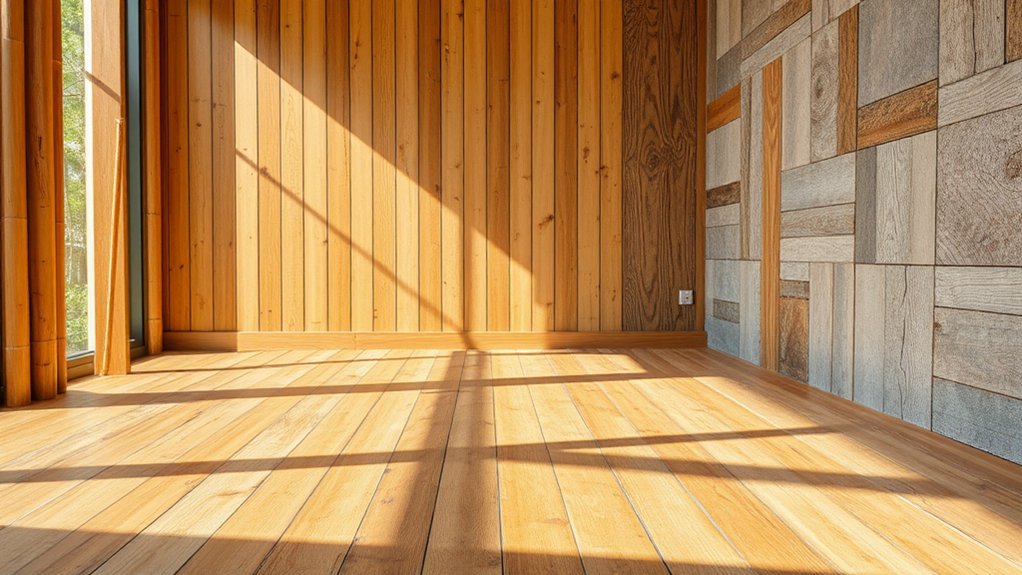

Bamboo Vs. recycled wood each suit floors and walls, but they shine in different ways. Bamboo delivers a denser, more uniform surface with faster installation and strong scratch resistance, while recycled wood adds character and better tolerates uneven subfloors. Both reduce environmental impact when sourced responsibly, though bamboo often boasts lower VOCs and quicker renewability. Your choice hinges on look, maintenance, and budget. If you want longer-term resilience with eco-conscious handling, you’ll want to explore more options and trade-offs here.
Key Takeaways
- Bamboo offers higher stiffness and uniform density for stable underfoot feel, while recycled wood provides dimensional resilience with varied grain for softer impact zones.
- Bamboo installs faster due to straighter planks; recycled wood may require extra cuts, increasing installation time and complexity.
- Lifecycle considerations: bamboo has rapid renewability and lower virgin fiber demand; recycled wood emphasizes salvaged components and waste reduction.
- VOCs and indoor air quality: both can be low-VOC with proper coatings; bamboo and recycled wood vary in finishes and aging, affecting emissions.
- End-of-life: recycled wood supports circular reuse and recycling; bamboo typically recyclable or compostable where facilities exist, impacting disposal options.
Bamboo vs Recycled Wood: Core Strengths for Floors and Walls
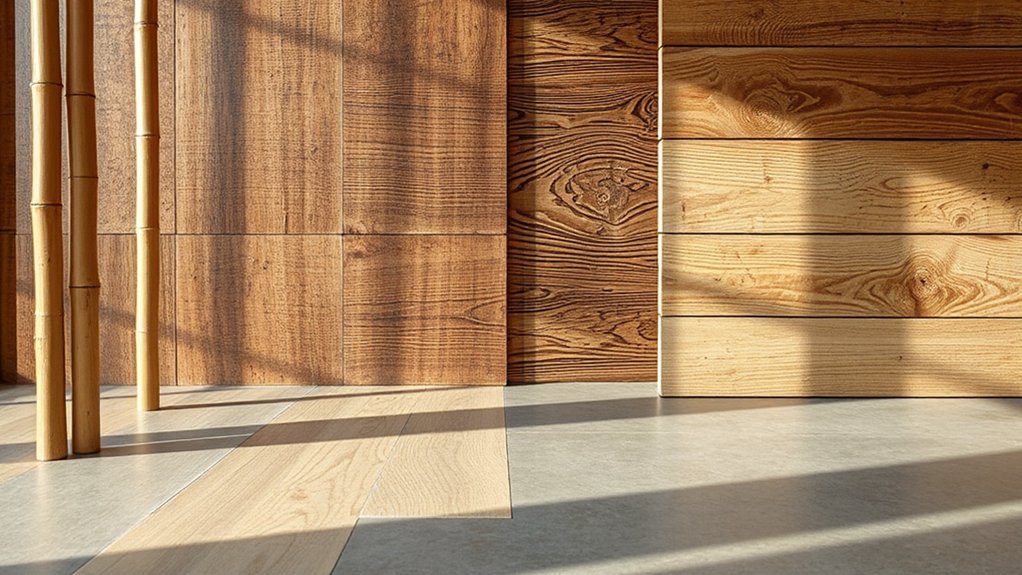
Bamboo and recycled wood both offer solid core options for floors and walls, but they differ in strength profiles and practical design implications. You’ll notice bamboo delivers higher stiffness and uniform density, translating to stable underfoot feels and minimal joint telegraphing in high-traffic spaces.
Recycled wood, by contrast, brings dimensional resilience from varied grain patterns and component blends, which can soften impact zones and add forgiving performance in uneven subfloors. For installations, bamboo often tolerates moisture fluctuations better when properly sealed, while recycled wood benefits from skilled acclimation and targeted surface treatments to maximize longevity.
Aesthetic versatility remains strong with bamboo’s clean, contemporary lines and recycled wood’s warm, lived-in character. Acoustic performance can improve in both through paneling choices, substructure design, and strategic detailing.
Recycled Wood: Character With Resource Efficiency
Recycled wood delivers character with notable resource efficiency, turning salvaged components and offcuts into durable, attractive building material. You’ll gain a distinct grain, warm tones, and authentic patina without pulling new forests into service.
This approach minimizes waste, reduces virgin fiber demand, and cuts embodied energy, while still offering solid structural and decorative options. You’ll find wide boards, paneling, and engineered products that suit floors and walls with minimal processing.
Aesthetic appeal remains strong, as irregularities tell a story and ages gracefully. Acoustic performance can also benefit from dense, fiber-rich stock, damping sound transmission in living spaces.
Maintenance stays straightforward, with standard finishes and coatings compatible with recycled timber. Choose recycled wood for responsible style that doesn’t compromise practicality or performance.
Decide With Confidence: Sustainability, Cost, and Care
You’ll weigh sustainability metrics and real-world performance to judge a material’s true environmental footprint.
Consider ongoing costs, maintenance needs, and how care routines affect longevity.
With clear data and transparent comparisons, you’ll make confident, informed choices that balance sustainability, cost, and upkeep.
Sustainability Metrics
Sustainability metrics matter because they translate complex trade-offs into clear, decision-ready signals. You’ll assess embodied energy, renewability, and end-of-life options to decide between bamboo and recycled wood with confidence. These metrics reveal not just eco-friendliness, but practical resilience in real-world use.
- Innovative applications
- Cultural influences
- Lifecycle prosperity
You’ll weigh extraction impacts, processing efficiency, and maintenance demands to determine long-term performance. Prioritize materials that align with responsible sourcing, low emissions during manufacture, and potential for circular reuse.
Consider how innovations, like treated composites or modular designs, alter sustainability outcomes. Cultural influences shape what users value—durability, aesthetics, or heritage. Use metrics to forecast total cost of ownership, indoor air quality, and waste reduction.
This approach keeps your choice grounded in evidence, not rhetoric, helping you justify flooring and panel decisions that meet environmental goals without compromising style.
Cost and Maintenance
Recycled wood can require careful sealing to resist staining, yet it maintains character that elevates design versatility. You’ll want to compare finish types, both for wear resistance and ease of repair, since high-quality finishes reduce ongoing maintenance.
Consider indoor air quality: low-VOC coatings and adhesives protect occupants without compromising appearance. Regular cleaning and prompt spill cleanup extend life, while period refinishing can refresh luster without full replacement.
Choose materials that balance initial price, maintenance needs, and ongoing performance to support durable, stylish spaces.
Installation Showdown: Bamboo vs Recycled Wood
Bamboo and recycled wood each bring distinct installation timelines, so consider how long setup takes and how that aligns with your project pace.
You’ll also want to compare subfloor prep needs, as uneven or moist substrates can swing installation difficulty and outcomes.
Finally, weigh maintenance and longevity once laid, since ongoing care and life span influence overall performance and cost.
Installation Time Comparison
When you’re weighing installation time, bamboo floors typically install faster than recycled wood options due to straighter planks, uniform sizing, and easier handling, which reduces trimming and alignment steps.
- Design versatility: bamboo’s uniform profiles cut down setup time and simplify layout decisions.
- Material availability: steady supply chains for bamboo panels and planks help you stick to schedules.
- On-site handling: lighter weight and fewer gaps translate to quicker acclimation and fewer delays.
Recycled wood can require extra cuts and mismatched sections, nudging total install time upward. By choosing bamboo, you gain predictable sequencing and fewer mid-project surprises.
Consider your room layouts and tool access; the streamlined process supports tighter timelines without sacrificing finish quality.
Subfloor Preparation Needs
Subfloor preparation sets the stage for success with either bamboo or recycled wood, so you’ll want to assess moisture, flatness, and substrate compatibility before you commit.
Your first step is evaluating moisture content in the concrete or wooden subfloor and applying appropriate moisture barriers to prevent future issues.
Next, check for flatness; high spots or dips can cause lipping, creaking, or premature wear, so you’ll need to address these with leveling compounds or sanding where permitted.
Guarantee the substrate is clean, dry, and structurally sound, removing debris, oils, and old coatings.
Plan for subfloor leveling if irregularities exceed manufacturer tolerances, then verify that the chosen floor system, underlayment, and fasteners are compatible.
Proper preparation minimizes gaps, squeaks, and warranty voids down the line.
Maintenance And Longevity
Ever wonder which material lasts longer and requires fewer surprises: bamboo or recycled wood? When it comes to maintenance, you’ll notice key differences in care routines, refinishing frequency, and resilience to humidity.
Bamboo tends to resist scratches and denting better on higher density floors, while recycled wood earns points for character but may need more conditioning to prevent gaps and surface wear.
Longevity hinges on finish protection, acclimation, and climate control; both perform well with proper installation and periodic care.
Consider design versatility and aesthetic appeal as you plan, since surface texture and tone influence long-term satisfaction.
- Lower maintenance with durable finishes on bamboo
- Regular refinishing cycles depend on traffic and ailment risks
- Climate control boosts stability and longevity for both materials
Real-World Durability and Maintenance
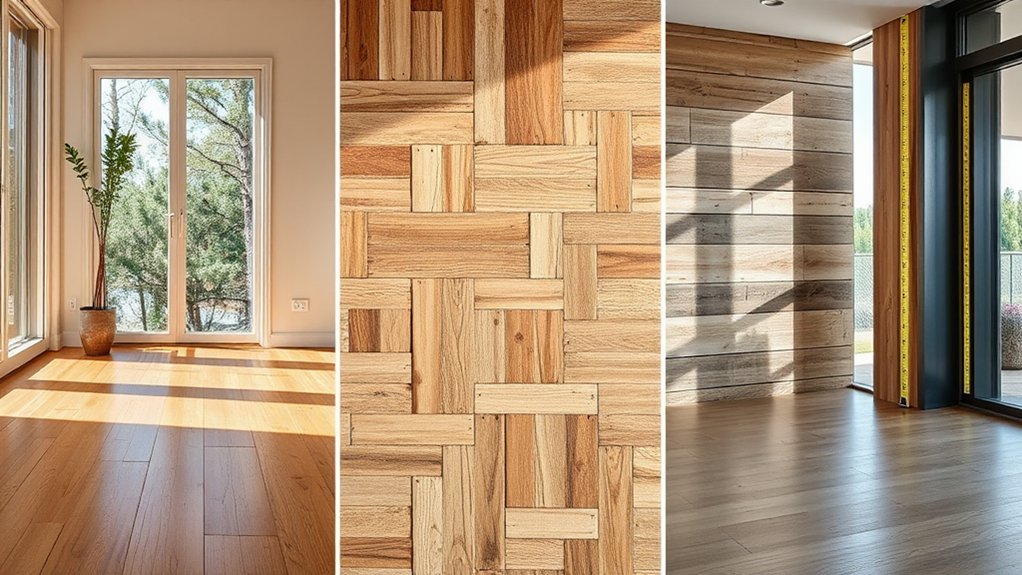
Bamboo’s density offers strong scratch resistance, yet some grades show color fade with sunlight; choose UV-stable finishes for longevity.
Recycled wood often carries hidden defects from prior use, so inspect for loose joints and finish wear, and reseal periodically.
Your maintenance routine matters: light cleaning with non-abrasive products, prompt moisture cleanup, and periodic refinishing extend life.
Aesthetic versatility matters for styling shifts, while Indoor air quality benefits depend on finish choices and sealants.
In real settings, performance hinges on installation quality and appropriate species selection, not just raw material specs.
Environmental Footprint: Carbon, VOCs, End-of-Life
Environmental footprint matters as much as on-site performance. You’ll compare carbon emissions, VOCs, and end-of-life options between bamboo and recycled wood, focusing on lifecycle impacts. Eco-friendly alternatives should guide choices, with attention to how manufacturing processes shape outcomes.
You’ll prioritize materials that minimize emissions, reduce off-gassing, and offer responsible disposal or reuse.
- Carbon lifecycle: from harvesting or recycling to final disposal, including transport impacts
- VOCs and indoor air quality: emissions during and after installation
- End-of-life: recyclability, compostability, or safe disposal
Understanding these factors helps you select floor and wall materials that align with environmental goals without compromising durability or aesthetics. Keep questions about supply chain transparency and certifications at the forefront as you evaluate options.
Style, Budget, and Longevity: Tailor to Your Space
When you tailor style, budget, and longevity to your space, you balance aesthetic goals with long-term value and performance. Your choice between bamboo and recycled wood should hinge on design versatility and how the material ages with daily use.
Consider room function: high-traffic areas benefit from durable finishes, while bedrooms permit richer tones and subtler textures. Budget constraints influence finish options, installation methods, and maintenance needs—opt for finishes that resist wear without frequent refinishing.
Aesthetic appeal matters beyond initial wow factor; think about resale value and how the material complements existing features like cabinetry, accents, and lighting.
Informed decisions blend visual harmony with lifecycle cost, ensuring you don’t sacrifice durability for looks or vice versa.
Frequently Asked Questions
Can Bamboo Be Recycled for New Flooring or Walls?
Yes, you can recycle bamboo-derived flooring into new materials, and it supports Bamboo sustainability; the process may involve grinding and reconstituting fibers. Recycled wood durability varies by source, finishing, and adhesive use in the final product.
How Do Moisture Levels Affect Bamboo Vs Recycled Wood?
You feel moisture levels shaping performance: bamboo absorbs moisture quickly, then expands; recycled wood varies with species. Moisture absorption governs stability, while humidity impact dictates dimensional changes, joint stress, and finish life—monitor, control, and seal for consistency.
Do Recycled Wood Products Contain Recycled Adhesives or Finishes?
Yes, recycled wood products may use recycled adhesives and finishes, but check product specs. You should assess adhesive safety and finish durability, ensuring low VOCs, compatible resins, and compliant certifications for healthier indoor air and long-term performance.
Which Option Offers Easier Patch Repair and Replacement?
Patch repair and replacement are easier with bamboo, because you’ll typically find standardized planks and accessible detailing. You’ll notice stronger surface durability and better color consistency, making matching repairs straightforward and less disruptive to your space.
How Do Installation Timelines Compare in Tight Spaces?
Surely you’ll love the irony: you’ll master installation speed despite space constraints, moving swiftly through tight spots. In practice, plan for precise cuts, compact layout, and efficient sequencing to optimize space constraints and speed.
Conclusion
You stand at the threshold, choices shimmering like fresh grain. Bamboo or recycled wood—each promises a distinct story for floors and walls. You’ll weigh strength against sustainability, cost against care, and installation ease against long-term durability. As you decide, the room seems to hold its breath, awaiting your verdict. Will you choose the rapid renewability of bamboo or the rugged character of reclaimed timber? Whichever path you pick, your space edges toward a future that’s as responsible as it is stunning.