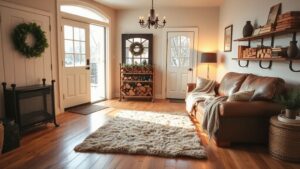


Want to refresh a tired interior without major renovations? Start with a cohesive color story and test large samples in your space, then reorganize layout to improve flow. Layer lighting—ambient, task, and accent—with dimmable options, and swap one or two textiles for instant texture. Update hardware and accessories for a fresh look, and tackle quick one-day upgrades like new curtains or art. Plan, budget, and track progress—more simple shifts await if you keep going.
Key Takeaways
- Define clear, measurable refresh goals and track progress weekly to stay focused without major renovations.
- Create a cohesive color story using a dominant wall color and two supporting tones, tested in room lighting.
- Layer lighting with ambient, task, and accent fixtures, using dimmable options to adjust mood easily.
- Optimize layout for flow, declutter, and use multi-functional, slim furniture to maximize space.
- Introduce texture and greenery through natural fabrics, varied textures, and well-pruned plants for instant depth.
Identify Your Refresh Goals: Quick Fixes for a Tired Interior

To refresh a tired interior, start by identifying your goals in a few clear statements. You’ll gain momentum by naming the changes you need, not the whims you want.
Define what “success” looks like in a few measurable terms: brighter light, calmer mood, or easier maintenance.
Prioritize quick, high-impact moves that align with your daily routines.
Consider how Personalized decor can reflect your identity without overpowering the space, and plan scent enhancement touches that won’t overwhelm the room.
Keep goals specific and time-bound, such as “freshen two rooms this weekend” or “reduce clutter by 30% by Friday.”
Document these targets, then verify progress weekly.
This practical grounding prevents scope creep and guides every tweak toward a cohesive, refreshed result.
Start With a Cohesive Color Story for Your Budget Refresh
Choose a core palette first, then balance accents so they support the main color without competing.
Test colors in the room with samples to see how they feel in lighting and with your furniture.
Keep the process tight: confirm the core palette, place strategic pops, and iterate only as needed.
Decide On Core Palette
Decide on a core palette by selecting a cohesive color story that anchors the room and guides every finish, textile, and accessory. You start by choosing a dominant shade for walls, then pick one to two supporting tones for trim, cabinetry, and textiles. Keep contrast modest to preserve calm, cohesive vibes.
Use color psychology: cooler neutrals feel airy and retreat-like; warm tones add coziness without shouting. Build your palette around a neutral backbone and a couple of accent hues that can evolve with textiles and artwork.
Apply consistent paint techniques: even roller for walls, satin or matte finishes to reduce glare, and semi-gloss for trim for definition. Document your selections so furniture, fabrics, and decor stay aligned and purposeful.
Balance Accents Strategically
A cohesive color story isn’t just pretty—it guides every accent decision and keeps your budget in check. When you balance accents, you prioritize a few key pieces that read as intentional rather than random splashes.
Choose a dominant hue from your core palette and ration opposite or contrasting accents to maintain color harmony across rooms. Limit metallics, textures, and patterns to two or three statements, then repeat them in varying scales for cohesion.
Test large accessories first—pillows, art, and rugs—before small items to avoid clutter. If an accessory doesn’t reinforce the story, skip it.
Track your choices against the palette and swap out weak links rather than overhauling. Accent balance strengthens the look without inflating costs.
Test Colors In Room
You’ve set a cohesive color story for your budget refresh, so now bring those choices to life in the room. Test colors in real lighting and on large swatches, not tiny chips, to see how hue, undertone, and saturation behave.
Color psychology guides decisions—calm spaces use cooler shades; energize with restrained warmth. Consider paint finishes to control texture and glare, from flat for walls to satin or eggshell for panels.
Commit to a few samples per wall, then observe at different times of day. Remove furniture, then map how each tone interacts with existing elements.
1) Apply large boards at eye level to judge harmony
2) Move samples around to compare adjacent colors
3) Note reflections from windows and lights
4) Finalize with a budget-friendly, cohesive palette
Reorganize Layout to Improve Flow and Function
Start by prioritizing traffic flow: arrange furniture to create clear paths and minimize congestion.
Zone functional areas so every activity has a defined cue and purpose, from seating to storage.
Rework the entry path to invite you in and guide you smoothly toward the main zones.
Maximize Traffic Flow
Is traffic bottleneck slowing your daily flow? You’ll streamline paths and occupancy to reclaim space, using practical cues over dramatic changes. Consider sightlines, clear thresholds, and purposeful short routes that reduce detours. Feng Shui principles guide where to place furniture for harmonious movement, while Acoustic Design helps keep conversations private without shouting.
- Map primary routes and remove obstacles to create direct access from core zones.
- Center high-traffic pieces on focal lines, not mid-walk paths, to avoid bottlenecks.
- Use area rugs and flooring changes to cue passages and slow pace naturally.
- Elevate storage and seating off main flow, keeping surfaces uncluttered for quick navigation.
Zone Functional Areas
Reorganize your space by defining clear functional zones that align with how you live. Start with a quick mapping: living, working, cooking, and relaxing areas should have distinct purposes and minimal overlap.
Place primary seating to face the most natural focal point, like a TV, fireplace, or window view, ensuring easy conversation lines and great traffic flow.
Group related tasks together—prep near the dining area, work near a quiet corner—with a logical path between them.
Use furniture arrangement to create soft boundaries; rugs and shelving can demarcate zones without closing them off.
Apply lighting adjustments to reinforce zones: brighter task lighting where you work or read, warm accents for lounging.
Keep essentials accessible, uncluttered, and aligned with daily routines.
Redefine Entry Path
To redefine the entry path, treat the foyer as a deliberate passageway: it should welcome people, direct traffic, and gently cue the rest of the home. You’ll improve flow by tightening connections, placing essentials near the door, and prioritizing sightlines. Keep the space uncluttered so mood and movement stay clear.
1) Clear threshold: remove obstacles, define a welcoming zone with a console or bench.
2) Lighting focus: use entryway lighting to guide posture and movement, not overpower mood.
3) Visual cues: low-profile rugs, color shifts, and printed accents to signal psychology of arrival.
4) Path continuity: align stairs, hallways, and rooms for direct sightlines and walkable routes, boosting walkway appeal.
Light It Right: Layered Lighting for Mood and Function

Layered lighting isn’t just about brightness; it’s about shaping mood and boosting function in every space. You can achieve this without a full remodel by layering three light types: ambient, task, and accent.
Start with ambient light that evenly fills the room—think a dimmable ceiling fixture or wall sconces.
Add task lighting where you read or work, such as a desk lamp or under-cabinet LEDs, ensuring a clear, shadow-free pool of light for focus.
Introduce accents to create depth and emphasize architectural features, art, or textiles, which also enhances ambiance.
Use dimmers to adjust intensity as the moment demands, shifting from ambient glow to task focus without changing fixtures.
Prioritize placement and controls for efficiency, comfort, and visual coherence.
Upgrade Textiles Without Replacing Big Pieces
You don’t need to gut your room to revitalize it—focus on the textiles you already have. Start by revitalizing textures and layering textiles to add depth and interest without replacing big pieces.
We’ll explore practical, simple upgrades you can make now to elevate softness, pattern, and color in seconds.
Refresh Fabric Textures
If you’re aiming to refresh fabric textures without ripping out big pieces, start by choosing tactile upgrades that add depth—think textured throws, cable-knit blankets, velvety cushions, and woven upholstery accents.
- textured throws that contrast with existing surfaces, boosting visual texture
- cable-knit blankets and ribbed fabrics for pronounced fabric depth
- velvety cushions that catch light, enhancing dimension
- woven upholstery accents in varied grain for durable, rich feel
These choices emphasize textile patterns and improve fabric durability, letting you refresh the room without full replacements. Keep the palette cohesive, match the textures to existing furniture, and test under different lighting.
Prioritize materials with clear wear patterns and easy care. This approach delivers tactile variety, practical durability, and a polished, refreshed vibe without major renovations.
Layered Textile Upgrades
Layering textiles adds depth and cohesion without ripping out big pieces. You can upgrade rooms by layering existing fabrics and adding a few strategic pieces.
Begin with textile layering in your seating area: pair a textured throw with a smoother weft on pillows, balancing sheen and matte finishes. Mix materials like cotton, linen, and wool to create tactile contrast without a full redecorating project.
Fabric mixing should stay cohesive—pick a unifying color or pattern scale to tie disparate pieces together. Swap out a bulky curtain for lighter drapes, add a woven cover to chairs, and introduce a rug with a complementary texture.
This approach preserves core furniture while delivering fresh energy, practicality, and a polished, cohesive look.
Add Accent Color Pops That Don’t Break the Budget
Accent color pops can brighten a tired interior without blowing your budget. You’ll use color psychology to pick hues that elevate mood and flow, then apply them with affordable choices. Keep contrast purposeful and avoid overwhelming the space with too many tones. Accent lighting enhances the effect by shaping perception and warmth.
- Swap in a bold throw pillow or two that anchors the couch and ties a rug’s accent shade to the seating.
- Introduce a painted door or wall stripe in a pocketed budget, pairing it with neutral surroundings.
- Add a vase, lamp, or decorative object in a saturated hue to direct attention.
- Layer small accessories in a similar palette to reinforce cohesion without clutter.
This approach stays practical, concise, and budget-friendly while leveraging color psychology and accent lighting.
Refresh Ornaments and Art With Intent
Ornaments and art should serve a purpose beyond decoration: swap out dated pieces for ones that reflect your current color palette, tell a story, or highlight a focal area. You should approach display with intent, not abundance.
Start with ornament placement that reinforces your room’s balance: group small items in odd numbers, vary heights, and rotate pieces seasonally to keep the scene fresh.
Limit gallery walls to a single thematic thread—color, texture, or era—to avoid visual clutter. When curating, prefer quality over quantity; a few standout pieces outshine many.
Use art to anchor seating zones, then complement with accessories that echo tones from the artwork. Maintain cohesion by repeating a signature motif or shade, ensuring every item earns its spot.
This disciplined approach yields polished, deliberate results.
Sound-Softening Upgrades for a Calmer Home

Soft surfaces and sound-absorbing details reduce echo, making rooms feel calmer and more intimate. You can cut noise without major work by choosing targeted upgrades that still look intentional and polished.
- Install acoustic panels on walls or ceilings to trap chatter and footsteps without bulky changes.
- Add soft rugs or runners in high-traffic zones to dampen footfall and tie spaces together.
- Use fabric curtains or heavier window treatments to mute outside noise and soften sharp lines.
- Choose furniture with plush upholstery and rounded silhouettes to diffuse sound naturally.
Soundproofing solutions don’t have to be loud or obvious; pick pieces that blend with your style. With these moves, you upgrade calm without a remodel.
Clean Lines: Small Furniture Swaps for Big Change
Redesigns can feel drastic, but with small furniture swaps you can achieve big changes without a full remodel. You’ll gain cleaner lines by selecting pieces with slim profiles and simple silhouettes, which reduces visual clutter and outdoorsy weight.
Prioritize functionality over ornamentation, choosing chairs and tables that fit your space without overhang or ornate legs. Emphasize Minimalist decor by keeping surfaces clear, embracing negative space, and matching a cohesive finish across items.
Reframe a room’s flow with furniture arrangement that reinforces sightlines toward focal points, like a fireplace or window, rather than crowding the center. Swap bulky storage for low cabinets or open shelves to strengthen line continuity.
Remember: fewer accents, stronger shapes, and intentional placement deliver the most impactful, affordable refresh.
Cut Clutter, Create Space: Storage Hacks That Read Calm
Declutter first, then carve out space with smart storage that reads calm. You’ll gain visual calm by choosing minimalist storage that hides what you don’t need and keeps essentials within reach. Practice clutter control with simple systems, so surfaces stay clean and rooms breathe.
- Slim profile bins slide into shelves, keeping odds and ends out of sight yet easy to grab.
- Floating shelves free up floor space while displaying only your daily essentials.
- Under-bed containers store seasonal items without crowding closets.
- Multi-use ottomans or benches hide gear and double as seating for quick, neat moments.
Zone by Activity: Defining Areas in Open Plans
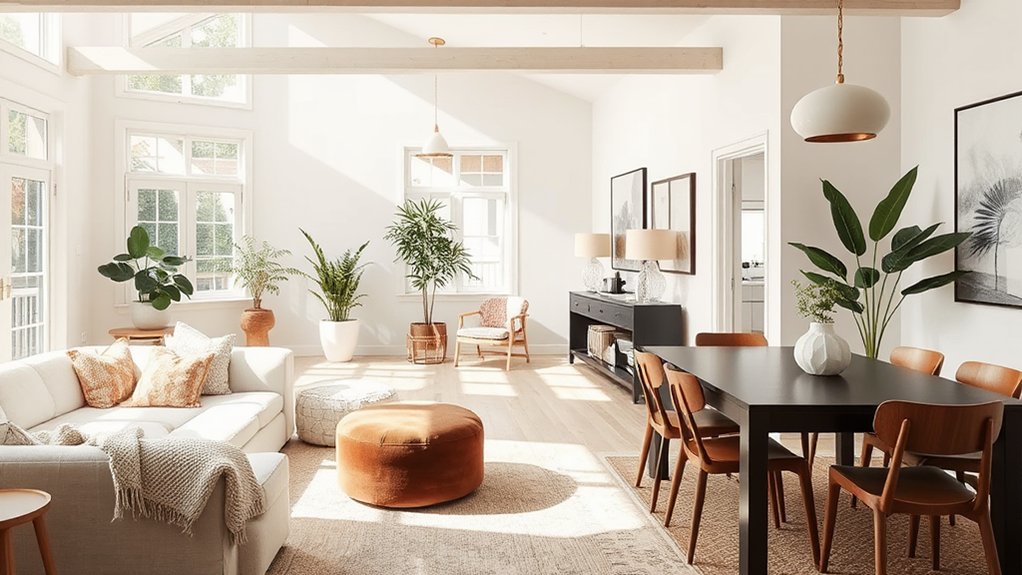
Start by outlining zones by activity so each area serves a clear purpose in your open plan. Map the functional flow—where you gather, work, play, and relax—without forcing shifts.
Use simple delineators like furniture, rugs, and lighting to define spaces, keeping sightlines and traffic smooth.
Zone-by-Zone Delineation
- Create a soft boundary with a strategic furnishings arrangement that guides movement without interrupting sightlines.
- Pair seating clusters with distinct but harmonious rugs to mark conversation and lounging zones.
- Use varied lighting enhancements to carve mood and function without heavy fixtures.
- Place task lighting near work areas while keeping ambient balance for overall warmth.
Keep it simple, deliberate, and adaptable as you refine daily routines.
Functional Flow Mapping
Begin with a simple activity list, then sketch the sequence of steps from entry to finish, noting any bottlenecks. Use color psychology to cue function: warm hues near social zones, cooler tones around work areas, and brighter accents to energize circulation points.
Prioritize furniture placement that preserves spaciousness while enabling quick progressions between tasks. Consider traffic patterns at peak times; minimize cross-traffic through logical layouts and subtle barriers like rugs or shelving.
Test with real-life routines and adjust, refining flow until daily life feels effortless.
Bring in Nature: Plants, Materials, and Textures

Bringing in nature instantly freshens a tired interior: plants, materials, and textures work together to soften lines, soften light, and boost mood. You’ll choose greenery, tactile surfaces, and natural materials to create instant calm without major changes.
- Use indoor fountains for gentle white noise and a focal point that echoes natural water motifs.
- Pair lush plants with natural stone accents to ground color and add texture.
- Introduce wood tones and woven fabrics to warmth without heaviness.
- Bring in varied textures—rattan, linen, and cork—to enhance depth and interest.
Keep scale balanced, mix leaf shapes, and maintain clean lines. Favor durable greenery for busy spaces and prune regularly to sustain *essence*. Indoor fountains and natural stone anchor the look with longevity.
Refresh Windows and Window Treatments
Windows frame your view and influence light, so invigorating them makes an immediate impact after introducing plants and textures. You’ll refresh window treatments by evaluating scale, layering, and texture first, then color.
Choose curtain styles that suit the room’s height and traffic, aiming for clean lines and easy maintenance. If privacy isn’t a concern, sheer panels can soften daylight without dulling brightness; for more control, install a simple roller or Roman shade.
Combine fabrics with solid drapes to add depth, aligning hems with furniture legs for cohesion. Keep hardware minimal and sturdy, swapping out dated rods or pulls if needed.
Measure precisely, then install correctly; small, deliberate updates yield a refreshed feel without full renovations.
Swap Hardware and Accessories for Immediate Impact
Switch out hardware and accessories for an immediate lift, because tiny changes add up quickly. You’ll feel a refreshed space without a full remodel by swapping finishes, pulls, and brackets. Focus on cohesive metal or matte tones that echo your existing elements, then layer in accessory updates to sharpen the mood.
- Swap cabinet pulls and door knobs for a unified finish, creating instant continuity.
- Replace outlet covers and switch plates with brushed nickel or matte black for subtle refinement.
- Change light fixtures or lampshades to introduce texture and scale.
- Add decorative hardware accents—hooks, rails, and picture ledges—that frame art and organize clutter.
Hardware swaps and accessory updates offer high impact with minimal disruption and cost.
One-Day Upgrades With Big Payoff
One-day upgrades can yield big payoffs without inches of demolition or weeks of planning. You can transform a room with targeted changes that feel intentional, not accidental. Focus on three quick bets: replace or reface a focal piece, add a standout wall treatment, and curate a refreshed display.
Choose Vintage furniture as a statement anchor that blends era charm with modern utility, ensuring silhouettes stay clean and proportional. Pair it with a bold but cohesive palette to avoid visual clutter.
Consider an Artistic murals accent on one wall to introduce depth without long processes. Finish with simple hardware swaps, updated lighting, and a curated accessory tray.
The payoff comes from cohesion, not complexity, delivering refreshed character in hours rather than days.
Plan, Budget, and Track Your Refresh Progress
- Visualize outcomes with a simple moodboard, pairing colors, textures, and lighting to guide choices.
- Break tasks into weekly milestones, assigning realistic durations and clear owners to stay on target.
- Allocate a contingency buffer for surprises, so you aren’t forced into unfavorable compromises.
- Review results after each phase, adjusting priorities and rebalancing the budget as needed to stay aligned with goals.
Frequently Asked Questions
How Can I Refresh a Tired Room Without Buying New Furniture?
You can refresh a tired room without buying new furniture by updating color schemes and wall treatments; choose bold accents, repaint walls, swap outlet covers, add removable wallpaper, and balance textures with throws, cushions, and layered lighting for a refreshed feel.
Which Quick Swaps Yield the Biggest Visual Impact?
Yes—switch to bold color palette and quick wall treatments, like peel-and-stick wallpaper or a fresh coat of paint, for the biggest impact. You’ll transform depth and cohesion with these swaps, instantly anchoring the space.
Can Temporary Updates Feel Permanent and Cohesive?
Yes, temporary updates can feel permanent with cohesive color psychology and deliberate furniture arrangement; you’ll unify accents, balance spaces, and project continuity, making your refreshed look durable despite being non-permanent.
How Do I Refresh Lighting Without New Fixtures?
“Where there’s a will, there’s a way.” You refresh lighting by adjusting color temps, layering lamps, and choosing fixture alternatives like plug-in sconces, dimmable LEDs, and under-cabinet strips to boost lighting ambiance without new fixtures.
What Budget-Friendly Decor Changes Create Focused Zones Quickly?
You’ll create focused zones quickly by using color schemes to delineate spaces and strategic decorative accents for emphasis. Add washable curtains, area rugs, or furniture throws; group items to cue function, and keep edges crisp for clear boundaries.
Conclusion
Need a fresh look fast? A tired interior can feel new with a few practical tweaks. Start with a cohesive color story, rearrange for better flow, and layer lighting for mood. Swap hardware, update textiles, and refresh window treatments for instant impact—no major renos required. Track progress, budget wisely, and celebrate small wins. Ready to refresh without the disruption? You’ve got this—can you pull off a stylish shift in one focused weekend?