


Seasonal gardening for year‑round beauty starts with climate awareness and microclimate mapping to place heat, shade, and moisture-smartly. Build a solid bed-prep routine, test and amend soil precisely, and mulch to conserve moisture. Choose sturdy perennials for continuity and adaptable annuals for seasonal fills, pairing blooms and foliage for steady color. Protect edges and paths, maintain structures, and implement proactive pest prevention. Track results and adjust seasonally—continuing tweaks will expand your garden’s resilience and appeal. You’ll uncover more strategies as you proceed.
Key Takeaways
- Assess microclimates, sun/shade, drainage, and wind to place plants for year-round color and resilience.
- Plan beds and containers with sturdy perennials plus adaptable annuals for continuous bloom.
- Build a seasonal maintenance schedule: pruning, mulching, soil testing, and precise amendments.
- Manage water wisely with smart irrigation, mulch, drought-tolerant species, and rain harvesting.
- Prepare for cold and heat: frost protection, seasonal color transitions, and pest prevention strategies.
Assess Your Climate and Garden Microclimates
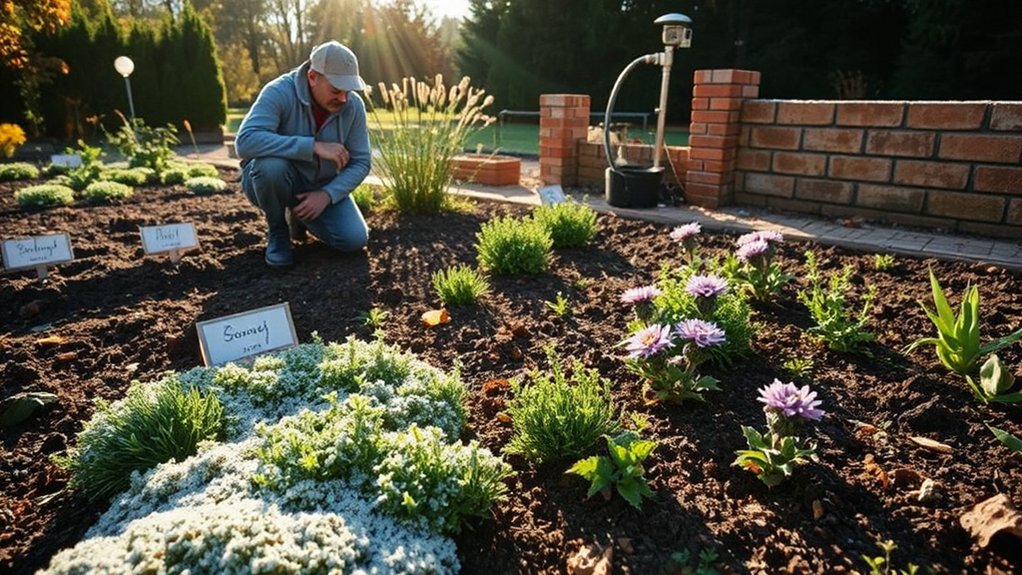
Evaluating your climate and garden microclimates starts with careful observation of local patterns: how heat, wind, and moisture move through your space across seasons. You’ll map sun angles, shade pockets, and drainage behavior, then test assumptions with simple trials.
In urban settings, recognize how built forms channel wind, create windward warm zones, and cast cool shadows; these are microclimates you can leverage. Consider your trees, walls, courtyards, and pavement as modifiers of heat storage and moisture retention.
For container gardening, evaluate pot placement, substrate, and irrigation cadence to prevent rapid drying or overheating.
Urban forestry insights inform species selection and spacing, while container strategies guide scale and accessibility.
Document observations, revisit quarterly, and adjust layouts to sustain year-round essentiality.
Build a Solid Bed-Prep Routine for Any Season
A solid bed-prep routine sets the foundation for every season, so you’ll start by pinning down soil health, structure, and drainage before you plant. You’ll assess texture, organic matter, and compaction, then adjust with targeted amendments.
Establish a uniform bed layout that promotes air circulation and water movement, and embed a simple drainage plan to prevent pooling after rain.
Implement composting basics to feed soil biology without overloading nutrients, and surface-mix compost evenly to maintain a crumbly, workable top layer.
Define edging, paths, and a consistent mulching strategy to minimize weed intrusion and conserve moisture.
As you go, document adjustments and outcomes—this becomes garden artwork you can refine over seasons.
Keep routines lean, repeatable, and adaptable to changing weather and crop needs.
Choose Perennial Core Plants for Year-Round Continuity
From a solid bed-prep foundation, you can now select perennial core plants that provide year-round continuity. Choose sturdy, low-maintenance species with overlapping bloom windows, strong structural form, and reliable hardiness.
Prioritize perennials that re-emerge consistently, resist pests, and suit your climate pattern. Map a coherent plant propagation plan to expand or refine sections over time, ensuring healthy spacing and compatibility.
In your garden layout, cluster evergreen backdrops with seasonal accents to maintain color and texture through winter and sun-drenched summers. Favor varieties whose root systems support soil structure and moisture balance, reducing future amendments.
Keep a concise plant list, noting mature size and preferred light. This disciplined approach guarantees continuity, simplifies maintenance, and elevates year-round garden beauty.
Pick Adaptable Annuals for Seasonal Fill-Ins
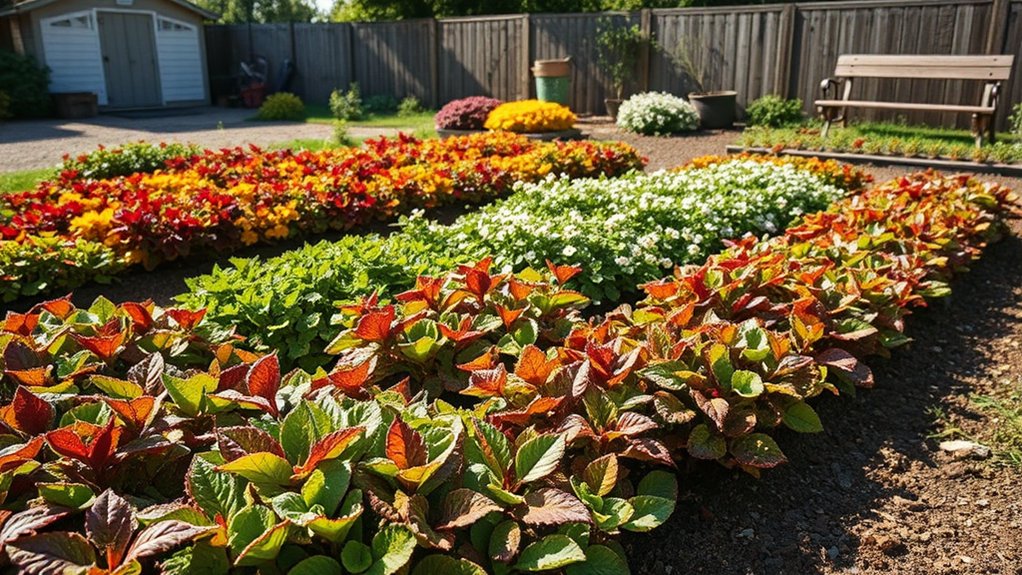
You’ll start by selecting adaptable annuals that fill gaps quickly as the seasons shift. Consider compact, low-maintenance varieties and mix colors and textures to create instant impact.
This approach gives you flexible seasonal fill-ins that stay vibrant through varying temps and patterns.
Adaptable Annuals Picks
Adaptable annuals are the workhorses of seasonal fills, delivering reliable color and texture when timing is tight. You’ll prioritize varieties with rapid establishment, consistent bloom, and long-lasting performance, ensuring progression between seasons stay cohesive.
Choose compact or mounded forms for containers and borders, allowing you to layer textures without crowding visual space. Color palettes should blend warm and cool tones, enabling quick swaps as light and temperatures shift.
When selecting, consider bloom duration, drought tolerance, and disease resistance to minimize maintenance.
For container design, place taller specimens toward the back and cascading types toward the edges to create depth and movement.
Composting techniques should accompany your plan, supplying rich soil amendments to sustain vigor while reducing waste and invigorating beds efficiently.
Seasonal Fill-In Strategies
Seasonal fill-ins rely on adaptable annuals that establish quickly and maintain steady color through shifting conditions. You select fast-establishing varieties with compact habits to fill gaps between perennial blooms and container rotations.
Prioritize plants with staggered bloom times to create continuous impact as seasons change, ensuring you won’t rebuild beds prematurely.
In practice, pairings matter: choose companion planting combinations that support growth while reducing competition for light and nutrients. Favor pest resistant varieties to minimize interventions and preserve garden harmony during transitions.
Consider height, texture, and foliage color to maintain visual cohesion when plants arrive and fade.
Map your beds, noting expected frost dates and heat waves, and schedule replacements accordingly for seamless, year-round appeal.
Test and Improve Soil Health: Testing, Amendments, Mulch

Testing and improving soil health starts with a clear plan: begin with simple soil tests, interpret the results accurately, and then choose targeted amendments and mulch strategies to build fertility and structure.
You’ll assess pH, nutrient availability, and texture, translating lab data into actionable steps. Prioritize organic amendments to improve microbial activity and long-term resilience; compost, well-rotted manure, and cover crops feed the soil rather than relying on short-term fixes.
Apply amendments based on precise recommendations, avoiding over-correction. Incorporate a balanced mix of nutrients aligned with your crops’ needs, and document baseline metrics for future comparison.
Mulch serves to moderate moisture and suppress weeds while supporting soil life. Select mulches that decompose gradually and complement your amendments.
Regular retesting confirms progress and informs adjustments for year-round vitality.
Mulch by Season: Types, Timing, and Benefits
Seasonal mulch choices shift with weather, plant needs, and your goals, so you’ll match material, depth, and timing to each season.
In spring, you’ll layer coarse materials for warmth and moisture control.
In summer, you’ll prioritize heat tolerance and weed suppression.
In fall, you’ll focus on winter protection and soil enrichment.
This discussion covers mulch types by season, when to apply them, and the benefits they deliver.
Mulch Types By Season
Mulch choices vary by season, and selecting the right type at the right time maximizes soil health, moisture retention, and weed suppression.
In spring, opt for light organic mulches like shredded leaves or straw to warm soil gradually and encourage seedling vigor.
Summer demands thicker blankets, such as composted mulch or pine bark, to conserve moisture and deter heat stress without suffocating roots.
Autumn favors nutrient-rich options like well-aged compost or leaf mold to build soil structure before dormancy.
Winter can benefit from an insulating layer of coarse mulch, protecting crowns and moderating moisture fluctuations.
Align your selection with existing beds, rotate materials to prevent pest buildup, and integrate Organic composting practices where feasible.
Choose Pest resistant varieties for biosecurity, and maintain clean, weed-free borders for sustained garden health.
Timing And Benefits Of Mulch
Mulching isn’t just about choosing a material; timing matters just as much as the mulch type. You’ll maximize benefits by aligning mulch application with season, soil conditions, and plant needs.
In spring, apply a light, weed-free layer to conserve moisture and suppress early growth of weeds, then reassess depth as the season advances.
In summer, mulch helps regulate soil temperature and reduce evaporation, but avoid mounding against stems to prevent rot.
In autumn, a fresh layer insulates roots against cold snaps, yet you should remove any debris that could harbor pests.
Use mulch to reinforce garden layout—edge beds cleanly, maintain spacing, and preserve path access.
Integrate composting techniques for steady nutrient release and monitor soil texture; timing amplifies both water efficiency and plant vigor.
Plan Succession Planting for Continuous Harvest and Color
To guarantee a steady harvest and continual color from your garden, plan succession plantings that stagger mature dates and extend bloom times. You’ll select a mix of early, mid, and late varieties for each crop, enabling overlapping harvests and prolonged visual interest.
Map a calendar, noting days to maturity and successive sowing windows, then stagger transplants so one group enters production as another finishes. Prioritize compatible companions in proximity to reduce pests and optimize space; companion planting supports healthier growth and can extend color displays without extra inputs.
Integrate soil testing before planting to tailor nutrient levels, pH, and organic matter, ensuring each species performs at peak. Maintain a disciplined rotation, track performance, and adjust timing for next season’s succession plan.
Water Smart: Managing Drought, Heat, and Freeze
To conserve resources, apply Water Wise strategies like timing irrigation for early morning or late evening and using drip systems with mulch to reduce evaporation.
Build drought tolerance by selecting hardy, mulch-loving plants and adjusting your selections to your climate, while monitoring soil moisture regularly.
For freeze protection, use insulating mulches and temporary covers, and document your area’s frost dates to fine-tune your protections.
Water Wise Strategies
Even as drought tightens its grip, you can protect your garden by adopting water-smart practices that conserve moisture while maintaining plant health. Start with efficient irrigation: install a smart timer, drip emitters, and zone-by-zone adjustments to target roots, reducing runoff.
Mulch deeply to stabilize soil temperature and minimize evaporation, ideally 2 to 3 inches around bed edges. Schedule irrigation for early morning or late evening to cut evaporation further.
Choose drought-tolerant species and group them by water needs, then apply rain garden concepts to capture runoff and filter it for reuse.
Implement xeriscaping techniques by reducing lawn areas, using native or adapted plants, and improving soil structure with compost.
Regularly monitor soil moisture and adjust as seasons shift. Your water-smart approach yields resilient, vibrant borders with less waste.
Drought Tolerance Techniques
Drought tolerance hinges on selecting resilient plants and giving them the right growing conditions, so you minimize water use while preserving vigor. Start with xeriscaping principles—group drought resistant shrubs with complementary textures and heights, maximizing shade for root zones and reducing evaporation.
Choose deep-rooted species that sustain foliage during dry spells and avoid high-water-demand ornamentals. Prepare soil with organic matter to improve moisture retention and drainage, then mulch to suppress weeds and stabilize soil temperature.
Water early in the day, applying slow, deep irrigation to encourage deep roots rather than surface watering. Employ strategic irrigation sensors or drip systems to meter usage precisely.
Rotate plantings among drought tolerant options to balance color and structure. Regularly assess soil moisture and adjust watering schedules to sustain performance through heat waves.
Freeze Protection Tips
Freeze protection starts with proactive planning, so you minimize damage when frosts arrive. You’ll assess which plants are frost sensitive and which are frost resistant, then tailor protection accordingly. Focus on timing, shelter, and moisture management to preserve vigor through sudden cold snaps.
- Inspect and prune frost sensitive plants after the cold threat passes, applying winter pruning to reduce stress while preserving bloom potential.
- Use breathable covers, shade cloth, or row covers on frost resistant plants during cold nights; remove during the day to prevent overheating.
- Water deeply before a freeze, then mulch lightly; maintain soil moisture without oversaturation to support resilience.
Implement these steps with precision and track results to refine your frost protection strategy.
A Practical Seasonal Pruning and Maintenance Calendar
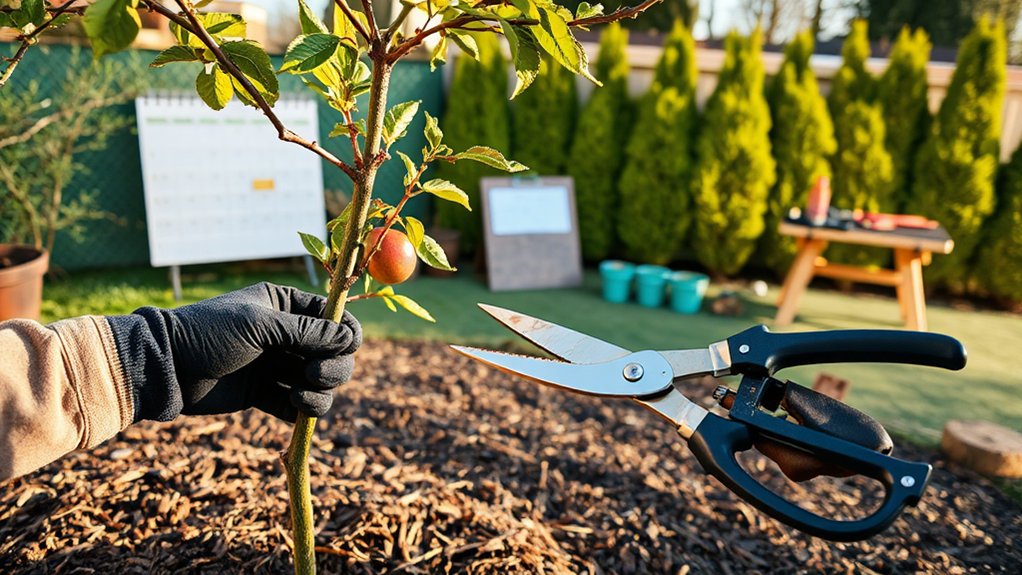
Maintain tool integrity with sharp blades and clean edges, reducing disease spread. Schedule mulching, irrigation checks, and soil amendments to align with soil temperatures and moisture losses, preventing stress.
Track pest alerts and beneficial interventions, rotating control methods to minimize resistance. Incorporate seasonal fertilization only when soil tests indicate nutrient deficits, avoiding over-fertilization that can promote weak, lush growth.
Align maintenance tasks with garden aesthetics and plant symbolism, ensuring dramatic seasonal progression. This disciplined calendar sustains vigor, reduces risk, and enhances year-round beauty.
Pair Plants and Create Color Schemes Across the Year
Pairing plants across the year creates seamless color shifts, so you can plan bloom and foliage cycles that complement each season.
Start by matching annuals and perennials with overlapping color tones and staggered peak times to maintain interest.
Then establish a through-line color scheme—light to dark, warm to cool—that persists as you rotate plant choices and adjust for evolving light and space.
Pairing Cycles Across Year
To pair plants and create color schemes across the year, start by mapping bloom times and foliage tones so you can stage successive color statements. You’ll align Seasonal bloom windows with foliage textures, ensuring continual interest while supporting crop rotation principles in beds and containers.
Plan progressions that reduce gaps between seasons and maximize visual impact with minimal maintenance.
- Chart bloom cycles by species, arranging early, mid, and late-season performers for seamless color shifts.
- Pair complementary and analogous palettes that echo foliage hues, adjusting for light exposure and height.
- Integrate crops in rotation to sustain soil health, while preserving flower-driven accents throughout every season.
Color-Scheme Continuity Tips
Building on aligning bloom windows and foliage tones, you’ll reinforce color-consistency across the year by staging deliberate plant pairings that repeat and shift hues.
To maintain color-scheme continuity, choose a unifying backbone—one dominant hue with supporting tones that echo across seasons. Map bloom calendars so you reclaim visual flow, ensuring progressions feel natural rather than jolting.
Pair warm and cool accents within the same family, leveraging foliage texture to reinforce unity when flowers pause. Use repeated motifs—a recurring accent color in pots, borders, and focal specimens—to cue the eye through changeovers.
Favor plants with complementary ratios of bloom and foliage, so color harmony remains intact despite growth cycles. Regularly prune and deadhead to preserve clean lines and consistent color chemistry.
Efficient Irrigation and Rain Capture for Every Month
Efficient irrigation and rain capture require month-by-month planning that aligns water use with plant needs and seasonal rainfall. You’ll optimize resources by pairing drip irrigation with rain harvesting, adjusting schedules as weather shifts.
Maintain soil moisture at steady, plant-friendly levels and minimize evaporation with mulched surfaces and timed applications.
- Implement drip irrigation zones tailored to plant water needs, evaluating soil moisture weekly.
- Capture rain using barrels or cisterns, integrating overflow into garden beds during wet months.
- Schedule irrigation to coincide with rainfall forecasts, using sensors and smart controllers for precision.
This approach reduces waste, protects hydration-demanding species, and supports year-round vigor without overwatering. You’ll stay consistent across seasons, ensuring efficiency and resilience in your garden.
Protect Edges, Paths, and Structures All Year
Edges, paths, and structures deserve year-round protection that’s proactive, not reactive. You safeguard borders and walkways by prioritizing durable edge maintenance, using well-drained soils, and selecting materials with proven resilience to weather fluctuations. Inspect routinely for minor shifts, cracks, or loosening, and address them before they escalate.
Reinforce edges with buried 2×4 spacers or steel stakes where necessary to maintain shape under freeze–thaw cycles and heavy loads. For paths, keep joints tight, uneven sections filled, and surfaces non-slip with a weather-ready sealant or permeable paver system.
Structure reinforcement should be planned and implemented proactively: anchor posts, reinforce deck-supported edges, and coat wooden elements with UV-stable protective finish. Schedule seasonal checks, document findings, and adjust maintenance to seasonal demands.
Proactive Pest Prevention Across the Seasons
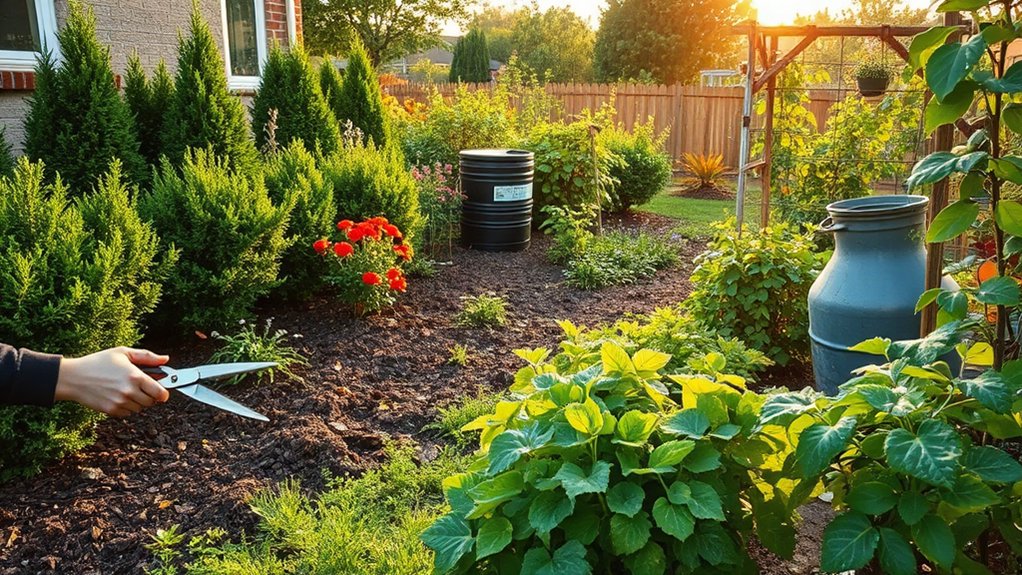
Seasonal pest pressure isn’t static, so your approach must adapt with the calendar. By planning ahead, you reduce outbreaks and protect bloom quality year-round. You’ll prioritize proactive strategies that deter pests before infestations take hold, using precise, evidence-based methods.
1) Choose pest resistant plants suited to your climate and light, reducing baseline pressure while maintaining vigor.
2) Implement biological controls where appropriate, encouraging beneficials and integrating compatible habitats to sustain them.
3) Schedule targeted cultural actions—mulching, drip irrigation, and sanitation—so problems don’t gain a foothold across seasons.
Pest resistant plants and Biological controls work in concert, delivering resilient landscapes. Maintain observation, document trends, and adjust choices as conditions shift, keeping your garden balanced and productive.
Troubleshooting the Year-Round Garden: Common Issues and Fixes
When you troubleshoot a year-round garden, start with a clear diagnostic check: identify the symptom, confirm the underlying cause, and prioritize fixes that address both current stress and future risk. You’ll quickly map problems to precise solutions, avoiding guesswork.
Common issues include uneven growth, nutrient deficiencies, water stress, and pest pressure; treat each with targeted actions, not broad sprays.
Use companion planting to disrupt pest cycles and bolster resilience, pairing functional species with beauty to stabilize microenvironments. Monitor wildlife activity and leverage wildlife attraction strategically to deter pests while enriching pollination.
Execute timely remedial steps, then reassess to confirm improvement. Document results, adjust timing, and implement preventive routines.
This disciplined process keeps your year-round garden healthy, vigorous, and aesthetically pleasing while reducing recurring challenges.
Getting the Most From Year-Round Garden Planning
A year-round garden thrives when you weave planning into daily practice, not just seasonal checkpoints. To get the most from year-round garden planning, you align goals with specific, measurable actions, track progress, and iterate based on results. Your plan should balance aesthetics, ecology, and resilience, ensuring consistent color, texture, and function across seasons.
Prioritize low-maintenance routines that sustain soil health, water efficiency, and pest suppression while enhancing garden art and wildlife habitat. Use data to refine plant choices, microclimates, and timing, so each season supports growth rather than reactive fixes.
Maintain a simple calendar, set quarterly reviews, and document outcomes for ongoing improvement.
1) Assess seasonal needs and adjust plant palettes accordingly
2) Integrate garden art anchors with habitat features for multiuse appeal
3) Monitor indicators, then refine routines and plantings year after year
Frequently Asked Questions
How Can I Balance Seasonal Color With Year-Round Structure?
You balance seasonal color with year-round structure by prioritizing color harmony in annuals and perennials, while reinforcing architectural form with evergreen massing. Use varying heights for structural balance, and rotate focal hues to maintain consistent, refined appeals.
Which Overlooked Microclimates Influence Year-Round Garden Success?
A quiet map unfolds: microclimate variations shape your year-round success, especially where shade pockets shelter plants. You’ll leverage subtle warmth, airflow, and moisture shifts to guide choices, optimizing microclimate variations for resilient, beautiful borders.
What Are Low-Maintenance Evergreen Options for Continuity?
Evergreen shrubs and ground cover plants offer low-maintenance continuity; choose drought-tolerant varieties, prune lightly, and group by sun needs. You’ll maintain structure year-round, minimize mowing, and enjoy steady color and texture with minimal effort.
How Do I Extend Bloom Into Off-Peak Months?
To extend bloom into off-peak months, select winter bloom varieties and shade-tolerant plants, then stagger textures and colors for continuous interest; you’ll enjoy pacey, low-maintenance displays even in darker corners.
What Simple Tools Speed Year-Round Planning and Maintenance?
You’ll speed year-round planning with simple tools like a clear garden layout map and a tidy tool organization system. You organize, you optimize; your layout guides tasks, and your tools stay ready, cutting downtime and boosting steady maintenance.
Conclusion
As you plan year‑round significance, your garden becomes a living clock—each season a precise gear turning with intention. You’ll read your microclimates like a seasoned map, nurture soil beneath a quiet layer of mulch, and weave perennial backbone with adaptable annuals. When pests threaten, you’ve already set safeguards; when weather tests you, you’ve built resilience. Stay curious, adjust swiftly, and let your edges, paths, and beds echo the cadence of a garden that never rests.