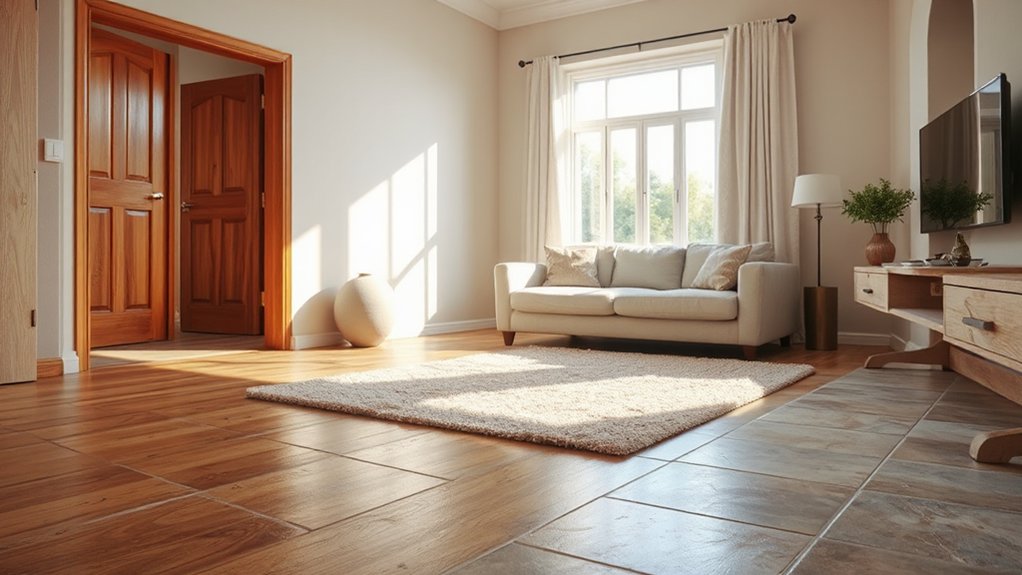

Choosing the right flooring for a busy home means prioritizing durability, stain resistance, and easy maintenance. Look for hard-wearing materials with strong abrasion resistance, water barriers, and low-porosity finishes. Consider engineered options (like aluminum oxide or luxury vinyl) or porcelain tiles for high-traffic zones, plus sealed joints for moisture-prone areas. DIY installs can save money, but professional work guarantees quality. Budget for total ownership—durability, upkeep, and resale value. If you keep exploring, you’ll uncover practical picks and tips to apply.
Key Takeaways
- Prioritize durable, wear-resistant materials (engineered surfaces, porcelain/ceramic tiles, luxury vinyl) to withstand high traffic and furniture movement.
- Choose moisture- and spill-resistant finishes with sealed subfloors to prevent staining, swelling, and deformation.
- Opt for low-porosity, easy-to-clean surfaces and light textures that hide wear while remaining simple to maintain.
- Consider installation quality, substrate prep, and whether professional installation impacts long-term performance and warranties.
- Balance cost with long-term value, including maintenance needs and how well the design coordinates with home resale appeal.
What Makes Flooring Stand Up to Busy Homes
Durable flooring in busy homes must resist scratches, stains, and wear from daily foot traffic and spills. You evaluate materials by hardness, surface finish, and resilience to impact. Choose products with high abrasion ratings and protective coatings that minimize scuffing.
Color options influence upkeep; darker tones hide minor soiling, while lighter shades reveal wear sooner. Consider design trends that align with functionality—textures can mask routine footprints, yet maintain a clean appearance.
You should assess moisture tolerance for high-traffic zones like entryways and kitchens, ensuring appropriate core construction for dent resistance. Installation method matters: stable, tightly joined floors reduce movement and noise.
Finally, verify colorfastness and finish durability under UV exposure, so you maintain a consistent look through renovations and seasonal lighting changes.
Key Criteria: Durability, Stain Resistance, and Maintenance
When evaluating flooring for durability, prioritize materials with high abrasion resistance, robust surface finishes, and strong core constructions that resist denting and impact.
You’ll value a low-maintenance option that resists staining from common spills, pets, and high-traffic use, while still offering predictable performance over time. Focus on finish quality, ease of cleaning, and resistance to wear patterns that mar appearance.
Maintenance should be straightforward: routine quick cleaning, minimal special treatments, and durable sealants or wear layers that don’t require frequent reapplication.
Color coordination matters for long-term appeal, ensuring grains, tones, and contrasts stay harmonious as you refresh spaces.
Design versatility lets you mix routes and accents without compromising performance.
In practice, choose materials with proven stain resistance, durable coatings, and simple upkeep for busy homes.
Durable Materials for Busy Homes: Pros and Cons
You’ll want flooring that resists scratches, handles moisture within practical limits, and remains easy to maintain day to day.
We’ll compare scratch resistance, moisture tolerance thresholds, and maintenance practicality to help you weigh pros and cons for busy homes.
This discussion establishes a baseline for selecting durable options that meet real-world demands.
Scratch Resistance Pros
Scratch resistance is a key metric for flooring in high-traffic homes, where daily activity subjects surfaces to paws, heels, and dropped objects. You’ll prioritize materials with hard surfaces, dense cores, and durable finishes that resist micro-scratches and visible wear.
Engineered options with aluminum oxide or high-pressure laminate coatings often outperform softer woods, while porcelain and ceramic tiles offer superior resilience for heavy abuse areas.
Real-world performance depends on wear layers, glaze hardness, and installation quality, so check ratings like Mohs hardness equivalents and scratch tests.
When choosing, consider aesthetics: vintage patterns can align with timeless interiors, yet maintenance must stay practical.
Eco-friendly options, including recycled content or low-VOC adhesives, can meet durability targets without compromising environmental impact.
Moisture Tolerance Limits
Moisture tolerance is a critical constraint for busy homes, where spills, humidity, and occasional flooding test flooring performance. You must assess how materials respond to liquid exposure, moisture migration, and seasonal moisture swings.
Durable options provide defined moisture tolerance limits, often measured by water absorption, swelling, and deformation thresholds under realistic loads. The best choices incorporate moisture barriers integrated into subfloor assemblies or product constructions to slow or block intrusion paths.
Consider installation details, substrate preparation, and edge sealing, as these influence real-world performance as much as the material itself. Humidity control remains essential: compatible flooring works with HVAC cycles, vapor retarders, and proper acclimation.
Select products with proven resistance to moisture-related failures, aligning with your home’s humidity profile and occupancy patterns.
Maintenance Practicality Pros
Durable materials simplify upkeep by resisting everyday wear, making upkeep predictable and less labor-intensive for busy homes. You’ll benefit from lower maintenance cycles and fewer unexpected repairs, because these surfaces tolerate traffic, spills, and routine cleaning without frequent refinishing.
Engineered formats, stabilized concrete, and high-quality luxury vinyl planks offer dimensional stability and strong stain resistance, reducing reapplication frequency. Decorative inlays provide aesthetic value without compromising durability, allowing you to customize patterns that still withstand daily use.
Consider finish durability and slip resistance for high-traffic zones, prioritizing materials with protective topcoats and sealed joints. Color customization remains practical when choosing durable options, enabling you to refresh looks with reformats or accents rather than full overhauls.
In busy homes, predictability and resilience define long-term cost efficiency and satisfaction.
Stain-Resistant Surfaces: What to Look For
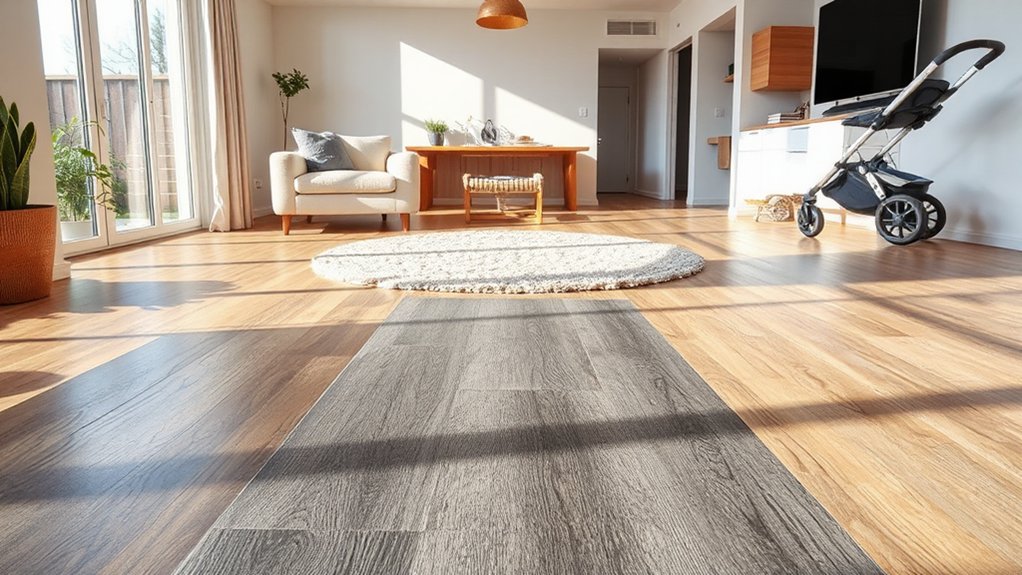
Stain-repellent finishes matter, so you should evaluate how well finishes resist common spills and fingerprints in real-life use.
Look for easy-clean surface textures that resist abrasion without sacrificing comfort or look, and verify that the texture supports simple wipe-downs rather than requiring special cleaners.
Consider spill-guard material choices that pair durable cores with top layers designed to keep colors true and routine maintenance minimal.
Stain-Repellent Finishes
Have you ever considered how stain-repellent finishes can protect your floors without sacrificing appearance or feel? Stain-repellent coatings form a barrier that minimizes liquid penetration while preserving texture and color depth.
Choose finishes with low surface energy, robust chemical resistance, and proven abrasion ratings to handle daily traffic without dulling. Look for nanostructured or polymer-modified formulas that resist coffee, wine, and oil stains, yet remain easy to recoat or touch up.
Compatibility with your flooring substrate matters: planks, tiles, or concrete each require appropriate binders and curing temps. Consider color palettes and design trends when selecting sheen and hue retention, as some finishes can slightly alter shade over time.
Prioritize real-world performance data, warranty terms, and maintenance guidance to assure long-term protection.
Easy-Clean Surface Textures
Choosing an easy-clean surface texture starts with the same goal as stain resistance: minimize maintenance while preserving look and feel. You’ll evaluate textures that resist dirt adhesion, abrasion, and moisture without sacrificing finish.
Prioritize patterns and sheens that hide minor markings and wear, reducing upkeep over time. Flat, low-porosity surfaces often clean with minimal effort, while lightly textured finishes can trap dirt unless sealed properly.
Consider edge and grout design in larger installations to limit crevice exposure. Eco-friendly options emphasize durable, repairable textures with low VOC coatings and long lifecycle performance.
Aesthetic considerations guide your choice toward consistency with room lighting and furniture, ensuring the texture complements the palette. Balance these factors against cleaning frequency, cost, and installation practicality for long-term satisfaction.
Spill-Guard Material Choices
Spill-guard materials prioritize barrier performance and maintenance, delivering durable, stain-resistant surfaces that resist common liquids and accidental spills. You’ll evaluate substrates for their compatibility with spill proof coatings and stain resistant treatments, prioritizing uniform coverage and seamless edge-to-edge protection.
Look for barrier layers that resist moisture, oils, and acidic substances without compromising footing or comfort. Consider abrasion resistance, as frequent foot traffic and furniture shifts demand longevity without surface dulling. Application simplicity matters; coatings should cure quickly and withstand cleaning regimes without yellowing.
Compatibility with existing flooring substrates reduces replacement costs. Prefer systems that provide predictable performance across temperature swings and humidity.
Documentation should confirm tested stain resistance, ease of reapplication, and warranty coverage, enabling confident maintenance planning for busy environments.
Maintenance That Stays Easy in a Busy Household
Is maintenance in a busy home achievable without constant upkeep? Yes, with purposefully chosen materials and routines.
Opt for flooring that resists stains, scratches, and moisture, and pair it with a minimal-cleaning schedule. Daily light dusting, plus a weekly wipe-down using a neutral cleaner, keeps grime from building without soaking your time.
Choose finishes that tolerate UV exposure and high-traffic wear, reducing refinishing needs. Use entry mats and footwear policies to curb dirt ingress, and employ area rugs only where beneficial for acoustics or spill zones.
Prioritize products with proven durability, low volatile organic compounds, and recyclable components to support Creative design and environmental impact goals.
Finally, leverage warranties and maintenance guides to standardize care, preventing ad-hoc, higher-effort upkeep.
Comfort Underfoot in High-Traffic Areas
You need flooring that balances comfort underfoot with long-term durability in high-traffic areas. Consider how underfoot feel correlates with impact resistance and the ability to retain shape under repeated use.
We’ll examine materials and textures that optimize foot comfort while withstanding daily wear.
Comfort Underfoot
How comfortable a floor feels underfoot matters as much as its appearance, especially in high-traffic areas. You’ll prioritize materials that balance softness with support, reducing fatigue during long wear.
Underfoot comfort hinges on a combination of impact resistance, surface texture, and resilience, which work together to absorb shocks from daily movements. Look for mid-to-firm substrates paired with durable finishes that maintain a consistent feel over time.
Insufficient cushioning can cause foot and leg strain, while overly plush options compromise stability and longevity. Consider the floor’s slip resistance and thermal comfort, ensuring a stable, pleasant surface from morning through late-night tasks.
Creative design enhances aesthetic appeal, aligning tactile experience with your space’s visual language and practical usage.
High-Traffic Durability
High-traffic areas demand flooring that resists wear while preserving underfoot comfort; choose materials rated for high abrasion and impact. You’ll prioritize surfaces that balance durability with foot feel, selecting layered constructions, reinforced cores, or urethane wear layers to minimize denting and deformation.
Assess impact resistance, indentation thresholds, and migration of texture under repeated use, then verify performance with real-world testing data.
In practice, opt for low-slip finishes that still feel solid underfoot, and guarantee joints, seams, or edges won’t loosen with moisture or heavy traffic.
Color options and design trends should align with long-term wear patterns, so you can refresh spaces without replacing floors.
Balance aesthetic goals with maintenance needs, ensuring consistent performance across high-traffic zones.
Pet-Friendly Flooring: Best Options and Considerations
Pet-friendly flooring choices balance durability, ease of cleaning, and comfort for both pets and people. You should prioritize surfaces that resist scratches, absorb impact, and maintain appearance under daily use.
For pet hair, choose smooth, low-pile textures that minimize snagging and simplify removal with routine vacuuming.
Consider layered vinyl or ceramic tile with a protective topcoat for moisture resistance and longevity, plus ease of maintenance.
If you prefer wood visuals, opt for engineered options with enhanced wear layers and scratch-resistant finishes to reduce visible damage.
Scratching issues are mitigated by softer, forgiving materials like luxury vinyl plank or tile with dent- and scuff-resistant surfaces.
Ensure subfloor stability and proper installation to prevent moisture ingress and edge lifting in high-traffic areas.
Kids, High-Traffic Zones, and Room-Specific Picks
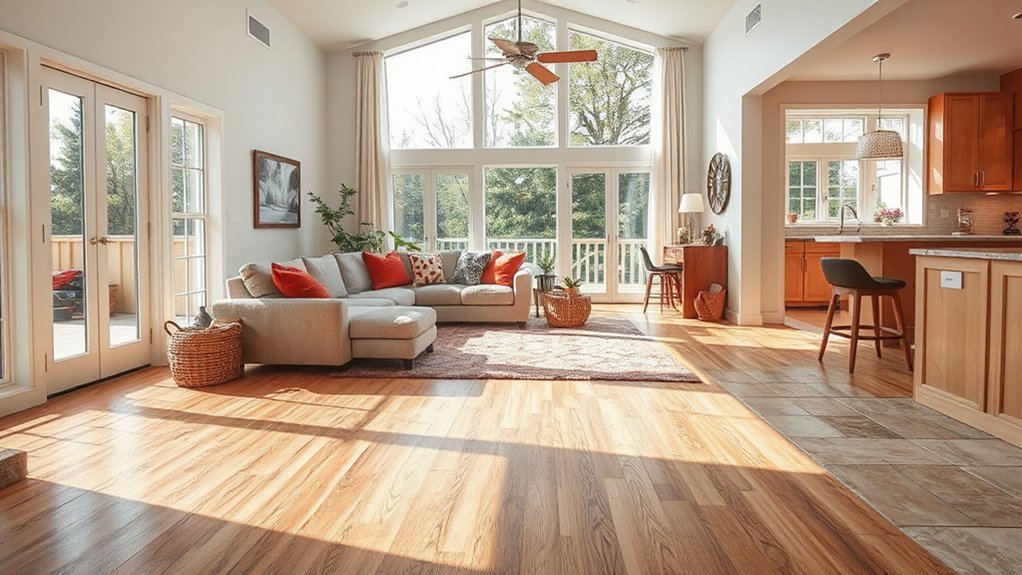
For spaces where kids, pets, and constant activity collide, focus on flooring that stands up to impact, spills, and heavy foot traffic while remaining comfortable underfoot. In high-traffic zones, prioritize resilient materials with proven dent resistance, moisture tolerance, and easy maintenance.
Room-specific picks should align with use-case demands: kitchens benefit from waterproof, low-maintenance surfaces; family rooms require softer underfoot without sacrificing durability; hallways demand long-lasting wear layers and stability under foot traffic.
Consider color options that disguise wear and scratches, and decorative patterns that guide traffic flow without visual chaos. Use planks or tiles with strong wear ratings and integrated underlayment for sound control.
Balance practicality with design by selecting tasteful decorative patterns that complement surrounding decor while keeping surface cleaning straightforward.
Finishes and Textures That Last
In spaces built for activity, finishes and textures that last start with materials engineered for durability and practical maintenance. You’ll prioritize layered wear resistance, slap-on gloss, and micro-reinforcement that resists scuffs and dents under heavy foot traffic.
Choose finishes measured in abrasion classes and easy-clean coatings that tolerate frequent cleaning without dulling. Textures should balance traction and foot comfort, reducing slip risk while preserving a smooth passage between rooms.
Decorative patterns add visual depth without sacrificing durability, so opt for patterning that disguises wear and maintains consistency over time. Color options matter: select stable hues and fade-resistant finishes to keep rooms looking new longer.
Align texture and finish with subfloor compatibility, routine maintenance, and warranty terms to ensure long-term performance.
Waterproof and Moisture-Proof Picks for Kitchens and Baths
Waterproof and moisture-proof options are essential in kitchens and baths because these spaces face frequent exposure to water, humidity, and spills. You want durable materials that resist swelling, warping, and staining while staying easy to clean.
Prioritize systems with sealed joints, homogenous wear layers, or solid surfaces to minimize moisture ingress. Eco-friendly options exist without sacrificing performance, and many varieties offer recycled content or low VOCs.
Aesthetic considerations matter too; choose colors and textures that coordinate with cabinetry and fixtures while maintaining slip resistance and curb appeal.
Below are practical picks to contemplate:
- Luxury vinyl plank with waterproof core and grout-free installation
- Porcelain or ceramic tile with large formats and water-resistant backing
- Solid surface or acrylic sheet products for seamless continuity
DIY vs. Pro Installation: Timelines and Costs
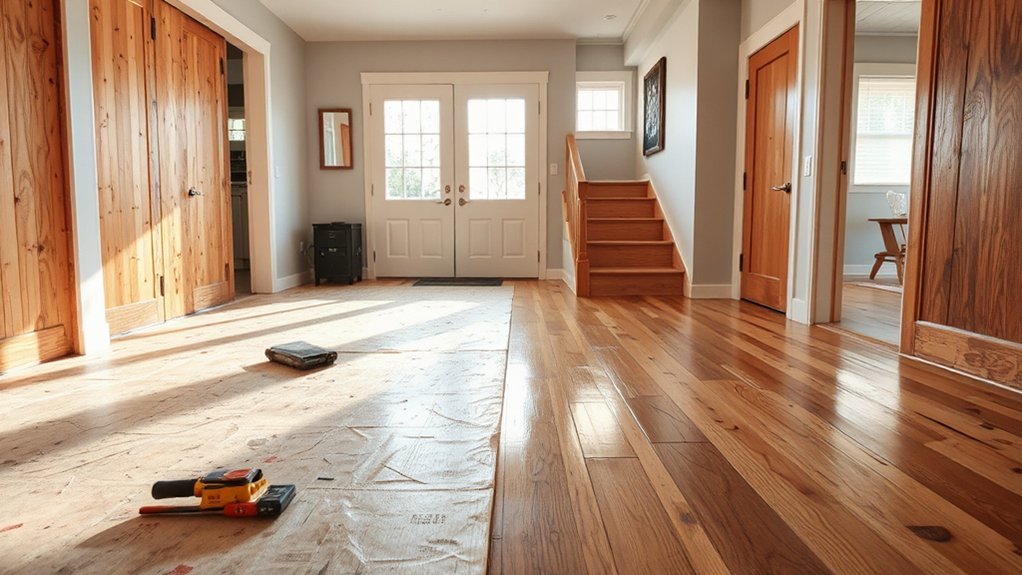
Choosing the right installation path affects both timelines and costs. DIY vs. pro work hinges on material, room complexity, and your skill level.
For simple projects, DIY can trim labor expenses but may lengthen timelines if you encounter cuts, leveling, or underlayment issues.
Pro installation delivers consistent results, faster completion, and code-compliant moisture and subfloor prep, though at a higher upfront price.
Consider tool availability, material access, and site disruption—busy homes benefit from scheduled windows and protection strategies.
Eco-friendly options, while often cooperative with installers’ processes, may require acclimation or specialty adhesives that affect duration and cost.
Aesthetic considerations matter: precision transitions, alignment, and grading influence both budget and schedule.
Weigh risk tolerance against schedule to select the most reliable path.
Smart Budgeting: Value, Longevity, and Resale
Smart budgeting for flooring hinges on balancing value, longevity, and resale impact. You evaluate materials not just on upfront cost, but on how they perform over time, how easy they’re to maintain, and how they influence curb appeal.
Prioritize options that maximize aesthetic appeal while preserving resale value, ensuring color coordination across rooms to avoid visual dissonance. Your choice should align with wear patterns, traffic, and maintenance demands, so you don’t overpay for features you won’t use.
- Compare total cost of ownership, including installation, maintenance, and replacement cycles.
- Assess color coordination and how it harmonizes with fixtures, cabinets, and furniture to boost perceived value.
- Favor durable, low-maintenance surfaces that sustain aesthetic appeal under busy-use conditions.
Frequently Asked Questions
How Often Should You Reseal Hardwood Floors in Busy Homes?
You should reseal hardwood floors every 2–5 years in busy homes. This Flooring maintenance interval depends on traffic and finish; monitor wear, scratches, and sheen. Adjust resealing frequency to maintain protective Resealing frequency and surface performance.
Which Flooring Resists Scuffs From Heavy Furniture the Best?
“Slow and steady wins the race.” You should choose scratch resistant materials; they resist scuffs from heavy furniture. Prioritize dense, durable options with protective finishes for furniture protection and long-term performance in busy homes.
Do Luxury Vinyl Planks Damage Under Heavy Point Loads?
Yes, luxury vinyl planks can deform under heavy point loads. Avoid high-point-load weights on thin vinyl, use protective underlays, distribute weight, and choose thicker, reinforced Luxury vinyl options rated for point-load resistance to reduce damage.
Are There Eco-Friendly Options That Are Also Durable?
Yes—eco-friendly flooring can be incredibly durable, like a fortress. You’ll want sustainable materials and eco friendly finishes, choosing products that meet durability tests and lifecycle assessments, ensuring performance without compromising environmental impact.
How to Select Flooring That Hides Pet Hair Effectively?
Choose flooring with high pet hair concealment by opting for low-pile textures and dense carpet fiber density, or smooth substrates; clean edges prevent hair buildup, and maintain consistent texture to minimize visibility of pet hair.
Conclusion
In short, choose flooring that behaves like a trained assistant: sturdy, stain-averse, and stubbornly low-maintenance. Durability earns longevity; stain resistance saves you from nightly toe-dips into guilt; easy upkeep means you won’t dread mop hour. Waterproof options for kitchens and baths pay for themselves in peace of mind. If you pretend budget doesn’t matter, you’ll pay later—literally. So invest wisely, install professionally when needed, and resist the illusion that chaos is a cost-free lifestyle. Your future self will thank you.