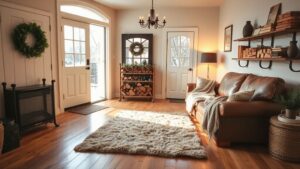
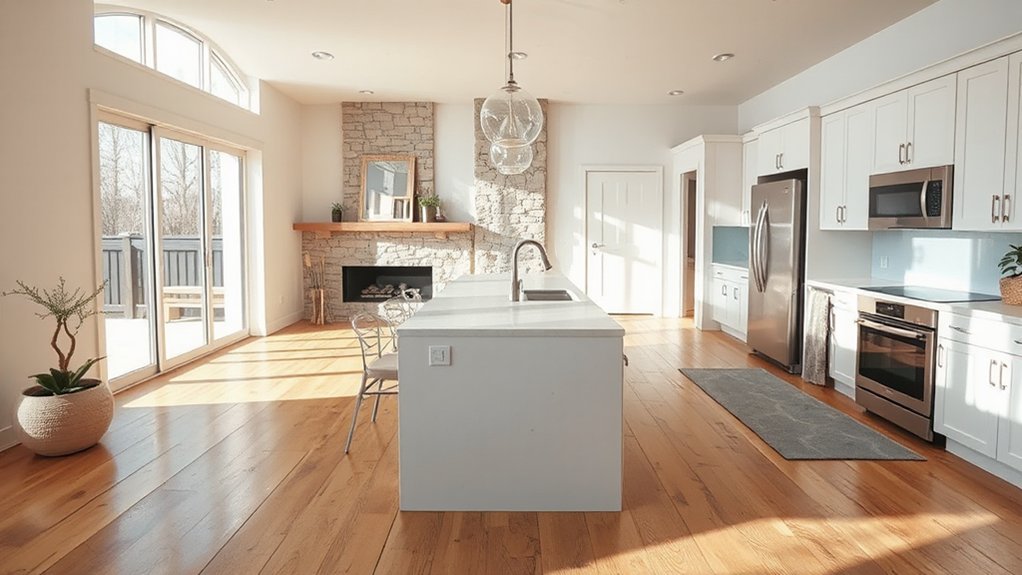

Prioritize high-impact, cost-effective renovations that buyers notice upfront. Start with essential structural fixes, curb appeal, and efficient systems—roofing, exterior refresh, HVAC updates, and energy-efficient windows offer solid ROI. Update kitchens and baths with durable finishes, smart fixtures, and timeless layouts. Improve space efficiency with multi-use furniture and strategic storage. Use cohesive finishes, high-quality materials, and durable surfaces. Plan tightly: define scope, budget, milestones, and approvals. If you keep going, you’ll uncover more actionable steps to maximize value.
Key Takeaways
- Prioritize high-impact, cost-effective exterior updates (roof, exterior refresh, curb appeal) with landscaping for immediate value perception.
- Upgrade kitchen and bathrooms with durable finishes, energy-efficient features, and timeless designs to boost resale appeal.
- Enhance space efficiency with multi-use layouts and smart storage (pull-outs, wall beds, modular furniture) to maximize functionality.
- Choose durable, cohesive finishes and fixtures (matching metals, high-quality counters, durable floors) for long-term value.
- Plan meticulously: define scope, budget, milestones, permits, and track progress to control costs and timelines.
Immediate-Value Renovation Criteria: What to Fix First for ROI
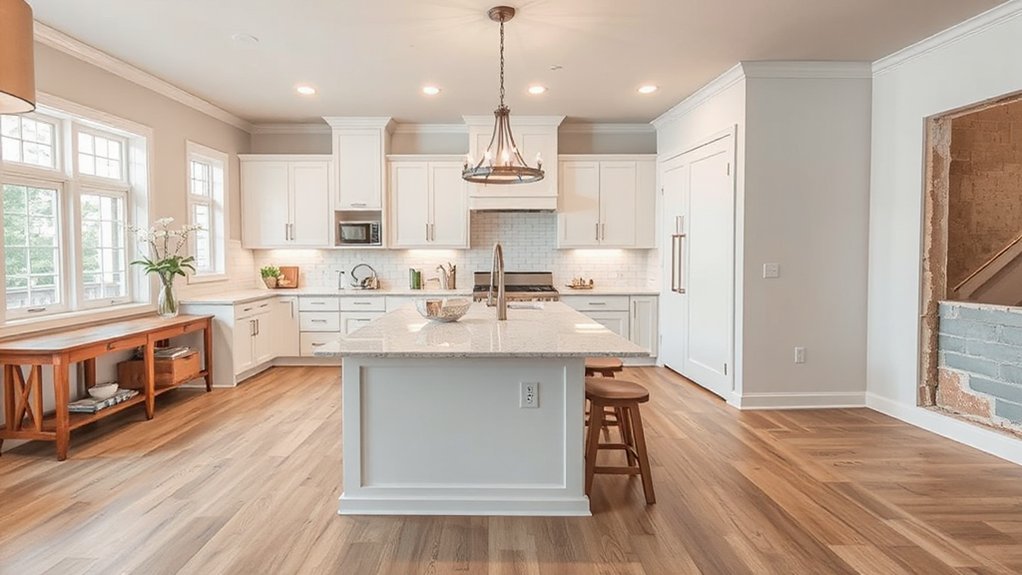
When you’re prioritizing renovations for ROI, start with high-impact, visible fixes that buyers notice first. You’ll assess conditions that undermine appeal and performance, then address areas with the largest return.
Begin with structural integrity, then curb appeal, then functional upgrades that improve daily living. Prioritize projects with proven ROI: solid roofing, refreshed exterior, updated HVAC, and efficient windows.
Limit scope to items that elevate perceived value without requiring extensive remodeling. Historical preservation can inform decisions by guiding stylistic choices that respect period features while improving efficiency.
Pair these with landscaping enhancements to create an immediate sense of value—trimmed lawns, defined pathways, and strategic plantings.
Document changes, maintain standards, and avoid over-improvement relative to neighborhood comps.
Finish with quick, professional-quality results rather than partial, low-quality fixes.
Kitchen Upgrades for Maximum ROI
Upgrading a kitchen for maximum ROI hinges on prioritizing changes that boost value without overhauling cost. You’ll see the best returns by focusing on essentials, efficiency, and timeless appeal. Prioritize quality cabinets and countertops, energy-efficient appliances, and strong lighting, while avoiding over-personalization.
Consider how the design supports resale, not just your daily needs. Include practical touches that echo vintage charm without compromising modern practicality, and think about outdoor kitchens as a value extension when relevant to your market.
1) Upgrade cabinetry with durable finishes and soft-close hardware.
2) Install energy-efficient appliances and LED lighting.
3) Choose timeless countertops and cohesive, functional layouts.
4) Integrate subtle vintage charm accents and smart, weatherproof outdoor kitchen connections.
Bathroom Refreshes That Deliver Real Impact
Refining a bathroom for ROI hinges on clean lines, durable materials, and smart updates that pay back. You optimize layout for flow, replace aging components, and choose timeless finishes.
Prioritize water efficiency without sacrificing performance, so you save on operating costs and appeal to savvy buyers. Install quality vanity hardware and recessed lighting to eliminate shadows and boost perceived space.
Consider spa-inspired designs to create a calming, upscale feel, but keep scale modest to avoid overspending. Luxury fixtures should be chosen for durability and ease of maintenance, not just appearance.
Emphasize moisture resistance, sealed grout, and durable countertops. A fresh, neutral palette with subtle texture elevates the room without dating the rest of the home.
Maintain clean lines, purposeful contrasts, and restraint in accessory choices.
Curb Appeal on a Budget: Quick Exterior Wins
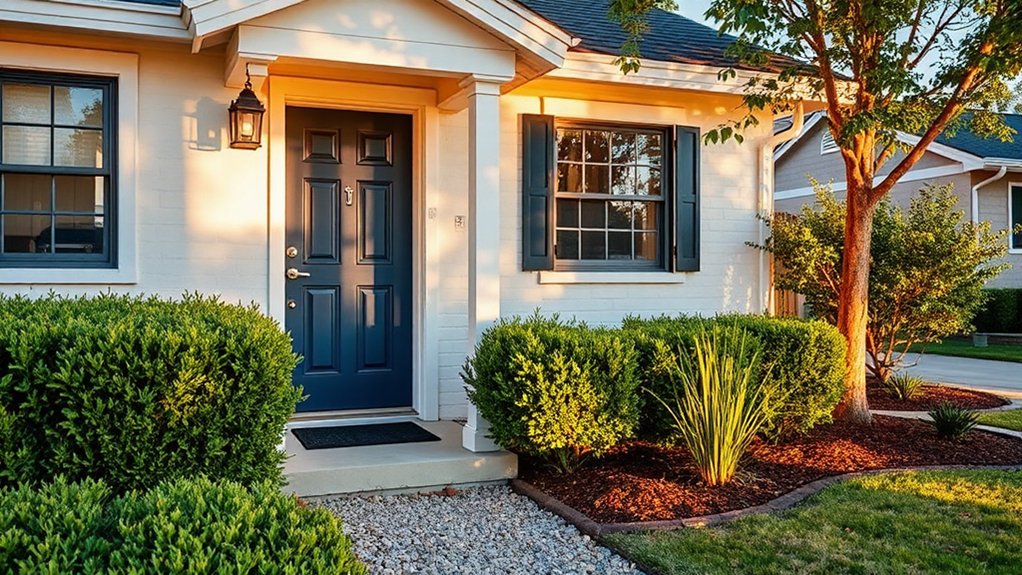
Curb appeal doesn’t have to break the bank: small, deliberate exterior updates create instant impact and set the tone for the whole property. You’ll boost value quickly by focusing on practical, repeatable moves that pay off at resale.
Prioritize cohesive color, texture, and lighting to guide the eye and improve perceived quality. Landscaping upgrades should emphasize balance, seasonality, and easy maintenance, while exterior lighting adds safety and drama without overdoing it.
Implement fixes that wow buyers without overspending. The goal is to create a welcoming first impression that signals durable curb appeal rather than a cosmetic patch.
- Refresh plantings with low-maintenance, drought-tolerant varieties
- Paint or refresh the front door and trim for contrast
- Install simple, cost-effective lighting along walkways
- Declutter and tidy the façade, gutters, and windowsills
Energy-Efficient Renovations Buyers Notice
Energy-efficient upgrades grab attention fast because buyers notice practical savings upfront.
Prioritize energy-efficient windows, solid insulation and sealing, and a smart thermostat to show lower utility bills and improved comfort.
You’ll clarify value by linking these features to measurable benefits, like comfort, humidity control, and predictable energy costs.
Energy-Efficient Windows
Replacing old windows with energy-efficient models immediately boosts comfort and lowers operating costs, and buyers notice. You’ll gain tighter envelopes, better heat retention, and reduced drafts, which translates to lower utility bills and more consistent indoor temperatures.
- Evaluate U-values and SHGC to choose glazing that minimizes heat loss while maximizing solar gains.
- Select double- or triple-pane vinyl or wood frames with proper weatherstripping for durability and easy maintenance.
- Opt for low-e coatings and gas fills to enhance performance without sacrificing visibility.
- Plan for compatibility with solar panel integration and other renewable energy sources to maximize overall efficiency and value.
Insulation And Sealing
If you’ve already upgraded windows, you’ve taken a solid step toward a tighter envelope; now focus on insulation and sealing to lock in those gains and cut drafts.
Start with a fresh roof or attic inspection, identify loose vents, and seal gaps with caulk or spray foam.
Prioritize insulation upgrades in key areas: attic, rim joists, and exterior walls. Choose material with high R-values appropriate to your climate, and guarantee proper installation to avoid compression and voids.
Air leaks matter more than bulk insulation alone, so use blower-door testing or simple drafts to locate unseen gaps.
For thoroughness, seal around electrical boxes, plumbing penetrations, and seams at interior-perimeter drywall.
Maintain ventilation balance to prevent moisture issues while maximizing energy savings.
Smart Thermostat Benefits
Smart thermostats save homeowners money and simplify climate control by learning schedules, adjusting heat and cooling automatically, and letting you override settings from your phone.
With energy-driven controls, you gain precise temperature management and fewer wasted cycles, boosting overall efficiency. This device is a practical upgrade buyers notice, signaling modern, conscious climate control.
It also supports remote monitoring, fault detection, and exposure-aware scheduling, reinforcing value through reliability and convenience.
- Reduces utility bills by optimizing daily usage
- Improves comfort with responsive, consistent temperatures
- Enhances home automation compatibility and remote access
- Signals a modern, energy-conscious property to buyers
Smart Storage and Space Maximization Solutions
You’ll reveal hidden storage with clever in-wall and under-stair solutions that keep clutter out of sight. Optimize layouts by prioritizing vertical space and multi-use furniture that adapts to daily needs.
These tactics streamline your space, boosting usability and value without enlarging the footprint.
Hidden Storage Tactics
Hidden storage can transform small spaces into functional areas without expanding square footage. You’ll maximize every inch by prioritizing accessible, purpose-driven solutions. Focus on clean lines, sturdy hardware, and quick access to belongings that matter most. Implement hidden compartments and concealed shelving to keep surfaces uncluttered while preserving aesthetic appeal.
- Install hidden compartments in beds, ottomans, and walls for seasonal items.
- Use concealed shelving behind mirrors, doors, or paneling to maintain a seamless look.
- Create under-stair drawers with integrated runners for shoes and tools.
- Add shallow pull-outs in kitchen and laundry for snacks, cleaners, and disposables.
These tactics deliver practical, precise storage gains without visual disruption or unnecessary renovation.
Space-Saving Layouts
Maximize every square foot with deliberate layouts that integrate storage where you use it most. You’ll optimize flow by defining zones and tucking mechanisms into daily routes.
Use modular furniture to tailor spaces as needs shift, letting you convert a living area into a work nook without clutter.
Prioritize vertical solutions: wall-mounted shelving, tall cabinets, and hooks keep counters clear and eyes focused.
Fold away beds release guestroom versatility without sacrificing daytime usability, pairing comfort with compact design.
Choose sustainable finishes and concealed hardware to maintain a streamlined look.
Plan for accessibility, ensuring doors swing without interference and drawers glide smoothly.
Label crates and bins for quick reorganization, reinforcing consistency in your space-saving strategy while preserving ambiance and value.
Multi-Use Furniture Solutions
Multi-use furniture blends storage with everyday use, turning limited space into adaptable zones without sacrificing style. You’ll maximize every square foot by choosing pieces that multitask, keeping rooms uncluttered and functional.
Prioritize build quality, hidden compartments, and easy access to essentials. This approach strengthens space optimization and boosts property value with practical aesthetics.
- Choose a sofa with integrated storage and a lift-up chaise for linens or games.
- Install storage ottomans that double as guest seating and footrests.
- Use wall beds or modular desks to convert bedrooms into workspaces in seconds.
- Opt for nesting tables and foldable dining options to adapt to occasions.
Finishes and Fixtures That Elevate Perceived Quality
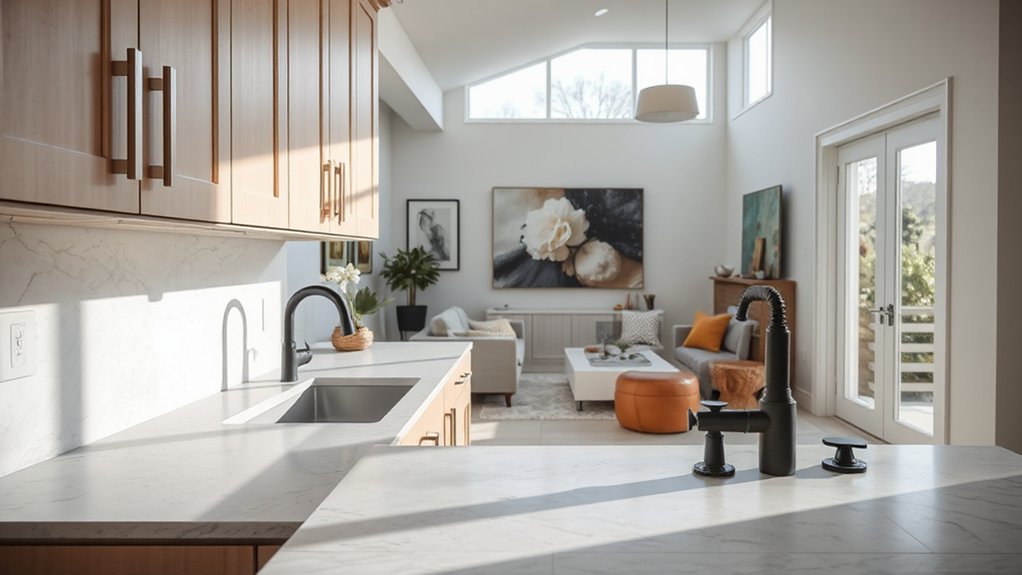
Quality finishes and fixtures instantly signal value to buyers and occupants. You’re shaping perceptions of quality through material choices, fit, and consistency across spaces.
Prioritize cohesive design: match metal tones, door hardware, and faucet styles to create a refined, unified look. Opt for timeless, durable finishes that resist wear and look refined over time.
In kitchens and baths, choose practical, high-contrast grout and solid-surface counters with subtle veining for depth without shouting. Incorporate decorative fixtures sparingly to avoid clutter, ensuring each piece has purpose and proportion.
Consider upgraded lighting fixtures and dimmers to elevate ambiance and task visibility.
Guarantee installation accuracy—plumbing, electrical, and finish carpentry should be tight, clean, and precise. These choices elevate perceived quality without excessive cost.
Durable Materials for Long-Term Value
Durable materials deliver long-term value by withstanding wear, moisture, and daily use while preserving appearance. You’ll prioritize options that resist damage, require minimal upkeep, and age gracefully, ensuring return on investment stays high over time.
Focus on proven performance, verified through tests and real-world use, and choose items with solid warranties. Sustainable sourcing matters, reducing environmental impact without sacrificing quality.
Material longevity means less frequent replacement, which saves labor and disposal costs while supporting predictable maintenance.
- Concrete and tile choices with dense, non-porous surfaces for easy cleaning and longevity
- Stone countertops and ceramic tiles that resist scratching and staining
- Solid hardwoods finished with durable sealants for wear resistance
- High-grade metals and hardware designed to endure daily use and resist corrosion
Planning, Budgeting, and a Realistic Renovation Timeline
A realistic renovation plan starts with a clear scope, a tight budget, and a practical timeline you can actually meet. You’ll define goals, prioritize tasks, and set milestones that align with your property’s value drivers.
Budget with precision: itemize permits, materials, labor, contingencies, and overhead, and then add a 10–15% reserve for surprises.
Schedule realistically by sequencing trades to avoid idle weeks and ensure access to utilities.
Address historical preservation concerns early to avoid retrofits, and confirm permissions before buying fixtures.
Research zoning regulations to confirm setbacks, height limits, and use restrictions, and adjust scope accordingly.
Track progress weekly, compare actuals to estimates, and reallocate resources as needed.
Document decisions for future resale, and maintain compliance to safeguard value.
Frequently Asked Questions
How Do Renovations Impact Resale Value by Neighborhood Trends?
Neighborhood dynamics shape resale value as trends shift, and you’ll notice price changes with Market fluctuations. You’ll align upgrades to demand cycles, invest prudently, and monitor local comps to maximize appeal across evolving buyer preferences.
Which Upgrades Yield the Strongest ROI Within Under $5,000?
Boost your ROI big time: under $5,000, you’ll gain the most with smart technology upgrades and eco upgrades. You’ll save energy, feel modern, and attract buyers fast, as these deliver tangible value and impressive, precise results.
Do Cosmetic Fixes Ever Outweigh Structural Improvements for Value?
Cosmetic fixes can outperform structural upgrades for value in some cases, but it’s about value vs. aesthetics. You weigh cosmetic vs. structural benefits and purchaser perceptions; prioritize lasting appeal, durability, and cost efficiency to maximize overall property value.
How Long Before a Renovation Influences Buyer Perception at Showings?
Within minutes, buyers notice energy efficiency and decorative accents, shaping perception within the first showing. About 2–4 weeks matters most, as visible updates align with expectations and demonstrate practical value, convincing buyers that energy efficiency outpaces cosmetic-only improvements.
What Financing Options Minimize Carrying Costs During Renovations?
You should consider loan options with low, fixed interest rates to minimize carrying costs during renovations. Compare lines of credit versus construction loans, prioritize predictable payments, and verify prequalification. Choose options offering interest protections and clear draw schedules for efficiency.
Conclusion
You’ve got a clear path: fix what matters first, upgrade thoughtfully, and charm buyers with lasting quality. Think of your renovation as a well-tuned instrument, each note—kitchen, baths, curb appeal, energy—and storage—anchored to a solid plan. When you weave durable materials, smart finishes, and efficient systems into a realistic timeline, you create value that endures beyond the closing. Like a well-kept compass, your home will point buyers toward confidence and higher offers.