
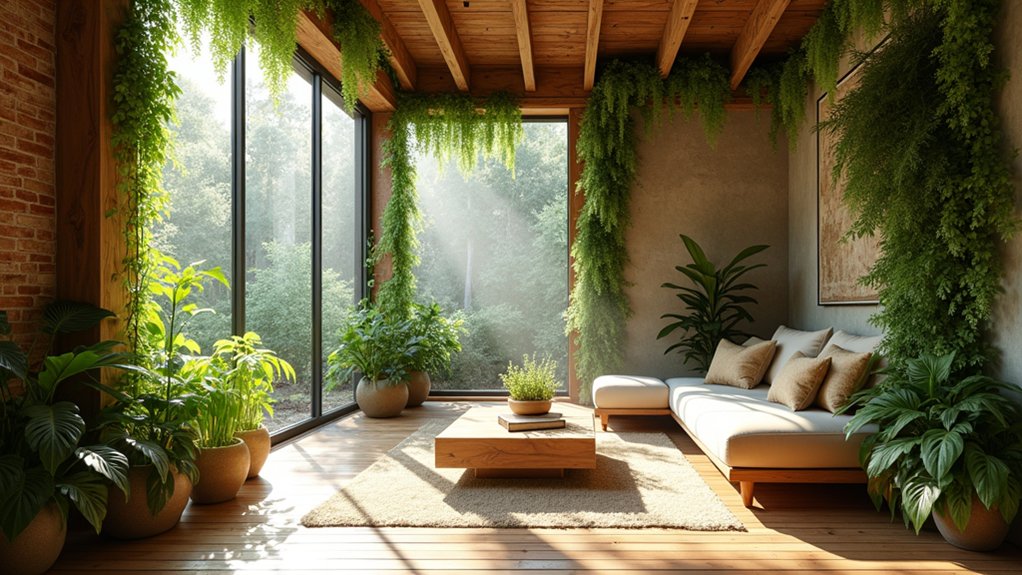

Biophilic design speaks to you because you want spaces that feel alive, not just clean. You’ll benefit from natural light, greenery, textures, and views that boost mood, focus, and resilience. Minimalism can feel hollow when you crave warmth and day-to-day energy; biophilia blends wellness with everyday function, offering longevity and resale value. You’ll see tangible gains in productivity and stress reduction without sacrificing style. If you keep exploring, you’ll discover practical steps to get started—on any budget.
Key Takeaways
- Millennials seek healthier, more productive spaces; biophilic design improves air quality, stress recovery, and focus beyond minimalist aesthetics.
- Biophilic cues align with daily routines, reducing fatigue through greenery, daylight, and tactile materials in practical, usable environments.
- Urban farming and sustainable finishes offer tangible value and connection to growth, not just pared-down visuals.
- Biophilic spaces balance function and wellness, lowering energy costs and maintenance while enhancing resale, leasing, and long-term asset resilience.
- Measurable benefits via sensors, post-occupancy surveys, and simple routines make biophilic design easier to justify and implement than pure minimalism.
What Biophilic Design Really Means for Millennials
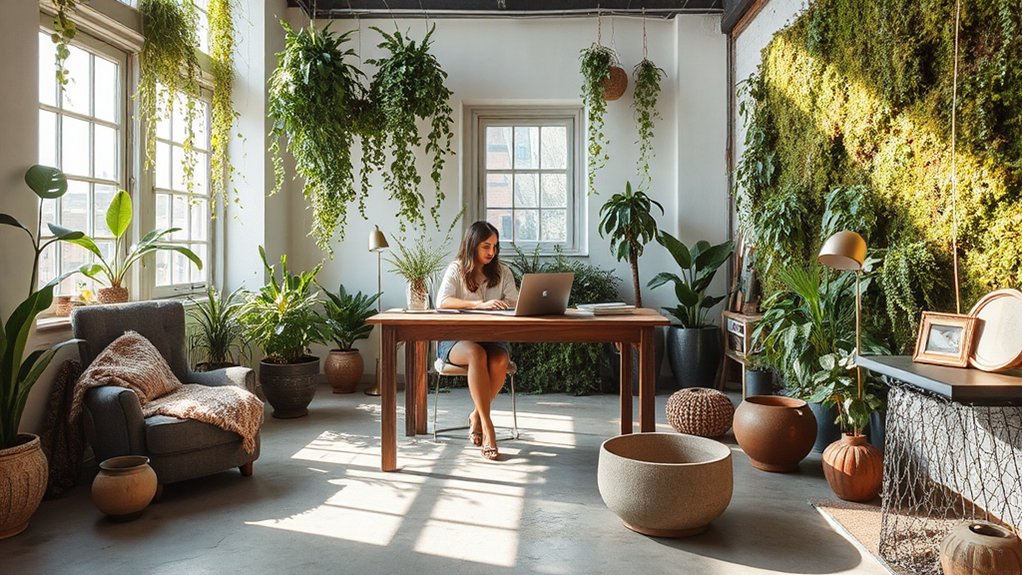
Biophilic design is more than a trend; it’s a practical framework that helps Millennials create healthier, more productive spaces. You’ll measure value by tangible outcomes: improved air quality, calmer workflows, and faster recovery from stress.
At its core, it links nature-inspired cues with daily routines, guiding choices in layout, materials, and lighting. You’re not chasing a mood; you’re engineering a habitat that reduces fatigue and supports sustained focus.
Urban architecture informs opportunities for accessible greenery, sightlines to outdoors, and compact greenery systems that scale with city living.
Technology integration becomes a tool, not a gimmick—sensors track air and light, while automation sustains ideal conditions without overreach.
Implement with clear objectives, test results, and iterative tweaks to maximize long-term well-being.
Why Minimalism Falls Short for Today’s Homes
Minimalism promises clarity, but modern homes often need more than empty surfaces and stark lines to support daily life. You’ll find that excess storage and rigid layouts limit flexibility for hobbies, guests, and evolving routines. A purely sparse aesthetic can feel cold, impeding comfort and real use of space. Instead, you gain utility by blending pared-down forms with multifunctional zones, visible natural light, and tactile materials. Consider urban farming plans and compact herb walls to bring liveliness without clutter. Eco friendly textiles in upholstery and curtains add warmth without sacrificing cleanliness or durability.
| Benefit | Trade-off | Practical tip |
|---|---|---|
| Flexibility | May require careful planning | Use modular furniture |
| Light diffusion | Limited depth | Add mirrors strategically |
| Texture warmth | Maintenance needs | Choose natural fibers |
The Psychology of Wellness, Focus, and Nature at Home
Even when you’re aiming for a calm, uncluttered home, your environment still shapes attention, mood, and energy. The psychology of wellness at home hinges on concrete cues you control daily. You’ll notice that greenery, natural textures, and quiet corners reduce cognitive load and support sustained focus.
In practice, design for predictable routines: consistent color temperatures, minimized noise intrusion, and uncluttered sightlines that lower stress responses. Proactively schedule micro-breaks where you stretch or breathe near a planted focal point to reset attention.
Choose materials and finishes that won’t off-gas or glare, supporting long sessions of work or study. Urban farming, eco-friendly finishes, and deliberate spatial rhythm reinforce healthful patterns, making your space do more without becoming distractingly busy.
How Daylight, Views, and Textures Elevate Mood and Productivity
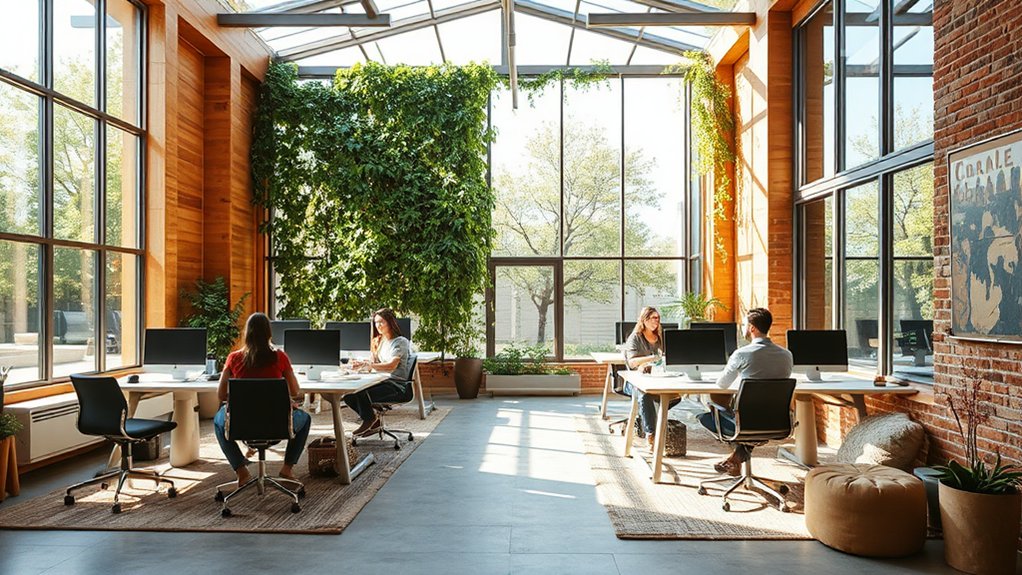
You’ll notice daylight sharpens your focus, guiding tasks with morning energy and steady attention through the day.
Scenic views reduce cognitive load and promote calmer minds, while textures boost engagement by inviting tactile interaction with your space.
Together, these elements support mood stability and sustained productivity, so you can design environments that work as hard as you do.
Daylight-Driven Focus
Natural daylight directly shapes focus by grounding circadian rhythms and reducing eye strain, so you’ll notice sharper attention and steadier energy throughout the day. You’ll leverage daylight to minimize fatigue and maximize task endurance, choosing spaces that balance glare control with bright, evenly lit work zones.
Natural lighting supports faster responses, fewer mistakes, and consistent motivation across tasks. Visual tranquility emerges when texture and view depth are aligned with light levels, reducing cognitive load and preserving focus.
- Align desk height and screen position with window light without causing glare
- Use layered daylight: windows, skylights, and reflective surfaces for even brightness
- Prefer cooler daylight in mornings to boost alertness, warmer tones late day
- Incorporate tactile materials that echo natural textures for steadier attention
Scenic Views, Calm Minds
Ever wondered how the view outside shapes your inside performance? You’ll harvest calm when daylight floods your space and you can trace the rhythm of urban wildlife beyond glass. Views matter because they anchor attention, reduce stress, and guide focus toward workable tasks. Let natural sounds, not sterile silence, steady your pace and sharpen decision-making. When you design sightlines, you invite predictable patterns that sustain motivation and mood throughout the workday.
Textures Boost Engagement
Textures do more than decorate spaces; they modulate mood and speed up task completion. You’ll notice how subtle variations in materiality sharpen perception, reduce cognitive load, and sustain focus throughout the day.
When you design for textural contrast, you create distinct zones that cue action and minimize errors. Tactile engagement invites hands-on interaction, reinforcing memory and diminishing fatigue during repetitive tasks.
By pairing rough and smooth, warm and cool, you guide users toward productive behavior without shouting for attention.
- Textural contrast as a behavioral cue
- Tactile engagement to sustain focus
- Material transitions that reduce cognitive load
- Durable, easy-maintenance finishes for workflow efficiency
Plants That Boost Wellness Without Clutter
What spurs wellness most in small spaces: plants that deliver health benefits without clutter? You choose compact specimens known for measurable gains. Start with air-purifying contenders: snake plant, pothos, and peace lily remove common toxins while tolerating low light, so maintenance stays minimal.
Pair them with herbs or greens for Urban farming potential, turning shelves into functional micro-gardens without crowding floors. Use vertical planters or wall-mounted pots to keep surfaces clear, preserving a sense of calm.
Regular, brief care routines beat long, neglected chores; water each plant as needed and rotate lighting to sustain growth. Consider grouping by function—air quality, mood, edible yields—to simplify care while boosting Indoor air quality and overall wellness.
Keep scale intentional, clutter minimal, outcomes maximal.
Designing for Sustainability: Climate-Conscious Choices
Prioritize energy-efficient materials that reduce embodied carbon while maintaining durability and performance.
Seek local-origin resources to cut transportation emissions and support nearby ecosystems, confirming supplier certifications and lifecycle data.
In practice, evaluate cost, maintenance, and end-of-life options to guarantee climate-conscious choices stay viable throughout your project.
Energy-Efficient Materials
Do energy-efficient materials matter more than ever for sustainable design? Yes, you’ll prioritize performance, durability, and low operating costs through careful selection and integration. You’ll harness proven strategies that reduce energy intensity while supporting biophilic goals.
- Prioritize high R-values, airtight assemblies, and thermal bridging reduction to cut heating and cooling loads.
- Choose materials with low embodied energy and long service life, favoring recycled or rapidly recyclable content.
- Leverage material innovation to improve insulation, glazing, and acoustic performance without sacrificing daylight or connections to nature.
- Balance cost, availability, and maintenance to ensure practical, scalable implementation.
Local-Origin Resources
You evaluate regional materials for durability, availability, and lifecycle impacts, avoiding overreliance on distant imports. Local craftsmanship often yields tailored solutions that respect site microclimates and traditional knowledge, while enabling timely maintenance and repairs.
Choose materials that perform well in your climate, then verify supplier transparency, harvest methods, and end-of-life options. Favor deadstock, reclaimed, or rapidly renewable options when feasible, ensuring they fit your design palette and budget.
Document sourcing paths to demonstrate accountability. By centering regional materials and local craftsmanship, you strengthen resilience, support regional economies, and minimize carbon footprints without sacrificing quality or aesthetics.
Bringing Nature to Small Urban Spaces
- Use vertical gardens and shelf-height greenery to maximize density without crowding
- Install discreet irrigation and lighting to sustain healthy plants with minimal effort
- Create micro-water features that don’t overwhelm space or acoustics
- Position wildlife-friendly elements to invite observation and calm
Biophilic Design Patterns Millennials Actually Use

Which biophilic design patterns do Millennials actually adopt in real life, and why do those choices work? You’ll notice practical patterns that balance cost, space, and mood: task-aware greenery, daylight alignment, tactile natural materials, and modest water features. These choices boost focus, reduce stress, and scale with apartment realities. Now, you’ll also see two specific patterns: urban farming and indoor waterfalls, used selectively for impact rather than decor. Urban farming delivers fresh yields and a hands-on connection to growth, while indoor waterfalls provide white noise and visual calm without overwhelming a room. The following table summarizes adoption gaps and outcomes, guiding pragmatic application.
| Pattern | Value/Impact | Implementation Tips |
|---|---|---|
| Urban farming | Fresh produce, learning curve | Balcony beds, compact shelves |
| Indoor waterfalls | Noise masking, tranquility | Small pump, controlled flow |
| Materials | Textural realism, durability | Wood, stone, ceramic |
| Daylight use | Circadian alignment, brightness | Window-facing layouts |
Real-Life Biophilic Setups: Calm, Inviting Rooms
Real-life biophilic setups create calm, inviting rooms by balancing greenery, light, and texture in practical ways. You’ll notice breathing room through intentional plant placement, soft furnishings, and daylight-driven layouts that reduce clutter.
Concentrate on airflow, scent, and color harmony to maintain focus and ease. Use indoor air quality as a guide for choosing low-VOC materials and cleanable surfaces, while aligning plants with functional zones for relaxation, work, and social time.
Prioritize natural light, avoiding harsh glare by layering shades and choosing reflective surfaces. The result is spaces that feel instantaneous and approachable.
- Strategic plant groupings that improve air quality and mood
- Window-light optimization with light shelves and sheer fabrics
- Textured materials for tactile, visual warmth
- Clean lines and purposeful zoning for calm, productive flows
The Economic Case: Value, Longevity, and Resale Appeal
The economic case for biophilic design rests on durable value: it boosts property desirability, reduces operating costs, and lengthens asset life. You’ll see higher resale appeal when projects emphasize natural systems, daylight planning, and material honesty, because buyers recognize lower risk and steadier performance.
Over time, maintenance needs stay predictable, and energy bills stay lean, reinforcing long-term profitability. Economic growth influences renter demand and capital allocation, as institutions increasingly favor buildings with measurable efficiency.
Market trends show premium pricing for wellness-forward spaces, with faster absorption and stronger leasing metrics in competitive markets. You size up risk-adjusted returns by comparing upfront costs against incremental rent, vacancy, and lifecycle savings.
In short, durable value translates to resilient asset performance, preserving value across cycles.
Myths About Biophilic Design Debunked
Biophilic design isn’t a fad, but a set of practices that often gets misrepresented. You’ll debunk common myths with clear facts, not vibes. You don’t need a miracle budget to benefit from nature-infused spaces, and you don’t have to redesign every square inch. The approach is adaptable, scalable, and measurable, not esoteric.
You’ll see how simple choices—like durable, eco friendly materials and functional greenery—deliver consistent value. Urban agriculture isn’t a luxury; it’s a practical feature that boosts resilience and productivity.
Myths crumble under real data: costs align with long-term savings, maintenance is manageable, and biophilic elements support wellbeing without compromising aesthetics.
- Urban agriculture
- Eco friendly materials
- Low maintenance effectiveness
- Measurable wellbeing gains
Getting Started: A Practical Plan for Any Budget
You can start today with budget-friendly planting ideas, choosing inexpensive containers, local herbs, and starter kits to fit any wallet.
Use simple natural materials—think cork, burlap, and untreated wood—in ways that are durable, easy to source, and visually cohesive.
Focus on space-efficient greenery tips like vertical planters and shelf-height greenery to maximize impact without clutter.
Budget-Friendly Planting Ideas
Start small to prove the concept: you can transform a space with low-cost, high-impact planting ideas that scale as you gain confidence. You’ll build a beginner-friendly routine, focusing on efficiency, durability, and measurable results for indoor gardening and plant care.
- Start with inexpensive cuttings or rescue plants from yard sales; root or repot quickly.
- Group a few containers in a single light shelf to maximize impact with minimal materials.
- Upgrade with affordable, self-watering planters to reduce daily care.
- Choose proven survivors (snake plants, pothos, ZZ) and rotate weekly to test growth.
This approach keeps costs low while teaching essentials: watering cadence, lighting needs, pruning, and monitoring soil moisture. You’ll gain momentum without overcommitting.
Simple Natural Materials
Begin with what you already have: inexpensive, readily available natural elements that support a calm, organic space. Simple Natural Materials focus your plan without breaking the bank.
Start with raw wood accents, untreated or lightly finished, to introduce natural textures that read as warm and sturdy. Add stone or ceramic elements for cool, tactile contrast, and choose fabrics in neutral, earthy tones that emphasize tactility over visual noise.
Prioritize sustainable, locally sourced materials to reduce environmental impact and support budget discipline. Use cork, bamboo, or reclaimed timber for structural or decorative purposes, balancing weight and scale.
Avoid overly glossy surfaces; matte finishes reinforce a grounded, organic mood.
Label these choices clearly: natural textures and organic materials guide every pairing, ensuring coherence and longevity.
Space-Efficient Greenery Tips
From simple natural materials to a space that breathes, you can extend that calm, organic feel with greenery that fits a compact footprint. Start with wall-mounted planters to save floor space and boost indoor air quality.
Choose trailing or compact species that thrive in bright, indirect light to optimize natural lighting. Use a smart watering routine to prevent overwatering and root rot, and rotate plants monthly to keep them healthy and visually balanced.
Layer textures with pots of varying materials to enhance depth without crowding. Consider vertical herb gardens for fresh flavors and air purification.
- Wall-mounted planters and shelves maximize space
- Trailing and compact species suit bright indirect light
- Smart, consistent watering protects indoor air quality
- Vertical herb gardens add functionality and greenery cohesion
Measuring Impact: When You Know Biophilic Design Is Working
Measuring impact starts with clear, behavior-based metrics that link design elements to user outcomes; when you can trace how spaces influence focus, mood, and productivity, you know biophilic design is working. You’ll quantify changes in concentration, task completion speed, and well-being, using repeatable scans and post-occupancy surveys. Prioritize indoor air and lighting quality as core indicators, since they drive comfort and cognitive performance. The table below highlights a practical measurement framework you can implement quickly.
| Metric | Data Source | Frequency |
|---|---|---|
| Air quality (CO2, VOCs) | sensors | daily |
| Lighting quality (adequacy, glare) | sensors, user feedback | weekly |
| Focus metrics (attention span) | performance tasks | monthly |
Frequently Asked Questions
How Quickly Do Benefits of Biophilic Design Appear?
Benefits can appear within days to weeks as you gain improved mood and energy. You’ll notice sharper focus from natural light and better comfort from indoor air quality, boosting productivity and sleep quality during initial weeks and ongoing.
Do Plants Truly Improve Productivity in Small Apartments?
Plants boost your focus; in small apartments, you’ll notice sharper concentration and calmer rhythms. Indoor air improves, natural lighting seems brighter, and you stay productive as foliage silently anchors your space like a steady compass.
Which Budgets Work Best for Biophilic Upgrades?
You should start with a realistic budget range and prioritize budget planning, aiming for modular, scalable upgrades. Focus on cost effective solutions like durable planters, DIY greenery, and lighting, while reserving funds for high-impact, long-lasting biophilic elements.
Can Biophilic Design Replace Traditional Interior Upgrades?
Biophilic design can’t fully replace traditional upgrades, but it can cover many needs. You’ll achieve urban integration and honor cultural influences, delivering practical improvements while maintaining function, durability, and aesthetic appeal in your space.
What Are Common Mistakes Beginners Make With Biophilic Decor?
Common beginner mistakes include overcrowding spaces and neglecting plant placement; you should avoid clutter. Focus on proper care, optimize indoor greenery with humidity control, and maximize natural lighting to guarantee healthy growth and practical aesthetics.
Conclusion
Biophilic design isn’t a trend you chase; it’s a practical upgrade that pays off in well-being, focus, and long-term value. You’ll notice brighter daylight, easier heat and acoustics, and fewer cluttered spaces as you bring in plants, textures, and natural views. It’s not about excess—it’s about intentional choices that endure. Remember: slow, steady, deliberate work builds resilience—like a sturdy oak growing from a single seed. Start small, scale thoughtfully, and measure the mood shifts along the way.