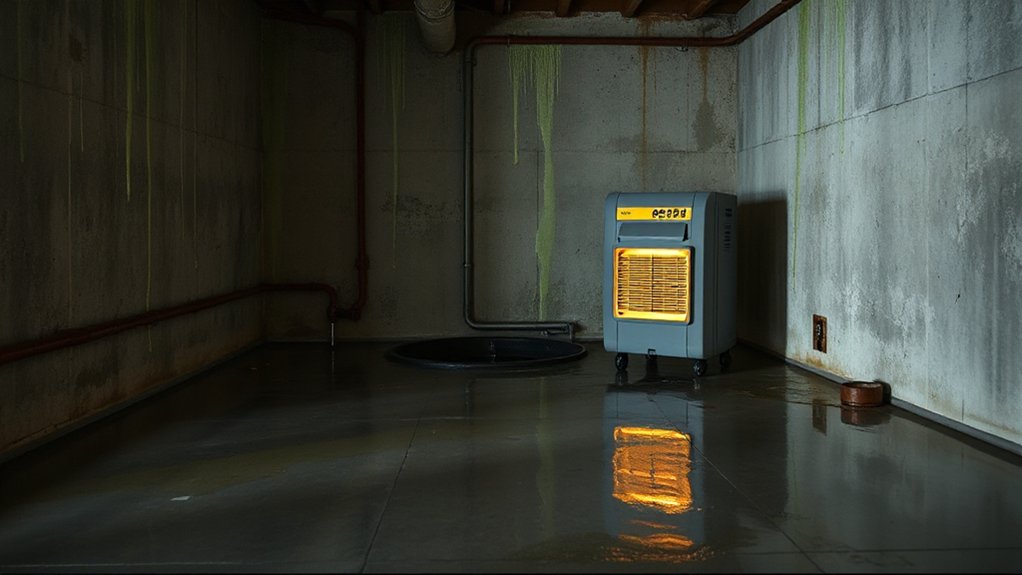

Basement damp proofing matters because moisture threatens your structural integrity and indoor air quality. You’ll want a precise assessment of how water enters, where vulnerable points lie, and what prevention steps best fit your home. If you don’t address damp, you risk mold, costly repairs, and degraded value. The method you choose—interior or exterior—depends on materials, climate, and risk factors. A careful, informed plan keeps you ahead of hidden problems—but the next steps vary by situation.
Key Takeaways
- Damp proofing prevents moisture intrusion that can cause mold, odors, and indoor air quality decline in basements.
- It protects structural integrity by reducing water-related stress, cracks, and deterioration of foundation elements.
- Exterior and interior damp-proofing approaches address different moisture sources, offering long-term dryness and faster remediation, respectively.
- Proper drainage and moisture removal (sump pumps, French drains) lessen hydrostatic pressure and keep basements dry.
- Regular maintenance and monitoring ensure system effectiveness, preserve insulation, and safeguard home value.
What Damp Is and Why Basements Get Wet
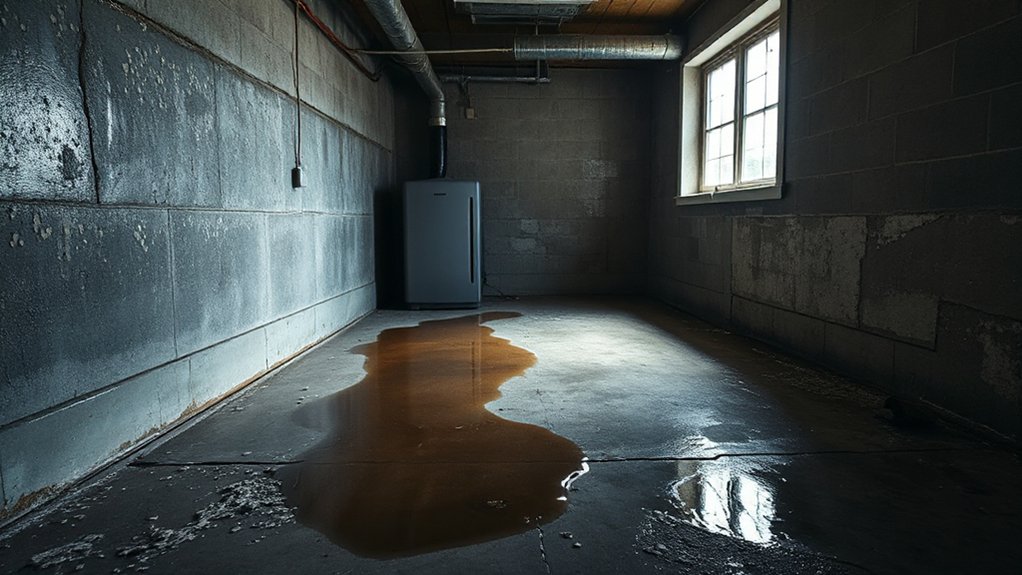
Damp in basements results from moisture moving through walls, floors, or soil, and from air that’s saturated or poorly ventilated. You analyze the moisture source by distinguishing vapor intrusion, capillary rise, and bulk water ingress.
Regarding movement, capillary action pulls groundwater upward into porous materials, increasing RH and surface moisture. Vapor diffusion depends on humidity gradients across envelopes, while liquid ingress arises from cracks, joints, or hydrostatic pressure.
Basements become wet when barriers fail or ventilation is insufficient, elevating humidity levels and fostering condensate formation. Addressing these mechanisms requires targeted measures, including basement ventilation optimization and the installation of moisture barriers to control vapor transfer.
The goal is a stable microclimate that minimizes condensation risk and structural deterioration.
Signs Your Basement Needs Damp Proofing
Wet stains and a musty odor are key early indicators that your basement may need damp proofing. You’ll want to assess how widespread the staining is and correlate it with any persistent odor to gauge moisture sources.
This initial check sets the stage for targeted testing and corrective action.
Wet Stains Evidence
Have you noticed irregular, discolored patches on basement walls or floors? Wet stains serve as tangible indicators of moisture intrusion and potential damp-proofing needs.
On concrete surfaces, look for mineral halos, splotches, or darkened zones that persist after surface drying. On porous materials, staining may penetrate deeper, revealing ongoing water movement rather than transient spills.
Identify patterns: uniform bands near the floor, spreading rims along joints, or irregular blotches tied to drainage paths. These signs correlate with moisture transport mechanisms, including capillary rise and seepage through cracks.
Evaluate building physics by considering basement insulation and drainage systems, since effective barriers and proper channeling reduce stain formation.
Early documentation of stain evolution supports timely remediation decisions and prevents structural degradation.
Musty Odor Clues
Musty odors are a practical clue that moisture intrusion is ongoing and your basement may need damp-proofing. You sense a persistent, mildew-like scent after rainfall or during humidity spikes, even if surfaces look dry. This odor signals trapped moisture and microbial activity within wall cavities, floors, or stored materials.
Track odor intensity with humidity fluctuations to differentiate transient from ongoing issues. Poor basement insulation can exacerbate temperature differentials, promoting condensation that sustains odors.
Implement humidity control strategies to reduce airborne moisture, then verify that smell diminishes as conditions stabilize. Combine air sealing, vapor barriers, and proper drainage to interrupt odor pathways.
Regular monitoring of humidity levels and air exchange helps prevent recurrence, supporting long-term damp-proofing effectiveness and structural health.
How Damp Proofing Protects Your Foundation
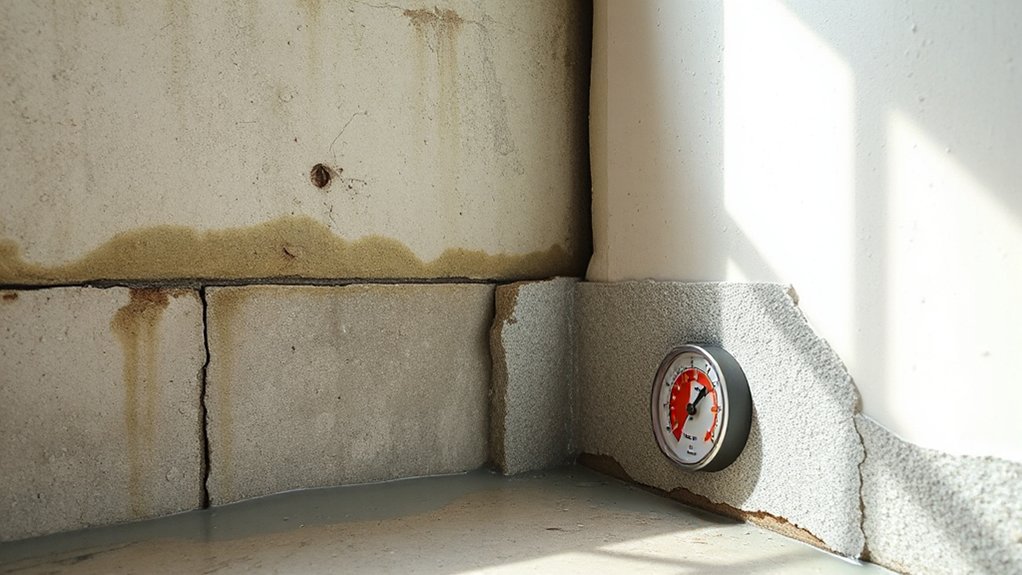
Damp proofing shields your foundation from moisture-induced stress, reducing the risk of cracks and settlement that can compromise structural integrity.
By limiting indoor humidity and moisture intrusion, it also helps maintain healthier interior air and prevents mold growth that can affect occupants.
In addition, a proven damp-proofing system supports long-term home value by protecting structural components and reducing repair needs.
Prevent Structural Damage
Wet conditions can drive moisture into a building’s base, and damp-proofing acts as a barrier that prevents water from reaching the foundation and weakening structural elements. You prevent structural damage by stopping water ingress before it reaches load-bearing components, reducing hydrostatic pressure that can cause bowing, settlement, or cracking.
Damp-proofing minimizes moisture migration through walls, preserving soil-structure interaction and delaying deterioration of supporting elements. By maintaining a dry base, you limit corrosion of steel reinforcements and reduce freeze-thaw damage that expands Foundation cracks.
Effective measures complement Basement insulation to control temperature gradients and moisture migration, further stabilizing the foundation envelope. Regular inspection confirms membrane integrity and drain performance, ensuring long-term resilience.
This approach directly mitigates risk without relying on interior air quality considerations.
Protect Interior Air Quality
Damp-proofing not only prevents water ingress but also protects interior air quality by limiting moisture-related deterioration and mold growth within the building envelope. You evaluate how humidity fluctuations drive condensation, spawn mold, and degrade indoor pollutants, then connect these outcomes to structural and HVAC performance.
With proper damp-proofing, surface moisture declines, reducing substrate dampness that fuels microbial proliferation and allergen persistence. Baseline ventilation effectiveness increases when humidity remains stable, because air exchange is less disrupted by condensation events.
Implementing basement insulation minimizes thermal bridges that invite cold surfaces and dew, while vapor barriers regulate moisture movement across assemblies. Together, these measures curtail volatile organic compound accumulation and minimize damp-driven air quality spikes, supporting healthier occupancy conditions without compromising the integrity of the foundation.
Preserve Home Value
When you preserve a home’s value, effective damp-proofing protects the foundation by limiting moisture-related damage that can erode structural integrity and curb appeal. You engage targeted measures that reduce hydrostatic pressure, prevent wood rot, and minimize salt efflorescence, preserving long-term stability.
By identifying vulnerable joints and addressing sudden temperature-driven movements, you avoid compounding deterioration that lowers appraisal value. Foundation cracks, if unchecked, propagate with soil expansion and contraction, increasing repair costs and insurance risk.
Implementing robust drainage solutions redirects groundwater away from the footprint, reducing sustained moisture in structural elements. This approach sustains interior consistency, preserves load paths, and maintains market desirability.
Regular monitoring, coupled with code-compliant waterproofing, provides measurable value retention and a demonstrable defense against depreciation from damp-related damage.
How to Choose the Right Damp-Proofing Method for Your Home
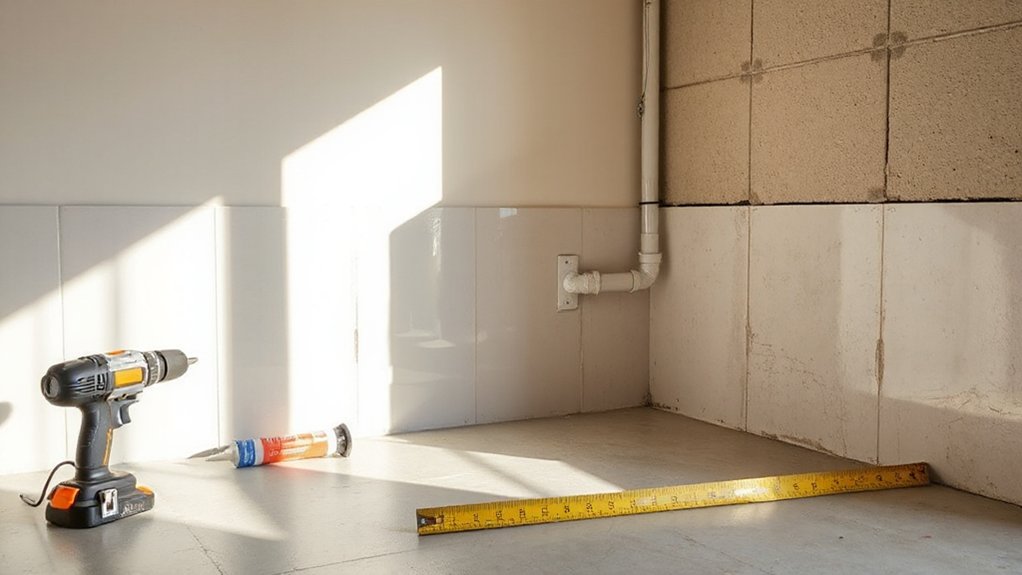
Choosing the right damp-proofing method hinges on accurately identifying the moisture source, the extent of intrusion, and the wall construction involved. You diagnose whether water ingress is hydrostatic, condensation, or capillary.
You quantify moisture burden, assess substrate compatibility, and match treatments to substrate porosity and load. You evaluate interior versus exterior access, long‑term durability, and impact on indoor air quality.
You consider vapor barriers, drainage optimization, and sealing strategies in concert with active systems when necessary. You integrate basement insulation considerations to reduce thermal bridging and manage humidity profiles.
You also weigh Radon mitigation requirements as part of *all-encompassing* moisture control, ensuring solution compatibility with existing ventilation and remediation plans.
Final selection prioritizes measurable performance, maintainability, and cost‑effectiveness, with a clear implementation roadmap.
Interior vs Exterior Damp Proofing: Pros, Cons, and When to Use Each
Interior and exterior damp-proofing each offer distinct trade-offs in moisture control, cost, and disruption. So you’ll weigh durability and maintenance against installation scope.
You’ll compare how interior methods manage existing damp and drainage dynamics versus exterior measures that address the source and long-term soil moisture.
Then assess which approach aligns with your basement conditions and budget.
The discussion centers on balancing practicality and effectiveness across the interior-exterior spectrum to determine the appropriate use for your situation.
Interior vs Exterior Choices
Do you know why interior and exterior damp proofing strategies differ in effectiveness and cost? When you choose, you weigh disruption, long-term performance, and moisture pathways.
Exterior approaches typically deter water ingress at the source, often improving long-term dryness but requiring excavation, coatings, and membrane layers.
Interior methods reduce construction impact and can address existing damp spots quickly, yet may leave latent moisture in wall assemblies if ventilation and drainage aren’t managed.
You should consider basement insulation and its role in temperature stability and condensation control, alongside appropriate ventilation techniques to balance humidity loads.
Proactive planning aligns material compatibility, soil conditions, and climate with the chosen strategy, ensuring both vapor management and thermal efficiency without unnecessary overengineering.
Pros and Cons Balance
Exterior damp proofing generally delivers stronger long-term dryness by blocking water at the source, though it demands excavation, membranes, and more upfront cost. You weigh interior methods against exterior barriers by considering control, disruption, and maintenance.
Interior approaches—often quicker to install—prioritize moisture management near the workspace, yet rely on ongoing dehumidification, sealing, and ventilation to keep equilibrium.
Exterior systems reduce hydrostatic pressure, limiting saturation of foundation walls and minimizing interior humidity spikes. However, they require planning, soil access, and potential landscape changes, increasing risk during repair.
Effective decisions combine drainage solutions outside with basement ventilation inside to sustain dryness. Assess leak history, soil conditions, and utility access.
When moisture is episodic, interior strategies may suffice; for persistent seepage, exterior interventions offer resilience and long-term protection.
Sump Pumps and French Drains for Damp Control
Sump pumps and French drains are fundamental components for controlling dampness, directing water away from foundation walls and reducing hydrostatic pressure. You deploy a sump pump to remove collected groundwater, guaranteeing continuous operation during wet seasons and power reliability checks.
French drains channel subsurface moisture toward the discharge point, preventing buildup near footings. System design aligns with site hydrogeology, pump sizing, and drainage gradients to minimize fallback risk.
When integrating, guarantee proper grading, backflow protection, and sump lid sealing to curb odor and debris intrusion. You should consider Basement insulation to maintain thermal stability and reduce condensation, while Vapor barriers underneath usable spaces prevent interior vapor migration.
Regular testing, maintenance, and clear documentation affirm long-term performance and structural integrity.
How Moisture Affects Mold, Mildew, and Indoor Air Quality
Moisture in a basement directly drives mold and mildew growth, which in turn degrades indoor air quality by releasing spores and volatile organic compounds. You’ll see moisture elevate mold growth as cells utilize alcoves, porous substrates, and hidden cavities to colonize rapidly.
When surface substrates and bulk materials remain damp, the indoor humidity level stabilizes near the dew point, sustaining ongoing microbial activity. This combination raises particulate concentrations and can trigger irritant responses in occupants.
You should monitor relative humidity and surface moisture to predict and limit microbial bloom potential. Increases in indoor humidity correlate with accelerated spore emission and volatile organic compound liberation, reducing air clarity and comfort.
Effective damp control minimizes these processes by maintaining consistently dry conditions and thorough material drying.
Preventive Maintenance for Long-Term Dry Basements
Monitor humidity trends and promptly address small leaks before they escalate, documenting findings for trend analysis. Prioritize basement insulation to reduce temperature differentials that drive condensation, selecting materials with appropriate R-values and vapor retarders consistent with code guidance.
Apply waterproof coatings to exterior and interior surfaces where exposure exists, ensuring proper surface prep, cure, and thickness per manufacturer specs. Maintain a clear perimeter free of debris to sustain drainage paths, and replace degraded seals promptly to sustain long-term dryness.
Common Mistakes That Undermine Damp-Proofing Projects
Common damp-proofing projects fail when teams overlook root causes or skip critical details, leading to reoccurring moisture issues despite initial fixes. You must diagnose systematically, because surface remedies neglect hidden pathways and conditional performance.
Missteps include assuming exterior barriers will suffice without verifying interior continuity, and treating single symptoms rather than underlying drainage or vapor dynamics. Precision matters: verify basement insulation performance, guarantee wall sealing integrates with a continuous envelope, and test for hydrostatic pressure before and after work.
Documentation, material compatibility, and sequencing coordinates prevent gaps that compromise durability. Avoid over-reliance on quick fixes; validate in-situ performance under realistic conditions.
Consistent QA reduces callbacks and preserves long-term effectiveness.
- Prioritize root-cause assessment and testing
- Guarantee basement insulation and wall sealing integrate cohesively
- Validate performance with field testing and documentation
Cost, Value, and ROI of Damp Proofing
A damp-proofing project should be evaluated for cost, value, and ROI using a structured framework that links upfront investment to measurable performance outcomes. You quantify initial costs, including materials, labor, and contingencies, against expected gains in dry-out time, decreased moisture-driven energy use, and reduced future repair needs.
Value emerges from extended asset life, higher usable space, and preserved resale value, not just immediate price tags.
ROI is driven by lower insurance premiums, fewer mold-related claims, and minimized disruption costs.
Consider how basement insulation and waterproof paints influence long-term thermal efficiency and moisture control, reinforcing a durable envelope.
Balance upfront expenditure against probability-weighted benefits over a defined horizon to guarantee decisions align with risk tolerance and performance targets.
DIY vs Professional Damp Proofing: When to Call in Experts
DIY damp-proofing can be cost-effective for straightforward, small-scale issues, but you should assess the task’s complexity, risk, and long-term certainty before deciding to DIY or hire a pro. You’ll weigh system integration, material compatibility, and warranty implications, recognizing that improper sealing or drainage changes can worsen moisture.
When to call in experts hinges on evidence of active ingress, repetitive failure, or limited access to the underlying structure. Professionals can design with Basement insulation strategies and Drainage systems to ensure lasting performance, plus code-compliant installation and documented testing.
A measured approach reduces total cost risk and preserves insulation integrity over time.
- Evaluate structural access and moisture history before proceeding
- Prioritize proven drainage and insulation compatibility in planning
- Consider professional diagnostics for long-term certainty
What to Expect During a Damp-Proofing Project
During a damp-proofing project, expect a structured sequence: assessment, preparation, installation, and verification. You’ll start with a precise evaluation of moisture sources, wall integrity, and drainage patterns, documenting measurements and expected outcomes.
Preparation involves sealing, dust control, and access management to protect occupants and belongings.
In installation, you’ll see primer coats, waterproof barriers, and membrane placements tailored to your basement’s geometry, with attention to overlaps and continuous coverage.
Verification includes post-installation testing, moisture monitoring, and a warranty review to confirm performance criteria.
Consider basement insulation improvements as part of overall efficiency, ensuring compatibility with installed barriers.
You’ll receive written specifications, maintenance guidance, and inspection timelines, enabling you to track progress and verify long-term effectiveness of waterproof barriers and the overall damp-proofing system.
Frequently Asked Questions
How Long Does a Damp-Proofing Project Typically Take?
A damp-proofing project typically takes several days to a week, depending on scope. You’ll implement moisture control strategies and install waterproof membranes, ensuring joints and penetrations are sealed, test for leaks, and verify proper drainage and cure times.
Will Damp Proofing Eliminate Foundation Cracks Permanently?
We’ll seal the cracks, but no—damp proofing won’t permanently fix all foundation cracks. You’ll achieve ongoing moisture prevention and foundation sealing, yet some cracks may require additional repair. You determine outcomes by thorough assessment and proper, targeted mitigation.
Is Interior or Exterior Work Louder or Messier?
Interior work is usually quieter but messier indoors; exterior work tends to be louder and messier overall, though noise depends on methods and site. You’ll notice interior noise is lower, while exterior mess impacts surroundings more consistently.
What Maintenance Follows Damp-Proofing Installation?
You follow up with moisture control checks and monitor vapor barriers for peak performance, inspecting seals, reapplying coatings as needed, and maintaining drainage around the foundation to prevent moisture intrusion and protect indoor air quality.
Can Damp Proofing Address Radon or Other Pests?
No, damp proofing doesn’t address radon or pests directly; you’ll need separate measures. You should consider radon mitigation and pest prevention alongside damp-proofing to ensure thorough indoor air quality and structural protection.
Conclusion
You’ve learned how damp proofing shields your basement, preserves structure, and improves indoor air quality. Think of it as a preventative shield: a concrete crack sealed today prevents a water-logged future. A recent study found homes with proper damp-proofing spend 10–15% less on moisture-related repairs over a decade. When you act now, you reduce risks of mold, mildew, and costly remediation. Prioritize correct method, professional assessment, and timely maintenance to protect your investment long-term.