


You can brighten a small kitchen by choosing light tiles in whites, beiges, or soft grays, with large formats and narrow grout lines to cut clutter. Opt for reflective finishes and linear or subway patterns to expand sightlines, while subtle textures add interest without overpowering. Think practical layouts and budget-friendly choices that maximize every inch, then finish with coordinated grout and lighting to keep the space cohesive—and you’ll see how the right tile decisions quietly shape the room you want to live in.
Key Takeaways
- Use pale, cool-toned tiles (white, beige, gray) to brighten small kitchens and reflect light effectively.
- Opt for large-format tiles with light or narrow grout to minimize visual breaks and enlarge sightlines.
- Choose subway or linear layouts with consistent grout for seamless walls and an open feel.
- Incorporate a single bold accent strip or subtle geometric motifs to add modern interest without clutter.
- Select stain-resistant grout and grout colors that hide wear for easy maintenance in tight spaces.
Choose Light-Boosting Colors and Finishes for a Brighter Small Kitchen

Lighten the room with pale, cool-toned tiles and reflective finishes that bounce daylight around the space. You’ll choose light-boosting colors and finishes that visually expand a small kitchen, prioritizing brightness without sacrificing style.
Lean into color psychology by pairing airy whites, soft beiges, and gentle grays to cultivate calm, open vibes. You’ll notice cool tones subtly recede walls, making areas feel larger and more breathable.
For tile material selection, opt for porcelain or ceramic with semi-gloss or matte finishes that reflect light efficiently while staying durable in a high-traffic kitchen. Avoid heavy textures that trap shadow.
Keep grout narrow and light, or consider large-format tiles to reduce visual breaks.
The result: a brighter, more inviting, efficiency-focused space that still feels thoughtfully curated.
Small-Kitchen Tile Patterns and Textures That Maximize Space
Texture and pattern can make a small kitchen feel bigger, so pick tile designs that elongate sightlines and reduce seams. You’ll maximize space by choosing patterns that draw the eye along walls, not across clutter.
Opt for linear or subway layouts in pale hues with consistent grout to minimize breaks, creating a seamless backdrop. Pattern variations on a single wall or backsplash add interest without crowding the room, while texture contrasts—matte walls with glossy accents—create depth without overheating the sense of space.
Favor light, cool tones to reflect light, and use subtle geometric motifs to add modernity without overwhelming. Keep repeat tiling restrained, so your kitchen breathes.
You stay trend-aware by balancing bold texture with calm color, ensuring a cohesive, open feel.
Practical Tile Layouts and Placement Strategies on a Budget
If you’re on a budget, smart tile layouts can stretch your space without stretching your wallet. You’ll maximize impact by starting with a grid that aligns with your window and appliance lines, keeping grout minimal and colors light to brighten corners.
Favor rectangular tiles in a running bond or herringbone for visual movement without waste, and consider a single bold accent strip to guide the eye without overdoing it.
Choose a cohesive color palette—soft neutrals with a pop of color on a backsplash—to feel larger and more modern.
For DIY installation, pre-measure trimming areas to reduce off-cuts, and use matching spacers for consistency.
After laying, plan for tile sealing in high-traffic zones to protect your investment and maintain a clean, contemporary look.
Maintenance Tips to Extend Tile Life in a Compact Kitchen
Even in a compact kitchen, smart maintenance keeps tile looking fresh and lasting longer. You’ll improve durability by choosing stain-resistant grout and matching tile colors that hide wear between cleanings.
Establish a simple weekly wipe-down routine, using a pH-balanced cleaner to protect finishes and minimize soap residue. When you notice grout darkening or cracking, tackle it early; reseal grout lines and replace damaged tiles to prevent spreading cracks.
Schedule light scrubs for high-traffic zones to avoid dull patches and water stains. For longer life, prioritize tile cleaning after cooking splatters, and keep a small kit handy for quick touch-ups.
Grout sealing periodically locks out moisture, preserving color, and reducing maintenance in a busy, color-conscious kitchen.
Finishing Touches: Lighting, Grout, and Color Cohesion for a Brighter Zone
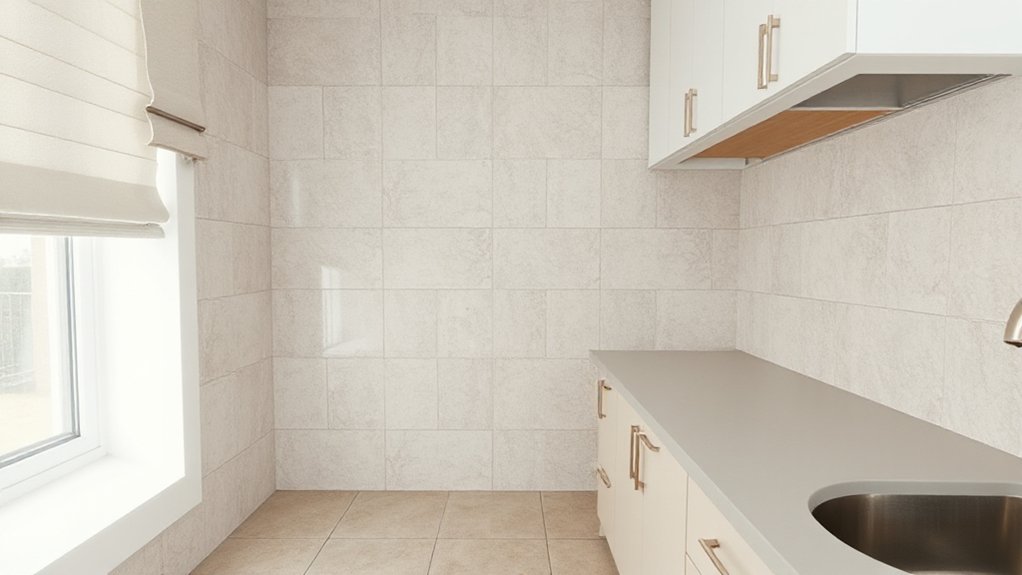
Think of lighting, grout, and color as the trio that brightens a small kitchen without crowding it: choose warm, energy-efficient fixtures that cast even light across surfaces.
Seal grout to keep its color clean, and pick hues that reflect natural light to widen the space. You’ll want decorative tile accents sparingly used to add character without clutter, and let backsplash designs echo the room’s palette to create cohesion.
Use grout in a shade that hides smudges yet pairs with floor and cabinet tones for a seamless flow. Keep color shifts smooth and purposeful, favoring lighter neutrals with a few bold pops for contrast.
Balance texture and shine to enhance perception of space while preserving a calm, contemporary vibe.
Frequently Asked Questions
How Do I Choose Tile Sizes for Uneven Kitchen Walls?
To handle uneven walls, choose large tiles to minimize grout lines and use digital level checks; or opt for staggered patterns that hide irregularities. Consider wall texture and tile installation details, plus grout color that complements the space.
Are Reflective Tiles Better for Tiny, Dimly Lit Kitchens?
Shimmer becomes your guide: reflective surfaces brighten, doubling light and depth. You’ll feel brighter spaces with less clutter; lighting enhancement shines through. You choose reflective surfaces to visually enlarge, staying color-conscious, trend-aware, space-minded, and confidently luminous.
What Budget-Friendly Underlayment Options Work Best?
Underlayment options that save you money include affordable backing and simple underlayment materials like foam, cork, or thin plywood. You’ll get cushioning, sound control, and stability while keeping your small kitchen stylish, space-minded, and color-conscious.
Which Grout Colors Resist Staining in High-Usage Areas?
Grout sealing improves stain resistance, so you choose colors that hide wear, match trends, and brighten spaces. You’ll pick midtone neutrals, test samples, and apply consistently, keeping grout resilient, vibrant, and effortless in high-traffic, mood-savvy kitchens.
Do Ceiling Tiles Impact Perceived Kitchen Height With Small Spaces?
Ceiling height does influence visual perception; you’ll feel taller rooms when you use lighter ceilings and reflectivity. You’ll heighten space perception by avoiding heavy textures, choosing bright, trend-aware hues and keeping lines clean for a roomier vibe.
Conclusion
You’ve got this small kitchen party under control, champ. Light tiles, big formats, and narrow grout lines are your hype squad, reflecting every inch you’ve squeezed into the room. Patterns whisper “spacious!” while textures wink from the walls. Budget-friendly layouts? Check. Maintenance tips? Check. Now, pair that color-coordinated glow with clever lighting and cohesive grout, and suddenly your counter space looks twice as big—without actually buying twice as much stuff. Satire aside, reality: you’re winning at brightness.