
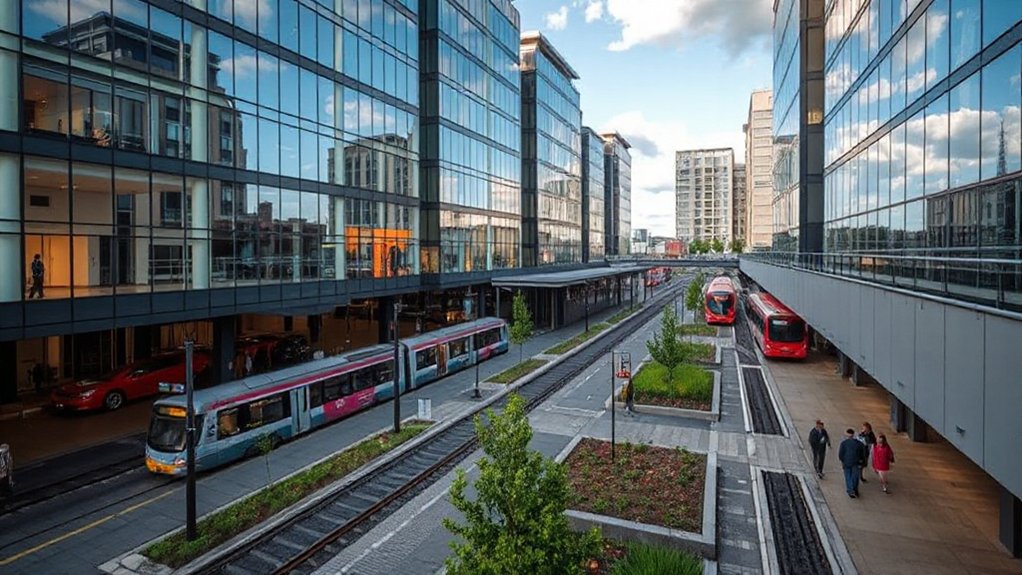

Slough property near transport links commands faster, more predictable rents and stronger demand by cutting commute times and expanding tenant pools. Proximity premiums rise with closer station access, while vacancy tightens and leases shorten in high-demand corridors. Crossrail enhances central-London and Heathrow connectivity, boosting activity in business parks and mixed-use schemes. Beyond transit, growth comes from Grade A rents, stable occupancy, and phased redevelopment. If you want a concrete roadmap, you’ll get more insights as you continue.
Key Takeaways
- Proximity to transport links in Slough commands price premiums, lowers commute times, and attracts higher-demand tenant and buyer pools.
- Crossrail and upgrades shorten peak journeys, expanding investor appeal to business parks, tech campuses, and mixed-use schemes.
- Transport-adjacent assets yield strong rent growth, with demand concentrated near stations and higher turnover in multi-modal access areas.
- Core corridors show value plateaus post-saturation, while fringe zones gain value with service reliability improvements.
- Market data links proximity to transit with faster rent growth, higher occupancy stability, and stronger resale velocity.
Why Invest Near Transport in Slough: The Market Fundamentals

Slough’s investment case near transport links is built on clear, data-driven fundamentals: proximity to rail, road, and future Crossrail-style connectivity consistently drives demand, rents, and resilience.
You’ll see population and business density concentrate where transit reduces travel times, and occupancy tends to stay solid even in slower cycles.
Property tax regimes and zoning laws shape certainty: predictable levies support budgeting, while clear classifications minimize planning risk and release value when amenities cluster around stations.
Market data signals quicker rent growth in zones with multi-modal access, higher vacancy turnover, and lower counterparty risk.
You’ll benefit from transparent timelines for upgrades, documented demand spillovers, and empirical rent-per-square-foot gains tied to accessibility.
In short, proximity magnifies fundamentals, not just visibility.
How Crossrail Changes Slough’s Accessibility and Appeal
Crossrail’s arrival reshapes Slough’s accessibility profile by cutting travel times, expanding commuter reach, and opening multi-modal synergies. You’ll notice faster links to central London and Heathrow, plus improved regional connections, which broadens demand for rental and resale.
Data point: peak-hour journey times shorten meaningfully, driving higher occupancy rights and longer average stays in key corridors. Accessibility upgrades elevate Slough’s profile for business parks, tech campuses, and mixed-use schemes, supporting a layered value story for investors.
The improved transport spine boosts footfall to local amenities, including historical architecture sites that become retail and cultural anchors. You’ll also see spillovers to local cuisine districts, where dining demand stabilizes beyond standard commuter hours.
Slough Growth Drivers Beyond Transit Links
Industrial and tech spillovers are fueling Slough’s growth beyond transit access, with demand concentrated in its established business parks and new mixed-use developments. You’ll see expansion driven by occupier preferences for asset quality, tenant mix, and long-term occupancy viability, supported by robust market data.
Local amenities attract professional labor pools, sustaining occupancy in office and flex space while reducing commuting friction. Community engagement elevates place-making value, reinforcing consented development and ongoing stakeholder collaboration.
Market signals show rising rents in Grade A campuses and improved retention metrics as employers leverage proximity to technical talent and nearby research facilities. Mixed-use schemes enhance daily activity, boosting short-term footfall and midweek renting stability.
When aligning investments, weigh amenity density, visibility, and dynamic corporate demand alongside existing transit access.
Best Property Types Near Transport Hubs in Slough
You’ll want to start with transport-adjacent rentals and hub-proximity property types, as data shows higher demand and faster yields near Slough’s transit nodes.
By prioritizing compact, efficient layouts and strong transport links, you can capture turnover from commuters and short-stay tenants alike.
This discussion should compare turnover, vacancy, and price trends across Transport-Adjacent Rentals and Hub-Proximity Property Types to identify the clearest investment signals.
Transport-Adjacent Rentals
You’ll find demand strongest for well-located flats and compact family-friendly units within walking distance of stations, bus corridors, and park-and-ride facilities.
Data show rental yields stabilizing when units align with peak commuter workflows, and occupancy remains resilient even in slower months.
Considerations include property taxation impacts on net returns and the importance of tenant retention strategies to sustain long-term occupancy.
Market intelligence indicates that well-marketed, compliant properties with transparent pricing outperform peers.
Prioritize efficient layouts, robust inspections, and proactive maintenance to maximize cash flow and minimize turnover.
Hub-Proximity Property Types
Near transport hubs in Slough, the strongest performers are compact, high-clarity units that maximize turnover and minimize space underutilization. Modern studio and one-bedroom flats, plus well-designed two-bedroom layouts, consistently attract commuters seeking efficiency and easy access to rail and bus routes.
Hub-proximity property types favor adaptable layouts that support short-term stays and long-term leases, with shared amenities enhancing incidentals like co-working spaces and secure bike storage.
In data terms, demand concentration near stations drives yield, while churn remains modest when units align with commuter schedules.
Historical architecture can add character without sacrificing load factors, provided updates respect structural integrity.
Community outreach programs boost occupancy through local partnerships, helping landlords tailor units to evolving transit patterns and resident preferences.
Rentability Metrics for Transport-Adjacent Assets in Slough
Historical trends inform price cycles; you’ll compare peak vs. off-peak absorption and identify the lag between macro demand and tenant retentions. Price resilience emerges when rents hold despite seasonal dips, supported by diversified tenant mixes and robust lease structures.
Demographic shifts shape long-run demand; you’ll analyze commuting patterns, household formation, and business density to test sensitivity to employment hubs. Combine quarterly data with forward-looking indicators like planned infrastructure upgrades to gauge forward rent trajectories and capex planning.
This disciplined approach reduces uncertainty and guides prudent investment choices.
Case Studies of Transport-Linked Deals in Slough
Historical trends show price resilience where stations anchor regeneration, yet sensitivity remains to service disruption and timetable changes. In one example, a boutique workspace near a key interchange outperformed peers as weekly patronage spiked during events, while another residential asset near a slower feeder route underperformed when delays grew predictable.
Market forecasts point to continued demand concentration along high-frequency corridors, supported by phased infrastructure upgrades and broader regional commutes.
Cash-flow sensitivity analyses emphasize near-term occupancy lift vs. long-term capex, guiding risk-adjusted capital allocation.
Yield Versus Capital Growth Near Transport in Slough

Yield and capital growth near Slough’s transport hubs hinge on how quickly high-frequency corridors translate into steady cash flow and robust longer-term value.
You’ll compare yields against potential price appreciation by year, factoring rent growth, occupancy stability, and financing costs.
Data shows diversified tenants and shorter lease durations can boost quarterly income while still supporting appreciation through improved transport access.
In markets with strong local demand, yields may compress as capital flows rise, yet price growth often outpaces rents when development near stations accelerates.
Sustainable development and Local amenities influence both axes, supporting tenant retention and premium pricing.
You’ll want transparent metrics: net yield, annualized cap rate, and horizon-based value projections, aligned with risk tolerance and portfolio diversification.
Pricing Dynamics: The Transport Proximity Premium in Slough
You’ll see a transport proximity premium reflected in pricing when proximity to links reduces travel times and boosts landlord demand.
Data shows proximity premium effects shift with station upgrades and service frequency, altering both entry prices and cap rates in Slough.
As transport links evolve, expect transport-link valuation shifts to tighten price sensitivity for nearby properties, shaping investment decisions.
Proximity Premium Effects
Proximity to transport links in Slough creates a measurable pricing premium, as accessibility reduces time-to-work and expands potential tenant and buyer pools. You’ll notice tighter spreads between properties within a five-minute transit catchment and those just beyond it, with data showing price per square foot rising proportionally to proximity.
In rental markets, vacancy rates tighten where access is strongest, and lease terms skew toward shorter cycles, reflecting higher demand. On the sales side, premium captures not just immediacy but predictability of commutes, boosting resale velocity.
Market clarity emerges when you map proximity bands against recent sale comps and rent indices. Urban greenery and historical landmarks subtly influence value perception, reinforcing desirability in mixed-use corridors and walkable neighborhoods.
Transport-Link Valuation Shifts
Data show pricing prefixes around major stations move in quarterly cycles, surfacing stronger yields when service upgrades align with demand surges from regional commuters.
Urban green spaces and Local cultural events subtly modulate the premium, adding qualitative uplift that isn’t captured by travel time alone.
In fringe zones, even small improvements in frequency yield outsized value increases, while core corridors exhibit plateauing premiums after saturation.
You should track node-specific benchmarks, service reliability, and event calendars to predict shifts rather than rely on broad market narratives.
Slough Price Sensitivity Dynamics
Price sensitivity in Slough hinges on how closely buyers value transport proximity relative to price, with the premium tightening near dense transit nodes and broadening when service reliability or frequency improves elsewhere. You’ll notice pricing gaps narrow where rail/rail‑link frequencies peak, while suburbs with sporadic service show wider spreads between property cost and perceived accessibility.
Historical trends reveal cyclical amplification during construction milestones and easing when alternative modes gain reliability. Market fluctuations reflect seasonality, developer activity, and policy shifts, all shaping willingness to pay for location near stations or bus corridors.
In practice, buyer cohorts weigh commute time reductions against price premiums, calibrating offers accordingly. For investors, monitoring uptime data, multiplex station access, and crowding patterns helps forecast future premium retention.
Financing Transport-Adjacent Property in Slough: A Practical Guide
Securing financing for transport-adjacent property in Slough hinges on demonstrating consistent access to rising traveler demand and clear rental upside from commuter flow. You’ll quantify current and projected ridership, occupancy by proximity to key nodes, and time-of-day demand shifts to illustrate resilience beyond short-term cycles.
Lenders expect transparent cash-flow models, linked to multi-year rent escalations and beta sensitivity to transport milestones, such as line upgrades or station refurbishments. You should showcase tenant diversification, long-term leases, and break options that preserve upside.
Leverage evidence of Transport innovation and Infrastructure funding coursing through regional plans, mapping how grant-supported infrastructure boosts value.
Present risk-adjusted returns with scenario analysis, funding maturity, and debt-service coverage ratios aligned to projected occupancy and renewal rates. This disciplined approach improves lender confidence and capital access.
Planning and Regulatory Considerations for Transport-Linked Projects in Slough
You’ll want to map Permitting Timelines and Approvals early, since delays can shift ROI and project phasing.
Zoning and Land Use rules shape site selection, density, and mix, so you should align plans with current policies and potential changes.
Environmental and Community Mitigation requirements add cost and timeline considerations, making stakeholder engagement and impact assessments critical from day one.
Permitting Timelines and Approvals
Permitting timelines for transport-linked projects in Slough hinge on synchronized planning approvals, regulatory screenings, and stakeholder consents that collectively shape development speed and risk. You’ll encounter interconnected approval processes across planning, environmental, and safety authorities, each adding distinct cadence to the overall schedule.
Typical durations reflect project scope, complexity, and public consultation requirements, with transport-oriented schemes often facing multi-tier reviews and potential resubmissions. Data shows permitting delays commonly stem from scope changes, data gaps, and coordination gaps between agencies, not just procedural rigor.
Proactive scheduling, clear documentation, and early engagement with regulators improve predictability and reduce risk-adjusted costs. Align milestones with funding windows, and maintain continuous stakeholder updates to minimize disruption as you navigate the approval processes toward a timely decision.
Zoning and Land Use
You’ll assess zoning restrictions and land use regulations to map allowable use classes, floor-area ratios, and setback envelopes against project scales and modal integration. Market data shows demand concentration around rail and road corridors, shaping viable parcel sizes and entitlements.
You should quantify phasing needs, identify special permit triggers, and anticipate cross-jurisdiction coordination. Rigorous zoning analyses reduce stalled timelines, align investor expectations, and improve contingency planning for grid, utilities, and access constraints.
Environmental and Community Mitigation
Mitigation credits should be tied to measurable performance targets. You’ll establish a data-driven framework that links pre- and post-construction metrics to regulatory thresholds and developer commitments.
Focus on urban greenery to buffer noise, improve air quality, and enhance resilience. Quantify canopy cover, evapotranspiration effects, and maintenance costs.
Implement robust monitoring dashboards that compare modeled forecasts against actual readings, enabling timely adjustments and transparent reporting to stakeholders.
You’ll leverage community programs to recruit local partners, measure engagement impact, and track job-market spillovers.
This approach aligns savings, risk allocation, and mitigation costs with market expectations, ensuring durable value creation around transport corridors.
Utilities and Infrastructure That Affect Slough Transport Investments
Utilities and infrastructure set the stage for Slough’s transport investments. You’ll see how utilities capacity and reliability underpin project viability, with data showing onward connections to rail, road, and bus networks.
Utility upgrades are a gating factor for mixed-use developments near stations, influencing construction timelines and occupancy rates. You’ll also note how power and water resilience affect schedule confidence for large-site builds and electrified transit connections, reducing risk in long‑term returns.
Across districts, infrastructure planning aligns with traffic models, capacity forecasts, and zoning rules, making cost‑of‑delivery estimates tighter and more predictable. Environmental constraints, grid upgrades, and feeder line upgrades shape remediation needs and permit timelines.
In short, utility upgrades and infrastructure planning materially steer project viability and investor confidence in Slough’s transport corridor.
Tenant Demand Profiles for Transit-Accessible Flats in Slough
Transit-accessible flats in Slough attract a diverse, data-driven tenant base, with demand concentrated around major rail links, bus corridors, and pedestrian-friendly station areas. You’ll see tenants prioritizing proximity to transport in monthly planning—short commutes, reliable service, and predictable costs.
Tenant preferences skew toward flexible layouts, secure parking, and smart-home features that support hybrid work and quick access to city hubs. Demographic shifts show rising shares of younger professionals and mid-career couples seeking convenience and value, alongside long-tenure renters valuing steady rental performance near transit nodes.
Seasonal spikes correlate with service enhancements and new rail links, reinforcing occupancy stability. You should monitor occupancy by ward, rider mix, and walkability scores to calibrate pricing and product features.
Commercial Assets Near Transport: Offices Versus Small Units in Slough
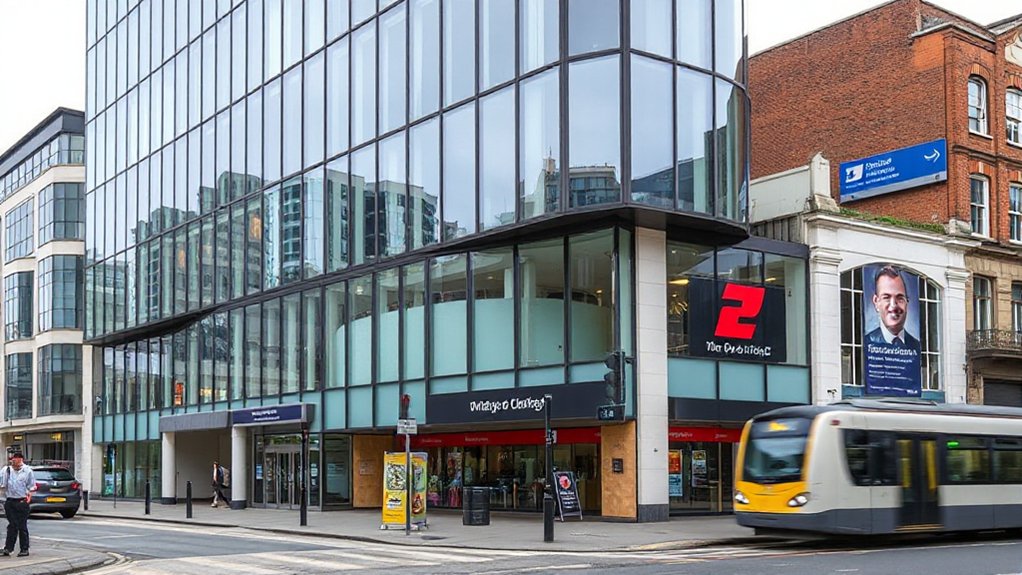
How do office sits near transport compare to compact units in Slough when demand centers on accessibility and cost control? You’ll weigh occupancy costs, cap rates, and space utilization across corridors near rail and bus hubs.
Offices typically command higher rents but offer scalable layouts and long lease terms, balancing with amenity access and professional clusters.
Small units yield lower upfront costs and tighter footprints, yet may constrain growth if facility needs expand.
Data indicate transport-linked assets boost occupancy for both segments, though office demand hinges on business services proximity and parking ratios, while compact units profit from flexibility and quick turnover.
Include considerations for adjacent Luxury apartments and growing Retail spaces to gauge overall ecosystem resilience and rental momentum.
Managing Rail Disruption Risk for Slough Investments
Rail disruption poses a tangible risk to Slough investments, so you should quantify exposure to both service interruptions and schedule renegotiations, then build mitigations around redundancy, visibility, and contingency costs.
You’ll map historical trends to forecast outage frequency, duration, and tariff impacts, aligning rent-roll sensitivity with service gaps.
Structure scenarios that compare baseline operations against sustained disruptions, quantifying revenue at risk and recovery timelines.
Prioritize redundancy: backup carriers, flexible lease terms, and staggered occupancy to cushion vacancy shifts.
Enhance visibility with real-time service dashboards, alerting, and partner coordination to shorten response times.
Cap costs by defining contingency budgets and rephasing capital plans.
Acknowledging Infrastructure upgrades as a shared resilience lever, calibrate investment pace to anticipated disruption cycles.
Due Diligence Checklist for Transport-Linked Assets in Slough
When evaluating transport-linked assets in Slough, you should start with a structured due diligence checklist that anchors value in exposure to rail and road access, service reliability, and planned infrastructure.
You verify station proximity, frequency, and transfer options, plus highway connectivity and congestion patterns at peak hours.
You quantify service reliability with disruption history, replacement bus services, and resilience of critical links during events.
You assess governance timelines for planned upgrades and funding milestones, then map environmental and safety standards to asset condition.
You track historical trends and demographic shifts to gauge demand drift, ensuring rent and occupancy forecasts reflect evolving commuter profiles.
Finally, you document data sources, assumptions, and sensitivity analyses to support defensible investment decisions.
Redevelopment and Value-Add Around Slough Stations
With redevelopment temptations clustered near Slough stations, you can quantify impact through footfall shifts, leasing velocity, and nearby rezoning approvals.
Value-add opportunities at Slough links hinge on mix changes, incremental yields, and capex absorption timelines, all trackable against station-by-station performance.
This data-driven lens sets the stage for targeted investing around the busiest transit hubs.
Redevelopment Temptations Near Stations
Redevelopment temptations near Slough stations are fueling value-add opportunities as transport links concentrate demand. You’ll see rapid shifts in land-use, with mixed-use envelopes structuring yield paths around transit hubs.
Historical trends show higher cap rates for walkable, amenity-rich blocks, while Cultural influences shape tenant mix and amenity provisioning, from cafés to coworking spaces.
Data indicate redevelopment closer to stations outpace peripheral schemes in occupancy and rent growth, with phased refurbishments limiting risk.
You benefit from targeted assets that balance heritage value with modern density, leveraging station-access to attract diverse tenants and buyers.
Plan with precise phasing, cost controls, and community-compatible designs to preserve character while maximizing NOI.
- Proximity-driven asset aging and retrofit viability
- Amenity-led demand shifts and tenant mix
- Density increases and price acceleration
- Historic layering and cultural cues guiding approvals
Value-Add Opportunities At Slough Links
Slough links present a clear pipeline for value-add plays, driven by near-station walkability and evolving commute patterns. You’ll target redevelopment around transit hubs to capture upside from higher footfall and longer dwell times.
Data show growing demand for mixed-use schemes that blend offices, residential, and retail, with underground or podium parking optimized for daily commuters.
Local amenities within a 10-minute radius—groceries, cafes, gyms—directly influence occupancy rates and rent resilience.
Lifestyle trends favor compact, transit-oriented layouts and flexible workspaces, reducing vacancy risk during shifts in tenant preferences.
Value-add strategies include upgrading lobby experiences, improving energy efficiency, and aligning pricing with micro-neighborhood demand signals.
In this framework, risk is mitigated by phased implementation and rigorous market-testing of unit mix and pricing.
Negotiating Leases and Rent Reviews Near Slough Transit Hubs
How negotiating leases and rent reviews near Slough transit hubs shapes the bottom line: proximity to Crossrail, Elizabeth Line branches, and major commuter routes tends to push capex and tenancy risk into sharper focus for both landlords and tenants.
You’ll tighten terms through precise rent adjustments, staged uplifts, and clear review dates that align with traffic forecasts and occupancy metrics. Data-driven benchmarks from comparable hubs guide negotiation power, while volatility in demand dictates risk premiums and break clauses.
Maintain documentation on maintenance, service charges, and shared spaces to protect cash flow. Clarity reduces disputes and speeds occupancy.
- Lease negotiations benchmarks
- Rent adjustments cadences
- Review timelines and triggers
- Responsibility allocations and caps
Exit Strategies: When to Divest From Transport-Led Bets in Slough
You should weigh Timing For Divestment against project lifespans and macro cycles, using observable data to gauge ideal exit points.
Monitor Market Signals To Watch such as cap rate shifts, vacancy trends, and financing costs that could alter risk-reward.
Consider Value Exit Scenarios by modeling multiple price and yield paths to determine clear thresholds for divestment.
Timing For Divestment
Careful timing matters when divesting from transport-led bets in Slough; investors should align exit decisions with observable market signals rather than fixed timelines. You’ll want to gauge demand shifts, cap rate compression, and redeployment liquidity, then exit when indicators align with risk tolerance.
In practice, you’ll measure occupancy trends, rent trajectories, and alternative use value, weighing them against redevelopment costs and timelines for Urban greenery and heritage preservation commitments. The goal is to avoid forced sales during volatility while preserving upside in nearby transit upgrades.
- Monitor vacancy spikes and lease-up velocity to trigger staged exits
- Track cap rate expansion/contraction against financing costs
- Assess reinvestment options tied to district branding and sustainability goals
- Align divestment with permitting windows and public sentiment around urban greenery and heritage preservation
Market Signals To Watch
Market signals matter most when timing exits from transport-led bets in Slough. You’ll assess price momentum, occupancy trends, and yield compression versus peers in Berkshire.
Track transaction velocity near major stations and TOD hubs, noting any sudden pullbacks after policy shifts or service disruptions.
Monitor rental growth versus new supply, especially in submarkets with improving urban greenery and pedestrian access, as well as areas where Local amenities expansion could sustain demand.
Pay attention to cap rate expansion indicators and exit liquidity in secondary markets, not just primary hubs.
Cross-check developer land-bank activity, planning approvals, and infrastructure timelines to gauge risk-adjusted exit windows.
Align timing with macro cycles, inventory levels, and macroeconomic signals to refine your approach.
Value Exit Scenarios
- Historical trends indicate cyclical peaks and troughs affecting sale timing
- Investment risks include liquidity gaps, cap-rate expansion, and tenant defaults
- Market depth and buyer activity guide ideal sequencing of dispositions
- Contingent plans safeguard capital during adverse liquidity events
Practical Steps to Start Your Slough Transport-Linked Portfolio
Beginning with solid fundamentals sets your Slough transport-linked portfolio up for disciplined growth: identify high-demand corridors near rail stations, bus hubs, and Moyle/Thameslink feeders. Then quantify tenant demand, vacancy trends, and rent trajectories using the latest market dashboards and council planning tallies.
You’ll map Historical trends to project occupancy cycles and rent resilience across periods of transit-driven demand spikes.
Assess Investment risks by stress‑testing leases, cap rates, and regulatory changes, focusing on permitted developments around Crossrail influences and planned station upgrades.
Compile a disciplined acquisition plan with target yields, underwriting assumptions, and exit routes.
Track performance monthly, reconcile forecasts against actual occupancy, turnover, and maintenance costs, and adjust pricing and tenant mix promptly to preserve margin and portfolio liquidity.
Frequently Asked Questions
How Do Seasonal Events Affect Transport-Adjacent Rents in Slough?
Seasonal events boost rents near transport hubs through event-driven demand, raising occupancy and rates during peak periods while seasonal tourism swells demand; you’ll see tighter vacancies, higher yields, and price readjustments as attendee influx fluctuates.
What Are Hidden Costs of Owning Near Slough Transit Hubs?
Hidden costs you’ll face include higher property maintenance and insurance premiums when you own near Slough transit hubs. You’ll track data on maintenance cycles, insurance trends, and market risks to quantify total ownership costs and protect cash flow.
Which Sub-Markets in Slough Benefit Most From Rail Disruption?
Disrupted rail raises demand in Transit infrastructure–adjacent sub-markets, you’ll see faster property appreciation where stations spur walkability and commuting options. You benefit from data-driven signals, tracking throughput, service restoration timelines, and landlord appetite shaping disciplined, proactive investment decisions.
How Does Land Value Near Stations Differ From General Residential Land?
Land value near stations outpaces general residential land due to higher demand; land appreciation accelerates with rail connectivity, while zoning restrictions cap supply timeline. You’ll see sharper price trajectories, driven by transferability, developer interest, and policy constraints.
What Credit Risk Patterns Exist for Tenants Near Slough Transport Nodes?
Tenant creditworthiness patterns show higher dispersion near transport nodes; you’ll see steadier Rental payment patterns when tenants have stable incomes. You should monitor vacancy risk and tenant mix, as credit risk clusters around university and commuter hubs.
Conclusion
You’ve got the data, the locations, and the timing. Transport links in Slough reliably lift rents, cap rates, and tenant demand, while growth drivers compound asset value over time. Focus on stations with redevelopment plans, diversify across asset types, and model rent escalations and vacancy shocks. If you monitor key metrics—yield, occupancy, and yield-on-cost—you’ll spot exits before the crowd. And when the market starts to hum, don’t forget your pager from the 1990s: stay disciplined, stay focused, stay ahead.