
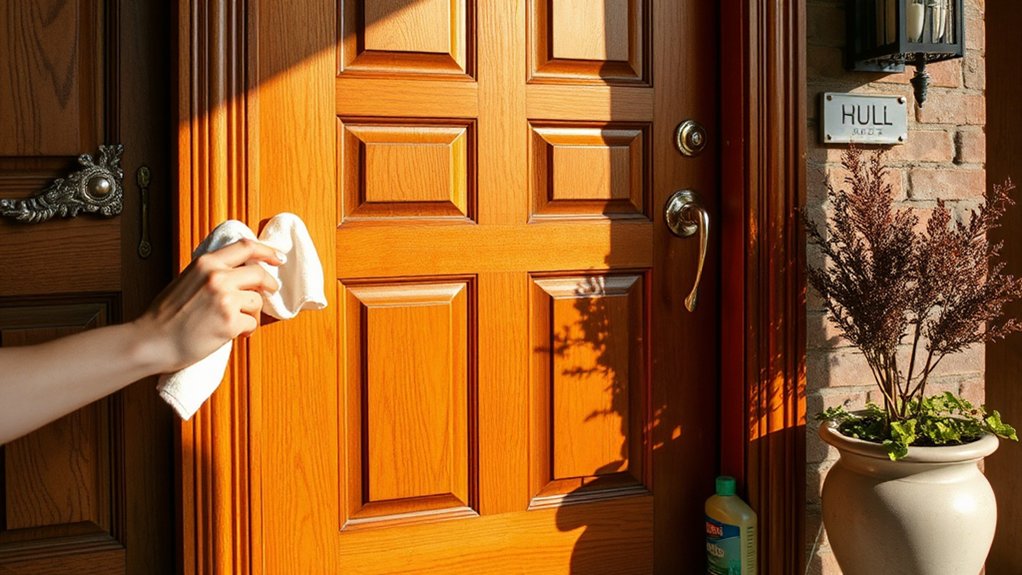

To maintain your wood front door, start by evaluating weather damage—look for cracks, warping, peeling finish, and moisture pockets, then test seals and alignment for gaps. Choose a climate-appropriate finish and prep the surface with thorough cleaning and light sanding. Apply flexible exterior sealant to all edges, and improve drainage and ventilation to manage moisture. Schedule seasonal checks and recoat or reseal as needed. Stay consistent; the right routine keeps beauty and protection for years, and you’ll uncover more tips ahead.
Key Takeaways
- Regularly inspect for cracks, rot, moisture, and seal gaps; address issues promptly to prevent further damage.
- Clean and prep surfaces, then sand smoothly before applying climate-appropriate stain or paint for durability.
- Apply exterior-grade sealant along edges and joints; reapply as needed to maintain a tight, flexible seal.
- Tighten hardware, check alignment, and ensure door operates freely to prevent wear and drafts.
- Maintain moisture control with ventilation, proper drainage, and seasonal protective measures to extend door life.
Assess Weather Damage on Your Wood Door
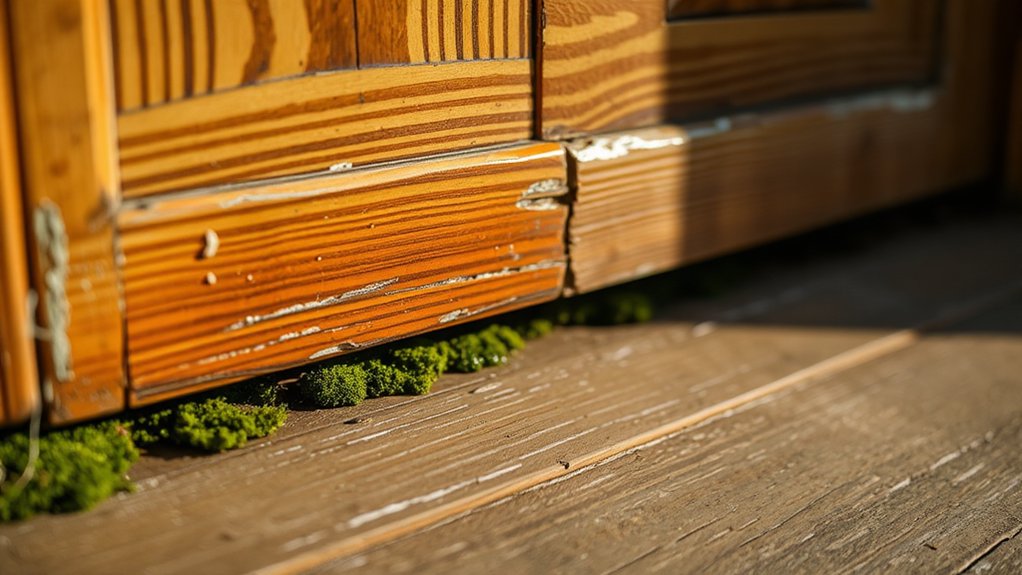
Weather damage can silently undermine a wood door’s integrity, so inspect for signs like cracks, warping, peeling finish, swelling, or water stains along the edges and panels.
You’ll look along rail joints and panels for movement, and check the backside for moisture pockets that indicate unseen leaks.
Note wood grain changes that reveal internal splitting or raised fibers, which signal structural stress.
Pay attention to paint peeling as an early warning of moisture ingress; flaking finish often accompanies edge swelling.
Test for softness with deliberate taps; soft spots indicate rot beneath the surface.
Record findings, focusing on location, extent, and moisture exposure.
Prioritize remediation steps in order of urgency: stop the source, dry affected areas, and plan targeted repairs to preserve door longevity.
Choose a Finish for Your Climate and Home Style
When you choose a finish, consider climate-specific options that resist moisture, heat, and UV exposure.
Align the finish with your home style to guarantee seamless curb appeal and consistent color across exterior elements.
Prioritize longevity and simple maintenance so you can recoat or touch up with minimal effort.
Climate-Specific Finishes
Choosing a finish tailored to your climate and home style protects your wood front door from UV rays, moisture, and temperature swings while highlighting its character.
For climates with intense sun, select UV-stabilized finishes that resist fading and add a subtle amber tone to enhance grain pattern.
In damp environments, prioritize waterproofing formulations and mildewcide inhibitors to prevent swelling and mold growth.
Dry, variable regions benefit from finishes with built-in flexibility to resist check cracking, while still preserving color depth.
When color matching, test small samples on hidden areas to ensure uniform saturation across light and shadow.
Apply even coats, allow ample cure time, and recoat as needed to maintain surface protection.
Regular maintenance preserves your door’s appearance and longevity without unnecessary overcoating.
Home Style Harmony
A door finish should harmonize with both climate and home style, so you can protect wood without sacrificing curb appeal. To choose the right finish, assess your exterior palette, architectural genre, and how weather shifts color over time.
For traditional homes, favor finishes that echo timber tones and preserve the historic character without appearing contrived. For contemporary facades, select clean, UV-stable sheens that resist sun fading while maintaining a minimalist vibe.
Apply a sealant that supports artistic craftsmanship and provides even coverage across panels and moldings.
Consider climate-specific needs: humid regions benefit from breathable films; arid zones demand robust, water-repellent coatings.
Always document steps for historical preservation when applicable and follow manufacturer guidance to guarantee durable, aesthetically aligned results.
Longevity and Maintenance
Longevity hinges on selecting a finish that suits your climate and home style and then applying it with disciplined maintenance. You’ll choose a finish that resists UV, moisture, and temperature swings, matching wood grain characteristics to the look you want.
For hot, dry climates, pick a penetrating oil with UV inhibitors; for humid regions, favor a film-forming polyurethane with weatherproofing techniques that resist peeling. In colder, exposed sites, consider a high-build exterior enamel to reduce water ingress.
Prep is nonnegotiable: clean, sand, and remove all old finish before applying. Apply in thin, even coats, backing with a quality primer when needed.
Maintain with annual inspections, address cracks promptly, and recoat as guidance suggests. Consistent maintenance preserves adhesion, color, and protection over time.
Prepare the Door Surface Before Refinishing
Before you refinishing, start with a thorough surface cleanup to remove dust, oils, and loose finishes.
Then sand the door evenly to create a smooth, toothy surface for adhesion, focusing on shifts and any edges.
This sets the stage for proper coating, reducing peeling and ensuring durable results.
Surface Cleanup Steps
To prepare the door for refinishing, start with a thorough surface cleanup that removes dirt, oils, and old finishes. Begin by wiping with a lint-free cloth dampened in a mild degreasing solution, then rinse with a clean, damp cloth to remove residue. Dry completely before proceeding.
Inspect for decorative hardware and mask or remove it to prevent contamination. Wipe areas around hardware with detail care to avoid streaks.
Avoid harsh solvents that could lift paint or stain; use mild soap if needed and ventilate the area.
Address color fading by cleaning evenly across the surface to reveal the true wood tone.
Any remaining gloss or residue should be dull, not sticky, ensuring a consistent, ready-to-sand surface for the next step.
Sanding For Prep
Sanding sets the stage for a durable refinish by creating a clean, even bonding surface. Begin by inspecting the door for peeling lacquer, old stain, and uneven grain. Wipe away dust, then select your grit progression: start with 120–150 for rough removal, move to 180–220 for smoothing, and finish with 320 for a fingerprint-free surface.
Maintain consistent pressure and overlap strokes to avoid gouges, and follow the grain pattern to prevent cross-scratching. Use a sanding block on flat areas and a detail sander or masking manual grip for edges and rails.
Vacuum thoroughly, then wipe with a tack cloth to remove fine dust. For any stubborn finishes, apply a brief solvent wipe, re-dry, and proceed to staining or sealing with confidence.
Apply Sealant and Protect the Visible Edges
Apply sealant along all visible edges to seal in moisture and prevent water intrusion. You’ll want a high-quality, exterior-grade sealant applied evenly around the door stiles, rails, and bottom edge. Use a 1/8-inch bead, smooth with a sharp knife, and wipe excess before it skins.
Allow proper curing time per manufacturer guidelines to avoid tackiness near door hardware or decorative accents. After curing, inspect seams for gaps and touch up as needed.
Choose a sealant that remains flexible in temperature fluctuations to maintain a tight seal without cracking. Reapply periodically, especially after seasonal shifts, to preserve finish integrity around exposed edges. This protects the door’s core and sustains its aesthetic appeal and performance.
- Inspect gaps and touch up promptly
- Match sealant to door finish and hardware
- Consider durability of decorative accents and door hardware
Manage Moisture: Seal Gaps, Improve Weepage, and Ventilation
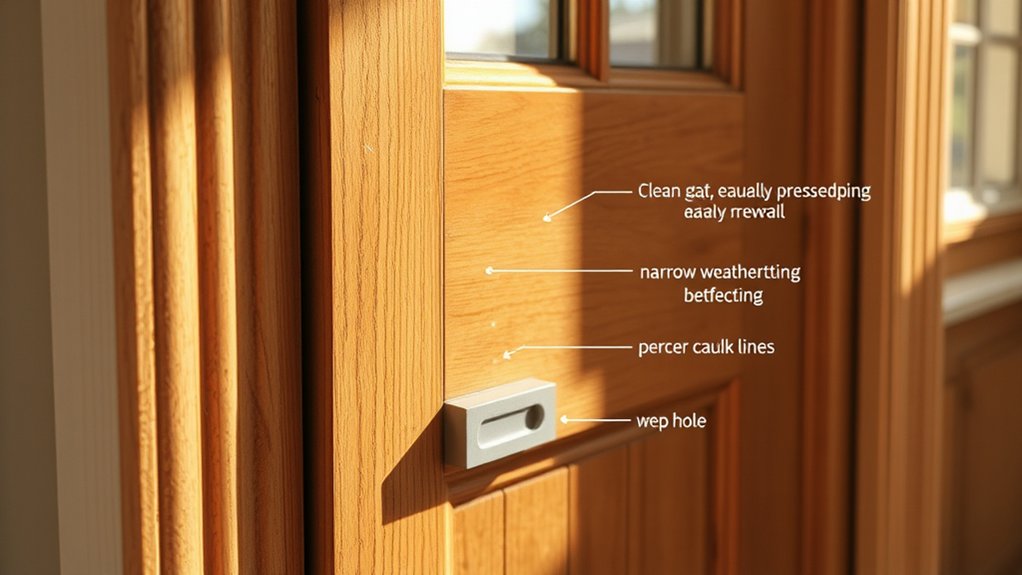
Keeping water out is the next step after sealing exposed edges. To manage moisture effectively, focus on Moisture control by minimizing entry paths and improving interior air flow.
Inspect your door’s frame for gaps and use high-quality gap sealing to stop drafts and water intrusion; don’t rely on paint alone.
Apply weatherstripping at the sill and any moving joints, ensuring a tight seal without hindering operation.
Improve weepage by clearing stops and drainage channels so water can escape rather than pool against the door.
Ventilation matters too: add a vent or maintain cross-ventilation near the entry to reduce humidity buildup inside the frame.
Regularly recheck seals after seasonal shifts to sustain gap sealing and overall moisture control.
Establish a Seasonal Maintenance Schedule
- Hardware inspection and lubrication cadence
- Pest prevention and ingress monitoring
- Finish upkeep and sealant reapplication schedule
Frequently Asked Questions
How Often Should You Reseal Hinges and Hardware?
You should reseal hinges and hardware every 1–2 years. Regularly inspect for wear, lubrication, and corrosion. Use hinge lubrication to reduce squeaks, and address hardware oxidation promptly with appropriate sealant or protective coating for lasting performance.
Can Weatherproofing Affect Door Color Consistency?
Yes, weatherproofing can affect color uniformity. You’ll notice paint fading where seals trap moisture or UV exposure increases on unprotected areas, so guarantee consistent coatings and UV-rated finishes to maintain paint fading resistance and color uniformity.
Is Professional Refinishing Needed for Antique Doors?
Antique restoration asks: do you need professional refinishing? Likely yes for historical accuracy, especially if patina matters; you’ll benefit from expert assessment, proper stabilization, and precise, period-appropriate finishes to protect and preserve intrinsic charm.
Do Interior Oils Help Exterior Wood Protection?
Interior oils don’t provide lasting exterior protection; they’re for interior humidity control and finish refresh. For exterior protection, apply appropriate exterior-grade sealants and trim maintenance, ensuring UV resistance, proper curing, and reapplication schedules to preserve your wood door’s durability.
What Indoor Environmental Factors Impact Exterior Wood Durability?
Indoor humidity and Indoor temperature influence exterior wood durability; you’ll notice faster aging if humidity soars and temps fluctuate. Maintain steady humidity and consistent temperatures, seal joints, and schedule inspections to preserve panels, planks, and protective finishes.
Conclusion
You can extend your door’s life by inspecting yearly, reapplying finish when wear shows, and sealing edges and gaps before moisture slips in. An interesting stat: properly maintained wood doors can outlast poorly cared-for ones by up to 30% in service life. Start with a quick weather check, choose a finish suited to your climate, and follow a simple refinishing routine. With precise prep and timely maintenance, you’ll keep appearance and protection consistent year after year.