


To give your garden an early autumn backbone, start with a solid plan: map irrigation, test and enrich soil, and apply compost to boost organic matter. Choose drought-tolerant perennials for fall color, like sedum or echinacea, and pair them with evergreen structure. Install crisp, low-profile edging and mulch 2–3 inches to secure in moisture and suppress weeds. Clean, organized beds and refreshed containers finish the look. If you keep going, you’ll reveal more practical upgrades.
Key Takeaways
- Map irrigation zones by root depth and seasonal demand to keep gardens evenly hydrated with less waste.
- Refresh soil with testing, compost, and organic amendments to boost fertility and structure for next season.
- Clean edges, mulch evenly, and reseed patches to create a neat, winter-ready, lush bed silhouette.
- Install durable edging and thoughtful pathways to enhance flow and maintenance efficiency.
- Select drought-tolerant perennials and evergreen accents to sustain color and form into autumn and beyond.
Set a Solid Autumn Garden Backbone
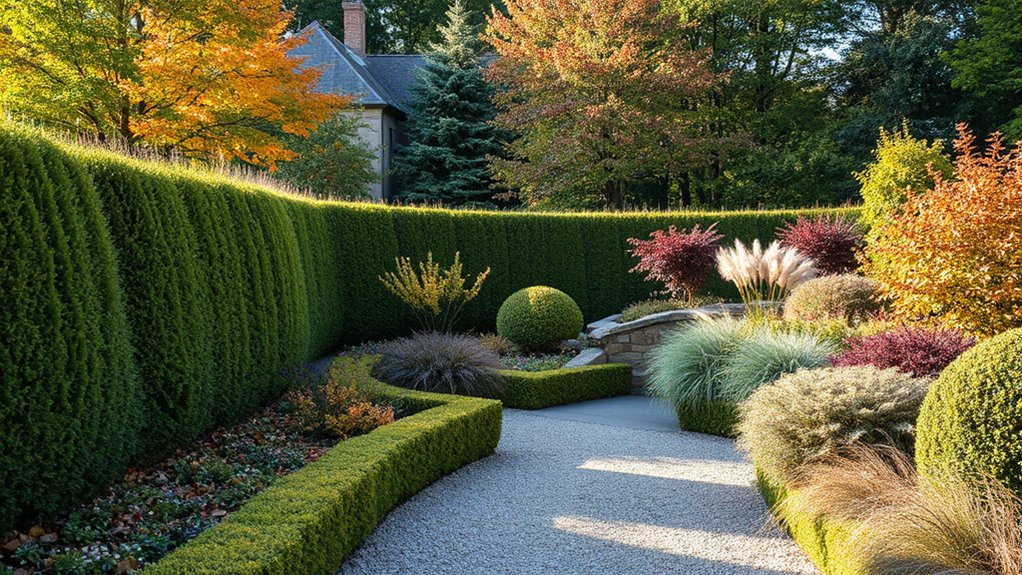
To establish a solid autumn garden backbone, start by outlining core priorities: irrigation, soil health, and plant selection. You’ll map where timely water applies, avoid waste, and guarantee steady moisture without runoff.
Prioritize soil health by testing nutrients, adding compost, and layering organic matter to boost structure. Choose plants that anchor color and structure through cooler temps, while supporting pollinators and wildlife.
Plan irrigation zones that accommodate root depth and seasonal demand, preventing wet feet and drought stress. Build a system that delivers consistent moisture, then monitor soil enrichment over time to sustain long-term vitality.
This backbone supports wildlife habitat by offering shelter, nectar, and sheltering microhabitats, while enhancing soil enrichment through ongoing organic inputs.
Your framework sets durable fall color, resilience, and easy transitional care.
Pick Drought-Tolerant Perennials for Fall Color
Fall-destined perennials bring reliable color despite drought, so start with sturdy options like sedum, rudbeckia, and echinacea.
These drought-tolerant picks deliver autumn interest and long-term garden structure with minimal water needs.
As you plan, prioritize plants that shift from late-summer blooms to fall foliage or seed interest to maximize color through the season.
Fall-Destined Perennials
Fall is a prime time to choose drought-tolerant perennials that deliver fall color, since they’ll establish now and flourish with less water later. You’ll select strategies that support a low-water display without sacrificing structure.
Favor robust, deep-rooted varieties that endure dry spells and resume rapid growth after rain. Prioritize plant diversity to reduce competition and extend color windows across the season.
Pair textures and heights to keep your beds organized and cohesive. Soil enrichment should begin at planting with well-draining mixes and compost to improve water retention where needed.
Mulch lightly to conserve moisture while preventing weeds. Space thoughtfully to minimize stress, then monitor inputs.
With precise planting, your fall palette persists through early frosts and into winter.
Drought-Tolerant Color Picks
Looking for drought-tolerant perennials that deliver autumn color? You’ll want selections that combine high impact with low water needs. Choose Proven winners for a compact vertical profile and long-lasting hues. Core picks include Sedum ‘Autumn Joy’ for rosy pink fades, and Helenium with warm amber undertones that persist into late fall.
Pair grasses like Muhlenbergia capillaris for airy texture and a soft gold backdrop. For color contrast, incorporate purple Anemone × hybrida and orange Echinacea purpurea to extend the seasonal palette without extra watering.
Plant pairing matters: stagger bloom times so color remains cohesive, and group specimens in drifts to maximize visual weight. Maintain soil moisture with mulch, then monitor rainfall to avoid stress, ensuring resilient fall color.
Install Crisp, Low-Profile Edging
Plan a continuous contour around beds, then install with a level hand to avoid gaps that invite grass intrusions. Use a single, durable option—plastic, metal, or composite—that complements your garden aesthetics without casting heavy shadows.
Set edging just below the mulch line, securing with anchors or spikes so shifting isn’t possible after trenching. Keep the finish clean and uniform, trimming excess along curves for a polished look.
Maintenance is minimal: inspect occasional warps after heavy rain, reseat if needed, and avoid overcomplicating the design with multiple profiles. Prioritize simplicity, function, and seasonal harmony.
Mulch Smartly for Moisture and Weeds
To mulch smartly for moisture and weed control, start with a clean, weed-free bed and choose a mulch depth that suits your climate and plant needs. Then apply a uniform layer that slows evaporation, regulates soil temperature, and suppresses opportunistic weeds without smothering roots.
Use organic mulch where possible to promote soil biology, while inorganic options suit high-traffic areas. Track mulch performance and adjust next season based on rainfall and plant vigor. Garden composting can recycle clippings into richer mulch, boosting nutrient cycling.
Pair mulching with targeted pest control by removing fallen debris and inspecting for pests at the base of plants.
- Choose a 2–3 inch layer in temperate zones; deeper in drought-prone areas
- Replenish annually and refresh edges
- Coarse textures reduce weed germination better
- Maintain soil contact and avoid piling mulch against stems
Fall Bed Maintenance: Clean, Organize, Refresh

Start by cleaning up bed edges to create clear, defined boundaries for mowing and edging.
Then remove debris in a clean, methodical pass, so beds stay tidy and plant health isn’t compromised.
Finally, refresh the mulching layer with a light, even coat to conserve moisture and suppress weeds.
Clear Bed Edges
- Recut and realign edging for crisp, parallel lines
- Remove trailing roots, weeds, and mulch buildup
- Install or refresh edging material for durability
- Integrate a small, selective garden art piece as a visual anchor
Remove Debris Cleanly
Debris-free beds set the stage for a vibrant fall display, so begin by clearing fallen leaves, spent flowers, and wind-blown litter from all planting zones. You’ll execute leaf cleanup and debris removal with steady, deliberate motions, avoiding scatter and waste.
Work from the outer edges inward, using a rake or blower to consolidate material into tidy piles for disposal or compost. Inspect perennials for spent stems and remove them cleanly at the base, preserving structure and health. Collect small debris into a sturdy bag or bin to prevent resettling.
Check edging and plant collars as you go, trimming any loose material that could invite pests. Finish with a light pass to reveal defined borders and a neat, ready-for-winter silhouette.
Refresh Mulching Layer
With debris cleared, it’s time to refresh the mulching layer to protect roots and sharpen bed presentation. You’ll restore even depth, suppress weeds, and keep moisture consistent as days cool. Aim for a uniform 2–3 inch cover that lets soil breathe and roots breathe easier through the season.
Be deliberate about material: use clean mulch, avoid mixing with weed seeds or diseased matter, and maintain color contrast for crisp borders. Incorporate soil aeration beneath when possible to prevent compaction, and plan for future compost layering to feed beds gradually.
This refresh also aids nutrient cycling and reduces erosion during autumn rains. Keep the edge neat, monitor mulch height, and reapply as needed for ongoing structure.
- Assess depth and uniformity
- Remove any compacted patches
- Integrate soil aeration as feasible
- Plan for occasional compost layering
Create a Cohesive Fall Color Palette
To create a cohesive fall color palette, start by selecting a unifying base color and then layer complementary hues around it. You’ll build harmony by pairing warm neutrals with accent tones that repeat throughout the garden beds and containers.
Choose a dominant shade—amber, burgundy, or olive—as the anchor, then introduce two or three supporting colors to echo across textures. Prioritize plant forms with consistent foliage color and seasonal bloom timing to maintain continuity.
For wildlife value, opt for Bird friendly planting species that offer extended interest without sacrificing cohesion. Integrate composting methods to feed soil and stabilize color through healthy plant vigor.
Plan shifts between beds so neighboring hues blend when viewed from pathways and seating areas. Keep recurring motifs narrow in scope for a polished, structured effect.
Build Structure With Evergreens and Architectural Grasses
Evergreen shrubs and architectural grasses form the backbone of a durable fall garden, providing year-round structure that anchors your cohesive color scheme. You’ll establish clean verticals, soften edges with texture, and create focal points that endure seasonal shifts.
- Prioritize evergreen contrast to maintain depth even as color shifts
- Pair architectural grasses with compact evergreens for year-round rhythm
- Use clumps and drifts to guide eye movement across beds
- Choose species with similar maintenance needs to simplify upkeep
This approach preserves a structured mood while delivering movement and contrast. You’ll plant with scale in mind, ensuring tall grasses don’t overwhelm shrubs. Prune judiciously after peak color to sustain form, not chase every seasonal nuance.
Evergreen and grasses stay visible in winter’s quiet, reinforcing your garden’s planned aesthetic through time.
Vibrant Container Combos Through Autumn
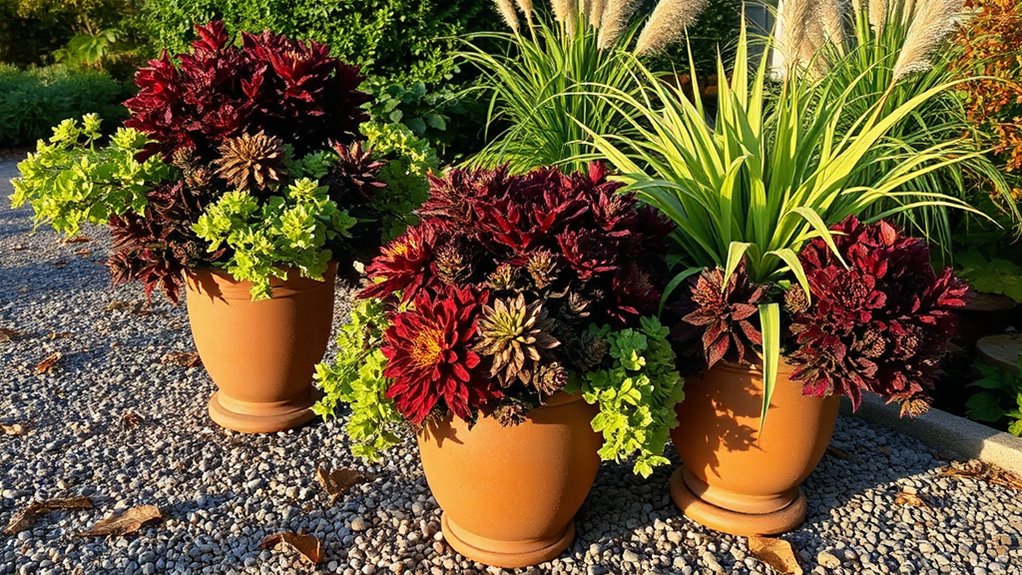
You’ll start with autumn container color play that pairs warm, bold tones with crisp greens for contrast.
Balance texture and height by combining varied foliage, grasses, and standout blooms to keep interest from top to bottom.
Highlight seasonal foliage by layering different textures and finishes, so every arrangement reads cohesive and fresh through the season.
Autumn Container Color Play
Autumn container color plays off the season’s rich hues by pairing warm oranges, deep purples, and crisp greens in bold, intentional combinations. You’ll maximize impact by selecting containers and blooms that create clear color contrasts and clean silhouettes. Focus on deliberate pairings that emphasize foliage textures and structure, rather than sheer quantity.
- Pair orange calibrachoa with purple salvia for pop without chaos
- Layer chartreuse coleus with dark purple pansies for depth
- Use deep green evergreens as a backdrop to highlight bright accents
- Alternate glossy and matte leaf textures to add dimension
These choices keep your display cohesive while delivering striking color contrasts and engaging foliage textures. Maintain balance with proportional spacing, repeat echoes of color, and avoid crowding the final look.
Texture and Height Balance
Place a bold vertical element at the back, then nestle medium-height shrubs or grasses toward the center, finishing with compacted foliage at the front for visibility.
Keep silhouettes varied to avoid a flat look; mix upright, arching, and mounding forms for persistent interest.
Guarantee soil aeration remains consistent by loosening the mix before planting and avoiding compaction after waterings. Use a well-draining medium with added organic matter to support root space.
Maintain proportion so color and texture read as a cohesive unit from all viewing angles, not a jumble of competing heights.
Check stability during wind events and adjust as needed.
Seasonal Foliage Highlights
- Pair velvety burgundy fans with chartreuse accents to maximize color shifts.
- Mix variegated leaves with solid tones for dynamic contrast.
- Layer upright and trailing varieties to maintain visibility from all angles.
- Rotate seasonal grasses or small shrubs to sustain structure as colors evolve.
This method delivers precise, polished containers that stay lush and organized all autumn.
Weekend Soil Health Upgrades You Can Do Now
If you want healthier soil this weekend, start with a quick assessment and a simple plan. Begin by inspecting your beds for compaction, drainage, and organic matter presence. Identify bare spots and areas that crust after rain.
Next, test representative samples from the root zone to guide amendments; soil testing helps you choose precise inputs and avoid overdoing it.
Apply compost where organic matter is low, focusing on the top 4–6 inches to boost microbial activity and moisture retention without becoming a nitrogen burden. Lightly till or rake compost into damaged surface layers if needed, then firm the soil to reduce air pockets.
Schedule follow-up checks to track improvements and adjust your plan before autumn’s end.
Texture and Practicality: Mulch Options for Color and Function
Now that you’ve got your soil in good shape, you can steer attention to mulch choices that balance color, texture, and function. You’ll pick options that enhance color contrast while supporting soil health, staying practical for year-round care.
Consider how different textures affect weed suppression, moisture retention, and mulch longevity. Below are concise choices to weigh.
- Bark nuggets for rich texture and moderate color variation
- Cedar or pine fines for finer texture and aromatic soil health benefit
- Rubberized or fabric barriers for long-lasting color and control
- Composted wood chips for a soft, natural look and nutrient delivery
Balance color with function by pairing darker mulches around evergreen beds with lighter tones near perennials, preserving soil health and visual clarity.
Tuning Irrigation for Drier Shoulder Seasons

As shoulder seasons bring drier spells, tune your irrigation with measured, data-driven tweaks to maximize efficiency. Consider your Drier-Season Irrigation Tactics and time watering to align with cooler periods.
Spot-keep soil moisture, not runoff. This discussion sets the stage for a practical plan you can implement now, focusing on precision watering that respects the changing conditions.
Drier-Season Irrigation Tactics
To tune irrigation for drier shoulder seasons, start by reducing watering durations and increasing intervals to match evapotranspiration rates while ensuring soil moisture remains above the wilt threshold.
Focus on delivering water deeply and infrequently, targeting root zones to boost efficiency.
Integrate rain harvesting and soil amendment to stabilize moisture and structure.
- Adjust runtimes based on soil type and seasonal ET estimates
- Prioritize soil moisture monitoring and adjust cycles accordingly
- Use efficient emitters and uniform distribution to prevent run-off
- Incorporate rain harvesting and soil amendment to improve retention
Shoulder-Season Watering Strategy
When the weather shifts toward drier shoulder seasons, calibrate your irrigation to deliver deep, infrequent soakings that align with soil moisture and ET. You’ll tailor run times to each zone, avoiding shallow cycles that promote evaporation.
Monitor soil moisture with simple probes and adjust schedules to keep the root zone consistently moist but not soggy. Apply water early in the day to minimize losses and reduce disease risk.
Set a static baseline for typical ET fluctuations, then fine-tune after rain events. Integrate soil testing into your routine to verify rooting depth and hydration status across beds.
Pair watering with targeted Pest management—prioritize dry-adapted zones and inspect for signs of stress. Document adjustments to optimize future shoulder-season cycles and preserve plant structure.
Plant Now for Spring-Forward Structure

Planting now sets you up for a sturdier, earlier-flowering spring. You’ll build structure by selecting robust perennials and tight-stem shrubs that resprout quickly, then position them to form year-round framework. Focus on root-first planting to encourage rapid establishment, and mulch to stabilize moisture as days shorten.
- Seasonal pruning strategies that shape until bloom and prevent congestion
- Smart composting tips to feed soil without delaying set
- Layered planting for vertical interest and early-season cover
- Timed fertilization to sustain spring vigor without leaf scorch
This approach keeps your beds orderly, minimizes post-planting maintenance, and accelerates spring display. Pairing sturdy foundations with tidy lines yields a garden that remains lush, structured, and ready for the next season’s growth.
Lighting Fall Edges and Silhouettes
As days shorten, you can sharpen the garden’s silhouette by lighting the edges that define beds and pathways. Focus on outlining borders with low, warm fixtures placed at ground level for subtle glow. Choose fixtures that resist autumn moisture and deter glare, using warm white LEDs around 2700K to preserve color accuracy.
Angle lights upward to emphasize plant shapes while avoiding direct sightlines from seating areas. Layer lighting with a mix of linear, spotlight, and path lamps to create depth and contrast, ensuring even coverage without hotspots. Use longer-lasting bulbs for reliability through chilly nights.
Consider motion or timer controls to maintain moonlit nights ambiance without overlighting. The result is pronounced shadow play that preserves night sky visibility and garden structure.
Pathway Upgrades That Guide the Eye
A well-designed pathway guides the eye and sets the rhythm of your garden walk. You’ll optimize sightlines with deliberate materials, spacing, and edging that feel calm yet purposeful. Stone pathways create a durable backbone, while plant borders frame each turn and soften progressions.
Use consistent width and gentle curves to invite exploration without distraction. Position focal shrubs at key nodes to anchor movement, then connect entry points with unobtrusive stepping stones that serve as cues rather than obstructions.
- Stone pathways establish structure and durability, guiding pace
- Plant borders frame edges, soften progressions, and add seasonal interest
- Consistent width and curvilinear lines maintain calm movement
- Strategic focal placements anchor sightlines and invite closer examination
Pruning for Shape Without Overdoing It
Balanced pruning techniques keep shrubs tidy without stressing them, so you shape with measured cuts and regular checks.
By prioritizing seasonal shape preservation, you maintain structure while allowing healthy growth to mature naturally.
You’ll use precise, small adjustments to avoid overdoing it and to keep the garden’s form harmonious.
Balanced Pruning Techniques
Good pruning balances form and health: you shape without removing more than necessary. Balanced pruning keeps structure intact while encouraging vigor, using deliberate cuts and thoughtful spacing. Focus on even growth, removing only weak, crossing, or sunburned shoots. Work from the outside in, preserving natural shape and airflow.
- Prioritize pruning timing to align with growth spurts and minimal stress.
- Target shrub shaping with light, directional cuts that maintain symmetry.
- Use clean tools and avoid leaving ragged edges to prevent disease.
- Step back frequently to assess balance before finalizing.
This disciplined approach reduces regrowth bursts and preserves plant robustness. Maintain a consistent rhythm across species, adjusting for flowering cycles and leaf flush.
Always prioritize vitality over vanity, ensuring a durable, attractive silhouette. Pruning timing and shrub shaping together yield disciplined, thriving borders and focal specimens.
Seasonal Shape Preservation
Start with light, selective cuts, removing dead or cross-branches first, then refine exterior lines to uphold natural habit. Use clean, sharp shears and avoid excessive shortening; aim for 10–15% annual removal on most shrubs and ornamental trees.
Monitor growth spurts after pruning and adjust next season to stay within shape goals. Pair pruning with soil testing to guarantee roots aren’t stressed by nutrient imbalances that tempt overzealous trimming.
Watch for garden pests that exploit exposed tissue, treating promptly. Maintain consistency across beds to sustain a cohesive, structured look through autumn.
Groundcovers to Fill Gaps and Reduce Maintenance
Groundcovers are a smart way to fill gaps and cut maintenance in an autumn garden, because they rapidly establish a dense mat that suppresses weeds and reduces mowing. You’ll choose resilient groundcovers that support plant diversity and improve soil health, while bridging bare patches with seasonal interest. Establishing a living carpet now minimizes future upkeep and stabilizes soils against erosion.
- Choose low-growing, drought-tolerant varieties for sun or shade
- Mix textures and colors to boost plant diversity
- Plant in staggered rows to ensure quick cover and soil contact
- Mulch lightly to protect roots while roots establish
This approach keeps beds tidy, reduces trimming, and sustains a structured look through autumn. It prioritizes soil health and a robust, low-maintenance foundation.
Decorative Accents That Add Texture Without Clutter
To add texture without clutter, choose decorative accents that enhance structure and rhythm rather than overwhelm it. You’ll favor clean lines, compact forms, and materials that pair with existing plants.
Textural accents should echo the garden’s architecture: a sculptural steel stake, a woven-edged planter, or a shallow stone bench that sits lightly on the soil. Select pieces in a restrained color palette to maintain cohesion and reduce visual noise.
Prioritize lightweight, durable materials that weather gracefully, avoiding bulky, high-contrast items. Place accents at key sightlines—entry points, seating areas, and focal beds—to guide the eye without crowding spaces.
This approach yields clutter reduction while preserving tactile interest, helping your autumn display stay crisp, organized, and inviting.
Replacing Worn Containers: Quick Evaluation Guide
If a container shows cracking, leaking, or faded drainage, it’s time to act before plants suffer. You’ll perform a quick container evaluation to decide on replacement efficiently.
- Check material integrity and drainage consistency
- Assess root crowding and growth limits
- Compare weight, drift, and portability for seasonal use
- Confirm fit with current potting mix and plant size
Proceed with replacement only when flaws affect health, stability, or drainage. Choose containers with UV resistance, proper drainage holes, and breathable sides for airflow.
While evaluating, consider color and texture to preserve border cohesion, but avoid sacrificing function for form. Document measurements and note any irrigation adjustments needed post-install.
Container replacement should result in improved water management, reduced root rot risk, and a neater plant display, maintaining the garden’s lush yet structured look.
Fall Upgrade Quick-Start Checklist
Now that you’ve identified container flaws, it’s time to start the Fall Upgrade Quick-Start Checklist. Begin by auditing soil, drainage, and root health, replacing media as needed to maintain moisture balance. Check irrigation lines for efficiency, adjusting timers to shorter, deeper cycles that suit autumn temperatures.
Remove spent blooms and tidy foliage to reduce disease risk, then prune lightly to preserve structure. Swap overcrowded plants for contrast—evergreen anchors with seasonal color that tolerates cooler days. Introduce bird friendly plants to invite early visitors while stabilizing pollinator-friendly habitat.
Last, implement composting tips: compost kitchen scraps, shred yard waste, and layer browns with greens to accelerate nutrient recovery. Finish with a concise plant calendar, labeling changes for next season’s baseline maintenance.
Frequently Asked Questions
How Soon Should I Prune Before Winter Hits?
Pruning timing depends on your plants, but aim two to four weeks before ground freezes. You’ll reduce stress and encourage healthy growth. This winter preparation helps, so monitor forecasts and prune when temperatures stay above freezing for several days.
Which Evergreen Grasses Thrive in Partial Shade?
Shade loving grasses thrive, such as Hakonechloa and Carex, in partial shade; evergreen groundcovers like Pachysandra augment structure. You’ll want resilient, low-maintenance options that stay green year-round, delivering texture, color, and steadiness through seasonal shifts.
Can Drought-Tolerant Perennials Handle Frost?
Yes, drought-tolerant perennials can handle frost, though resilience varies. Choose species with true drought resilience and hearty frost tolerance. For reliable results, prioritize careful perennial selection, note local microclimates, and mulch to protect roots during freezes.
What Container Sizes Suit Fall Color Combos?
For fall color combos, choose moderately sized containers with good drainage; 12–16 inches diameter often works well. Prioritize pot material choices that insulate roots and resist weather. Make certain container drainage and soil depth suit your plant mix.
How Often to Top-Dress Mulch for Winter Prep?
Sure, you top-dress mulch annually, not daily—you’re not dramatic. You’ll do it every 6–12 months for soil improvement and pest control, precision-focused, practical, polished, and ironically understated about mulch routines.
Conclusion
As autumn settles in, you’ll notice your garden looks neater, tougher, and ready for winter—without extra fuss. A smart choice: drought-tolerant perennials can deliver color through October while trimming water use by up to 30%. Install crisp edging and mulch wisely to cut maintenance twice as much. Clean, refresh beds, and add low-profile accents to preserve structure. Quick checks now keep your landscape reliable, vibrant, and garden-friendly well into next spring.