

Maximize space without moving by embracing vertical storage, flexible furniture, and disciplined decluttering. Go tall with wall shelves, tall bookcases, and mounted organizers to free surfaces. Choose slim, modular pieces that reconfigure for living, working, and play. Create clear zones, use area rugs and low-profile seating to cue boundaries, and keep desks tidy with task lighting. Declutter daily in 10–15 minutes, use clear bins, and add mirrors and cohesive textiles to boost perception. More tips await as you continue.
Key Takeaways
- Implement vertical storage with tall shelves, wall organizers, and labeled bins to free floor space without expanding the footprint.
- Create clear zones and flow using low-profile furniture, area rugs, and strategic layout to visually enlarge and organize rooms.
- Use multifunction and modular furniture, wall-mounted desks, and nesting pieces to maximize usability in small areas.
- Declutter daily with labeled organizers, clear bins, and minimalist decor to maintain perceived and actual space.
- Add perceived space through mirrors, cohesive lighting, and vertical accents to enhance openness without moving.
No-Move Space Wins: Quick Reasons to Optimize What You Have

You don’t need a bigger footprint to gain real room. You’ll start by embracing storage optimization, not more stuff. Fine-tune what you own, then fit it where it belongs.
Begin with vertical solutions: tall shelves, wall hooks, and labeled bins free floor space without reducing function. Next, consider furniture arrangement that encourages flow: place heavy pieces against walls, float lighter items, and carve clear pathways through rooms.
Multi-purpose furniture becomes your ally—ottomans with hidden storage, bed frames with drawers, desks that fold away when not in use.
Sort daily essentials so frequently used items live within arm’s reach, and stash the rest.
Finally, adopt a quick declutter routine; month by month you’ll sustain space gains without sacrificing style or practicality.
A Simple Framework: Assess, Plan, Implement Your Space
A simple framework makes space gains predictable: start with assess, move to plan, then implement.
You assess by inventorying what you have, noting how you actually use each area, and spotting bottlenecks in traffic or clutter.
Then you plan with intent, mapping activities to zones and prioritizing high-impact changes, like prioritizing space utilization over mere cosmetic fixes.
Implement with discipline: declutter, reallocate, and test furniture arrangement before wiring in permanent moves.
Measure progress by how freely you traverse rooms, how often you complete tasks, and how much time you save daily.
This framework keeps momentum, avoids scope creep, and yields tangible gains quickly.
You’ll finish with a clearer layout, smarter storage, and a calmer, more functional home.
Layouts That Feel Bigger: Create Zones for Living, Working, and Play
To make spaces feel larger, start by carving clear zones for living, working, and play. You’ll gain flow when each area has a defined purpose, yet stays visually cohesive. Use zoning strategies to allocate light, color, and furniture scale—avoid crowding but keep edges distinct.
For living, prefer low-profile couches, area rugs, and sofa backs that cue boundaries without walls. In your workspace, isolate a quiet perch with a compact desk, task lighting, and minimal clutter to boost focus.
Play zones can be flexible: open shelving, mat space, or a small nook for hobbies, easily reconfigured as needs shift. Employ spatial segmentation through subtle elements—plants, sconces, or art alignments—that guide movement.
The result: clearer sightlines, calmer rhythms, and rooms that feel bigger, not busier.
Store Up, Not Out: Vertical Solutions for Narrow Rooms
When space is tight, look up and up again. In a narrow room, vertical storage becomes your best friend. You’ll reclaim floor real estate by stacking function above eye level, not by sprawling out.
Start with wall-mounted shelves that go from baseboard to crown molding, keeping decor light and secure. Use tall bookcases or modular cubes to create pockets for gear, paperwork, and display pieces without crowding surfaces.
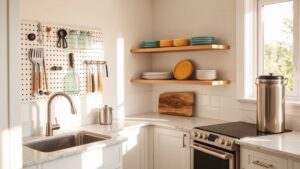
Hanging organizers, pegboards, and magnetic strips keep tools within arm’s reach and off the desk. Choose slim profiles, neutral finishes, and integrated lighting to preserve flow.
Maintain balance by avoiding clutter at chair and door zones. With deliberate vertical solutions, you gain storage, style, and ease in a narrow room. Vertical storage transforms constraints into clarity.
Flexible Furniture That Maximizes Tiny Spaces

Flexible furniture can be a game changer in tiny spaces, letting you do more with less by choosing pieces that serve multiple roles. You’ll want multifunctional furniture that blends form and function, so a coffee table doubles as storage, or a sofa bed creates a guest room in a single room.
Look for modular units you can reconfigure daily, and beds with built-in drawers or a murphy-style foldaway option. Wall-mounted desks free floor space without sacrificing work areas, while nesting tables and stackable chairs collapse when not in use.
Prioritize clean lines, slim profiles, and hidden compartments to maintain an open feel. Favor space saving designs that maximize usability, not bulk, ensuring every piece earns its keep in your compact footprint.
Daily Decluttering Routines to Free Real Estate Fast
A daily decluttering pulse keeps your space breathable and real estate-ready without overhauling your habits. Start small: clear a zone, then reset it every day to form real estate freeing habits.
You’ll notice faster wins and steadier momentum as clutter stops stealing your square footage.
Daily Decluttering Pulse
Starting with a quick daily decluttering pulse—just 10 to 15 minutes—lets you reclaim space before it stacks up. Each session targets what you use most: grab-and-go essentials, out-of-season gear, and items you rarely touch. Set a timer, then sort into keep, relocate, donate, or discard.
You’ll train your eye to spot duplicates and pointless clutter, sharpening decision-making so cleanups aren’t daunting. Pair the pulse with smart storage: clear bins, labeled organizers, and accessible shelving keep daily finds visible and manageable.
Favor minimalist design by prioritizing functional pieces over decorative clutter, so spaces feel calm and open. Consistency beats intensity; a short, regular ritual compounds into genuine airiness, easier maintenance, and a home that functions as you intend.
Real Estate Freeing Habits
Real estate-friendly habits start with a simple daily decluttering routine you can actually keep: 10 to 15 minutes of focused binning, relocating, and donating. You’ll clear visible clutter fast, making rooms feel larger and more inviting.
Keep storage solutions bright and intentional, so every item has a home and purpose, not a placeholder. This daily rhythm fuels design aesthetics, presenting cleaner lines and calmer spaces that buyers notice.
- Quick sort: keep, donate, relocate, trash, recycle
- Front-and-center storage: baskets, baskets, baskets
- Visible surface rules: one item off each surface nightly
- Wardrobe triage: seasonal swap, donate what’s unused
- Documentation dump: file duplicates, shred unnecessary papers
Consistency wins; momentum turns spaces into assets.
Budget-Friendly Upgrades That Add Perceived Space

If you’re trying to make a small space feel bigger without breaking the bank, smart, affordable upgrades can do the trick. Start with decluttering and smart storage that tucks away daily clutter. Then choose pieces that pull double duty, like ottomans with hidden compartments or a coffee table with shelves.
Color and light matter most: use creative color schemes that reflect light and create the illusion of depth. Lean on smart lighting to redefine zones without added fixtures. Mirrors amplify brightness and visually extend walls, while vertical accents draw the eye upward, increasing perceived height.
Opt for multiuse furniture, slim profiles, and hidden cables. Finish with cohesive textiles and restrained hardware to maintain a calm, expansive feel.
Frequently Asked Questions
How Can I Measure Space Efficiency for Quick Wins?
You can measure space efficiency by testing furniture arrangement and wall utilization in quick wins: time each layout, note flow and accessibility, then compare. You’ll see which setup maximizes room feel, reduces clutter, and improves movement.
Which Color Schemes Make Rooms Feel Larger?
You’ll want light, cool tones to open spaces; opt for neutrals with pops of contrasting accents. Color psychology guides mood, while visual illusions—monochrome walls, strategic rugs, and reflective surfaces—maximise perceived square footage, feel fresher, and stay practical.
What Habits Boost Perceived Space Daily?
You boost perceived space daily by clutter reduction and furniture downsizing, you stay practical and stylish: tidy surfaces, rotate essentials, store seasonal items, use hidden organizers, maintain clean sightlines, and keep zones open for effortless, airy flow.
Can Lighting Choices Alter Room Proportions?
Yes, ambient lighting can alter perceived room proportions, and you’ll notice ceilings feel higher when you place light sources upward and away from walls to wash the space. Optimize ceiling height perception with strategic, stylish fixtures and reflections.
Are There Safe, Budget Storage Hacks for Renters?
Okay, you can use hidden compartments and vertical shelving to boost storage safely on a budget. Embrace modular units, sturdy organizers, and rental-friendly install methods; you’ll maximize space without compromising decor or security—practical, stylish, and surprisingly clever.
Conclusion
You don’t need a bigger house to feel bigger. Master the tiny shifts—rethink layouts, couple vertical storage with flexible furniture, and prune habits that steal space. When you assess, plan, and implement with intent, every square foot earns fame. A clean path, a calm corner, a purposeful zone becomes your stage: work, rest, play, all in perfect view. The room grows in your mind first, then in your home—proving space is a mindset you can pack into any room.