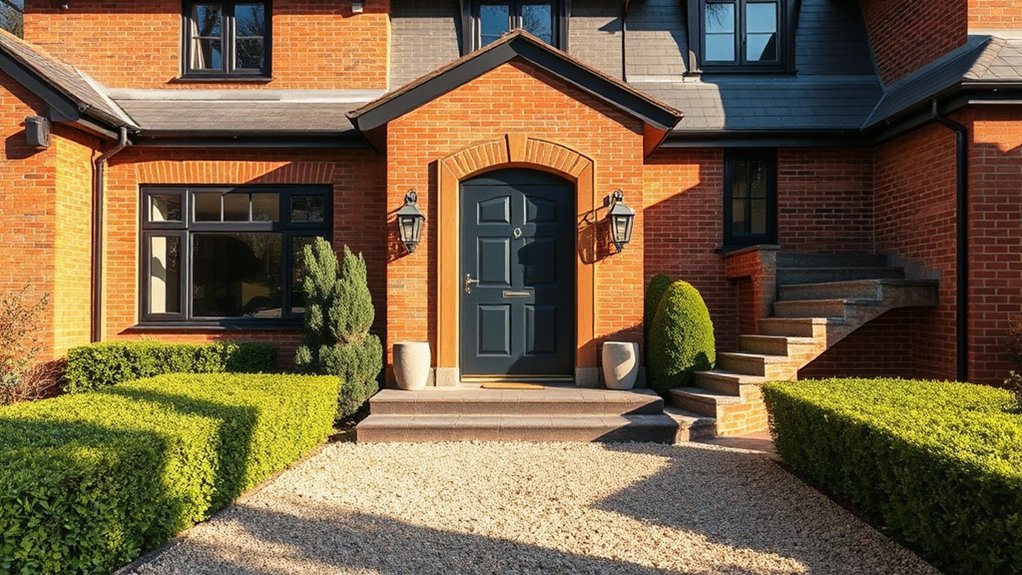

A detached house deserves a statement entrance because it sets the curb-appeal standard, signals quality, and guides guests with confident, architecturally coherent moments. When you align the entrance with the home’s style, integrate durable materials, and layer thoughtful lighting, you create an inviting, cohesive first impression that lasts. A well-planned threshold boosts value and security while reflecting your lifestyle. Ready to see how this transformation unfolds and what it could mean for you?
Key Takeaways
- A statement entrance creates curb appeal that sets a strong first impression before any door opens.
- It signals security, care, and value, elevating perceived quality from the exterior to the interior.
- Thoughtful lighting, durable materials, and cohesive design bolster safety and long-term performance.
- A cohesive entrance reflects the home’s style, enhancing architectural language and overall character.
- Strategic pathways, focal points, and proportional hardware guide visitors smoothly to the threshold.
Why Entrances Matter for Detached Homes
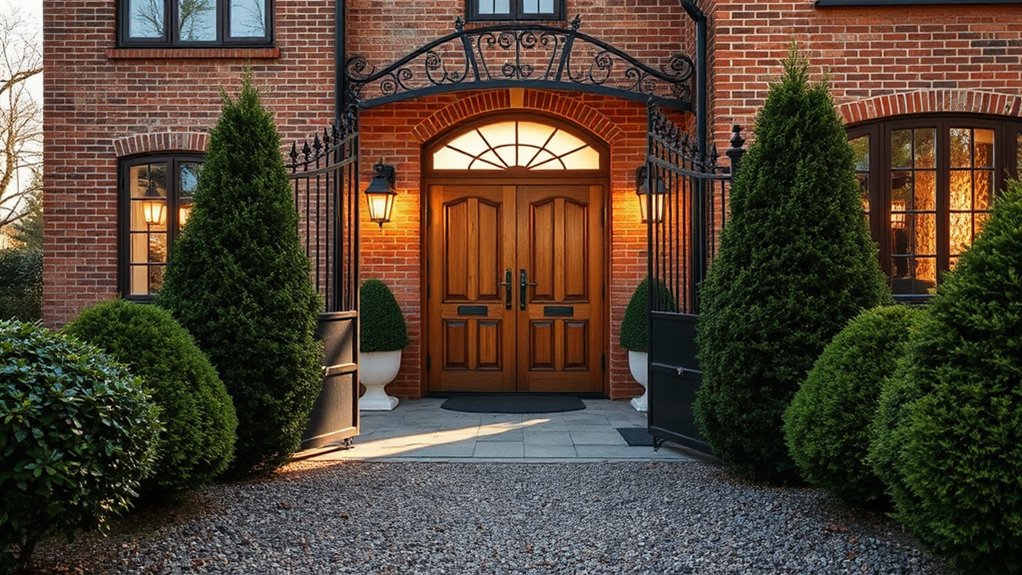
Entrances set the tone for a detached home, creating the first impression guests and residents form long before stepping inside. You shape this moment with a deliberate approach: alignment, materials, and light converge to announce your home’s character.
A well-considered entrance signals security, sophistication, and care, inviting curb appeal to do the heavy lifting before a door ever opens. You’ll want a focal point that anchors the path, whether a sculptural garden element or a thoughtfully scaled mailbox styles setup.
Choose durable finishes that echo architectural language—stone, metal, or timber—so the entrance reads as intentional, not accidental. Subtle landscaping frames the approach, guiding the eye toward a balanced, curated vignette that remains practical for daily use.
Aligning Your Entrance With Your Home’s Style
Your entrance should echo your home’s exterior style, creating a cohesive first impression from curb appeal to foyer. Focus on Exterior Style Harmony so its form, lines, and silhouette reflect the house itself.
Tie in Material and Texture Unity with complementary finishes and textures for a seamless, intentional look.
Exterior Style Harmony
To achieve exterior style harmony, align your entrance with the home’s overall architectural language—materials, lines, and proportions should echo what’s already on display. You pursue a cohesive curb presence by mirroring rooflines, window details, and the character of your façade in the entrance elements.
Choose lighting, hardware, and signage that reflect the era and silhouette of the house, avoiding jarring contrasts. Consider garden sculptures as a curated punctuation that reinforces scale without competing with architectural cues.
Decorative planters should echo the material and profile of nearby features, maintaining rhythm along the approach. This disciplined alignment boosts perceived value, sets expectations for visitors, and creates a seamless flow from exterior to interior, reinforcing the home’s unified personality.
Material and Texture Unity
Material and texture decisions should reinforce the home’s architectural identity, not clash with it. When you align entry materials with your facade, you achieve cohesive curb appeal and lasting harmony.
Focus on deliberate Material contrast to emphasize form without shouting, and use Texture layering to add depth under a single material umbrella. Your entrance becomes a seamless extension of the house, not a standalone statement.
- Choose complementary materials that reflect the home’s era and proportion
- Layer textures—think smooth stone with brushed metal or timber for warmth
- Maintain a restrained color palette to preserve unity and legibility
Result: a refined, durable face that communicates confidence, complements architectural cues, and invites entry without discord.
Front Door as the Design Anchor
Your front door should serve as the design anchor, becoming a clear focal point that guides the entire facade. By positioning a distinctive door color and thoughtful hardware, you anchor your entryway and set the mood for the whole homescape.
Consider how the door’s prominence communicates style and influences curb appeal, from color impact to surrounding materials.
Front Door Focal Point
A front door acts as the visual anchor of a detached house, drawing the eye and setting the tone for the entire facade. You shape its impact by selecting a focal color, a statement handle, and balanced proportions that echo your architecture.
When you plan the entry, consider three concrete moves that elevate curb appeal:
- Choose a door with a bold silhouette, complemented by lighting that reveals texture and depth.
- Tie the entrance to garden sculptures and surrounding landscaping for cohesive drama.
- Pair the door with driveway materials that frame the threshold and extend the design language outward.
This focal point anchors the exterior, guiding visitors’ gaze and signaling the house’s personality with precision.
Anchor Your Entryway
The front door should act as the design anchor of your entry, drawing the eye and setting the tone for everything beyond. You establish hierarchy by letting the entry door frame guide the journey to interior spaces, while the landscape reinforces harmony.
Focus on clean lines, appropriate scale, and material continuity that echoes your exterior cladding and roof language. Garden pathways should lead visitors to the threshold with deliberate pacing, not clutter, so choose paving that complements the door’s finish.
Pair this with purposeful lighting fixtures to illuminate the approach and emphasize texture after dusk. Keep hardware refined but expressive, avoiding competing elements.
When the anchor holds, your entry feels intentional, cohesive, and inviting, signaling quality from the moment you arrive.
Door Color Impact
Door color matters as the finish line of your entry’s design anchor. Your front door sets the first impression, guiding the eye toward your architectural story and selecting door hardware that reinforces the vibe. Choose paint finishes that endure and read cleanly at a distance, then inspect texture and gloss up close to verify cohesion with surrounding materials.
- Align door color with trim and siding for a cohesive exterior.
- Match hardware style to the door’s tone, from matte black to brushed brass.
- Test finishes under sun and shade to confirm long-term clarity and depth.
With deliberate color, hardware, and finish choices, your entry becomes a confident, lasting statement.
Durable Materials for a Weatherproof Entrance
Durable materials set the baseline for a weatherproof entrance, and choosing the right ones now saves maintenance later. You’ll want materials that resist rain, sun, and temperature swings without cracking or warping.
Favor dense timber or composite boards for doors and porches, with a protective finish that’s UV- and moisture-resistant. For hardware, pick corrosion-resistant metals and reinforced fasteners to withstand seasonal shifts.
Stone, concrete, or brick pavers create a stable, low-slip threshold, easy to clean after mud or salt. Guarantee drainage slopes away from the entry and seal joints to prevent water ingress.
Practical aesthetics matter: select color and texture that harmonize with garden pathways and outdoor seating areas, so the entrance feels cohesive, durable, and welcoming under every sky.
Welcoming Lighting for Curb Appeal
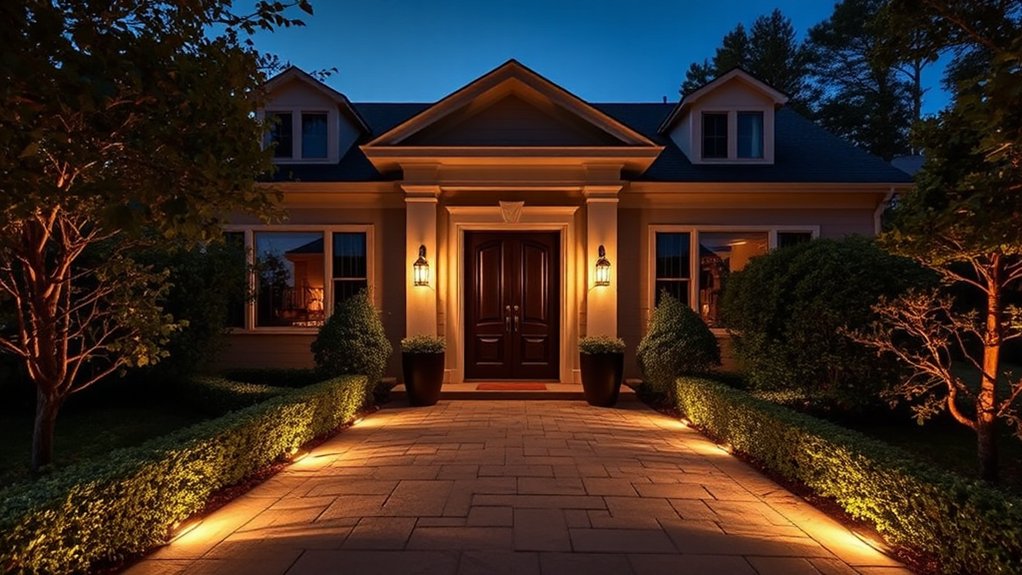
Could the right lighting transform your curb appeal overnight? The entrance comes alive with intentional glow, guiding eyes toward architectural details and signaling curbside hospitality.
Choose lighting that complements form, not competes with it, using warm intits around the doorway and path. Layered illumination—wall sconces, pathway lights, and a subtle uplight—creates depth, reduces shadows, and highlights your home’s silhouette.
Guarantee compatibility with your porch furniture and garden sculptures, so pieces read as curated moments rather than afterthoughts. Aim for a cohesive palette and avoid glare that blasts from above.
Choose energy-efficient LEDs, dimmers, and automated schedules for consistent charm after dusk.
- Subtle sconce pairings beside the door
- Pathway lights guiding to the steps
- Accent lighting on focal garden sculptures
Landscaping That Guides the Eye to the Door
To guide the eye to your door, harness clear visual cues that lead visitors along a deliberate path. Frame the approach with thoughtful pathway design, using materials, edges, and spacing to direct attention toward the entrance.
Introduce focal plant accents as punctuation marks that punctuate key moments along the route, reinforcing the door as the destination.
Guiding Visual Cues
- Use garden pathways to create a guided, unobtrusive tour toward the door.
- Place outdoor sculptures as tasteful anchors that pause the eye at key moments.
- Employ light, shadow, and texture changes to reinforce the doorway as the destination.
Pathway Framing Focus
A well-framed pathway pulls the eye toward the door by leveraging planting, edging, and focal lines that direct movement without shouting.
You shape the route with intention: low, continuous plantings that hug the path, creating a rhythm that guides the gaze forward. Use edging to define edges crisply, preventing visual noise while letting the door read clearly as the destination.
Focal lines—stone breadcrumbs, a line of ornamental grasses, or a slim accent tree—pull attention toward the entrance without overpowering the façade.
Integrate garden art sparingly as a quiet stop along the journey, then let porch furniture anchor the threshold, inviting lingering.
The result is a cohesive corridor that feels curated, balanced, and unmistakably inviting.
Focal Plant Accents
- Garden sculptures integrated with planting to sculpt the route
- Water features that reflect light and draw attention toward the entry
- Plant pairings that offer year-round interest and approachable form
This approach keeps the doorway as the visual destination, delivering a refined, welcoming statement.
Architectural Details That Signal Character
Begin with materials that age gracefully—weathered timber, stone with subtle texture, or brick with a refined mortar joint.
Introduce authentic profiles: pitched eaves, trellised entryways, and carefully scaled columns or pilasters that nod to tradition without nostalgia.
Detail matters: window trim that frames views, door surrounds that welcome, and a grade-level finish that reduces glare while increasing depth.
Consider garden sculptures and seasonal decorations as punctuation rather than decoration, ensuring they complement the architecture.
Your entrance becomes a study in restraint, precision, and character, inviting curiosity without overpowering the home’s silhouette.
Color Schemes That Make Your Entrance Memorable
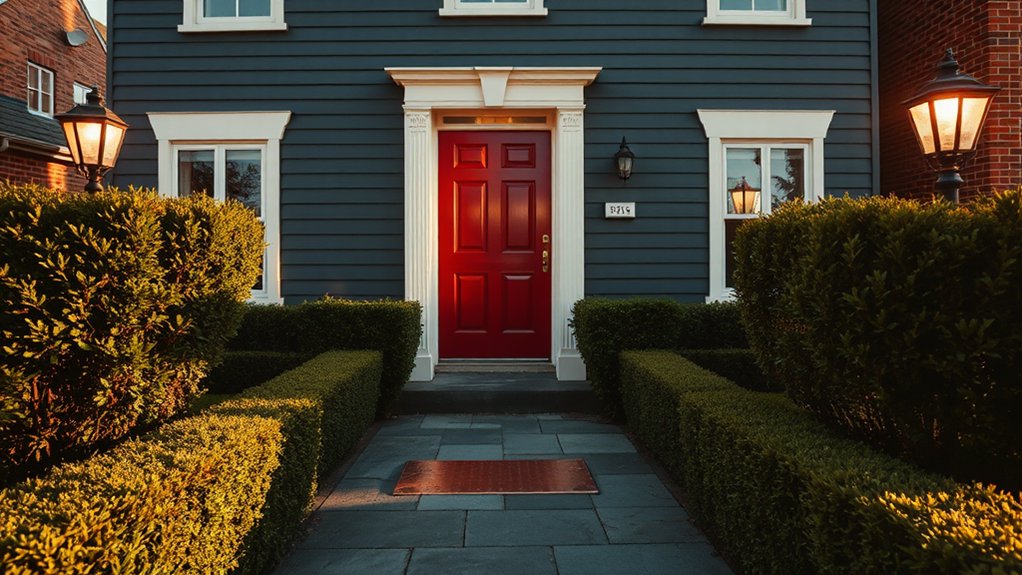
Color schemes for your entrance should do more than look good on a palette; they set the tone the moment you approach. You’ll use color psychology to influence mood—calm, confidence, welcome—while aligning with the architecture’s silhouette. Seasonal palettes ensure harmony with light shifts and neighboring homes, so your entrance remains striking year-round.
Choose a dominant hue that anchors the facade, then layer with contrasting accents for depth and approachability. Use durable finishes that reflect your chosen tones without fading.
- Balance bold with subtle accents to guide the eye
- Pair warm and cool tones to create depth and invitation
- Test in different lighting to confirm the mood across seasons
Climate-Ready Entrances: Materials That Stand Up to Your Weather
From the moment you choose your entrance materials, prioritize durability and weather resilience to maintain curb appeal intact year after year. Climate-ready entrances begin with weather-tolerant foundations: rust-resistant metals, fiber-reinforced composites, and corrosion-proof coatings that handle sun, rain, and freeze-thaw cycles.
Select surfaces that resist staining and fading, yet maintain tactile warmth under touch and sight. For pathways, a garden walkway should combine slip resistance with low maintenance, using textured pavers or sealed concrete that won’t crack in winter.
Door hardware matters too: choose hardware finishes that resist tarnish and temperature shifts while preserving a refined look. Pair these choices with precise installation and protective seals to guarantee long-term performance, minimal upkeep, and a consistently polished first impression.
Secure Yet Stylish: Privacy Without Compromise
Privacy without compromise means you can enjoy a serene, welcoming entry while keeping outside eyes at bay. You’re balancing curb appeal with discretion, so choose forms, textures, and layouts that read refined rather than obvious. Thoughtful wall screens, staggered hedges, and strategic lighting create a protected glow without shouting.
Integrate garden lighting and decorative accessories that soften edges and guide sightlines toward your interior.
- Plant-screened pathways with low, dense groundcover
- Minimalist lanterns and sculptural planters for focal points
- Discreet sensors and cameras tucked behind architectural features
This approach preserves openness where you want it and privacy where it counts, delivering a confident, cohesive first impression. Your entrance becomes both secure and stylish, a true statement of quiet sophistication.
Accessible Entrances for Everyone
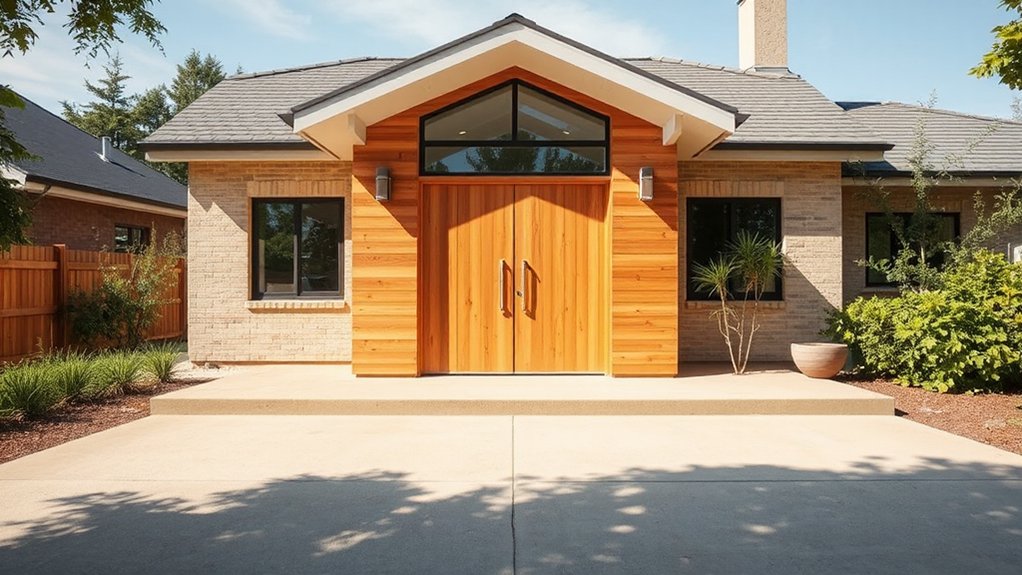
You prioritize accessible thresholds, because every passerby should enter with ease and dignity.
By applying universal design principles, you create entries that function flawlessly for all ages and abilities.
Start by sizing thresholds thoughtfully, minimizing steps, and aligning hardware for ergonomic, timeless impact.
Accessible Thresholds Matter
Accessible thresholds aren’t just a nicety—they set the standard for how smoothly a home welcomes every user. You design with intention, ensuring each entry step reads as seamless, safe, and elegant. Small details matter: slope, grip, and material choice can transform first impressions and daily routines.
- Align thresholds with current door hardware for flawless operation
- Use contrasting finishes to aid navigation and highlight entry points
- Choose low-profile, non-slip surfaces that blend with garden pathways and outdoor sculptures
Applied thoughtfully, these thresholds support universal access while preserving refined aesthetics. You’ll balance practicality with statement style, letting the entrance read as both inviting and deliberate. The result: a cohesive, high-performance threshold that elevates curb appeal and supports ongoing comfort for every guest.
Universal Design Principles
This approach isn’t about compromise; it’s about optimizing flow, safety, and usability without sacrificing style. Consider door widths, threshold compatibility, and slip-resistant surfaces that endure weather and foot traffic.
You’ll map garden pathways to guide movement naturally, avoiding abrupt changes that disrupt mobility or orientation. Integrate outdoor seating as a gathering node that remains accessible from multiple routes, promoting sociable use without clutter.
Prioritize low-effort maintenance and intuitive operation, so every user experiences a welcoming, democratic threshold that elevates the home’s exterior statement.
Budgeting Your Entrance Upgrade: A Practical Plan
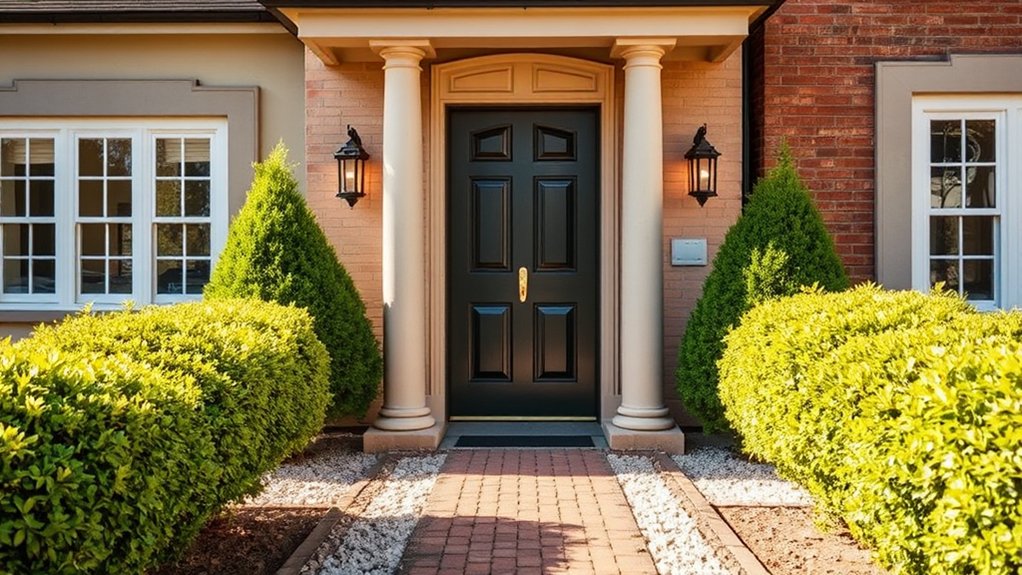
A clear budget is the backbone of a successful entrance upgrade, guiding decisions from scope to finishes without backtracking. You’ll map costs by category, set priorities, and build a contingency. With disciplined planning, you *access* signature details without overspending. Focus on durable materials, efficient install, and cohesive aesthetics to maximize impact.
- Define nonnegotiables first: function, lighting layers, and hardware finish
- Allocate a realistic contingency (10–15%) to cover hidden costs
- Phase purchases to leverage timing, warranties, and contractor coordination
As you progress, track spending weekly and adjust scope as needed. Prioritize entrance lighting and door hardware that align with your design intent, ensuring a polished, cohesive look.
A well-budgeted plan protects quality, reduces surprises, and delivers a statement entrance you’ll enjoy daily.
Case Studies: Before-and-After Entrance Transformations
Case studies reveal how thoughtful decisions from budgeting and planning translate into real-world curb appeal. In these before-and-after snapshots, you’ll see how small changes yield bold impact, from lighting upgrades to repainting and hardware swaps.
You’ll notice how carefully chosen garden pathways guide pedestrians to the front door, creating a welcoming rhythm that sets the tone for the entire facade.
Decorative hardware isn’t an afterthought; it anchors the entrance’s character, whether you opt for chunky, modern pulls or vintage-inspired finishes.
These transformations illustrate a disciplined approach: define the budget, align materials, and stage entry moments that feel cohesive with the home’s architecture.
You’ll gain clarity on what works, what reads well from the curb, and how to replicate success.
Personalization Ideas That Reflect Your Lifestyle
Personalization is where your entrance stops being generic and starts telling your story. You shape the moment you arrive home by selecting details that mirror your lifestyle, not trends.
Lean into deliberate contrasts, textures, and lighting that align with how you live, work, and entertain. Let garden pathways guide guests toward your narrative, while outdoor sculptures punctuate the pause between function and art.
Choose elements that age gracefully and invite curiosity, rather than shout. Focus on cohesion, not complication, so every touchpoint feels purposeful.
- garden pathways that weave your routine into the landscape
- outdoor sculptures that underscore your taste
- lighting and hardware that unify color, material, and scale
Maintenance Habits to Keep Your Entrance Pristine
Regular upkeep keeps your entrance looking intentional and inviting, so establish a simple routine that protects materials from wear and weather.
You should start with a quarterly inspection, noting loose panels, chipped paint, and hardware wear. Clean surfaces with appropriate solutions, then reseal or repaint as needed to maintain a coherent finish.
Use weather-appropriate coatings for timber, stone, and metal, and check drainage to prevent staining or pooling near thresholds.
When you add garden ornaments or seasonal decorations, secure them firmly and remove any that may trap moisture or cause abrasion. Rotate accents to minimize surface contact points and clean them before reinstallation.
Keep a tidy threshold, replace damaged lighting, and schedule professional checks for electrical components to sustain a pristine, enduring entrance.
Next Steps: Planning Your Detached Home Entrance Project
With a solid maintenance foundation in place, you’re ready to outline a practical plan for your detached home entrance project. Start by defining goals: curb appeal, durability, and low upkeep.
Map a budget, timeline, and a shortlist of design elements that reflect your home’s character. Prioritize layout, lighting, and traffic flow to ensure every step feels intentional.
Then, layer materials and textures to create a cohesive vignette that welcomes guests.
- Integrate garden paths that guide visitors and emphasize sightlines.
- Choose outdoor sculptures as focal points, balancing scale with surroundings.
- Select durable finishes and smart lighting to enhance safety and ambiance after dark.
Frequently Asked Questions
How Long Does a Typical Entrance Upgrade Take?
Typically, an entrance upgrade takes 2–6 weeks, depending on scope and permitting. You’ll plan, install entrance lighting, and outdoor signage thoughtfully, coordinating timelines, materials, and trades to minimize disruption while maximizing curb appeal and efficiency.
What Is the Best Budget-Friendly Material Upfront?
For the best budget-friendly upfront material, choose plywood and cement board—eco friendly materials that are durable and affordable. Embrace minimalist design, letting clean lines and natural finishes elevate your entrance with confident, design-savvy, authoritative impact.
Can I Do a DIY Entrance Makeover Safely?
Yes, you can DIY safely with proper planning, testing, and permits. You’ll investigate lighting theories, install garden lighting to highlight textures, and craft a cohesive pathway design, ensuring stable steps, weatherproof materials, and a trusted helper for safety.
How Do I Improve Curb Appeal From the Street View?
To improve curb appeal from the street view, create a clear garden pathway and install striking lighting fixtures. You’ll guide visitors, highlight architecture, and convey confidence with balanced lighting, texture, and thoughtfully chosen landscape elements.
Do Entrances Affect Home Resale Value Significantly?
Yes, entrances considerably boost resale value. You’ll see a solid return with landscaping improvements and lighting enhancements, because a polished entry signals quality and care, influencing buyers’ first impressions and perceived overall home value.
Conclusion
Your detached home deserves an entrance that signals quality, cohesion, and personality. By aligning the entry with your home’s style, choosing a design anchor like the front door, and selecting durable, weatherproof materials, you create instant curb appeal. Add welcoming lighting and a touch of personalization, then maintain it with simple routines. Think of your entrance as the front porch of your lifestyle—a tasteful invitation that sets the tone for everything inside. Plan thoughtfully, execute with precision, enjoy the impact.