


Laminate flooring uses a fiberboard core with a photographic wear layer, so it’s durable, affordable, and resists scratches, but it can struggle with moisture if the core isn’t well sealed. Engineered flooring has a real wood veneer over a stable core, giving better moisture resistance and a more authentic wood feel. Both can look great and wear well, but their performance depends on the wear layer, core, and finish. Want practical guidance for your space? Keep reading to learn more.
Key Takeaways
- Laminate has a fiberboard core with a photographic wear layer; engineered flooring uses a real wood veneer over a stable core (plywood or HDF).
- Laminate mimics wood with embossing and textures; engineered shows genuine wood grain via real veneer.
- Laminate tends to be cheaper initially; engineered typically offers better moisture resistance and aging with a more gradual patina.
- Laminate’s durability relies on wear layer thickness and resin overlay; engineered durability depends on veneer finish and core stability.
- Installation and moisture handling: engineered resists humidity better; laminate requires careful moisture control and proper subfloor prep.
Laminate vs Engineered Flooring: The Core Difference
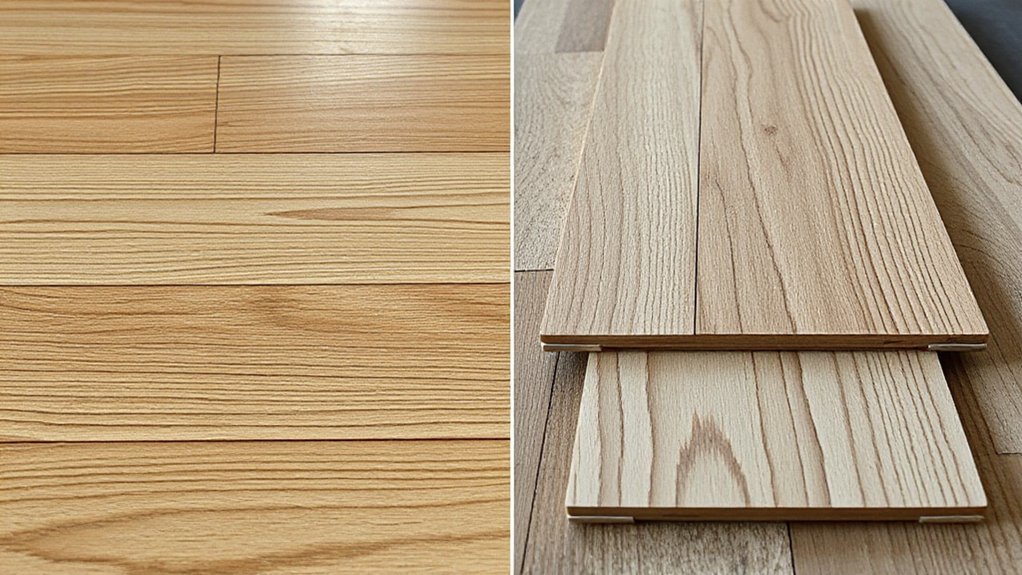
Laminate and engineered flooring look similar, but they differ in structure and how they’re made. You’ll notice the core distinction is in composition: laminate uses a fiberboard core with a photographic wear layer, while engineered flooring has a real wood or layered composition beneath a protective top.
This affects how you handle moisture, durability, and refinished options. Color options exist for both, but engineered floors often show more authentic wood tones and depth.
When you plan installation, consider installation tools you’ll need—pull bars, tapping blocks, spacers, and a suitable saw for clean cuts. For laminates, be mindful of expansion gaps and underlayment requirements.
For engineered planks, verify the Click-lock vs. nail or glue methods your chosen product supports.
How Laminate Is Built: Layers, Materials, and Process
Laminate flooring starts with a multi-layer build: a wear layer, a decorative printed sheet, and a sturdy core.
You’ll see options like HDF or plywood core, depending on durability and feel, plus core variants that affect stability and moisture resistance.
The manufacturing steps move from substrate prep to lamination, pressing, and quality checks, with each layer designed to balance appearance, strength, and cost.
Layer Structure Overview
Layer structure for laminate flooring starts with a durable wear layer that protects against scratches and stains. Then adds a decorative print layer for realistic visuals, followed by a core board that provides stability. This stack is pressed together under high heat to form a single, rigid plank.
The wear layer varies in thickness, influencing durability and maintenance, while the image layer delivers the look you want without real timber. The core board is usually high-density fiberboard or resin-infused substrates that resist warping.
Beneath, there may be a balancing layer to guard against moisture and a backing layer for additional dimensional stability. If you’re seeking Eco friendly options or soundproofing solutions, look for products with recycled content, low formaldehyde emissions, and integrated acoustic underlays.
Core Material Variants
You’ll compare how these cores impact performance without entering the manufacturing steps.
HDF delivers rigidity, faster installation, and reduced sound transmission, aiding Flooring aesthetics with a smooth, uniform surface.
Phenolic-treated cores resist humidity, enhancing durability in moisture-prone areas, though they may add weight and cost.
Particleboard cores can lower price but may swell with prolonged exposure to water, affecting longevity.
Consider environmental impact: HDF typically uses recycled wood fibers, while some boards rely on resin binders with varying formaldehyde emissions.
Choose a core that balances stability, wear, and indoor air quality for a practical, long-lasting installation.
Manufacturing Process Steps
To build laminate flooring, manufacturers stack and press several layers: a decorative paper print, a clear wear layer, a silica or resin-infused overlay for durability, and a core panel such as HDF or particleboard, all bonded under heat and pressure.
You then cut the panels, apply edge profiling, and finish with embossing to mimic wood grain. The process emphasizes consistency: precise resin saturation, controlled temperature, and uniform pressure ensure dimensional stability.
In manufacturing sustainability, you’ll recycle scrap, optimize water use, and minimize formaldehyde emissions via low-emission resins. Environmental impact hinges on core material choice and adhesive chemistry.
Efficient production lines reduce energy demand, and aftermarket recycling programs help close the material loop. Overall, manufacturing sustainability depends on materials, processes, and end-of-life considerations.
How Engineered Flooring Is Built: Veneer, Core, and Stability
Engineered flooring starts with a thin veneer on top, giving you the look you want with built-in stability. The core layer beneath matters for durability and flatness, influencing how it behaves over time.
Together, veneer construction basics and core layer stability factors determine performance and resilience.
Veneer Construction Basics
Veneer construction in engineered flooring stacks a thin layer of real wood, called the veneer, on top of a stable core made from plywood or high-density fiberboard. You’re not just adding looks; you’re balancing durability with cost.
The veneer provides authentic grain and color, while the core adds dimensional stability and moisture resilience. Adhesives bond these layers, and sometimes a backing layer helps prevent warping.
The construction matters for performance and longevity. When you evaluate options, consider sustainable sourcing practices for the veneer and the overall environmental impact of the materials.
If sourcing is responsible, you’ll enjoy less waste and better lifecycle outcomes. In short, veneer construction basics focus on a realistic, repurposed-real-wood appearance, strong core, and mindful environmental considerations.
Core Layer Stability Factors
Stability hinges on grain orientation, resin binders, and the layer count, which minimize expansion or cupping under humidity shifts. When selecting, consider how the core reacts to water exposure, temperature swings, and everyday traffic.
Proper installation tools matter for consistent results: tapping blocks, spacers, and a moisture meter help you achieve even seams and correct alignment.
Color options vary by core type and finish, so you can tailor look without compromising stability. In short, match core stability to your space, then install with the right tools for lasting performance.
Real Wood Look: Can Laminate Fool the Eye?
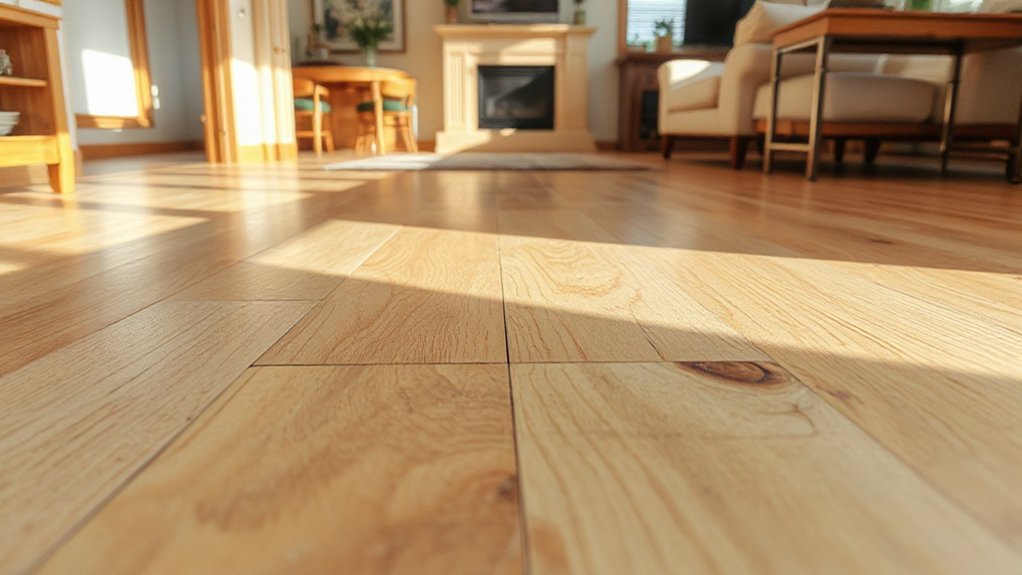
Real wood look is largely about texture, pattern, and depth, not just color. You can spot fake grain by glare, repeating patterns, and overly uniform boards.
Laminate can mimic species with varied bevels, embossing, and hand-scraped textures, but you feel differences up close. True realism comes from layered textures and subtle inconsistencies you notice when you walk across a room.
You’ll hear the gap between surface and feel of the wood, especially under kitchen chairs or foot traffic.
Eco friendly options exist, but beware moisture seals and wear layers.
Noise reduction matters; some laminates include underlayment with sound dampening. If fooling the eye is your goal, pairing realistic visuals with a quiet underlayment helps, though durability cues may reveal limits over time.
Durability and Wear: Surface, Impact, and Longevity
Durability and wear in laminate vs. engineered flooring hinge on surface construction, how each handles daily stresses, and how long the finish lasts. Laminate tops use a tough resin-coated overlay over a core that resists dents, yet heavy impact or sharp objects can penetrate thin wear layers.
Engineered floors often pair a real-wood veneer with a durable finish, offering richer texture and better long-term resistance to denting in higher-traffic areas. Both types age with visible wear, but engineered tends to show a more forgiving, gradual patina.
Environmental impact matters here: some laminates use recycled or lower-emission resins, while engineered options vary by veneer source. Aesthetic diversity matters, too, as you’ll find more color and pattern options in engineered lines, aiding style longevity.
Moisture Performance in Real Homes
How do laminate and engineered flooring stand up to moisture in real homes? In practical terms, engineered flooring often handles fluctuating indoor humidity better because its plywood core resists swelling more than solid wood.
Laminate, by contrast, uses a high-density fiberboard core with a protective top layer, which can swell or warp if moisture penetrates its surface or underlayment.
You’ll notice tighter margins between rooms when humidity stays within typical ranges, reducing gaps and buckling.
Both options benefit from a steady climate to maintain flooring aesthetics, especially in kitchens, bathrooms, or basements where moisture exposure is higher.
Wipe spills promptly, use appropriate underlayment, and keep relative humidity roughly 30–50% to preserve performance without sacrificing look or feel.
Installation Essentials: Subfloors, Acclimation, and Click-Lock
Subfloor prep sets the stage, so you verify flatness, clean debris, and address any dips or high spots before you lay down laminate or engineered planks.
Acclimation matters: give the material time to adjust to room conditions to reduce gaps and warping after installation.
With click-lock systems, you’ll align panels, test fit, and follow manufacturer gaps and sequencing to guarantee a tight, stable floor.
Subfloor Preparation Essentials
A solid subfloor is your foundation for a successful install, so start by guaranteeing it’s clean, dry, and level before you lay any laminate or engineered flooring.
- Inspect for moisture and repairs, addressing cracks, gaps, and loose patches.
- Level high spots and fill low areas with compatible compound, then sand smooth.
- Verify flatness with a straightedge, adjusting until gaps under 3/16 inch across 6 feet disappear.
Prioritize eco friendly options and acoustic insulation where possible, as these choices support durability and comfort without sacrificing performance. Keep moisture barriers intact if required by your product specs, and make sure transitions at doorways are seamless to prevent debris buildup.
Document subfloor conditions for future reference and warranty compliance.
Acclimation And Click-Lock Setup
Once your subfloor is clean, dry, and level, you can start with acclimation and the click-lock setup to guarantee a proper fit and long-lasting performance. Acclimate the planks for 48 to 72 hours in the room where they’ll be installed, keeping them in their packaging to minimize moisture swings. Maintain consistent temperature and humidity, within the manufacturer’s recommendations.
When you start, lay boards in a staggered pattern and without forceful tapping. Use spacers to maintain expansion gaps along walls. Engage the click-lock system per instructions, usually by aligning edges and snapping seams with light taps.
Cut planks precisely, especially around partitions and irregulars. Choose Eco friendly options when possible, and appreciate the design versatility offered by this system for clean lines and seamless connections.
Maintenance Tips to Keep Finishes Looking New
To keep finishes looking new, start with a consistent cleaning routine that removes dirt and debris without scratching the surface. You’ll protect both laminate and engineered flooring by using soft brooms, microfiber mops, and dry dusting between spills. Remember to avoid harsh cleaners and excessive moisture on any finish.
1) Regular sweeping and light moisture mopping: keep grit from embedding, and wipe spills promptly.
2) Weekly deep care: use a cleaner designed for your finish, then dry everything thoroughly.
3) Protective steps: use felt pads under furniture, area rugs at entryways, and avoid dragging heavy objects.
Color options and installation tools influence your upkeep choices, so pick finishes that suit your space and hardware that won’t tramp any surface.
Cost and Value: Upfront Price, Lifespan, and Total Cost
Laminate and engineered flooring differ in upfront cost, lifespan, and long-term value, so understanding these factors helps you choose wisely.
Upfront price varies: laminate usually costs less per square foot than engineered options, but installation fees and underlayment can shift totals.
Lifespan depends on wear layer quality, with engineered floors often handling moisture better if engineered with proper core layers.
Total cost includes maintenance, refinishing limits, and potential replacement timing.
Color options influence resale appeal and design longevity, yet don’t change performance.
Environmental impact matters too: look for FSC-certified wood or low-VOC finishes to reduce footprint.
In short, balance initial spend against expected life and maintenance needs, then weigh aesthetics and environmental considerations to determine which offers the best overall value for your space.
Which Should You Choose for Your Space? A Practical Framework

Choosing between laminate and engineered flooring comes down to how you’ll use the space and what you value most. Use this practical framework to decide:
- Indoor air: opt for materials with low VOCs and solid backing to minimize off-gassing, especially in bedrooms and nurseries.
- Environmental impact: consider manufacturing methods, recyclability, and durability; longer life lowers overall footprint.
- Real-world use: assess traffic, moisture risk, and maintenance needs to predict longevity and satisfaction.
Frequently Asked Questions
Can Laminate Be Refinished Like Real Wood?
Laminate can’t be refinished like real wood; durability concerns limit sanding. You’ll usually replace damaged planks. Consider aesthetic differences when choosing, and protect with mats and proper humidity. If damaged, replacement preserves overall look and performance.
Does Engineered Wood Warp Less Than Laminate in Humidity?
Sure, engineered wood handles humidity better and warping risks are lower, so you’ll see less warping. Humidity stability matters; your choice reduces warping factors, so you won’t regret it, right? You’ll be happier with engineered wood.
Which Is More Resistant to Scratches: Laminate or Engineered?
Laminate tends to scratch more than engineered, so your durability comparison favors engineered. You’ll often find better scratch resistance with higher wear layers. Durability Comparison favors engineered; Cost Efficiency varies, but engineered can save you long-term maintenance costs.
Is There a Significant Sound Difference Underfoot?
Underfoot, you’ll notice a modest sound difference: laminate tends to click louder, engineered feels softer. You’ll gain underfoot comfort with proper underlayment, and sound absorption improves dramatically when you choose thicker cores and good padding.
Can Both Be Recycled or Eco-Friendly?
Yes, you can recycle both, though processes differ by material. Recycling processes vary, and some vinyl or resin layers complicate recycling. Look for eco-friendly materials in core or backing and choose certifications to guarantee end-of-life practicality.
Conclusion
So you’re choosing between laminate and engineered flooring? Here’s the bottom line: pick laminate for budget-proof, quick upgrades, and a nearly foolproof, cookie-cutter look. Choose engineered when you crave real-wood warmth, better moisture tolerance, and long-term resale bragging rights. Think of it as a tool: laminate is speed, engineered is longevity. Weigh your space, humidity, and life plans, then commit. Your floor isn’t just underfoot—it’s the foundation for every room’s vibe, and it matters massively.