
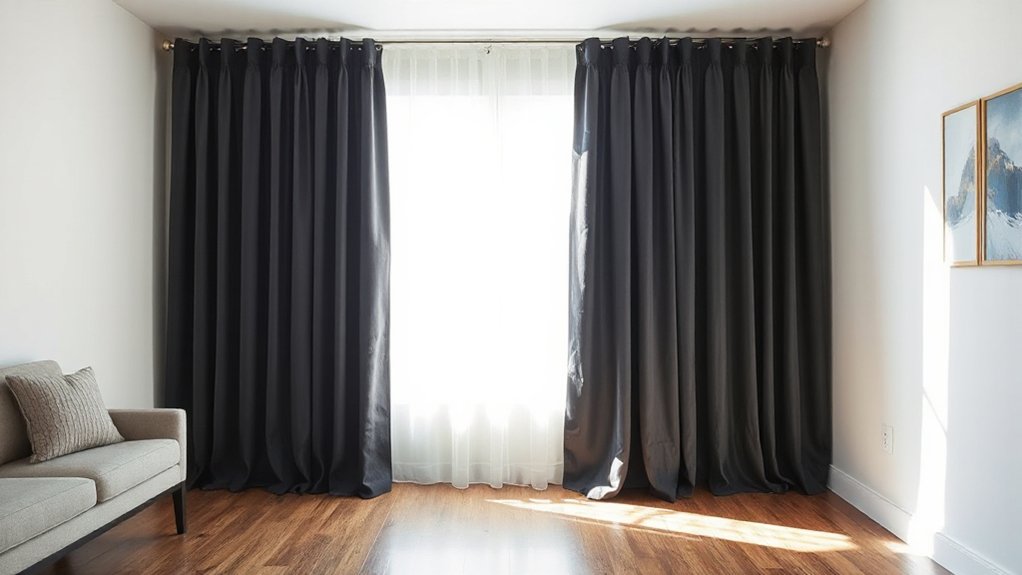

Upgrading curtain rods and drapes boosts function, longevity, and style by reducing sag, improving light control, and smoothing operation. Start by noting your priorities—durability, easy maintenance, and the look you want—then measure from the frame’s outer edges and account for rod diameter. Choose a durable material and finish that mirrors your decor, and pick a header style that suits fabric weight. With proper mounting and layering, you’ll enjoy cleaner silhouettes and better room cohesion; more tips await.
Key Takeaways
- Assess benefits and priorities to guide upgrades, focusing on smoother operation, reduced sag, durability, and cohesive aesthetics with your room style.
- Choose appropriate materials, finishes, and rod styles that balance fabric weight, light control, and decorative impact.
- Plan precise measurements (width, rod diameter, mount height) to ensure compatibility and stable, even drapery movement.
- Consider mounting options (wall, ceiling, or doorway) and follow installation best practices for strong, long-lasting support.
- Align fabric choices and header styles (rod pockets, tabs, grommets, or pinch pleats) to achieve desired look and functional light control.
Why Upgrade Curtain Rods: What You’ll Gain
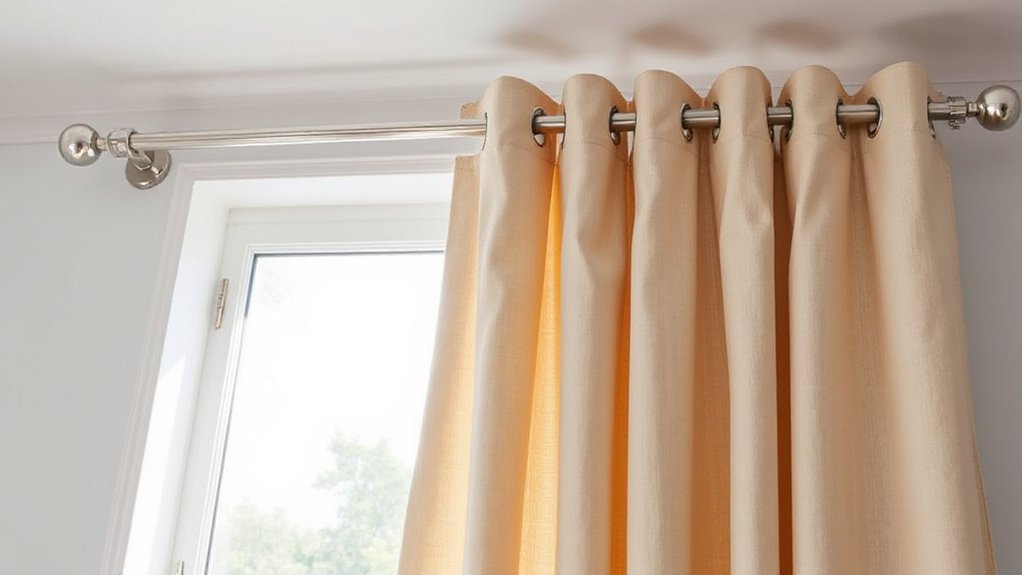
Upgrading curtain rods pays off in practical, noticeable ways. You’ll gain better function, longevity, and cleaner aesthetics for daily life. When you examine curtain rod history, you’ll appreciate sturdier materials, smarter mounting options, and designs that minimize sag without crowding your window.
That awareness helps you pick a system that holds up over time and supports diverse drapery styles. You’ll also see how the right rod improves fabric behavior: smooth operation, even weight distribution, and reduced wear at the attachment points.
Consider fabric dyeing and color compatibility to guarantee a cohesive look from hardware to textiles. In short, upgraded rods simplify setup, enhance performance, and elevate your window treatment’s overall feel and durability.
How to Determine Your Window Upgrade Priorities
To determine your window upgrade priorities, start by listing what you value most in daily use: smooth operation, minimal sag, durability, and a clean look that matches your decor.
You’ll want a setup that stays functional without fuss, so weigh how often you open and close, and how long the hardware stays taut and sturdy.
Consider whether you prefer seamless compatibility with existing window treatments or crave a bold, decorative statement through decorative hardware.
Think about maintenance needs, noise, and ease of replacement parts.
Assess alignments with room style and lighting, ensuring the overall silhouette remains uncluttered.
Prioritize reliability and ease of use, then select components—window treatments and hardware—that deliver a cohesive, long‑lasting upgrade.
Measure Your Windows for a New Curtain Rod
To measure for a new curtain rod, start at the outer edges of the window frame to capture full width.
Don’t forget to include the curtain rod diameter in your total, so you have enough reach for hardware and mounting.
Finally, account for your chosen mount style, as it affects how much space you’ll need above the window and how far the rod sits from the wall.
Measure From Outer Edges
Measure from the outer edges of your window opening to determine a rod length that will visually expand the glass and maximize light. When you set the rod beyond the frame, you’ll create a brighter, more open feel and better light distribution.
Consider how curtain rod height interacts with your drapery fabric patterns to affect perceived space and scale. Keep measurements precise and avoid crowding corners with hardware.
- Align the rod to extend beyond both sides of the frame
- Pair high placement with lightweight drapes to bounce light
- Choose patterns that enhance width without visually shrinking the room
- Ensure mounting supports the rod’s length for stability
- Double-check clearances for operation and clean lines
Include Curtain Rod Diameter
When choosing a new curtain rod, start by matching the diameter to your window hardware and drapery weight, guaranteeing a secure fit and smooth operation. Measure your window’s mounting points and compare them to rod ends and brackets to prevent misalignment.
A rod that’s too slim may bow under heavy drapery; one that’s too thick can stress hardware and limit movement. Consider two common diameters: lightweight fabrics around 1/2 inch and heavier setups at 3/4 inch or more.
Choose a rod that complements your hardware and supports the load without sag. Plan for curtain rod installation that allows easy operation and precise stacking.
Drapery fabric selection should drive hanging angles and fullness, avoiding crowding the rod. Assure brackets extend enough for clear drape movement and proper clearance from walls.
Account For Mount Style
If your window mount style varies, start by noting exactly how your hardware attaches—whether it’s a through-the-wall, ceiling-mounted, or wall-mounted setup—and plan the rod length and bracket positions accordingly.
Account for mount style to guarantee proper clearance, weight support, and clean lines. By matching Curtain rod styles to your mounting method, you’ll optimize function and aesthetics, staying current with Window treatment trends.
- Precise bracket spacing boosts stability and symmetry
- Ceiling mounts create an expansive, lofty feel
- Wall mounts offer clean, unobtrusive lines
- Through-the-wall setups maximize rod length
- Consistent hardware ties into cohesive Curtain rod styles
Consider how each option changes drapery stack and hardware visibility, and choose with confidence.
Choose a Curtain Rod Material for Your Space
Choosing a curtain rod material sets the tone for your space, so consider how material, finish, and color will harmonize with your decor.
Think about weight, durability, and the rod’s profile to support your drapes without sag or creep.
We’ll explore how tone, style, and practical needs work together to guide your selection.
Material Tones And Finish
- Harmonize metals and fabrics to create a cohesive mood
- Match finishes with hardware details for subtle continuity
- Consider sheen levels to control reflected light and depth
- Weigh fabric weight against room scale for balanced drape
- Use neutral bases with accent tones for versatile versatility
Weight, Durability, And Style
Weight and durability matter just as much as style when you pick a curtain rod. You’ll need to balance load, span, and a surface that won’t wear quickly.
Material choices set the tone: lightweight aluminum for versatility, steel for strength, or wood for warmth. Consider how the rod’s finish interacts with your space and hardware—new hardware, not just the rod, can refresh the entire window.
Durability hinges on coating quality, connection joints, and mounting hardware designed for your wall type. Pair the rod with appropriate fabric patterns and hardware colors to avoid visual discord.
If you rotate fabrics seasonally, choose a neutral base and stylish curtain accessories to keep a cohesive look. Prioritize compatibility with drapery weight and support options for long-lasting appeal.
Pick Finishes That Match Your Decor
When selecting finishes, start by anchoring them to your existing décor—harmony is what ties a room together. You’ll want finishes that echo your palette and metals without shouting. Consider how the finish reads at eye level and in natural light, then pair it with the right drapery color schemes and hardware texture. The goal is cohesion, not competition.
- Subtle metallics that pull from furniture accents
- Matte blacks for modern contrast
- Warm brass to soften traditional tones
- Aged pewter for casual interiors
- Satin nickel for versatile, timeless appeal
Curtain rod placement influences finish impact, so plan height and alignment first. By choosing finishes that complement your decor, you’ll create a polished, inviting look with effortless coordination.
Classic, Minimal, and Modern Rod Styles Explained
Classic rod aesthetics lean toward clean lines and timeless appeal, while modern drapery hardware emphasizes smooth operation and low-profile finishes. You’ll notice how minimalist shapes keep focus on fabrics and hardware, not the hardware itself.
Let’s explore how these styles can complement your space and simplify your upgrade choices.
Classic Rod Aesthetics
Curtain rod aesthetics guide three distinct vibes—classic, minimal, and modern—so you can pick a finish and silhouette that complements your space.
In Classic Rod Aesthetics, you lean into timeless silhouettes, polished metals, and subtle detailing that celebrate vintage elegance. You’ll notice how delicate finials and understated rods deliver quiet sophistication, while still leaving room for personal expression through color and texture.
Emphasize proportion and durability to *guarantee* long-lasting appeal, and consider rod customization to tailor length and mounting to your windows. This approach pairs well with layered fabrics, creating depth without clutter.
- Timeless silhouettes that anchor any room
- Polished finishes with a refined glow
- Subtle detailing for quiet refinement
- Long-lasting, durable constructions
- Rod customization for precise fit and feel
Vintage elegance meets practical control in your drapery routine.
Modern Drapery Hardware
You’ll see how Classic pieces honor tradition with ornate finials, while Minimal designs prioritize clean lines and unobtrusive supports.
Modern options emphasize sleek profiles, hidden mountings, and versatile finishes.
When selecting, consider how Historical influences shape details like room era cues or decorative motifs, ensuring your hardware complements existing décor.
Cultural variations also matter: regional aesthetics influence rod shapes, brackets, and end caps, so you can reflect your heritage or local taste.
Your goal is cohesive hardware that supports function, curtain movement, and lighting control without competing with your drapes.
In practice, test weight ratings and mounting methods before committing.
Where to Mount: Wall, Ceiling, or Doorways
When deciding where to mount your curtain rods, you have several practical options: on the wall, from the ceiling, or across doorways. Each choice affects light control, reach, and the room’s proportion, so consider your space and needs.
Wall mounting offers clean lines and stability.
Ceiling mounts maximize coverage and drama.
Doorways create a seamless connection between rooms.
Your decision hinges on mounting options and placement considerations like wall strength, hardware compatibility, and curtain length.
Take measurements carefully, account for return on each side, and visualize how drapes will hang in air or against trim.
- Clean, continuous lines that enlarge a space
- Flexible light control with longer drapes
- Easier accessibility for tall windows
- Strongest support on sturdy walls
- Dramatic effect with ceiling-mounted rails
How to Install Curtain Rods: Step-by-Step Guide
To install curtain rods, gather the right hardware, measure carefully, and mark level mounting points before you drill.
Begin with a simple layout: determine rod length, choose brackets, and plan for hardware near studs for strength. Install a center-support bracket if the span is wide, and level every piece as you go.
Use a stud finder to locate solid anchors, and drywall anchors if needed. Mount brackets at least 2 inches above the window frame to maximize light and conceal hardware.
Thread finials on last to avoid scratching walls. Test the rod for stability, then slide the drapes to confirm clearance and operation.
Curtain rod styles inform bracket placement, and fabric selection guides drapery fullness and weight, ensuring smooth operation and a polished result.
Budget Your Curtain Upgrade: Where to Spend
- vintage accents that nod to character while staying timeless
- durable finishes that resist wear and tarnish
- eco friendly choices that reduce waste and costs over time
- high-quality supports that prevent sag and alignment issues
- savvy, minimal hardware swaps for a refreshed aesthetic
With this approach, you protect the core structure, then elevate the visual impact.
You’ll enjoy fewer budget surprises, faster installations, and a coherent style language across rooms.
Prioritize long‑term value, not just immediate appeal, and your upgrade will pay dividends in comfort and curb appeal.
Selecting Drape Fabrics for Function and Feel
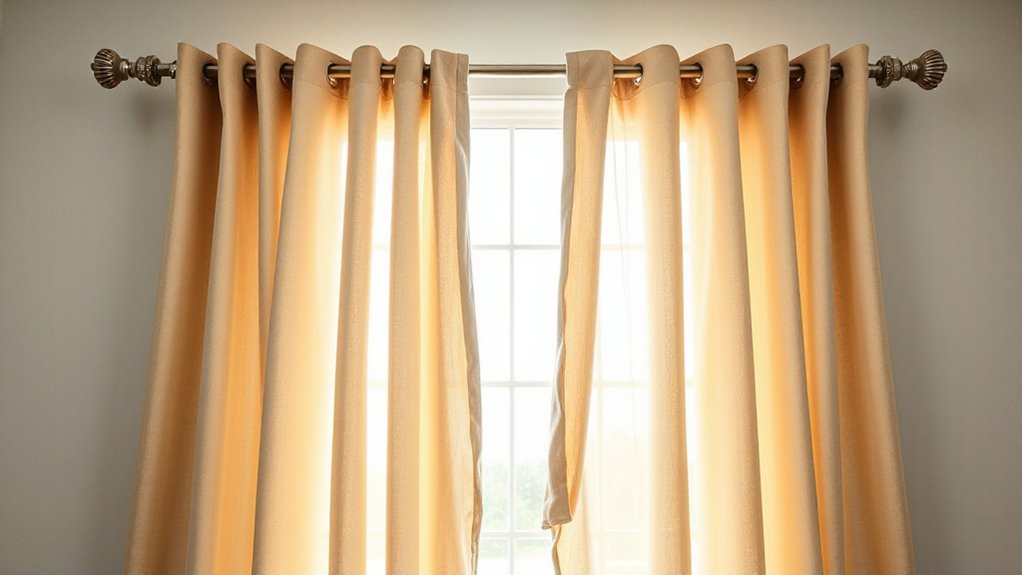
Choosing the right drape fabric starts with how you want the room to feel and function. Consider fabric opacity for privacy and light, then weigh light-control options to suit daily use.
Texture sets the mood, influencing both style and acoustics, so think about how it will interact with your room’s energy.
Fabric Opacity Considerations
Fabric opacity matters because it determines how much light passes through and how visible the room’s contents will be. When you choose fabrics, consider both function and feel: opacity shapes mood, privacy, and energy with every hour of the day.
- Feel the texture: soft, tactile fabrics elevate the room, even when closed.
- Observe the view: denser fabrics create privacy without sacrificing style.
- Balance daylight: lighter translucency brighten spaces while maintaining elegance.
- Align with Curtain style: ensure opacity complements rod hardware and drape fall.
- Test in person: compare swatches at different times to gauge mood and practicality.
Fabric texture informs your choice as much as color. Pick opacity that suits your goals, then refine with thoughtful, precise layering.
Light Control Options
Sheer panels soften glare while maintaining exterior visibility, ideal for living rooms and workspaces. Heavier fabrics offer better blackout, privacy, and temperature control, suitable for bedrooms and media rooms.
Consider curtain styles that support your goals: layered treatments provide flexibility, while single drape designs emphasize clean lines. For versatility, pair neutral, mid-weight fabrics with a liner or interlining.
Window treatments should align with your room’s design, controlling heat, glare, and mood. Choose fabrics that perform daily without sacrificing style or ease of maintenance.
Texture and Mood Effects
Texture dramatically shapes how a room feels and functions: the same drape can read warm and cozy or crisp and modern simply by its surface and weight. You’ll balance fabric textures with light, choosing drape width and layering to control mood lighting and depth.
Heavier fabrics dull glare while silk or voile soften it, guiding the room’s rhythm from morning to night. Consider how texture interacts with color, pattern, and window size to craft a cohesive atmosphere.
- Layer options for depth and warmth
- Pair matte fabrics with shiny accents to shift mood
- Use lined drapes to control daylight and privacy
- Choose textures that echo furniture finishes
- Test daylight impact before committing
Lining and Weight: How They Shape Drapery Behavior

Lining and weight determine how drapes hang, move, and keep their shape. You’ll notice lining choices alter opacity, sound, and drape stiffness, while weight affects fall and crease retention.
Heavier fabrics resist sway, creating a grounded, formal look; lighter options drift with air, yielding an airy feel. When you pair lining with weight, you control energy—stiff help for clean folds, softer drape for graceful curves.
Consider fabric patterns and texture; a dense weave can skew the line, while lighter prints may read as sheer from a distance. In curtain installation terms, match lining weight to room use: bedrooms benefit from minimum light, living spaces from flexibility.
Choose thoughtfully to preserve proportion, avoid bulk, and maintain easy operation without sacrificing style or performance.
Essential Rod Hardware: Rings, Brackets, and Sets
Rings, brackets, and sets are the backbone of a reliable curtain rod system, so choose components that suit your rod diameter, load, and style. When you select drapery hardware choices, you’ll guarantee smooth operation and lasting performance.
Consider how rings align with your drape fabric and how brackets support weight without sag. Opt for sturdy sets that match your rod’s finish for a cohesive look.
Keep installation simple by using matched screws and anchors. Prioritize compatibility with your curtain rod installation plan, and avoid mismatches that complicate mounting.
Here’s what to feel confident about:
- Clean lines, secure support, confident drapery
- Quiet glides, minimal wear, long-lasting hardware
- Correct diameter, flawless movement, easy maintenance
- Stylish finish, cohesive room, timeless appeal
- Reusable components, adaptable setup, future-proofing
Curtain Header Styles That Change the Look
Curtain header styles can transform the overall look of a room, from casual and airy to tailored and formal. You’ll find that header choices influence drapery hang, ease of operation, and room perception.
A simple rod pocket or tabs create a relaxed vibe, while grommets or pinch pleats deliver structure and polish. Consider fabric patterns to guide your decision—bold stripes, subtle textures, or floral motifs impact both scale and mood.
When selecting window treatments, match header style to the fabric’s behavior: flowing silhouettes work with soft drape headers; crisp fabrics pair with tailored pins or tailored header boards.
Assess maintenance, curtain length, and rod compatibility, then opt for a header that complements your room’s architecture and the overall fabric patterns you’ve chosen.
Achieving Light Control and Privacy With Rods
You can tailor light and privacy by pairing the right drapery rods with your fabric choice and hardware. Start with light-control basics—consider densities, coatings, and layer options—to block glare without sacrificing daylight.
For privacy, match rod height and hang style to your windows and use drapes or panels that suit your desired level of seclusion.
Light Control Basics
Light control starts with how you hang and layer your rods and drapery. You’ll shape light with height, overlap, and fabric weight, so choose accordingly. Start with a neutral liner for versatility, then add a blackout or sheer layer to dial brightness.
Align curtains with the window’s width, not the frame, and use a sturdy rod for heavy fabrics. Track systems offer smooth adjustments, while clips keep panels tidy at extremes.
Consider maintenance: easy-clean fabrics save time and keep colors vibrant, much like plant growth responds to the right light. In kitchens, kitchen fixtures that harmonize with windows prevent glare during meals and tasks.
- Visual calm from balanced layering
- Tight, controlled glare for cooking tasks
- Easy operation that invites daily use
- Durable fabrics that withstand heat
- Clean lines that enhance room scale
Privacy With Drapery Rods
If privacy is your goal, drapery rods can be a simple, effective tool for controlling both light and visibility. You’ll choose rod materials that suit your room’s durability and style, then pair them with textiles that meet your privacy needs.
A heavier weight fabric, paired with a sturdy rod, reduces glare and exposure while preserving interior tones. For daytime transparency, consider lighter sheers, layered with opaque drapes for flexible light control.
Vintage aesthetics can guide your selection, pairing classic finials and warm finishes with modern performance.
Curtain rod materials should balance strength, color, and maintenance, keeping frames flush and curtains flowing smoothly. Install brackets securely, test operation, and adjust tension as needed to guarantee consistent privacy without drag or sag.
Layering: Sheers Under Drapes for Depth
Layering sheer curtains under drapes adds depth and softness without sacrificing light. You’ll notice how sheer fabric softens edges, while still letting daylight filter in. Use layering techniques to create visual interest without crowding your window.
- Choose a lightweight, neutral pair for versatility
- Pair with darker drapes to emphasize contrast
- Hang sheers closer to the rod for a crisp silhouette
- Let drapes pool slightly for elegance
- Guarantee consistent hardware for a cohesive look
This approach keeps rooms bright and inviting, yet grounded. You’ll feel the balance between transparency and privacy, with a tactile, airy atmosphere that enhances any decor.
Coordinating Color and Pattern Across Rooms
When you mix patterns, aim for a shared scale, or a unifying motif, like a subtle geometric or botanical repeat. This supports color harmony and prevents visual clash. Introduce a second, restrained pattern only after the first is resolved, and keep background tones quiet to let textures shine.
Note how lighting changes color perception; adjust accordingly to maintain balance, rather than chasing every trend. Simplicity and consistency win in pattern mixing.
Quick, Budget-Friendly Upgrades With Big Impact
Even on a tight budget, you can make a room feel refreshed with a few smart drapery and curtain-rod tweaks. You’ll gain style without replacing everything, focusing on impact over cost.
Choose vintage textiles for character and texture, or mix in eco-friendly materials to boost sustainability without sacrificing look. Here’s how to maximize effect quickly:
- Swap in a brighter rod finish for instant contrast
- Layer sheer panels under opaque curtains for depth
- Add tiebacks to frame windows and define space
- Use bold, budget-friendly hues in a single panel
- Recycle or repurpose a fabric sample as an accent valance
With these moves, you’ll elevate vibe, warmth, and polish, all while keeping costs lean.
Caring for Rods and Drapes: Maintenance Tips
Caring for rods and drapes is about simple, regular upkeep that protects your investment and keeps them looking fresh. To start, establish a routine: vacuum fabric gently, then spot-clean stains as soon as you notice them. Use a brush attachment on drapery panels to remove dust without bending the fabric fibers.
When removing rod hardware for cleaning, note the mounting positions so reassembly is quick and precise. For fabric care, follow the care label—cold water cycles or delicate loads prevent shrinking or fading, and avoid harsh detergents.
Rod cleaning should be limited to warm, soapy water and a soft cloth, drying thoroughly before rehanging. Schedule professional cleanings for complex fabrics or heavy drapes, ensuring longevity and consistent appearance.
Real-Life Upgrades: Before-and-After Case Studies
From the routine care you just read, you’ll see how real-world upgrades can amplify both style and function. Real-Life Upgrades show how small changes yield dramatic results, with before-and-after clarity you can trust.
You’ll notice how choosing Vintage decor accents reframes spaces, and how eco-friendly materials fit today’s priorities without sacrificing texture or tone.
- A lightweight rod swap creates immediate drape flow and cleaner sightlines
- Hidden brackets deliver a seamless, clutter-free look
- Layered sheers paired with blackout panels boost versatility
- Reclaimed wood or steel finishes add warmth and durability
- Subtle hardware updates elevate overall cohesion and charm
Frequently Asked Questions
Can Curtain Rods Support Heavy Drapes Without Bending?
Yes, you can, but it depends on hardware. Choose a sturdy curtain rod, guarantee proper wall anchors, and match rod weight to heavy drape support. Distribute weight evenly, and verify brackets and end supports handle the load.
How to Avoid Wall Damage When Mounting Rods?
Did you know 67% of walls show damage after improper mounts? You avoid it by using proper mounting techniques and wall reinforcement, then secure studs or use toggles, cheater braces, and anti-sag brackets for safe, damage-free mounting.
Do Rods Affect Room Insulation or Acoustics?
Yes, rods and curtains can affect thermal insulation and soundproofing effectiveness; heavier drapes improve insulation by reducing drafts, while dense fabrics dampen noise. Make certain proper installation and sealing at window edges to maximize both benefits.
What Are Hidden Costs of a Rod Upgrade?
Hidden costs include installation labor, hardware upgrades, and potential re-drilling or wall patching. You’ll want accurate cost estimation and careful material selection to avoid surprises; plan for delivery delays and mismatches, then compare quotes before committing.
How Often Should Drapes Be Cleaned or Replaced?
Drapes should be cleaned every 6 to 12 months, depending on exposure and use. For durability, inspect annually and replace when fibers fray or fade. Practice drapes maintenance by spot-cleaning between full cleanings to extend life.
Conclusion
Upgrading your curtain rods and drapes is affordable, practical, and instantly transformative. You’ll notice bigger windows, more light, and a room that finally feels cohesive. Think of it like swapping tired shoes for a fresh pair: the whole outfit looks sharper. In a recent reno, swapping a basic rod for a reinforced metal one cut sagging and glare, saving hours of drape fiddling. Small hardware upgrades, big room payoff—start with your priorities and measure twice.