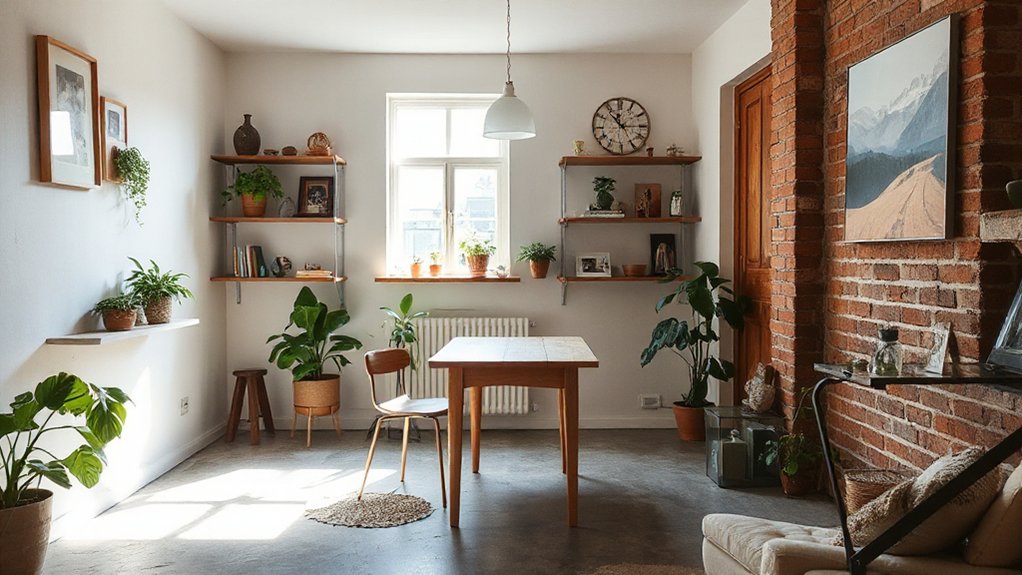

Last year, a couple transformed a tiny Manchester flat with a fresh coat, new hardware, and thrifted textiles, proving that big style can come on a small budget. You can start by defining a cohesive palette, then layer textures and vintage details for impact without overspending. But the path isn’t just about aesthetics; it’s about smart choices, practical tweaks, and small wins that compound—keeping walls calm, cues from period features, and rooms that feel larger and more liveable. So where will you begin?
Key Takeaways
- Plan rooms by function, set realistic budgets, and prioritize durable, timeless pieces for lasting style in UK homes.
- Use a cohesive anchor palette early and introduce seasonal accents through affordable, easily swapped items.
- Focus on high-impact finishes and simple upgrades (lighting, hardware, paint) to transform spaces cost-effectively.
- Leverage space-saving designs (multifunction furniture, vertical storage) to maximize small UK properties.
- Add character with textured walls, period-inspired details, and layered lighting while maintaining energy-efficient choices.
Plan a Stylish UK Home on a Budget: Where to Start
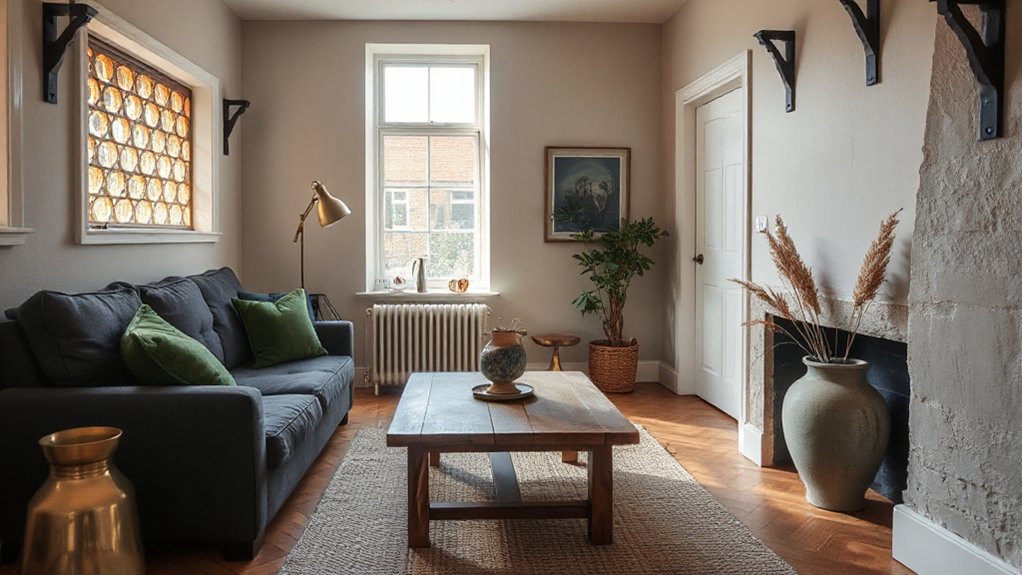
Starting a stylish UK home on a budget begins with a clear plan, not impulse buys. You map rooms by function, then priorities, separating essentials from wish-list items. Set a realistic budget for each space and hold yourself to it with a simple spreadsheet or app.
Focus on quality over quantity: luxury features can be achieved through smart materials, durable finishes, and thoughtful hardware. Seek value in timeless basics—paint, lighting, and textiles—that adapt as trends shift.
Look for designer collaborations or limited releases that offer a luxe look without a premium storefront price. Create a cohesive anchor palette early, so mismatched finds feel intentional.
Finally, schedule purchases around sales cycles and delivery windows to maintain momentum without overspending.
Define Your Uk-Style Palette and Budget Constraints
To define your UK-style palette and budget constraints, start by anchoring a versatile color story and a realistic spending ceiling that respects the space’s natural light and scale.
You’ll want color coordination that keeps rooms cohesive without stifling personality, so pick a main neutral and two accents you can swap seasonally.
Budget planning hinges on prioritizing durable basics first—seating, surfaces, and storage—then layering with softer touches.
Consider paints with low VOCs to ease refresh cycles, and select materials that tolerate UK weather and wear.
Map out a simple spend ladder: essentials, adaptable pieces, then statement details.
Keep a written limit for each zone to prevent overspend and maintain flow.
Revisit quarterly, adjusting as you gain clarity on needs and light.
DIY Vs Hire: Deciding What to Tackle First
Deciding what to DIY versus hire hinges on two core questions: what you can do safely and what’ll deliver the biggest return on time and money. You’ll assess tasks by risk, cost, and impact, then map them to your skills.
Start with tool selection: choose reliable, beginner-friendly gear for small projects, and reserve complex tools for tasks you’ve practiced or learned.
Next, conduct a candid Skill assessment: list duties you’ve done, where you’ve faltered, and what you can learn quickly through online guides or hands-on practice.
Prioritise projects that lower future maintenance or boost value, like painting walls or revitalising fixtures, before tackling structural work or rewiring.
When in doubt, hire for the high-stakes moments; DIY the straightforward, safe upgrades you can complete with confidence.
Rooms First: Smart Budgeting for Kitchens and Bathrooms
When you’re budgeting for kitchens and bathrooms, start by mapping priorities against constraints—then lock in a plan you can actually follow. You’ll get smarter results by focusing on high-impact updates and treating the space as a cohesive unit.
- Prioritize core changes: fixtures, storage, and surfaces that endure daily use.
- Choose budget friendly furniture and smart organizers to maximize space without overhauling cabinetry.
- Mix affordable decor ideas with durable finishes to keep both style and longevity in check.
- Compare quotes, timing, and minimal disruption options so work flows smoothly and stops creeping costs.
With clear goals, you’ll enjoy a refreshed feel and practical efficiency—without breaking the bank.
Floors on a Budget: Affordable Uk-Friendly Options
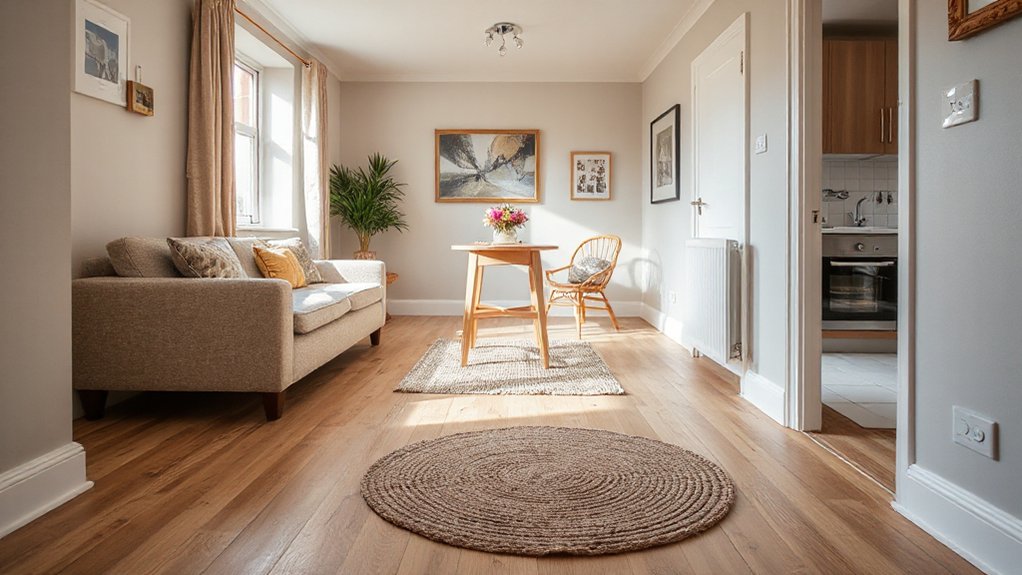
Looking for floor options that fit UK homes and budgets? You can achieve stylish results without a hefty price tag by choosing smart, durable, and easy-to-install solutions. Budget flooring isn’t about sacrificing look; it’s about selecting materials that tolerate wear and humidity, while staying within reach.
Consider luxury vinyl planks for seamless, waterproof appeal or laminate with a solid core for stability and a real-wood look at a fraction of the cost. If you’re handy, DIY installation saves time and money, and many products click together with minimal tools.
For warmth underfoot, opt for underlayment paired with composite boards. Finish with a simple, cohesive color scheme and smooth progression between rooms.
Practical, budget-conscious choices can elevate spaces without compromise.
Paint Tricks to Enlarge Small UK Spaces
Light and bright paint tricks can make compact UK spaces feel instantly larger. You’ll use color illusions and smart paint techniques to expand perception without heavy remodeling.
- Choose pale, cool neutrals on walls to recede boundaries and reflect light.
- Paint ceilings a shade lighter than walls to lift the room’s height.
- Use a crisp white for trims and doors to sharpen edges and add depth.
- Implement subtle contrast accents on architectural features to guide the eye upward.
Keep finishes satin or eggshell to reduce glare, while avoiding heavy saturations that compress spaces.
Test swatches near natural light and in different rooms to verify color illusion results. Remember, even small shifts in shade or sheen can noticeably enlarge a space without extra clutter.
Lighting Strategies for Compact UK Homes
You can start with layered illumination to make every square meter feel bigger, using a mix of ambient, task, and accent lighting.
Space-smart plans guide you to place fixtures where you actually need light, from under-cabinet LEDs to compact ceiling beams that don’t crowd ceilings.
Together, these tactics create practical, polished brightness that adapts as your rooms and routines change.
Layered Illumination Tactics
Smart lighting isn’t just about brightness—it’s about flexibility. In compact spaces, layered illumination boosts perception of size and function without clutter. You’ll combine tasks, ambience, and feature glow to craft rooms that feel bigger and more usable.
Focus on three core layers—ambient, task, and accent—and let color temperature shift with activity to sharpen or soften mood. Use simple controls and plug-in options to keep costs down.
- Ambient base: soft, even wash from ceiling or wall sconces to create a breathable backdrop.
- Task focus: desk lamps or under-cabinet LEDs for practical work areas.
- Accent highlights: directional spots to sculpt architectural features.
- Decorative glow: string or tape lights to add warmth and depth.
Layered lighting delivers illumination effects without crowding spaces.
Space-Smart Lighting Plans
Could you make the most of every square metre with space-smart lighting plans that work in compact UK homes? Start with ambient layers that softly define zones without adding bulk. Use ceiling-mounted fittings or slim track lighting to keep ceilings feeling airy.
Then layer task lighting where you truly need it—under cabinets, above desks, and at reading nooks. When planning fixture placement, consider sightlines from entryways and through doorways to avoid glare and shadows.
Opt compact, high-CRI LEDs to preserve color without overheating rooms. Mirror corners with soft backlighting to bounce light and enhance perceived space.
Dimmable options give day-to-night versatility, while wireless controls simplify adjustments. Finish with a cohesive palette of warm whites to unify disparate areas and maximize perceived roominess.
Smart Storage That Keeps UK Rooms Uncluttered
Smart storage is the backbone of tidy UK homes, turning scarce space into practical, usable rooms. You’ll feel calmer when clutter has a home, and you’ll reclaim floor area without sacrificing style. Use clever strategies that mix function with design, so storage doesn’t shout, it supports.
- Creative decluttering: sort items by frequency, donate what you don’t use, and store remaining essentials in accessible bins.
- Multifunctional furniture: ottomans with hidden compartments, bed frames with drawers, and fold-down desks maximize every square foot.
- Vertical solutions: wall-mounted shelving and hooks keep surfaces clear and eyes level.
- Smart zoning: designate small zones for living, working, and dressing to reduce impulse clutter.
Keep it simple, aligned, and practical.
Working With Period Features on a Budget
Start with period preservation as your guiding principle: treat original mouldings, fireplaces, and timber floors with gentle care, repairing only what’s essential. For walls and finishes, embrace sympathetic paints in traditional tones that dry evenly and don’t obscure detail.
When pieces show wear, opt for conservation fixes over wholesale replacement; a skilled repair can preserve provenance and value. Consider historic restoration as a design constraint, not a barrier—upgrade lighting with vintage-inspired fittings that highlight architectural features, and choose textiles and furnishings that complement historic lines without overpowering them.
This approach delivers refined, affordable character.
Upcycle and Mix Furniture for a Cohesive Look
Upcycling and mixing furniture is about creating a cohesive look that feels intentional rather than mismatched. You’ll transform odds and ends into a polished whole, using practical choices over flashy purchases. Focus on three core moves: unify finishes, mix eras with care, and portfolio your palette.
- Begin with a shared finish or neutral base and introduce subtle accents to tie pieces together.
- Pair vintage with contemporary items, preserving lines that echo each other for cohesive style blending.
- Prioritize furniture repurposing by adapting storage, seating, and surfaces to fit your space.
- Maintain balance with scale, leaving room for negative space so each piece earns its place.
This approach delivers a refined, budget-smart result that feels intentional and lived-in.
Textiles and Soft Furnishings for Instant Warmth
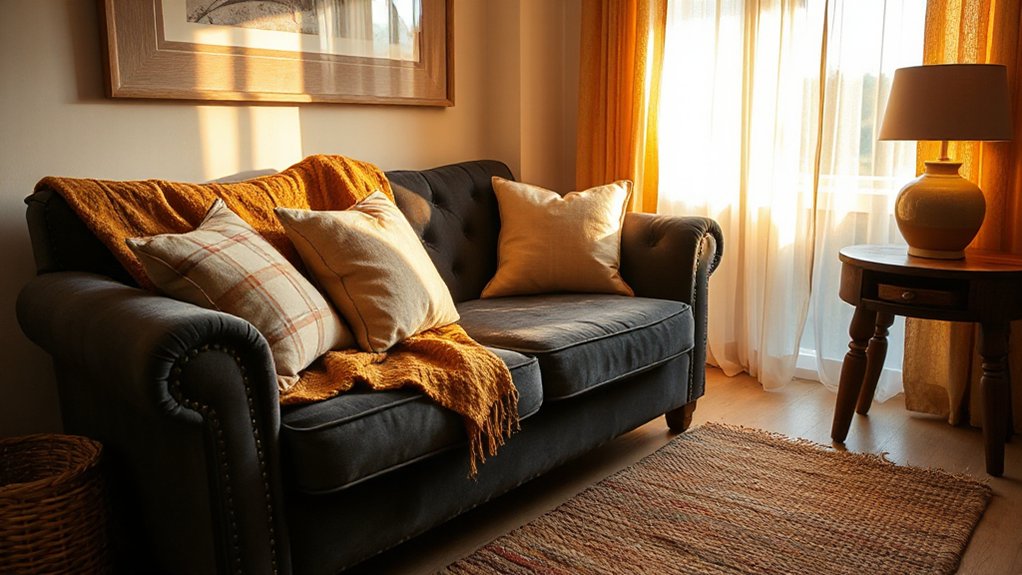
Textiles and soft furnishings are your quickest route to instant warmth, no major overhaul required. You’ll feel the difference as soon as you layer fabrics across seating and bedding.
Focus on textile layering: combine textures like wool, linen, and faux fur in neutral tones with a pop of colour to add depth without clutter. Start with a solid base—coordinated cushions or a throw—then build with small accents that echo your palette.
Opt for heavier curtains or a thermal drape to boost warmth and sound insulation. Keep patterns subtle to avoid visual noise, allowing the room to feel cohesive.
British-Inspired Statement Walls and Accents
British wall statements can set the tone for a room, so start with a focal color or motif and build from there.
Consider one accent wall in a rich, period-appropriate hue or a textured finish that echoes UK design classics.
Pair bold walls with restrained accessories to keep the look polished and adaptable.
British Wall Statements
What makes a room feel characterful? It’s the way British wall statements blend heritage charm with everyday practicality. You can achieve this without a full renovation by focusing on proportion, texture, and subtle contrast. Use wall art and decorative mouldings to frame personality without loud decor.
Here are four simple moves:
- Pair a muted paint color with a bold moulding detail to create instant depth.
- Create a gallery wall that mixes vintage prints and contemporary pieces for a curated, lived-in vibe.
- Install a standalone architectural panel or wainscot to add structure to a room’s silhouette.
- Ground a feature wall with a warm, tactile finish (linen plaster or textured wallpaper) to invite touch and warmth.
Accent Wall Ideas
Accent walls can be the quickest way to anchor a room with personality while keeping the rest of the space calm. You don’t need a full remodel to achieve impact—start with a single, well-chosen wall.
Consider vintage patterns for a nod to heritage without overwhelming the scheme; a muted paisley or geometric print can add depth while staying versatile. If you prefer restraint, opt for wallpaper textures like linen or tactile grasses to create subtle warmth under layered lighting.
Balance is essential: pair a bold wall with soft neutrals, or mirror it with coordinating accessories in your existing palette. Installation should be clean and reversible, so you can swap patterns as trends shift.
Practical, polished, and distinctly British, these accents elevate any property.
Energy-Saving Uk-Friendly Window Treatments

Energy-saving window treatments can make a noticeable dent in UK heat loss, especially when you pair insulating drapes with well-sealed, low-emissivity blinds. You’ll feel the impact in lower heating bills and steadier indoor temperatures. Focus on materials that balance performance with style, and install proper drafts seals to maximize efficiency.
Here are practical options:
1) Thermal curtains that block cold drafts while letting light in
2) Low-emissivity blinds paired with blackout liners for nights
3) Window film that reflects heat without sacrificing visibility
4) Double-glazed inserts or secondary glazing for older homes
Tip: combine thermal curtains with window film for a two-layer shield. These choices keep rooms warm, cut energy use, and look polished.
Budget-Friendly Tech and Smart-Home Basics
Smart budgeting meets smart living with budget-friendly tech that’s genuinely useful, not flashy. You can start small with a smart hub and a couple of compatible smart gadgets to simplify routines without overhauling rooms.
Choose devices that emphasize automation over complexity: smart lighting that adapts to occupancy, a thermostat that learns your schedule, and plugs that monitor energy use. Look for simple setups that support tech integration across brands to future-proof your investment.
Prioritize privacy and easy updates; avoid gear that requires constant cloud access or subscriptions. Position devices for accessibility and reliability, not aesthetics alone.
With thoughtful selection, you’ll gain comfort and control, plus clear energy savings. Budget-friendly tech becomes practical, scalable, and genuinely supportive for daily living.
Small UK Terraces: Outdoor Space on a Budget
If you’ve been optimizing indoor tech on a budget, you can extend that practicality to your outdoor space without overspending. On small UK terraces, clever layering beats square footage. Prioritise garden privacy and outdoor lighting to transform the feel without a major overhaul.
- Use tall, slim planters to create a green wall and shield you from neighbours without crowding the yard.
- Choose a compact, foldable furniture set that folds away when not in use.
- Install solar-powered string lights or wall-mounted lanterns for warm, ambient lighting.
- Add a small outdoor rug and weatherproof cushions to define zones and add comfort.
Your terrace becomes a usable extension of your home, stylish and budget-smart.
Where to Shop for Steal Deals in the UK
Finding steals in the UK hinges on knowing where to look and when to pounce. You’ll beat high prices by targeting outlets that regularly refresh stock, including clearance sections, end-of-season drops, and online marketplaces with strict seller reviews.
Start with budget planning: set a cap for each room and track item-by-item costs to avoid impulse buys. Shopping tips include visiting local charity shops on weekday mornings, exploring district auctions for furniture, and comparing price-per-use rather than sticker value.
Don’t overlook discount retailers and factory seconds, where minor flaws mean major savings—inspect items carefully for wear or repairs. Co-create a shortlist of must-haves, then wait for seasonal sales or flash deals to strike.
With focus and patience, stylish spaces emerge without overspending.
A Practical Timeline for Budget Renovations

Now that you’ve spotted great steals, you’re ready to map a practical renovation timeline that fits a budget. Start with a realistic setback buffer, then align tasks with your funders and suppliers. Budget friendly planning means sequencing dependencies and avoiding peak-price windows. Use a simple calendar to mark procurement, demolition, and installation milestones, keeping daily tasks focused and attainable.
- Assess needs, set priorities, and allocate funds for each area.
- Create a phased schedule, syncing trades and deliveries to minimise waste.
- Build in buffer days for delays and inspections, tracking costs weekly.
- Review progress, adjust scope, and reallocate savings to high-impact finishings.
This timeline planning approach keeps momentum, reduces surprises, and delivers polished rooms within budget.
Quick Wins: 5 Budget-Friendly Room Makeovers
Updating on a budget doesn’t mean compromising style; these quick wins prove you can refresh a room with smart choices and minimal disruption. You’ll tackle five simple makeovers that deliver big impact without blowing your budget.
First, swap heavy drapes for light linen and introduce a bright rug to anchor the space.
Second, repaint a single feature wall in a fresh, timeless hue to transform mood fast.
Third, swap outdated hardware and switchplates for brushed finishes that feel premium.
Fourth, add layered lighting with a couple of affordable lamps to create depth.
Fifth, curate a small gallery of personal art or photos to shape character.
Budget travel and culinary tips blend here as you repurpose what you already own, avoiding waste while elevating style.
Frequently Asked Questions
How Can I Maximize Light With Tiny Budgets?
Brighten spaces by maximizing natural light: swap heavy drapes for sheer curtains, mirror strategically, and choose light color schemes. Place furniture to reflect light, avoid blocking windows, and optimize furniture placement to amplify perceived spaciousness on a budget.
Which Materials Offer Best Long-Term Value?
You’ll get the best long-term value from luxury finishes and eco friendly materials that last. Prioritize solid woods, recycled metals, and low-VOC paints; choose timeless textures, detailed craftsmanship, and sustainable sourcing for durable, stylish results you’ll love.
How to Prioritize Safety When DIYING on a Budget?
Prioritize safety by planning and using safety equipment, PPE, and clear guidance before any DIY. Inspect sites, secure hazards, and implement hazard prevention measures. Keep a first-aid kit handy, document risks, and pause if conditions feel unsafe.
What Affordable Storage Tricks Maximize Space Instantly?
You’ll maximize space instantly with creative furniture and multifunctional solutions, like storage beds, wall-mounted desks, and stackable, modular units. You’ll stay organized, access hidden spots, and keep daily living sleek, practical, and affordable.
Are There Tax or Permit Considerations for Low-Cost Updates?
Yes, you should check tax implications and permit requirements before upgrades. You’ll want to confirm exemptions, claimable relief, and any impact on council rates, plus obtain permits for structural changes to avoid penalties and delays. Plan carefully.
Conclusion
You’re the captain steering a thrifted brig, charting calm seas with a clever map of reuse. Your plan is the compass, your budget the wind, and each small upgrade—the painted door, swapped handle, upcycled chair—a friendly lighthouse guiding the voyage. On a UK backdrop of brick and charm, you’ll weave durable finishes, layered textiles, and characterful accents into a cohesive, affordable home. Sail steady, shop smart, and let small wins reveal the big style you’re building.