
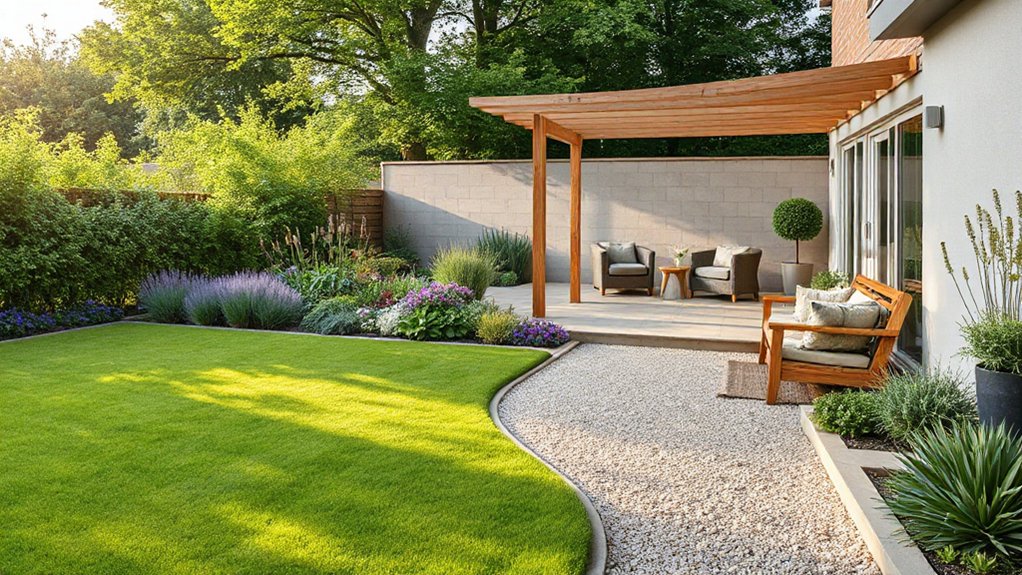

You’re likely already seeing it: UK gardens becoming tougher, more adaptable, and as stylish as they are practical. Drought-tolerant perennials, edible borders, and modular outdoor rooms shape spaces that work year-round, with waterwise planting and eco-friendly materials at the core. Urban wildlife corridors and scalable features promise resilience without chasing trends. If you’re planning now, you’ll want to understand how these shifts could redefine your own outdoors—and what to implement first.
Key Takeaways
- Climate-resilient design with drought-tolerant plants, waterwise layouts, and microclimate planning to cope with UK weather extremes.
- Low-maintenance, modular garden schemes using scalable spaces, rugged materials, and reusable components to suit tighter budgets.
- Edible borders and compact, high-yield planting that combine culinary yields with year-round visual appeal.
- Biodiversity-focused planting, pollinator corridors, and habitat-friendly installations to support urban wildlife.
- Outdoor rooms with year-round usability, including layered lighting, adaptable shade, and durable furniture.
What’s Driving UK Garden Design in 2026: Climate, Budgets, and Trends
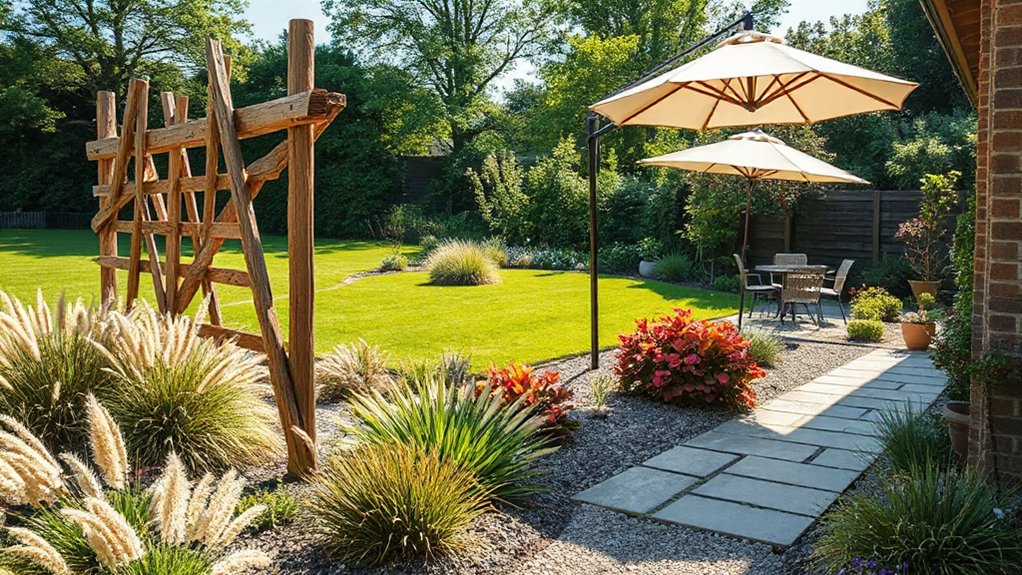
UK garden design in 2026 is being shaped by climate realities, tighter budgets, and evolving stylistic cues. You’ll notice a sharper emphasis on resilience—choosing plants and materials that endure heat, drought, and heavy rainfall without extra care.
Budget-smart strategies guide your choices toward modular layouts, scalable spaces, and reusable components, ensuring flexibility for changing needs. You’ll prioritize urban wildlife corridors, pollinator-friendly plantings, and shade structures that support biodiversity without complicating upkeep.
Sustainable materials become non-negotiable: recycled composites, localized stone, and responsibly sourced timber reduce embedded carbon while preserving aesthetics. Climates shift your palette toward muted, natural tones and texture-rich surfaces that age gracefully.
In short, function drives form, and thoughtful design delivers enduring appeal with practical, trend-aware confidence.
Low-Maintenance Perennials for Busy British Summers
Busy British summers demand perennials that earn their keep, not your time. You want beds that bloom reliably with minimal fuss, so choose low-maintenance options that thrive on routine neglect.
Favor drought-tolerant, compact, and pest-resistant varieties that reduce watering and feeding. Emphasize pollinator friendly plants, ensuring you sustain bees and butterflies through peak months.
Opt for versatile textures—grasses, asters, sedums, and hardy geraniums that rebloom with little intervention. Native species selection in your border supports local ecosystems and stabilizes performance across Brit summers.
Pair these with well-drained soil and strategic mulch to suppress weeds and conserve moisture. Design with layering: tall focal perennials at back, mid-height for continuity, groundcovers to minimize upkeep.
Regular deadheading keeps colour without heavy maintenance or frequent replanting.
Edible Borders in Small UK Plots: Grow, Cook, and Enjoy
Edible borders transform tight spaces into productive, edible backdrops that look lush year-round. In small UK plots, you can turn edges into harvest hubs without surrendering style.
Start with compact herbs, leafy greens, and quick-cycling veg like radish, lettuce, and dwarf beans to maximize momentum from border to plate.
Use compact fruiting shrubs for continuous picks while keeping pathways neat.
Practice companion planting to deter pests and boost flavor, pairing basil with tomatoes or marigolds with peppers for natural benefits.
Embrace vertical gardening to double your yield in limited depth—trellises, wires, and hanging baskets keep sunlit zones productive.
This border approach aligns with modern, trend-aware design: practical, attractive, and cook-ready right from your doorstep.
Waterwise Planting and Drought-Resilient Garden Design for UK Climates
Drought-resilient planting isn’t optional in today’s UK gardens—it’s essential. You’ll prioritise waterwise strategies that blend aesthetics with efficiency, selecting varieties and layouts that thrive with limited irrigation.
Focus on deep-rooted perennials, clump-forming grasses, and drought-tolerant shrubs that provide structure year-round. Rain gardens stand out as proactive solutions, capturing runoff and filtering it for sustained moisture, while native flora supports local pollinators and reduces maintenance.
Pair mulch blankets with well-draining soils to curb evaporation and foster healthy root zones. Design with microclimates in mind—shady pockets, sun-soaked edges, and wind-sheltered beds all demand tailored plant choices.
Aim for layered, cohesive corridors that reduce water demand, enhance soil health, and deliver enduring colour and texture throughout drought-prone UK seasons.
Outdoor Rooms All Year: Lighting, Shade, and Year-Round Use
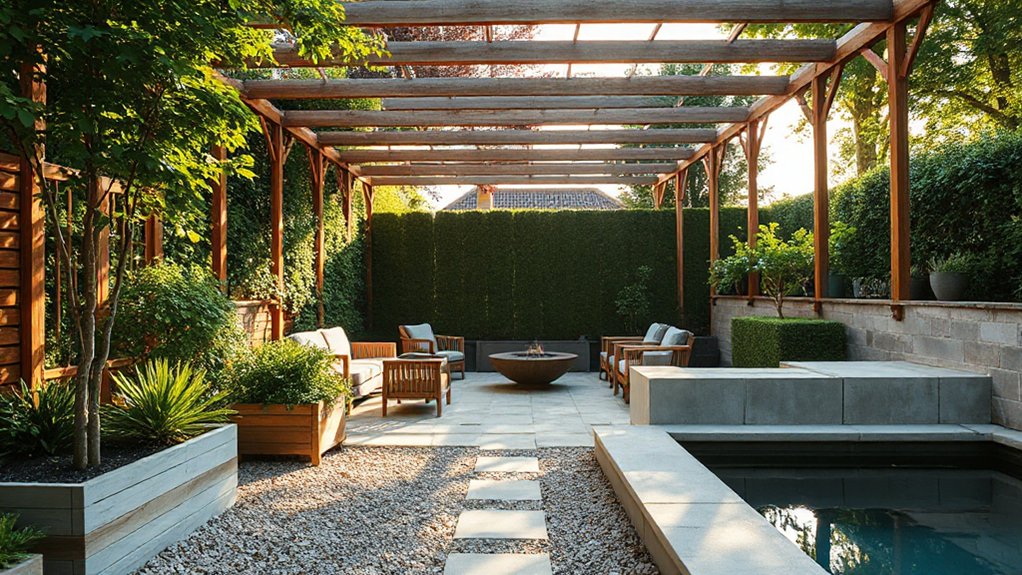
Outdoor rooms aren’t seasonal afterthoughts—they’re living spaces you can use year-round. In UK gardens, lighting and shade create resilience, inviting evening gatherings and sunny retreats beyond the summer weeks.
Layered lighting—warm LEDs, low-profile uplights, and task fixtures—extends usability without glare, while smart controls tailor ambiance to weather and activity.
Shade solutions must be adaptable: retractable canopies, tall trees, and pergolas with adjustable slats offer comfort during heat spells and crisp winter air.
Year-round use hinges on durable furniture and temperatures that respect practicality; invest in garden furniture designed for damp conditions and easy maintenance.
Accent with outdoor art to anchor zones, then refresh with seasonal textiles and planters. This approach sustains form, function, and stylish continuity throughout the year.
Frequently Asked Questions
How to Balance Aesthetics With Pollinator-Friendly Planting?
Balance aesthetics with pollinator-friendly planting by mixing vibrant perennial borders with wildflower mixes, and add vertical planting to maximize blooms in small spaces. You’ll attract wildlife, while maintaining structure and color through layered, sustainable design.
Which Native Species Matter Most for UK Biodiversity?
Native species that matter most: prioritize native shrubs and wildflower meadows, since they symbolize resilience and stewardship. You support biodiversity, creating habitats, food webs, and resilient landscapes that boost pollinators and wildlife across UK ecosystems.
What Budget-Friendly Garden Upgrades Pay off Long Term?
Prioritize durable, low-maintenance upgrades; you’ll save time and money long term. Invest in garden lighting and outdoor furniture that withstands weather, adds ambiance, and boosts resale value while reducing ongoing costs and energy use.
How to Reinvent a Small Urban Garden Efficiently?
Compact, clever and cost-conscious, you can reinvent a small urban garden efficiently by embracing container gardening and vertical planting, maximizing space, streamlining sunlight, and ensuring sturdy setups that scale as you grow.
What Legal Considerations Affect Garden Changes and Additions?
You must obtain garden zoning assessments and legal permissions before changes. You’ll assess planning requirements, permits, and boundary rights; guarantee setbacks, heights, and protected features comply. Stay trend-conscious, authoritative, and concise to avoid costly compliance issues.
Conclusion
You’re promised a lush, low-maintenance oasis that still excites the senses. Yet resilience sits beside whimsy: drought-tolerant perennials pair with edible borders, practical drainage with playful lighting. You crave year-round use, but also weekly spontaneity. The paradox is your garden’s strength—scalable, eco-friendly, stylish—adapting as climate and budgets shift. Embrace modular layouts today, and savor tomorrow’s wildlife corridors and edible harvests. In this tension, your UK outdoor space becomes both sanctuary and statement.