
To make a semi-detached home feel luxurious, start with cohesive materials and durable finishes—natural stone, solid wood, and warm metals—paired with refined hardware. Maximize light with soft, diffusing window treatments and layered lighting for ambient, task, and accent zones. Define spaces with subtle zoning and sightlines, using proportionate furniture and a unifying color palette. Add focal points—art, fireplace, or views—and tasteful textures through throws and rugs. Plan upgrades in phases and maintain key surfaces; you’ll discover more tips ahead.
Key Takeaways
- Elevate materials and finishes with durable natural stone, wood, and refined hardware to signal luxury with perceived value.
- Maximize natural light and layer lighting (ambient, task, accent) using diffusers, dimmers, and statement fixtures.
- Plan spaces with clear sightlines, zones, and proportional furniture to create airy, cohesive layouts.
- Use cohesive color palettes, tactile textures, and art/decor to add personality without clutter.
- Implement a phased budget plan with high-impact upgrades, maintenance routines, and a 5–10% contingency.
Identify Luxurious Cues for Semi-Detached Living Areas
Consider what signals luxury in a semi-detached space: coherence, quality materials, and thoughtful detailing that feel intentional rather than showy. You’ll detect luxury cues in a restrained palette, precise joinery, and tactile finishes that age gracefully.
Focus on proportion, scale, and balance between zones to craft a cohesive semi-detached ambiance. Opt for materials that communicate durability—natural stone, solid wood, and low-VOC finishes—paired with hardware that feels refined, not fussy.
Lighting should glow with purpose, highlighting textures without glare. Storage should be integrated and unobtrusive, maintaining clean sightlines.
Clutter-free layouts, acoustic consideration, and consistent trim elevate perception of space. These elements converge to signal quality and subtle exclusivity, delivering a tangible, effortless sense of refinement.
Maximize Natural Light With Window Treatments
Maximizing natural light starts with selecting window treatments that enhance openness rather than block it. Choose options that diffuse daylight softly without sacrificing privacy or glare control. Opt for light, neutral fabrics, sheer panels, or motorized blinds that you can raise, lower, or tilt for precise light control throughout the day.
Consider layered approaches: a sheer for daytime brightness paired with a lightweight shade for evening privacy. The goal is seamless integration with architectural lines, not heavy drapes that absorb space. Prioritize easy operation and consistency with room scale to preserve an airy feel.
Always test fabrics in daylight to confirm color accuracy. When you fine‑tune window treatments, you maximize light without compromising energy efficiency or visual flow. Window treatments positively shape perceived space and light.
Layer Warm Textures: Materials and Finishes
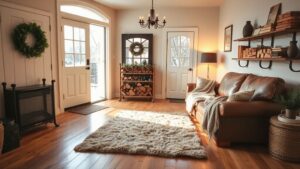
Layer warm textures into your semi-detached home by selecting materials and finishes that invite touch and add depth without cluttering the space. You’ll create richness through tactility, not complexity, by choosing finish materials that pair well with existing tones and lighting.
Prioritize fabric textures and natural fibers to soften angles and echo comfort. Balancing sheen and matte surfaces prevents overstimulation while keeping everything cohesive.
- Select fabric textures with restrained patterns and durable weaves for upholstery and drapery.
- Mix finish materials like warm hardwoods, stone, and brushed metals to build subtle contrast.
- Layer textiles in throws, cushions, and rugs to enhance warmth without crowding.
Define Spaces With Subtle Zoning and Flow
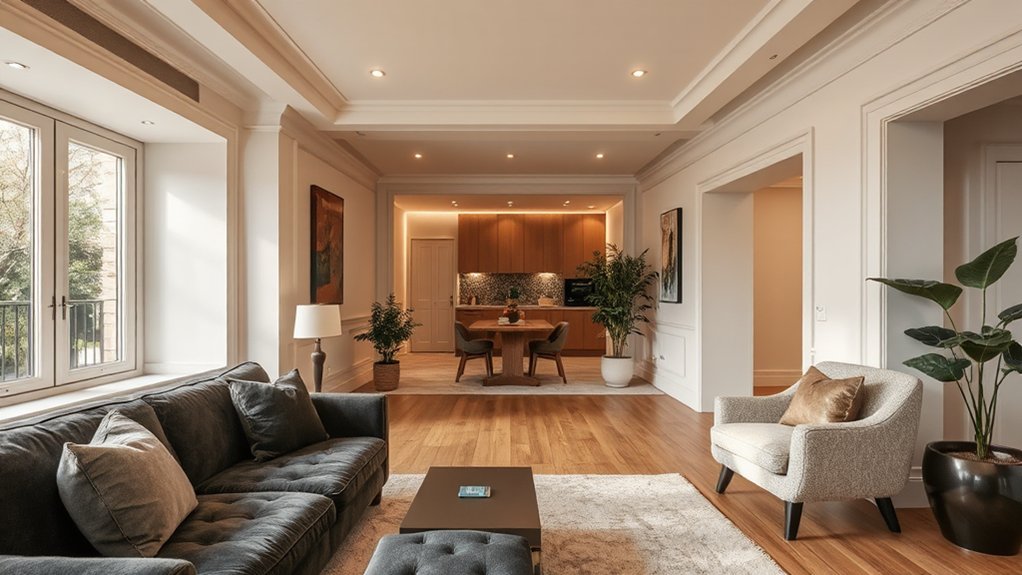
You shape natural traffic flow by aligning primary pathways with sightlines and doorways, guiding movement without shouting from the layout.
Use subtle space delineation—layer lighting, color, and furniture to mark zones like living, dining, and study—without solid barriers.
Tie everything together with a cohesive material palette so shifts feel deliberate, not disjointed.
Natural Traffic Flow
- Establish a single main funnel from entry to core living zones, then connect rooms with gentle changes in ceiling height and lighting intensity.
- Use furniture layout and area rug placement to create intuitive paths that feel natural, not imposed.
- Integrate exterior cues, such as garden landscaping and the exterior facade, to cue indoor flow from exterior space.
This approach preserves luxury through clarity, cohesion, and understated refinement.
Subtle Space Delineation
Floor finishes and area rugs further define intent without heavy boundaries. Decorative partitions offer visual separation while maintaining sightlines, and should be lightweight, reversible, and chosen to complement your palette. Consider vertical elements—low bookcases, open shelving, or plants—to carve paths without confinement.
Balance intimacy with spaciousness by keeping sightlines clear and ensuring every zone serves a practical, aspirational purpose.
Cohesive Material Palette
A cohesive material palette unifies spaces while preserving subtle zone distinctions, using repeated textures, tones, and finishes to guide flow. You define boundaries through consistent material families rather than stark contrasts, ensuring seamless progressions from entry to living areas.
This approach hinges on deliberate color coordination and thoughtful material selection, so spaces read as one cohesive home with distinct, but gentle, zones.
- Choose a core material family (e.g., stone, wood, metal) and carry its color undertones across rooms.
- Introduce an accent texture or finish sparingly to delineate areas without breaking harmony.
- Test lighting alongside surfaces to confirm perceived warmth and continuity.
The result is a luxurious feel achieved through disciplined material selection and color coordination, not excess.
Elevate Ambience With Layered, Statement Lighting
Layered lighting creates depth by combining ambient, task, and accent layers to shape mood and function.
Select statement fixtures thoughtfully to punctuate architectural moments without overpowering the space.
Together, these elements set a refined tone while enhancing perceived room scale.
Layered Lighting Layers
To create a truly luxurious feel, combine multiple lighting layers that work together to sculpt space and mood. Layering light shapes perception, depth, and texture, so you perceive rooms as taller and more intentional.
Use three core layers to build ambiance:
1) Ambient glow: provide even, soft illumination that wraps the space without glare.
2) Task illumination: focus light where you perform precise activities, like reading or cooking, without shadows.
3) Accent highlights: spotlight architectural features, artwork, or furnishings to add depth and drama.
Pair dimmers with warm color temperatures to preserve comfort. Guarantee switches are convenient for frequent use and adjust as rooms change with decor.
Statement Fixtures Impact
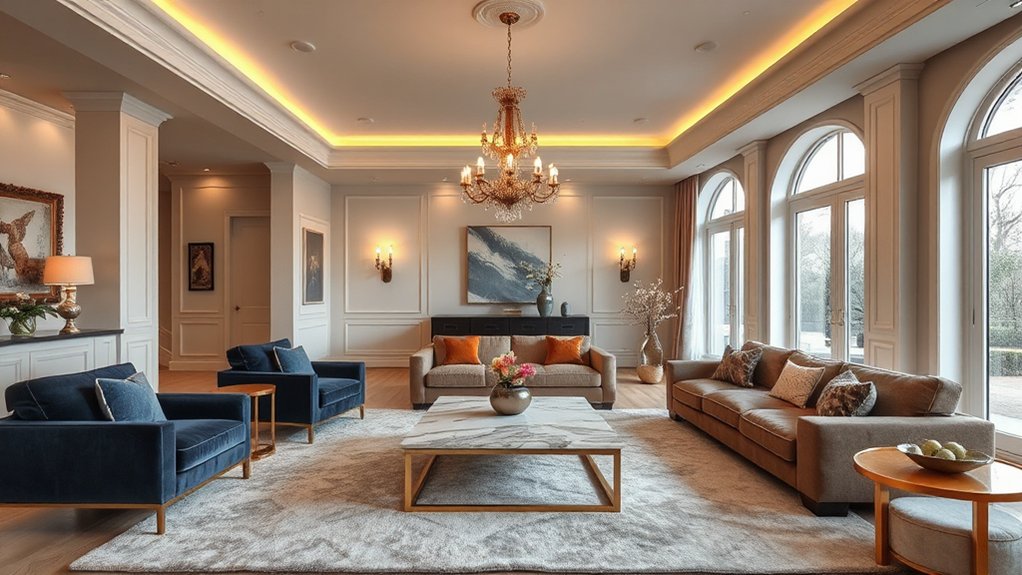
Statement fixtures do more than illuminate; they define mood and elevate the overall feel of your semi-detached home. You’ll shape rooms with focal lighting that acts as decorative accents as much as functional sources. Choose statement fixtures with strong silhouettes, scaled to room size, and align finishes with your wood tones and metals for cohesion.
Layer light by pairing a bold chandelier or sculptural pendant with controlled, task-oriented lamps, so ambient, task, and accent roles don’t compete. Consider materials—brass, matte black, or smoked glass—to add texture and depth.
Position fixtures to highlight architectural features and artwork, guiding the eye without glare. Remember: decorative accents are as transformative as the primary fixture, delivering luxury through curated, purposeful lighting decisions.
Pair Classic Palettes With Modern Finishes
- Mix matte neutrals with high-gloss hardware for subtle texture.
- Pair warm woods with cool stone or porcelain to amplify contrast.
- Introduce a single, saturated accent across furnishings and textiles for continuity.
Upgrade Key Surfaces Without a Full Remodel
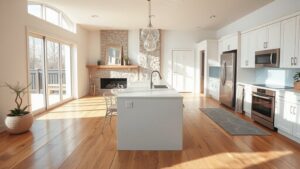
Upgrading key surfaces without a full remodel lets you refresh the feel of a semi-detached home with minimal disruption. Start with countertops and backsplashes in kitchens and baths; opt for solid-surface or quartz with clean edges for a premium, low-maintenance look.
Upgrade flooring selectively—hogging wear spots with durable materials like engineered wood or premium ceramic—so you gain texture and warmth without a complete overhaul. In shared spaces, swap lighting fixtures and hardware to sharpen the finish; brushed nickel, matte black, or warm brass shapes convey luxury with minimal cost.
Integrate luxury landscaping around entryways and views to frame upgrades and enhance curb appeal. For kitchens, pair upgrades with high end appliances for a cohesive, upscale impression.
Focus on precision, consistency, and durable, refined materials.
Arrange Furniture for Open, Luxe Living
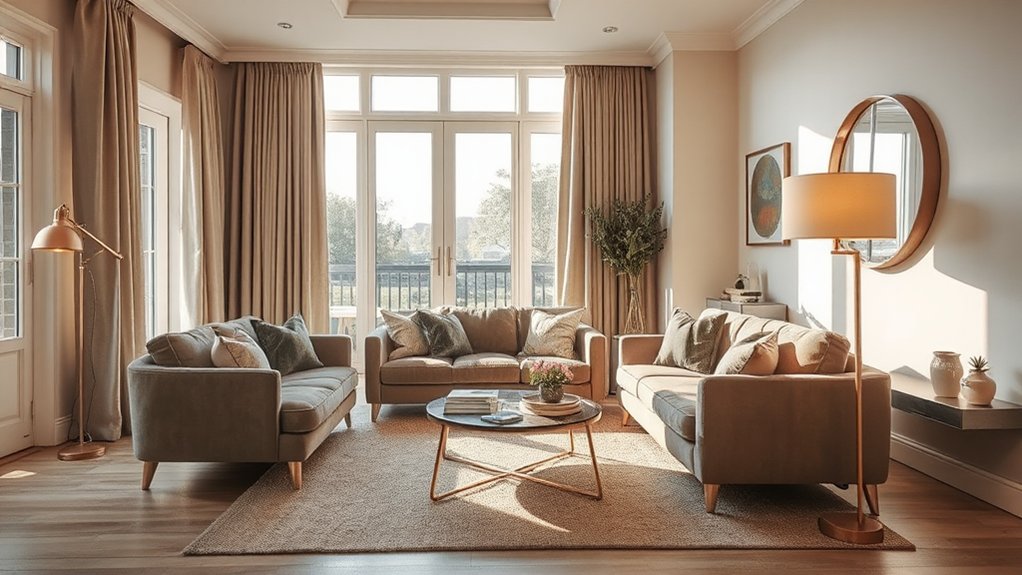
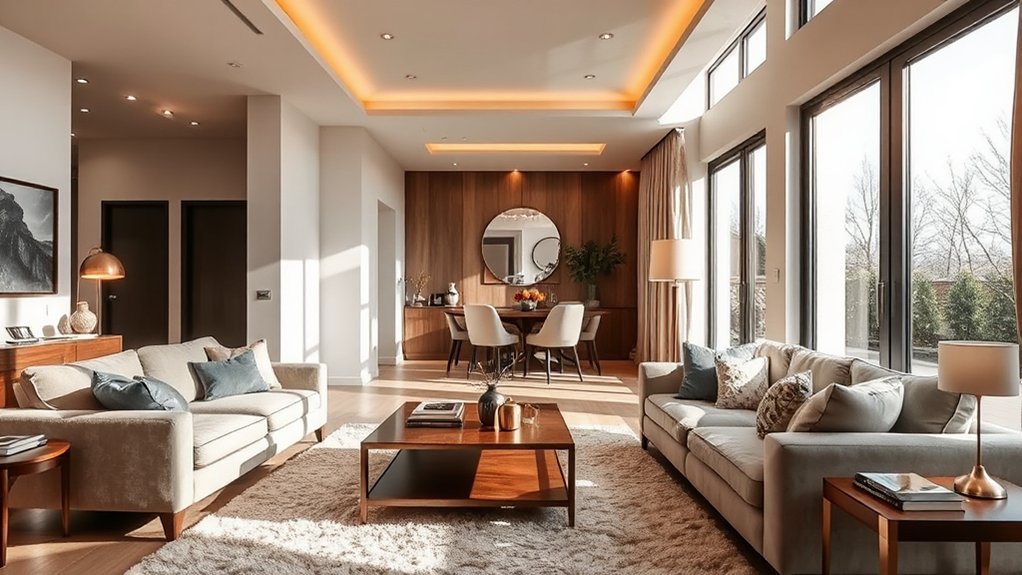
To open up your space, start with smart space planning that prioritizes clear sightlines and flexible seating.
Emphasize flow by arranging furniture to create defined but connected zones, so movement feels effortless.
Use focal points—such as a fireplace, window view, or art placement—to anchor rooms and elevate the sense of luxury.
Space Planning Principles
Good layout starts with clear zoning: define distinct living, dining, and circulation areas so the space reads as one cohesive, open continuum rather than disparate rooms. You’ll optimize sightlines, exploit vertical height, and guarantee furniture encourages effortless flow. Color schemes and architectural details guide perception, creating luxury without crowding.
- Establishing zones with rugs, lighting, and varied textures signals hierarchy while preserving openness.
- Position seating to foster conversation and maintain generous pathways, avoiding bottlenecks near entryways.
- Use scale-appropriate pieces and negative space to enhance airiness, then tie rooms together with a unifying color palette.
Your approach blends function with refinement, ensuring every piece earns its place. Focus on balance, restraint, and thoughtful detailing to elevate the semi-detached interior.
Flow and Focal Points
How you arrange furniture directly shapes flow and focal points, revealing an open, luxe feel. You align seating to create confident sightlines, guiding movement without clutter.
Position sofas and chairs to form intimate conversation nooks while preserving generous pathways; avoid blocking radiators or views. Use key pieces—art, fireplace, or a statement console—to anchor the room, then mirror those elements across zones for cohesion.
Scale matters: oversized pieces shrink a room; lighter, low-profile frames open it up. Color and texture should repeat subtly to unify spaces, not compete for attention.
Consider garden design and exterior styling cues when mapping indoor layouts, so transitions feel intentional.
Finally, design sightlines toward architectural features, exterior lighting, and outdoor vistas to maintain luxe continuity from inside out.
Personalize With Art and Thoughtful Décor Details
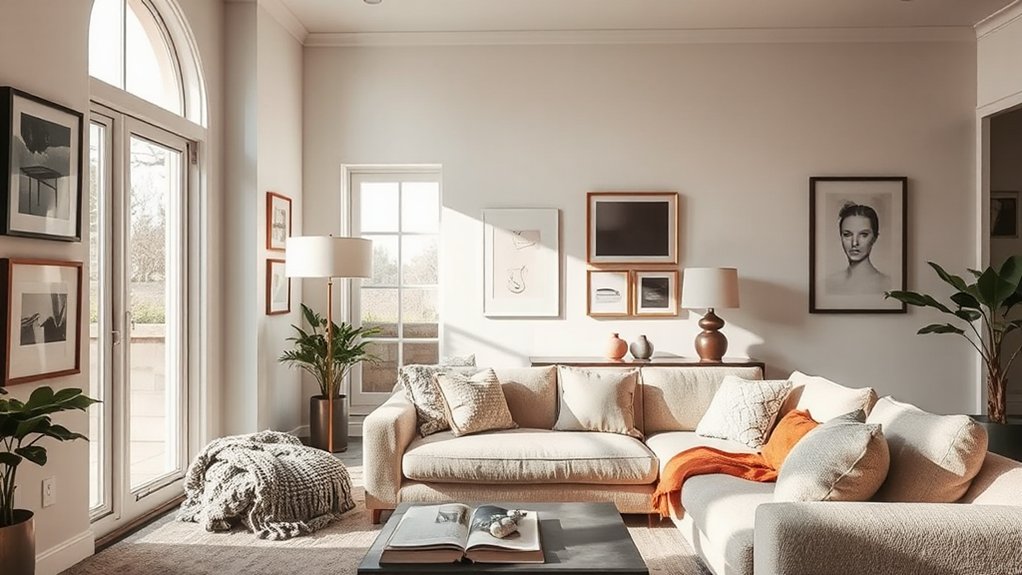
Art and thoughtful décor details personalize a semi-detached home by creating focal points that reflect your taste without overwhelming the space. You’ll elevate rooms with curated pieces that speak to your style, not trends, ensuring balance and cohesion.
- Choose a single statement work or sculpture that anchors the room, then echo its color or texture in smaller décor accents around the area.
- Layer textures thoughtfully—matte, gloss, and tactile fabrics—to add depth without clutter.
- Rotate select pieces seasonally or annually to refresh the sensation of luxury without a full refresh.
This approach centers on art curation and décor accents, delivering refined character while preserving flow, light, and function.
Budget, Timeline, and Maintenance for Small Upgrades
Even small upgrades require clear budgeting, a realistic timeline, and a plan for ongoing maintenance to preserve luxury without overhauling your space.
You’ll prioritize cost effective upgrades by selecting finishes and fixtures that deliver high perceived value for modest expense.
Map a tight, phased schedule—begin with projects that release the most impact, like lighting, hardware, and paint, then address textiles and accents.
Budget a contingency for overruns, ideally 5–10 percent.
Document measurable milestones and hold daily to-dos you can complete in weekends.
For maintenance tips, establish a quarterly check routine: reseal grout, polish metals, test seals, and refresh caulk as needed.
Schedule regular upkeep to prevent degradation, and avoid frequent, large-scale renovations.
Steady, intentional updates sustain luxury without disrupting daily living.
Frequently Asked Questions
How Can Soundproofing Feel Luxurious in a Semi-Detached Home?
Soundproofing feels luxurious by letting you enjoy music and conversations privately. Use soundproofing technology and acoustic panels strategically, lining walls and ceilings, and you’ll notice clearer sound, deeper privacy, and a calmer, more refined living space.
What Ceiling Treatments Add Instant Elegance on a Budget?
You can elevate ceilings on a budget with elegant color palettes and statement ceiling fixtures. Choose refined neutrals, add a bold accent, and install a visually striking fixture to draw the eye upward and instantly convey sophistication.
Which Upholstery Finishes Resist Wear in Shared Walls?
Upholstery finishes that resist wear in shared walls show upholstery durability and fabric resilience. You’ll want tight-weave fabrics, performance blends, and high Martindale rub scores, plus recessed seams, protective coatings, and stain-resistant treatments for everyday comfort and longevity.
How to Balance Scale Between Compact and Open Spaces?
You balance scale by pairing compact rooms with open sightlines, using judicious zoning and layout. Incorporate exterior landscaping near shifts and indoor plant decor inside to visually extend ceilings, creating continuity between intimate and expansive spaces.
What Small Lighting Tweaks Create Hotel-Like Ambiance?
You’ll notice a hotel vibe by layering smart lighting with mood lighting, dimming softly at corners while brightening tasks. You consciously blend warm and cool tones, creating depth; awkward glare vanishes as your space feels instantly refined.
Conclusion
You can tilt a semi-detached space toward luxe without a full rebuild. Apply the cues, lean into natural light, layer textures, and define flow with subtle zoning. Choose statement lighting and upgrade key surfaces, not every surface, to keep costs sane. Arrange furniture for an open, high-end feel, add art with intention, and mind the upkeep. Remember: less is more, but thoughtful detail goes a long way—a stitch in time saves nine, especially in stylish upgrades.