


To keep a minimalist living room warm, balance negative space with tactile textures and natural materials. Use calm, warm neutrals and soft accents, letting materiality and layered textiles speak gently. Align lighting as a core element—ambient, task, and accent layers with dimmers for mood. Choose purposeful decor, scaled and meaningful, plus smart storage to avoid clutter. Favor flow and intimate sightlines, then add personal touches that feel intentional, not overdone; you’ll reveal even deeper warmth as you continue.
Key Takeaways
- Use warm, calm color palettes and cohesive materials to create depth without clutter, ensuring soft contrasts and ample natural light.
- Prioritize thoughtful furniture proportion and placement to preserve negative space while anchor pieces establish a clear hierarchy.
- Employ layered lighting (ambient, task, accent) with discreet fixtures and dimmers to add depth without visual noise.
- Incorporate functional, multi-purpose storage and restrained decor to keep surfaces clear while maintaining personality.
- Introduce textural variety through layered textiles and natural materials, adding tactility and warmth without overwhelming minimalism.
Warmth in Minimalist Spaces: Three Guiding Principles
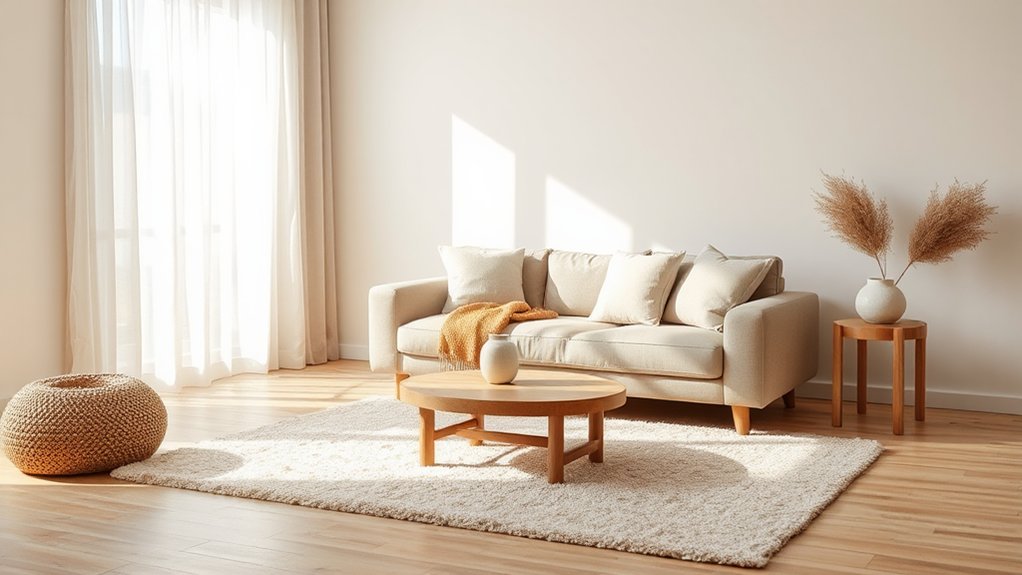
In minimalist spaces, warmth isn’t an afterthought—it’s a guiding principle. You shape a room where restraint meets comfort by prioritizing three core ideas.
First, fireplace ambiance acts as a focal cue, not a cluttered centerpiece; keep the area clean, sparse, and visually calm, so the glow feels intentional rather than busy.
Second, you layer cozy textiles with purpose: a single throw, a quiet rug, and a tactile cushion palette that echoes the space without competing with architecture.
Third, you curate lighting to flatter surfaces and textures, avoiding harsh glare while emphasizing subtle shadows.
The result is restrained elegance that invites lingering, where warmth emerges through thoughtful proportion, material honesty, and disciplined restraint rather than excess.
Balance Negative Space With Tactile Textures
Negative space isn’t empty space here; it’s a deliberate frame that lets tactile textures breathe.
In a minimalist living room, you balance Negative space with tactile contrast by pairing smooth surfaces with textured elements, not clutter. Choose a restrained palette and let one material dominate a focal plane, like a concrete wall offset by a plush wool rug.
The goal isn’t to overwhelm; it’s to invite touch and nuance. Introduce tactile textures through upholstery, throw blankets, and cushions in varying weaves—think boucle, brushed linen, or leather.
Keep edges clean to maintain calm. Use intentional gaps to guide movement and highlight surface quality.
When you feel the room, you’ll notice how Negative space and tactile contrast create warmth without noise, clarity without sterility.
Light as the Backbone of a Cozy Minimalist Lounge
Natural light forms the backbone of a cozy minimalist lounge, guiding color, texture, and furniture choices. You’ll shape brightness through windows, shadows, and layering techniques.
Embracing soft contrasts and bright spaces is key. Use layered luminosity to balance natural light foundations with practical elegance, so the room feels open without ever losing warmth.
Natural Light Foundations
How you frame daylight defines the mood of a minimalist lounge: let light enter softly, then guide it with simple surfaces that reflect and diffuse.
- Sunlit corners reveal architecture’s quiet drama, avoiding heavy silhouettes while keeping rooms breathable.
- Daylight diffusion comes from matte whites, oak, and linen; shapes stay legible as light travels.
- Window treatments stay minimal and adaptable, maintaining depth without blocking clarity or color accuracy.
In practice, position windows for even illumination, not glare. Choose finishes that bounce light around, like plaster, light wood, and subtle metallics. Keep a restrained palette to prevent visual noise, so daylight becomes the room’s primary color amplifier.
The result is calm, luminous space that feels larger, more inviting, and intentionally curated.
Soft Shadows, Bright Spaces
Soft shadows anchor a bright, welcoming minimalist lounge by trading blunt light for subtle contrast. You shape a calm atmosphere by balancing surfaces and task lighting, ensuring the space breathes without clutter.
Let shadow play define architectural edges: a doorway silhouette, a console relief, or the curve of a sofa in profile. Choose lamps that offer adjustable intensity, so ambient glow becomes a deliberate design element rather than a byproduct.
Avoid harsh glare by diffusing sources with frosted glass or fabric shades. Keep finishes matte to prevent visual noise, and favor simple forms that reflect light softly.
In this approach, brightness fulfills function while shadows add depth, texture, and a quiet, sophisticated cadence throughout your minimalist lounge.
Layered Luminosity Techniques
Layered luminosity is the backbone of a cozy minimalist lounge, where light counts as both mood and structure. You combine multiple sources to sculpt space, not glare. Start with ambient lighting to create a calm backdrop, then accumulate task lights for function, and finish with accent lighting to highlight texture. Each layer should blend seamlessly, avoiding harsh gradations or oversaturation.
Choose sleek fixtures that echo the room’s quiet aesthetic, and color temperature around 2700K to 3000K for warmth. Dimmers are essential; they empower you to shift tone on demand, from crisp daytime clarity to intimate evenings.
Maintain balance by keeping reflections controlled and visible surfaces uncluttered. Layered luminosity elevates minimalism without noise, guiding the eye and shaping perception.
- Ambient lighting foundations for mood and structure
- Task layers that center on daily use
- Accent highlights to reveal texture and form
Layered Textiles That Feel Soft, Not Cluttered

Textiles should feel soft and inviting, not like a collection of accents stuck on a room. You layer textiles to create depth without visual chaos, balancing weight, texture, and color.
Start with a foundational throw or rug in a natural fiber for tactile comfort, then add second and third layers with varied weaves—cotton, linen, wool—that read as cohesive, not competing. Keep patterns subtle and scale-consistent.
Allow negative space between items so each texture can breathe. Choose a restrained palette and let material quality speak louder than print size.
Prioritize fit to furniture profiles: drapery to soften lines, cushions that mirror upholstery, and a blanket draped over a chair for casual polish. Layered textiles deliver warmth, tactility, and a polished, uncluttered atmosphere.
Warm, Calm Color Palettes for Minimalist Spaces
Soft hues keep spaces serene even in natural light, so you’ll notice warmth without glare.
Balance light with subtle texture and tone to avoid flatness, while still preserving minimalist restraint.
Use this palette as a foundation to shape calm, cohesive rooms that feel intentional and livable.
Soft Hues For Calm
Soft hues set a serene foundation for minimalist spaces, where warm neutrals and muted pastels create calm without clutter.
- Soothing palettes guide choosing wall tones, upholstery, and accessories that feel cohesive rather than competing for attention.
- Gentle contrasts between warm neutrals and soft accent colors add depth without breaking the simple vibe.
- Practical tips help you preserve space: select limited textures, lean into matte finishes, and keep patterns minimal.
You’ll notice how the right tinting smooths connections between zones, making every piece feel intentional.
With this approach, you invite warmth without overwhelm, enabling your furniture and art to breathe.
The result is a calm, refined room that remains visually quiet yet thoughtfully curated.
Natural Light Balance
Natural light shapes the warm, calm palette by washing walls and furnishings with soft, true tones that stay grounded. You’ll optimize tone by aligning wall color with furniture finishes to prevent harsh contrasts, letting daylight diffusion carry the room’s mood.
Use sunlit alcoves to frame seating and work zones, inviting comfort without glare. Keep finishes matte or silk to maintain quiet reflectivity that colors itself with the sun’s arc.
Introduce textiles in warm neutrals to soften edges while preserving minimalism, avoiding busy patterns that fight the light. Choose window treatments that modulate brightness without vanishing the glow—sheer layers or light drapes work best.
Maintain contrast through spatial composition, not color jumps, so the space reads cohesive, serene, and intentionally lit.
Texture With Tone
Texture adds depth without clutter: warm, calm palettes rely on tactful materiality that reads cohesive and refined. In this approach, you balance texture and color to avoid flat surfaces while keeping restraint. Seek pieces that show textural contrast—linen, wool, wood, and stone pairings create subtle rhythm.
Embrace tone variation across materials, not brightness: deeper cores offset lighter surfaces for a grounded, serene vibe. Let tactile contrast guide your focal point and harmonize with simple forms. You’ll achieve a space that feels intentional, not busy, by prioritizing quality over quantity and letting materiality speak.
- Use textural contrast to define zones without visual clutter
- Apply tone variation across textiles, woods, and surfaces
- Choose calm, warm hues as the cohesive backbone
Furniture That Breathes: Scale, Proportion, and Placement
In a minimalist living room, furniture that breathes comes from smart scale, thoughtful proportion, and deliberate placement. You balance room flow by choosing pieces that fit the space without crowding it, preserving negative space as a design asset.
Prioritize a clear furniture hierarchy: a dominant, low-profile sofa anchors seating, with accent chairs and stools positioned for conversation without blocking sightlines. Consider scale so every element feels proportional to the room’s footprint and ceiling height; oversized pieces collapse the airiness you want, undersized ones feel orphaned.
Place items along sightlines and circulation paths, not across them, to maintain ease of movement. This approach supports space optimization while preserving calm, intentional elegance in every detail.
Choose Strategic Décor With Purpose

Choose décor with intention: select purposeful ornaments, use color blocks to guide the eye, and rely on scaled, functional accents that serve a clear purpose.
Each piece should reinforce the room’s function while maintaining visual calm. Let restraint define the focal points, not filler.
Purposeful Ornament Selection
When you select ornaments, aim for objects that earn their keep: meaningful, well-made pieces that enhance function as well as form. Choose items with clear ornament purpose and decorative intent, not filler.
Favor craftsmanship, restrained scale, and tactile detail that invites touch or use. Let each piece tell a story or serve a daily cue—seasonal rotation, memory, or workflow.
Avoid duplicates, trends, or clutter; opt for a coherent family with deliberate variation. Place ornaments where they punctuate spaces, not overwhelm them.
Balance negative space with purpose; objects should contribute to mood, light, or acoustics as well as aesthetics.
Curate slowly, removing what loses meaning. Your room stays calm, intentional, and refined, with every piece reinforcing minimalist living.
- Intentional choice, lasting value
- Strategic placement for function
- Quiet, cohesive harmony
Strategic Color Blocking
Color blocking should be deliberate and restrained: use bold zones of color to guide flow, not shout. You’ll create purpose by pairing a restrained palette with confident placements, so the room reads with intent rather than noise.
Begin with a dominant neutral field, then introduce a single, saturated accent to anchor the space. Use color contrast to delineate zones—living, lounging, and circulation—without overwhelming each area.
In practical terms, apply color in proportion: 60/30/10 or similar to preserve calm while signaling function. Keep textiles and surfaces cohesive, letting a single hue recur as a visual thread.
Establish visual hierarchy by color weight: heavier tones near focal points, lighter tones elsewhere. The result: deliberate, elegant balance that feels spacious, cohesive, and purposefully curated.
Scaled, Functional Accents
You curate with purpose, choosing scaled accents that fit the space without crowding it. Prioritize functional décor that adds utility—lighting, storage, seating—while remaining understated. Each piece should earn its keep, contributing texture, contrast, or tactility without shouting.
Favor clean lines, subtle materials, and restraint, so the arrangement breathes. Layer soft shadows with purposeful fixtures, and let negative space highlight your focal points. Avoid duplicating functions; keep a single, clear role for every accent.
- Pick compact, multiuse pieces that enhance flow without crowding sightlines
- Use strategically placed lamps or trays to guide movement and protect surfaces
- Choose materials and finishes that echo the room’s quiet palette
Layer Lighting for Ambiance, Task, and Accent
Layering lighting in a minimalist living room means balancing ambience, task, and accent without clutter. You’ll create depth by combining a soft, ubiquitous glow with focused, purposeful beams.
Start with ambient illumination—clean ceiling fixtures or a discreet floor lamp that fills the room without declaring itself. Add task lighting where you read, work, or craft, using adjustable sconces or a slim desk lamp that preserves lines and textures.
Introduce accent lighting to sculpt architecture or highlight art, keeping it subtle and deliberate. Use dimmers to modulate mood from bright to intimate, and choose fixtures with clean profiles to maintain a calm, uncluttered silhouette.
The result: layered lighting that feels effortless, functional, and distinctly modern.
Natural Materials for a Serene, Cozy Living Room
Natural materials ground a serene, cozy living room by inviting tactile warmth and natural grain into the space. You choose textures and tones that breathe calm, then pair them with clean lines and restrained accents.
Prioritize eco friendly finishes and sustainable sourcing to align aesthetics with ethics, without sacrificing refinement. Use wood, stone, and natural fibers to create depth, while keeping surfaces simple and uncluttered.
The result is tactile comfort that ages gracefully, not fads.
- Reclaimed wood furniture with matte finishes for warmth and character
- Limestone or concrete accents paired with soft textiles
- Natural fiber rugs and cushions in neutral palettes for balance and cohesion
Greenery That Fits a Minimalist Design

In a minimalist living room, you’ll use greenery to anchor space without clutter. Think compact plants for small areas that add texture and subtle contrast, while preserving clean lines.
Pair leafy textures with simple vessels to reinforce calm, intentional design.
Greenery In Small Spaces
If you’re working with a minimalist backdrop, greenery should stay intentionally small-scale and low-key, so it enhances rather than competes with the space. In tight rooms, choose compact specimens and simple containers that read as design elements, not clutter.
Focus on structure over foliage mass, using negative space to emphasize lines and light. Succulent arrangements and low-profile greens keep the palette calm, while still delivering life.
Favor vertical or wall-mounted options to avoid surface crowding, and limit plant variety to maintain cohesion. Subtle variation—texture, tone, and height—adds interest without shouting.
- succulent arrangements for a clean, sculptural touch
- hanging planters that conserve surface area and add depth
- compact desk or shelf greenery with quiet presence
Texture With Houseplants
Texture isn’t just about color or shape—it’s about tact and tone. You create texture with houseplants by selecting varieties that offer varied leaf forms, sizes, and hues, then pairing them thoughtfully with your space.
Favor plant varieties that echo minimalism: sculptural upright subjects, soft trailing accents, and compact rosettes to balance negative space.
Layer textures through foliage textures—matte leaves beside glossy finishes, fine serrations with broad, smooth surfaces.
Consider light and airflow when choosing placements: place tall specimens as anchors, mid-height greens as transitional accents, and compact options near seating for intimate contact.
Plant placement matters: group in odd numbers, maintain clear sightlines, and avoid crowding.
With deliberate selection and strategic placement, greenery reinforces calm, refined minimalism without feeling busy.
Window Treatments That Soften a Minimalist Space

Window treatments can soften a minimalist space without breaking its clean lines by choosing fabrics, shades, and mounting that feel light and intentional. You’ll aim for slim profiles, near-transparency, and tactile, soft fabrics that add warmth without visual clutter.
Favor motorized or simple rail systems to maintain calm, uninterrupted walls. Layering a sheer undercurtain with a solid roller shade creates depth while preserving airiness.
Neutral tones with subtle texture keep the room cohesive and purposeful, not fussy.
- Opt for soft fabrics and light hues to enhance warmth without bulk
- Use slim mounting and hidden hardware to preserve clean lines
- Integrate layers for subtle depth, then conceal mechanisms when not in use
Smart Storage to Keep Surfaces Clear
Clear countertops and tabletop surfaces come from thoughtful storage that lives where you don’t see it. You gain calm by tucking away daily clutter with hidden compartments and smart, accessible layouts.
Rethink silhouettes: choose multipurpose furniture that serves storage and display without adding bulk. A coffee table with a shallow drawer plus a lift-top tray, for example, keeps remotes, chargers, and notebooks out of sight while remaining convenient.
Wall-integrated shelves can cradle essentials above eye level, reducing surface temptation. A sofa with side panels that open to reveal slim storage offers discreet organization.
In smaller rooms, lift-out lids, pocket doors, and concealed bins keep surfaces clear without sacrificing style. The goal: functional elegance that reads as intentional restraint, not sacrifice.
Texture Contrasts That Read as Cozy, Not Cluttered
In calming a room, you combine textures to cue coziness without creating visual noise. Texture contrasts should read as intentional, not busy; you want depth without distraction. Aim for textural harmony by balancing soft, rough, glossy, and matte surfaces so elements support each other.
Use tactile pairings that invite touch and linger, rather than compete. Gentle weaves, velvet accents, and wool blankets create warmth without clutter, while a sleek leather or glass surface adds edge and clarity.
Prioritize restraint: three strong textures max per zone, integrated by color and scale. Cozy contrasts emerge when materials highlight lines and negative space, guiding the eye calmly across the room.
- Choose a dominant texture, then layer two supporting textures for depth
- Align fabrics with key architectural lines to maintain calm
- Use subtle sheen to unify matte elements without glare
Design for Smooth Traffic Flow and Everyday Calm
Create clear pathways that invite movement without interrupting conversation. In a minimalist living room, you design around open floor plans that feel calm, not cavernous. Position furniture to anchor traffic patterns, guiding feet without forcing detours. Prioritize low profiles, edge lighting, and subtle rug delineation to hint zones without fences.
Keep circulation wide enough for two to pass side by side, yet compact enough to feel intimate. Use neutral palettes and unobtrusive storage to prevent visual clutter that disrupts flow. Align sofas, coffee tables, and media with sightlines, so conversations stay anchored as people move.
Let negative space breathe, ensuring every step feels deliberate. When traffic feels effortless, everyday calm emerges through disciplined, purposeful design choices.
Personal Touches That Feel Intentional, Not Overdone
Personal touches should feel deliberate, not decorative. You curate with intention, choosing items that reinforce calm, not clutter.
Favor quality over quantity, and let each piece earn its space. Focus on personalized accents that tell your story without shouting.
Use intentional displays—grouped thoughtfully, lit with purpose, and scaled to the room. Keep surfaces uncluttered, so every chosen detail reads as purposeful rather than playful excess.
- Personalized accents placed in small, meaningful clusters
- Intentional displays that balance height, texture, and negative space
- Clean lines, restrained color, and purposeful focal points
Real-World Warm Minimalist Room Tours
Warm minimalist rooms prove restraint can feel warm, not cold, by pairing natural textures with soft illumination and a muted palette. In real-world tours, you’ll notice how, despite pared-down furnishings, color psychology guides mood: warm neutrals create coziness, while restrained accents keep focus.
You avoid clutter through deliberate placement and negative space, letting light define atmosphere. Minimalist art becomes punctuation, not wallpaper, so each piece earns its keep and reinforces a room’s calm rhythm.
Practical choices—a timeless sofa, a single statement chair, low-profile wood accents—support function without shouting. You’ll see how textures, from linen to wool, add tactility and warmth.
These rooms prove that intention, not abundance, achieves comfort, chic balance, and enduring appeal.
Frequently Asked Questions
How Can I Add Warmth Without Compromising Minimalism?
You can add warmth by layering textures and subtle color accents. Use textural contrasts like woven throws and wood grain, keep lines clean, and introduce soft lighting. Balance with tactile fabrics, warm neutrals, and restrained, thoughtful color accents.
What’s the Ideal Rug-To-Sofa Ratio for Calm Spaces?
Aim for a rug about 60–80% of your sofa width, anchoring the seating with a calm color palette and deliberate furniture arrangement. You create balance, depth, and calm—no clutter, just intentional cohesion and practical elegance.
How Much Negative Space Is “Too Much” in a Living Room?
Too much negative space feels clinical; aim for balance. You should fill walls with measured color contrast and furniture scale that complements, not competes with, openness. Keep subtle accents to maintain practical elegance and visual cohesion.
Which Lighting Layers Best Balance Coziness and Clarity?
You balance coziness and clarity by layering ambient glow with focused task illumination, like a lighthouse guiding you home. You’ll use warm ambient light for mood and precise task lighting for reading and detail work.
How Do I Personalize Minimally Without Clutter?
You personalize minimally without clutter by adding color accents in small doses and layered decorative textures. Embrace a few meaningful pieces, balanced spacing, and purposeful surfaces to keep space calm, cohesive, and elegantly expressive.
Conclusion
You’ll notice the same thread running through each room: warmth grows when you pause, touch, and breathe. Coincidence nudges you—a woven throw echoes the rug; a wood tone mirrors a framed print—reminding you that restraint creates comfort. Embrace tactile textures, layered fabrics, and calm colors, while keeping pathways clear. You don’t need chaos to feel alive; you need intention. With these mindful choices, your minimalist space becomes inviting, practical, and quietly luxurious—never empty, always purposeful.