

The most popular biophilic trends of 2026 center on integrating nature at scale with smart, sensory-rich design. You’ll see adaptive daylight strategies, living walls and green façades, plant-inspired textures, and nature-oriented color palettes that calm and focus. Scent and soundscapes tailor to tasks, while permeable urban greens and microclimates enhance safety and comfort. Use modular, low-maintenance systems with native species and sensor feedback to tune environments. If you keep exploring, you’ll gain practical, actionable insights.
Key Takeaways
- Flexible, modular biophilic systems (living walls, green façades) enable scalable use in offices, schools, and homes with low maintenance.
- Integrated natural light optimization and adaptive shading improve circadian health and comfort while reducing energy use.
- Sensory design prioritizes plant-inspired textures, muted palettes, and balanced scents/sounds to boost focus and wellbeing.
- Data-driven evaluation with IAQ, thermal, and daylight metrics ensures measurable well-being and productivity gains.
- Urban biophilic strategies—green corridors, native plantings, and microclimate design—expand nature access in public spaces and workplaces.
What Biophilic Design Is and Why It Matters in 2026
Biophilic design blends people with nature to boost well-being, productivity, and resilience in built environments. You pursue environments that connect occupants to natural systems, materials, and patterns, not merely decoration.
At its core, biophilic design leverages Biophilic principles to embed nature into daily life, supporting attention restoration, stress reduction, and healthier circadian rhythms. In 2026, this approach crosses offices, schools, and residences, transforming spaces into living ecosystems that adapt to occupants’ needs.
You’ll find natural light optimization, moisture-rich materials, and greenery integrated with functional layouts. Urban green spaces serve as anchors, linking interior experiences to the city’s ecological fabric. This linkage enhances air quality, biodiversity, and social cohesion, reinforcing resilience.
Embrace evidence-based design strategies that foreground human-nature coupling for measurable outcomes.
How to Evaluate a Biophilic Project: Criteria for Success
To determine if a biophilic project delivers real value, start with clear, measurable criteria tied to user outcomes and system performance. You’ll define metrics for well-being, productivity, and health, then map them to daily experiences.
Track indoor air quality, thermal comfort, acoustics, and daylight consistency as core performance indicators.
Confirm project goals align with operational reliability, maintenance burden, and energy use, so you can assess long-term value.
Tie success to user engagement with nature, mindful of context, culture, and accessibility.
Use before-and-after benchmarks, control groups, and transparent reporting to validate impact.
Consider process transparency, budget adherence, and schedule discipline as gatekeepers to scale.
Include water features and their maintenance implications, guaranteeing safety, reliability, and cost-effectiveness without compromising occupant comfort or air quality.
Living Walls and Green Façades: Practical, Impactful Tactics
Living walls and green façades offer immediate, tangible value by integrating vegetation into building envelopes. You’ll deploy vertical gardens with modular systems that simplify installation, maintenance, and scalability, delivering rapid aesthetic and thermal benefits.
Prioritize lightweight, sustainable materials to minimize structural loading and lifecycle emissions. Choose engineered growing media and irrigation that reduce water use while sustaining plant health, especially in challenging urban microclimates.
Design for accessibility: pruning paths, inspection access, and fault isolation keep systems reliable and low-maintenance.
Integrate native species to boost biodiversity and resilience, and align plant selection with local climate data and maintenance capacity.
Pair living walls with monitoring sensors to track moisture, nutrients, and robustness, ensuring sustained performance and measurable impact on occupant well-being and energy use.
Maximize Natural Light With Smart Daylight Strategies
You’ll optimize how daylight enters your spaces by prioritizing morning light, aligning window schedules with occupancy, and using light-driven comfort strategies.
Smart window scheduling reduces glare while boosting natural warmth and productivity, even on cloudy days.
Start with precise control of vertical and horizontal light paths to sustain comfort and energy efficiency throughout the day.
Maximize Morning Light
| Timeframe | Action | Benefit |
|---|---|---|
| Morning | Open blinds fully, angle shades | Maximize intake |
| Mid-morning | Use light-reflective surfaces | Elevate brightness |
| Day | Maintain consistent luminance | Stabilize cortisol |
| Evening | Dim lights gradually | Prepare for sleep |
| Weekend | Schedule outdoor time | reinforce entrainment |
Smart Window Scheduling
- Synchronize shading with sun path to maintain consistent daylight quality across interiors.
- Configure adaptive profiles that respond to occupancy, weather, and seasonal shifts.
- Integrate skylight and window controls with smart grids for demand-response efficiency.
- Use data dashboards to verify glare reduction, heat gain limits, and daylight autonomy.
This approach stays precise, authoritative, and directly applicable to forward-thinking spaces.
Light-Driven Comfort Strategies
Maximize natural light while preserving comfort by deploying smart daylight strategies that adapt to sun position, occupancy, and weather. You’ll harmonize daylight with interior zones, tailoring glare control and thermal loads to keep comfort zones stable throughout the day.
Use automated shading, dimming, and light shelves to boost natural light penetration without overheating or discomfort. Align daylighting with occupancy patterns to reduce energy waste while maintaining visual clarity for work and relaxation.
Track daylight metrics—illuminance levels, contrast, and peripheral brightness—to preserve focus and reduce eye strain. Pair daylight strategies with high-performance glazing and reflective surfaces to spread light evenly.
Communicate clearly with occupants about zones and comfort targets for consistent, measurable outcomes. Natural light supports well-being; comfort zones ensure sustained performance.
Plant-Inspired Textures: Selecting Tactual Surfaces That Calm and Engage
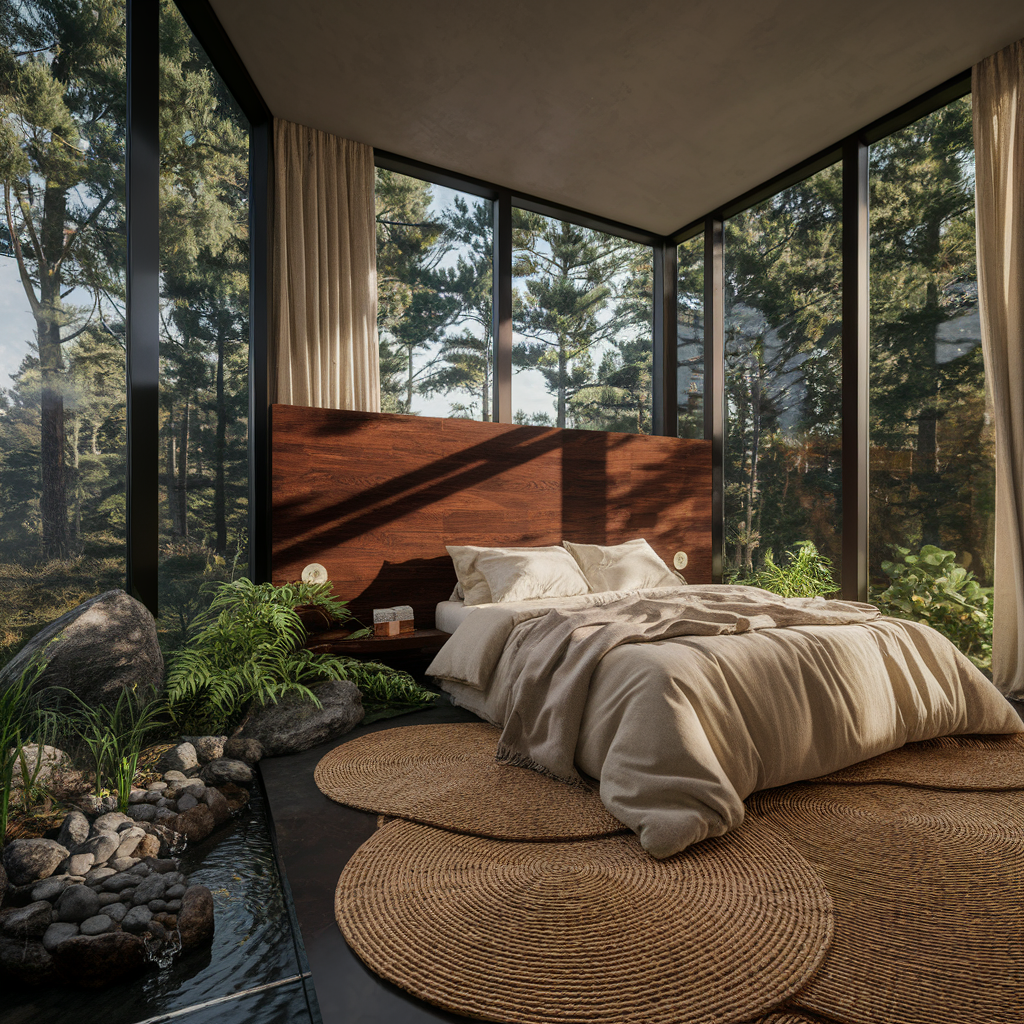
Textural design grounded in nature can steady attention and invite tactile exploration, so selecting plant-inspired surfaces matters for calm and engagement. You’ll choose textures that feel natural under fingertips, balancing softness with structured relief. Focus on how tactile surfaces promote subtle sensory feedback, guiding attention without distraction, and apply this as textural therapy across spaces.
- Prioritize plant-derived patterns that echo leaf veins, bark grain, and botanical fibrousness to anchor perception.
- Combine varied scales of texture to create calm contrast, facilitating gentle exploration without overstimulation.
- Use natural materials and low-reflectivity finishes to minimize glare and support sustained focus.
- Test touch responsiveness in real-world tasks to ensure textures invite engagement without fatigue.
Nature-Inspired Color Palettes for Mood and Focus
Nature-inspired hues guide mood and focus by aligning environments with primal color cues that calm stress and sharpen attention. You’ll see how muted greens, earthy neutrals, and soft blues support sustained concentration while avoiding overstimulation.
This palette approach prioritizes perceptual clarity and intentional contrast to optimize both wellbeing and performance.
Nature-Inspired Hues
- Urban jungle cues: deep greens and earthy neutrals to evoke growth, stability, and resilience.
- Botanical branding: muted florals paired with mineral tones for refined, nature-forward identity.
- Lighting synergy: cool and warm tones aligned with circadian rhythms to sustain alertness.
- Surface language: textural neutrals that support focus without visual fatigue or distraction.
Mood-Boosting Palettes
Think soft greens and muted teals paired with warm neutrals to ground perception, then inject accents of ochre or coral for energy bursts when needed. Use high-saturation pops sparingly, ensuring contrast supports legibility and reduces eye strain.
Balance is key: cool tones calm, warm tones energize, and natural light compatibility reinforces effects. Implement natural material combinations to reinforce mood cues—bamboo, stone, and wood textures subtly reflected in color choices heighten authenticity.
Test palettes across rooms and tasks, tracking performance shifts, then refine by season and work rhythm to sustain momentum.
Sensory Wellbeing: Scents and Soundscapes That Support Productivity
If you want to sustain focus at work, prioritize scents and soundscapes that reinforce alertness and calm without distraction. You’ll optimize performance by pairing purposeful fragrances with distraction-free audio environments.
- Aromatherapy integration: choose mindful blends that reduce stress without overpowering attention.
- Soundscape curation: select steady, unobtrusive textures that mask interruptions and sustain concentration.
- Personal calibration: tailor intensity and tempo to your tasks, not trends.
- Feedback loop: monitor productivity signals and adjust scents and sounds for consistent focus.
These strategies reinforce alertness while preventing cognitive clutter. Implementing intentional scent and sound choices helps you maintain flow, support memory, and reduce fatigue.
The approach is practical, evidence-informed, and scalable across desks and teams.
Real-World Use-Case Playbooks for Homes, Offices, and Public Spaces
Real-world playbooks translate the science from sensory wellbeing into practical steps you can apply at home, at work, and in public spaces. You’ll deploy proven patterns from biophilic trends into tangible layouts, routines, and policies that support focus, resilience, and connection.
In homes, prioritize daylight, varied textures, and plant cues that invite daily nature contact without clutter.
In offices, integrate Biophilic architecture through modular ecosystems, views, and acoustic zoning that reduce distraction while boosting collaboration.
In public spaces, design permeability, accessible green corridors, and humane microclimates to encourage spontaneous encounters with nature.
Urban wildlife considerations guide placement of native plantings and shelter, balancing accessibility with conservation.
Use these playbooks to operationalize wellness, safety, and beauty across environments, without sacrificing efficiency or cost.
Frequently Asked Questions
How Can Biophilic Design Improve Employee Productivity Instantly?
Natural light and indoor plants boost focus and energy immediately, increasing productivity by reducing stress and cognitive load. You’ll experience sharper attention, quicker task completion, and better collaboration as natural light and indoor plants elevate mood and performance.
What Are Cost Pitfalls in First-Year Biophilic Implementations?
Cost overruns and implementation challenges spike in year one. You’ll face brittle budgets, flaky vendor scopes, and scope creep; plan rigorously, validate costs early, and lock in clear milestones to avoid budget surprises and design delays.
Which Metrics Best Measure Occupant Well-Being Impact?
You should track occupant well-being with validated surveys and physiological indicators, focusing on Indoor air and Natural lighting. You’ll see improvements when you monitor sleep quality, concentration, and perceived air freshness, linking outcomes to ventilation, daylight exposure, and shading control.
How to Balance Maintenance With High-Contrast Greenery?
Like a harmony-filled orchestra, you balance maintenance with high-contrast greenery by scheduling plant integration around peak natural lighting, pruning rigorously, and using resilient species. You optimize natural lighting, plant integration to sustain visual contrast and health.
Are There Zoning or Code Barriers to Biophilic Features?
There are zoning restrictions and building codes you must follow; check local ordinances, permit processes, and HOA rules. You’ll need approvals for structural involvement, safety measures, and maintenance access to guarantee compliant biophilic features. Stay within established regulatory requirements.
Conclusion
Biophilic design isn’t a trend—it’s a measurable performance driver. By 2026, spaces integrating natural light, living walls, and tactile textures can boost well-being and productivity, with studies linking biophilic design to up to 15% faster task completion and reduced energy demands through smarter daylight use. You’ll want a clear criteria for success, scalable playbooks, and real-world tested tactics. Embrace nature-inspired palettes and soundscapes to sustain focus, then validate outcomes with robust metrics and ongoing refinements.