
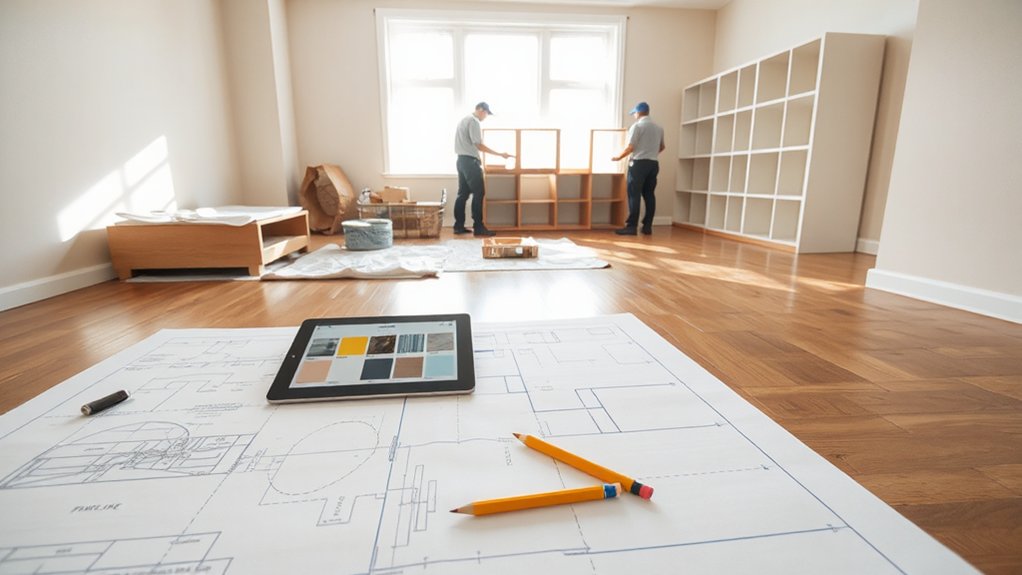

Plan the renovation around clear goals and a realistic budget with a 10–20% contingency. Prioritize early structural and systems needs, then tackle high-impact, manageable tasks to build momentum. Vet reliable contractors with documented criteria and references. Manage materials with centralized tracking, staged deliveries, and safety stock. Maintain calm, written communication, and set defined boundaries to protect living space. Schedule tasks with owners and buffers, and conduct a thorough final inspection and handover. Want more steps to keep you on track?
Key Takeaways
- Define clear renovation goals, priorities, and budgets up front to guide decisions and minimize scope creep.
- Build a detailed schedule with milestones, owners, buffers, and weekly progress reviews to stay on track.
- Establish a realistic budget with contingency, monitor expenses weekly, and adjust forecasts as needed.
- Vet contractors thoroughly, request references, verify licenses/insurance, and use a standardized evaluation rubric.
- Maintain open communication, document changes in writing, and plan for contingencies to reduce surprises.
Define Your Renovation Goals and Priorities

To start, define exactly what you want to achieve with your renovation and why it matters to you. You’ll map clear goals that align with your daily life and long-term plans. Identify priority areas, functions, and outcomes you’ll measure success by—like better flow, more light, or improved storage.
Translate these goals into practical decisions: rooms to remodel first, essential features, and non-negotiables. Consider your Decorating style to guide materials, finishes, and aesthetics, and how Interior lighting will impact mood and usefulness.
Set quantifiable targets, such as budget bands, timelines, and disruption thresholds, so you stay on track when surprises arise. Document decisions, keep visuals, and review progress weekly to maintain momentum and avoid scope creep.
Set a Realistic Renovation Budget With Contingencies
After you’ve defined your goals and priorities, you can anchor your plan with a realistic budget that includes a safety net. You’ll manage costs with clear forecasting and disciplined tracking, balancing ambition with practicality.
Use financial forecasting to model worst-, best-, and most-likely scenarios, then set a contingency fund that’s 10–20% of total costs. This protects you from overruns without derailing progress or morale.
Build emotional resilience by reviewing the plan regularly and adjusting your expectations calmly.
- Define fixed costs, variable costs, and potential overruns
- Establish a contingency fund and a process to draw on it judiciously
- Monitor actuals weekly and revise forecasts accordingly
Prioritize Your First Renovation for Momentum
Prioritizing your first renovation is a strategic move that builds momentum and sets a practical pace for the project. You should pick a task that yields noticeable impact with manageable risk, such as a small kitchen or a high-traffic bathroom.
Establish a clear before-and-after goal, and map a tight sequence to avoid backtracking. Prioritize areas that influence daily life and motivation, not just aesthetics.
When you plan, include Creative lighting and durable finishes as core requirements; they deliver immediate value and long-term efficiency.
Selecting Sustainable materials where feasible helps curb costs and environmental impact without compromising quality.
Set a compact scope, define benchmarks, and schedule short, focused work blocks.
Review progress weekly, adjust priorities, and celebrate incremental wins to maintain momentum throughout the renovation.
Assess Structural Needs Early: Framing, Load-Bearing, and Systems
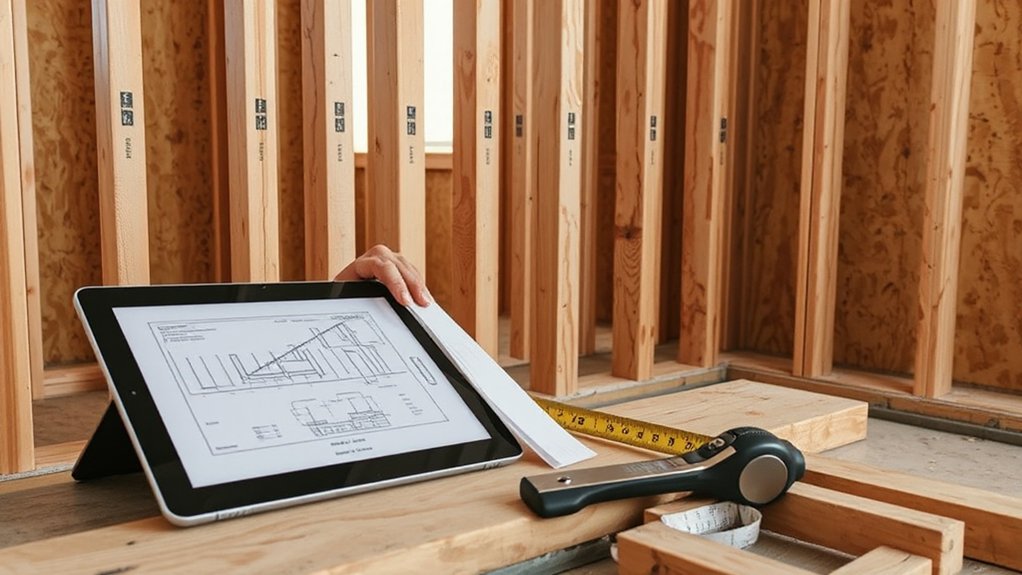
Evaluating structural needs early saves time and money down the line. You’ll establish a solid framework by examining framing, load-bearing capacity, and key systems before you draft plans. Early analysis prevents costly retrofits and clarifies scope for your renovation.
- Foundation inspection: confirm soil conditions, footing integrity, and moisture risks to guide timing and repairs.
- Load analysis: evaluate wall supports, beams, and floor joists to determine feasible layouts and required reinforcements.
- Systems integration: plan plumbing, electrical, and HVAC routes with structural limits to avoid conflicts and code issues.
Choose Reliable Contractors: Build Your Vetting Plan
Start by outlining your vetting criteria: credibility, licensing, insurance, and proven results.
Gather contractor references and check their past projects, timelines, and client satisfaction.
Use these benchmarks to filter candidates and set clear expectations before you request bids.
Vetting Criteria Basics
To vet contractors effectively, you must establish clear criteria and a practical plan upfront. Vetting criteria guide your decisions, while contractor credentials prove capability. You’ll minimize risk by focusing on objective measures rather than promises.
- Verify licenses and insurance: confirm active status, coverage types, and names match the business.
- Check experience and scope fit: ensure projects align with your renovation type, size, and timeline.
- Review performance indicators: demand recent client references, project photos, and a track record of on-time, on-budget delivery.
Maintain a documented vetting plan: list must-haves, acceptable trade-offs, and decision dates. Use consistent evaluation rubrics to compare bids.
This disciplined approach keeps you in control, enhances accountability, and shortens decision cycles. Vetting criteria, contractor credentials.
Getting Contractor References
When vetting contractors, start by collecting reliable references from recent clients who completed similar projects. Reach out to at least three neighbors or homeowners with comparable scope to verify performance, timeliness, and communication.
Ask concrete questions: Did the project stay on budget? Were change orders necessary, and how were they handled? Was the site cleaned daily, and were safety concerns addressed promptly?
Verify licenses, insurance, and bonding, and confirm the contractor’s role on the job site.
Cross-check the delivered results against plans for garden landscaping and interior decor to guarantee consistency. Request before-and-after photos, a written warranty, and a detailed project timeline.
Finally, compare responses for patterns of reliability, problem-solving, and transparency to build a solid vetting plan.
Vet Contractors: Credentials, References, and Guarantees
Beyond asking for licenses, verify each contractor’s credentials, references, and guarantees to make certain you’re hiring a qualified, accountable professional. You’ll assess three core areas: contractor background, references, and project warranties. Use these steps:
- Verify licenses, insurance, and past project scope to confirm legitimacy and capability.
- Contact prior clients to learn about reliability, communication, and workmanship quality.
- Review warranties and aftercare terms to ensure you’re covered for defects or failures.
This approach protects you from surprises and clarifies expectations from day one.
A contractor with solid project warranties demonstrates confidence in workmanship and accountability. Keep notes, compare responses, and document everything to strengthen your position if issues arise later. Clear criteria save time, improve outcomes, and reduce stress throughout your renovation journey.
Compare Renovation Estimates: Spot Hidden Costs
When you compare renovation estimates, start by identifying hidden cost signals that can creep in after work begins.
Look beyond the bottom line to how each bid itemizes labor, materials, and contingencies, so you spot discrepancies early.
Examining bid details now helps you prevent surprise charges down the road.
Hidden Cost Signals
- Break down each category: labor, materials, permits, and subcontractors, noting what’s included or optional.
- Check contingency and escalation lines for realism, not excuses to inflate costs.
- Request apples-to-apples comparisons across bids, confirming identical scopes and warranties.
Compare Bid Details
Look beyond base prices and check for contingencies, permit fees, disposal charges, and warranty terms. Clarify who supplies what and when payments are due to avoid cash-flow hiccups.
Seek explicit assumptions for each estimate—square footage, retrofit scope, and project phasing—to guarantee an apples-to-apples cost comparison.
Question any unusually low bids that may mask quality or delays. Request revised numbers in writing and verify subcontractor credentials.
Document discrepancies, calculate total cost of ownership, and align bids with your design intent and timeline.
A disciplined bid evaluation reduces surprises and strengthens your renovation plan.
Turn Your Plan Into a Real Renovation Schedule
To turn your plan into a real renovation schedule, start by mapping every task to a clear deadline and owners. You’ll create a master timeline that ties milestones to responsible teammates and measurable due dates.
Then, translate that schedule into actionable steps with priorities, dependencies, and buffer time for unexpected delays. Keep the plan visible and agreed upon, updating as realities shift.
- Assign owners and deadlines for each task, linking dependencies to realistic durations.
- Build in milestones for creative lighting and eco-friendly materials, guaranteeing procurement aligns with installation phases.
- Review weekly, adjust for progress, and communicate changes promptly to avoid bottlenecks.
This approach guarantees accountability, minimizes downtime, and maintains quality throughout the project.
Plan for Delays and Disruptions (Contingency Planning)
Delays and disruptions are inevitable in a renovation, but you can stay ahead by building a practical contingency plan. Start with a realistic budget buffer and a tiered timeline that assumes variability in materials and trades.
Identify high-risk tasks and allocate extra time and funds where delays most commonly occur. Establish alternative suppliers and backup crew options so you’re not immobilized if a contractor falls behind.
Document decision paths for change orders to minimize downtime and keep everyone aligned. Practice emergency preparedness by stocking core materials, securing permits, and safeguarding essential utilities.
Build a communication protocol that flags issues early and assigns clear ownership. Review and adjust the plan weekly, treating contingencies as an integral part of your project, not an afterthought.
Permits, Compliance, and Licensing You Need
You’ll need to check the permits required by your jurisdiction and secure them before you start. Make sure you understand licensing and contractor rules so you hire the right professionals and stay compliant.
We’ll cover which permits apply, what licenses you should verify, and how to avoid common compliance mistakes.
Permits Required by Jurisdiction
Before you start a home renovation, check your local jurisdiction’s permit requirements, since rules vary by city, county, and project type. You must understand how permit regulations affect timing, costs, and inspections, and you should map out approvals before breaking ground.
Local ordinances often dictate setbacks, wiring, plumbing, and fire safety, so align plans early to avoid delays.
- Identify applicable permit types and submission deadlines.
- Confirm required inspections and completion criteria.
- Track statuses and keep records for audits or future renovations.
Following these steps helps you stay compliant and minimize rework. Always verify with your building department to ensure you’re operating within permit regulations and local ordinances, preventing surprises that stall your project.
Licensing and Contractor Rules
Check whether trade-specific licenses apply to your project scope, and guarantee workers are covered by workers’ compensation and general liability policies.
Discuss permit compliance upfront: know who applies, who pays, and who’s responsible for code upgrades if inspections fail.
Maintain a written scope of work, timelines, and compliance milestones.
Avoid unauthorized work, as it risks fines, delays, and voided warranties.
Require clear signatures, holdbacks for permit-related tasks, and a single point of contact.
Design Choices That Streamline Renovations
- Adopt design trends and color palettes that align with durable finishes and ease of maintenance.
- Select universal dimensions and modular components to simplify sourcing and install timelines.
- Prioritize one- or two-story workflows, allowing trades to work sequentially without delays.
Materials Procurement: Deliveries and Stock Management
Managing deliveries and stock starts with solid practices: set delivery schedules, implement clear inventory tracking, and plan for contingency stock.
You’ll streamline procurement by aligning orders with project milestones, tagging materials by location, and maintaining transparent updates for all trades.
This discussion covers delivery timing, tracking methods, and safety stock to keep your renovation on track.
Delivery Scheduling Best Practices
Efficient delivery scheduling is essential to keep renovations on track and on budget. You’ll coordinate timing, arrivals, and access to minimize delays. By optimizing delivery scheduling and vendor coordination, you reduce downtime and storage clutter, keeping work flowing smoothly.
- Align milestones with supplier windows: confirm date ranges, required lead times, and any surge periods to prevent misaligned deliveries.
- Build a contingency plan: establish fallback vendors, alternate delivery routes, and reserved dock slots to handle disruptions gracefully.
- Communicate clearly and promptly: share updated schedules, access instructions, and contact points with all trades to avoid miscommunication.
Maintain a single source of truth for delivery calendars, and review weekly to catch gaps before they become delays.
Inventory Tracking Strategies
Inventory tracking is the backbone of smooth deliveries and lean stock. You’ll implement a simple, repeatable system that covers receiving, storage, and usage.
Begin with a centralized log for every item, including quantity, vendor, delivery date, and batch numbers. Use real-time updates, not after-the-fact notes, so you know when to reorder and what’s on hand at a glance.
Establish stock organization by category, labeling, and accessible shelving to minimize search time and misplacement.
Integrate a barcode or SKU process to reduce errors during intake and withdrawals.
Review weekly to reconcile discrepancies between physical counts and your records, and adjust thresholds accordingly.
This disciplined approach supports inventory management, controls waste, and keeps your project on track.
Contingency Stock Planning
- Establish emergency supplies: reserve core items, fast-track replacements, and finish-ready quantities.
- Synchronize deliveries: coordinate with suppliers to stagger arrivals and avoid bottlenecks.
- Enforce safety precautions: store materials properly, label quantities, and monitor for damage or spoilage.
Keep regular audits, update forecasts after each phase, and document rollback plans to maintain momentum without compromising quality or safety.
Living Through a Renovation: Practical Boundaries

Living through a renovation requires clear boundaries that protect your time, space, and sanity. You set zones for work versus living areas, and you enforce them with consistent routines. Establish a daily start and end, so interruptions don’t bleed into relaxation.
Reserve a clean, accessible stash for tools, waste, and materials to minimize clutter and safety risks. Schedule critical tasks during predictable daylight to reduce stress and increase accuracy.
Communicate limits to family and contractors, and document changes in writing to prevent scope creep. Keep a dedicated area for meals and a retreat for rest, avoiding fatigue-driven mistakes.
When you’re decorating, use Creative decor, but prioritize safety and efficiency. Prefer Eco friendly materials when feasible to balance aesthetics with responsibility.
Communication Habits for a Smooth Renovation
Clear, direct communication keeps a renovation on track and minimizes surprises. You’ll elevate the process by prioritizing two skills: effective listening and clear articulation. When you speak, be concise and specific about goals, timelines, and constraints.
- Practice active listening: summarize what you heard, confirm details, and note decisions.
- Articulate requirements clearly: specify measurements, materials, and acceptable alternatives.
- Schedule written updates: confirm changes in a shared file or email thread to prevent ambiguity.
Clear articulation helps trades interpret expectations consistently, while effective listening reveals conflicts early. Maintain a calm tone, ask clarifying questions, and acknowledge input from designers, contractors, and inspectors.
Pause before decisions, replace vague terms with measurable criteria, and document all agreements. This disciplined approach reduces rework, keeps timelines intact, and supports a smoother renovation overall.
Stress-Free Handover: Final Inspections and Finish
As you approach the end of a project, finish strong by setting up a stress-free handover with final inspections and finish checks. You’ll schedule a final walk through with your contractor and a detailed punch list to confirm every item is complete, functional, and up to spec.
Verify structural integrity, electrical safety, plumbing operation, and HVAC performance, and guarantee compliance with local codes. Confirm warranty documentation, manuals, and supplier debris removal.
Conduct post renovation cleaning so spaces look presentation-ready and dust-free for occupancy. Accept only residual items that meet agreed tolerances, and document any deviations with corrective timelines.
Establish sign-off criteria, assign responsible parties, and preserve communication logs for accountability. A disciplined handover reduces disputes, speeds occupancy, and protects your investment.
Frequently Asked Questions
How Long Does a Typical Home Renovation Take From Start to Finish?
A typical renovation lasts several weeks to a few months, depending on scope. You’ll need precise budget planning and swift contractor selection; expect permit delays and scheduling buffers. You’ll monitor milestones, coordinate trades, and stay flexible for adjustments.
What Unexpected Costs Commonly Arise During Renovations?
Cost overruns and hidden fees commonly arise during renovations; you’ll encounter them, you’ll manage them, you’ll anticipate them, you’ll document them, you’ll review contracts, you’ll add contingencies, you’ll communicate clearly, you’ll secure approvals, you’ll stay vigilant.
How Can I Minimize Dust and Disruption in Daily Life?
To minimize dust and disruption, implement air purification and dust barriers everywhere. Seal doors and use targeted ventilation, schedule noisy tasks during off-hours, and wipe surfaces daily to prevent spread; you’ll notice steadier routines and cleaner air throughout the project.
What Are the Best Ways to Handle Contract Disputes Calmly?
Negotiating calmly, you prioritize contract negotiation and dispute resolution, setting boundaries and timelines. You stay factual, document everything, seek mediation when needed, and use clear, concise communication to resolve issues without escalating tensions. Success follows steady, solution-focused action.
How Do I Ensure Post-Project Warranty and Maintenance Coverage?
Guarantee post-project warranty and maintenance coverage by keeping Warranty documentation organized and accessible, and establishing Maintenance scheduling with your contractor. You’ll review terms, deadlines, and transfer the records, so future repairs are straightforward and costs are predictable.
Conclusion
If you follow these steps, you’ll chill through the chaos like a zen master with a power drill. Budget, plan, and vet like a pro, and you’ll dodge project delays, budget blowouts, and surprise copiers of chaos. Communicate clearly, set firm walls around mess, and celebrate every milestone. When inspections pass, you’ll feel a victory roar louder than construction noise. In short, you’ll finish calm, confident, and in control—renovation serenity, delivered.