


Insulation matters now because it directly cuts energy use, slashes bills, and stabilizes indoor comfort in UK homes. It reduces heat loss through walls, roofs, and joints, while boosting airtightness and ventilation effectiveness. Properly installed insulation also guards against damp, condensation, and thermal bridging, supporting long-term fabric health and heritage protection. With tightening regulations and ambitious climate goals, high-performance retrofit delivers rapid returns and resilience. If you keep exploring, you’ll uncover practical, step-by-step guidance to maximize impact.
Key Takeaways
- Insulation cuts energy use and bills by reducing heat loss, improving efficiency and stability in UK homes.
- It boosts comfort year-round by minimizing drafts, cold spots, and condensation through better thermal performance.
- Proper insulation supports historic buildings and new builds with targeted, compliant retrofit solutions.
- Policy aims, funding, and standards drive high-impact, cost-effective upgrades for decarbonization and grid resilience.
- Post-install audits and smart controls ensure sustained savings, resilience, and ongoing optimization of energy use.
Why Insulation Matters for UK Homes Today
Insulation matters in UK homes today because it directly reduces energy use, cuts bills, and improves comfort in a climate that swings between cold winters and damp summers.
You’re seeing how robust insulation supports historical building preservation while meeting modern standards. In today’s market, the focus isn’t just on ticking boxes; it’s on outcomes: sustained warmth, reduced thermal bridging, and long-term structural integrity.
Insulation material innovation drives performance without compromising heritage fabric, enabling retrofit strategies that respect listed features and fabric health. You evaluate materials by density, vapour resistance, and compatibility with traditional construction methods.
How Insulation Lowers UK Energy Bills (And What to Expect)
As homeowners and builders push for better comfort and lower running costs, the practical value of insulation becomes clear: it directly reduces energy loss, lowers bills, and buffers indoor temperatures through the year. You’ll see immediate gains when thermal barriers are correctly installed, slowing heat transfer at walls, roofs, and floors.
In real terms, expect steadier indoor temperatures and fewer rate spikes from peak settlements or weather swings. Bills reflect these gains as the need for space heating and cooling drops, especially when aligned with airtight detailing and proper ventilation.
Note common insulation myths: more material isn’t always better if gaps exist, and costlier options aren’t always superior. Implement targeted, compliant solutions for predictable, long‑term savings.
How Insulation Improves Comfort and Prevents Damp
Properly installed insulation moderates indoor temperatures by reducing heat flux, which directly boosts comfort levels year-round. You’ll notice steadier warmth in winter and cooler, more breathable spaces in summer, thanks to reduced temperature gradients across walls, floors, and ceilings.
Effective insulation minimizes thermal bridging, which otherwise creates cold spots and drafts that force your heating system to work harder. By stabilizing surface temperatures, you experience fewer temperature swings that cause discomfort and condensation.
Moisture barriers play a critical role by restricting damp ingress and guiding humidity away from interior surfaces, lowering mould risk. This combination improves perceived comfort, supports consistent system sizing, and enhances indoor air quality.
In turn, residents enjoy a healthier, more predictable living environment with lower energy variability.
Insulation Types for UK Homes: Where They Fit Best
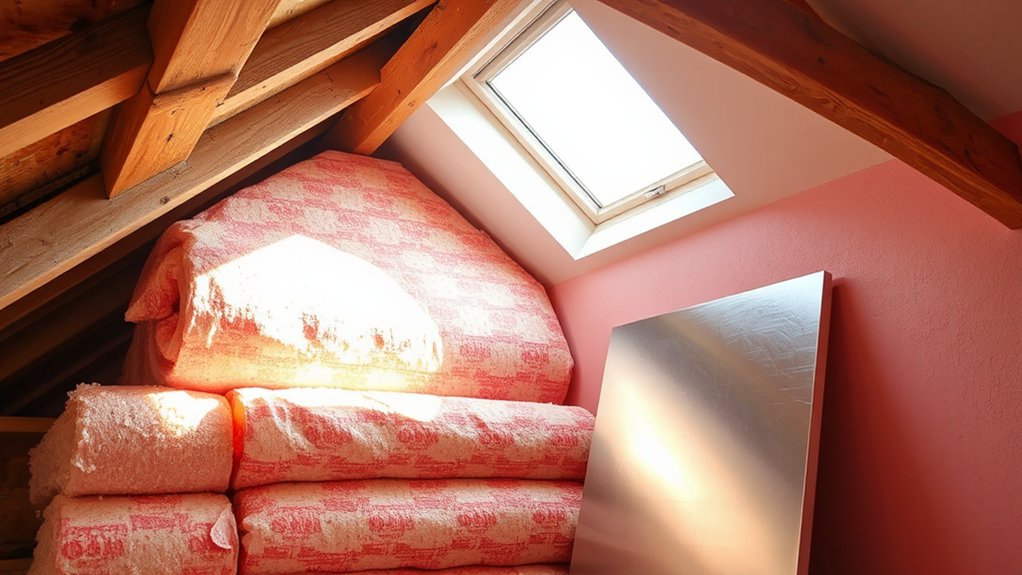
Choosing the right insulation type depends on your home’s construction, climate, and retrofit goals; each option fits different parts of the building envelope and offers distinct performance benefits. In practice, you’ll select cavity wall, loft, or internal insulation based on substrate compatibility and space constraints.
Insulation materials vary by thermal performance, moisture management, and fire safety, so you’ll weigh U-values, breathability, and long-term durability. For existing solid walls, consider external renders or internal boards with careful detailing to avoid cold bridges.
In new-builds, continuous insulation and airtight assemblies streamline installation techniques and limit surface condensation. You’ll also align roof and floor insulation with service routes and ventilation.
Prioritise retrofit plans that minimize disruption while maximizing thermal gains and energy efficiency.
UK Climate Goals and Regulations Shaping Retrofit Upgrades
What climate targets and regulatory frameworks currently steer retrofit upgrades across the UK? You operate within a tightening policy landscape that prioritises energy efficiency, decarbonisation, and grid resilience. To meet ambitious goals, retrofit programs align with statutory milestones, building codes, and funding streams that incentivise market-ready upgrades.
- Renewable integration targets push on-site generation and storage alongside insulation improvements.
- Policy incentives channel capital to high-impact upgrades, accelerating project pipelines.
- Building Regulations updates mandate higher fabric performance, continuous improvement, and consequence-based inspections.
- Local authorities deploy granular standards, planning conditions, and energy performance contracts to drive retrofit activity.
This framework guides decision-making, ensuring upgrades deliver measurable carbon reductions, cost savings, and system reliability.
A Practical, Step-By-Step Guide to Choosing and Installing Insulation
Selecting the right insulation starts with a clear material-selection plan, weighing thermal performance, moisture resistance, and cost for your project.
In the next steps, you’ll follow installation best practices to guarantee airtightness, proper gap filling, and safe handling of any batts or boards.
This discussion focuses on choosing materials wisely and applying proven installation techniques to deliver reliable, code-compliant results.
Material Selection Guide
Effective insulation starts with a clear, methodical material selection process that matches performance needs to building use and climate. You’ll assess thermal resistance, moisture handling, fire safety, and long-term durability to guarantee alignment with project goals.
Material durability and aesthetic compatibility guide choices, reducing future retrofit risk and maintaining architecture integrity. Consider performance consistency across seasons, lifecycle costs, and installation compatibility to avoid gaps between spec and reality.
- Prioritize climate-appropriate R-values and vapor management to minimize heat loss and condensation risk.
- Evaluate material durability and warranty coverage to prevent premature degradation.
- Check aesthetic compatibility with finishes, colors, and interior/exterior visible surfaces.
- Confirm supplier reliability, availability, and environmental impact to ensure supply stability and sustainability.
Installation Best Practices
Installation matters most when insulation decisions leave the drawing board and enter the wall cavity. You’ll follow a step-by-step approach that prioritises system compatibility, fire safety, and performance.
Begin with correct sizing, matching insulation type to walls, roofs, and floors, then verify thickness and continuity to avoid cold bridges.
Inspect ducting and framing for obstructions, and seal gaps with appropriate tapes and sealants before cover layers go on.
Embrace correct installation safety: use protective gear, ventilation, and ladder procedures; handle materials to prevent compacting or damage.
Check installations for uniform density and void-free joints, ensuring long-term insulation durability.
Document labelling, warranty terms, and controller settings for building management systems.
Finally, confirm that installers meet standards and supply chains for consistent, reliable performance.
Future-Proofing Your Home With Smart Retrofit Upgrades
Smart retrofit upgrades set your home on a clear path to longer-term energy resilience, with scalable pathways that adapt as technology evolves.
You’ll prioritize integrated systems, from insulation improvements to smart controls, to build efficiency now and future-proof your energy use.
This approach focuses on practical, industry-aligned choices that enable ongoing performance and cost stability.
Smart Retrofit Pathways
What’re the practical steps you can take today to future-proof your home with smart retrofit upgrades? Implement a staged plan that prioritises high-impact, cost-efficient measures, guided by data from energy audits and supplier specifications.
Focus on devices and materials that optimise heat exchange, control, and monitoring, while aligning with current regulations and market availability.
- Select innovative materials and smart controls that integrate with existing systems.
- Benchmark performance against policy incentives and funding opportunities.
- Deploy modular retrofits that scale with future needs and upgrades.
- Audit post-install results to verify efficiency gains and return on investment.
Smart retrofit pathways require disciplined budgeting, robust data, and contractor collaboration to maximise comfort, resilience, and long-term value.
Long-Term Energy Resilience
Could your home withstand future energy shocks by embracing a deliberate smart retrofit strategy today? You can achieve long-term resilience by targeting fundamental energy pathways with precision.
Prioritize continuous insulation and airtight detailing to limit heat loss across seasons, reducing both bills and emissions.
Address thermal bridging at joints, cornices, and penetrations, employing continuous thermal breaks and well‑sealed interfaces to maintain a stable indoor climate.
Integrate smart controls and responsive ventilation to balance comfort with energy use, ensuring performance remains robust under variable grid conditions.
Also, consider acoustic insulation as a supplementary measure, since improved massing and detailing bolster overall airtightness and occupant well‑being.
This proactive approach future-proofs homes against price volatility and tightening regulations.
Frequently Asked Questions
How Does Insulation Affect Indoor Air Quality in UK Homes?
Insulation impact on indoor air depends on ventilation; you reduce drafts and moisture buildup, but poor air exchange can trap pollutants. You’ll improve comfort and energy efficiency, yet guarantee adequate ventilation to maintain healthy indoor air quality. Indoor air dynamics matter.
Are There Hidden Costs to Consider Beyond Installation?
Yes, there are hidden costs beyond installation. Perform a thorough cost analysis, including maintenance, potential retrofit needs, and long-term energy savings. You’ll likely see energy savings drive ROI, but factor warranties, removal risks, and upgrading impacts.
Can Insulation Improve Resale Value and Market Appeal?
Yes, insulation can boost resale value and market appeal. You’ll showcase energy savings and enhanced thermal comfort, aligning with buyer priorities, while coincidental timing with market trends signals seriousness and industry credibility.
Which Insulation Works Best for Extreme UK Weather Swings?
Which insulation works best for extreme UK weather swings? Opt for high thermal performance with long-term material durability; pick rigid foam or mineral wool, installed correctly, to maintain steady temps, resist moisture, and endure seasonal cycling.
How Do Grants and Subsidies Actually Apply to Retrofit Projects?
Government incentives help you retrofit with clarity: you’ll access Funding eligibility details, verify criteria, and apply for grants. You qualify if your project aligns with program rules, documentation, and energy efficiency standards, ensuring you maximize cost reductions and timelines.
Conclusion
Think of your home as a money furnace you can’t switch off. When you insulate, you lock in warmth so fiercely that your energy bills vanish like steam from a kettle. You’ll feel a fortress of coziness sealing every wall, ceiling, and floor, while damp retreats to the shadows. Retrofit smartly, meet regulations, and future-proof with efficiency that outlasts trends. Do it now, and your house becomes a lean, green, comfort-generating machine.