


Manchester offers a data-driven path for first-time buyers and investors. Focus on South, North, and East Manchester for value, rental demand, and growth potential. Look for strong transport links, universities, and regeneration drives to boost yields and occupancy. Evaluate price-to-yield balance, absorption rates, and affordability across wards. Prioritize areas with walkable amenities, safety, and community momentum. If you keep exploring, you’ll uncover practical steps to choose your ideal Manchester ward.
Key Takeaways
- Focus on South and East Manchester for affordability, regeneration momentum, and strong rental demand near transport links and universities.
- Prioritize North Manchester pockets by rail access, higher occupancy, shorter voids, and resilient yields with new builds.
- Target areas near transport hubs, retail cores, and green connectors to maximize occupancy, walkability, and lifestyle appeal.
- Evaluate redevelopment hotspots with milestone timing, community engagement, and district cycle analysis for buying opportunities.
- Use a weighted decision framework considering price trajectory, affordability, schools, safety, and long-term cash flow potential.
Essential Criteria for Evaluating Manchester Neighbourhoods
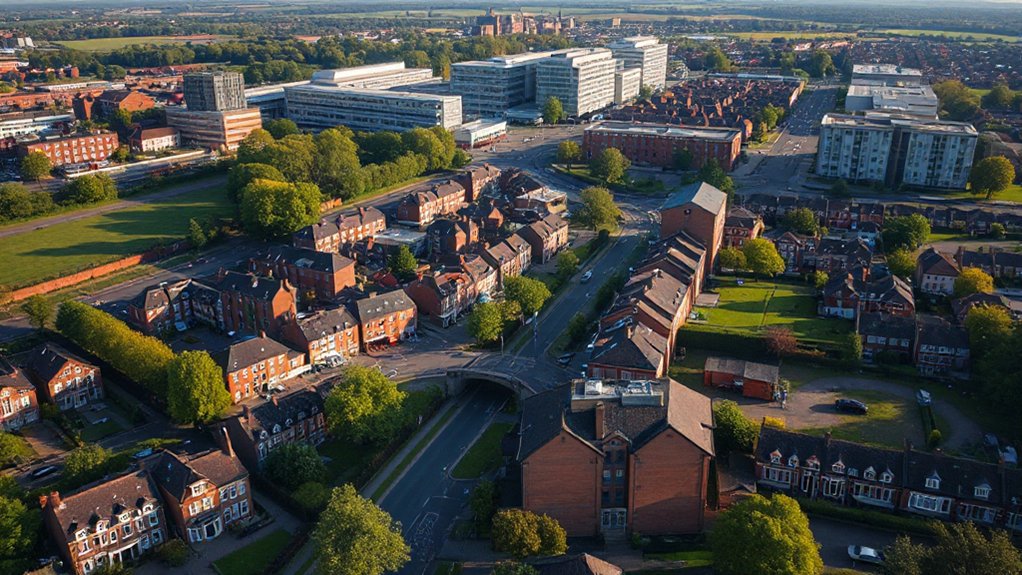
When evaluating Manchester neighborhoods for first-time buyers or investors, start with clear, data-driven criteria that capture cost, growth potential, and livability. You’ll compare purchase price bands, rent benchmarks, vacancy rates, and projected cap rates to filter options quickly.
Examine yield drivers like transport links, regeneration plans, and school quality, then balance them against occupancy trends and seasonal demand.
Consider lifecycle fit: entry-level affordability, renovation costs, and tenant stability. Track market velocity—days on market, price growth, and bidding activity—to forecast short- and mid-term performance.
Weigh amenity access, safety metrics, and masterplan timelines as risk-adjustors, not decisive factors. Remember to map historical architecture, local cuisine offerings, and cultural assets as value-add signals rather than deal-breakers or primary objectives.
Manchester Overall Value: Price-To-Yield Balance
Manchester’s value proposition hinges on a clear price-to-yield balance: affordable entry prices paired with solid rental returns, supported by stable occupancy and growth prospects. You assess valuations across boroughs, prioritizing areas with modest purchase costs and rent coverage that outpace mortgage service.
In practice, price-to-yield remains favorable where demand stays steady, particularly near transport hubs, universities, and evolving business quarters. Luxury apartments offer higher gross yields, but require careful maintenance and long-term demand checks; some premium stock can compress if supply accelerates.
Green spaces buoy tenant appeal and retention, boosting occupancy stability. You balance capex needs with projected rent growth, focusing on neighborhoods delivering consistent cash flow while preserving capital, ensuring resilience through market cycles.
South Manchester: Growth Potential and Standout Neighborhoods
South Manchester offers notable growth potential driven by population flow, investment in transport links, and university footprint spillovers. You’ll find steady demand from first-time buyers and investors, supported by ongoing housing supply and favorable pricing dynamics.
The area benefits from university-related employment, student housing spillovers, and coordinated regeneration schemes that lift surrounding neighborhoods. Standout pockets emphasize affordability relative to central Manchester, with rents adjusting to student cycles and local employer demand.
Cultural landmarks anchor micro-meantached reputations, while Green spaces enhance livability and appeal for families and professionals seeking balance. Performance metrics show improving occupancy rates, rising capital values, and narrowing yield gaps compared to city averages.
Target neighborhoods balance access to campuses, amenities, and transit hubs, delivering resilient long-term upside.
North Manchester: Transport Links and Rental Demand
North Manchester stands out for transport-linked rental demand: strong links to central Manchester and beyond drive steady tenant churn and premium yields. You’ll see higher occupancy in zones with direct rail and bus corridors, supported by consistent demand from commuters and students.
Transport demand here translates into shorter void periods and quicker rent resets, with investors benefiting from above-average rental growth during market cycles. Data shows reliable cross-city access via Victoria, Manchester Victoria, and multiple bus routes, boosting appeal for first-time buyers seeking affordable entry points without sacrificing liquidity.
Suburban pockets adjacent to rail hubs maintain discipline in rental rates, while newer build stock improves yield resilience. To sum up, North Manchester offers dependable transport-led demand, reinforcing its investment case and cash-flow stability.
East Manchester: Affordability and Regeneration Highlights
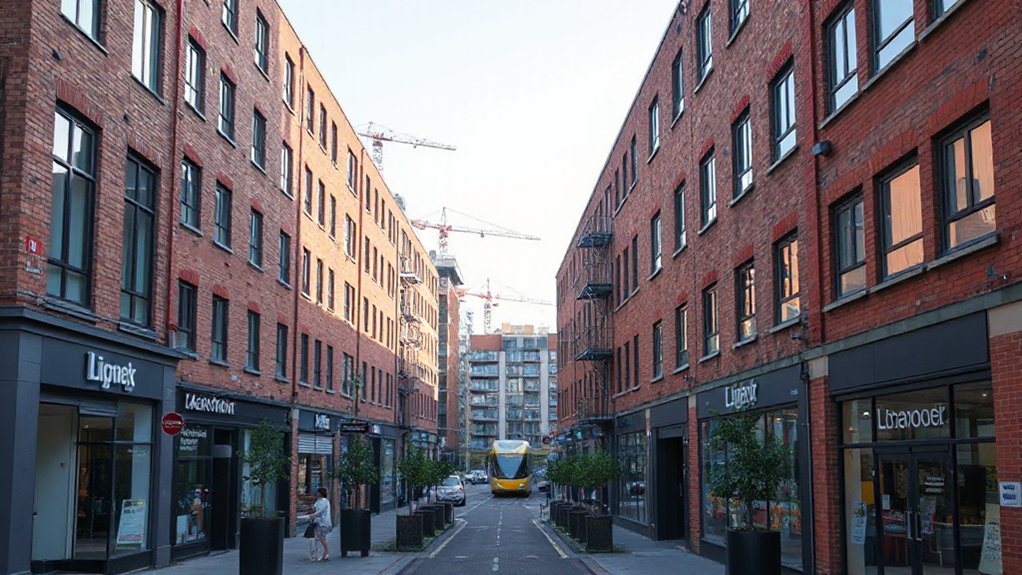
East Manchester shows affordability amid ongoing regeneration, with price trends and rental yields stabilizing as new projects come online. You’ll find growth opportunities driven by rising demand and improving transport links, supporting steady investment returns.
This area balances lower entry costs with upside potential, making it a data-driven consideration for first-time buyers and investors alike.
Affordability Amid Regeneration
Affordability in East Manchester is shaped by ongoing regeneration, which is steadily expanding supply and driving competition for value. You’ll see prices softening in areas with new affordable housing quotas, balanced by rising demand for well-connected sites.
Market data show a tightening spread between mid-market flats and entry-level houses, yet government-backed schemes and developer incentives keep monthly costs manageable for first-time buyers. You’ll benefit from improved transport links and transit-oriented developments that preserve value without overpricing, sustaining long-term affordability.
Community engagement remains central, influencing design, leasing, and occupancy targets to avoid short-term spikes. For investors, steady rental yields emerge from stable demand driven by regeneration–linked job growth and supported housing initiatives.
Prioritize listings with clear affordability metrics and verified affordable housing provisions.
Growth Opportunities East Manchester
Growth prospects in East Manchester depend on ongoing redevelopment fueling supply and demand. You’ll observe a consistent stream of new housing and mixed-use developments that shift the market equilibrium toward attainable entry prices.
East Manchester redevelopment promotes enhanced transport connections, amenities, and employment hubs, supporting both owner-occupiers and rental tenants.
Affordability patterns reveal areas where price increases remain moderate relative to Manchester’s central districts, creating entry points for first-time buyers and cautious investors.
Market data suggest stronger rental yields in regions connected to redevelopment corridors, combined with longer-term appreciation as infrastructure advances.
You should track planning milestones, delivery schedules, and lease-up rates to assess momentum.
In this context, strategic acquisitions align with ongoing district enhancements and stabilized affordability trends.
Investment Returns Outlook
Recent redevelopment in East Manchester is reshaping risk-adjusted returns, with affordability remaining a key driver of investor demand as new supply comes online and uses improve connectivity.
You’ll see tightening yields near regeneration hubs, yet capex-backed upgrades sustain longer-term value.
Market saturation in select corridors tempers short-term rent growth, but diversified demand from students, renters, and small businesses supports steady occupancy.
Property taxes remain a critical cost driver; recent reforms marginally shift operating margins but are offset by higher assessed values in high-demand pockets.
Price ceilings and grant-supported schemes may narrow entry barriers for first-time buyers while preserving appetite for conversion and multifamily investment.
West Manchester: Lifestyle-Focused, Amenity-Rich Areas

West Manchester offers amenity-rich living with a focus on lifestyle, from parks and cafés to cultural venues that boost rental appeal and resale value.
You’ll see a clear link between these lifestyle-oriented areas and higher demand from first-time buyers seeking convenience and community.
In short, the West Manchester vibe supports steady market momentum through accessible amenities and a distinctive local character.
Amenity-Rich Living
Residents of West Manchester prioritize lifestyle amenities, and the area delivers with a dense mix of parks, cafés, gyms, and social venues clustered near transit to boost daily convenience. You’ll notice high demand for amenity-rich living, driven by walkability scores and consistent foot traffic that supports nearby retailers and services.
Market data show premium rents and faster lease-ups for luxury apartments, especially in areas with integrated recreation and wellness facilities. Proximity to cultural hubs and renovated historic districts adds value for first-time buyers seeking charm plus modern convenience.
Investor interest remains solid due to diversified amenity tiers, from compact co-ops to larger, amenity-plush schemes. Yield analyses highlight favorable capitalization rates in submarkets where transit access and park space intersect with retail density.
Lifestyle-Oriented Areas
The cohort-friendly mix includes luxury apartments near transit hubs and buzzing retail cores, supporting quick commutes and walkable living. Investment theses emphasize stable occupancy rates, shallow vacancy cycles, and resilient rental premiums in amenity-rich blocks.
Historic architecture adds character and potential for value appreciation, while modern interiors meet tenant expectations. Data shows pre-leasing momentum around new foodie concepts, fitness studios, and green spaces.
If you seek ongoing demand, prioritize properties with proximity to dense service clusters, scalable rental strategies, and distinctive historic appeal.
West Manchester Vibe
In West Manchester, the vibe centers on quick access to amenities that attract both first-time buyers and investors, with lifestyle-focused pockets near transit, retail cores, and dining hotspots. You’ll see a premium on walkability, with average daily foot traffic supporting short-term rental appeal and steady occupancy.
Market data show median prices trending modestly upward, driven by demand for compact, turnkey units within a 20-minute commute to central workplaces. West Manchester, local culture, and neighborhood events bolster daytime and after-hours appeal, enhancing rental yields without sacrificing capital resilience.
Saturation remains limited in core blocks, while newer developments emphasize community spaces and green connectors. For buyers and investors, fundamentals point to steady turnover, robust renter demand, and durable long‑term value in this integrated, amenity-rich corridor.
City Centre Fringe: Work–Live Balance and Rental Appeal
The City Centre Fringe offers a compelling work–live balance and strong rental appeal, driven by proximity to core employment hubs, seamless transport links, and a growing mix of live-work spaces.
You’ll find high occupancy in compact apartments that target professionals seeking utility and proximity to offices. Vacancy rates hover below city averages, with demand strongest among micro-areas near finance, tech, and professional services clusters.
Rent-smart tenants favor flexible leases and integrated amenities, boosting turnover and seasonal occupancy. Market signals point to stable yields supported by sustained demand from first-time buyers and investors.
Urban green spaces and Local cultural hubs contribute to longer tenancies and premium pricing, while retention remains linked to density, safety, and transit access.
Data suggests the fringe delivers efficient, predictable returns.
Transport Accessibility as a Decision Driver in Manchester
Transport accessibility often drives decisions for buyers and investors in Manchester, with rail and tram links shaping both rental demand and price premia. You’ll see stronger yields in neighborhoods with frequent services and short journey times to Harborside and central employment hubs.
Public transport access correlates with higher occupancy levels and faster lease affections, especially where service frequency exceeds 4–6 minutes during peak periods. Walkability scores matter too, as areas offering compact, mixed-use environments reduce car dependency and boost tenant turnout.
Analyzing data by ward shows that property values rise where multimodal options converge, delivering resilience in downturns. For first-time buyers, proximity to metro stops translates into lower commute costs and higher long-term liquidity.
Prioritize routes with reliable reliability and sustained investment to optimize risk-adjusted returns.
Redevelopment Hotspots and Short-Term Value Implications
Redevelopment hotspots can shift short-term value as projects progress, permitting you to time entry and exits around pipeline milestones.
You’ll see price momentum react to timelines, approvals, and contractor updates, so tracking these signals matters for quick bets.
We’ll map timelines against price dynamics to spot where gains may tighten or accelerate in the near term.
Redevelopment Timeline Impacts
Redevelopment timelines create visible price gaps and buying windows, as project milestones release or constrain value for nearby homes in Manchester. You’ll see short-term spikes or dips tied to scheduled completions, planning approvals, and phased openings, making timing pivotal for entry or exit.
Data shows price relief often follows early-stage milestones when supply remains tight, while subsequent construction carries risk of temporary price softening as neighborhoods adjust to disruption.
Historical redevelopment provides a usable framework: analyze district-by-district cycles, absorption rates, and rent-to-value ratios to estimate near-term moves.
You should track announcements, funding rounds, and contractor performance for early warning signals.
Community engagement matters; involvement correlates with steadier demand and smoother shifts, reducing volatility amid redevelopment and preserving long-run value.
Short-Term Value Dynamics
Data indicates price acceleration often precedes completion milestones, with jumps concentrated near transit upgrades or mixed-use developments. Market volatility intensifies around permit approvals and contractor delays, amplifying entry risk for first-time buyers and liquidity for investors.
Buyer psychology drives quick repricing as expectations adjust to news cycles, press releases, and visible on-site progress. To capitalize, align purchase timing with milestone forecasts, monitor nightly construction updates, and diversify across submarkets showing consistent pre-delivery demand rather than one-off spikes.
Investor Opportunities: Rental Yields by Manchester Area
Manchester’s rental yields vary by area, with higher returns typically found in inner-city and expanding transport corridors. By contrast, more suburban zones offer steadier but lower yields. You’ll see strongest gross yields in city-edge corridors with increasing commuter demand and new development, while rental growth is steadier in established suburbs.
In Manchester, areas with luxury apartments often command premium rents, boosting yields when occupancy stays high and vacancies remain low. Historic districts attract tenants seeking character and proximity to amenities, supporting stable yields despite modest supply.
For investors, success hinges on turnover and management efficiency. Newer builds near transit tend to preserve value, whereas conversion-ready sites in evolving districts may deliver upside. Target diversified portfolios to balance risk and maximize overall rental performance.
First-Time Buyer Criteria to Compare Manchester Wards
When evaluating wards for first-time buyers, you should compare criteria like purchase price, mortgage affordability, transport links, school quality, local amenities, and future growth prospects.
In Manchester, track median asking prices and 12-month price trends to gauge value vs. risk. Assess mortgage stress tests, loan-to-value ranges, and down-payment requirements for true affordability.
Weigh transport accessibility, including tram, rail, and road connectivity, against commute durations to central employment hubs.
Compare school performance metrics and catchment reliability, as these influence resale appeal.
Analyze neighborhood safety indicators, crime rates, and consistency of policing.
Consider property tax behavior, including council tax bands and potential rate changes.
A ward with prudent fiscal management often sustains value, balancing potential gains with ongoing living costs.
Practical Next Steps: How to Choose Your Manchester Ward
To pick the right Manchester ward, start with a clear decision filter built from the metrics you already prioritized for first-time buyers: price trajectory, mortgage affordability, transport links, schools, amenities, and growth prospects. You’ll translate data into a practical view of neighborhoods, focusing on neighborhood safety and community engagement as core signals.
Compare ward-level trends, tenant demand, and resale velocity to identify where fundamentals are strongest and risk is lowest. Use a weighted scorecard to rank options, then validate with site visits and local insights.
Align your choice with long-term cash flow, capital growth, and lifestyle fit. Finalize with a decision memo, including contingencies if market conditions shift.
- Visualize risk-adjusted gains with neighborhood safety and community engagement as anchors
- Cross-check transport nodes, school catchments, and amenity clusters for real-world accessibility
- Seek local stakeholder input to confirm vibes and engagement levels
Frequently Asked Questions
What Grants or Schemes Help First-Time Buyers in Manchester?
Government incentives include Help to Buy-style schemes and regional grants; you’ll access mortgage options with lower deposits. In Manchester, current data shows grant availability fluctuates by program, so verify eligibility and timelines before committing to any purchase.
Which Neighborhoods Offer the Top Rental Demand Today?
You’ll see top rental demand in luxury apartments within Historic districts, where occupancy stays high and rents trend upward, supported by data on vacancy rates, cap rates, and recent intra-city migration patterns.
How Does Crime Rate Affect Investment Viability in Wards?
Crime stats show wards with lower crime statistics correlate to higher investment viability; safety concerns linger in higher-crime areas, dampening rents and demand. You’ll see clearer yields when you prioritize safer wards with strong community safety initiatives.
What Rental Yield Benchmarks Suit First-Time Buyers?
You should target rental yields around 5–7% for first-time buyers. Prioritize property management efficiency and tenant retention, as steady occupancy boosts cash flow and mitigates turnover costs, supported by market data and occupancy benchmarks.
Which Areas Show Fastest Price Growth This Year?
You’ll see fastest price growth in Manchester’s central and south-eastern corridors this year, driven by rising demand, strong local amenities, and favorable property tax incentives that attract buyers, while you monitor evolving market data for confidence.
Conclusion
You want the truth without sugar: Manchester’s markets reward the curious, not the complacent. The data screams price-to-yield balance, growth pockets, and transport access like a GPS for your cash. If you chase budget-friendly wards, you’ll dodge short-term folly; if you chase regeneration luck, you’ll risk timing errors. So, pick a ward with solid rents, solid roads, and a clear development plan. Invest with discipline, or end up explaining to your future self why you bought socks for £300k.