
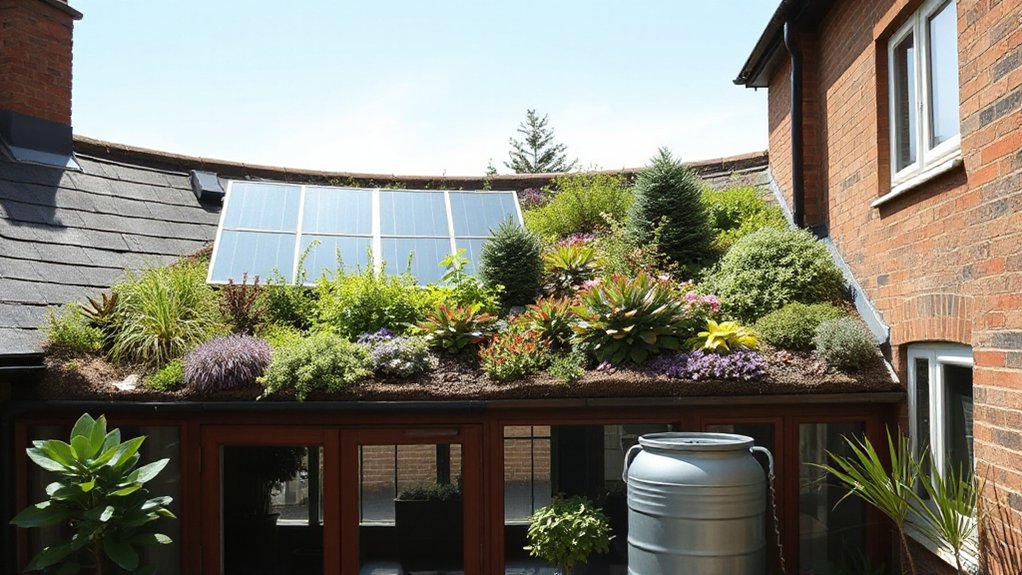

You’re aiming for a home that’s warm, cost-efficient, and low impact. Start with a solid energy audit, then prioritize insulation and airtightness, smart controls, and a lower-carbon heating system. Add renewables and water-saving measures, backed by sustainable materials and smart finance options. The path isn’t just about tech; it’s about a cohesive strategy that compounds savings over time, while keeping comfort intact—and the next step will sharpen your plan.
Key Takeaways
- Conduct a home energy audit to identify leaks and priority improvements like air-sealing, insulation, and efficient thermostats for immediate and long-term savings.
- Improve building envelope with continuous insulation, airtight cavities, and breathable materials to reduce heat loss and boiler reliance.
- Install smart heating controls and zoning to optimize comfort, reduce phantom loads, and align schedules with occupancy.
- Install renewable energy and high-efficiency systems (solar, heat pumps, efficient boilers) with proper sizing and professional guidance for best returns.
- Use water-saving fixtures and consider rainwater harvesting and low-flow technologies to cut consumption without compromising hygiene.
Assess Your Home’s Energy Profile: Start With a Home Energy Audit
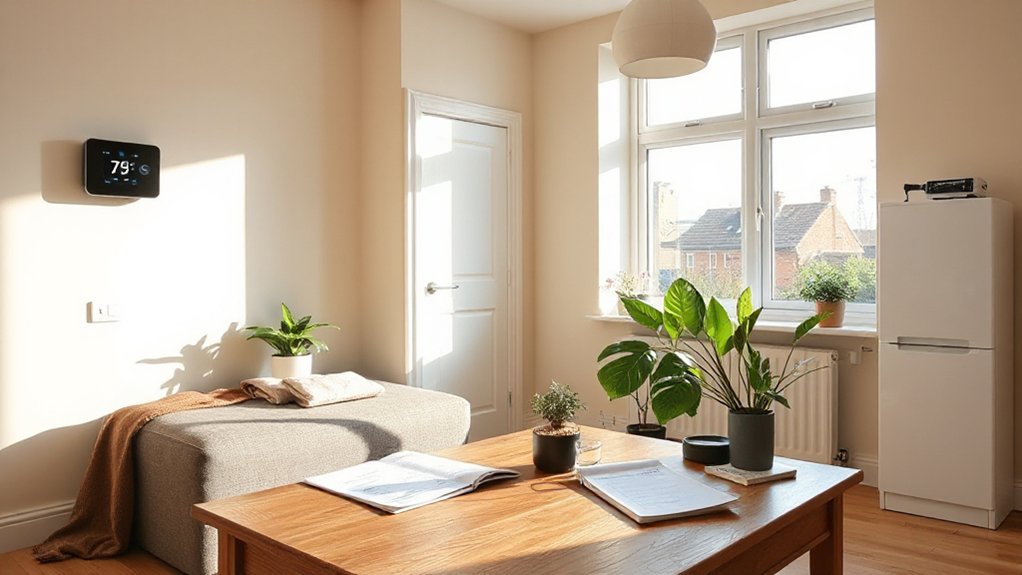
A home energy audit is your starting point for smarter, greener living. You’ll map where energy sneaks out and where efficiency wins, using a structured approach that keeps recommendations practical.
Identify the big heat losses first: doors, windows, and ducts, then confirm with a quick blower-door check or thermal imaging if available. As you inspect, note opportunities for low-cost fixes—air-sealing gaps, weather-stripping, and thermostat adjustments—that deliver immediate savings.
Balance prioritized improvements with long-term gains, weighing equipment efficiency and seasonal usage. Consider how your choices touch home decor and outdoor landscaping: sealant and insulation can be discrete, while smart controls align with aesthetic goals.
Document findings, set targets, and re-test to measure impact versus baseline performance. This disciplined process guides informed, cost-effective upgrades.
Insulation Upgrades That Slash UK Heating Bills
Upgrading insulation is the most cost-effective way to cut UK heating bills after you’ve assessed your current energy profile. You’ll gain immediate gains by targeting air leakage and thermal bridges, not just adding thickness everywhere.
Start with airtight construction: seal gaps around doors, windows, and service penetrations. Then invest in high-performance rigid boards or mineral wool for walls where possible.
Prioritise continuous insulation and a well-sealed cavity to minimize heat loss during winter and reduce overreliance on boilers.
Consider floor and underfloor options where accessible, and pair upgrades with smart controls to optimize usage.
While you upgrade, mind indoor air quality and garden landscaping for moisture management and ventilation strategy, ensuring a healthy, energy-efficient home without compromising comfort.
The Best Wall and Loft Insulation Setups for UK Homes
Choosing the right wall and loft insulation is essential for reducing heat loss without sacrificing comfort. You’ll maximize efficiency by selecting a combination that suits your home’s structure, climate, and budget, then installing it correctly to avoid gaps and thermal bridges.
In practical terms, aim for continuous insulation, proper ventilation, and mineral wool or dense-pack solutions where appropriate. Consider how walls and lofts interact with existing building fabric, improving overall airtightness without compromising breathability or indoor air quality.
When planning, link insulation upgrades to potential loft conversions or wall mural aesthetics by preserving usable space and minimizing disruption. Use professional guidance to ensure compliance and durability, especially in older properties.
- Continuous insulation and careful detailing
- Mineral wool or dense-pack for gaps
- Airtightness with controlled ventilation
- Compatible with loft conversions and design plans
Draft-Proof Your Windows and Doors Without Ruining Style
You can start by sealing gaps with discreet weatherstrips and high-quality door sweeps that don’t compromise aesthetics. Consider stylish yet effective options like low-profile seals and mock-elevated frames that blend with your décor.
We’ll explore practical, proven draft-proofing strategies that balance performance with design.
Draft-Proofing Essentials
Draft-proofing your home doesn’t have to compromise style. You can tighten gaps without sacrificing aesthetics, targeting air leakage at key points around windows and doors. Prioritize high-perimeter seals, draft-proofing strips, and door sweeps that blend with finishes. Use weather-rated profiles and lightweight insulating films where appropriate to avoid bulk.
Measure and test after each upgrade to confirm reduced heat loss and improved comfort. Keep materials low VOC and compatible with existing frames to preserve appearance. Focus on practical, reversible solutions that don’t require wholesale replacements.
- High-quality draft-proofing strips matched to frame color
- Door sweeps with adjustable gaps for uneven floors
- Low-profile gaskets around sashes and frames
- Temporary insulating films for seasonal use
Stylish Weather Seals Tips
Sealing your windows and doors can be stylish and subtle at the same time, so you don’t have to choose between comfort and aesthetics. Start with a quick audit: identify gaps at frames, sills, and joints, then prioritize weatherproofing aesthetics with purpose.
Choose gaps less than 5 mm to target with tube sealants or foam, avoiding bulky looks. For sash windows, install slim weatherstrips that compress without warping, and use draft stoppers under doors that blend with flooring.
Opt for reversible, low-profile weather seals to preserve original features while improving performance. Consider brush-style seals for exposed gaps and flexible silicone for irregular edges.
Finish with a matching sealant bead for a seamless line. With stylish sealing, you protect heat loss without sacrificing style.
Optimising Heating With Smart Thermostats and Zoning
Smart thermostats and zoning can dramatically cut energy use by tailoring heating to when and where you actually need it. You’ll gain precise control over each room, reducing waste and staying comfortable year-round.
Smart zoning lets you heat only occupied areas, while temperature scheduling aligns heat with your routines, avoiding unnecessary runtimes. Implementing these tools requires accurate room-by-room setup and clear comfort targets to prevent temperature swings.
Regularly review usage data to refine schedules and detect phantom loads from idle zones. Pair devices with good insulation and draft-proofing for maximum efficiency.
Expect lower bills, faster return on investment, and carbon reductions when you optimize intelligently.
- Smart zoning strategies for room-by-room control
- Temperature scheduling aligned with routines
- Clear comfort targets to prevent swings
- Regular usage reviews and fine-tuning
Solar Boosts for UK Roofs
Solar panel efficiency, roof mounting options, and the current economic benefits all shape how you approach rooftop solar.
You’ll weigh module performance, shading, and orientation to maximize output, while selecting mounts that suit UK roof types and wind loads.
In practical terms, consider upfront costs, available incentives, and payback timelines to gauge viability today.
Solar Panel Efficiency
Even with cloudy British skies, you can maximize energy from rooftop panels by focusing on efficiency upgrades and proper system design. Solar panel efficiency hinges on minimizing losses and enhancing every component, from cells to inverters. You’ll benefit from understanding photovoltaic technology fundamentals and applying them to real-world tweaks that boost output.
Regular solar panel maintenance is essential to sustain performance, including cleaning, shading checks, and electrical connections evaluation. Pair high-efficiency modules with a well-sized inverter and ideal tilt to reduce mismatch losses. Consider microinverters or power optimizers for partial shading scenarios.
For long-term gains, monitor performance data and schedule professional audits every few years.
- Enhance module choice and inverter pairing for minimal losses
- Schedule routine solar panel maintenance and diagnostics
- Address shading and temperature-related decline promptly
- Track performance with a monitoring system for rapid alerts
Roof Mounting Options
On pitched roofs, fixed brackets or rafter-mounted rails reduce wind uplift risk and preserve warranty integrity. Materials should be aluminum or stainless steel with appropriate coatings.
Consider weight distribution, gutter clearance, and potential shading from nearby obstacles. Make sure your installation aligns with manufacturer guidelines, local planning rules, and the grid-tied inverter’s limits for safe, durable performance.
Economic Benefits Today
Across the UK, solar installations deliver tangible short- and long-term financial returns by cutting electricity bills, attracting incentives, and increasing home value. You’ll gain predictable savings, improve energy resilience, and bolster market appeal without compromising comfort.
With careful financial planning, you can model payback periods, depreciation, and cash flow to inform decisions. Solar boosts qualify for incentives and grant schemes, depending on location and system type, so you’ll want to verify current schemes before committing.
Look for eco friendly certifications on equipment and installers, which signal quality, warranties, and performance standards. The investment also supports property value, insulated roof lines, and potential rental advantages.
Align installation with energy needs to maximize returns and minimize risk.
- Financial planning considerations for upfront costs and payback
- Incentive eligibility and grants by region
- Certification signals reliability and performance
- Value preservation and resale impact of eco upgrades
Are Heat Pumps (Ground- or Air-Source) Right for Your UK Home?
Heat pumps can be a smart fit for many UK homes, but suitability hinges on your property’s heat demand, insulation, and electricity costs. You’ll assess whether ground- or air-source units match your load profile, space, and existing heating.
In practice, performance depends on insulation quality, heat loss, and temp controls, not just gadget appeal. Be aware of heat pump myths that overstate savings or underplay electricity price risks; real gains come from well-sized systems paired with efficient emitters and smart thermostats.
Installation costs vary by borehole work for ground-source versus outdoors for air-source, plus upgrade needs to the electrical circuit and controls. Finally, plan for accurate heat-loss calculations and professional sizing to avoid oversizing or undersizing, which undermine comfort and cost effectiveness.
Choosing Efficient Boilers and Fuels for Lower Bills

Choosing an efficient boiler and low-cost sustainable fuels can considerably cut your UK home’s running costs.
You’ll want a model sized for your heat load, with high seasonal efficiency and compatibility with your fuel choices.
Start by comparing upfront costs, fuel availability, and potential rebates to balance short-term spend against long-term bills.
Efficient Boiler Selection
Wondering how to cut your heating bills without sacrificing comfort? Efficient boiler selection starts with sizing, efficiency, and fuel options. Choose a condensing boiler with high seasonal efficiency and low standby losses to maximize renewable heating gains.
Match boiler output to your home’s heat load, preventing short cycling and wasted energy. Consider a system boiler with a properly sized radiator network and well-insulated pipes for ideal performance.
Evaluate fuel flexibility, prioritising low-carbon choices where available, and assess potential for renewable heating integrations.
Look at boiler lifespan projections, maintenance needs, and reliability history to reduce long-term costs. Guarantee professional installation, annual servicing, and switched controls for smarter, cost-effective operation.
- Proper sizing and high-efficiency condensing models
- Fuel flexibility and renewable heating compatibility
- Boiler lifespan and maintenance considerations
- Professional installation and smart controls readiness
Low-Cost Sustainable Fuels
Biomass boilers convert affordable solid fuels, often sourced locally, into steady heat with predictable annual running costs, especially when paired with good insulation and a modern heat emitter setup.
Bioethanol fuels offer a cleaner, liquid option for supplementary or hybrid systems, delivering quick heat without combustion byproducts typical of older appliances.
When selecting equipment, prioritize efficiency ratings (seasonal performance factors) and reliable service networks.
Consider fuel logistics: feedstock availability, storage needs, and delivery consistency.
For lower bills, match boiler output to demand, and combine fuels with smart controls and well-sealed spaces to maximize savings.
Water Efficiency: Low-Flow Fixtures That Actually Work
To cut water waste without compromising performance, focus on proven low-flow fixtures that deliver consistent pressure and predictable results. You’ll prioritize reliability, measurable savings, and long-term fixture durability, ensuring water conservation without sacrificing user experience.
Install aerated taps, efficient showerheads, and calibrated toilets that maintain flush strength while minimizing flow. Check rated performance and flow, and avoid gimmicks that promise big drops with tiny gains.
Proper installation and regular maintenance keep efficiency high over time, preventing leaks that undermine results. Pair fixtures with smart monitoring for insight into usage patterns and potential faults.
This practical approach balances conservation with comfort, delivering durable, proven outcomes.
- Aerated taps and compliant showerheads
- Pressure-balanced valves and calibrated toilets
- Leak detection and routine maintenance
- Usage monitoring and performance checks
Modern Taps, Showers, and Toilets With Minimal Footprint
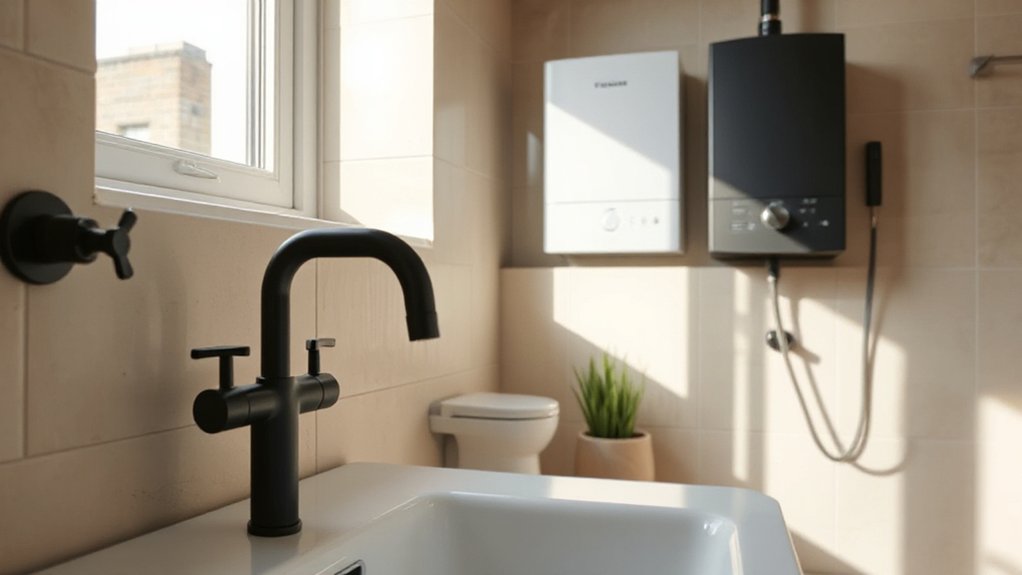
You’ll explore modern taps, showers, and toilets that minimize footprint without compromising performance, focusing on water-saving mechanisms and low-flow fixtures.
Durable designs and smart retrofit options let you upgrade efficiently while preserving reliability and ease of maintenance.
Together, we’ll assess how precise specifications and practical choices translate to real-world water savings and long-term durability.
Water-Saving Mechanisms
Are you optimizing water use without sacrificing comfort? You can cut consumption without losing ease by selecting modern taps, showers, and toilets designed for efficiency. Aim for metering, pressure-balanced delivery, and low-flow performance that maintains feel and pressure.
Integrate rainwater harvesting and greywater recycling where appropriate to supplement mains water for non-potable uses, reducing demand while staying compliant with local regs. Choose fixtures with smart flow control, but verify compatibility with your system to avoid leaks or cold shocks.
Regular maintenance keeps seals tight and performance steady, extending fixture life. Prioritize durable materials and easy-clean surfaces to minimize maintenance. Plan a simple retrofit path, so upgrades remain cost-effective and unobtrusive.
- Rainwater harvesting integration for non-potable use
- Greywater recycling for suitable non-potable applications
- High-efficiency taps and dual-flush toilets
- Pressure-balanced, low-flow showers and fixtures
Durable, Low-Flow Fixtures
Modern taps, showers, and toilets with durable, low-flow designs let you cut water use without sacrificing comfort or performance. You’ll see consistent efficiency by choosing fixtures rated for low flow and reliable performance under daily use.
Focus on aerated taps, 4–6 L/min showers, and dual-flush or high-efficiency toilets; these deliver steady output while minimizing waste.
Prioritize fixture durability, selecting solid materials, robust cartridges, and reputable seals to reduce leaks and service visits. Pair high-quality gaskets with correct installation to sustain performance over years.
Look for certifications like Water Label or WELS ratings to verify stated flow rates.
In practice, you’ll achieve meaningful water conservation without sacrificing usability, hygiene, or experience. Durable, low-flow fixtures enable responsible consumption while preserving comfort in your home.
Smart Retrofit Options
- High-efficiency taps with aerated flow
- Smart showers with precise temperature and flow control
- Dual-flush or measured-volume toilets
- Integrated energy monitoring dashboards
A Greener Kitchen: Appliances and Fixtures That Save Energy
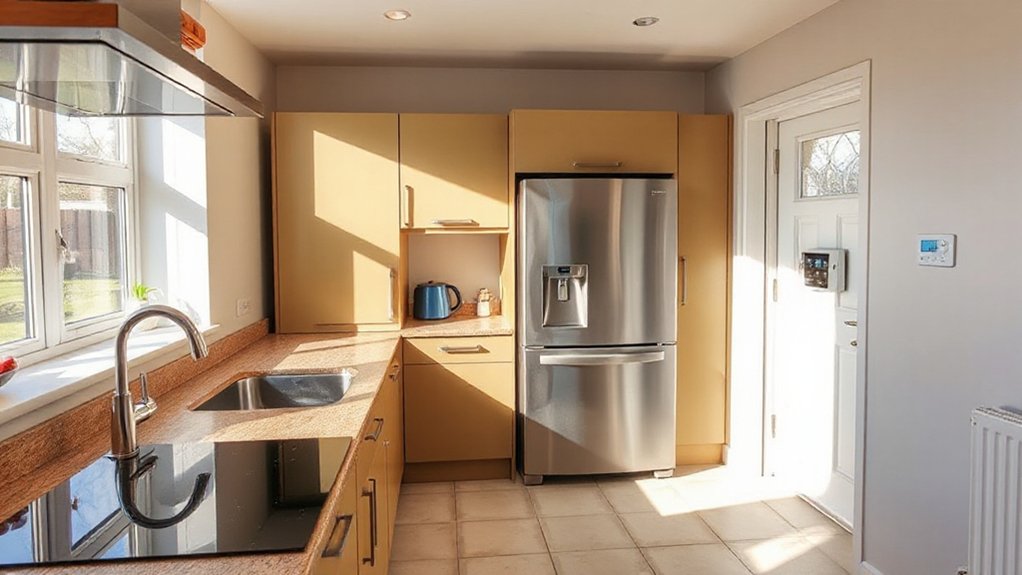
Upgrading your kitchen with energy-efficient appliances and fixtures can sharply cut utility bills and shrink your carbon footprint. You’ll choose appliances with high energy efficiency ratings, like A+++ models or equivalents, and size them to match your actual usage to avoid standby waste.
Opt for LED lighting and smart controls to minimize idle consumption. For fixtures, install a heat pump water heater or a high-efficiency boiler with proper insulation, and select taps with low-flow aerators to conserve hot water.
Embrace a thoughtful Kitchen redesign that integrates eco-friendly countertops and sustainable materials while maintaining durability. Prioritize fridge and freezer placement for ideal airflow and accessibility.
These steps keep costs down and performance high, reinforcing a practical, precise approach.
Laundry and Dishwashing: High-Efficiency Routines and Gear
To cut energy and water use in laundry and dishwashing, adopt high-efficiency routines and gear that match actual loads and optimize cycle choices. You’ll minimize waste by running full loads, choosing eco modes, and calibrating water levels to load size.
Use laundry detergents that are concentrated and biodegradable, and opt for low-suds formulations for dishwashers. Prefer fabric softeners sparingly or skip them with wool or microfiber fabrics, to avoid buildup.
Monitor temperature settings, washing at 30°C where effective, and air-dry indoors when feasible. For dishes, fine-tune pre-rinsing to reduce pre-wash time and leverage soil-sensing cycles.
Maintain machines routinely, from filters to seals, to sustain efficiency over time.
- Run full loads only
- Select eco/low-temp cycles
- Use concentrated detergents
- Limit fabric softeners and pre-rinses
Lighting the Eco-Friendly Way: LEDs and Smart Lighting
LEDs slash energy use while delivering steady, high-quality light, making it a practical upgrade for UK homes.
Smart lighting adds convenience and control, enabling schedules, occupancy sensing, and daylight harvesting to curb waste.
Together, these options save energy and extend bulb life, supporting a more sustainable lighting strategy.
Energy-Efficient LED Lighting
Smart lighting can cut both bills and carbon, making LED technology a practical first step for any UK home. You’ll maximise efficiency by choosing high‑quality LEDs with good lumen output per watt, and by using smart controls to avoid waste.
Focus on ambient lighting as a base layer that smooths contrasts without blasting brightness. Select a color temperature that suits each room: warmer tones for relaxation, cooler tones for tasks.
Dimmed, automated schedules further reduce energy use and extend bulb life. Pair LEDs with solid wiring and proper heat management to maintain performance over time.
With precise lumen planning, you’ll maintain comfort while trimming consumption.
- Ambient lighting first, then task lighting where needed
- Set color temperature by room use
- Use dimming and scheduling to save energy
- Choose reliable, long‑lasting LED sources
Smart Lighting Benefits
Could smart lighting deliver real eco benefits? Yes, when you combine LEDs with intelligent controls, you gain measurable energy savings and convenience. Smart lighting adapts to occupancy, daylight levels, and room usage, reducing unnecessary illumination without sacrificing comfort.
You program schedules and scenes, so lights switch off automatically, cutting standby drain and boosting energy conservation. Beyond cost, this approach supports grid stability by lowering peak demand, especially in UK homes with variable occupancy.
Realistic gains come from dimming, timely shutdowns, and remote control, enabling precise usage profiling. Choose LED-compatible, interoperable hubs and devices to avoid compatibility pitfalls.
Implementing zoning and automation yields higher efficiency, fewer replacements, and a smarter, greener home ecosystem. Smart lighting aligns performance with sustainable living.
Powering Devices With Renewables: Charging Strategies and Grids
Powering devices with renewables hinges on aligning generation, storage, and consumption so that homes stay powered when sun or wind waxes and wanes. You’ll optimize Renewable charging by sizing solar and storage to match demand profiles, enabling quick shifts between generation bumps and peaks.
Grid integration becomes a tool, not a liability, using smart inverters and time-of-use signals to decouple export from consumption and minimize imports. Practically, you’ll deploy battery storage, demand response, and EV charging schedules that respect grid constraints while maximizing self-consumption.
Monitor intra-day production, adjust appliance use, and plan for seasonal variability to sustain reliability.
- Optimize Renewable charging with measured storage capacity and generation forecasts
- Use Grid integration signals to align charging with low-demand windows
- Schedule EVs and high-draw devices to match solar generation
- Implement smart inverters and energy management for resilience
Ventilation Strategies That Save Energy Without Sacrificing Air Quality
Passive ventilation alone isn’t enough—you must pair it with targeted strategies that cut energy use while keeping indoor air healthy. You’ll optimize ventilation design by combining controlled mechanical ventilation with heat recovery where possible and by sealing unintended leaks.
Prioritize humidity-aware airflow, using continuous extraction in kitchens and bathrooms and balanced supply in living spaces. Use demand-controlled ventilation tied to occupancy or CO2 sensors to avoid over-ventilating.
Integrate simple passive options, like trickle vents, only where they won’t undermine efficiency. Match fan sizing to room volume and retrofit with high-efficiency motors.
Air quality hinges on filtration and source control, so specify filters rated for particles and gases suitable to your area. Regular commissioning guarantees performance aligns with your indoor air quality goals and energy targets.
Energy Resilience: Backup Options for UK Homes
In the face of outages or grid stress, you need practical, reliable backup options that keep essential functions running without breaking the bank. You’ll prioritize robust, affordable systems that secure power for critical loads, support heating, and maintain basic communications when mains fail.
Focus on renewable storage and grid independence to reduce vulnerability and fossil dependence while staying within budget. Choose modular options you can scale over time, ensuring compatibility with your existing panels and storage.
Prioritize safety, warranty coverage, and routine maintenance to sustain performance. Balance upfront costs with long-term savings through reduced downtime and tariff resilience. Reliability comes from testing and clear load prioritization.
- Hybrid inverters with integrated batteries for seamless switching
- Home energy storage paired with solar for Renewable storage
- Standalone generators as a practical backup tier
- Grid-tied systems with islanding capability for grid independence
Smart Home Integration for Continuous Savings

You can extend the value of your eco-smart upgrades by tying energy, heating, and home-automation systems into a single, responsive platform. Smart home integration streamlines daily use while driving continuous savings.
Prioritize a centralized dashboard that aggregates energy monitoring data in real time, revealing where consumption spikes occur and how to curb them. Set adaptive schedules for heating, lighting, and appliances that align with occupancy and weather, reducing waste without sacrificing comfort.
Choose devices and hubs that support standard protocols to guarantee interoperability and easy firmware updates. Implement automation rules that respond to price signals or grid demand to minimize peak usage.
Regularly review insights, adjust thresholds, and confirm that energy monitoring translations into actionable steps. Maintain cybersecurity basics to protect your optimized system.
Financing UK Green Upgrades: Grants, Loans, and Incentives You Can Claim
Financing UK green upgrades isn’t just about the upfront cost; it’s about choosing funding that aligns with your project scope and timeline. You’ll navigate Renewable financing options and match them to your energy retrofit plan, avoiding overfunding or underfunding.
Government incentives can reduce net costs, shorten payback, and improve cash flow without delaying work. Assess eligibility, terms, and repayment periods before committing, so you preserve flexibility for future upgrades.
Compare grant terms, loan rates, and eligibility criteria to maximize value while meeting building performance goals. Use post-upgrade savings to repay any financing, or refinance if rates drop.
Plan for compliance and documentation early to prevent delays. Align funding with milestones to keep your project on track and within budget.
- Renewable financing options and eligibility
- Government incentives timing and application tips
- Grant vs. loan: when each makes sense
- Documentation, compliance, and impact tracking
Choosing a Sustainable Materials and Build Approach
Opt for timber framing from certified sources, responsibly sourced stone, and recycled-content aggregates where appropriate, ensuring compatibility with existing structures to reduce retrofit complexity.
Embrace modular, prefabricated elements to shorten site time, improve quality control, and limit transport emissions. Design for disassembly, so components can be reused or recycled at end of life, lowering future embodied energy.
Prioritise passive strategies: high insulation, airtight envelopes, efficient glazing, and solar gains. This approach aligns with sustainable architecture and eco friendly construction, delivering durable, low-impact homes.
Maintenance Habits That Sustain Long-Term UK Energy Efficiency
Maintaining the energy-saving gains from a well-chosen, low-embodied-energy build hinges on consistent, practical upkeep that protects performance over time. You optimize systems daily, spot-clean filters, and schedule seasonal checks to prevent efficiency losses.
Proactive maintenance preserves air sealing, insulation, and equipment efficiency, reducing energy waste while sustaining indoor comfort and health. Attention to garden landscaping around the home can influence heat gain and drainage, supporting drought-resilient, low-energy operation.
You also monitor indoor air quality through ventilation practices and filtration, guarding against pollutant buildup that undermines efficiency and wellbeing. By enforcing routines now, you extend lifespan, lower bills, and maintain design intent long term.
- Schedule seasonal inspections and filter changes
- Maintain seals, insulation, and ventilation paths
- Manage garden landscaping to control heat gain and drainage
- Track indoor air quality and ventilation effectiveness
Frequently Asked Questions
How Long Does a Home Energy Audit Take?
A home energy audit typically takes 2 to 4 hours, depending on home size and complexity. During the process, you’ll undergo a thorough home inspection and energy assessment, identifying leaks, insulation gaps, and efficient upgrades for comfort and savings.
What’s the Typical Payback Period for Upgrades?
Is it around 5–15 years? You’ll see a payback over those years, depending on upgrades. Do a cost comparison and factor in financial incentives to maximize your return, then plan prudent, targeted improvements. That’s how you optimize value.
Do Grants Cover Whole-House Renovations?
Grants rarely cover whole-house renovations. Financial incentives typically scale with renovation scope, often requiring staged upgrades. You should assess eligible measures, plan the Renovation scope strategically, and combine grants with loans to maximize overall funding impact.
Can Insulation Reduce Cooling Needs Too?
Yes, insulation helps reduce cooling needs by maintaining indoor temperatures. Pair it with passive cooling and ventilation strategies to minimize heat gain, improving comfort and efficiency without excessive cooling loads.
Which Upgrades Have the Biggest Emissions Impact?
“Hit two birds with one stone.” You’ll cut emissions most by installing renewables and upgrading efficient heat, insulation, and appliances, reducing your carbon footprint via on-site generation and smarter load management, with renewable energy shaping long-term, low-cost savings.
Conclusion
To keep your home thriving long-term, implement a layered, practical plan—from audits and insulation to smart controls and renewables—and maintain momentum with regular checks. Start with a tailored retrofit path, then monitor results and adjust. For example, a semi‑detached UK home reduced heat loss by 40% after dense loft insulation, draught-proofing, and a heat pump with a smart thermostat. Sustainable upgrades pay back through lower bills, higher comfort, and a smaller carbon footprint.