
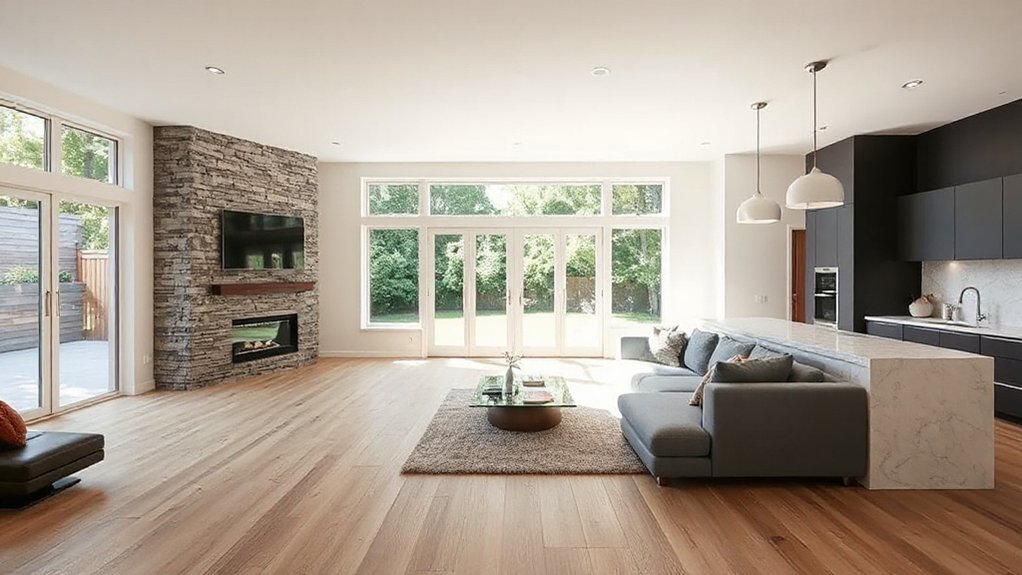

To boost property value, start with high-ROI renovations like a kitchen refresh, durable bathroom updates, and smart lighting that appeal to buyers and cut operating costs. Prioritize projects by budget and timing, using a master schedule and seasonal windows. Add low-cost upgrades—fresh neutrals, hardware, and curb-appeal tweaks—before tackling insulation and air sealing for comfort. Design cohesion matters: timeless finishes, open layouts, and quality finishes reduce future maintenance. Want practical steps and examples? You’ll gain more insights as you proceed.
Key Takeaways
- Prioritize high-ROI updates like kitchens, bathrooms, lighting, storage, and durable finishes to boost appeal and value.
- Improve energy efficiency with insulation, sealing, and smart thermostats to reduce operating costs and attract buyers.
- Refresh interiors with neutral paint, modern lighting, hardware, and timeless fixtures for broad market appeal.
- Enhance curb appeal through landscaping, entry upgrades, exterior lighting, and tidy paths to create strong first impressions.
- Plan projects by budget and timeline, align with market conditions, and avoid over-personalization to prevent value loss.
How to Identify Renovations With the Best ROI
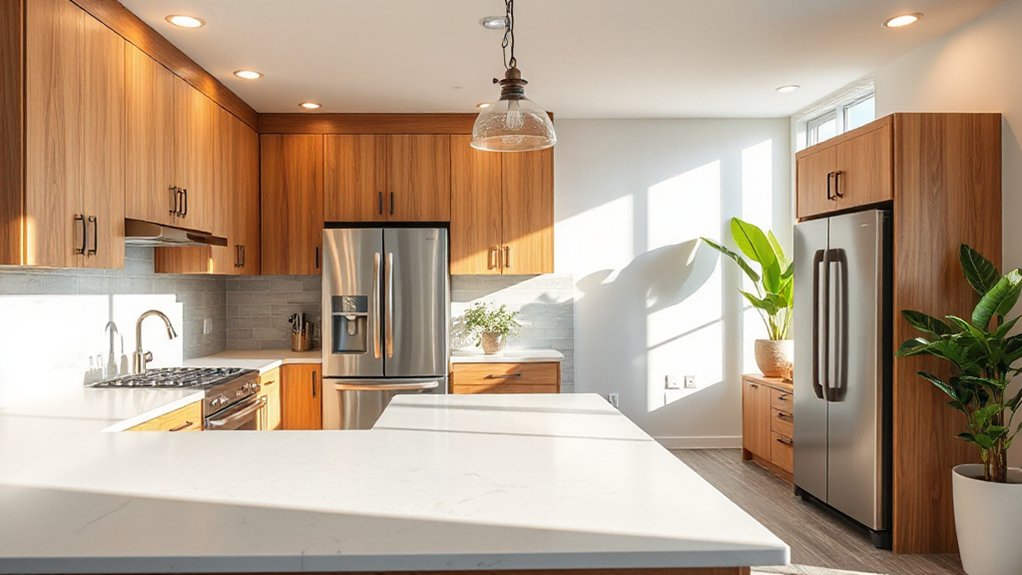
To identify renovations with the best ROI, start by separating must-haves from nice-to-haves and focusing on improvements that boost both appeal and value. You prioritize updates that modernize utilities, lighting, and storage because these deliver daily practicality and long-term payoff.
Evaluate projects by cost per dollar of value added, targeting high-impact rooms first: kitchen and baths. Choose durable, timeless finishes to reduce future replacements and extend lifespan.
Historical preservation matters when you preserve character while upgrading systems; integrate modern conveniences without erasing heritage. Favor eco-friendly materials that lower operating costs and appeal to conscious buyers.
Maintain coherent design language across updates so changes feel deliberate, not random. Document upgrades for future appraisal, showing compliance, quality, and the intent behind each choice.
Prioritize Projects by Budget and Timeline
Prioritizing projects by budget and timeline keeps the renovation plan focused and achievable. You segment the work into essential, high-impact tasks first, then phase nice-to-haves.
Begin with Budget planning to set clear cost ceilings and buffer for surprises, so you don’t overshoot your limits. Next, apply Timeline management to map logical sequences: rough-ins before finishes, permits before carpentry, and dependencies clearly labeled.
Rank projects by return on value, urgency, and disruption to daily life. Create a master calendar that aligns contractor availability with peak seasons and your own schedule.
Use lightweight scopes for low-risk, quick wins that maintain momentum without derailing longer efforts. Revisit your plan monthly, adjusting priorities as prices and timelines shift.
This disciplined approach preserves momentum while protecting value.
Low-Cost Upgrades That Add Quick Value
Even with a tight budget, you can open noticeable value fast by choosing small, high-impact upgrades that refresh the space without major construction. Focus on details that yield big optics: fresh paint in modern neutrals, updated chrome hardware, and adaptable lighting that reshapes rooms without rewiring.
Swap out outdated fixtures for energy-efficient options, and consider a compact, stylish ceiling fixture to lift ceilings visually. Implement a few purposeful, low-cost landscape design tweaks—clean lines, mulch, and hardy perennial accents—that boost curb appeal without breaking the bank.
Add vintage charm with well-chosen vintage or vintage-inspired accessories—think mirrors, clocks, or pottery—that feel intentional, not cluttered. Align textures and finishes to a cohesive palette, ensuring every upgrade reads as deliberate and market-ready.
Refresh the Kitchen to Boost Market Value
Revitalizing the kitchen starts by updating the cabinets for a cleaner look. Then, select durable, stylish countertops. Finally, tighten the lighting plan to highlight the upgrades.
You’ll see value when the cabinets feel modern, the counters read well in person and in photos, and task lighting creates inviting work zones.
Focus on cohesive finishes and bright, efficient illumination to maximize appeal.
Refresh Kitchen Cabinets
Freshen up your kitchen by revitalizing the cabinets, a strategic move that delivers big value with limited disruption. You should view cabinets as the room’s frame of reference, not just storage.
Start with a clean, even surface and inspect for loose doors or squeaks; address those issues first.
Choose a timeless paint finish that resists wear and wipe marks, and apply a smooth, even coat for a cohesive look.
Consider updating only the fronts or doors if full replacement isn’t necessary.
Upgrade cabinet hardware to elevate style without overhauling storage, selecting pulls or knobs that coordinate with your faucet and lighting.
Keep the color palette restrained—neutrals with a subtle accent.
Finally, seal edges and soft-close hinges for longevity and a refined, market-ready finish.
Upgrade Countertops Material
Upgrading countertop material is a practical way to elevate kitchen aesthetics and boost value without a full renovation. You’ll prioritize durable surfaces that withstand daily use and still look contemporary.
Consider quartz for a low-maintenance, consistent look, or solid surface for seamless installation and repairability. If you crave natural variation, choose granite or marble, aware of higher maintenance and sealing needs.
Tile offers flexibility in color and edge profiles, but grouting can demand more upkeep. For budget-minded upgrades, laminate now mimics stone at a fraction of the cost, though durability varies by brand.
In all cases, assess countertop materials for heat resistance, scratching, and stain tolerance. Pair with a cohesive backsplash and cabinet pulls to maximize overall value and perceived quality.
Countertop durability remains a priority.
Improve Lighting Plan
A well-planned lighting strategy can transform a kitchen from functional to inviting, while simultaneously enhancing perceived value. You should optimize both natural sunlight and ambient lighting to create depth, color accuracy, and a sense of space.
- Align ceiling fixtures with task zones to guarantee bright, glare-free work surfaces.
- Use layered lighting—ambient, task, and accent—to sculpt mood and highlight finishes.
- Choose color temperatures around 2700–3000K for warmth, and incorporate dimmers for flexibility.
- Add under-cabinet LEDs and window treatments that maximize daylight without causing heat or glare.
Modernize Bathrooms on a Budget
If you’re renovating on a budget, you can modernize your bathrooms without a full overhaul by prioritizing cost-effective upgrades that make a big impact. Start with durable, inexpensive updates: refresh walls with bathroom paint in a moisture-resistant finish, swap dated hardware, and replace mismatched accessories.
Choose streamlined vanity accents and install open shelving to create a spa-like feel without a full rebuild. Introduce modern lighting and a mirrored focal point to brighten the space, while preserving essential storage.
For lasting impression, consider vintage fixtures as statement pieces—think a classic faucet or retro-inspired lighting—paired with modern fittings for balanced charm. Prioritize efficiency with low-flow valves and smart storage, ensuring the room looks contemporary, cohesive, and value-enhancing.
Boost Curb Appeal With Simple, Value-Adding Tweaks
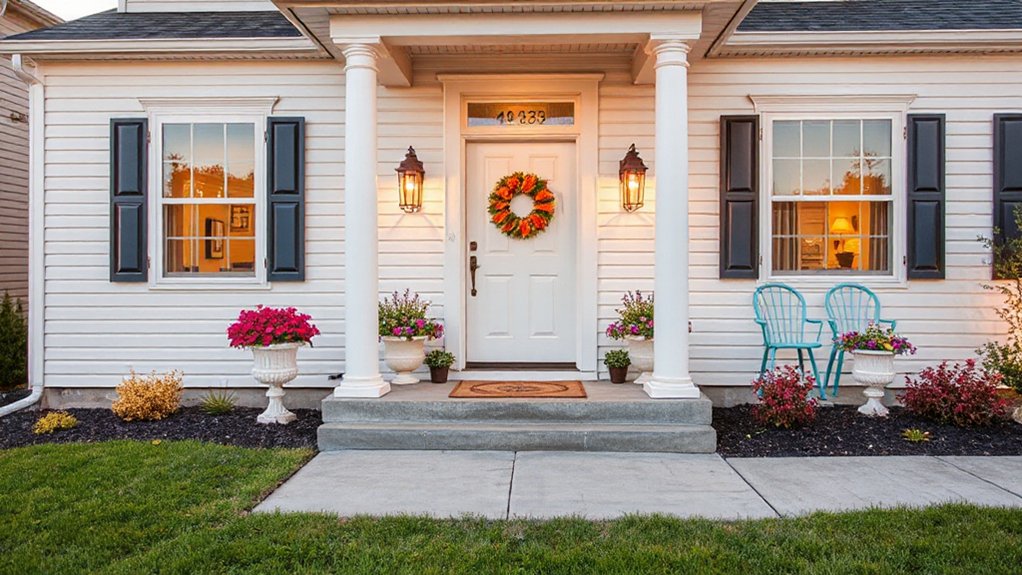
Even small exterior tweaks can dramatically boost curb appeal and property value. You’ll connect with buyers by focusing on clean lines, purposeful greenery, and thoughtful lighting.
Here are practical steps you can implement now:
- Upgrade entryway: a sturdy door, fresh paint, and a seasonal wreath set a confident tone.
- Garden landscaping refresh: prune, mulch, and add two color spots with perennials for year-round texture.
- Exterior lighting upgrade: layer task, accent, and path lights to extend appeal after dark.
- Hardscape polish: reseal a cracked path, tidy steps, and add a simple seating or display area for approachability.
Energy Upgrades That Cut Bills and Raise Value
Smart thermostat integration and efficient insulation upgrades are practical moves that cut monthly bills while boosting comfort and home value. You’ll see immediate gains in energy performance, with precise controls and better temperature consistency across rooms.
Start by prioritizing airtight insulation improvements and a compatible smart thermostat system to maximize long-term savings and design coherence.
Efficient Insulation Upgrades
Upgrading insulation is one of the most practical ways to slash energy bills while boosting home value. You’ll lock in comfort and reduce drafts by selecting targeted upgrades that fit your climate and home layout. Focus on materials, installation quality, and continuous coverage so thermal barriers and vapor barriers perform as designed.
Below are high-impact options to weigh:
- Exterior wall insulation with continuous, spray-applied or blown-in fills
- Attic and roof deck upgrades to minimize heat transfer
- Insulated doors, seals, and windows with proper flashing
- Basement and crawlspace encapsulation to control moisture and drafts
Combined, these choices create a tighter envelope, cut utility use, and elevate perceived value through long-term reliability.
Smart Thermostat Integration
After tightening the building envelope, a smart thermostat becomes the backbone of day-to-day energy control, pairing you with real-time feedback to optimize HVAC use. You’ll monitor occupancy, adjust schedules, and streamline comfort without guesswork. This device translates climate data into precise actions, reducing waste and lowering bills.
In practice, install zones or room-based control where appropriate, ensuring compatibility with existing systems and future upgrades. Pair it with a dedicated app for remote adjustments and clear energy insights, so you can compare consumption month to month.
Focus on energy efficiency highlights: automatic cooling and heating setbacks, adaptive scheduling, and maintenance reminders that prevent efficiency drops. A well-chosen Smart thermostat adds value by delivering measurable comfort and cost savings with a modern, design-forward touch.
Create Light and Flow With Open-Concept Tweaks
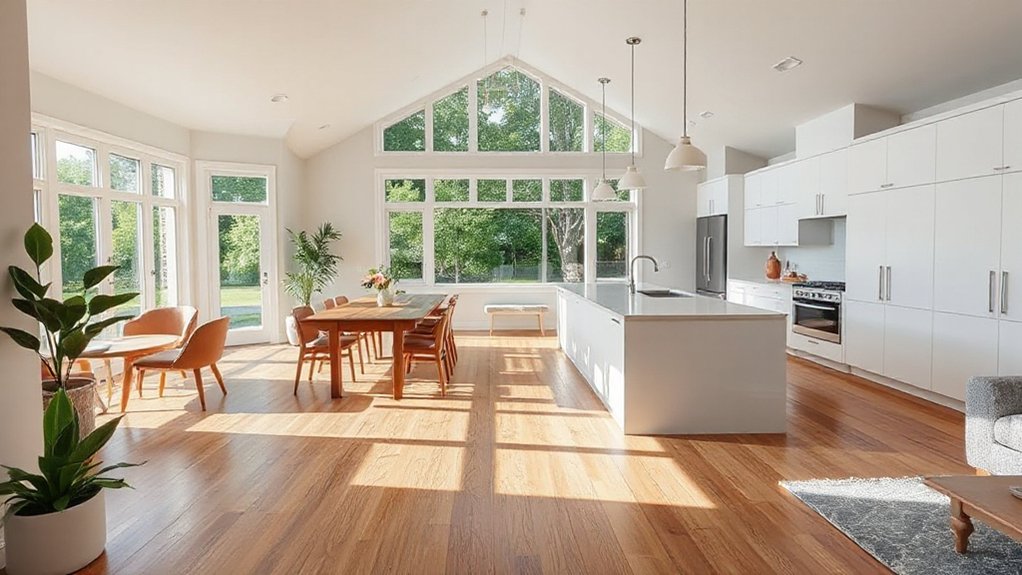
Open-concept tweaks instantly brighten spaces and improve circulation, so you’ll notice a more inviting flow from room to room. You’ll harness natural light and create interior flow by removing barriers, choosing airy finishes, and aligning sightlines for vertical and horizontal openness.
- Open sightlines with partial walls or glass panels to preserve light while defining zones.
- Use pale, reflective surfaces and streamlined cabinetry to minimize visual heft.
- Prioritize consistent flooring and cohesive color palettes to unify spaces.
- Optimize furniture layout for clear pathways and functional, flexible use.
Flooring Choices That Improve Value and Durability
Choosing flooring that balances value with durability starts with knowing your climate, footprint, and daily use. You’ll want materials that resist moisture, wear, and denting without sacrificing style. Ground your choice in practical performance: consider engineered hardwood for stability, porcelain tile for bathrooms and kitchens, or Luxury finishes that read premium while staying tough.
In high-traffic zones, opt for dense, scratch-resistant options and wide planks to create a timeless feel with fewer seams. Favor Sustainable materials that minimize environmental impact, like reclaimed wood or cork, paired with low-VOC finishes for healthier interiors.
Switch prompts—matching subfloor prep, underlayment, and appropriate radiusing—keep longevity intact. Finally, prioritize color and texture that stay current, yet easy to refresh with accents rather than full replacement.
Smart-Home Features That Help Resale
Smart-home features are a smart investment for resale, complementing the durable flooring choices you’ve already made. You’ll boost appeal and control with practical, future-proof tech that buyers expect.
Opt for reliable integrations, intuitive interfaces, and strong data privacy. Here’s a concise framework:
- Smart security: cameras, door sensors, and alarms that integrate with a unified app.
- Voice assistants: seamless control of lighting, climate, and scenes, with clear privacy options.
- Energy-aware systems: smart thermostats and occupancy-based controls that cut costs.
- Remote access and monitoring: secure, user-friendly dashboards for real-time peace of mind.
Insulation, Air Sealing, and Ventilation for Comfort and Savings
Insulation, air sealing, and ventilation are the backbone of comfort and energy savings, delivering a tighter, healthier home without sacrificing design or light-filled spaces. You’ll maximize comfort by choosing R-value appropriate for your climate and sealing gaps around doors, ducts, and wiring with precision.
Prioritize continuous insulation and strategic air barriers to prevent drafts, cold spots, and moisture buildup. Implement controlled ventilation with heat recovery when possible to maintain air quality without wasting energy.
Damp proofing becomes essential in foundations and basements, safeguarding against moisture that undermines comfort and value. Install vapor barriers on cold-side surfaces in humid spaces to reduce condensation risks and mold growth.
These steps create a resilient shell that supports long-term performance and design-forward interiors.
Layout and Space Tricks to Improve Perceived Value
Open sightlines and an open plan can make spaces feel larger and more cohesive, so you’ll want to prioritize clear sight from living to dining to kitchen.
Use scale with light—larger furnishings in brighter rooms and lighter tones elsewhere—to amplify perceived space without sacrificing function.
Plan traffic flow that guides movement smoothly, so every turn reinforces value rather than interrupting it.
Open Plan Magic
Open-plan layouts can instantly make a home feel larger and more cohesive, and the right tricks keep the space functional without sacrificing warmth. You’ll optimize spatial flow by zoning with subtle cues, not walls, and by selecting materials that unify zones.
Prioritize sightlines, avoid clutter, and keep traffic paths clear to preserve openness while defining purpose.
- Create distinct zones with furniture placement and rugs
- Choose a cohesive material palette to tie spaces together
- Use lighting layers to guide movement and mood
- Integrate storage to maintain clean, breathable interiors
Scale With Light
Lighting is your quickest lever for making a space feel larger and more valuable, so scale rooms by how light moves through them. You’ll achieve this by open sightlines, strategic mirror placement, and by prioritizing vertical elements that guide the eye upward.
Use lighter tones on walls and ceilings to bounce natural illumination deeper into the space, and consider recessed or layered lighting to maintain depth when daylight fades.
Zone areas with soft, consistent lighting rather than harsh shadows, so the room reads as cohesive, not crowded.
Favor furniture with slim profiles and transparent materials to preserve sightlines and airflow.
This approach creates Lighting ambiance that feels intentional, while the perception of space expands without major remodeling.
Traffic Flow Keys
- Orient the foyer toward a main living area to reduce detours and create a welcoming sequence.
- Minimize door swings that interrupt circulation; use pocket or accordion doors where appropriate.
- Create sightlines from entry to key rooms to reinforce openness and purpose.
- Use consistent flooring progressions and subtle color shifts to delineate zones without clutter.
Implement these tweaks to amplify perceived value with practical, design-forward finesse.
Timing Renovations for Market Conditions
Timing renovations to match market conditions is essential for maximizing value and minimizing risk; when demand shifts, acting decisively can protect your investment. You’ll time projects by monitoring indicators like seasonality, inventory levels, and buyer sentiment, then align upgrades with what buyers currently seek.
Seasonal timing matters: curb appeal in spring, energy efficiency ahead of fall listings, and modern, low-maintenance interiors for rental-to-sale transitions. Conduct a concise market analysis before committing, focusing on price trajectories, days-on-market, and competitive comps.
Prioritize renovations that yield broad appeal and short, clear ROI—neutral palettes, durable finishes, and flexible layouts. Coordinate trades to minimize downtime, and stage updates to highlight value without over-improvement.
Reassess plans as conditions evolve, preserving leverage for the next market cycle.
Common Pitfalls to Avoid When Renovating for Value
Common renovation missteps can quietly erode value, so flagging them early helps you stay on track. You’ll want to avoid over-personalizing spaces, which can deter future buyers and inflate costs. Focus on cohesive design, reliable materials, and proportional room scales to maximize value.
- Budget pitfalls: underestimate costs, skip contingencies, and misprice trades, then stretch timelines.
- Design distractions: flashy trends that fade quickly, mismatched fixtures, or competing styles that confuse buyers.
- Scope creep: add unplanned features mid-project, inflating budget and extending timelines.
- Execution gaps: sloppy measurements, poor finishes, or delayed inspections that undermine quality.
Stay solution-driven: choose timeless finishes, document decisions, and schedule phased milestones to protect value and deliver clarity.
Frequently Asked Questions
How Long Do Renovations Typically Take to Recoup Costs?
Renovations typically recoup costs in 5 to 10 years, depending on scope and market. You should Timeline planning and Cost analysis upfront, track ROI, and adapt budgets as you progress to maximize value and shorten payback.
Which Renovation Adds the Most Resale Value per Dollar?
Like a magnet, adding luxury upgrades yields the strongest resale lift per dollar. You should prioritize energy efficiency alongside high-end finishes for maximum impact on value, delivering practical, design-forward improvements that attract buyers and cut operating costs.
Do Professional Permits Impact ROI More Than DIY Projects?
Professional permits impact ROI more than DIY projects, because you streamline the permit process and avoid costly rework. You’ll prioritize DIY safety alongside compliance, ensuring safer builds while maintaining design-forward quality and protecting long-term value.
What Costs Are Often Underestimated in Renovation Budgets?
Material costs and Unexpected expenses are often underestimated in renovation budgets. You should account for shifting prices, labor surcharges, permits, contingencies, and project delays, because accurate forecasting prevents overruns and keeps your design-forward plan on track.
Can Rental Property Upgrades Differ From Owner-Occupied Value Gains?
Rental-specific upgrades differ from owner-occupant improvements, you’ll prioritize yield and tenancy stability, you’ll tailor finishes for durability, and you’ll balance cost with return. Rental-specific upgrades drive demand; owner-occupant improvements boost personal appeal and value. Alliteration: practical, prudent property progress.
Conclusion
You’ll approach renovations with a clear ROI mindset, focusing on value, efficiency, and timing. Prioritize updates that move the needle, keep budgets in check, and finish on schedule. Refresh kitchens and baths, seal leaks, and optimize layouts for perceived space. Choose durable finishes, track market trends, and avoid over-improving for your area. With practical choices and design-forward polish, you’ll boost appeal—and likely value—without overreaching. Now, channel a 1920s smartwatch mindset to stay ahead.