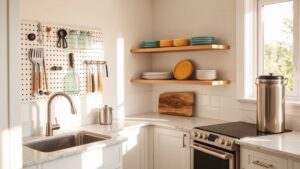
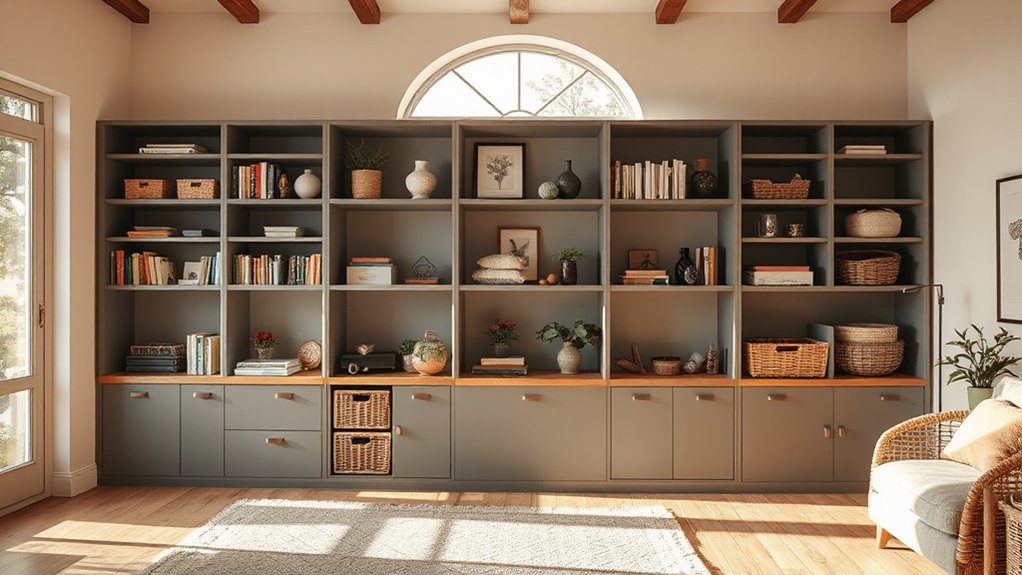

Tackle clutter in busy family rooms with slim, modular shelves that fit your space and leave sightlines clear. Start by measuring alcoves and traffic flow, then choose adaptable units you can stack or flank walls. Hide items in shallow drawers, pull-out bins, and hidden compartments, all with uniform labels. Blend storage with decor using color-blocked bins and baskets, topped with staggered shelves for easy access. Keep routines simple; small daily checks keep chaos at bay and calm within reach, too. Keep exploring for more tips.
Key Takeaways
- Use modular, shallow shelves with hidden pull-out bins to conceal everyday clutter while keeping items easily accessible.
- Combine color-blocked baskets and uniform lids to create cohesive storage that blends with decor.
- Add slim, shallow drawers on flat surfaces to hide small items like remotes, chargers, and craft supplies.
- Customize vertical space with staggered shelf heights to create functional zones that minimize visible mess.
- Label bins and implement simple daily routines to maintain organization and reduce recurring clutter.
Pinpoint the Clutter Pain Points in a Busy Family Room

Think back to a typical evening in your family room: toys spill from baskets, magazines pile up, and the remote keeps slipping behind the couch. You’re not imagining the chaos; you’re identifying it.
Start by mapping hotspots: the coffee table, sofa arms, entryway shelves. Notice where entertainment clutter gathers and where small items vanish. Ask yourself what you reach for most, and what you never touch.
Then label the problem areas: quick-grab zones, kids’ play zones, and gift-turned-ditch spaces. Prioritize fixes that balance ease and access, like simple toy organization ideas and discreet storage that keeps essentials within reach without crowding your sightline.
With clear zones, you’ll regain flow, reduce friction, and enjoy calmer evenings.
Pick Modular Shelf Systems That Fit Your Space
Choose modular shelf systems that fit your space precisely, so you can tailor storage without overhauling your room.
Start by measuring your alcoves, wall widths, and floor clearances, then look for adaptable components that work with what you have.
With flexible options, you’ll create a clean, functional setup that grows with your needs.
Fit Your Space Precisely
To fit your space precisely, start with modular shelf systems that can be configured to your exact dimensions and needs. Choose units you can stack, rotate, or flank against walls to minimize wasted gaps.
Measure doorways, windows, outlets, and baseboards, then map a layout that keeps traffic clear and sightlines open. Prioritize modular panels and adjustable shelves that accommodate current belongings and future shifts.
Consider vertical height to maximize storage without crowding the room, and use shallow, open shelving for frequently used items.
Plan furniture arrangement first, then place shelves to complement flow and focal points.
Lighting enhancement should guide placement: align shelves with lamps or wall fixtures to reduce shadows.
Stay concise, purposeful, and organized for a clean, clutter-free space.
Modular Options For Flexibility
Modular shelf systems offer flexible ways to fit any space, letting you mix and match units to match your layout and storage needs. When you plan, consider height, width, and depth to avoid crowding doors or outlets.
Flexible configurations let you scale from a single wall island to a whole room centerpiece, so you can grow as your storage demands shift. Look for modular designs that snap together or stack without tools, saving time during rearrangements.
Choose customizable modules that let you reconfigure shelves, drawers, and cabinets as hobbies or kids’ tactics change. Prioritize sturdy construction and simple hardware—adjustable shelves reduce wasted space and accommodate tall books or bulky decor.
With thoughtful selection, your shelves stay neat, adaptable, and visually cohesive.
Hide Clutter With Drawers and Pull-Out Storage
A quick way to hide clutter is to add drawers and pull-out storage wherever you already have flat surfaces. You’ll gain instant concealment and better daily use of space. Choose slim, shallow drawers for entryways, coffee tables, and under-desks to keep items out of sight yet accessible.
For larger surfaces, install pull-out bins or trays that slide smoothly on ball bearings, reducing visual clutter without sacrificing function. Emphasize Hidden compartments to tuck seasonal gear, chargers, and craft supplies out of view.
Keep Drawer organization simple: label each bin, use uniform liners, and group related items together. Opt modular, stackable units that align with your existing lines for a cohesive, tidy look that’s easy to maintain.
Blend Storage With Decor Using Color-Blocking and Baskets
Color-block storage guides the eye while keeping essentials within reach, so you can define zones without crowding shelves.
Pair those blocks with decorative baskets to add texture and a cohesive look, letting color do the organizing for you.
Start simple: choose two or three hues and a few baskets to balance storage and style.
Color-Block Storage
Use solid-colored bins for bulky items and pair them with textured baskets to add warmth without blowing the budget. Prioritize color coordination to avoid visual chaos; rotate seasonal pieces to keep the look fresh without overloading shelves.
When choosing containers, consider material choices that align with your room’s vibe—matte ceramic, woven fibers, or smooth plastics all read differently, yet stay cohesive. Maintain clear labeling or uniform lids so you can locate items quickly.
The result is practical storage that supports daily life and looks polished.
Decorative Baskets Blend
Decorative baskets offer a flexible, stylish way to blend storage with decor while keeping color-blocking benefits intact. You’ll pair sturdy, woven baskets with bold hues to create zones that feel intentional, not cluttered.
Choose sizes that fit your shelves without crowding, then group by purpose—baskets for throws, bins for toys, baskets for magazines.
Use color blocking techniques by assigning a color family to each shelf or cluster, so the eye follows a clean rhythm rather than chaos.
Keep lids and grip handles visible to maintain accessibility, and line interiors with fabric to prevent snagging.
Rotate contents seasonally to refresh the look without buying new pieces.
With thoughtful placement and consistent palettes, your shelves stay organized and inviting.
Design Accessible Zones With Staggered Shelf Heights
Designing accessible zones with staggered shelf heights helps everyone reach what they need without stretching or bending. You can map function first: place frequently used items at mid-height, seldom-used decor higher, and heavy objects lower for easy lifting.
Use staggered shelving to create visual anchors that guide kids and adults alike, reducing clutter as you grab what you reach most. Keep edges softened with rounded brackets or removable liners to protect little hands.
Label bins or color-code sections so family members know where to return items. Plan around everyday tasks—snack stations at mid-level, homework supplies within arm’s reach, and charging zones near outlets.
With accessible zones and staggered shelving, workflows feel smoother, and rooms stay tidier without fuss.
Maintain Tidiness: Tips and Routines for Long-Term Order

Maintaining tidiness isn’t a one-off project; it’s a steady routine you can weave into daily life. By adopting simple Organizational techniques and consistent Cleaning schedules, you reduce clutter before it builds. Set clear expectations, limit daily touchpoints, and honor quick reset moments to keep momentum.
- Use a daily 5-minute check: return items, wipe surfaces, and close bins.
- Establish a weekly purge block: remove unused items, rotate contents, and adjust shelves.
- Create a monthly audit: review zones, update labels, and refine storage habits.
These steps turn upkeep into protection rather than punishment. When routines feel doable, you stay on track without friction, making the shelf hacks truly long-lasting and clutter-free.
Frequently Asked Questions
How Can I Measure for Modular Shelves Without Remodeling?
You measure for modular shelves by using measuring tools to plot space planning, then note wall and floor clearances. Start with a tape measure, level, and stud finder; confirm weights, simulate placement, and adjust for doorways or obstacles.
What Materials Keep Shelves Kid-Friendly and Durable?
Like sturdy oaks, you’ll choose childproof finishes and sturdy wall mounts, ensuring durability. You’ll select kid-friendly materials, apply non-slip coatings, and secure shelves firmly, so you stay confident, practical, and reassured that clutter stays contained.
Can Hidden Storage Still Feel Accessible for Daily Use?
Yes, hidden storage can stay accessible with smart placement and labeled compartments. You’ll maintain an Accessibility balance by using hidden compartments near daily-used items, keeping pull-outs smooth, and choosing shallow, clear sections for quick, confident access.
How Do I Monetize Style While Concealing Clutter Effectively?
You monetize style by showcasing decor styling that blends function with visuals, while clutter concealment stays seamless. Highlight practical, polished solutions, reassure clients you’ll balance aesthetics and utility, and package tips that feel accessible, stylish, and ready for daily use.
What Maintenance Routine Keeps Shelves Visually Tidy Long-Term?
You should schedule a quick daily wipe, weekly dusting, monthly declutter, and midseason reorganization to keep shelves visually tidy long-term. Maintain decor organization, adjust shelf lighting, and you’ll feel calm, confident, and in control every day.
Conclusion
You can turn a busy family room into calm, usable space by choosing modular shelves, hiding clutter in drawers, and blending storage with decor. Start with clear zones, then stack-and-slide your way to order. For example, a family of four reshaped a high-traffic corner with a staggered shelf layout and pull-out bins, cutting visual clutter by half within a week. Stay consistent with a simple daily tidy routine, and the shelves will stay both stylish and functional.