
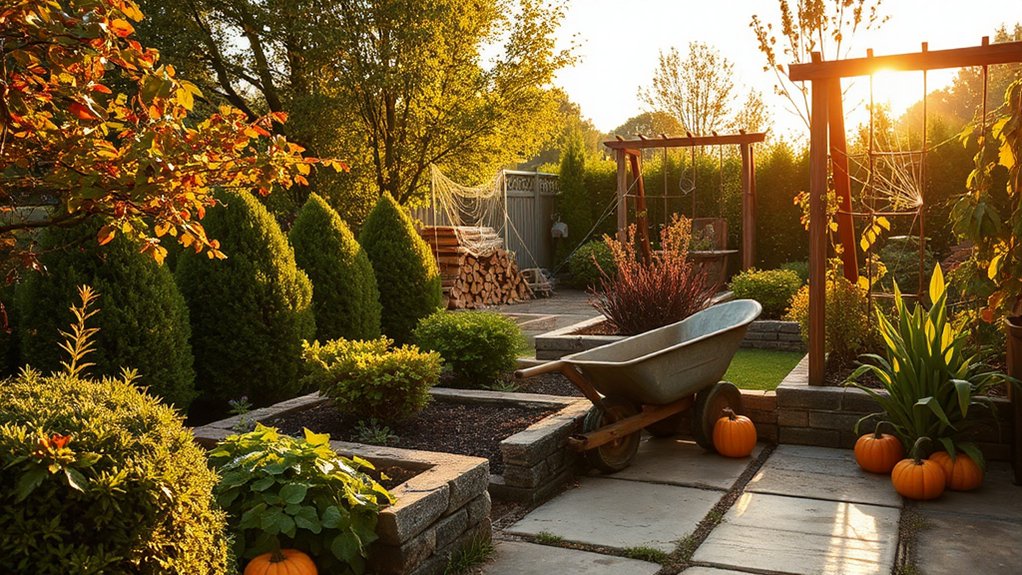

As autumn signals cooler days, you’ll want to define clear fall goals, refresh soil with testing and compost, and keep moisture steady for root establishment. Tidy beds, divide overcrowded perennials, and plant quick-harvest cool-season greens like arugula and spinach. Install focal points visible in dusk, add durable, weather-ready lighting, and mulch deeply to regulate temperature. Protect hardy ornamentals from frost with row covers. A simple fall maintenance schedule will keep your space resilient as days shorten—more tips await if you keep exploring.
Key Takeaways
- Plan a practical timeline for early autumn tasks, prioritizing lighting, decor, and plant selection to extend outdoor usability into cooler days.
- Install durable, weather-ready lighting and focal features visible at dusk to create evening interest.
- Mulch deeply (3–6 inches) with organic materials to regulate soil temperature and conserve moisture during cooler spells.
- Protect frost-tender plants with row covers, mulch around crowns, and temporary shelters as forecasts indicate cold snaps.
- Prepare soil and plants for fall growth by testing pH, improving soil with compost, and sowing cool-season greens every 1–2 weeks.
Define Your Fall Garden Goals

Setting clear goals now keeps your fall garden focused and achievable. You’ll map what you want to accomplish this autumn, from color shifts to extended season interest.
Start with a simple inventory: which spaces need more definition, and what functions should they serve? Define measurable targets—how many weeks of bloom, anticipated frost dates, and minimum hardiness tolerance.
Consider garden decor ideas you’ll actually use, and how outdoor lighting can extend daily use. Prioritize tasks that deliver the biggest impact with your time and budget, then sequence them into a practical timeline.
Align each goal with a concrete action, like selecting a pollinator-friendly palette or installing low-voltage lighting for pathways. This clarity keeps decisions purposeful and your project steadily moving forward.
Assess and Refresh Soil for Cooler Weeks
To prepare your beds for cooler weeks, start by evaluating soil health and moisture, then refresh where needed. You’ll assess texture and drainage, looking for compaction that blocks root growth. If the soil feels heavy or stays wet after rain, loosen it with a light pass of a broadfork or garden fork, avoiding deep disruption.
Conduct soil testing to gauge pH and nutrient balance, then interpret results to guide amendments. Add compost enrichment to boost organic matter, improve moisture retention, and feed soil biology. Follow recommended rates, incorporating evenly for uniform distribution.
Schedule amendments ahead of plantings to minimize stress. Keep a consistent moisture plan, avoiding extremes while roots adjust. With precise soil care, your beds will be ready for fall crops and longer-term health.
Tidy Beds and Divide Overcrowded Perennials
As autumn arrives, you’ll tidy beds first so paths stay clear and plants stay organized.
Then, you’ll identify overcrowded perennials and divide them to restore vigor and maintain bloom power.
Start now, with clean cuts and careful spacing, to keep your borders balanced through the season ahead.
Tidy Beds Now
Now is the time to tidy beds and divide overcrowded perennials before they lose vigor, crowd their neighbors, or fall prey to disease. You approach cleanup with purpose: remove expired foliage, deadhead where appropriate, and clear fallen debris that harbors pests.
Focus on Garden cleanup as a practice, not a chore, and keep pathways crisp for safe harvests and seasonal upkeep. Rejuvenate plantings by dividing crowded clumps, preserving strongest central crowns, and replanting at appropriate depths to encourage steady growth.
Prioritize Bed organization by labeling sections and spacing plants to current mature size. Each action reduces competition, improves air circulation, and lowers maintenance later.
Finish with a neat mulch layer, early-season protection, and a plan for ongoing tidy beds through autumn.
Divide Overcrowded Perennials
If your perennials are crowded and competing for space, now’s the moment to divide them to restore vigor and airflow. You’ll gain stronger plants, better flowering, and easier maintenance as the season cools.
Start by choosing a sturdy, healthy clump and water the bed the day before. Dig wide around the plant to avoid damaging roots, then lift the rootball gently. Use a sharp knife or spade to cut the crown into several sections, ensuring each division has several shoots and healthy roots.
Replant at the same depth, water deeply, and mulch to conserve moisture. For future success, practice perennial propagation during this window and label divisions.
Apply proven plant division techniques and monitor for new growth, adjusting feeding as needed.
Plant Cool-Season Greens for Quick Harvests
For quick results, start with leafing greens that germinate fast and tolerate cool nights, using the Quick Germination Tips to lock in moisture and speed establishment.
Plan your Leafy Greens Sowing schedule so you have a steady succession, then reference the Harvest Window Calendar to time cuts for ongoing freshness.
Target a continuous harvest by sowing every 1–2 weeks and pruning outer leaves to encourage new growth.
Quick Germination Tips
Warm-season crops may color the garden, but quick-germinating cool-season greens get you fast, fresh harvests. Start by choosing fast-growing varieties like arugula, spinach, and baby lettuce mixes.
To optimize germination, prep your beds with light, well-draining soil and keep surface moisture even. Seed starting should be shallow, just 1/4 inch deep, and covered lightly; use a gentle press to ensure good seed-to-soil contact.
Maintain soil temperature around 40–70°F to encourage uniform sprouting. Use a transparent lid or netting to regulate humidity and reduce damping-off risk.
For accurate outcomes, perform soil testing and adjust with balanced amendments before sowing.
Monitor daily, thin seedlings to the strongest individuals, and harvest baby greens as soon as leaves reach usable size.
Leafy Greens Sowing
Want quick harvests from cool-season greens? Start sowing leafy greens now for rapid returns. Choose compact varieties like lettuce, arugula, spinach, and baby kale to maximize space and speed.
Prepare rich, well-drained soil and sow shallowly in rows or blocks, then cover lightly. Keep soil consistently moist to germinate in cool air, and use row covers to shield against early cold snaps.
Companion planting boosts performance: plant greens near herbs or legumes to deter pests and improve overall vigor. Space plants to allow sufficient air circulation, reducing disease risk.
Mulch after emergence to retain moisture and suppress weeds. As harvest nears, pick outer leaves first to encourage continued growth, ensuring a steady supply of fresh, crisp leafy greens.
Harvest Window Calendar
A practical harvest window makes it easy to plan your cool-season greens for quick returns. A Harvest Window Calendar helps you lock in harvest timing so you maximize yields between frosts and heat waves. Track days to maturity for each variety and align sowing with your local frost dates, ensuring you pick greens at peak flavor.
Use a simple grid: crop, sow date, expected harvest, and window length. Prioritize succession sowing to maintain consistent harvests throughout autumn. Pair this with crop rotation to reduce disease pressure and soil fatigue; rotate greens with legumes or root crops to replenish nutrients.
Update the calendar after every harvest to refine timings and optimize space. This approach keeps your patch productive, efficient, and ready for cooler days.
Divide and Rehouse Time-Saving Perennials

Dividing and rehoming time-saving perennials now keeps your beds tidy and plants vigorous for next season. You’ll improve air circulation, reduce disease, and create space for stronger roots.
Start by selecting healthy clumps, using a sharp knife or garden spade to split them into multiple crowns with several healthy buds. Replant divisions at the same depth, water thoroughly, and mulch lightly to stabilize temperature.
For containers, divide perennials into fresh pots or larger containers, ensuring good drainage and a quality potting mix. Label each division to track care needs, especially if you’re building a diverse display for container gardening or wildlife habitat benefits.
Move plants to a protected spot if frost threatens and monitor moisture as soils settle.
Mulch Deeply to Protect Roots and Soil Moisture
Mulching deeply protects soil moisture by creating a durable barrier that reduces evaporation and locks in humidity.
This layer also acts as a soil-temperature shield, moderating swings that can stress roots.
Deep Mulch Benefits
Applied correctly, deep mulch keeps roots cooler, reduces soil moisture evaporation, and protects soil life through the hottest parts of autumn.
Deep mulch benefits go beyond temperature control. You’ll improve soil structure, boost microbial activity, and extend the life of plantings with less irrigation. Use a thick, even layer to promote consistent moisture and weed suppression, while allowing air to reach roots.
For best results, align mulch depth with plant size and root zone.
- Apply 3–4 inches of organic mulch for established beds.
- Refresh annually to maintain coverage and compost layering.
- Keep mulch a finger’s width away from stems to prevent rot.
- Reassess and adjust to maintain even moisture distribution.
This approach yields healthier soil, fewer weeds, and a more resilient autumn garden.
Soil Moisture Shield
Moisture loss is one of the biggest autumn garden risks, and deep mulch acts as a shield that keeps roots cool and soil humidity stable. You’ll protect plant vigor by laying a thick, even layer of mulch over the root zone, not against the stem. Aim for 2 to 4 inches, depending on mulch type, and avoid gaps that let erosion or sunlight reach the soil.
As mulch settles, it moderates soil temperature, reduces evaporation, and supports consistent soil moisture for roots and beneficial organisms. Check moisture levels regularly, adjusting thickness if rain remains scarce.
This practice supports garden hydration, minimizes irrigation needs, and promotes steady growth through shifting autumn conditions. Replenish annually or after heavy rains to maintain continuous protection.
Roots Temperature Guard
Have you noticed how a deep mulch layer shields roots from temperature swings and preserves soil moisture? A robust mulch acts as a practical Roots Temperature Guard, moderating soil temperature and reducing evaporation.
Focus on applying a uniform blanket 4–6 inches thick around tree bases, shrubs, and perennial beds to promote Root insulation and soil cooling during warm autumn days and approaching cold snaps.
- Choose organic mulch (wood chips, shredded leaves) for gradual decomposition.
- Spread evenly, avoiding piling against trunks to prevent rot.
- Replenish as mulch settles to maintain depth.
- Inspect for compaction after heavy rains and loosen gently.
This approach keeps roots protected, preserves moisture, and supports steady nutrient uptake without excess effort.
Prune for Plant Health and Year-Round Appearance
Pruning for plant health and year-round appearance isn’t about chasing a perfect shape—it’s about strengthening structure and encouraging steady growth. You’ll prune to remove dead, diseased, or crossing branches, which improves airflow and reduces pathogen risk.
Focus on main scaffold branches, keeping a balanced, open canopy that light can reach. Use clean, sharp tools and make cuts just above outward-facing buds to foster outward growth.
Pruning techniques should prioritize health first, appearance second, so you maintain plant vigor across seasons. As growth slows this autumn, trim selectively to reduce stress on signals of vigor, not to perform cosmetic edits.
The plant health benefits include reduced pest pressure and more resilient structure, supporting year-round form while preparing shrubs and small trees for cooler days.
Install Focal Points for Shorter Days

As days shorten, you’ll want garden focal points that guide the eye and anchor interest despite waning light. Install focal points that read clearly in dusk, using contrast, scale, and placement to maximize impact during shorter day lighting.
Prioritize elements that attract attention from multiple angles and create a cohesive narrative across borders and paths. Focal point selection should balance visibility with subtlety, ensuring nighttime presence without glare.
Consider lighting accents that render textures and colors when daylight fades. Use durable materials and weather-ready finishes to maintain impact season after season.
- Choose a bold centerpiece
- Position along sightlines
- Layer lighting for depth
- Vary textures for mood
Prepare Hardy Ornamentals for Frost
When frost threatens, you’ll prep hardy ornamentals to endure first freezes and late-season cold snaps. To begin, identify frost resistant plants that perform well in your climate and schedule their protection as nights cool.
Use sturdy mulch around crowns to insulate roots, and apply a light layer of organic mulch to deter rapid temperature swings. Mulch also reduces soil moisture loss, helping perennials stay vigorous.
Consider temporary shelters, like breathable row covers or DIY cloches, for extended cold snaps, ensuring air can circulate.
Water thoroughly before forecasts drop, but avoid overwatering that fuels rot.
For evergreen ornamentals, wrap trunks with burlap if winds intensify.
Maintain ornamental plant protection through careful monitoring, removing covers on milder days to prevent moisture buildup.
Pest Prevention for Mild Fall Afternoons
As fall afternoons ease into milder warmth, pests can still pose trouble for the garden if you ignore them. To protect foliage, target common seasonal pests with practical tactics that stay effective as temps drop.
Start by promoting beneficial insects and reducing attractants. Then implement proactive, low-effort measures you can sustain through October and beyond. Below, a concise plan:
- Plant a dedicated Ladybug habitat to attract beneficial beetles that keep aphids under control.
- Inspect and remove decaying material that can harbor pests before they establish.
- Use Organic repellents on susceptible plants, following label directions for safe, repeated use.
- Monitor daily, logging trouble spots and adjusting rotations to prevent outbreaks.
With disciplined steps, you guard plants while preserving garden balance and performance.
Create a Simple Fall Maintenance Schedule

A simple fall maintenance schedule keeps your garden tidy and productive as temperatures cool. Start with a weekly rhythm: quick weeding, tool inspection, and debris removal to prevent pests.
Map watering to seasonal needs, drying soils in late summer, then moderate, consistent moisture as days shorten. Prioritize pruning for structure and airflow, and note any diseased branches for later removal.
Allocate a monthly checklist for composting tips—layer greens and browns, turn lightly, and monitor moisture to accelerate decomposition without odors.
Incorporate garden decor thoughtfully; rotate containers, clean gourds or ornaments, and store fragile pieces before frost.
Schedule soil tests and amend as needed, ensuring organic matter remains active.
Finish with a fall cleanup that leaves beds ready for spring, reducing effort when you’re busy with harvests and holidays.
Frequently Asked Questions
How Soon Can I Plant After a Hard Frost Warning?
You can replant once frost warning passes and soil is workable, typically after 1–2 weeks of above-freezing lows. Prioritize frost resistant plants and adjust your Autumn planting schedule to avoid cold snaps.
What Is the Best Mulch Depth for Soil Protection?
Mulch depth should be about 2–4 inches. You’ll protect soil with proper mulch installation and promote soil layering stability; don’t overthink it, just avoid piling against stems. You’ll maintain moisture, suppress weeds, and preserve roots efficiently.
Which Perennials Are Easiest to Divide in Autumn?
You’ll find that hostas, irises, and peonies are easiest to divide in autumn. Use careful Perseverant spacing, and apply perennial propagation techniques. Employ autumn dividing techniques, and you’ll preserve vigor while expanding your borders with confident, pragmatic results.
When Should I Prune to Avoid Transplant Shock?
Pruning timing matters: prune when plants are dormant or just starting to leaf out, and you’ll reduce transplant shock prevention. You’ll protect roots, improve healing, and promote steady establishment, pruning gently, precisely, and consistently for best results.
How Can I Extend Color Into Late Autumn Weekends?
To extend color on late autumn weekends, you should plant seasonal color schemes that include late bloomers and protect them with mulch; you’ll enjoy continuous hues as days shorten, keeping your beds vibrant and cohesive through season shifts.
Conclusion
As you rush to “finish” your fall prep, remember: nature loves a good deadline too. You’ll prune, mulch, and plant with all the confidence of someone who read a guide once and now owns a very confident shovel. But if frost arrives early, don’t panic—just pretend you meant to draft a backup plan all along. The garden adapts; your 75-word conclusion won’t. Still, you earned the glow of orderly beds and a schedule you actually might keep.