


To help your garden shift smoothly into autumn, extend color by choosing hardy perennials that bloom again in fall and by layering textures with ornamental grasses and bronzy foliage. Shape beds for easy cleanup and install weed barriers or mulch to stabilize soils. Prioritize watering during drier weeks, add soil amendments now, and apply protective mulch to borders. Set seasonal hardscaping that directs foot traffic and highlights focal points. For more step‑by‑step guidance, you’ll uncover practical, proactive actions soon.
Extend Color This Fall: What Autumn Garden Transition Really Means

Autumn is a passage period that demands a deliberate strategy to extend color in your landscape, not just a quick bloom. You’ll extend color by selecting varieties with proven fall performance and staggered bloom times, ensuring continuous interest from late summer into frost.
Focus on foliage transformation: choose shrubs and perennials that shift red, amber, or plum as days shorten, and place them where eye travel naturally occurs.
Maintain seasonal scent enhancement by incorporating plants with subtle fragrance during cool evenings, like certain herbs and flowering shrubs.
Schedule irrigation and fertilization to support sustained pigment development without encouraging excessive vegetative growth.
Prune selectively to promote strong structure, not dense canopies, and monitor for pests that accelerate color fade.
This method yields reliable, extended color with minimal maintenance.
Plant Hardy Perennials Now to Keep Fall Blooms Coming
Start now to plant hardy perennials that tolerate autumn stress and set the stage for continued blooms.
Choose cold-resistant favorites that extend color, then space and time plantings to guarantee steady display through late fall.
This approach keeps your beds cohesive while you extend fall blooms graciously.
Plant Hardy Perennials Now
Space plants according to mature width to reduce crowding and competition for resources. Apply a light, balanced fertilizer early to encourage steady establishment, then monitor for nutrient deficiencies and adjust with targeted Fertilizer application as needed.
Mulch to moderate soil temperature and conserve moisture, but avoid mounding up against crowns. Establish robust Pest control practices by inspecting for common overwintering pests and using preventive measures, such as barrier fabrics or beneficials, rather than reactive treatments.
Water deeply during dry spells to promote deep roots. Finally, stagger planting to maintain continual bloom windows through late-season progressions.
Extend Fall Blooms Graciously
To extend fall blooms gracefully, you’ll select hardy perennials that sustain color as days shorten and nights cool. Choose cultivars known for late-season vigor, such as sedums, asters, and tulips progressing to fall-blooming species, guaranteeing multi-season interest.
Before planting, assess site light, soil drainage, and moisture; amend with compost to improve structure and nutrients.
Space plants according to mature width to avoid crowding and ensure airflow, which reduces disease risk.
Implement staggered bloom timing by mixing early- and late-season perennials, and mulch to conserve soil temperature while moderating moisture.
Integrate moss gardens near reflective surfaces to add texture without competing for nutrients.
Use garden sculptures as focal points to draw eye toward enduring color.
Water deeply during establishment, then monitor for signs of stress and adjust care promptly.
Choose Cold-Resistant Favorites
As autumn temps dip, you’ll want hardy perennials that tolerate cold snaps and keep color reliable the longer into fall. Choose cold-resistant favorites now to sustain bloom rhythm and reduce maintenance later. Select species with proven frost tolerance and strong root systems; these endure fluctuating temps and wind exposure while delivering steady color. Incorporate prudent soil management and pest surveillance to maximize performance.
- Hardened over summer perennials with late-season bloom potential
- Planting window timing to align with first frosts for root establishment
- Integrated practices: soil amendments, garden pests management, and mulch strategies
Apply targeted soil amendments before planting, monitor for slug and vole activity, and adjust watering to prevent root stress. Maintain annual patient observation to refine selection for ongoing color display.
Texture Tricks to Carry Fall Color With Ease
Texture adds depth to your autumn display, making color shifts read smoothly from curb to garden.
By layering foliage with varied textures, you’ll achieve a cohesive palette that carries fall hues with minimal maintenance.
Use contrasting leaf forms and surface textures to enhance interest while keeping color changes focused and deliberate.
Texture Adds Depth
- Texture contrasts with contrasting finishes (matte vs. polished) to highlight key planting areas.
- Tactile garden elements (rough bark, ribbed stone, wire mesh) invite interaction and year-round interest.
- Layered plant textures (fine, medium, bold foliage) create depth without clutter.
This approach prioritizes a tactile, durable aesthetic that remains legible as light changes and colors soften.
Color Transitions Easily
Color shifts in autumn rely on pairing textures that carry color through fading light and cooler days. You can achieve smooth gradations by selecting plant materials with complementary and contrasting textures that persist after peak pigment.
Prioritize color blending across late-season bloomers, berries, and foliar tones to maintain visual continuity as daylight shortens. Use foliage contrast to separate foreground interest from background drifts, leveraging glossy against matte surfaces and fine versus broad leaves.
Combine woody stems with herbaceous perennials to sustain structure while color evolves occur. Maintain practical spacing so emerging tones aren’t overshadowed, and choose cultivars with extended leaf color, not just autumn flowers.
This disciplined approach yields cohesive, enduring interest without abrupt changes.
Layered Foliage Appeal
Layered foliage creates immediate impact by combining different leaf forms, tones, and textures in a single view. You’ll optimize autumn color by balancing foliage contrast and leaf stratification across plant strata.
Start with a dominant backdrop of large, matte leaves, then tuck lighter textures in toward the foreground to create depth and interest. Use a cool-to-warm progression to maintain legibility as colors shift.
- Combine glossy, serrated leaves with soft, lobed varieties for dynamic texture.
- Pair dark greens with bronze or chartreuse accents to heighten foliage contrast.
- Place medium-height shrubs behind groundcovers to reinforce leaf layering without crowding.
This approach yields a structured, durable progression, ensuring fall color remains legible from multiple viewpoints throughout the season.
Shape Beds and Edges for Easy Autumn Cleanup
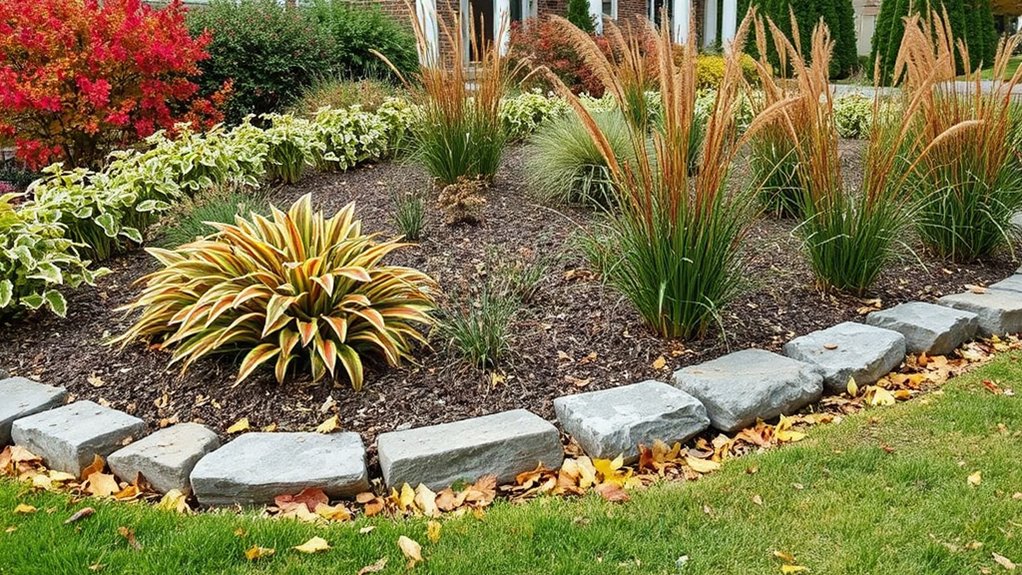
To streamline autumn cleanup, shape your beds and define crisp edges now, then maintain them through the season. Start with a surveyed layout, using straight or gently curved lines that minimize debris traps and restrict grass encroachment. Cut cleanly with an edging tool or mechanized trimmer, and notch corners to shed leaves toward open beds rather than overlapping borders.
Establish a consistent mulch depth to suppress weeds while easing leaf fall cleanups. Integrate garden art as a visual anchor that guides maintenance paths, preventing overgrowth from hiding critical edges.
Guarantee irrigation systems are mapped and kept clear of line clutter, so seasonal runoff doesn’t undermine bed shape. Schedule quarterly edge checks, re-define once, and implement a simple seasonal rotation to preserve tidy lines throughout autumn.
Watering and Soil Prep for Drier Weeks Ahead
As drier weeks approach, prioritize deep but efficient watering and soil conditioning to preserve moisture and root health. You’ll want to target the root zone, apply slow, thorough irrigation, and avoid surface runoff.
Assess drainage and amend compacted soils with organic matter to improve structure and infiltration. Implement drainage solutions to prevent waterlogging after rare rainfall and to maintain steady moisture levels in drought periods.
Use composting methods to boost microbial activity and nutrient availability, enriching soil tilth for improved water retention and nutrient uptake.
- Deep, slow irrigation focused at the root zone
- Organic amendments to enhance structure and drainage
- Composting methods to sustain nutrients and soil life
Smart Plant Pairings for Continuous Fall Blooms
Pair up varieties with overlapping bloom windows to guarantee continuous color through autumn, focusing on Night-Falling Color Timers and Late-Bloom Continuity Strategies.
Choose pollinator-friendly plant pairings to sustain activity as days shorten, while coordinating with practical spacing and sun exposure guidelines.
We’ll outline concrete pairings and timing to keep blooms steady from late summer into frost.
Night-Falling Color Timers
- night fall light sequencing for staged color
- color timers synchronized with soil moisture feedback
- irrigation pulses that align with petal fatigue cycles
This system delivers reliable, energy-efficient performance, minimal maintenance, and consistent fall color without overwatering or light spill into adjacent beds.
Pollinator-Friendly Plant Pairings
Prioritize taxa known for robust fall performance, such as late-summer to early-fall bloomers, and guarantee companion species don’t compete for the same resource. Structure beds to form small wildlife corridors, enabling easier pollinator movement between flowering zones.
Use diverse textures to reduce pest hotspots while maintaining accessibility for maintenance. Implement pest deterrents, like companion herbs and aromatic foliage, to minimize chemical reliance.
Monitor bloom overlap and adjust species as needed to sustain continuous forage without collapsing soil structure or water demand.
Late-Bloom Continuity Strategies
To guarantee continuous fall blooms, select smart plant pairings that stagger nectar availability while matching soil, sun, and moisture needs. You’ll synchronize bloom windows by combining early-season nectar sources with late-spring flushers, ensuring phased flowering through autumn.
Prioritize durable perennials and dependable annuals that tolerate your site’s light and drainage, then align water and fertilizer to avoid stress gaps. Incorporate pest control measures alongside winter prep, so plants emerge resilient after frost.
Establish a layered palette that shifts from bright late-summer tones to subdued autumn hues, reducing maintenance while maintaining attractants for pollinators.
- Choose compatible bloom windows
- Pair disease-resistant varieties
- Schedule winter prep and pest control integration
Mulches and Groundcovers That Protect Borders All Season

Mulches and groundcovers protect border edges all season by suppressing weeds, moderating soil temperature, and reducing moisture loss. You implement organic mulches like shredded bark or composted leaves to gradually release nutrients while keeping root zones stable.
For evergreen borders, you balance mulch depth to avoid suffocation, typically 2 to 4 inches, and keep mulch a few centimeters away from trunk collars to prevent rot.
Groundcovers, such as low-growing, dense varieties, form living barriers that resist erosion and suppress weed pockets between edging stones. Moss blankets provide year-round carpeting that moderates moisture fluctuations in shady borders.
Gravel accents create well-drained microhabitats for drought-tolerant edges. Regular top-ups and seasonal weeding maintain consistent performance across changing temperatures.
Quick Autumn Cleanup Routines for Tidy Beds
As autumn cools the air, you can tighten border cleanliness without sacrificing the protections you’ve built with seasonal mulching and groundcovers. Quick cleanup routines help you maintain tidy beds while preserving soil health and pest deterrents.
- Remove spent blooms and spent foliage selectively, composting where appropriate to limit disease spread.
- Trim back single-season stems, then sweep debris to prevent overwintering pests and improve garden decor aesthetics.
- Apply a light, targeted mulch refresh around perennials to stabilize temps, suppress weeds, and reduce soil erosion.
These steps keep borders neat, support pest control by removing concealment, and preserve mulch benefits. You’ll gain clearer bed lines, easier spring prep, and a dependable base for next season’s growth.
Build Structure: Seasonal Hardscaping and Focal Points
Strategic hardscaping frames seasonal shifts by creating durable structures that guide movement and highlight focal points. Start by evaluating sightlines and access to guarantee paths, seating, and borders work with mature plants and upcoming textures.
You’ll implement robust materials—pavers, edging, and retaining features—that tolerate weather changes and foot traffic. Design focal points with intentional sight access: a seating nook, a specimen or garden art piece, and a wildlife-friendly corner that stays visible from multiple angles.
Use grade, drainage, and subtle lighting to extend usability into shorter days. Integrate signage or markers for seasonal blooms and ripe fruit, ensuring maintenance is straightforward.
Emphasize Wildlife habitat inclusion through native plant pockets adjacent to hardscape, and curate Garden art as harmonious visual anchors.
Autumn-to-Winter Action Plan: A Simple Next-Steps Checklist

Now that you’ve set the structure, outline a practical, prioritized action plan for the autumn-to-winter shift: list concrete tasks, assign realistic timeframes, and specify materials or tools needed. This checklist stays technical and concise, emphasizing efficiency and outcomes. Prioritize tasks by impact on Garden pests control, seasonal pruning readiness, and bed preparation. Use durable tools, sharp pruners, gloves, mulch, and protective coverings as needed. Allocate windows for survey, implement, and review, with clear success criteria and safety reminders. Track progress, adjust schedules, and store seasonal supplies for next year. Maintain documentation for inspections and pest signs, ensuring ongoing plant health through colder months.
- Inspect plant beds and prune with sharp secateurs, labeling cuts and timelines
- Apply mulch and protective covers; schedule weed and pest checks
- Prepare irrigation shutoff, winterize hoses, and stock replacements
Frequently Asked Questions
How Soon Should I Prune After Peak Color Fades?
After peak color fades, prune promptly within 2–3 weeks if you see new growth; delaying risks disease. For Fall foliage, make sure you prune timing aligns with species’ dormancy patterns; use clean tools and disinfect between cuts.
Can I Mow Perennials for Autumn Regrowth?
Yes, you can mow perennials for autumn regrowth. Use a light, selective cut, leaving stems 2–4 inches tall. Avoid damaging crowns, and fertilize lightly afterward to stimulate steady Autumn regrowth while maintaining root health and vigor.
Which Mulch Lasts Longest in Cold Climates?
Cold climate mulch lasts longest, offering superior insulation and moisture retention. You should choose by mulch durability, favoring chunky bark or hardwood compost blends. For practical guidance, monitor soil temp, replenish annually, and prioritize durable, slow-decomposing options.
Do Annuals Help Extend Fall Color More Than Perennials?
Annuals extend fall color slightly more than perennials, with a 20–30% brighter display in the first October weeks. You’ll maximize fall foliage impact and seasonal color by staggered planting and selecting heat-tolerant varieties for succession.
Is Drip Irrigation Better Than Sprinklers in Autumn?
Yes, drip irrigation is better in autumn for water efficiency and pest control, because you minimize runoff and leaf wetness. You’ll improve targeted watering, reduce fungal risks, conserve water, and maintain soil structure during seasonal shifts.
Conclusion
As you implement these autumn shifts, you’ll see color, texture, and structure align with ease. Prioritize hardy perennials now, shape beds for cleanup, and set up mulches, groundcovers, and irrigation for drier weeks. Establish clear routines: quick cleanup, seasonal hardscaping, and a simple next-steps plan. Stay proactive and methodical—because preparation today prevents problems tomorrow. An adage to keep in mind: slow and steady wins the race. Maintain accuracy, measure outcomes, and adapt as conditions change.