


Transform your UK outdoor space into a year‑round, low‑maintenance retreat by smartly zoning for dining, lounging, and gardening, plus weather-ready finishes. Plan zones that suit sun and wind, choose modular, weatherproof furniture, and use lighting to extend usability after dark. Create low‑maintenance borders with hardy, damp-tolerant plants and smart irrigation. Prioritize privacy with hedges or screens, and layer pathways and seating for fluid movement. If you keep going, you’ll uncover more practical, climate-smart strategies.
Key Takeaways
- Plan multi-zone layouts that minimize maintenance and ensure smooth flow between dining, lounging, and gardening areas.
- Use weather-ready, modular furniture and durable materials with proper storage to extend usability year-round in UK climates.
- Create private, secure spaces with hedges, fencing, screens, and strategically placed lighting for year-round comfort.
- Choose low-maintenance, climate-appropriate plants and implement smart irrigation to conserve water and reduce upkeep.
- Enhance aesthetics with lighting, paving, and decorative elements while incorporating storage, pathways, and shaded areas for functionality.
Assess Your UK Outdoor Space for Year-Round Living

Prioritize zones that minimize maintenance while maximizing usefulness: define clear progressions between dining, lounging, and gardening spots, and guarantee accessible storage for tools and cushions.
Seasonal plant selection should align with your climate, assuring year-round interest and minimal fuss.
Assess drainage, wind protection, and surface durability to reduce upkeep and extend usage.
Plan for outdoor storage solutions that stay tidy and weather-resistant, keeping essentials close at hand.
Finally, map traffic flow, essential outlets, and power access to support year-round activities.
Plan Weather-Ready Zones for All Seasons
To create weather-ready zones that work year-round, translate your outdoor layout into clearly defined areas for dining, lounging, and gardening, each with adaptable elements for changing conditions. You’ll map zones to reflect sun paths, wind pockets, and sheltered nooks, then choose equipment that adapts.
Use weatherproof furniture in key seating and dining spots, prioritizing modular pieces you can rearrange as seasons shift. Layer shade, protection, and ventilation with pergolas, adjustable screens, and movable canopies that still feel integrated.
For aesthetics, incorporate seasonal decor that’s durable, not fragile, so it remains inviting through rain, frost, or sun. Store cushions and textiles properly, and keep a simple maintenance routine to extend life.
Your plan delivers flexible, year-round usability with minimal effort.
Layer Furniture and Lighting for Cozy, Multifunctional Areas
You’ll create cozy, multifunctional spaces by layering seating, textures, and lighting to adapt from sunlit mornings to evening gatherings. Start with a base of comfortable, weather-ready furniture and add varied lighting zones—ambient, task, and accent—to define zones without crowding.
This practical approach keeps your outdoor area versatile, stylish, and ready for any UK-season moment.
Layered Outdoor Comfort
Use outdoor decor to define zones without clutter, such as a rug that anchors a seating cluster or candle-style lanterns for evening pause. Garden art adds personality while remaining weather-ready, so pick pieces that tolerate rain and sun.
Guarantee cushions and textiles are water-repellent and easy to wipe clean. Plan textures and heights to invite lingering, but keep paths clear for flow. Prioritize sturdy bases, slip-resistant surfaces, and smart plugs for effortless control.
Multifunctional Lighting Zones
Mix lighting and furniture to carve cozy, multifunctional zones that adapt from casual lounging to dining or work moments.
In outdoor spaces, design zones with layered lighting that supports mood, visibility, and focus. Use ambient glow from wall wash or string lights to soften edges and create inviting atmosphere without glare.
Pair this with task lighting at dining nooks and work spots—think low-profile bollard lamps, shaded floor lamps, or directional LEDs—to guarantee clear, comfortable precision for meals, reading, or screens.
Furniture should be modular and grouped to define each zone, while keeping pathways open.
Accessoriz with dimmable controls and weather-rated fixtures to switch from relaxed evenings to productive days, enhancing usability without clutter or complexity.
Build Low-Maintenance Borders That Thrive Here
Consider damp-tolerant borders and choose low-maintenance plantings that still deliver texture and color throughout the seasons. You’ll favor shrubs and perennials that shrug off UK weather, with mulch to cut irrigation needs and suppress weeds.
Start with a simple plan that prioritizes resilience, then refine with occasional, easy-care maintenance to keep borders thriving.
Damp-Tolerant Borders
Use damp proof barriers at the soil interface to prevent rising moisture from wicking into edging and soil, keeping borders crisp.
Choose moisture resistant plants that tolerate shade, drizzle, and compact soil, such as ferns, hostas, and ornamental grasses for year-round structure.
Mulch lightly to conserve moisture without suffocating roots, and guarantee good drainage so water sits briefly then drains away.
Maintain with annual cleanups and minimal feeding, preserving a tidy, contemporary look that stays resilient through wet UK seasons.
Low-Mup Maintenance Plantings
Ever wondered how to create borders that stay tidy with minimal effort while thriving in UK conditions? You can achieve low-maintenance, robust borders by choosing hardy, low-skill routines and appropriate plantings.
Prioritize containers and ground borders that demand little water, pruning, or fuss, yet provide year-round structure. Embrace native species that support local wildlife and resist pests. Pair them with drought-tolerant options to reduce irrigation and deadheading.
Use mulches to suppress weeds and stabilize moisture. Think compact designer grasses, evergreen shrubs, and perennial natives for seasonal color. For flexibility, mix sizes in clumps and paths to maintain a tidy look with minimal upkeep.
- Choose native species and drought-tolerant perennials
- Layer with evergreens and grasses for year-round form
- Use mulch and smart irrigation in containers
- Plan simple pruning and clean edges for daily tidiness
Choose Climate-Smart Plants and Smart Irrigation
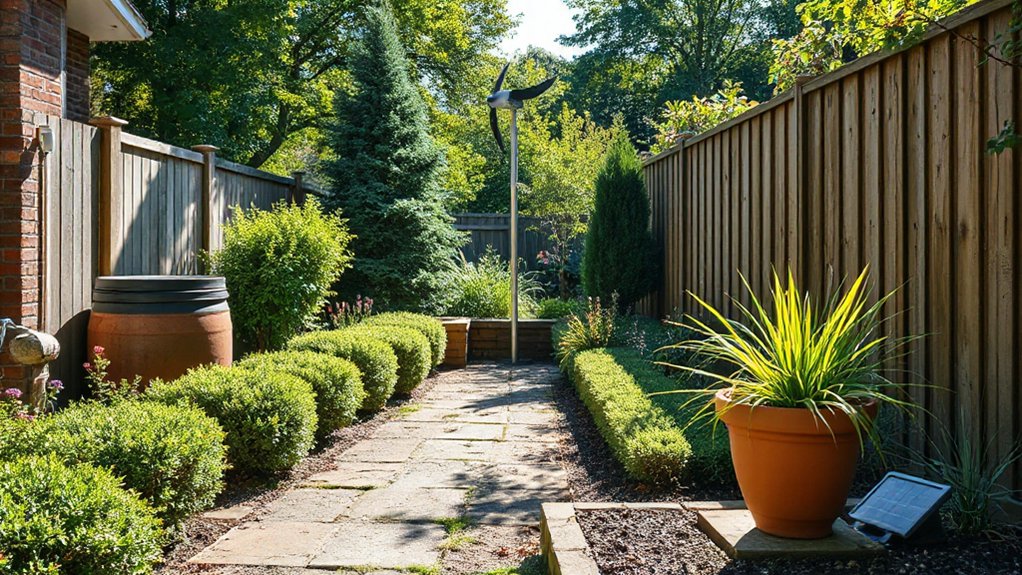
Are you ready to pair climate-smart plants with smart irrigation to slash water use and boost resilience? Choosing species that suit your local climate, soil, and microhabits—while integrating automated irrigation that adjusts to rainfall and temperature—lets you create a low-maintenance, high-performance outdoor space.
You’ll prioritize drought resistance and climate adaptation, selecting plants that’ll thrive with minimal watering and sudden weather shifts. Pair drought-tolerant varieties with smart controllers that modulate irrigation based on soil moisture and forecasts, reducing waste and runoff.
Use native or well-adapted species to support pollinators and biodiversity while keeping maintenance practical. Plan zones with appropriate sun exposure and wind protection, and retrofit drip emitters for precision.
Regularly refresh mulch and monitor battery- and sensor-health to sustain long-term efficiency.
Maximise Shelter, Heating, and Privacy on Any Plot
- Choose modular shelters that adapt to seasons and events.
- Use strategic screening and fencing to create intimate zones without closing off light.
- Install passive heating; reflect sun with south-facing surfaces and thermal mass.
- Integrate smart shading and ventilation for year-round comfort.
Outdoor privacy remains essential; shelter options should be versatile, durable, and easy to maintain.
Budget, Plan, and Maintain: A Practical Rollout Timeline
To move from flexible sheltering to a practical rollout, you’ll want a clear budget, concrete plan, and a maintainable schedule.
Start with Budget planning by listing essentials, estimated costs, and a contingency of 10–15%. Prioritize permanent items (pathways, seating, storage) before seasonal updates.
Translate your plan into a phased timeline: quick wins first, mid-term installs next, long-term enhancements last. Align purchases with supplier lead times and weather windows to avoid delays.
Establish Maintenance routines that preserve value: seasonal checks, power-wash schedules, and protective coatings. Build in review points every eight weeks to adjust scope, costs, and timelines.
Track progress with a simple dashboard, comparing actuals to forecast. Communicate changes with household members to sustain momentum and minimize friction.
Frequently Asked Questions
How Can I Assess Soil Quality for Year-Round Outdoor Use?
To assess soil quality for year-round use, you should test soil moisture and pH, then perform soil testing for nutrients; add a compost amendment where needed, and monitor drainage. Regularly retest to track improvements and adjust practices.
What Are Cost-Effective Ways to Heat Outdoor Spaces?
Imagine warm light wrapping your patio as you step outside. You can cut costs with solar heating and infrared panels, delivering efficient warmth. You’ll install affordable options, optimize placement, and monitor performance for practical, trend-aware comfort.
Which Uk-Friendly Plants Tolerate Typical Rainfall Patterns?
You’ll want UK-friendly plants that tolerate typical rainfall, like hardy lavender and native grasses, plus rainwater harvesting benefits. Choose wildlife friendly plants, diversify shelter, and observe drainage; you’ll create resilient borders that attract pollinators and sustain through wet seasons.
How Do I Legally Install Shade Structures or Shelters?
You should check Legal restrictions and Permit requirements before you install shade structures; verify your local council rules, whether planning permission or building regulations apply, and guarantee compliant, safe installation and adherence to height, setback, and neighbor privacy standards.
What Maintenance Schedule Keeps Containers Thriving Long-Term?
You should follow a steady maintenance schedule: inspect weekly, prune when needed, and refresh soil annually. Container design matters for drainage and airflow. Watering techniques vary—check moisture before watering, use slow-release feeds, and seasonally adjust care.
Conclusion
You can transform your outdoor space with clear steps, steady planning, and smart choices. Assess, plan, layer, and border; assess, plan, layer, and border. Choose climate-smart plants, smart irrigation, and low-maintenance borders; choose climate-smart plants, smart irrigation, and low-maintenance borders. Install shelters, heating, and privacy for all seasons; install shelters, heating, and privacy for all seasons. Budget wisely, schedule realistically, maintain consistently, and enjoy year-round outdoor living that’s stylish, practical, and ready for the UK.