


To plan a home renovation from start to finish, first define your top goals and must‑haves, then shape a realistic scope that fits your budget. Choose the right pros, verify licenses and insurance, and secure the necessary permits. Plan design and materials you’ll love while considering lifecycle costs. Create a clear change and contingency plan, and keep everyone aligned with regular updates. Track milestones and inspect progress to guarantee finish‑quality results, with more practical steps to come.
Key Takeaways
- Start by defining renovation goals, essential spaces, and a realistic budget with a contingency to guide scope and decisions.
- Vet and select licensed professionals, confirm permits, codes, and documentation, and keep approvals organized onsite.
- Build a flexible, milestone-driven timeline with clear priorities and visible progress tracking.
- Plan budgeting and material selection early, balancing style, durability, and lifecycle costs; lock in prices where possible.
- Establish ongoing communication, daily/weekly quality checks, standardized punch lists, and a change-log to manage changes gracefully.
Clarify Your Top Renovation Goals and Must-Haves
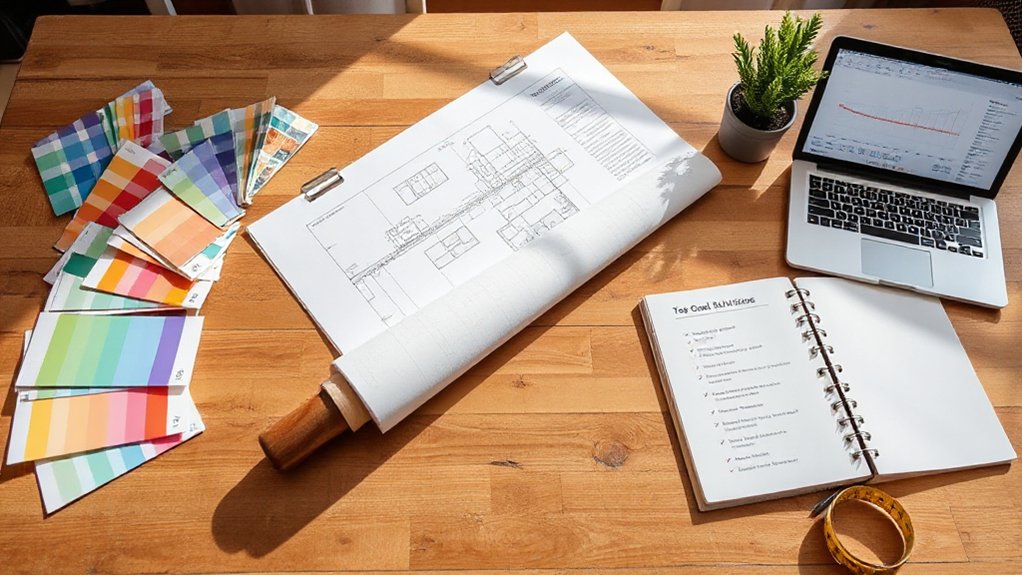
Define the core spaces to impact first, then specify measurable targets (better storage, brighter lighting, quieter rooms).
Identify nonnegotiables, like accessibility or kid-friendly layouts, and note any constraints early.
Use Design inspiration to guide the vibe you want, but keep options open for later refinement.
As you draft, map each goal to a concrete feature and a rough timeline.
Consider Material selection early to avoid later backtracking, choosing durable finishes that support your lifestyle and budget.
This clarity keeps decisions focused, reduces scope creep, and ensures you stay aligned with your renovation vision.
Create a Realistic Renovation Scope That Fits Budget
Start by defining a realistic scope you can actually complete with available resources.
Prioritize must-haves first, so your budget isn’t stretched by nice-to-haves that don’t change daily use.
Align your budget with your plans, adjusting scope as needed to keep the project feasible.
Define Realistic Scope
How can you set a realistic renovation scope that fits your budget? Begin by defining clear, measurable goals for the project’s outcome and identifying non-negotiables versus nice-to-haves. Break the work into concrete tasks with specific endpoints, so you can track progress and avoid scope creep.
Assess current conditions honestly, noting what must change, what can stay, and where compromises are acceptable. Use a realistic timeline that aligns with cash flow, labor availability, and permit requirements.
Consider potential Budget adjustments early, and document constraints that drive decisions, such as structural changes or utility rerouting. Communicate boundaries to all stakeholders, and reference them when new ideas arise.
Recognize Scope limitations and resist expanding beyond what the budget can sustain.
Prioritize Must-Haves First
Begin with a core list: structural fixes, essential systems, and any layout changes that enable daily functionality. Then map those items to a realistic cost range, using conservative estimates and a contingency buffer.
When evaluating design inspiration, pull from reliable sources and assign a practical value to each idea, avoiding overreach. Consider renovation trends, but commit to options that fit your space and timeline, not just what’s popular.
Align Budget With Plans
Aligning your budget with your plans means turning your renovation goals into a concrete, achievable scope. You’ll translate those goals into a realistic project plan by defining key tasks, timelines, and priorities that correspond with funds available.
Do a precise budget allocation for each area—rooms, permits, contingencies, and labor—so you know where every dollar goes. Use cost estimation as your reality check: gather multiple quotes, build in a 10–20% contingency, and distinguish between must-haves and nice-to-haves.
If estimates exceed your budget, revise the scope before breaking ground. Track changes daily, updating the plan and the budget simultaneously. Maintain clear communication with trades and suppliers to prevent scope creep and ensure decisions stay aligned with your financial limits.
This disciplined approach keeps your project feasible and on track.
Set a Budget That Supports Your Must-Haves
Setting a realistic budget is your blueprint for a successful renovation, so start by mapping out must-haves and then tag every expense to that list. You’ll prioritize essential upgrades, then layer in nice-to-haves based on impact and cost. Practice disciplined financial planning: set caps, track commitments, and adjust as prices shift. Clear budget allocation helps prevent scope creep and stormy surprises at payout time.
- Identify non‑negotiables and assign fixed costs
- Create a contingency line (5–15%) for unknowns
- Track every purchase against the plan
- Review and revise monthly to stay aligned
This approach keeps decisions practical and measurable, ensuring you fund the must-haves without derailing the project. Budget allocation and financial planning power a smooth, controlled renovation.
Choose the Right Professionals for Your Renovation
Start by vetting local pros to guarantee you’re hiring someone who knows your area’s codes, climate, and contractor norms.
Check credentials carefully—license, insurance, and past project references should be verifiable before you commit.
Align your budget with bids by comparing scope, timelines, and potential change orders so you can choose a fit that delivers quality without surprises.
Vetting Local Pros
How do you pick trustworthy pros for your renovation? Vetting local pros means narrowing options to reliable candidates and setting clear expectations. Focus on proven performance, realistic timelines, and transparent pricing. Look for evidence of durable material sourcing and efficient processes, not only low bids.
Then, assess communication quality, responsiveness, and problem-solving mindset, because projects change. Prioritize contractors who offer detailed scope, written estimates, and milestone payments that align with progress.
For negotiations, establish a baseline budget, know your must-haves, and request equal access to subcontractor lists and warranties. Compare similar bids to avoid hidden costs.
Build trust through references, site visits, and a short introductory trial.
- Verify licenses and insurance
- Review past work and client feedback
- Confirm material sourcing and product quality
- Clarify contractor negotiations and payment terms
Check Credentials Carefully
You’ve vetted options and gathered promising candidates; now, you’ll check credentials carefully to choose the right professionals for your renovation. Start with credentials verification: confirm licenses, insurance, and any trade certifications required in your area. Ask for scope-specific proofs, such as bonding for larger projects.
Check government and industry databases for status, suspensions, or complaints. Review a contractor’s reputation by contacting recent clients and inspecting completed work when possible. Look for consistency across projects, not just glossy portfolios.
Verify tax IDs and business legitimacy, and confirm the contractor’s ability to meet local permit requirements. Document all findings in a single file, and compare responses objectively.
A thorough check prevents costly missteps and supports a reliable, compliant renovation team.
Align Budget With Bids
To align your budget with bids, start by clearly defining what each bid covers and where it may deviate from your plans. You’ll compare scope, materials, timing, and contingencies to spot gaps that inflate costs or extend timelines.
Focus on budget alignment by aligning unit costs with project phases, and use bid comparison outcomes to negotiate clearer, more accurate estimates. Seek consistency across contractors to ensure apples-to-apples quotes.
Prioritize value and reliability over the lowest price, and document every assumption.
- Confirm included materials, finishes, and labor
- Note excluded items and potential add-ons
- Align schedules with project milestones
- Flag any contingencies and their thresholds
Verify Permits, Codes, and Approvals for Your Project
Before you begin any work, verify that you have the necessary permits, codes, and approvals in place. You’ll save delays by confirming permit types, expiration dates, and required agencies before purchasing materials.
Check building permits for scope, inspector handoffs, and final sign‑offs, and confirm zoning compliance to assure the project aligns with local land-use rules. Gather copies of all approvals and keep them accessible on-site.
If plans change, resubmit revisions promptly and track review timelines. Engage a licensed professional for complex changes and confirm that electrical, plumbing, and structural work complies with current codes.
Document inspections, approvals, and amendments in a centralized file. Maintain a proactive approach to avoid costly holdbacks, rework, or penalties that could derail your schedule.
Build a Flexible Timeline With Clear Milestones
A flexible timeline keeps your project on track even when surprises occur. You’ll set realistic start and finish dates, then build in buffers for approvals, deliveries, and weather delays.
Practice flexible scheduling by prioritizing tasks that unlock others, so a delay in one area doesn’t stall the whole project. Track milestones visibly to stay accountable and adjust as needed.
Use concrete dates, not wanderer targets, and record changes promptly. Communicate updates to your team and suppliers to preserve momentum.
Regularly review the plan, removing bottlenecks and reassigning resources when necessary. Milestone tracking gives you early warning signs and a clear path to completion.
Maintain momentum, adapt quickly, and keep stakeholders informed.
- Flexible scheduling
- Milestone tracking
- Buffering for contingencies
- Clear, dated milestones
Plan Design and Materials You’ll Love Within Budget
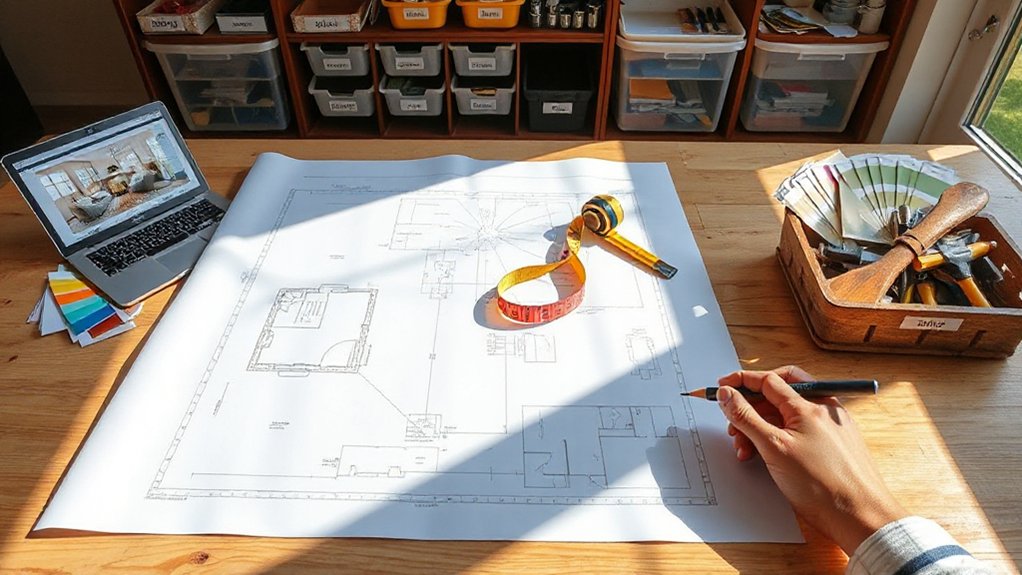
You’ll set a clear budget for design and material priorities, so every choice fits your overall plan.
Start with design goals that align with cost-effective options, ensuring you get the look you want without overspending.
We’ll balance style with value, focusing on materials and finishes that deliver impact within your budget.
Budget-Driven Material Choices
When you plan a budget-driven renovation, start by aligning design goals with material costs so you don’t overshoot your total. You’ll prioritize options that balance material durability with aesthetic appeal, ensuring long-term value. Consider alternatives that achieve the same look at different price points, and lock in prices early to avoid surprises.
Favor standard sizes and predictable finishes to reduce waste. Focus on core rooms first, then expand as funds permit.
- Choose durable, cost-effective materials that match your design intent
- Compare finishes that deliver aesthetic appeal without premium surcharges
- Leverage multipurpose materials to cut items and labor
- Plan for lifecycle costs, not just upfront price, to maximize value
Design Fit Within Budget
Define a cohesive concept, then map it to budget lines for color, texture, and scale. Use color palettes to set mood without overspending on premium paints or custom fabrics; opt for durable, mid-range options that look premium.
Plan furniture placement early, measuring spaces to avoid costly reconfigurations later. Choose modular pieces and versatile storage to maximize function on a fixed budget.
Seek reliable, mid-range materials with proven durability, and compare warranties. Finally, document decisions and track changes to prevent scope creep, ensuring every design choice serves both style and cost efficiency.
Manage Changes and Contingencies Without Chaos
Change orders and unforeseen issues are inevitable in any remodel, but you can keep chaos at bay by planning for them upfront. You’ll reduce downtime and preserve scope by setting clear processes, buffers, and decision points before you start.
- Establish a change-log and approval timeline
- Build a contingency budget and track remaining funds
- Define a renegotiated scope with milestones
- Schedule regular, brief progress reviews to catch issues early
Unforeseen setbacks happen; the goal is rapid assessment and decisive action. When a variance arises, categorize it as funding, scope, or timing, then choose the smallest impact fix first.
Document adjustments in writing, communicate clearly with stakeholders, and adjust timelines only after evaluating all options. Maintain flexibility while protecting your core objectives and quality standards.
Communicate Effectively With Your Renovation Team

Clear, ongoing communication keeps your renovation on track and helps prevent small issues from escalating. You set the tone by outlining expectations, methods, and response times with every team member. Use concise briefings, written summaries, and explicit deliverables so nothing unfolds by guesswork.
Practice effective listening: restate concerns to confirm understanding, ask clarifying questions, and acknowledge constraints. Encourage teammates to flag risks early, then document decisions and rationale.
When conflicts arise, apply a structured approach: identify the issue, gather facts, explore options, and agree on a path forward without blame. Maintain regular check-ins, track progress against milestones, and adjust plans transparently.
This disciplined communication reduces rework, keeps schedules honest, and reinforces professional trust across trades and suppliers.
Inspect Progress and Ensure Finish-Quality Milestones
Inspect progress regularly to keep your project on track and guarantee finish-quality milestones. You’ll want a disciplined approach to Progress tracking and Quality assurance, so minor deviations don’t derail the schedule or budget.
Set clear, measurable milestones and verify each one before moving forward. Schedule quick daily check-ins and a formal weekly review to compare actual work against the plan. Document issues, assign owners, and adjust timelines transparently.
Focus on critical path tasks first—floors, walls, finishes—before signing off. Maintain open communication with trades to prevent rework. Use a standardized punch list at each phase, and close it only when criteria are met.
- Establish milestones with objective criteria
- Track progress against the baseline
- Review quality at each handoff
- Resolve variances promptly
Frequently Asked Questions
How Long Does a Typical Home Renovation Take End-To-End?
Typically, a full home renovation takes 3 to 6 months, depending on scope and permits. You’ll pace decisions with Material Selection and stay on schedule through Contractor Vetting, then coordinate trades and inspections for steady progress.
What Hidden Costs Commonly Surprise Homeowners?
Hidden costs catch you off guard; expect budget overruns and permit delays. You should inspect contracts, buffer contingency funds, and factor inspection timelines. You’ll protect timelines and finances by vigilant planning, proactive communication, and transparent supplier pricing.
How Do You Prioritize Safety During Renovations?
You prioritize safety by enforcing clear safety protocols and conducting nightly hazard checks, then implementing ongoing hazard mitigation. You document procedures, wear PPE, train crew, and halt work for weather or unsafe conditions to protect everyone on site.
When Should You Consider a Design-Build vs. Traditional Approach?
You should consider a design-build when speed and integrated team coordination matter; otherwise, choose traditional if you want broader contractor bids. Design flexibility and Budget management are stronger with design-build, keeping milestones tight and changes controlled.
What Are Signs of Contractual Red Flags With Contractors?
Watch for red flags that flare like warning sirens: unlicensed or vague contractor credentials, evasive project communication, missed deadlines, and budget creep. You’re careful; verify credentials, document everything, and insist on clear, written milestones and change orders.
Conclusion
You’ve mapped goals, scoped realistically, and lined up the right pros—now execute with discipline. Track budget and timeline, verify permits, and stay flexible for late-breaking surprises. Communicate clearly, document decisions, and inspect milestones so workmanship shines. Keep a tight grip on changes without chaos, and trust the plan you built together. As the old adage goes, measure twice, cut once—and your home renovation will transform smoothly, with quality you’ll love for years to come.