


Start by defining your micro-retreat: your goals, constraints, and the vibe you want—calm, private, or subtly luxurious. Then map a compact backbone of perennials for year-round structure, and plan cozy seating zones that invite lingering. Layer lighting to set mood without glare, choose low-maintenance plants, and sketch smart micro-hardscaping with portable furniture and strategic planters. A few seasonal tweaks and budget-friendly upgrades can transform a tiny garden, yet the real shift comes when you picture how every corner supports your moment of calm.
Key Takeaways
- Define a micro-retreat with clear goals, sun and drainage constraints, and a practical maintenance plan to guide design tasks.
- Create privacy and mood by layering low hedges, screens, and focal garden art while preserving open sightlines.
- Expand space visually with continuous edging and winding, varied-width paths that soften boundaries.
- Build a year-round perennial backbone with compact, low-maintenance plants grouped by light and water needs.
- Plan cozy seating, soothing water features, warm lighting, and sensory, wildlife-friendly plantings for a calm, inviting atmosphere.
Define Your Micro-Retreat: Scope, Goals, and Constraints
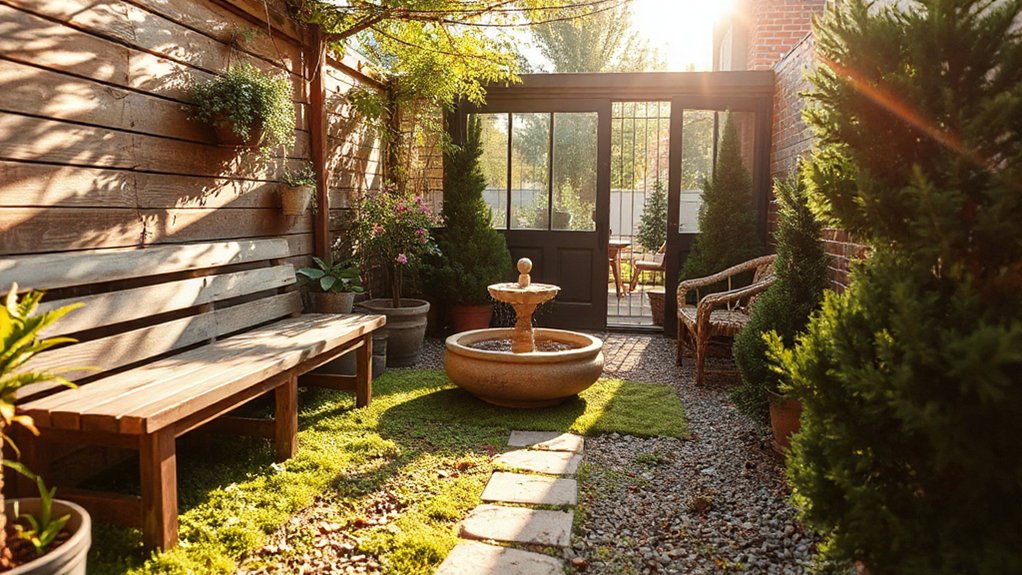
To define your micro-retreat, start by clarifying its scope, goals, and constraints. You’ll map what you want from the space, then set measurable targets you can actually achieve.
Define non-negotiables—sun exposure, drainage, a preferred mood—and identify constraints like budget, time, and neighboring rules. Translate goals into concrete design tasks: seating for quiet mornings, a focal plant, and a pathway that invites slow pauses.
Consider maintenance capabilities to prevent overreach; simplicity often yields lasting results. Address practicalities early: garden pests, irrigation needs, and seasonal color.
Plan for soil testing to establish a baseline for healthy growth, then tailor amendments to support your palette. By documenting scope, goals, and limits, you create focus, minimize scope creep, and empower decisive, iterative progress.
Build a Compact, Year-Round Backbone of Perennials
A compact, year-round perennial backbone gives your garden structure and steady texture, so you can enjoy color and form in every season. We’ll explore smart plantings, tight spacing, and layered selections that keep interest without crowding, even in a small footprint.
Let’s discuss how to choose reliable perennials that perform across seasons and how to choreograph their bloom, foliage, and height for a cohesive, low-maintenance backdrop.
Year-Round Perennial Backbone
Creating a compact, year-round backbone of perennials gives your garden structure and ongoing interest, even when seasonal blooms fade. You’ll select sturdy, low-maintenance varieties that provide texture, color, and cover across seasons, then place them to anchor borders and paths.
Prioritize depth and foliage interest for winter, with evergreen or variegated forms that maintain shape. Include plants that support wildlife habitats, invite pollinators, and resist pests.
Pair with practical soil and watering plans, and reserve space for seasonal accents.
- Choose evergreen and semi-evergreen perennials for year-round structure
- Group by light needs and varying bloom times for continuous interest
- Integrate wildlife habitats and nectar sources to attract pollinators
- Layer textures from deep to light to enhance depth
- Apply composting tips to enrich soil and reduce waste
Compact Planting Strategies
Compact planting is the key to a year-round backbone, letting you layer sturdy perennials in tight spaces for continuous structure and interest. You design with purpose, choosing compact varieties that mature quickly and resist crowding.
Begin with a clear backbone: a few steadfast grasses or evergreen perennials that hold shape through seasons. Fill gaps with low-growing, high-performance species that offer bloom and foliage without overwhelming the space.
Combine varying textures to keep your eye moving, and group by light and water needs to simplify maintenance. Use a Plant container to test arrangements before committing bed space, then transplant when you’re confident.
Consider a restrained garden sculpture as a focal point, guiding sightlines without dominating. Maintain with timely division and clean edges.
Seasonal Interest Planning
Seasonal interest starts with a compact, year-round backbone of perennials you can rely on. You’ll choose sturdy, low-maintenance species that shift color and form through the seasons, creating a cohesive frame for your space. Plan with bloom times, foliage texture, and height in mind, so even off-peak periods feel deliberate.
Establish soil health first, as healthy soil supports drought tolerance and robust roots. Integrate wildlife-friendly choices to invite pollinators and birds, enriching the garden’s rhythm.
Use a restrained palette for continuity, then punctuate with seasonal focal points that draw the eye.
- Select enduring perennials with staggered bloom windows
- Pair texture-rich foliage with subtle color shifts
- Prioritize soil amendments and mulching for health
- Add habitat features for wildlife, like small snags or bird-friendly shrubs
- Schedule staggered maintenance to maintain year-round integrity
Plan Cozy Seating Zones for Small Spaces
A well-planned seating zone makes a small garden feel like a separate room, so start by measuring the space and identifying a natural focal point.
You’ll define a simple layout that fits the area without crowding it. Choose compact, modular furniture that can flex with the weather and your needs, creating cozy seating and easy circulation.
Opt for benches with storage or slender armchairs to maximize footprint while preserving comfort. Use neutral cushions with a couple of accent colors to tie the zone to the rest of the garden.
Consider a small, weatherproof table for drinks or a book. Keep paths clear, and position seating to invite conversation without blocking light or airflow.
Cozy seating, small space, achieved through thoughtful proportion and restraint.
Layer Lighting for Mood Without Glare
Layering lighting adds atmosphere and function to a small garden without creating glare or clutter. You’ll want an approach that blends safety with mood, using soft, diffused glow rather than harsh beams.
Focus on glare reduction by positioning fixtures away from seating areas and choosing warm, color-balanced bulbs. Implement layered ambient lighting that defines paths, borders, and focal plants without overpowering the space.
- use warm white LEDs (2700–3000K) for all main fixtures
- install low-profile path lights to guide movement
- choose shielded fixtures to minimize direct glare
- incorporate string or lantern lighting for gentle ambience
- rely on dimmers to adjust intensity by mood
This strategy keeps the garden inviting yet calm, perfect for relaxed evenings.
Pick Low-Maintenance Plants That Thrive in Tiny Gardens
Even with limited space, choosing low-maintenance plants that thrive in tiny gardens is a smart shortcut to a lush, inviting outdoors. You should select compact, drought-tolerant varieties that bloom reliably with minimal care, such as dwarf perennials, evergreen groundcovers, and container-friendly shrubs.
Prioritize species suited to your climate and sun exposure, ensuring they require little pruning and minimal feeding. Group plants with similar water needs to simplify irrigation and reduce maintenance.
Consider wildlife attraction by incorporating nectar-rich blooms and safe shelter, which invites birds and pollinators without inviting pests.
For pest prevention, choose disease-resistant cultivars and avoid dense, waterlogged spots that harbor trouble.
Use mulch to deter weeds and conserve moisture, and space plants to promote air circulation. Maintain an uncluttered layout for easy upkeep.
Texture and Scent: Layer Leaves, Grasses, and Blooms
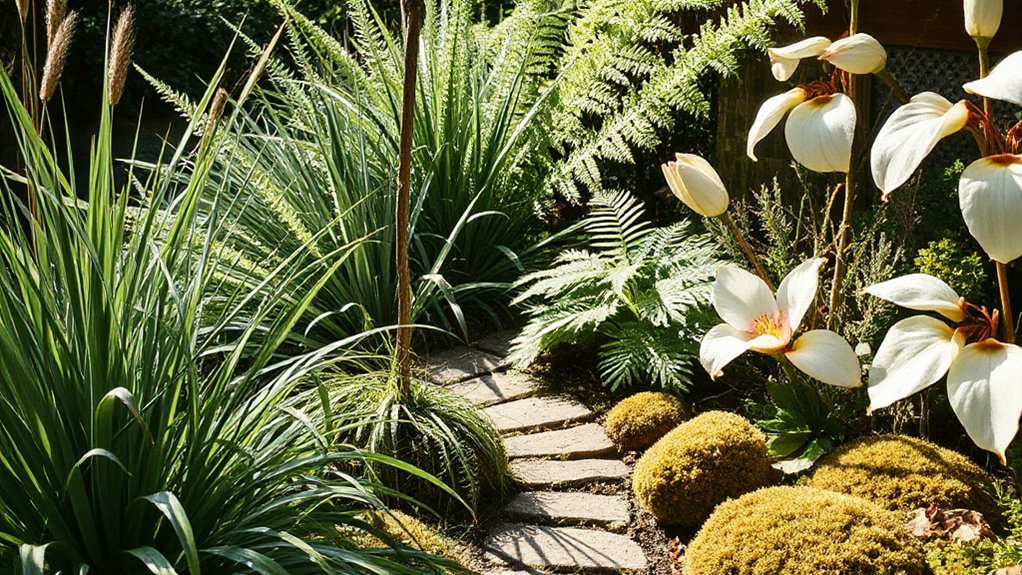
Layer texture and scent by layering leaves, grasses, and blooms to create distinct tiers of interest.
Pair complementary textures and scents—think soft foliage with wispy grasses and fragrant blooms—and consider how each element reads from different angles.
Choose your mix carefully to guarantee cohesion, accessibility, and a quietly invigorating atmosphere.
Layer Texture and Scent
To create a tactile, inviting garden, mix textures and scents by layering leaves, grasses, and blooms in thoughtful combinations. You’ll create contrast, depth, and aroma that guide the eye and calm the senses, while supporting urban wildlife and soil health.
Begin with crisp foliage, then add soft, plume-like grasses, finished by flowering accents for color and scent. Use foliage with varying leaf surfaces—glossy, fuzzy, or needle-like—to catch light and invite touch.
Pair fragrance from herbs or remontant blooms with the visual texture you’ve built. Plan year-round interest so textures change with seasons, keeping the retreat lively and functional.
- Layered leaves for tactile contrast
- Dense grasses for movement
- Aromatic blooms for scent
- Texture-rich foliage accents
- Seasonal color and form progression
Leaves, Grasses, Blooms Mix
Turn from texture-focused planting to a cohesive trio by combining leaves, grasses, and blooms into a single, tactile tapestry. You’ll shape depth by layering foliage with varying leaf color, then punctuate with upright grasses and seasonal blooms.
Start with a cool, pale palette and weave in warm highlights; this creates a dynamic, walk-through rhythm across the bed. Choose grasses diversity to provide year-round architecture—lush clumps, airy blades, and plumed seed heads that catch light at dusk.
Balance broad-leaved specimens with slender, textured grasses so texture reads clearly from all angles. Use foliage with contrasting leaf color to enhance shadows and glow without crowding, keeping space breathable.
In this mix, blooms arrive as accents, guiding the eye and enriching the garden’s tranquil, retreat-like mood.
Scented Plant Combinations Carefully
Scented plant combinations enrich texture with a sensory layer that complements visual interest. You layer leaves, grasses, and blooms to build a perfumed tapestry that guides the garden’s mood, no matter the season. Focus on pairing structural plants with aromatic varieties to extend fragrance from dawn to night. Use hardy, drought-tolerant options for reliability and sustained scent.
Consider how leaf texture amplifies aroma release when touched by breeze or sun. Create contrast by mixing linear grasses with broad-leaf shrubs and massed flowering perennials. Target localized scents near seating or paths for immediate impact. Choose Aromatherapy blends through careful Plant pairing, prioritizing complementary notes and bloom times.
Plan a compact, cohesive palette that remains practical year-round.
- Pair fragrant herbs with flowering companions
- Mix silver foliage with sweetly scented blooms
- Layer grasses for subtle movement and aroma
- Combine spicy and citrus notes for depth
- Position seating to enjoy peak fragrance
Create Privacy Without Closing In the View
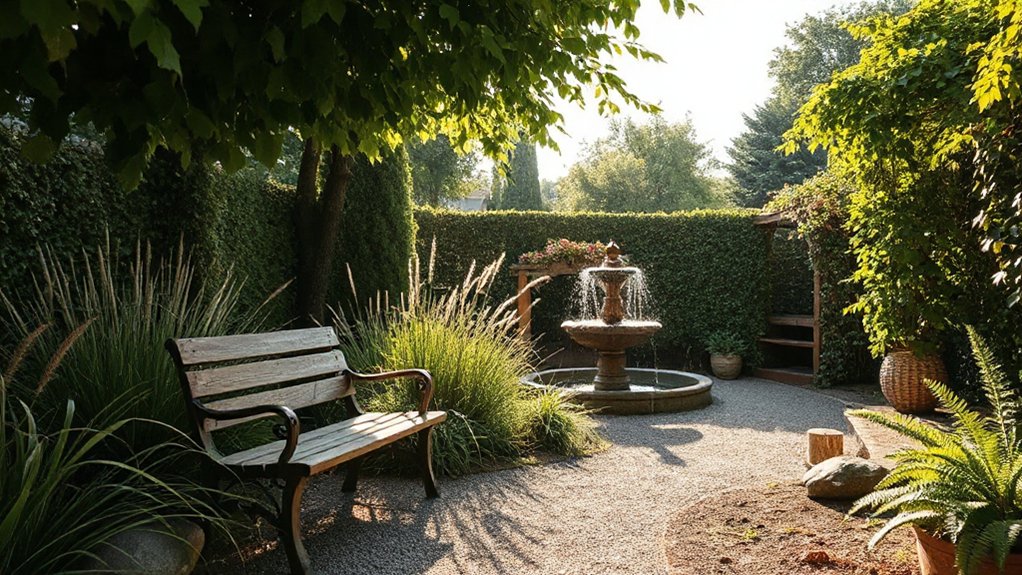
If you want privacy without closing off the view, start by layering elements that frame the space rather than block it. Use a mix of low hedges, espaliered fruit trees, and decorative screens to create edges that define corners while preserving sightlines.
Place taller plants at the perimeter and keep sightlines through the center open, so you feel sheltered yet connected to the garden beyond. Integrate garden art as focal points rather than barriers; sculptures or trellises become visual anchors that guide the eye.
Choose materials and colors that harmonize with your plants to avoid harsh contrasts. To support wildlife habitat, include native flowering shrubs, a small birdbath, and sheltered nooks.
The result is a retreat that’s private, lively, and spacious.
Introduce Water and Gentle Sound for Instant Calm
Water features instantly calm a small garden by adding movement and soft, ambient sound. You’ll select aquatic features that fit your space and maintenance routine, then tune the soundscape to your preference.
Gentle water will mask urban noise and invite a slower pace, without dominating the lounge zone. Focus on reliable, quiet options, and place them where you can hear the flow from your favorite seating spot.
For best effect, combine texture, scent, and greenery that frame the feature. Consistency matters: consistent drip or trickle feels calmer than sporadic splashes. Keep the setup simple, easy to service, and visually tidy.
- Choose compact options with low power consumption
- Position near seating for audible, soothing sounds
- Use rocks and plants to soften edges
- Add a return path for the water flow
- Consider programmable timers for subtle variation
Expand Space Visually With Edging, Paths, and Groundcovers
Edging creates perceived depth, guiding the eye and making borders feel farther away.
Choose a continuous, narrow edge and a winding path to mimic expansion without adding bulk.
Pair with low groundcovers to soften shifts while preserving space for movement and seating.
Edging for Depth
To create the illusion of greater space, define borders with edging and complementary groundcovers that guide the eye along the path. Edging creates depth by separating turf from planting areas, while low-growth groundcovers blur the boundary and extend the line beyond the border.
Choose materials that contrast with surrounding foliage and reflect your garden art aesthetic, then repeat a consistent width to reinforce perspective. Pair straight edges with soft curves to balance form and invite movement.
Maintain crisp edges with regular mowing and edging, keeping paths clear for safe, deliberate steps. Incorporate mulch or gravel to highlight borders and suppress weeds, reducing upkeep and pest control concerns.
The result is a calm, expansive feel that invites lingering.
- Select durable edging materials and repeat texture
- Pair with low, trailing groundcovers for continuity
- Use contrasting colors to sharpen lines
- Maintain clean, well-defined borders
- Consider climate and sun exposure when plants are chosen
Winding Pathways Perimeter
Winding pathways do more than guide your steps—they shape how the space feels. You’ll expand your garden visually by pairing edging, curved paths, and groundcovers that soften progressions and create retreat zones.
Use narrow, flowing lines to draw the eye along the garden perimeter, then widen where you want a sunny seat or shaded nook. Choose materials that complement your house and soil—gravel for a casual vibe, smooth flagstone for formality, or brick for warmth—always ensuring level, stable edges.
Groundcovers like creeping thyme or ajuga fill gaps between pavers, reducing maintenance and suppressing weeds. Maintain consistent edging height to keep the perimeters tidy.
Winding pathways invite exploration, while deliberate placement of turns and vistas makes the garden perimeter feel bigger and more inviting.
Smart Micro-Hardscaping: Furniture, Planters, and Zoning
Smart micro-hardscaping blends compact furniture, strategic planters, and purposeful zoning to create functional outdoor rooms without overwhelming a small space. You’ll optimize every inch by pairing foldable or stackable Garden furniture with vertical planters and low-profile borders, keeping sightlines open.
Define planting zones that guide traffic and soften borders, choosing species with similar sun and water needs to reduce maintenance. Use mixed materials—teak, metal, and ceramic—to create contrast without clutter.
Elevate rooms with movable screens, rugs, and lighting that adapts to evening calm. Keep scale appropriate: cushions and pots should feel light rather than bulky, even in clusters.
This approach yields flexible, inviting zones you can rearrange as moods shift.
- Space-efficient seating
- Vertical planters
- Movable screens
- Low-profile borders
- Coordinated textures
Seasonal Care for a Year-Round MDR-Ready Retreat
As you refine your MDR-ready retreat across the seasons, you’ll keep the space inviting and functional year-round by coordinating care routines with your micro-hardscaping design. Seasonal care centers on predictable maintenance windows, selective pruning, and smart irrigation adjustments that respect plant cycles.
In spring, install pollinator-friendly varieties and add a compact wildlife habitat to encourage beneficial visitors without crowding pathways.
Summer demands consistent pest control focused on non-toxic options and vigilant debris removal to prevent harboring pests.
Fall and winter prioritize soil protection, mulching, and windbreaks that preserve root health and comfort.
Maintain year-round accessibility by grouping care tasks with the micro-hardscaping schedule, ensuring safe, easy access.
This approach sustains wildlife habitat while reducing maintenance effort and enhancing retreat usability.
Budget Upgrades That Deliver Big Impact
- Prioritize durable, low-maintenance materials for paths and seating.
- Add modular plantings and container gardens for instant color.
- Use edging and lighting to define zones and enhance safety.
- Improve soil health with timely Soil amendments and compost.
- Monitor and deter Garden pests with natural strategies and barriers.
These choices minimize upkeep while maximizing return.
Track results, adjust tolerances, and reinvest savings into gradual enhancements.
Practical upgrades pay dividends in enjoyment and property value, without overwhelming your schedule.
Common Pitfalls and Quick Fixes for Micro-Retreats

Even with good planning, micro-retreats run into common traps that derail effort and dampen enjoyment. You’ll often overestimate garden pace, chasing perfect scenery instead of steady progress.
A frequent pitfall is neglecting maintenance: tiny comforts fade when routine slips. Quick fixes work best when you identify a root cause, not a symptom, and then apply a targeted tweak.
Watch for overcrowding, which stifles growth and invites pests; prune selectively and reconfigure plantings to balance sunlight and air flow.
Garden pests can derail momentum; intercept early with preventative practices and humane controls.
Soil amendments matter too, but apply them thoughtfully—test soil first, then supplement to improve structure and fertility without waste.
Anticipate weather shifts, and schedule short, repeatable rituals to sustain calm.
Frequently Asked Questions
How Small Can a Garden Be for a Retreat?
A small garden can still feel retreat-worthy; even 6×8 feet works. Plan smart garden layout with zones, focal points, and seating. Add decorative features, soft lighting, and scented plants to maximize calm and usability. You’ll feel refreshed, instantly.
What Is the Quickest Mood-Boosting Retrofit?
To boost your mood quickly, optimize garden lighting and outdoor furniture. You’ll feel calmer fastest by layered lights, warm tones, and a comfy seating area; position near focal plants, and add a weatherproof throw for instant coziness.
Can a Tiny Space Support Year-Round Planting?
Yes, a tiny space can support year-round planting. You’ll adapt with microclimates, containers, and season-extending methods. Picture an urban rooftop thriving like a balcony garden archive: you grow, you learn, you savor every season, no wasted space.
Which Low-Maintenance Plants Suit Containers Best?
When choosing low-maintenance plants, you’ll favor hardy perennials and compact shrubs. For foliage selection, pick texture-rich leaves in varying greens. Plan Container design carefully, using drapey grasses and succulents to reduce maintenance while maximizing appeal.
How to Balance Privacy With an Open View?
You balance privacy with an open view by using garden fencing and outdoor screens strategically. Place taller screens to frame boundaries, lower ones for sightlines, and choose translucent materials to retain openness while shading and softening the space.
Conclusion
You’ve turned a postage-stamp plot into a sanctuary, and yes, you deserve an award for restraint—mostly because you resisted planting a vending machine-sized fountain. In practice, you’ve built micro-rooms of calm: seating that sighs, lighting that whispers, and plants that pretend to be low-maintenance while secretly plotting world domination over weeds. Enjoy the serenity, but don’t forget the beige compost bin is your loud roommate. Stay mindful, prune bravely, and let the garden do the talking—quietly, with impeccable taste.