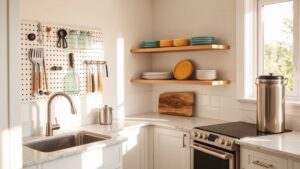
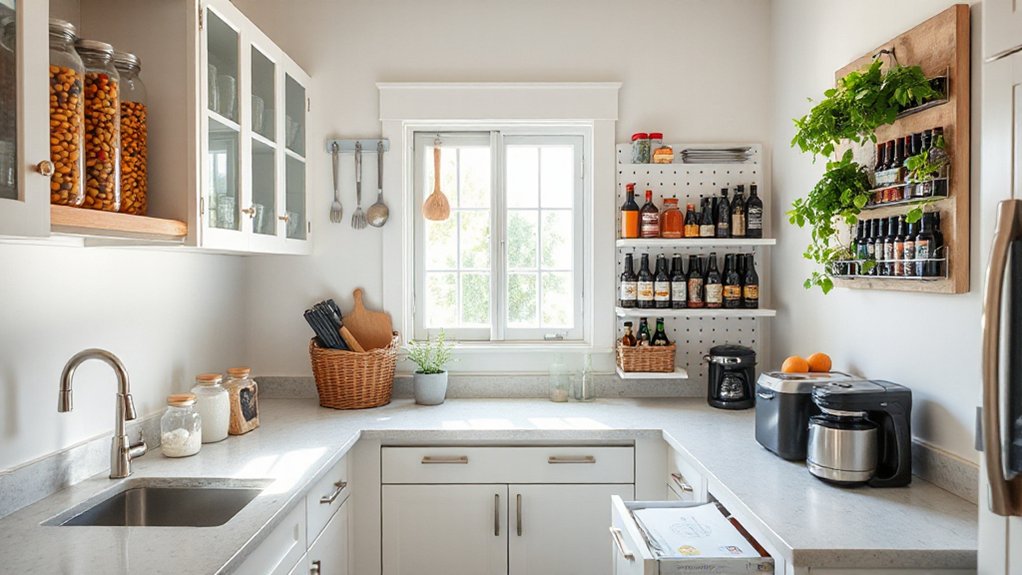

You’re looking here for Kitchen Storage Ideas For Small Kitchen. If you’re working with a tight footprint, so start by diagnosing what’s truly missing in your kitchen—then map how vertical tools, like floating shelves and tall, narrow cabinets, can reclaim precious real estate. Think pull-out pantries, corner lazy Susans, and labeled containers for fast access. Keep frequently used items within arm’s reach and group similar things together. The result should feel organized and efficient, but there’s more to optimize before you call it done.
Key Takeaways
- Do a space audit to map traffic flow, identify bottlenecks, and target underutilized vertical areas for storage improvements.
- Maximize wall space with floating shelves, pegboards, magnetic strips, and tall narrow units to free counter space.
- Use pull-out pantry, corner rotating shelves, and modular units to keep items accessible while reducing clutter.
- Label and color-code groups (pantry, cookware, tools) with visible icons for quick recognition and scalable labeling.
- Regularly review and reorganize, prioritize frequently used items, and keep pathways clear to maintain efficient flow.
Diagnose Your Small Kitchen Space for Storage
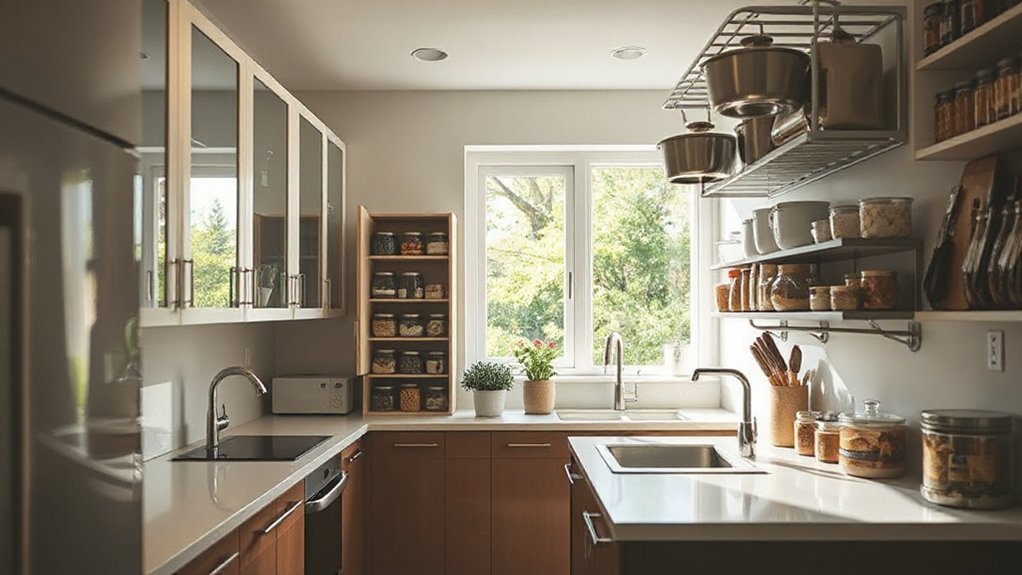
If your kitchen feels cramped, start by auditing how you actually use the space. You’ll map traffic patterns, note peak tasks, and identify bottlenecks that waste time.
Begin with the Kitchen layout: sketch zones for prep, cooking, cleaning, and storage, then test flow with typical routines.
Next, assess Storage capacity: count cabinet inches and drawer depth, evaluate shelf heights, and spot underutilized areas. Track what you reach for most and what sits unused.
Consider pantry access, appliance placement, and clearance for doors and door swings. Document vertical space, corner nooks, and gaps behind doors.
With findings, you’ll prioritize changes that free surfaces, improve reach, and streamline clutter. A clear, intentional plan sets the stage for smarter storage without overhauling your whole kitchen.
Maximize Wall Space With Floating Shelves for Small-Kitchen Storage
Floating shelves free up counter space and level the look of a small kitchen. Think about materials that suit your style and load.
Consider how high to place them for easy reach, and how to keep them organized with baskets or small jars. Use color and décor sparingly to boost visibility and keep clutter off the shelves.
Material Choices For Shelves
Choosing the right material for floating shelves makes a big difference in small kitchens: strong, lightweight options keep clutter down and walls looking clean. You’ll optimize space by selecting metal shelving for a sleek, modern edge or wood plank choices for warmth and texture.
Metal shelves offer durability, a slim profile, and easy wipe-downs, great above counters or near heat. Wood planks vary in hardness, grain, and finish, so opt for high-quality plywood or solid options that resist warping in humidity.
Pair metal with thinner fronts to maintain airiness. If you choose wood, go with lighter tones to mirror natural light. Consider hidden brackets for a clean line, and keep weight evenly distributed.
Your shelves should feel invisible yet highly functional in tight layouts.
Placement For Accessibility
To maximize accessibility, place floating shelves at reachable heights—typically between 48 and 66 inches from the floor for most kitchen tasks, with lower tiers for everyday items. You’ll gain instant visibility and quick reach, reducing cabinet rummaging.
Align shelves near prep zones to keep recipe organization in sight, so you can reference steps without stepping away. When planning, consider appliance placement: position lightweight appliances on end caps or lower shelves to prevent crowding work surfaces.
Use staggered heights to accommodate tall spice jars and frequently used bowls. Group related items by zone—coffee bar, baking, and snacks—so you maintain flow while saving counter space.
Install brackets securely and test reach from both sides of the counter for true accessibility.
Decor And Organization Tips
If you want to make the most of small kitchen walls, start with a simple rule: keep essentials within easy reach and show off a few well-chosen pieces.
Floating shelves maximize wall space without crowding counters, so pick clean lines and durable finishes. Install them at varied heights to create visual interest and to suit different items—cookbooks, jars, or glassware.
Keep décor minimal: a single plant, a compact clock, and a few decorative containers. Label jars for quick recognition, reducing search time and enhancing flow.
Group similar items together to boost organization essentials. Use shelf dividers or risers to stack safely, and leave space for airflow around heat-prone gadgets.
Stay aligned with decor trends that emphasize light, open visuals while preserving practical storage.
Reclaim Countertop Real Estate With a Pull-Out Pantry
A pull-out pantry hides a full-sized cabinet inside your cabinet, giving you instant countertop relief without sacrificing storage. You slide it out like a drawer, revealing tall cans, jars, and dry goods neatly organized. This design preserves utensil space and keeps frequently used items within arm’s reach.
Visual cues help you see what you have, so you stop buying duplicates and start pantry organization at a glance. When you open the cabinet, labeled shelves or transparent bins guide you to what you need, fast.
Pair it with clear fronts and soft-close slides for quiet efficiency. It’s a compact upgrade that clearly supports countertop decluttering while maintaining pantry capacity, boosting workflow without crowding your prep area.
Double-Duty Furniture: Storage-Smart Furniture for Small Kitchens
Double-duty furniture turns tight kitchens into multitaskers. You’ll optimize every inch with multi functional furniture that hides storage in plain sight.
Think folding drop-leaf tables, bed-turned-counter racks, and dining benches with built-in bins. Choose pieces that serve multiple roles without adding visual bulk, so the room stays light and easy to navigate.
Look for compact island options that pull double duty as prep space and pantry, or ottomans that open to reveal dishes and linens.
Space saving designs thrive when seams, brackets, and hinges are slim, and finishes match cabinetry for a cohesive, streamlined feel.
Prioritize modular units you can rearrange as needs shift, keeping your workflow efficient without clutter.
Corner Cabinet Hacks: Lazy Susans and Efficient Corner Solutions
Corner cabinets can waste precious space, but smart organizers like lazy Susans and winged organizers transform those angles into easy-reach storage. You’ll open a door and instantly see what you need, thanks to rotating shelves that pull items into view.
Lazy Susans maximize height and depth, reducing buried jars and awkward stacking. Choose a heavy-duty spinner for pots, pans, or small appliances, and pair with a winged organizer to keep lids and baking sheets flat and accessible.
For tighter corners, install a shallow pull-out or a swiveling rack to convert dead space into usable tiers. This approach boosts corner cabinet organization, minimizes digging, and streamlines meal prep, helping you keep countertops clearer and your storage more efficient.
Label Systems for Fast Access in Tiny Kitchens

Think through magnetic label placement on your pantry and cabinets so you can grab what you need in a flash.
A color-coded accessibility system keeps items visible at a glance and reduces rummaging.
Keep the labels bold, simple, and near eye level to maximize tiny-kitchen speed.
Magnetic Label Placement
- Position labels at eye level above shelves for fast recognition.
- Use bold, high-contrast type with brief words for quick scanning.
- Group by task (pantry, spices, utensils) to boost kitchen organization.
- Use color dots or icons tied to categories for visual cues you can rely on at a glance.
Color-Coded Accessibility System
Ever wondered how color-coded labels speed your tiny-kitchen tasks? A Color-Coded Accessibility System keeps essentials visible at a glance. Use a small palette: green for pantry staples, blue for cookware, red for hazards, yellow for tools.
Place labels on bins, jars, and shelf edges so you can grab what you need without hunting. This boosts color coordination across your prep area and minimizes decision fatigue during rushes.
Keep a simple legend posted nearby, with a quick-to-read icon and one-word cue. Accessibility features shine when labels contrast strongly against backgrounds and notches or lids show color bands.
The system scales as you add storage, and each item’s label guides you to the right place, faster, cleaner, and stress-free.
Vertical Storage Hacks for Tall, Narrow Spaces
When space is tall but narrow, vertical storage becomes your best ally—pulling items up to reach, not out to clutter. You’ll maximize wall real estate with smart organizers that keep pantry organization and utensil storage tidy and visible.
Use tall, slim shelving, pegboards, and magnetic strips to drill down clutter without sacrificing flow. Install adjustable racks for flexible height, so you can stash oversized bottles or jars above lighter items.
Label edges for quick scanning, and group by use to minimize digging. Consider these steps:
- Add a tall pantry unit with adjustable shelves
- Mount a pegboard for utensils and small tools
- Use magnetic strips for metal gadgets
- Install slim pull-out baskets for easy access
Frequently Asked Questions
How Can I Budget for Small-Kitchen Storage Upgrades?
Yes—start with a clear budget plan and prioritize storage organization upgrades you’ll actually use. Set a total, allocate for essentials, and reserve for surprises; compare prices, DIY where sensible, and track every purchase to stay on budget.
What Is the Best Material for Durable, Compact Shelves?
If you want durability in compact shelves, go with metal or high-quality plywood. You’ll get sturdiness and clean lines. Modular shelving excels for flexibility, while space saving materials keep footprints small and storage efficient.
How Do I Maintain Accessible Storage for Kids in Small Kitchens?
Keep child-safe, reachable shelves by design: lower the most-used items, secure heavy things, and use latches. Label zones, keep spills minimal, and rotate toys. Create clear paths, check heights monthly, and teach kids safe, independent access.
Can Under-Sink Spaces Be Repurposed Effectively?
Yes, you can. Install pull-out shelves and slim bins for under-sink organization, add a compact caddy for cleaners, and use vertical space. Space saving solutions rely on clear containers, labeling, and door-mounted racks.
What Are Hidden-Storage Ideas for Appliances?
Hidden compartments and appliance cupboards quietly streamline your space, letting you stash gadgets out of sight. You’ll keep countertops clear, grab what you need fast, and enjoy tidy efficiency without sacrificing function.
Conclusion
You’ve got the gears to transform a cramped galley into a calm, efficient hub. Imagine this: vertical growth lifting 30% more storage from wall space, while a pull-out pantry adds instant access without stealing counter real estate. In tight corners, Lazy Susans turn wasted angles into usable shelves. Keep labels clear and items grouped, so you reach what you need in seconds. Declutter regularly, and watch your kitchen feel bigger, brighter, and wonderfully organized.