
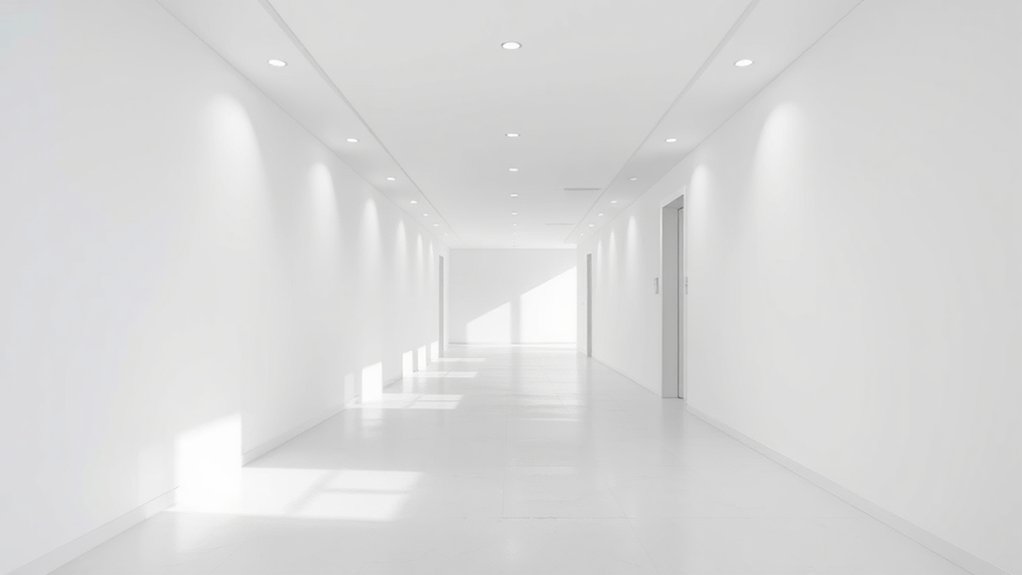

To make a powerful first impression, keep your minimalist hallway calm, cohesive, and uncluttered. Define a clear focal point with a single sculptural piece, a streamlined console, or built‑in niche, and guarantee it harmonizes with lighting, materials, and color. Use a restrained palette, long vertical elements, and continuous flooring to visually lengthen the space. Layer lighting for brightness without glare, and hide storage behind flush fronts. If you keep going, you’ll uncover how to refine every detail for lasting impact.
Key Takeaways
- Create an open, airy hallway with a cohesive neutral palette, streamlined storage, and purposeful minimal decor to convey calm, upscale first impressions.
- Define a strong focal point—sculpture, console, or built-in niche—unobstructed and harmonized with lighting and materials.
- Lengthen the space using vertical details, continuous planks or tiles, and light wall colors with subtle tonal contrasts.
- Layer lighting (ambient, task, accent) with diffused fixtures to brighten evenly and reduce shadows without clutter.
- Maintain restraint: limit accessories to a small, meaningful art piece or trio, and use consistent finishes for a cohesive, quiet elegance.
Key Principles for a Successful Minimalist Hallway
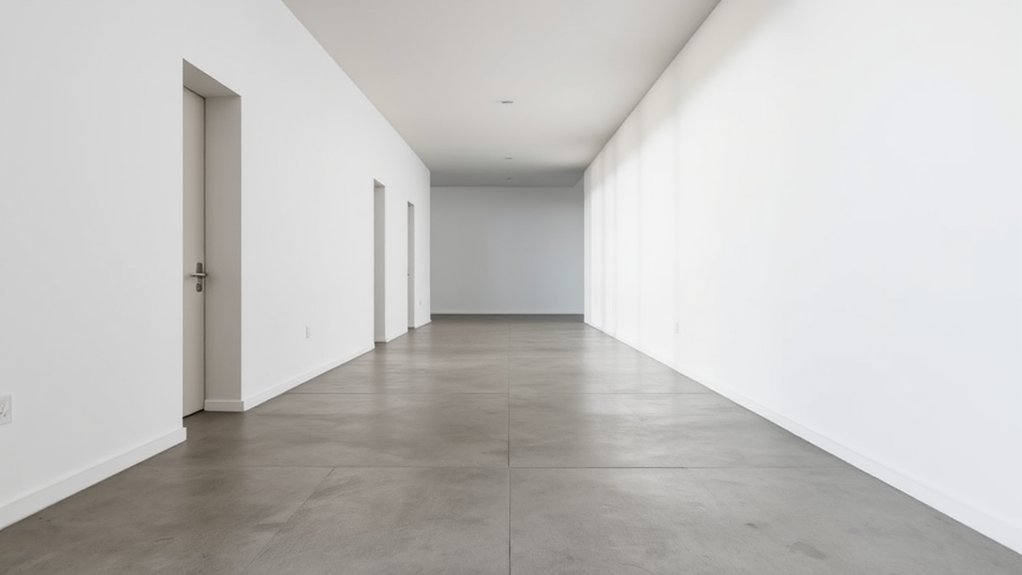
A minimalist hallway succeeds when it clarifies the path you travel. You apply key principles that streamline form, function, and feel, ensuring every element earns its place.
Begin with proportion: balance light, texture, and material to guide the eye without distraction. Prioritize negative space to emphasize each shift, letting calm define motion.
Choose a restrained palette and purposeful lighting to reinforce clarity, avoiding visual noise on walls, floors, or ceilings.
Consider circulation by eliminating clutter and elevating storage to tucked, accessible corners.
Acknowledge Historical influences and Cultural variations as context, not decoration—let them inform restraint rather than ornament.
Finally, enforce consistency in hardware, trim, and scale, so the hallway reads as a single, confident sequence rather than disparate parts.
You shape a path that feels inevitable and serene.
Define Your Hallway’s Focal Point and Why It Matters
Your hallway should center on a single focal point that anchors movement and sets the tone. This focal point can be artistic or functional, but its clarity shapes every subsequent choice.
An artistic focal point draws attention through a thoughtfully placed sculpture, photograph, or sculptural console that’s visually decisive without shouting.
A functional focal point emphasizes purpose, such as a streamlined console desk, a striking light fixture, or a built-in niche that organizes arrivals.
Whichever you choose, guarantee it remains unobstructed and proportionate to the hallway’s dimensions.
Consistency matters: the focal point should harmonize with materials, finishes, and lighting to avoid visual competition.
Color Foundations for Calm Minimalist Hallways
Color sets the mood in minimalist hallways, guiding pace and perception without shouting. In calm corridors, you choose color foundations that support restraint and clarity. Start with a restrained palette, favoring neutrals or desaturated tones that recede, letting architectural lines speak.
Color psychology informs how hues influence mood: cool shades evoke distance and serenity, warm hues foster approachability without overstimulation, and midtones offer balance for daily flow. Consider undertones carefully; subtle shifts alter perceived depth and harmony more than you’d expect.
When selecting paint finishes, opt for eggshell or satin to reduce glare while preserving subtle texture, enhancing perceived calm without sacrificing durability.
Apply color strategically—walls, trim, and cabinetry should complement, not compete—so the hallway remains an unobtrusive prelude to the home.
Lighting Your Hallway to Feel Bigger and Brighter

To make a hallway feel bigger and brighter, start with ambient lighting that reduces shadows and widens perceived space.
Use reflective surfaces to bounce light and amplify every lumen, while layering light sources for depth and flexibility.
Combine these strategies—ambient, reflective, and layered lighting—to create a clean, expansive feel without clutter.
Brighten With Ambient Light
Ambient light can make a narrow hallway feel expansive by washing walls with a soft, even glow. You’ll improve perception by choosing luminaires with high color rendering and a consistent color temperature, avoiding harsh shadows.
Use layered lighting: ceiling wash, wall sconces, and a subtle floor uplight to guide movement without glare. Color psychology matters: warm whites create coziness, cooler tones sharpen focus in long corridors.
Balance brightness so reflections don’t flood the space; aim for even illumination that preserves depth. Integrate ambient sound discipline—soft, unobtrusive noises—so lighting feels integrated, not isolated.
Keep fixtures minimal and aligned with your minimalist intent, ensuring wiring is concealed and glare-free. With precise placement, ambient light enlarges the feel of your hall, inviting, but never overwhelming.
Reflective Surfaces Enhancement
When you harness reflective surfaces strategically, your hallway instantly reads brighter and more expansive. Start with a light, neutral palette and choose glossy finishes for key elements, then balance with matte walls to avoid glare.
Reflective surfaces amplify ambient and task lighting, so position sconces or minimal pendants to bounce light along corridors without creating competing hotspots. Mirror placements should align with doorways and sightlines, extending perception rather than crowding space.
Surface enhancement relies on clean, seamless edges and restrained ornament; avoid busy patterns that break reflection. Use glass, polished metal, and high-gloss tile sparingly to maintain a cohesive minimalist vibe.
Regularly wipe surfaces to preserve luminosity, and guarantee consistency across materials to sustain a calm, wider-feeling entrance.
Layered Light Strategies
Layered lighting creates a sense of depth in a hallway by combining ambient, task, and accent layers. You achieve this by layering a soft overhead glow with recessed fixtures and wall sconces. Then, add a targeted task light near key moments like a console or artwork.
Choose fixtures with a cohesive finish to maintain minimalist continuity. Dimmer controls let you adjust mood and perceived space, making the hallway feel larger without excessive brightness.
Integrate vintage accents through antique bulbs or retro-inspired fixtures that won’t overwhelm modern lines. Highlight architectural details or corridors with subtle wall wash lighting, and pair it with artistic murals to create focal interest.
This approach delivers clarity, warmth, and a refined, spacious impression.
Hidden Storage That Disappears in Narrow Hallways
Hidden storage can vanish into the walls with slim-line solutions that preserve sightlines and flow. We’ll explore hidden storage tricks, from recessed niches to pull-out panels.
and how seamless door plans hide storage without crowding the hall. You’ll see how precise, space-saving choices maintain minimalist clarity while adding real utility.
Hidden Storage Tricks
Hidden storage in narrow hallways demands clever design that stays out of sight yet remains accessible. You’ll enhance flow by choosing hidden compartments and concealed drawers that blend with walls or baseboards, preserving the minimalist feel while adding function.
Prioritize travel space and easy reach, avoiding bulky fixtures. Use shallow pull-outs behind artwork, or under stairs, to store daily essentials without visual clutter. Integrate soft-close mechanisms to prevent noise and preserve the calm ambiance.
Labeling should be minimal, with internal organizers kept simple. For a clean look, select uniform materials and edge profiles that echo the surrounding surfaces. These strategies keep storage invisible yet practical, supporting a streamlined entry.
- Hidden compartments behind panels or toe-kicks
- Concealed drawers integrated into cabinetry
- Recessed bedside or wall niches
- Under-stair pull-outs with dividers
Slim Line Solutions
Can you imagine storage that vanishes into the walls yet remains instantly accessible? Slim line solutions optimize narrow corridors by integrating recessed cabinetry and pull-out organizers that sit flush with plaster or paneling. You gain hidden drawers, slim shelves, and micro-hinged doors that don’t encroach on floor space.
Measurement-driven design ensures door lines align with studs, preserving clean sightlines and a gallery-like feel. Materials stay restrained: matte laminates, softened wood tones, or monochrome finishes that read as built-ins rather than furniture.
To temper the utilitarian, add vintage accents and botanical touches—snug brass pulls, antique keys, or carved silhouettes—creating character without clutter. The result is a corridor that stays expansive, functional, and quietly refined.
Seamless Door Plans
- Custom doorways integrate flush with walls, preserving sightlines.
- Hidden compartments offer discreet storage for keys, shoes, or slim tech.
- Precision hardware guarantees quiet, reliable opening and closing.
- Seamless shifts maintain a cohesive, expansive feel across the corridor.
Prioritize durable finishes and accurate measurements to avoid misalignment, delivering a seamless, functional aesthetic.
Wall Treatments That Visually Lengthen a Hallway
To visually lengthen a hallway, choose wall treatments that guide the eye along its length. Begin with vertical elements: tall molding, elongated panels, or floor-to-ceiling wallpaper seams that create continuous lines.
Keep color lighter on the primary walls and reserve slightly darker or textured finishes for accents that push the boundaries of space without crowding it. Use subtle contrasts—tonal grays, soft greiges, or airy neutrals—to avoid breaking the line.
Add depth with strategic lighting: wall sconces positioned at eye level, and recessed LEDs that wash walls evenly.
Incorporate artistic accents sparingly, letting clean surrounds breathe. For character, integrate vintage fixtures as tasteful nods, not focal points, ensuring the corridor remains streamlined and expansive.
Floor Materials and Transitions for Narrow Corridors

Floor materials set the rhythm of a narrow corridor, guiding foot traffic and visual perception alike. You’ll choose subtle textures and continuous planks or tiles to elongate space, while minimizing visual interruption. Transitions become strategic, ensuring smooth footfall at doors and intersections without breaking the minimalist balance.
Consider material integrity under traffic and ease of cleaning, prioritizing low-maintenance options.
- Use continuous runs to avoid grout lines that interrupt sightlines
- Select a restrained palette that mirrors ceiling designs for cohesion
- Prefer durable, matte finishes to reduce reflections and glare
- Plan thresholds and transitions to align with door swings and furniture flows
Incorporate art installations sparingly at focal points and coordinate with ceiling designs to maintain calm, deliberate rhythm throughout the corridor.
Art and Accessories Without Clutter
In a minimalist hallway, art and accessories should accent rather than crowd. Choose a singular focal piece or a small, cohesive trio that speaks to your style without overpowering sightlines. Favor restrained frames, matte finishes, and neutral grounds to keep the palette calm.
Color psychology matters: select hues that energize or soothe the space without shouting. Place art at eye level for natural viewing, testing distance from seating or walls to avoid visual clutter.
Maintain generous negative space around each piece; negative space is itself a design element. Limit accessories to two or three purposeful objects, rotated seasonally to preserve freshness.
Art placement should enhance architecture, not compete with it, ensuring clean lines and deliberate balance throughout the corridor.
Doorway and Trim Details That Elevate Subtlety
Doorway and trim details can elevate subtlety by focusing on clean lines, refined profiles, and thoughtful hardware. You shape perception by selecting restrained decorative moldings and precise door hardware, avoiding ornament that distracts.
Subtlety comes from proportion: frame widths, casing depth, and header treatments that read as cohesive, not cluttered.
- minimalist casing with slim profiles
- concealed hinges and matte finishes
- understated door hardware in matching metal
- integrated door stops and alignments for seamless edges
Apply consistency: match metal tones, keep gaps uniform, and let negative space do the talking. You’ll achieve a refined, calm entry that feels intentional rather than ornate, guiding the eye along the hallway with quiet confidence.
The result: doors that appear almost invisible, yet notably elevate the space.
Mirrors to Create Depth and Light

Mirrors can dramatically expand a hallway’s depth and brighten its atmosphere when placed with intention. You’ll choose strategic placements that maximize light reflection and spatial perception.
Begin with a tall, unobtrusive mirror opposite a light source to bounce daylight or artificial glow along the length of the wall. A single, framed mirror can read as a window, amplifying verticality without crowding the corridor.
Consider a slim, wall-mounted option for tight spaces and avoid multiple layers that create visual noise. Mirror installation should emphasize clean lines and quiet finishes to preserve minimalist harmony.
Position mirrors so reflections don’t reveal clutter; instead, they extend the scene toward the far end. Prioritize quality materials and precise alignment to maintain a calm, coherent entry.
Texture Without Visual Noise
- Textured walls with subtle depth
- Tactile accents in natural fiber or stone
- Matte finishes that reduce glare
- Warm undertones in wood or ceramic
Choose palettes that stay within a narrow range, so textures read as cohesive layers. In practice, textures should enhance movement and softness, not overwhelm you.
Textured walls highlight architectural lines, while tactile accents invite touch, grounding the space. The result is a hallway that feels refined and inviting, where visual noise is minimized and the design speaks softly yet with authority.
Textured walls, tactile accents.
Smart Storage and Hidden Tech for Hallways
Smart storage and hidden tech extend the minimalist hallway without adding visual clutter. You’ll design discreet solutions that maximize function while preserving clean lines. Integrate Smart technology into slim cabinetry and wall panels, so devices recede rather than dominate.
Choose hidden compartments with flush fronts and soft-close mechanisms to keep surfaces impeccably tidy. Consider pull-out trays for footwear, covert charging stations, and angled mirrors that double as storage lids.
Use modular systems that align with wall planes, avoiding protrusions. Lighting should remain understated yet strategic, highlighting storage edges without attracting attention. Materials stay matte and uniform to reduce reflections.
Prioritize durability and ease of access, ensuring every item has a purposeful, concealed home. Your hallway becomes organized, calm, and visually uninterrupted.
Layout Strategies for Narrow Hallways

In narrow hallways, layout strategies should maximize through-traffic and perception of space without compromising function. You finalize traffic flow by choosing proportional clearances, avoiding bulky furniture, and aligning lines with architectural cues. To keep the corridor feeling open, employ elongated sightlines and minimal interruptions that guide your eye forward.
Use a Decorative rug to anchor the floor without crowding, and install Wall molding to add depth without bulk. Prioritize wall-mounted storage and slim consoles over freestanding pieces to maintain legibility. Finally, emphasize negative space around doorways and progressions to reduce clutter.
- Align furniture with wall planes
- Choose low-profile pieces and hidden hardware
- Use a decorative rug to define zones
- Install wall molding for depth and texture
Layered Lighting: Ambient, Task, Accent
Layered lighting in minimalist hallways builds on the need for clear sightlines and uncluttered spaces by combining ambient, task, and accent layers for balanced illumination. You prioritize even brightness across surfaces, preventing harsh shadows and glare.
Ambient light establishes the base, diffused through unobtrusive fixtures. Task lighting targets entrances, mirrors, and artwork, ensuring safe navigation without excess glow.
Accent lighting highlights architectural features, vintage accents, or subtle textures, creating depth without clutter. Consider a dimmable main fixture paired with focused wall sconces or under-cabinet strips for flexibility.
Artful simplicity thrives when luminance levels remain proportional to scale, avoiding overpowering visuals. Integrate artistic murals or restrained vintage accents as focal points, so illumination reinforces rather than competes with design.
Precision in placement and control yields a calm, intelligible approach to corridor brightness.
Seasonal Styling Without Overstimulation
Seasonal styling should feel subtle, not showy, so you keep a steady, timeless cadence in your hallway. Build calm color palettes and cozy accents that shift with the season without overpowering the space.
Focus on restrained textures and thoughtful details that reinforce seasonal mood while maintaining minimalist clarity.
Seasonal Subtlety, Steady Style
Seasonal subtlety in a minimalist hallway means you adapt color, texture, and light without shouting for attention: subtle changes that stay timeless.
- Seasonal themes inform quick updates: swap textiles, artwork, and accents in gentle gradations.
- Subtle textures add depth: mix matte, linen, wool, and brushed metals for quiet refinement.
- Light remains steady: favor natural daylight and warm LEDs to preserve calm, cohesive flow.
- Proportions stay balanced: keep scale restrained so every element supports the hallway’s quiet cadence.
You target a refined rhythm by layering restrained color shifts and tactile surfaces, avoiding bold contrasts. The result is a corridor that feels organized and serene, yet distinctly aware of the season. Seasonal themes and subtle textures align with steady style, preserving a polished, enduring impression.
Calm Color Palettes, Cozy Flair
Calm color palettes create cozy flair without shouting for attention. In this corridor, you use restrained tones to guide mood, not compete with decor. Think soft neutrals anchored by warm undertones, then layer with subtle textures that invite touch.
Color psychology informs your choices: blues and greiges calm nerves, while warm taupes add welcome familiarity. You’ll tune contrast carefully, preserving cohesion across walls, flooring, and trim.
Cozy textiles—linen, wool, and plush blends—introduce tactile warmth without visual noise. Keep patterns minimal or micro-prints, ensuring lines stay clean and uninterrupted.
Lighting works in harmony with color, so lamps and fixtures soften edges at dusk. The result is a serene approach that feels deliberate, refined, and quietly inviting for every visitor.
Case Studies: Minimalist Hallways That Wow
From bold lines to deliberate emptiness, minimalist hallways prove that restraint can awe. You study three case studies where quiet spaces become statement moments through precision, texture, and light. Each example shows how restraint carries weight, guiding your eye without shouting.
- Vintage furniture threads character into a stark setting, creating warmth without clutter.
- Bold patterns appear as deliberate accents, not the entire scene, anchoring focal points.
- Strategic lighting pools on artworks or architectural features, elevating mood.
- Clean materials—wood, stone, glass—balance texture with negative space for timeless impact.
You transfer these lessons to your own hallway: choose one memorable element, edit relentlessly, and let space do the talking. The result? A wow that feels effortless, refined, and distinctly yours.
Budget-Friendly Upgrades With Big Impact
You don’t need a big budget to transform a minimalist hallway into a striking, functional space. Budget-friendly upgrades prove you can elevate impact with thoughtful choices.
Begin with scalable lighting: a single sculptural pendant or a pair of wall sconces creates depth and mood without overspending.
Introduce texture through affordable textiles—runner, a narrow jute rug, or linen curtains—that absorb echoes and add warmth.
Replace generic hardware with purposefully designed pulls and brackets to sharpen lines.
Implement strategic color accents in artwork, plants, or a bold door frame to punctuate historical influences and cultural symbolism without overwhelming minimalism.
Add mirrors to expand perceived space and reflect light.
Finally, curate slim storage solutions that blend form and function, maintaining a clean, purposeful corridor.
Maintenance Habits for a Timeless Hallway
A minimalist hallway thrives on consistency, so establish a simple maintenance rhythm that preserves its clean lines and calm feel. You’ll protect its integrity by scheduling routine checks, cleaning, and minor touchups that keep materials looking purposeful and fresh. Use eco-friendly materials for any updates, and choose finishes that resist fingerprints and scuffs.
Prioritize ventilation, dust control, and controlled lighting to maintain atmosphere without clutter. When you refresh, lean into vintage accents sparingly to enhance character without crowding space.
- Schedule weekly dusting and monthly wipe-downs with gentle, eco-friendly cleaners
- Inspect hardware and trim for loose joints; tighten or repair promptly
- Vacuum high-traffic runners and use mats to minimize wear
- Integrate vintage accents in deliberate, limited doses for timeless appeal
Quick Start Checklist to Plan Your Minimalist Hallway
Start by defining your hallway goals: what function, mood, and flow do you want to achieve in the space?
Then gather essential elements that support those aims, such as lighting, storage, and unobtrusive decor.
Keep choices minimal and cohesive. This checklist keeps you focused on aligning every item with your defined goals and the clean, purposeful look of a minimalist hallway.
Define Hallway Goals
To define your hallway goals, start with clarity about function, flow, and mood; this quick checklist helps you set priorities and align decisions with your minimalist vision.
- Define primary function: traffic pattern, storage limits, and display edges
- Map flow: entry, transit, and exit points to minimize friction
- Establish mood: choose lighting, texture, and color intent that support purpose
- Align with color psychology and wall textures to reinforce calm, clarity, and order
This approach keeps choices intentional and measurable, ensuring every detail serves the overall concept.
Gather Essential Elements
Gather the essential elements you’ll need, starting with a focused inventory: measure corridor width, note doorways and switchplates, and list built-in options like shelving or hooks. You’re laying a precise foundation for a minimalist hallway, so identify traffic flow and lighting constraints, then confirm outlet positions and switch accessibility.
Catalog existing features you’ll retain or replace, from trim to flooring progression, and record dimensions for artwork or mirrors. Prioritize a restrained color palette and calm textures, selecting vintage elements that won’t overwhelm.
Consider storage opportunities—slim consoles, baskets, or wall-mounted units—without sacrificing openness. Plan a thoughtful mix of vintage patterns and eclectic accessories as accents, ensuring scale and repetition support unity.
This quick checklist guides deliberate choices, yielding a refined, cohesive hallway.
Frequently Asked Questions
How Can I Start a Minimalist Hallway With Limited Natural Light?
Yes—you start by maximizing light: choose bright paint, reflective surfaces, and strategic lighting. Use Lighting enhancements, keep decor minimalism, add mirrors, and place slim skylights or translucent panels. You’ll brighten the hallway while preserving a clean aesthetic.
What Is the Best Color to Maximize Perceived Hallway Length?
Color psychology suggests light neutrals maximize perceived length; you should favor soft whites or pale grays. Like a clarifying lens, they enable visual elongation, elevating your corridor’s depth and spaciousness with deliberate, precise, authoritative styling.
Which Materials Resist Scuffs in High-Traffic Hallways?
Durable finishes and scratch resistant flooring resist scuffs in high-traffic hallways. You should choose tough materials, like dense ceramic or porcelain tile, premium vinyl, and coated concrete, ensuring easy cleaning and long-lasting, pristine looks under heavy use.
How Can Storage Stay Invisible Without Sacrificing Accessibility?
Hidden storage keeps clutter invisible, while discreet shelving grants quick access. You’ll hide odds and ends with precision, then reach them instantly—satirically noting you pull off organization like a pro, without sacrificing style, space, or flow.
What’s a Quick, Affordable Way to Elevate Hallway Impact?
You can elevate hallway impact quickly and affordably by choosing cohesive color schemes and showcasing wall art. You’ll create contrast with a bold accent wall and anchor the space with a curated, breathable display that feels refined and intentional.
Conclusion
You’ll define a calm entrance, you’ll choose restraint, you’ll embrace light. You’ll balance form and function, you’ll reveal space and reduce clutter, you’ll highlight your focal point, you’ll hide what doesn’t belong. You’ll plan with purpose, you’ll upgrade with intention, you’ll maintain with care, you’ll live with timelessness. You’ll create a minimalist hallway that feels bigger, brighter, better. You’ll start now, you’ll finish later, you’ll revisit often, because less can be everything you need.