
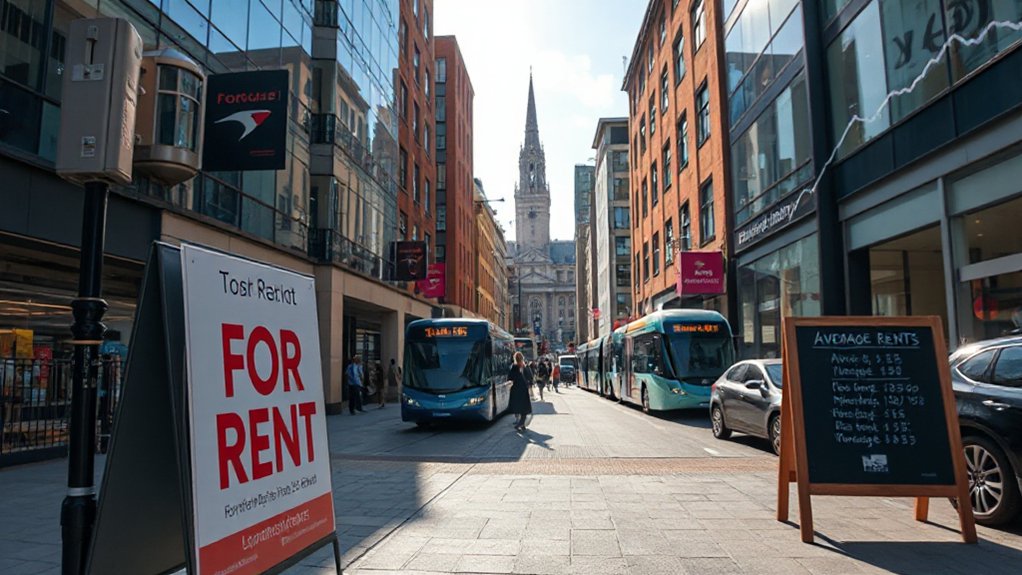

Nottingham’s rental market is tightening as housing supply stays tight and population growth outpaces completions. Rents are edging higher in core, city-center-adjacent neighborhoods, with student corridors leading growth and occupancy staying strong. Look for opportunities in upcoming transit upgrades, luxury developments, and mixed-use projects that command premium rents. Energy upgrades boost efficiency, improve appraisal value, and attract higher-quality tenants. If you keep following the data, you’ll uncover actionable steps to capitalize on these trends.
Key Takeaways
- Nottingham shows tight rental supply with lagging new builds, driving higher rents in central and university-adjacent areas.
- Demand peaks align with semester cycles; occupancy improves with campus-introduced cohorts and student-focused amenities.
- Neighborhoods near transit upgrades and mixed-use developments forecast premium rents and stronger yields.
- Energy-efficient upgrades and transparent lease terms enhance occupancy stability and support higher rental values.
- Regulatory compliance and proactive management minimize vacancies, safeguarding long-term rental performance.
What Is Driving Nottingham’s Rental Market Today

Nottingham’s rental market is shaped by a tight supply of housing, steady demand from a growing workforce, and price signals that reflect both affordability pressures and investment activity. You can see the drivers clearly in the data: vacancy rates hover near historical lows, while construction completions struggle to keep pace with population growth.
Rents respond quickly to onboarding of new employers and university intake, indicating a forward trajectory for occupancy costs. Rental legislation shapes the risk/reward calculus, with compliance costs influencing property returns and lease terms guiding tenant stability.
Historical housing stock quality, age, and location continue to anchor price differentials across districts. You should monitor permit approvals, build-out rates, and policy changes to forecast mid-year shifts and opportunities.
Are Rents Rising Where You Live in Nottingham?
Rents in your area are shifting, and the latest numbers show mixed signals across Nottingham’s neighborhoods. We’ll compare rent trends by area with current signals to spot which wards are tightening or cooling on a monthly basis.
Rent Trends By Area
Across Nottingham, rents have been edging higher in several key neighborhoods, with year-over-year growth strongest in city-center-adjacent areas and popular student corridors. You’ll see area-level patterns informed by indicators like vacancy rates, delivery cycles, and seasonal demand, helping you gauge where rent pressure is most likely to persist.
Historical rent fluctuations reveal cycles driven by university calendars and infrastructure projects, while landlord responsibilities become more salient as turnover costs rise and maintenance expectations evolve. Use the snapshots below to compare districts and anticipate shifts.
- City-center-adjacent vs. fringe corridors
- Student-dense vs. professional-heavy pockets
- Seasonal peaks vs. off-peak baselines
Nottingham Rent Signals
Get a clearer read on whether rents are climbing where you live in Nottingham by stitching together recent price moves, vacancy shifts, and delivery cycles from nearby neighborhoods. Nottingham Rent Signals synthesize current data to show where demand is tightening and where new supply is softening pricing momentum.
Expect upward pressure in areas with rising occupancy rates and shorter vacancy durations, especially near transit and employment clusters. Luxury apartments continue to anchor premium pricing, while historic properties often reflect slower appreciation but steady demand in conservation zones.
Look for momentum in delivery cycles—projects completing this quarter tend to lift nearby rents before occupancy scales. If vacancy widens in outlying districts, you may see temporary pullbacks, creating entry points for value-oriented tenants seeking affordable upgrades.
Nottingham Neighborhoods Worth Watching for Investment

Nottingham’s best-investment neighborhoods are those showing sustained rent growth, strong occupancy, and upside from planned developments. You’ll notice pockets where current rents outpace historic averages, supported by occupancy near 95% and new builds that push future yields higher.
Data-driven momentum points to areas with strong demand from professionals and amenities that attract long-term tenants. Look for neighborhoods with upcoming commercial spaces and luxury apartments that command premium rents, while maintaining affordable entry points for diversification.
Focus on areas benefitting from transit upgrades and mixed-use development, as these drive occupancy and rent retention.
1) Track rent trajectories and occupancy by sub-district.
2) Monitor new luxury apartment openings relative to absorption rates.
3) Assess commercial space leases shaping neighborhood vitality.
Student Hubs and Campus Demand Shaping Supply
Student demand waves are already shifting rental timelines as campuses pulse with intake cohorts and exam cycles. We’ll track occupancy, turnover, and price signals by hub to quantify how campus calendars correlate with inventory movements.
This metrics-driven view will illuminate where supply should adapt first to match evolving student hubs and campus-driven demand.
Student Demand Waves
Do student hubs drive the rental cycle? Yes, and you’ll see waves align with semester calendars, exam periods, and fresh intake cohorts. Data show demand spikes around welcome weeks, followed by gradual softening as leases begin.
You’ll note rental affordability tightens during peak admissions, pressuring budgets and shifting search behavior toward nearby options. Market fluctuations around campus neighborhoods track university announcements, program expansions, and partner housing deals, revealing predictable cadence that operators can model.
Use these signals to forecast occupancy, rent progression, and capex needs.
1) Semester-driven demand index
2) Proximity-to-campus affordability bands
3) Lease renewal vs. new tenancy ratio.
Anticipate continued upside where student hubs amplify demand, but guard against prolonged imbalances in high-demand corridors.
Campus-Driven Inventory Movements
Metrics indicate vacancy drainage near exam periods when occupancy pressure peaks, underscoring the importance of timely leasing and targeted marketing. Campus partnerships enable structured pre-lease campaigns, reducing vacancy days and stabilizing cash flow.
You should monitor pipeline metrics: inquiries per week, showing rates, and average days on market by building type. Landlord responsibilities expand to inclusive pricing, transparent maintenance response, and compliance with housing standards, ensuring durable tenant retention.
Anticipate stronger demand in graduate-focused clusters, guiding investment toward amenity-rich, proximate inventory that sustains occupancy.
Energy Upgrades That Boost Rent in Nottingham

Energy upgrades are a practical lever for raising Nottingham rental values, delivering measurable returns through lower energy bills and higher comfort. You’ll see tenant demand shift toward better-rated homes as efficiency metrics improve, supporting higher rents and accelerated vacancy cycles.
Targeted upgrades yield clear, trackable gains in energy performance and operating costs, enabling precise ROI forecasting.
- Upgrade insulation and sealing to reduce heat loss, boosting overall energy efficiency ratings and comfort.
- Install high-efficiency heating and cooling systems with smart controls to lower ongoing energy use and stabilize utility bills.
- Add draft-proofing and efficient lighting to enhance property upgrades without excessive capex.
Data indicates higher EUI scores correlate with premium rents, while compliant upgrades support long-term value growth.
Flexible Leases and Tenant Incentives That Work
You’ll see flexible lease options correlate with higher occupancy rates and longer tenancies, driven by metrics like renewal velocity and average occupancy duration.
Tailor tenant incentive strategies to price sensitivity, using outcome-focused benchmarks such as time-to-fill, rent collection consistency, and incremental net operating income.
Flexible Lease Options
- Lease option tiers
- Incentive-supported occupancy
- Performance-based renewals
Tenant Incentive Strategies
Data shows tenants respond to predictable incentives: modest concessions paired with measurable service enhancements boost occupancy stability without eroding margins. Implement pet friendly policies to widen potential renter pools, balanced by deposit buffers and quarterly maintenance check-ins that protect asset quality.
Track conversion rates from trials to leases, calibrating incentives as vacancy risk shifts seasonally and market demand fluctuates. Communicate value through transparent lease terms, minimum stay requirements, and flexible renewal windows, ensuring incentives scale with unit performance and citywide occupancy trends.
Market-Driven Rent Tactics
1) Pair flexible terms with renewal-rate targets
2) Calibrate incentives to demonstrate measurable value
3) Align amenity investments to demonstrated demand and occupancy velocity
Financing Nottingham Investments: Practical Pathways
Financing Nottingham investments comes down to optimizing cost of capital and aligning loan terms with rental growth projections. You’ll compare debt structures—fixed vs. floating, interest reserves, and amortization—to maximize net yield across a 5–7 year horizon.
Leverage data on local occupancy, rent escalators, and cap rates to stress-test scenarios, ensuring monthly cash flow stays positive under rate shocks. Seek lender programs tied to energy efficiency and green energy upgrades, as these can lower capitalization rates and boost appraisal value.
Consider property taxation impacts, predicting net cash flow shifts from changes in bands and reliefs. Use a mix of equity and debt to diversify risk, target loan-to-value ranges aligned with projected appreciation, and monitor quarterly metrics to adjust financing tactics proactively.
Must-Have Property Management Tools for Nottingham Landlords
To run Nottingham rentals efficiently, you’ll rely on a targeted set of property management tools that turn data into action. These tools optimize occupancy, streamline finances, and reduce risk, giving you a measurable edge in a competitive market.
You’ll track performance metrics across portfolios, including luxury apartments, to forecast returns and adjust pricing strategy. By aggregating tenant data, maintenance requests, and tax implications, you’ll improve responsiveness and compliance with property taxes.
Embrace automation for inspections, rent collection, and document storage to minimize delays and errors. The goal is clear: maximize net operating income while preserving asset value.
- Streamlined tenant screening and lease automation
- Real-time maintenance dashboards and ticketing
- Integrated financials, tax tracking, and reporting
Navigating Nottingham’s Rental Regulations and Safety
Managing Nottingham’s rental regulations and safety requires a proactive, data-driven approach: stay ahead of changes in housing standards, licensing, and enforcement by tracking key metrics like compliance days, inspection passing rates, and defect resolution times.
You’ll map lease agreements to regulatory requirements, ensuring terms cover safety, deposits, and access. Monitor landlord responsibilities, aligning practices with periodic audits and enforcement outcomes to minimize penalties and vacancies.
Use a dashboard to quantify safety incidents, certification expirations, and defect remediation timelines, then forecast compliance gaps and remediation costs.
Prioritize rapid corrective action after inspections, and standardize Documentation workflows for tenant safety disclosures.
This metrics-first stance strengthens risk management, improves service quality, and sustains licence eligibility while supporting predictable cash flow.
Actionable Steps to Capitalize on Nottingham Opportunities
You can capitalize on Nottingham opportunities by anchoring your strategy in data-driven insights and rapid action: analyze recent occupancy trends, licensing cycles, and inspection outcomes in real time to pinpoint high-return neighborhoods, property types, and pricing bands. This approach emphasizes measurable moves, not guesswork, so you can allocate capital to assets with demonstrated demand and shorter vacancy windows.
Focus on differentiators like Luxury amenities and Property aesthetics to command premium rent and reduce turnover.
- Track occupancy, licensing, and inspection signals weekly to forecast demand shifts and price elasticity.
- Target high-return neighborhoods with scalable renovation plans that enhance luxury appeal without blowing capex.
- Implement data-backed pricing bands and marketing tests to optimize occupancy, page views, and conversion.
Data-forward decisions maximize yield and resilience in Nottingham’s rental market.
Frequently Asked Questions
How Do Local Amenities Impact Rental Value in Nottingham Neighborhoods?
Public transport accessibility boosts rental values in Nottingham neighborhoods, and nearby Local attractions correlate with higher rents; you’ll see stronger demand metrics, occupancy, and price growth when amenities are within walking distance and transit hubs are convenient.
What Are Hidden Costs Behind Nottingham Property Investment Returns?
Hidden fees and maintenance costs quietly erode returns; you’ll need to quantify capex vs. opex, track vacancy rates, and model depreciation. You’ll forecast cash flow, sensitivity to rent growth, and repairs to keep metrics—and returns—on track.
Which Building Types Yield Best Cash Flow in Nottingham?
You’ll maximize cash flow with luxury apartments and student housing, as demand drives occupancy up 6–12% and yields rise 4–7% over five years, supported by occupancy metrics, rent growth, and cap rate projections.
How Does Seasonality Affect Nottingham Rental Demand?
Seasonality boosts Nottingham rental demand as students start terms and holidays ease, driving spikes in Student housing and Short term rentals. You’ll see occupancy peaks in autumn and spring, with revenue per unit rising as enrollment and tourism trend upward.
What Are Rising Regulatory Risks for Nottingham Landlords?
Ironically, you’ll love the coming friction: rising regulatory risks for landlords. You’ll navigate landlord licensing and rent control regulations, monitoring metrics, compliance costs, and projected capex, forecasting cash flow declines and risk-adjusted returns with quarterly data.
Conclusion
Nottingham’s rental momentum aligns with rising rents and tighter supply, a coincidence you can leverage. With vacancies tightening across high-demand corridors and student hubs driving occupancy, data points show year-over-year rent growth and increasing cap rates in top neighborhoods. You’ll capitalize by pairing energy upgrades with targeted upgrades, optimizing yields. Track metrics like ROIs, occupancy, and maintenance cost per unit, then scale across promising pockets. Stay data-driven, forward-looking, and ready to act as market signals converge in your favor.