
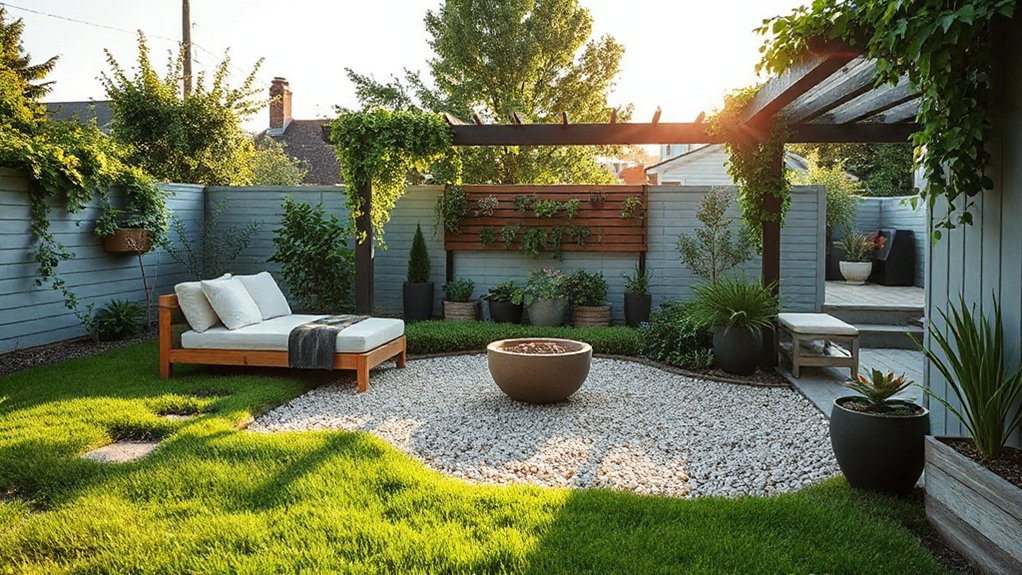

Transforming your garden into a functional living space starts with clear zones for dining, relaxing, and entertaining, all wired for easy flow and practical storage. Choose weather-ready furniture, plan modular seating, and layer lighting for day and night use. Focus on soil health and water-wise tweaks to extend longevity. Seasonal accents keep it fresh without overhauling the layout. You’ll gain a versatile backdrop that adapts with you, but the real question is how you want this space to evolve as seasons shift.
Key Takeaways
- Define purpose and zones to convert wasteful space into functional areas for dining, relaxing, and entertaining.
- Design a cohesive zone plan with clear boundaries, traffic flow, and anchor elements for versatility.
- Choose weather-ready, modular furniture and climate-resistant textiles for year-round use.
- Implement layered outdoor lighting, weatherproof hardware, and accessible storage to reduce clutter.
- Incorporate sustainable practices (drip irrigation, shade, soil health) for durable, low-maintenance year-round living spaces.
What You Really Want From an Outdoor Living Space
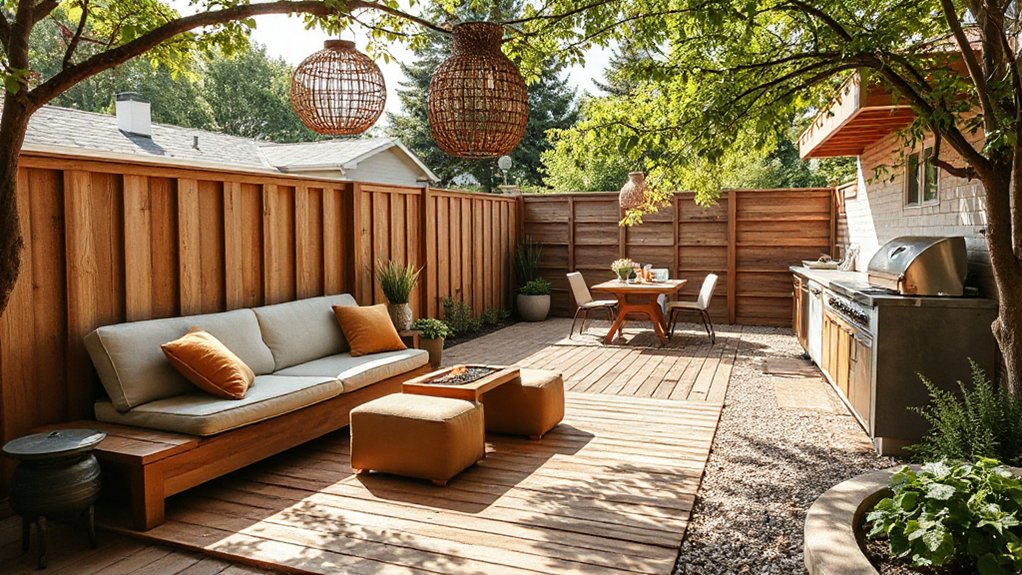
When planning an outdoor living space, start by identifying what you actually want to do there. You’ll define purpose first: entertaining, relaxing, cooking, or family time. Consider how seasons shape use, and whether you need weather protection or privacy.
Next, translate goals into practical zones—a dining nook, a lounge area, and a prep spot for meals. Think about traffic flow, storage needs, and maintenance tolerance. Choose materials that withstand your climate and align with your budget.
For outdoor decor, pick a cohesive mood that remains flexible as trends shift. Don’t overlook garden lighting, which extends usability after dark and highlights focal points.
Clarify maintenance, safety, and scalability now so future tweaks stay simple and cost-efficient. You’ll create a space that serves you today and adapts tomorrow.
Create a Simple Zone Plan That Works for Your Yard
Turning your outdoor vision into actionable space starts with a simple zone plan that fits your yard. Start by mapping zones: living, cooking, play, and retreat. Identify natural traffic flows and sun patterns to locate each zone for daily use.
Prioritize sightlines from key seating areas so you feel connected rather than boxed in. Use clear boundaries with low-maintenance edging or groundcovers to avoid visual clutter while preserving flexibility.
Select a few anchor elements—garden art, a compact seating cluster, and a utilitarian prep area—that define each zone without overpowering the space. Keep materials cohesive and scale appropriate to your yard’s size.
Finally, document a basic layout you can revise as needs change, not as fear of change.
Choose Weather-Ready Furniture That Grows With You
Choose weather-ready furniture that lasts and adapts as your space grows. Start with weather-resistant foundations that stay stable year-round.
And pick pieces sized for easy reconfiguration as your needs change. This approach keeps your outdoor setup practical, polished, and ready for whatever comes next.
Weather-Resistant Foundations
Before you buy, confirm that cushions use quick-dry foams and removable covers, enabling fast drying and easy cleaning. Apply waterproof coatings to wooden and metal surfaces to slow moisture intrusion and extend longevity.
Consider modular systems that reconfigure into dining, lounging, or entertaining zones, so your space grows with you. With these safeguards, your garden remains usable, inviting, and resilient year-round.
Grow-With-You Adaptability
To guarantee your outdoor setup stays flexible as life changes, prioritize furniture that grows with you—from modular pieces that reconfigure for dining, lounging, or entertaining to systems that add seating or surface area without a full replacement.
Grow-with-you adaptability means selecting adaptable furniture designed for evolving needs, not single-season use. Favor pieces that nest, stack, or extend, enabling flexible layouts without crowding your space.
Look for weather-ready materials that resist wind, sun, and moisture while maintaining form, so adjustments are effortless year-round.
Plan a core set of modular modules and scalable surfaces that you can expand when guests arrive or contract for intimate evenings.
With flexible layouts, you maximize function and comfort while keeping maintenance minimal and aesthetics cohesive. Your garden becomes a living space that grows with you.
Light It Right: Ambience and Safety for Outdoors
Outdoor lighting sets the mood while keeping paths safe, so plan a layered system that combines task, ambient, and accent lights to avoid glare and dark spots. You’ll create practical, polished illumination that guides movement and highlights features without overpowering them.
Choose weatherproof fixtures with warm color temperatures (2700–3000K) for inviting atmospheres and safer night orientation. Prioritize Safety protocols: use ground-fault circuit interrupters, sealed connections, and proper cable management to prevent trips.
Position task lights at outdoor dining and work zones, ambient lighting to soften spaces, and accent accents to emphasize focal trees or walls. Dimmers and timers improve energy efficiency while preserving mood.
Test layout after dark, adjust angles to minimize glare, and document wiring diagrams for future maintenance. Your outdoor space reaches fuller potential with thoughtful, compliant lighting aesthetics.
Plant Picks: Low-Maintenance, Year-Round Color
You’ll start with low-maintenance plant choices that keep your landscape vibrant year-round. Combine reliable color with easy-care staples to build a foundation you can trust in any season.
Let’s explore practical pairings and dependable textures that simplify upkeep while preserving impact.
Low-Maintenance Plant Choices
Planning a low-maintenance planting scheme can deliver year-round color with minimal effort, so you get vibrant foliage and blooms without constant upkeep. You’ll choose resilient options that thrive with minimal intervention, focusing on structure and texture.
Start with evergreen backbone plants for year-round presence, then layer with seasonal accents to maintain visual interest.
Succulent arrangements offer striking forms with low water needs and compact growth, ideal for borders, containers, or rock gardens.
Include drought tolerant shrubs to endure dry spells and reduce irrigation demands.
Pair these with mulch to suppress weeds and retain soil moisture.
Favor plants with reduced pruning requirements and pest resistance, simplifying maintenance.
Plan irrigation zones strategically, and group compatible species to minimize care while preserving continuous color and appeal.
Year-Round Color Combinations
Year-round color comes from pairing resilient, low-maintenance plants that perform in all seasons. You’ll build depth by selecting textures and forms that shift subtly with light, not with constant drama.
Begin with a core trio of evergreen structure, seasonal blooms, and foliage contrast, then layer in complementary hues for Color harmony across the calendar. Favor plants that rebloom or carry multiple color accents, so intervals between blooms feel intentional rather than sparse.
Group plants by bloom time to create micro-seasons: early-spring accents, midsummer pops, and late-season echoes. Limit palette to 2–3 main tones for cohesion, adding a fourth hue as an accent.
Keep it practical: drought tolerance, compact size, and disease resistance. With deliberate planning, you achieve lasting impact without daily upkeep.
Easy Care Garden Staples
What’re the easiest plants to rely on for year-round color and low maintenance? You’ll choose sturdy staples that thrive with minimal fuss, giving you dependable coverage and simple pest control. With smart selection, you expand plant diversity while keeping care concise and predictable.
- Perennial core: hostas, daylilies, and ornamental grasses provide texture and season-long color with little intervention.
- Evergreen backbone: boxwood or euonymus offer structure, reduce mowing, and preserve color through winter.
- Low-water performers: Russian sage, sedum, and lavender bloom reliably and resist common garden pests.
These choices streamline maintenance, stabilize microclimates, and support a cohesive design. You’ll enjoy consistent color, easier pruning, and healthier soil, all while enhancing pest control and overall garden resilience.
From Doorway to Deck: Seamless Indoor-Outdoor Flow
Keep sightlines clear, so furniture and plants don’t interrupt movement. Use weatherproof surfaces that tolerate foot traffic and seasonal changes, then anchor the deck with a consistent color palette and materials that echo indoors.
Introduce garden art as focal points nearby, not clutter, to guide the eye outward. Layer lighting thoughtfully: outdoor lighting should complement daylight, with dimmable options for evenings and safety lighting along paths.
Finally, guarantee storage and seating are accessible from both zones, enabling truly seamless, practical use of the entire living area.
Privacy on a Budget: Screens and Greenery That Work
As you extend privacy without breaking the budget, simple screens and thoughtful greenery become your most practical allies. You’ll create secluded vibes with clever, affordable solutions that blend form and function. Privacy screens and greenery barriers don’t just block sightlines; they frame your outdoor living as an intimate retreat.
- Choose modular screens: lightweight, stackable, and easy to reposition as your privacy needs shift.
- Layer plant material: fast-growing evergreen shrubs paired with tall grasses for texture and year-round coverage.
- Use vertical greens: trellises, upright climbers, and hanging planters to maximize coverage without sacrificing space.
Together, these tactics offer a scalable, cost-conscious approach to shelter and serenity in your garden.
Weatherproof Dining: Nooks That Withstand Rain and Sun
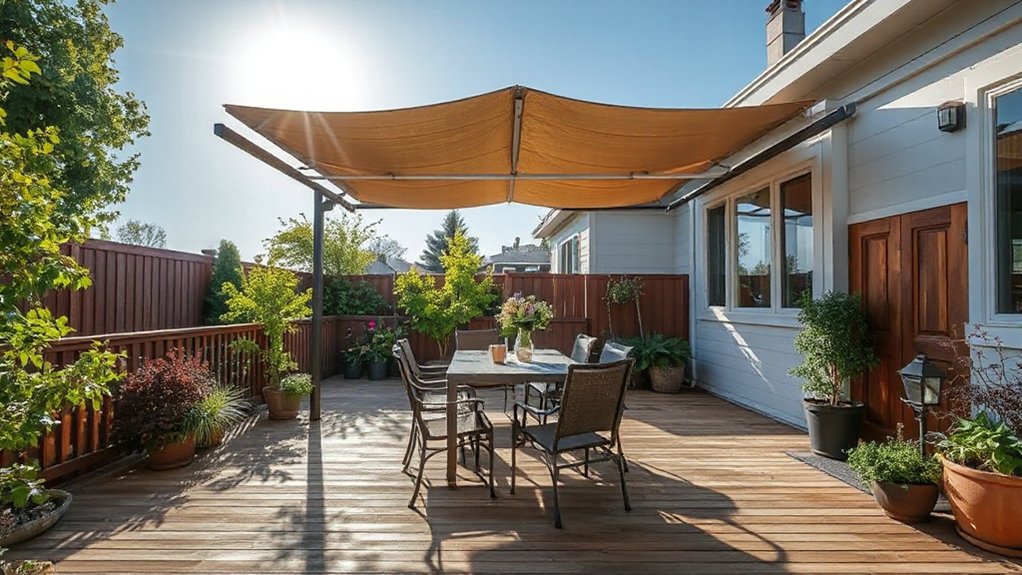
When you design weatherproof dining nooks, choose materials built to endure rain or sun without cracking or fading. You’ll prioritize rain‑screen finishes, UV‑resistant fabrics, and corrosion‑proof hardware for lasting comfort.
Start by weighing weatherproof materials and rain‑or‑shine comfort to create a space that functions reliably in any season.
Weatherproof Materials
Weatherproof materials are the foundation of durable outdoor dining spaces, so choosing options that stand up to sun, rain, and temperature swings is essential. You’ll focus on reliability, not trendiness, so pick proven choices that resist fading and warping.
To start, consider these core elements:
- Weatherproof fabrics that resist moisture and UV damage without sacrificing comfort.
- Durable coatings on furniture and fixtures that stop corrosion and surface wear.
- Low-maintenance substrates like powder-coated metal or treated woods that tolerate humidity.
Rain or Shine Comfort
Rain or shine, your outdoor dining nook should remain inviting and comfortable, no matter what the sky delivers. Begin with weatherproof furniture and cushions treated for moisture and UV resistance, so daily use stays pleasant.
Choose a canopy or pergola with adjustable shading to adapt to sun, rain, and wind without blocking views.
Seal surfaces and store servingware in weatherproof containers to prevent damage.
Install discreet drainage and a simple gutter system to divert runoff away from seating; keep a compact set of gardening tools handy for quick fixes and plant care.
For ambiance, layer outdoor decor with durable textures—synthetic wicker, treated wood, and fast-drying fabrics.
Prioritize reliable hardware and routine maintenance to sustain comfort year-round.
Hidden Storage for Clutter-Free Outdoor Living
Hidden storage can transform an outdoor space from cluttered to serene, and the best solutions blend discretion with durability. You’ll keep gear, cushions, and toys neatly tucked away without sacrificing style or accessibility.
- Install hidden compartments integrated into benches, planters, or decking for instant organization.
- Choose weatherproof outdoor storage that matches your area’s climate and foot traffic, so you don’t fight wear.
- Use multi-purpose furniture with lift-top lids or hollow seating to maximize every inch.
With thoughtful placement, clutter vanishes and the yard feels larger. Prioritize discreet, secure access for seasonal items and everyday essentials.
This approach minimizes maintenance while maximizing usable space, reinforcing the room-like feel of your garden.
Sustainable Tweaks: Water, Soil, and Shade Solutions

You’ll start with Water Conservation Tactics that reduce runoff and storage needs, while still keeping plants thriving.
Next, implement Soil Health Boosters to improve structure, nutrients, and resilience with simple, actionable practices.
Finally, explore Shade Design Solutions that chill outdoor living — and save energy — with effective, low-maintenance strategies.
Water Conservation Tactics
To conserve water effectively, start with a practical plan that prioritizes efficient irrigation, soil health, and shade strategies. You’ll minimize waste by targeting roots, improving soil moisture retention, and choosing drought-tolerant plants. Implement these tactics:
- Install drip irrigation and connect to rain barrels to capture and reuse runoff.
- Mulch beds deeply to reduce evaporation and stabilize soil temperature.
- Create shaded zones with strategically placed trees, pergolas, or shade sails to cut daytime demand.
With drip irrigation, you deliver water exactly where needed, while rain barrels supply a reliable, low-cost source. Maintain schedules that reflect weather and plant needs, not rote calendars.
Regularly inspect emitters and valve fittings, replacing clogged or leaky parts to sustain efficiency and longevity.
Soil Health Boosters
Ever wondered how to recharge your soil’s importance while saving water and easing shade needs? You’ll boost soil health by layering practical, targeted practices.
Begin with soil nutrients—test and tailor amendments to your plant mix, avoiding guesswork. Use organic amendments such as compost, well-rotted manure, and cover crops to nourish microbial life and improve structure.
Incorporate mulches to preserve moisture and regulate temperature, reducing irrigation demand.
Apply balanced nutrient inputs in modest, periodic doses aligned with seasonal growth spurts.
Practice minimal disturbance—no-till when possible—to protect soil life and prevent erosion.
Split fertilizer applications to synchronize with root uptake, maximizing efficiency.
Monitor soil moisture and texture after amendments, adjusting plans as you observe responses.
These steps foster resilient, productive beds without costly inputs.
Shade Design Solutions
Shade design isn’t just about blocking sun; it’s about integrating control with comfort and efficiency. You’ll choose shade solutions that balance cooling with light, durability with aesthetics, and maintenance ease with long-term value.
Start by evaluating site patterns, wind flow, and microclimates to tailor canopies and structures to your space. Then select canopy options that suit your climate and usage, from breathable fabrics to rigid frames.
Finally, install smart features that optimize performance and water use.
- Assess durable canopy options and material performance for your locale
- Compare fixed versus retractable shade solutions aligned with sun paths
- Prioritize low-maintenance systems that integrate with irrigation and soil health
Seasonal Transitions: Making Your Space Usable All Year

Seasonal shifts can redefine how you use outdoor spaces, so start by evaluating your climate, sun paths, and typical patterns of rain or wind to identify where you’ll gain or lose comfort throughout the year.
Then map transitional zones: lean-to shelters, movable screens, and permeable fabrics that adapt to temperature swings.
Prioritize efficiency with weather-appropriate gear you can deploy quickly, like infrared heaters, collapsible awnings, and insulated cushions.
Embrace plant pairing to reinforce microclimates—evergreens with sun-loving ornamentals create year-round structure, while deciduous varieties provide seasonal color without overwhelming heat gain.
Integrate seasonal decor to mark changes without clutter, using modular containers and battery-powered lighting for flexibility.
Maintain clear access routes and durable surfaces to preserve usability during wet or icy periods.
Flexible Seating for Guests and Daily Use
Flexible seating keeps guests comfortable and everyday life flowing, even as outdoor use shifts with weather and gatherings. You’ll want arrangements that blend form and function, so conversations stay natural and meals feel effortless. Prioritize adaptable pieces that invite lingering, yet clean up quickly for daily use. Material choices should resist weather, clean easily, and stack or fold when needed.
For balance, pair fixed zones with movable seats to accommodate clusters or solo downtime.
- Choose a bench or modular chairs near the fire pit for cozy, intimate chats.
- Add seating near the outdoor kitchen to streamline serving and socializing.
- Include a small ottoman or side stool that doubles as a step or extra surface.
This approach keeps space welcoming, efficient, and resilient year-round.
Quick Wins: Modular, DIY, and Repurposed Finds
Quick wins in modular, DIY, and repurposed outdoor furniture hinge on smart thrift and agile set-ups. You’ll approach spaces with intent, selecting modular pieces that scale with your needs and stack for weather shifts.
Your DIY projects should emphasize sturdy joints, weatherproof finishes, and simple maintenance routines. Start with repurposed finds: a salvaged bench becomes seating, a crate transforms into a side table, and old pallets forge modular platforms.
Measure precisely, plan progressions, and document dimensions for future swaps. Layer comfort with cushions and weather-resistant fabrics, prioritizing quick assembly and disassembly for seasonal changes.
Keep tools organized, glue and screws labeled, and plan for airflow and drainage. With disciplined curation, you achieve versatile, durable outdoor furniture that saves money without sacrificing style or function.
Maintenance Routines That Keep Your Outdoor Space Sharp
Maintenance routines keep your outdoor space looking sharp year-round. To stay ahead, build a simple cadence that protects structure, soil, and style while showcasing landscape lighting and outdoor art.
- Schedule seasonal checks: inspect drainage, trim overgrowth, and clean fixtures to maximize light and curb appeal.
- Maintain surfaces: power-wash decking, seal stones, and refresh paint or stain every season to prevent wear and preserve color.
- Refresh focal points: rotate outdoor art and adjust lighting levels for dramatic effect, ensuring shadows flatter key features.
With these steps, you avoid buildup, reduce repairs, and keep spaces inviting.
Consistency makes maintenance feel automatic, not burdensome, while preserving the garden’s functional living-space promise.
Frequently Asked Questions
How Do I Budget for a Full Outdoor Space Makeover?
Define your priorities first, then draft a budget with line items: garden lighting, outdoor furniture, hardscaping, plants, and labor. Allocate 30% contingency, compare quotes, and track costs weekly to stay on target. Prioritize durable, timeless choices.
What Permits or Codes Apply to Outdoor Structures?
Building permits and zoning regulations apply to outdoor structures; you’ll need approvals before construction. Check local codes, submit plans, and comply with setbacks, height limits, and utility permissions to avoid violations and guarantee safe, compliant improvements.
Which Plants Handle My Local Climate With Minimal Care?
Native plants thrive in your area, and drought tolerant species minimize upkeep. You’ll choose climate-ready options, plan proper placement, and water smartly, then observe resilient growth with less fertilizer, fewer pests, and enduring seasonal beauty.
How Can I Create Accessible Paths and Seating for All Ages?
You can create accessible paths and seating by including Accessible ramps and wide, even surfaces, then place Cozy firepits to anchor gatherings; guarantee non-slip materials, clear edges, and sturdy seating so guests of all ages feel welcome and safe.
What Safety Features Are Essential for a Family Yard?
Think of a trusted fence as a “seven-foot lullaby” that keeps danger out. Prioritize playground safety with sturdy gates and soft surfacing; choose fencing options that separate play areas, gate latches, and extra lighting for night visibility.
Conclusion
You’ll close the chapter with a space that whispers “almost there.” Think of it as a gentle nudge toward ease: a yard that breathes with you, not at you. With smart zoning, weather-ready furniture, and lighting that guides without shouting, you’ve crafted a backbone that adapts. Seasonal tweaks ease in like a soft compliment, and modular choices keep you comfortable without overdoing it. The result is subtly elevated, practically perfect, and quietly ready for life—every day, all year.