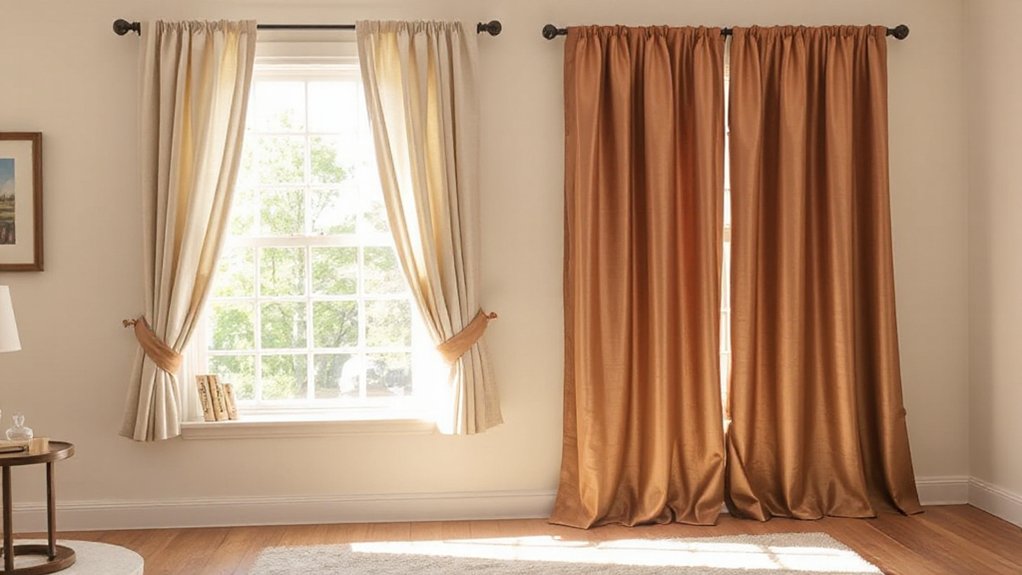

Sill curtains are your casual, light-friendly option when you want an unobstructed outdoor view and daylight to wash the room. Floor-length drapes add drama, scale, and privacy, softening glare and elevating the space. If you have many windows or want quick access, sill works best; for formal rooms or strong insulation, go floor-length. Consider fabric weight and hardware—heavier fabrics need sturdy hardware. Want a simple decision shortcut? There’s more to explore, including room-by-room tips and practical combos.
Key Takeaways
- Sill curtains offer quick light control with minimal window obstruction, ideal for rooms with strong outdoor views and smaller windows.
- Floor-length curtains create a polished look, shade glow softly, and enhance privacy and insulation in larger or formal spaces.
- Fabric weight and texture determine brightness control and mood; lighter fabrics brighten, heavier fabrics mute glare and increase privacy.
- Height and scale impact room feel: sill curtains read casual and casual, floor-length adds drama and vertical emphasis.
- Maintenance and durability vary: sill options are easier to access and clean, while floor-length require sturdier hardware and lint control.
How Sill vs Floor-Length Curtains Change Light and View
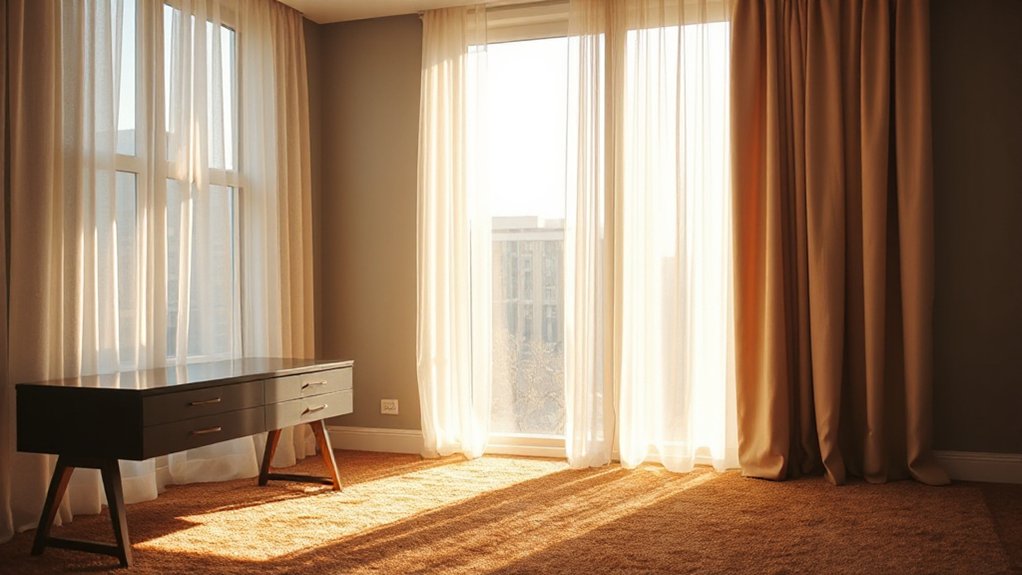
Sill-length curtains let you see more of the view and admit light directly through the gap above the rod, while floor-length curtains frame the window and create a softer, more controlled glow.
You’ll notice brightness shifts: sill-casings emphasize outdoors and daylight while floor-length softens glare and blends with wall tones.
Color coordination matters here; align curtain hue with wall or furniture to unify the room, or deliberately contrast for a focal accent.
Fabric texture influences mood as much as color—sleek sateen reflects crisp daylight, while matte velvet mutes brightness for evenings.
If you prioritize energy comfort, floor-length offers better insulation at the sill, reducing drafts.
For quick, lively spaces, sill-length keeps a transparent, active feel.
Choose with intention, then enjoy the result.
When Sill Curtains Make Sense: Rooms and Windows That Benefit
Sill curtains work best in rooms where you want a sense of openness without sacrificing privacy, especially in spaces with abundant outdoor views like living rooms, dining areas, and sunlit kitchens. They excel when you need quick, unobtrusive light control without overwhelming window scale.
In smaller windows or rooms with busy patterns, keep the palette cohesive to avoid visual clutter. Color coordination matters: match curtain hues to walls or furnishings for a seamless look, or use a subtle contrast to highlight architectural features.
Fabric selection also matters; choose lightweight, breathable materials for casual settings or denser weaves for a polished feel. Prioritize even hems and simple hardware for a clean, practical installation that preserves sightlines and airflow.
When Floor-Length Drapes Shine: Drama, Privacy, and Room Scale
Floor-length drapes transform a room by echoing your need for drama and privacy while subtly expanding the space. You get bold impact when light is filtered and silhouettes frame the view, yet you retain control over how open or intimate the room feels.
As you weigh scale, consider how the drapes’ presence shifts privacy and the overall room proportion.
Dramatic Privacy Impact
When floor-length drapes catch the light just right, they transform privacy from a shield into a statement—dramatic, purposeful, and room-defining. You’ll notice an immediate shift: visibility softens, yet light still circulates, preserving atmosphere without surrendering control.
This dramatic privacy impact lets you curate scenes—bright mornings, moody evenings—without constant adjustments. To maximize effect, choose dense, nonreflective fabrics in rich tones that absorb glare while maintaining energy efficiency.
Track systems or heavy panels reduce peeking angles, reinforcing boundaries without feeling punitive. The result is privacy enhancement that doesn’t read as fortress-like, but as deliberate design.
Pair with minimal sheer layers for optional transparency, or forego them for maximum drama. The payoff is clear: enhanced security, refined light, and heightened aesthetic appeal.
Room Scale Enhancement
Drapes that puddle to the floor don’t just frame a window—they redefine the room’s scale, making spaces feel taller, cozier, and more intentional. When you pursue Room Scale Enhancement, you leverage floor-length drama to anchor design and acoustics alike.
Start with fabric selection that suits your vibe—textured cottons for casual rooms, velvets for luxe dens, or linen blends for breezy spells of light.
Next, color coordination matters: choose tones that echo walls or art to elongate sightlines, or go bold with a contrasting hue for focal impact.
For practicality, hang rods higher than the window head and allow extra puddle to soften edges. This approach adds depth without clutter, delivering a deliberate, polished ambiance.
Fabric, Weight, and Light Control: What Each Curtain Type Really Does
Fabric and weight determine how each curtain type handles light, privacy, and drape. You’ll feel the difference in how much daylight slips through and how quickly you can shade a room. Sill curtains, lighter by nature, soften glare yet often reveal more under bright sun. Floor-length options block more fully and offer deeper privacy when closed.
Heavier fabrics create inertia, yielding solid room-darkening and a crisp hang, but they’ll demand sturdier hardware. Lighter weaves invite airflow and a relaxed silhouette, whereas dense materials deliver substantial coverage and silhouette discipline.
Material textures influence perception: matte crepes read softly and airily; satins reflect a hint of glamour; fabrics with higher thread counts boost durability. Fabric durability matters for longevity; choose accordingly to future-proof your setup.
Color, Pattern, and Decor Coordination With Sill or Floor-Length
Color and pattern choices hinge on how you want the room to read from both near and far: sill curtains read lighter and can echo wall color or decor accents, while floor-length styles anchor a space with a more dramatic, cohesive palette.
- Color harmony: start with your dominant wall tone, then layer with a complementary curtain shade
- Pattern balance: choose subtle patterns for smaller rooms or bold prints for larger spaces
- Decor styling: align curtain hardware and trim with metals or wood tones in the room
- Proportion: pair lighter sill curtains with airy furnishings, heavier floor-lengths with substantial pieces
- Cohesion: repeat a key color across pillows, art, and accessories for unity all around
Maintenance and Practicality: Cleaning, Durability, and Longevity
Maintenance and practicality go hand in hand: you’ll want curtains that stand up to daily use without demanding constant care. In this section, consider how Cleaning frequency affects upkeep and how Fabric durability supports long life.
Sill-length options typically experience less wear from passing traffic near the window, but frequent handling can still loosen fibers. Floor-length styles might show more lint and dust, yet sturdy fabrics resist fray and snag.
Pick materials with reputable resilience, easy washing, and quick drying to minimize downtime. Look for machine-washable blends or wrinkle-resistant finishes to simplify care.
Consider how gaps, weights, and hems influence longevity; heavier curtains need robust hardware to hold up. Ultimately, durability paired with practical maintenance keeps your chosen style looking fresh year after year.
Budget and Installation: Costs, Rods, and Fit for Your Space
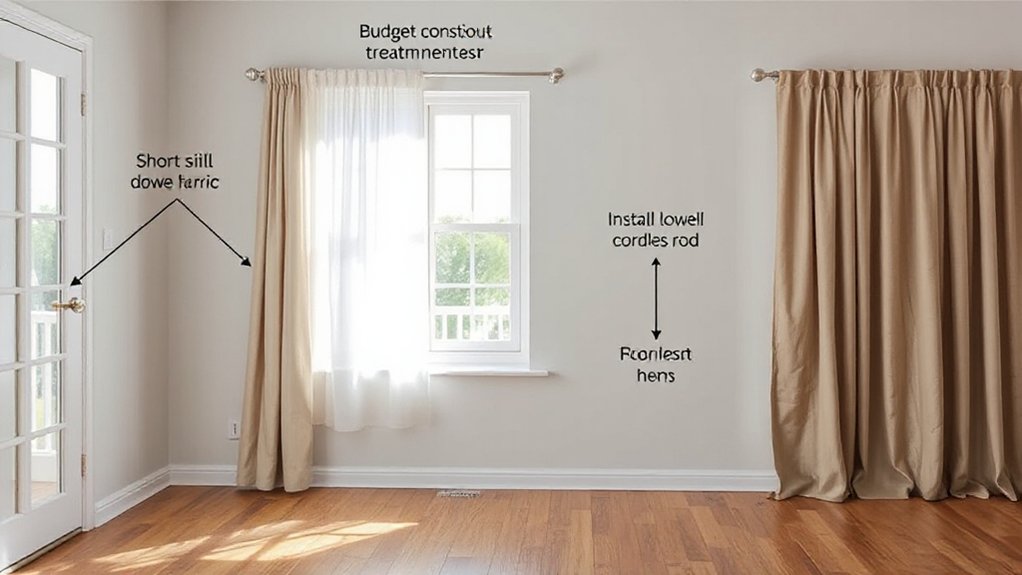
If you’re balancing style with practicality, start by nailing a realistic budget, then map out the installation plan—the right rods and a proper fit can save time and headaches later. Your window treatment choices hinge on material selection and hardware that hold up to daily use without sacrificing aesthetics.
- Budget-aware picks that still elevate your room
- Sturdy rods, smooth operation, minimal maintenance
- Precise measurements for a flawless fit
- Quick-install options to avoid wall damage
- Coordinating materials that reflect your style
With the right balance of cost, durability, and design, you’ll enjoy a polished look that lasts. Keep the focus on material selection and system compatibility, and you’ll minimize surprises during setup while maximizing comfort and privacy.
Room-by-Room Guidelines: Kitchens, Living Areas, and Beyond
From kitchens to living rooms, tailor your window treatments room by room to balance light control, privacy, and style without clutter.
In kitchens, opt for easy-clean curtain materials or durable blinds that resist splashes, selecting window treatments that won’t obstruct ventilation or cooking workflows.
Living areas benefit from layered options—sheer for soft daylight and heavier drapes for privacy and acoustics—so you can morph ambiance with ease.
In bedrooms, prioritize blackout fabrics and insulating linings to sustain comfort and rest.
Bathrooms call for moisture‑resistant materials and simple hardware to avoid maintenance hassles.
Beyond, consider flexible hardware and color coordination to unify spaces.
Choose curtain materials and window treatments that scale with your decor, ensuring practical function without compromising aesthetic clarity.
A Simple Decision Framework: Choose Sill or Floor-Length With Confidence
Height sets the mood, so you’ll weigh how tall your windows feel with sill vs. floor-length to guide the look.
Consider how the room’s function—say, a sunny living area or a dimly lit bedroom—shapes where emphasis should land. Use a simple rule: align with activity, light, and scale to decide confidently between sill and floor-length.
Height Influence On Style
Choosing the right curtain height changes the room’s feel in an instant: vertical lines draw the eye upward, while hemmed lengths ground the space. Height influences style by signaling formality, balance, and light behavior, so you decide with intention.
- Material textures mirror your room’s tactile vibe
- Color coordination ties window dressings to furniture and art
- Sill heights keep casual, breezy energy in smaller spaces
- Floor-length, with its gravity, elevates drama and elegance
- Subtle hems prevent visual clutter and misreads of height
Consider how you want to feel when you enter: brighter, taller, calmer, or cozier. Your choice shapes proportions, reflections, and mood—without changing windows.
Room Function Considerations
Room function should guide your choice between sill and floor-length curtains, pairing practicality with mood. In living spaces, consider traffic patterns, light control, and furniture layout—these determine whether you prioritize easy access or a clean, uninterrupted drape.
For high-activity rooms, sill curtains offer quick styling without snagging, while floor-length options can soften edges and frame views, enhancing interior design. In bedrooms, prioritize privacy and insulation, leaning toward floor-length to minimize gaps and drafts.
In study or media areas, choose window treatments that reduce glare without obstructing screens, favoring tailored sill or light-absorbing panels. In kitchens, keep functionality top of mind; consider short curtains or cafe style.
Align with your personality, budget, and maintenance tolerance for a cohesive look.
Real-World Scenarios: Common Layouts and Goals in Action
When you’re planning curtain layouts in real rooms, practical goals drive every choice—from maximizing light to creating a perceived height or shaping traffic flow. You’ll match window treatments to function, then tune the texture, weight, and color for aesthetic balance.
- You’ll prioritize daylight without glare, choosing lighter fabrics or layering for flexibility.
- You’ll frame architectural features to emphasize sightlines and scale.
- You’ll stage openings to guide movement, using panels that skim floor or stack neatly.
- You’ll select materials that echo furniture while remaining easy to clean.
- You’ll test height and fullness to achieve a cohesive, polished vibe.
This approach keeps the look purposeful, stylish, and livable.
Frequently Asked Questions
Do Sill Curtains Affect Window Insulation Differently Than Floor-Length?
Sill curtains don’t insulate as well as floor-length ones because they miss longer fabric layers; for better window insulation, choose heavier curtain materials and guarantee proper lining. Altogether, you’ll control drafts while maintaining style and practical warmth.
Can Floor-Length Drapes Work Well in Small Rooms?
Yes, floor-length drapes can suit small rooms. For example, you replace short blinds with floor-length panels to create height. You’ll enhance decorative accents, choose light, sheer fabrics, and pick fabric choices that maximize space and light.
Are Sill Curtains Easier to Clean Than Floor-Length Drapes?
Sill curtains are easier to clean, you’ll notice less dust accumulation and simpler maintenance. You’ll enjoy quick wipe-downs and fewer fibers to wash, making them feel practically stylish while keeping the ease of maintenance in check.
How Do Blinds Interact With Sill Vs Floor-Length Curtains?
Blinds work with both, you just tailor installation height to preserve curtain styles and aesthetic appeal. You’ll avoid crowding when you choose sill curtains, yet still leverage floor-length for drama—practical, stylish, and adaptable to any room.
Do We Need differentHardware for Each Curtain Type?
Yes, you’ll need different hardware for each curtain type. Curtain installation depends on weight and mounting style, and hardware compatibility varies. Choose rods, brackets, and supports that match your curtains and guarantee secure, smooth operation.
Conclusion
Choosing between sill and floor-length curtains comes down to the vibe you want and the light you crave. Sill curtains keep things crisp, modern, and ideal for small or busy rooms, while floor-length drapes add drama, privacy, and scope to larger spaces. Think of your space like a stage: sill prompts clean lines, floor-length commands attention. Whichever you pick, your window treatment should feel intentional, easy, and effortlessly stylish—your space, your story, your glow.