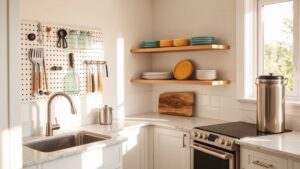


Quick, simple space savers start with a fast space audit: measure footprint, map flow, and test layouts before buying. Pick space-smart furniture that hides storage or folds away, and use vertical storage like wall shelves to free floor space. Turn corners into storage with hidden nooks and under-bed bins. Create zones with rugs and color, not barriers, and keep clear walking paths. If you keep refining routines, you’ll uncover more clever hacks as you go.
Key Takeaways
- Conduct a quick space audit to measure footprint, identify high-traffic areas, and test layout changes before buying furniture.
- Choose multi-functional, space-saving furniture like beds with hidden storage or foldable desks.
- Use vertical storage with wall shelves and staggered racks to free floor space and improve accessibility.
- Create hidden or tucked-away storage solutions (under-bed bins, hidden compartments, pegboard organizers) to reduce clutter.
- Zone rooms with rugs and color to define areas, maintain clear pathways, and reinforce function.
What Space-Saving Ideas Really Count (and Why)

You don’t have to chase every gimmick to save space; what matters are ideas that fit your daily flow, solve a real problem, and scale with your needs. When you choose space-savers, prioritize impact over novelty. Focus on practical moves that compound: versatile furniture, hidden storage, and thoughtful layouts.
Decorative accents and color schemes should reinforce function, not clash with clarity. Pick pieces that can perform double duty—ottomans with storage, wall desks, foldaway beds—and arrange zones that reduce clutter. Invest in a few smart organizers rather than many disposable hacks.
Measure how you move through rooms, not just how they look. If a solution saves minutes and creates breathing room, it counts. Your space gains coherence, ease, and a cleaner rhythm.
How to Audit Your Space in 3 Steps: Measure, Map, Prioritize
To turn those smart ideas into real gains, start with a simple audit: measure what you have, map how you move, and rank what to tackle first. You’ll begin by measuring footprint, storage, and daily touch points, then sketch a quick map of how you flow through each room. This reveals gaps and choke points, so you can prioritize changes that yield the biggest gains.
Use space efficient techniques to test layouts before committing tools or furniture. When you map, note high-traffic areas and underused nooks, then rank tasks by impact and effort.
Apply clutter reduction strategies—clear surfaces, vertical storage, and consistent zones. Finish with a compact action list, so your plan becomes progress, not promise.
Space-Smart Furniture That Earns Its Keep
Space-smart furniture earns its keep by doing double duty—think beds that stash clothes, desks that fold into walls, and ottomans that hide charging stations. You’re designing a room where every inch earns its keep, so pick pieces that pull weight without crowding space.
A sofa bed with integrated storage keeps blankets tidy, while a wall-bed with a hidden desk creates a flexible daytime zone. Look for multi-use tables that collapse to a slim profile, and ottomans that conceal cords yet still offer seating.
Add space-themed art and celestial decor to cue imagination without stealing footprint. Choose streamlined silhouettes, hidden hinges, and lightweight frames for easy rearranging. You’ll enjoy cleaner floors, calmer rhythms, and furniture that quietly earns its keep.
Vertical Storage: Wall Shelves and Organizers That Breathe
Vertical storage frees up floor space without cramping style. You reclaim blank walls with sleek shelves and organizers that breathe, keeping essentials within reach. Cut clutter by grouping items by use: books, keys, jars, and gadgets on staggered racks that add architectural interest.
Install low-profile brackets to maximize depth, then stack boxes, bins, and baskets for quick access. When you swap horizontal surfaces for vertical planes, you gain surface area without crowding rooms.
For greenery, consider wall-mounted planters and compact displays that don’t steal square feet. Grow a practical touch of nature with vertical herb gardens tucked near the kitchen for fresh yields.
The result is tidy, functional, and airy—a room-transforming tactic that stays quietly stylish.
Turn Every Corner Into Storage: 6 Clever Nooks to Use

Hidden corner shelves tuck storage into overlooked spaces, while under-stair tricks transform awkward feet into useful nooks. Nook bench innovations invite seating plus hidden compartments, turning everyday areas into secret stash spots.
Together, these ideas show how 6 clever nooks can maximize every square inch without crowding your rooms.
Hidden Corner Shelves
Corner shelves tucked into unused nooks transform tight spaces into tidy storage without stealing floor room. Hidden corner shelves exploit wasted angles, turning walls into work surfaces and display zones without crowding the main area.
You install slim units that blend with décor, then slide in books, candles, or tiny plants for instant personality. Their secret storage keeps clutter off visible surfaces while maintaining accessibility—perfect for desks, hallways, or bedside corners.
Opt for adjustable or floating designs to tailor height and depth as needs evolve. Keep lip pulls minimal to preserve clean lines.
With clever mounting, every corner becomes a purposeful nook rather than wasted space. Hidden corner shelves prove small spaces can feel larger, and every item earns a stake. secret storage
Under-Stair Storage Tricks
Under-stairs space is prime real estate waiting to be opened. You’ll turn that awkward gap into smart storage with deliberate layout and accessible access. Explore staircase plans that maximize volume: pull-out drawers, slim bins, and hinged panels that disappear when not needed.
Under stair lighting guides your choices, keeps items visible, and reduces clutter from dim corners. Choose modular shelves that adapt to your stash, from seasonal gear to everyday odds and ends. Height varies, so tailor compartments to what you actually own.
Add a labelled, rotating rack for quick grabs, and seal dusty corners with a breathable liner. Keep surfaces clean, snag-free, and easy to maintain, so this hidden space stays a tidy, functional extension of your home.
Nook Bench Innovations
- Hidden-lid benches for blankets and boards
- Window-seat organizers with pull-out bins
- Corner nooks for magazines and remotes
- Upholstered storage for cushions and throws
- Decorative baskets as visual accents
Living-Room Storage Hacks That Look Intentional

Hidden storage isn’t an eyesore when it’s part of the design. You’ll discover concealed storage secrets that hide in plain sight, keeping the room clean without shouting “storage.”
Pair those clever, stylish clutter solutions with intentional styling to prove function can feel like décor.
Concealed Storage Secrets
When you want room to breathe, clever concealment does the heavy lifting without shouting for attention. Concealed storage secrets pop up where you least expect, blending function with form so your living room stays curated and calm.
You’ll spot hidden compartments and secret compartments tucked behind art, below seating, and inside coffee tables, all designed to vanish from sight while staying handy.
- Hidden compartments under cushions
- Secret compartments within ottomans
- Discreet panels behind framed art
- Storage benches with protected lids
- Dual-purpose side tables with hollow cores
Stylish Clutter Solutions
Ever feel clutter creeping in? You can tame it with stylish clutter solutions that read intentional, not chaotic. Start by choosing space themed decor as focal points, then tuck everyday essentials behind statement pieces so nothing looks disjointed.
Opt for multiuse furniture—ottomans with hidden storage, coffee tables with drawers—to keep piles out of sight. Group-in a gallery of astronaut figurines for a playful, cohesive vibe that signals purpose rather than mess.
Use floating shelves to display manuals, remotes, and small gadgets, freeing floor space and easing maintenance. Color code storage bins under tables, so you know where everything lives at a glance.
Finally, rotate items seasonally; a quick swap keeps the room fresh while preserving order. Your living area stays sleek and intentional.
Kitchen Decluttering That Keeps Essentials at Hand
Decluttering your kitchen without sacrificing function starts with a simple premise: keep what you actually use daily, and put it where you reach it most. You’ll streamline by prioritizing essentials and relocating rarely used items to higher shelves or drawers. This keeps counter space calmer and cooking smoother, so you truly enjoy meal prep.
- Curate a daily kit of Kitchen gadgets you actually use
- Designate a single spot for Recipe storage and keep it full
- Arrange tools by rhythm of use (near the stove, near prep area)
- Label containers for quick, confident retrieval
- Trim duplicates, embracing multi-use items for flexibility
With this approach, you’ll claim space without sacrificing function, turning clutter into purposeful ease.
Bedroom Optimization: Under-Bed and Closet Wins
Tiny gaps, big gains: your under-bed and closet can become powerhouse organizers that mirror the kitchen mindset—use what you need, stash what you don’t, and keep daily routines flowing.
You optimize by choosing shallow under-bed boxes for off-season gear and bed linen, labeled clearly for quick access. Slide in vacuum-sealed bags to shrink bulky items, and use uniform containers to maximize space ceiling-to-floor.
In the closet, install a simple lighting plan—closet lighting that activates with a hinge or touch—so visibility stays high and rummaging stops. Group like items: sheets, pillowcases, and extra blankets in one tier; seasonal clothing in another.
Keep a dedicated drawer for small essentials. With tidy zones, morning routines become seamless and calm.
Bathroom Organization That Stays Tidy
Transform a chaotic bathroom into a calm, efficient routine space by designing smart zones: daily essentials within arm’s reach, and infrequently used items tucked away. You’ll keep countertops clear with a simple vanity organization plan that respects flow and function. Group products by purpose, label containers, and swap heavy packages for compact refills. Put a caddy in reach of the sink for bathroom essentials you grab every day.
- Create a dedicated daily drawer for toothbrushes, toothpaste, and skincare.
- Use a small basket for cosmetics near the mirror.
- Install shelves for towels and backups.
- Label jars for cotton swabs, q-tips, and cotton balls.
- Stash extra products in a labeled bin or cabinet.
This keeps bathroom essentials organized and clutter-free.
Entryways That Welcome: Shoe and Coat Zones That Work
Your entryway should greet you with efficiency, not chaos, and a smart shoe and coat zone does just that. You clear the threshold with a compact bench, a sturdy shoe tray, and a wall hook row within easy reach.
Put irregular items away: bags on a slim shelf, umbrellas in a tall canister, keys on a labeled hook. Choose a shallow cubby for sneakers and a dedicated coat rack for heavier outerwear.
Lighting matters: bright, even illumination prevents rummaging and accidents. Add outdoor lighting along the entry path for safety, plus a small solar lantern that makes late arrivals feel welcomed.
Integrate garden pathways and accents near the door to unify indoor and outdoor flow without crowding space.
Small-Space Furniture Layouts for Better Flow
You design around Optimize Traffic Flow to keep pathways clear and rooms feel open.
Choose Multifunctional Furniture Pieces that hide storage and switch roles as you move through the space.
Use Zone Clear Visuals to separate areas without walls, guiding movement with simple lines and thoughtful placement.
Optimize Traffic Flow
Clear traffic flow in a small space starts with smart furniture placement that invites movement rather than traps it.
- Prioritize clear paths by keeping walking zones at least 2 feet wide and unobstructed.
- Use low-profile pieces to preserve sightlines and make rooms feel larger.
- Position seating to face open space, not walls, guiding natural circulation.
- Define zones with rugs and color, not barriers, for seamless flow optimization.
- Choose multipurpose furniture that stays out of walkways, reducing clutter and confusion.
With deliberate layouts, you’ll notice space traffic smooths itself, energy stays directed, and rooms feel inviting.
You’ll exploit every square foot without crowding. Small moves, big impact—flow becomes your built-in feature, not an afterthought.
Multifunctional Furniture Pieces
In small spaces, multifunctional furniture becomes the backbone of flow, letting one piece do double duty without crowding the room. You’ll combine form and function, choosing pieces that serve more than one need. A sofa that hides a bed, a coffee table with hidden storage, or a wall-mounted desk that folds away when not in use keeps pathways clear.
Prioritize silhouettes that feel light yet sturdy, so movement stays easy and rooms breathe. Introduce novel seating that doubles as storage or a surface, so guests have spots to perch without adding clutter.
Complement with statement lighting to define zones and add personality without bulk. You’ll craft versatile layouts that adapt from daily living to entertaining while maintaining a calm, cohesive vibe.
Zone Clear Visuals
Sculpt zones with intentional visual cues that guide movement and signal function without crowding the room. Zone clear visuals help you separate living, dining, and work spaces using alignment, color, and furniture height, so flow stays smooth and open.
- Use rug boundaries to anchor seating and whisper traffic directions.
- Pair low-profile consoles with tall shelves to create vertical separation.
- Choose consistent color accents to unify adjacent zones without clutter.
- Float a compact desk near but not in the main path for focused tasks.
- Emphasize negative space to let each zone breathe, reducing space myths and clutter psychology.
Baskets, Bins, and Boxes: Choosing the Right Organizers
Choosing the right baskets, bins, and boxes starts with a clear sense of function. You’ll match containment needs to space, weight, and access.
Start by grouping by use: lightweight odds and ends in decorative baskets, heavier items in sturdy storage bins.
Size matters: choose units that fit shelves, under beds, or closet niches without crowding.
Visual weight matters too—opt for uniform shapes for a cohesive look, or mix textures to add personality.
Lids vs. open tops depend on visibility and dust concerns; compressible options save space where stacks grow tall.
Labeling helps you maintain order after every adjustment.
Material choice influences durability and care—fabric for soft storage, plastic or metal for high-traffic zones.
Pick organizers that invite you to sort, not stall.
Tidy Tech: Smart Cable Management Ideas
You’ll start with cable management essentials that keep cords tidy and accessible. Hidden tech cabling lets your setup look clean while hiding clutter, so you can focus on your workspace.
Desk organization hacks tie it all together, making every device easy to reach without the mess.
Cable Management Essentials
Cable clutter can steal space and focus, so start with a simple plan: map out your devices, outlets, and where cables actually live. You’ll gain clarity and control as you design a neat backbone for every cord.
With a practical layout, you’ll spot gaps, minimize crossings, and prevent overhangs. Now, embrace smart habits that keep things tidy beyond today.
- Group cords by zone and label both ends
- Use cable sleeves or clips to hide and guide paths
- Choose furniture with built-in cord ports for discreet routing
- Implement wireless charging stations to reduce dangling cables
- Conceal excess lengths with retractable reels or ties for cord concealment
Hidden Tech Cableing
Embrace labeled, color-coded bundles so you can identify paths at a glance, not a maze. Opt for wall-mounted power strips and recessed outlets to keep plugs neat and off desks.
Use cable combs or magnetic clips to maintain orderly runs and prevent tangles during builds or swaps.
When you plan tech integration, consider wireless backups and smart plugs to reduce visible clutter. This approach supports a cleaner aesthetic while supporting a smart home mindset—less visible clutter, more functional space, and smarter, safer cable management.
Desk Organization Hacks
When you’re desk-deep in tasks, a tidy workspace can spark flow as surely as a charged laptop. You’ll reclaim space without clutter by embracing smart cable management that’s both practical and pretty. Think vertical roots for cords, label every plug, and route under-desk legs to vanish trip hazards.
Use a slim power strip mounted beneath the desk to keep hotspots off the surface, and consider magnetic clips to keep cables in line. Under-mat cable sleeves tame tangles, while modular trays corral adapters and USB hubs.
For longer drapes of cord, coil with a gentle twist and secure with Velcro. Small tweaks, big impact: Space optimization and clutter control converge to power your focus.
- Mount a slim power strip under the desk
- Label cords at both ends
- Add magnetic clips along cable paths
- Use under-desk cable sleeves
- Implement modular tray systems
Seasonal Storage Without the Bulky Commitment
Seasonal storage doesn’t have to feel like a DIY marathon; with smart, space-saving tricks, you can swap out bulky items without crowding your home. You’ll stash Seasonal decor in slim bins that stack high on a single shelf, keeping the floor clear.
Rotate textiles in vacuum-sealed bags, labeled by season, so you pull the right look without dragging boxes around.
When it comes to Holiday gift prep, choose compact solutions: use modular containers that collapse flat, or multipurpose organizers that serve as both display and storage.
Repurpose under-bed drawers for seasonal gear and keep a calendar box to track rotation — you’ll know exactly when to switch.
Clean, label, and consolidate; simplicity stabilizes your seasonal cycle.
Weekend-Ready DIY Storage Projects
- Build a wall-mounted cubby system with labeled bins
- Create a pegboard entry organizer for keys, bags, and hats
- Convert a hollow coffee table into a hidden-gear chest
- Install floating shelves with integrated lip for small items
- Craft a rolling cart for craft supplies and chargers
Where to Invest vs. Improvise in Storage Solutions
Figuring out where to invest and where to improvise can save you time, money, and space. You’ll want to put real investments into items that endure, like sturdy closet systems, modular shelving, and quality storage bins that stack neatly. These aren’t flashy; they’re reliable frames that keep rooms tidy longer.
Outside the core, improvise with clever solutions: repurposed drawers, tension rods, or under-bed organizers that adapt to changing needs. Vintage finds can surprise you with character and affordable durability, especially when you negotiate price and repurpose parts.
Pair them with DIY hacks that tune the space without breaking the budget. The goal isn’t perfection; it’s balance. Invest smartly where it counts, improvise where it makes sense, and your space stays organized with less effort.
Practical Decluttering Routines for Long-Term Calm
Start with a simple Daily Declutter Ritual that fits your rhythm, so tiny clears add up without feeling dramatic.
Build a Zone-Based Storage System that makes every item findable in seconds, cutting back on rummaging and rethinking.
Set a Seasonal Reorganization Schedule to refresh routines, so calm sticks as you adapt to changing needs.
Daily Declutter Rituals
Daily decluttering isn’t a once-and-done task; it’s a brief, intentional ritual that keeps chaos from piling up. You’ll wield small, consistent actions that add up to calm, not constraint, so you stay in control of your spaces.
- Set a 5-minute reset timer each evening
- Return items to their homes, immediately
- Sort discard, donate, or recycle in one pass
- Refresh focal areas with simple touches
- Note clutter hotspots and tackle them tomorrow
Adopt the rhythm: a quick sweep, a mindful glance, a tidy return. You’ll notice how Creative plant displays and decorative wall art transform with fewer competing pieces, letting personality shine.
This routine isn’t harsh discipline; it’s a gentle commitment that preserves balance, simplifies routines, and makes everyday living effortless.
Zone-Based Storage System
A zone-based storage system makes clutter vanish by design, not discipline—you optimize spaces by assigning specific zones for what belongs there and what doesn’t. You create clear Space zones that guide what goes where, so items stay put and easy to find.
Start with broad categories, then subdivide into Storage categories within each zone, matching usage, frequency, and accessibility. In practice, designate a quick-access zone for daily items, a seasonal zone for rotating goods, and a hidden zone for rarely used stuff.
Label shelves, bins, and drawers to reinforce choices. Keep a simple rule: if you wouldn’t store it in that zone, it isn’t there. Routine checks refresh the system, prevent drift, and maintain calm.
Your home feels lighter as organization becomes automatic.
Seasonal Reorganization Schedule
Seasonal shifts aren’t just about swapping out sweaters; they’re a chance to reset what you store, what you use, and what you no longer need. You’ll adopt a simple rotation that trims clutter and keeps calm year-round.
Every season, review categories, purge duplicates, and rehome items that no longer spark utility or joy. Use a quick audit: daily drivers, seasonal props, and long-test gadgets get priority; the rest goes to donation or recycling.
Schedule short, focused sessions to maintain momentum and prevent backsliding. Pair this routine with a space-themed decor refresh and mindful placement for astronomical gadgets, so your shelves breathe again.
- Schedule 15-minute declutter bursts
- Tag items for donation, keep, or swap
- Rotate decor accents seasonally
- Create a “gadget graveyard” list for underused tech
- Set a quarterly review reminder
Quick Checklists to Keep Spaces Consistently Tidу
To keep spaces consistently tidy, quick checklists act as your daily reset routines, turning disorder into order with minimal effort. Each morning, skim a three-item routine: clear clutter, wipe surfaces, and reset your key zone. Tailor it to your space, marking a checkbox next to tasks you complete.
Use a timer to limit perfectionism and avoid burnout, cycling through rooms so nothing gets forgotten. Keep a compact, magnetized list on the fridge or a digital note for fast updates.
If you’re decorating, align quick prompts with your theme—space themed decor and cosmic inspired lighting—so tidiness feels intentional, not punitive.
End your day by reviewing what you achieved and planning tomorrow’s streamlined steps. Consistency transforms clutter into calm, quickly.
Frequently Asked Questions
How Do I Determine What to Discard First?
First, prioritize items with low sentimental value and high utility, so you discard those first. Adopt a decluttering mindset: ask yourself if it serves daily life. If not, keep or donate; save keepsakes with genuine sentimental value.
Can I Measure Space Without Removing Furniture?
Yes, you can measure space without moving furniture using measuring tools and clever estimation. Use a tape or laser measure, note door swing, and calculate available area. Space estimation helps you plan layout before rearranging.
Are Multi-Use Items Truly Worth the Cost?
Yes, multi-use items are worth it when you focus on practical storage solutions and a clear cost analysis; you’ll free clutter, save space, and justify the price by how much smarter you organize your home.
What’s the Best Low-Cost Hack for Tiny Closets?
“Less is more,” you discover, as you organize. You’ll maximize shelves, use vertical racks, and fold clothing neatly. You stay efficient, avoid clutter, and master clothing organization with shelf maximizing ideas that feel affordable and doable today.
How Often Should I Recheck My Decluttering Rules?
You should recheck your decluttering rules every month to stay on track. This keeps storage optimization front and center and reinforces practical clutter management, so you consistently adapt as your needs evolve and your space stays streamlined.
Conclusion
You’ll notice better flow when you soften the truth: your space isn’t “perfectly clutter-free” so much as gently organized. Start small, take credit for tiny wins, and let clever nooks do the heavy lifting. If a shelf feels crowded, call it “cozy with potential.” When a corner looks busy, call it “chartered for growth.” With steady routines and smart choices, your home quietly breathes—calm, capable, and beautifully usable, day after day.