


To add instant color and texture, start with a bold summer palette of sun-loving plants that bloom at staggered times, pairing saturated blooms with lime foliage for contrast. Layer heights and use three to four textures max, then place bold focal plants along sightlines. Use drought-tolerant perennials like coreopsis, salvia, and zinnias, plus smart containers with reservoirs for steady moisture. Finish with layered lighting and quick swaps to refresh height and rhythm as the season shifts—more tips await.
Key Takeaways
- Use bold, staggered blooms (annuals and perennials) in containers and borders for immediate color bursts throughout summer.
- Pair hot, saturated blooms with cool foliage to create instant contrast and depth.
- Layer plants by height and texture—groundcovers, mid-height clumps, and tall focal accents—for quick rhythm.
- Incorporate drought-tolerant varieties (coreopsis, salvia, zinnias, agastache) for vibrant color with low maintenance.
- Add textured surfaces and lightweight planters with woven or metal accents to amplify color and visual interest.
Fast Color and Texture for Summer Gardens
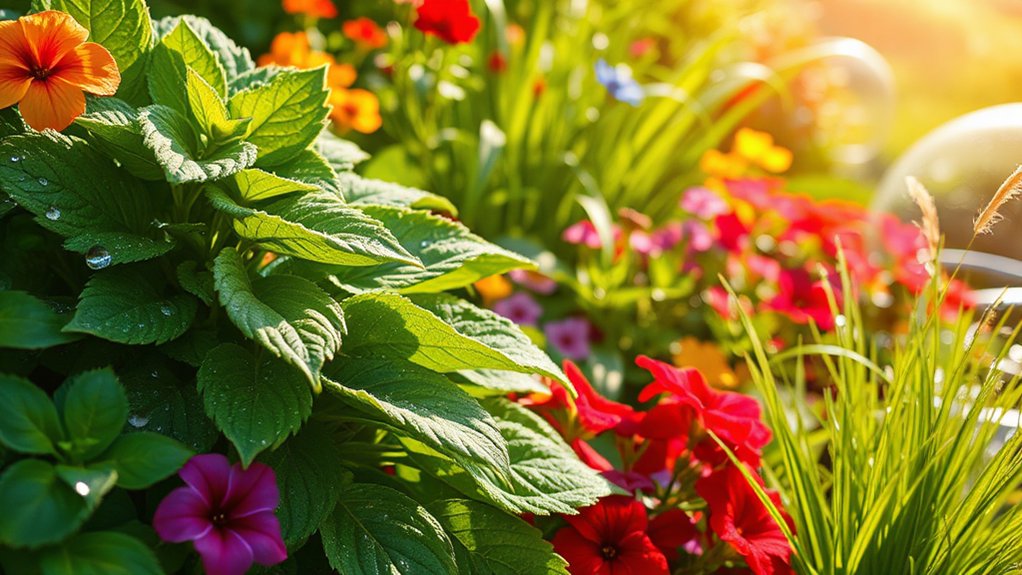
Quick color and texture can transform a summer garden, so start with bold, complementary plant choices that bloom at staggered times. You shape instant impact by layering layers of height, foliage, and form, then pair heavy blooms with airy choices to avoid monotony.
Use drought-tolerant perennials and annuals that deliver rapid color bursts, like coreopsis, salvia, zinnias, and agastache. These can be offset by textural grasses and compact conifers.
Align bloom windows to maintain continuous interest from early to late summer, ensuring repeat planting in containers for mobility.
Consider foliage-driven contrast—silver, chartreuse, and deep burgundy—to amplify color without overcrowding.
Summer fragrance and garden scents should guide placement near paths and seating, so scents touch you as you move, not overwhelm peripheral spaces.
Keep maintenance minimal, invest in healthy soil, and enjoy the instant vibrancy.
Pick a Summer Color Palette That Pops
A summer color palette that pops hinges on deliberate contrast and harmony: pair bold, saturated hues with cooler tones to create visual spark without clashing. You’ll design with three anchor tones, then support with accents that repeat the palette.
Start with a dominant color grounded in the garden’s architecture or furniture, ensuring it aligns with garden furniture as a focal point. Introduce a cooler secondary color to temper intensity, then add a warm accent for energy.
Balance is key: vary lightness, texture, and scale to maintain depth across borders and plantings. Consider pest control implications in color choice—darker greens can recede while bright florals advance.
Test color blocks in situ before committing, and document how each hue shifts perception through different light.
Quick Plant Pairings for Instant Impact
Pairing plants for instant impact hinges on contrasting form and texture as much as color. You’ll create immediate appeal by pairing bold silhouettes with airy leaves, then layering with a unifying color note.
Choose strong, compact specimens—boxy-leaved shrubs or architectural perennials—and offset them with finely textured grasses or feathery ferns. For color contrasts, couple saturated bloomers with pale foliage to amplify brightness without shouting.
Think deep purples beside lime greens, or pure whites against charcoal foliage for crisp clarity. Keep scale complementary: one focal plant anchors the plot, with supporting partners at eye level and slightly elevated for depth.
Plant combinations should read as a cohesive plan, not a hodgepodge. Limit variety to three or four well-chosen textures and hues for maximum impact.
Sun-Ready Perennials to Anchor Your Space

Sun-loving perennials form the backbone of a sun-drenched bed, delivering instant structure and long-season appeal. When you select these anchors, you guide garden design with disciplined plant selection, prioritizing耐 drought tolerance, bloom duration, and foliage texture.
Choose sturdy, heat-mardy varieties that perform reliably in heatwaves, then layer height to create a cohesive rhythm across the border. Favor species with complementary bloom windows so color and interest persist through summer and into early autumn.
Opt for weather-resilient forms that require minimal maintenance, reducing ongoing interventions. Pair architectural perennials with lighter grasses or groundcovers to soften edges without stealing spotlight.
In short, plant selection should emphasize structure, durability, and seasonal cohesion, delivering a timeless foundation for your sun-drenched space.
Bold Focal Plants for Immediate Visual Buzz
Bold focal plants instantly inject energy and structure, pulling the eye into the bed and setting the mood for the whole summer. You’ll choose strong verticals and sculptural forms to anchor the scene, then pair them with complementary textures. Bold foliage and high-contrast silhouettes create instant drama, so select species with clean lines and reliable performance in heat.
Use focal accents at sightlines—entry paths, seating areas, and passage between beds—to guide movement and define zones. Keep color restrained and purposeful: a single bright bloom can read as a punctuation mark, while foliage acts as the persistent backdrop.
Maintain scale accuracy, ensuring taller specimens don’t overwhelm intimate corners. Regular deadheading and timely irrigation preserve crisp, lasting impact throughout peak season.
Texture Wins: Foliage, Fences, and Surfaces
Texture is your quiet workhorse this summer, shaping how an entire bed reads and feels from a distance and up close. You’ll leverage deliberate contrasts: lush foliage textures against linear fence materials to create rhythm without overwhelming scale.
Start with variegated leaves and matte greens to soften hard edges, then introduce glossy accents in small repeats to catch light. Layered textures on surfaces—stone, wood, metal—add tactile interest that survives heat and drought.
Use fences as architectural palettes, selecting materials that echo plant tones or provide a deliberate counterpoint, such as warm timber beside cool stone. Remember sightlines: foliage textures should lead the eye toward focal points, while surface materials reinforce mood and cohesion.
This restrained approach amplifies color, depth, and structure with quiet, lasting impact.
Budget Plant Pairings That Do the Heavy Lifting
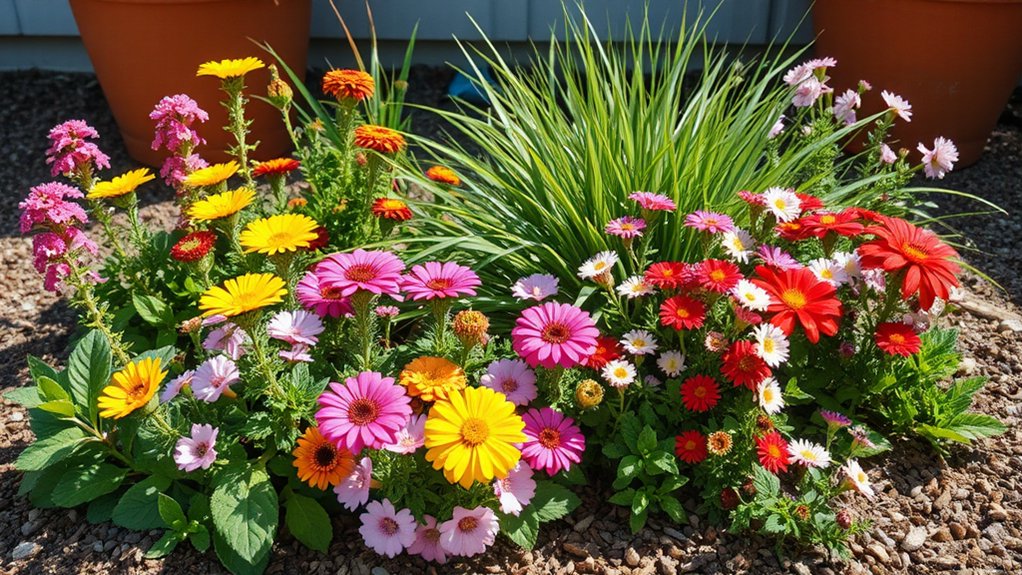
Pair budget plantings with purpose by choosing pairs that deliver structure, color, and long-season performance without breaking the bank. You’ll maximize impact by pairing sturdy, drought-tolerant performers with showy accents, ensuring enduring form through peak heat.
Prioritize plants with complementary textures and similar water needs to reduce garden maintenance and irrigation. For example, combine a backbone of tall, evergreen-like perennials or upright grasses with repeated, low-cost color notes from seasonal fillers that attract beneficial insects.
Favor selections with pest resistance and proven performance in your climate, then repeat both color and texture at intervals to create cohesion. Use mulch to suppress weeds and retain moisture, cutting maintenance further.
This approach supports pest control naturally while sustaining visual energy throughout the season.
Easy Containers That Do All the Work
Choose containers that balance lightness and drainage, so your plants do the heavy lifting for you. Prioritize options with built-in saucers and accessible refillable reservoirs to simplify watering and minimize waste.
We’ll compare watering frequency and drainage performance to help you select setups that work as hard as they look.
Choose Easy Containers
To keep your summer containers low-maintenance, opt for designs that do the work for you: self-werted, self-watering, and drip-fed options reduce daily tending.
Choosing easy containers hinges on durability and thoughtful composition. Opt rugged materials that resist heat and wind, and favor shapes that create Plant height contrast for visual impact. A tight, integrated system cuts fuss, so you enjoy color and texture without constant rearranging.
Planters with built‑in reservoirs or smart irrigation deliver steady moisture, preserving form and color. Pair high and low plant forms to maintain drama without overreach. Use liners and drainage that minimize overflow, keeping patios pristine.
Focus on longevity, stability, and scale as you design.
- Durable material, calm silhouette, instant cohesion
- Self-watering reliability for stress-free weeks
- Drip-fed precision, minimal attention
- Height contrast that reads strong from afar
- Sturdy base, confident placement
Watering and Drainage Tips
Self-watering and drip-fed containers simplify irrigation by delivering moisture steadily and precisely. You’ll maintain consistent soil moisture without daily checks, aligning with a deliberate watering schedule that fits hot summers. Choose containers with integrated reservoirs or capillary mats to decouple plant demand from your routine, reducing overwatering and stress.
In practice, baseline routines involve weekly or biweekly checks, adjusting for rain, temperature, and plant vigor. Prioritize drainage solutions that prevent perched water and root rot: guarantee ample drainage holes, a breathable growing medium, and a potting mix designed for high moisture retention without compaction.
Consider subirrigation liners for tall or hanging specimens, which stabilize moisture gradients. Record observations, refine intervals, and match irrigation to plant size, container weight, and sunlight exposure for reliable color and texture.
DIY Accents: Woven, Metal, and Rattan Touches
Woven, metal, and rattan accents bring texture and structure to your garden spaces, transforming simple surfaces into curated focal points. You’ll harness these materials to define zones, elevate seating, and slow the eye with tactile contrast.
Precision placement matters: balance weight, scale, and color to keep the garden feeling cohesive rather than cluttered. Use woven accents to soften hard lines, introduce rattan textures for warmth, and add metal for crisp punctuation.
Maintain weather resistance and maintenance in your choices to guarantee lasting impact.
- Sculptural wicker seating that invites lingering conversations
- Metallic lanterns casting sharp, ambient light
- Handwoven cushions adding color and grip
- Rattan screens creating intimate nooks
- Low, woven poufs for flexible seating
Layer Your Small Space: Depth, Height, and Flow
Layer each corner with layered visual depth to guide the eye from foreground to background.
Use vertical elements to reclaim space and create a clear flow that reads as natural movement through the bed and seating zones.
Layered Visual Depth
To create layered visual depth in a small garden, start by varying planter heights and widths to guide the eye from foreground to background. Use a mix of compact perennials, mid-height shrubs, and a singular focal tree or statue to anchor the scene. Then, repeat textures to create rhythm.
Position furniture and decor to carve sightlines, not obstruct them, so outdoor furniture becomes visual anchors rather than obstacles. Balance cool and warm tones to enhance perception of depth, and tuck lighting at varying levels to extend the day’s drama.
By layering scale and texture thoughtfully, you craft a garden that feels larger, more intentional, and inviting, with garden decor and outdoor furniture reinforcing the depth.
- Vary heights strategically for a cascading silhouette
- Align textures to echo the garden’s story
- Place lighting at different elevations for dusk drama
- Use a single focal point to pull the eye inward
- Integrate seating as horizon markers rather than gaps
Vertical Space Flow
Place structural elements at varied heights to establish a rhythm: low shelves, mid-height trellises, and high wall pockets. Use hanging planters strategically to soften edges and to trap light in mid-air, enhancing color repetition without crowding floor space.
Choose compact, tall specimens for near-vertical drama, and trailing varieties for texture along edges. Maintain balance by repeating plant families across levels, ensuring shade and sun exposure align with each species.
This deliberate layering converts a small area into a cohesive, breathable vertical ecosystem that feels intentional, not cramped.
Drought-Resistant Blooms With Colorful Appeal
Drought-resistant blooms bring vibrant color to waterwise gardens without demanding continual irrigation. You’ll curate striking pockets with forms and hues that read as architectural; each plant supports your design brief while thriving on minimal water.
Choose pollinator-friendly textures, from spiky silhouettes to softly rounded petals, to create contrast and movement across beds and containers. Consider color strategy: warm ambers and electric purples pop against cool greens, while glossy foliage amplifies light reflection for a brighter overall effect.
With careful placement, you’ll achieve lasting impact from July through early autumn, even in intense sun. Desert blooms and succulent gardens prove you don’t sacrifice beauty when you conserve water.
- Dynamic silhouettes that hold visual interest all season
- Bold, sun-loving color combinations
- Textural variety for depth and contrast
- Low-maintenance, high-design appeal
- Compact options for shady edges and containers
Water-Wise Upkeep to Keep Things Looking Fresh

Water-wise upkeep keeps your drought-smart garden looking polished without wasting water or time. You implement a disciplined routine that prioritizes efficiency, simplicity, and cadence.
Begin with a smart irrigation plan: drip lines deliver water to root zones, reducing evaporation, while a soil-moisture sensor flags when to water again.
Mulch thickly to stabilize soil temperature and minimize evaporation—this supports water conservation and soil biology.
Prune plants with architectural intent, removing dead tissue to cut maintenance and airflow improves, reducing disease pressure.
Group drought-tolerant specimens for targeted cues and easier monitoring.
Use native or adapted species where possible; their deeper root systems boost drought resilience.
Schedule light, frequent checks during peak heat, and record outcomes to refine future decisions.
Lighting Ideas to Extend Summer Evenings
Even after dusk, well-planned lighting can shape a garden’s mood and extend outdoor usability. You’ll deploy layered light—ambient, task, and accent—to sculpt dimensions, highlight textures, and invite lingering moments around garden art.
Choose warm white tones at 2700–3000K to preserve color and atmosphere. Power options should align with your zones, using low-voltage fixtures for safety and efficiency.
Placed strategically, lights create invitation routes to outdoor dining areas and focal artwork, without glare or hotspots. Integrate dimmers to modulate intensity as night deepens, and consider solar where practical for peripheral accents.
Dimmed uplights on sculptural plants and subtle path lighting slow pace, while string lights deliver intimate charm. This approach blends function with beauty, extending evenings with deliberate, refined glow.
- Layered lighting to guide movement and mood
- Warm, color-faithful tones that enhance garden art
- Dimmable controls for adaptive ambience
- Subtle path and boundary illumination
- Thoughtful integration with outdoor dining setups
Seasonal Refreshes to Keep It Vibrant All Summer
You can refresh your summer palette with a Seasonal Color Refresh, pairing bold new blooms with foliage that pops against your existing borders.
Introduce Texture Through Foliage by mixing leaf shapes and sizes—think airy grasses beside broad, structured leaves—to keep the bed visually lively as the season shifts.
This concise, design-forward approach keeps your garden vibrant all summer without clutter.
Seasonal Color Refresh
Seasonal color refreshes keep a summer garden feeling intentional rather than accidental, so start by mapping three focal beds with a cohesive palette that shifts as the season advances. You’ll create momentum by staging cool-to-warm gradations, then reinforce with repeated accents to unify the sequence.
Choose plant heights, bloom shapes, and foliage color to sculpt depth, dimension, and rhythm, ensuring Seasonal color remains the guiding thread. Focus on garden textures to register contrast as flowers mature and leaves fade, preserving visual interest despite heat.
- Cohesive palette across beds to read as a single narrative
- Strategic bloom timing that carries through peak summer
- Recurrent accents for visual continuity
- Texture variation to maintain depth and intrigue
- Seasonal color as the organizing principle of every bed
Texture Through Foliage
Texture is where foliage shines, turning heat and sunshine into tactile depth that reads as a season-long refresh. You’ll curate contrast by pairing broad leaves with fine, lacy forms to create instant visual rhythm.
Focus on foliage patterns that repeat along stems and near pathway edges, guiding the eye without shouting. Choose leaf textures that catch light differently—glossy, matte, and velvety surfaces—to add subtle shifting character as the day evolves.
Layer plants with varying heights so the canopy reads as a single, cohesive texture, yet rewards closer inspection. Maintain cohesion through color restraint, letting foliage carry the narrative of the garden’s summer performance.
This approach delivers architecture, atmosphere, and tactile variety without clutter, enhancing durability and effortless, vibrant year-long perception.
Quick Troubleshooting for Common Summer Hurdles
Even when summer smiles, quick trouble can crop up, so tackle it the moment it appears rather than letting small issues snowball. In this section, you’ll troubleshoot efficiently with an eye for design and long-term health. You’ll address symptoms swiftly, then implement targeted fixes that preserve color, texture, and structure. Focus on root causes, not band-aid solutions, and balance aesthetics with resilience. Remember to document what works, refining your approach as seasons shift.
For the tools of success, emphasize proactive soil preparation and selective pest management that minimizes disruption to display and pollinators. Your garden should remain vibrant, cohesive, and low-maintenance, even under heat stress or sudden rain.
- Spot issues early with daily checks and a calm, methodical approach
- Calibrate irrigation to avoid drought stress without oversaturation
- Employ targeted, minimal interventions for Garden pests
- Reinforce soil structure through mindful soil preparation
- Plan quick, elegant swaps to maintain color and texture
Frequently Asked Questions
How Can I Measure Sun Exposure for Plant Placement?
You measure sun exposure by mapping hours of sun with a light meter or sun-chart, place plants accordingly, and refine with trial. Use soil testing to confirm drainage, and consider shade cloth for adjusting intense midday glare.
What Are Budget-Friendly Mulch Options for Color Impact?
Organic matter boosts soil moisture by up to 50%, so budget-friendly mulch types matter. You’ll choose shredded bark, straw, or pine needles, maximizing color impact while protecting roots and enriching soil with ongoing organic matter.
Which Companion Plants Deter Pests Naturally?
You can use companion planting for natural pest control, selecting plants that deter specific pests and attract beneficial insects. Pair marigolds with tomatoes or basil with peppers to disrupt pests and bolster garden resilience.
How Do I Prevent Plants From Crowding in Containers?
To prevent plants crowding in containers, monitor Container drainage and enforce proper Plant spacing. Choose appropriately sized pots, staggered, breathable soil, and avoid overwatering. You’ll maintain airflow, root health, and vibrant growth across designs.
Best Quick Fixes for Wilting in Hot Weather?
To fix wilting in hot weather fast, you should water deeply and consistently; consider watering tips like early morning sessions, and apply shade solutions such as light row covers or moved plants. Adjust airflow, mulch, and monitor soil moisture.
Conclusion
As you stage your summer oasis, color and texture become your secret weapons. You’ve lined up bold shades, sharp silhouettes, and sun-ready perennials that anchor the bed while playful accents spark delight. But the real edge is in the subtle cues: a single dramatic focal plant, a pair of complementary textures, a whisper of fragrance at dusk. Keep an eye on water and pests, yet resist overthinking. The garden answers with instant drama—and you’ll sense it, almost before it happens.