
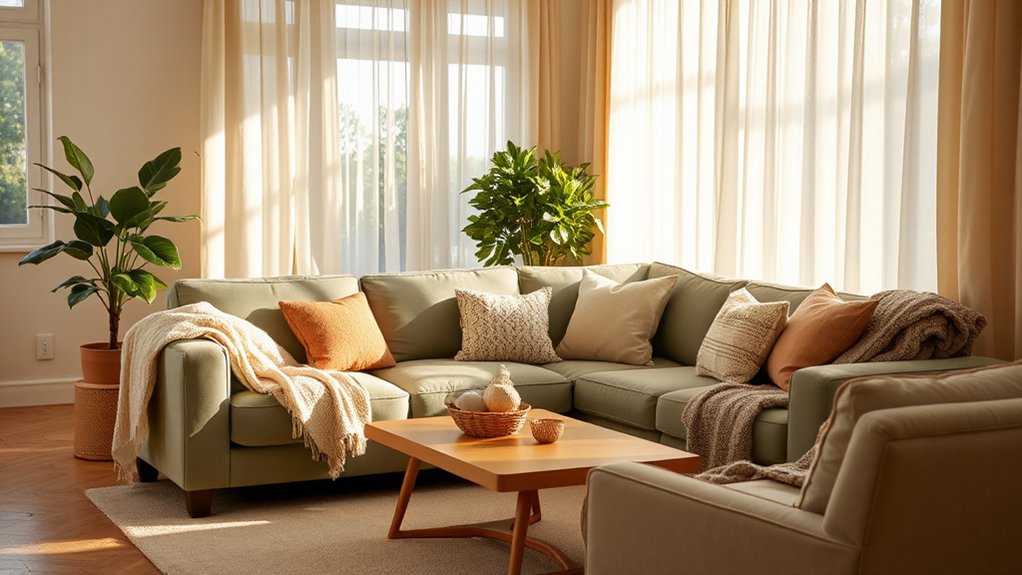

To create a more comfortable living space, start by defining your cozy—calm, warmth, or versatility—and choose color, texture, and layout that support daily rituals. Visualize an easy flow with clear focal points and test movement by re‑positioning furniture. Match scale to room size, prioritize multi‑use pieces, and layer textures for depth. Add adjustable lighting, a cohesive color base with warm accents, and subtle scents or sound. Small upgrades and seasonal tweaks keep things soothing—more practical tips await.
Key Takeaways
- Define coziness through calm, warm neutrals, tactile textures, and adaptable furniture to support daily rituals and reduce clutter.
- Map a smooth flow with clear focal points and sightlines, testing furniture placement to ensure unobtrusive movement.
- Balance scale and proportions by allowing at least 3 feet around seating and testing via templates before buying.
- Layer lighting (overhead, task, accent) with dimmable warm bulbs to create inviting, flexible atmospheres.
- Build a cohesive color palette, test swatches in natural light, and add texture, scent, and personal touches for warmth.
Define Your Cozy: Calm, Warmth, or Versatility
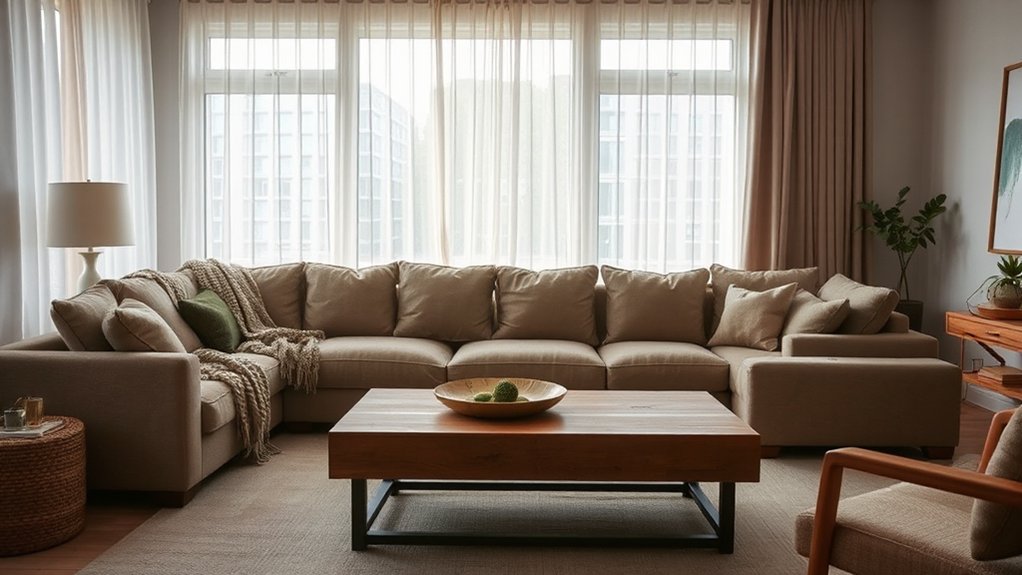
Choosing your cozy starts with a simple question: what feeling should anchor your space today—calm, warmth, or versatility? You’ll define your vibe by prioritizing function first, then mood.
If calm guides you, simplify textures and lines; invite a persönliche sanctuary with soft neutrals, minimal clutter, and quiet nooks.
For warmth, layer tactile materials—knits, wool, wood—plus amber lighting to cultivate sensory comfort and a welcoming glow.
If versatility wins, choose adaptable furniture and modular storage that shift with needs while preserving coherence.
Regardless, align color, texture, and layout to support everyday rituals. You’ll create a space that feels intentional, livable, and coherent—a personal sanctuary you trust.
Your defined cozy anchors comfort, focus, and continuity throughout the home.
Visualize Your Ideal Flow and Focal Points
Begin by visualizing how you move through the room, noting natural pauses and bottlenecks to map a smooth space flow.
Identify your focal points—areas that draw the eye or invite use—and place them to guide attention from entry to seating, dining, and work zones.
Plan a clear movement path that minimizes backtracking, keeps key elements accessible, and supports comfortable, effortless living.
Visualize Space Flow
Where should you start when shaping how a space flows and where your eye lands? Begin with a clear path: walk the room mentally, from entrance to key zones, noting sightlines and interruptions. Visualize a gentle diagonal of movement that invites you toward seating, work, and storage without forcing detours.
Prioritize exits, natural light, and focal anchors to guide attention, not clutter it. Consider color psychology to modulate mood along each path—cool tones for calm transitions, warmer accents to energize gathering spots.
Place furniture so ergonomic use is evident: reachable switches, comfortable reach distances, and clear walking zones that avoid crowding. Align furniture ergonomics with traffic flow, keeping lines clean and purpose obvious.
Periodically reassess as you rearrange, ensuring flow remains intuitive and unobtrusive.
Identify Focal Points
Choose a Focal point that aligns with the room’s purpose—sofas, art, or a striking rug can cue seating, conversation, or display. Confirm scale, proportion, and lighting reinforce this choice, not distract from it.
Arrange furniture to frame the focal point, leaving purposeful negative space to prevent clutter. Use color and texture thoughtfully to elevate the main element while keeping adjacent items subordinate.
Plan Movement Path
Considering how people move through a room helps you map an efficient flow that reinforces the focal point. Plan movement paths by sizing furniture to allow clear, continuous routes that avoid bottlenecks.
Prioritize sightlines toward the primary feature, ensuring chairs and sofas form inviting, conversational angles without obstructing pathways.
Use logical zoning: entry, seating, work, and dining areas should connect with minimal detours. Consider vertical and horizontal flow, avoiding clutter near doorways.
Integrate garden lighting along the periphery to guide evening traffic toward key areas, while interior lamps illuminate tasks without glare.
Choose window treatments that frame views and adjust light, expanding or narrowing pathways as needed.
Test your scheme with furniture repositioning before committing, ensuring practicality and polish.
Assess Room Proportions: Scale, Traffic, and Function
When you assess a room’s proportions, start by judging scale, traffic flow, and intended function, then adjust layouts to support comfortable movement and purposeful use.
- Evaluate room proportions by balancing furniture scale with open space, ensuring routes remain clear.
- Prioritize clear sightlines and easy access to focal areas for efficient function.
- Recheck circulation after placing key pieces to prevent crowding and awkward angles.
Keep these principles in mind as you plan: match furniture scale to room size, maintain at least 3 feet of clearance around seating, and align layouts with daily routines.
This approach minimizes clutter, enhances comfort, and supports intentional living.
Pick Furniture That Fits Your Space

Start by measuring each room and doorway to know what’ll actually fit without crowding traffic paths.
Choose furniture that matches those dimensions, prioritizing proportional pieces that leave clear circulation. This guarantees comfort and function while you keep the space visually balanced.
Measure Your Space Carefully
- Measure doorways and switch placements to avoid obstructions
- Record wall lengths and corner angles for accurate scale
- Check ceiling height for tall pieces and vertical clearance
With these measurements, you’ll distinguish between options that feel cramped and those that breathe. Trust precise data over intuition when evaluating potential furniture.
For a balanced look, compare footprint and clearance, ensuring walking paths stay fluid. Accurate space measurement guides you to proportional choices and comfortable circulation.
Remember: room dimensions dictate fit, so measure twice, buy once.
Choose Proportional Furniture Fit
Now that you’ve mapped your space, it’s time to pick furniture that fits your room proportionally. Start with scale balance: choose pieces that relate to the room’s dimensions without overpowering them. A large sofa in a tiny living area creates crowding; a petite settee in a great hall feels lost.
Aim for cohesive silhouettes that pair well with existing architectural lines, like low, streamlined profiles in modern rooms or rounded, traditional forms in classic spaces. Consider sightlines and traffic flow; never block doors or windows.
Use furniture harmony to guide placement, ensuring each piece supports others in height, depth, and weight. Finally, test spacing with templates or tape before buying, and prioritize pieces you can move easily to preserve flexibility.
Maximize Multi-Use Pieces for Small Rooms
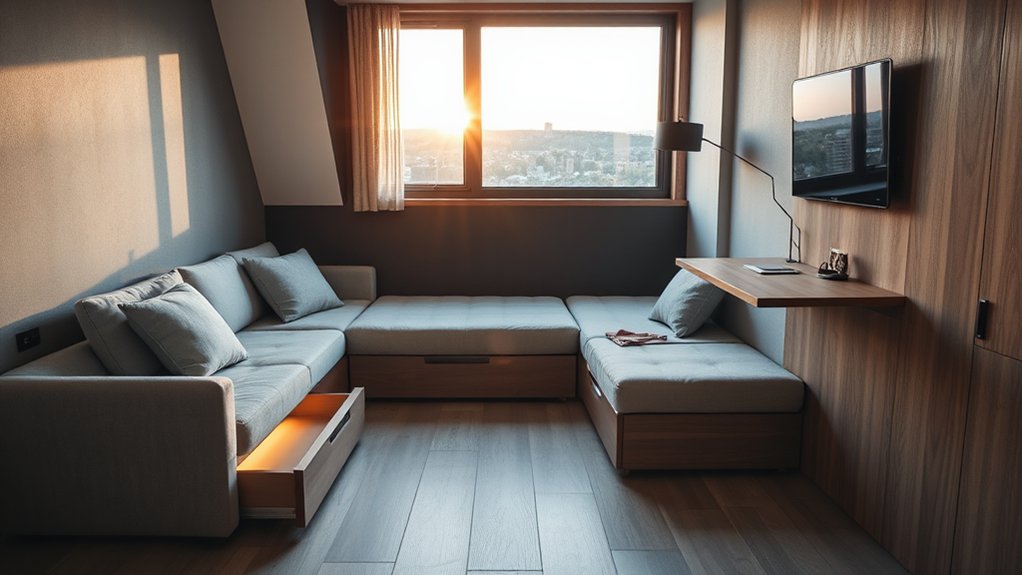
When you’re working with limited square footage, choosing pieces that pull double duty can dramatically improve function without crowding the room. Maximize multi-use pieces by selecting convertible furniture and embracing adaptable designs that adapt to daily needs.
Prioritize clean lines, hidden storage, and seamless flow to keep sightlines open. Consider a sofa bed, coffee table with drawers, and a wall desk that folds away when not in use.
Modular designs let you reconfigure as your space changes, so you stay flexible without buying new furniture. Balance form with function by pairing compact, durable pieces with vertical storage to free floor space.
Your room gains purpose, efficiency, and a calmer rhythm that supports both work and relaxation.
- Convertible furniture
- Modular designs
- Hidden storage
Layer Textures for Comfort: Fabric, Fiber, and Finish
Layering textures is a practical next step after selecting versatile pieces, because what you feel and see up close shapes both comfort and mood. You’ll blend fabric, fiber, and finish to create tactile depth.
Start with textile textures you like to touch: a velvet sofa, a woven throw, or a crisp cotton pillow. Consider fiber varieties for durability and warmth: wool, linen, cotton, or blends that balance performance with softness.
Choose finishes that read differently under light—matte, sheen, or nubby surfaces—to add subtle interest without visual clutter. Pair high and low textures to prevent monotony, ensuring seams and edges stay tidy for a polished look.
Prioritize comfort first, then cohesion, so every surface invites touch and settles the room’s atmosphere. Textile textures and fiber varieties guide your layering strategy.
Craft a Welcoming Lighting Plan
A welcoming lighting plan starts with a clear purpose: illuminate the room evenly for daily tasks while creating warm, inviting pockets for relaxation. You’ll shape lighting ambiance by layering light rather than relying on a single source, and you’ll choose fixtures with intent to suit each zone.
Focus on fundamental fixture selection that complements the space and supports flexibility—dimmable options, warm color temperature, and gradual changeover.
- Layer overhead, task, and accent lighting for balance
- Prioritize dimmable fixtures and warm-toned bulbs
- Choose fixtures that visually anchor each area while remaining unobtrusive
Build a Calming Color Palette Across Rooms

Creating a calming color palette across rooms starts with a cohesive base and thoughtful accents that flow from one space to the next. You’ll choose a restrained base color for walls and large surfaces, then layer in complementary tones through furniture, textiles, and artwork.
Use color psychology to guide your choices: cool neutrals promote serenity, while warm accents add subtle warmth without overstimulation. Keep paint selection simple and consistent—prioritize low-odor finishes, durable sheens, and easy touch-ups for high-traffic zones.
Create progressions between rooms with shared colors or adjacent shades that differ slightly in saturation. Test swatches in natural light at different times of day, and document your palette so future updates stay cohesive.
This approach yields a harmonious, adaptable environment.
Subtle Ambience: Scent and Sound Without Overload
Building on a cohesive color base, you can fine‑tune the mood with scent and sound that quietly support relaxation without competing with daily activity. You’ll apply scent layering and restrained soundscaping techniques to create an ambient backdrop that feels effortless.
Keep scents subtle, using a single core aroma with gentle variation over time. Pair this with quiet, intentional sounds that fade into the background during tasks. Use practical, low‑profile options—undetectable at distance, noticeable up close.
Maintain control with simple rules: avoid overpowering notes, rotate occasional scents, and tune volume to conversation level. Your goal is warmth without distraction.
- Scent layering: gentle base, soft accents, seasonal shifts
- Soundscaping techniques: natural buffers, low volume, non‑intrusive textures
- Integration: place thoughtfully, test, adjust to daily rhythm
Declutter With Character: Preserve What Matters
When you declutter with character, start by preserving what truly matters and letting go of the rest.
Sort items by sentimental value, keeping only those that tell your story without overwhelming your space.
Choose a clear, purposeful approach that simplifies while honoring treasured keepsakes.
Preserve Treasured Items
Ever wonder why some homes feel instantly grounded while others feel cluttered? You can preserve what matters by curating with intention. Focus on durable display options and secure storage to protect treasures.
- Antique preservation techniques that safeguard delicate finishes and patina
- Sentimental storage strategies that honor memories without overcrowding
- Thoughtful rotation of items to keep scenes fresh and meaningful
Keep a clear purpose for each piece: tell a story, not a shelf full of reminders. Use labels, provenance notes, and proper lighting to enhance value while reducing damage risk. When you photograph items before packing, you’ll reduce impulse restoration and create a verifiable record.
Revisit your collection periodically, discarding duplicates or resets that no longer serve your space. With disciplined care, treasured items retain character and improve living comfort.
Sort By Sentimental Value
Where should you start when sorting by sentimental value? Begin with a quick inventory of items tied to cherished memories. Ask yourself which pieces truly reflect your life story and which you’d miss if they disappeared.
Group objects into categories: daily reminders, milestone keepsakes, and decorative mementos that spark sentimental decor without crowding space.
For each item, weigh emotional significance against practicality: will it be used, displayed, or stored? Favor rotation over hoarding—rotate a few meaningful pieces seasonally to refresh rooms without clutter.
Create a simple display method: a dedicated shelf or a tray that highlights a chosen memory.
Simplify With Purpose
If you want a calmer, more usable space, simplify with purpose by trimming items that don’t reinforce your daily life or real memories. You’ll practice purposeful decluttering by evaluating utility, meaning, and proximity—keeping what serves you and letting go of excess.
Focus on what aligns with how you live, not what you own by habit. This approach creates room for intentional lighting, which highlights function and mood rather than clutter. You’ll preserve character by choosing pieces with story, not quantity.
- Prioritize items you use weekly and love
- Group similar belongings to reveal patterns and gaps
- Introduce lighting that clarifies purpose rather than fills space
Zone for Living, Working, and Rest
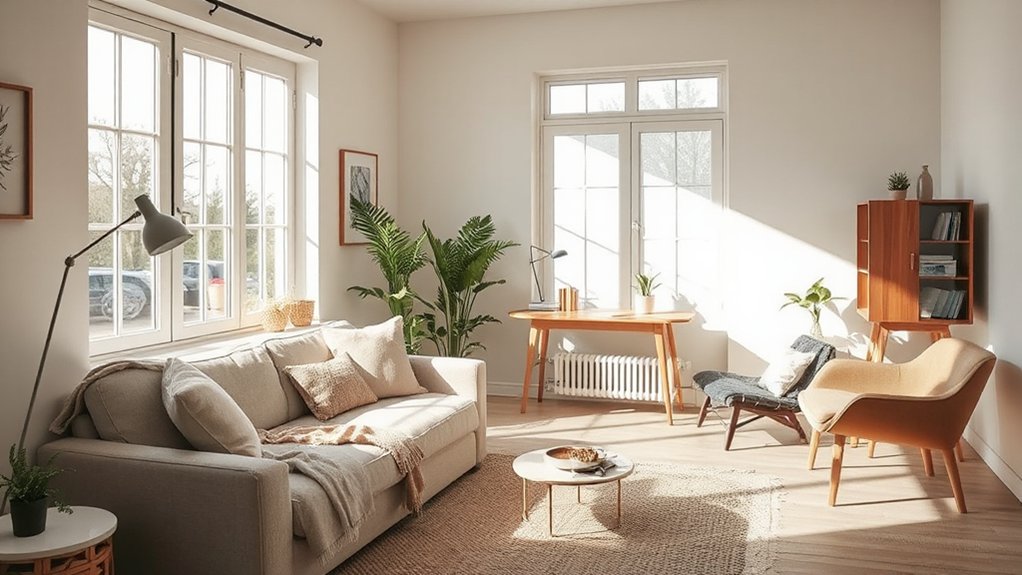
Creating a distinct zone that blends living, working, and resting helps you manage energy and distraction. You’ll separate tasks from relaxation by choosing clearly defined areas and consistent cues. Start with a practical layout: designate a compact workspace with a desk, chair, and essential tech, adjacent to a calming rest nook.
Use visual anchors—color, lighting, and textures—to signal each function without clutter. Apply decorating essentials that promote focus, such as a minimal desk setup, organized storage, and soft, indirect lighting for evenings.
Consider color psychology: cooler tones for concentration, warmer tones for unwinding, and a neutral *changeover* zone between them. Keep peripherals tucked away when not in use and rotate elements seasonally to maintain balance and flow throughout the day.
Invite Sitting: Soft Furnishings That Encourage Lounging
Soft furnishings do more than look inviting—they set the tone for lounging and lasting comfort. You shape daily routines with the right textures, cushions, and throws, inviting calm without clutter.
Prioritize seating that cushions joints and supports posture, so you stay comfortable through conversations and movies. Use plush cushions and cozy throws as anchors for mood and function, not just decoration.
Layer textures to create warmth and depth, and select colors that harmonize with your space rather than dominate it. Keep scale in mind: a single sofa, a couple of chairs, and a generous ottoman can form a natural lounging flow.
- Plush cushions for support and softness
- Cozy throws for warmth and accessibility
- Thoughtful placement that invites lingering conversations
Hidden Storage That Keeps Clutter Away
Hidden storage isn’t about hiding away a mess—it’s about making clutter effortless to stow and easy to access. You’ll transform small spaces by choosing furniture with built‑in compartments, like ottomans, coffee tables, and bed frames that conceal essentials without bulking up the room.
Prioritize vertical solutions: tall cabinets, wall-mounted shelves, and magnetic strips free floor space while keeping everyday items reachable. Use labeled, uniform storage bins for consistency, so you never hunt for a misplaced charger or remote.
Clutter concealment succeeds when every item has a designated home, and that home is intuitive to use. Integrate hidden storage in entryways and living zones to streamline daily routines, reduce visual noise, and preserve a calm, functional atmosphere.
Focus on practicality, quality, and easy access.
Budget-Smart Upgrades That Make a Big Impact
If you’re looking to refresh a room without breaking the bank, start with a few well-chosen, budget-smart upgrades that deliver big impact.
- Swap textiles: fresh curtains, rug, and cushions instantly change tone with budget-friendly, quick fixes.
- Refresh lighting: add dimmable lamps or warm bulbs to create atmosphere and feel more inviting.
- Tidy surfaces: replace worn hardware, polish fixtures, and swap out a dated mirror for a brighter, cohesive look.
These budget friendly moves transform mood without major renovations.
Prioritize pieces you notice daily—the result is a more comfortable space that stays practical.
With disciplined shopping and a clear focus, you’ll achieve a polished result fast, preserving function while elevating style.
DIY Decor Tricks to Personalize Without Guilt
DIY decor is all about making a space feel like you without overhauling your budget. You can personalize thoughtfully by focusing on a few practical tricks that don’t scream “new room.”
Start with color psychology: choose wall hues and accents that influence mood—calm blues for a retreat, warm terracotta for energy, soft neutrals for cohesion.
Introduce texture with affordable textiles, throws, and cushions to add depth without clutter.
Scent layering matters too; pair a light diffuser with a subtle room spray to create a cohesive atmosphere that feels intentional, not cluttered.
Display meaningful objects in curated vignettes rather than everywhere at once, and rotate seasonal pieces to keep the space fresh.
Keep layouts simple, accessible, and easy to maintain.
Simple Maintenance Habits for Calm Spaces
Start with a simple daily wipe-down and a quick tidy each evening to keep surfaces calm and clutter-free.
Establish a quiet routine for chores, so maintenance feels automatic rather than disruptive.
Gentle Daily Cleaning
- Do a 5-minute sweep each morning to clear surfaces.
- Wipe high-traffic zones after use, sealing minor messes.
- Put items back in their places, preserving orderliness.
This approach preserves calm by reducing clutter and energy drain. You’ll notice fewer interruptions from stray objects, quieter surroundings, and a more intentional pace.
Consistency matters more than intensity, so keep the cadence steady and let the simple acts compound into a noticeably cleaner, more comfortable space.
Quiet Routine Habits
Establish a simple morning and evening cadence, then automate reminders so routines become reflexive. Practice meditation routines briefly each day to center your mindset, which lowers stress and increases focus on present tasks.
For sound control, deploy noise reduction techniques: seal gaps around doors, use soft textiles, and place rugs to dampen footsteps. Schedule periodic checks of HVAC and electronics to prevent unexpected disruptions.
Track progress with a concise checklist, refine as needed, and preserve consistency to sustain a tranquil environment.
Seasonal Tweaks to Sustain Year-Round Coziness
Seasonal tweaks keep your space comfortable year-round by aligning lighting, textures, and temperature with the changing weather. You’ll implement simple shifts that preserve coziness without overhauling rooms, making seasonal decorating practical and effective.
By focusing on how you feel in each room, you’ll optimize comfort while preserving style.
- Adjust lighting layers seasonally to balance warmth and task needs
- Swap textures and textiles for appropriate insulation and tactile appeal
- Tweak temperature control strategies with sensible airflow and consistent ambient heat
These steps keep your home inviting through fluctuating days and nights. With deliberate choices, you’ll maintain balance between energy use and comfort, avoiding abrupt transitions.
Seasonal tweaks empower you to sustain year-round coziness through targeted, repeatable actions.
Frequently Asked Questions
How Can I Balance Warmth With Modern Style?
Balance warmth with modern style by choosing warm neutrals and rich accents, then layering tactile textures. Use cohesive color palettes and strategic decorative accents to keep spaces inviting yet streamlined, reflecting polish, practicality, and confident personal taste.
What Small Changes Create Instant Coziness?
A friendly hearth secretly tucks in warmth, like a patient ally. You add vintage accents, light scented candles, and keep surfaces uncluttered; you feel instant coziness. You soften lighting, textures, and rhythm, and you relax into practical charm.
Which Fabrics Withstand Daily Use Without Glare?
Durable textiles resist daily wear and still look calm, even with frequent use. Choose fabrics with matte finishes to minimize glare, and prioritize tight weaves, kiln-dried fiber blends, and easy-care care instructions for long-lasting comfort and performance.
How Do I Maintain Calm Lighting Year-Round?
Radiants glow, you maintain calm lighting year-round by layering natural light with consistent mood lighting. You dim during evenings, use blackout-aware shades, and balance color temperature to preserve focus and comfort for every season.
What Quick Tweaks Boost Perceived Space?
You can boost perceived space with quick tweaks like maximizing storage solutions and choosing light color palettes; declutter, mirror strategically, and optimize vertical space. Use compact furniture, cohesive hues, and hidden organizers to maintain a polished, expansive feel.
Conclusion
You’ve mapped your cozy without overthinking it, so trust the flow, not the fluff. Start with calm, warmth, or versatility, then tune layout, scale, and multi-use pieces to your daily needs. Invest in a few durable basics, add personal touches slowly, and keep up simple maintenance to preserve serenity. When you tweak seasonally, you’ll feel the space breathe—like a familiar, welcoming room you can always count on. It’s not magic; it’s making it yours. Sit back and enjoy.