
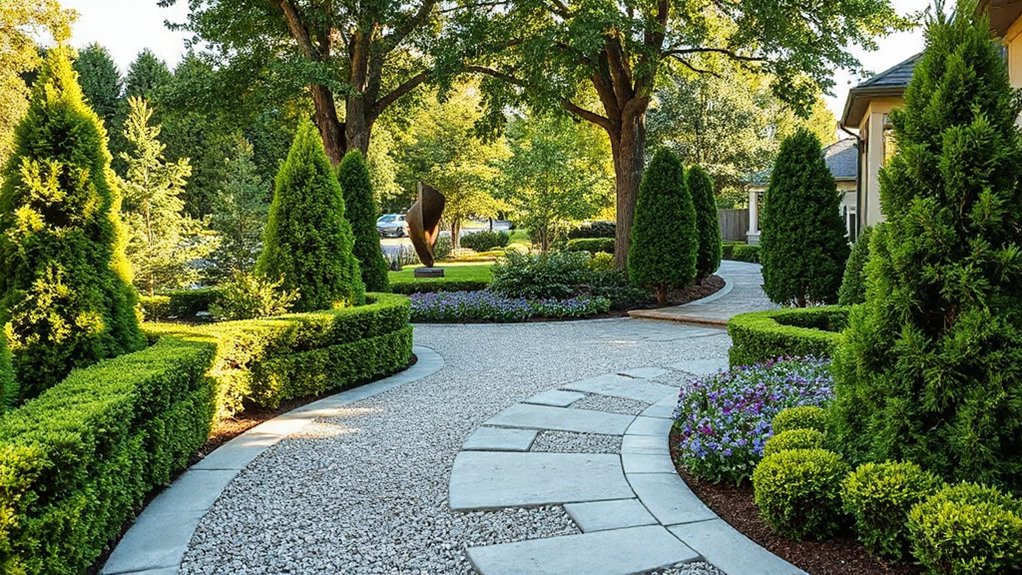

You might assume kerb appeal hinges on big, costly changes, but the truth is smarter, quicker wins can transform first impressions. You’ll learn how to blend plants, structure, and lighting into a cohesive, inviting edge that lasts. Start with simple weekend upgrades, then layer in focal points and durable hardscape. If you’re curious how these elements sync without breaking the bank, you’re about to uncover practical strategies that set the tone from the curb.
Key Takeaways
- Declutter and refresh entryways with power washing, fresh mulch, lighting, and garden art to instantly boost curb presence.
- Use height zoning and year-round color with evergreen-backdrop and diverse bloom times for continuous seasonal impact.
- Implement low-maintenance, durable hardscapes and permeable paving paired with smart lighting and timers.
- Create focal points (sculpture or water feature) framed by lush planting and strategic lighting to anchors the landscape.
- Add vertical elements and wildlife-friendly features (living walls, trellises, native plants) to maximize structure and interest at the curb.
Start With Curb-Appeal Quick Wins for Weekends
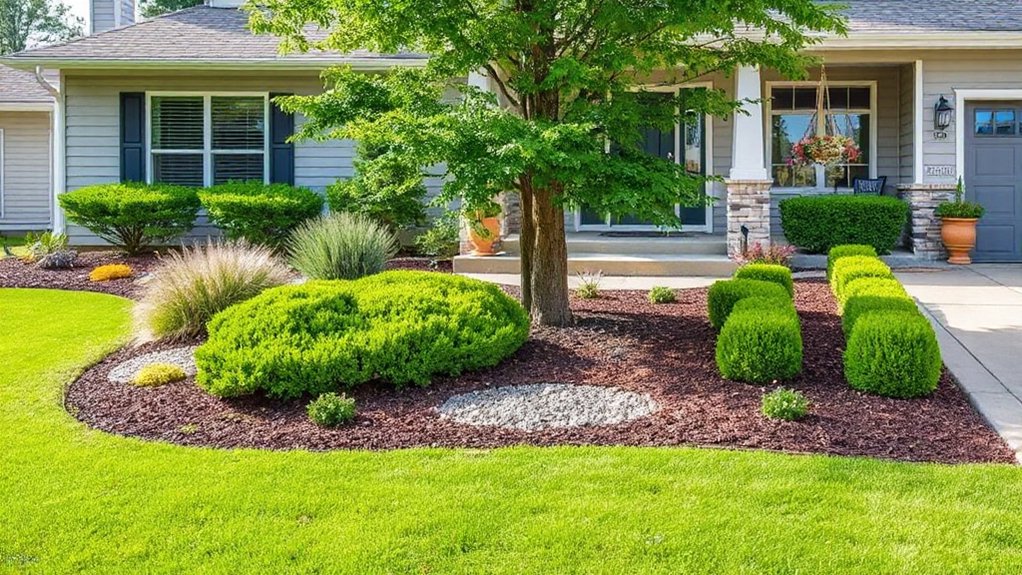
If you’re aiming for noticeable curb appeal this weekend, start with quick, high-impact tweaks you can complete in a few hours. You’ll create immediate impact by decluttering the entrance, power-washing surfaces, and brightening the path with fresh mulch.
Add garden art that reflects your style to punctuate focal points without overwhelming the space. Choose outdoor lighting that highlights key features and extends the evening usability of the yard.
Prioritize color contrast in container plantings to draw the eye toward the home’s architecture. Incorporate wildlife habitats by installing a simple birdbath, native plants, and a shallow water feature to invite fluttering visitors.
Keep maintenance minimal: mulch refreshes, prune overgrowth, and schedule a quick weed pull. These steps establish credibility and momentum for longer-term improvements.
Choose Plant Pairings That Boost Curb Appeal
Pairing the right plants is the fastest way to boost curb appeal, because complementary textures, colors, and heights create an eye-catching, cohesive look from the street. You’ll shape a refined foundation by pairing broad-leaf evergreens with airy perennials, establishing year-round structure.
Prioritize plant pairings that offer varying bloom times so color remains deliberate across seasons, not random splashes. Seek complementary color combinations: cool blues and silvers with warm ambers; rich greens punctuated by soft florals; or deep purples against chartreuse for contrast that reads from curbside.
Consider height zoning: taller plants at the back, mid-height massing, and low groundcovers at the front to polish edges. Maintain proportional spacing to prevent crowding, ensuring each specimen contributes to a unified, deliberate curb presence.
Color combinations and plant pairings guide lasting curb-appeal precision.
Create a Bold Focal Point That Anchors the Yard
A bold focal point immediately anchors your yard, giving the entire landscape a purposeful center of gravity. You choose a specimen, sculpture, or structure that embodies your style and serves as a visual anchor from every approach. Position it where sightlines converge and where it won’t obstruct circulation or views beyond. Use lighting to illuminate its silhouette at night, enhancing drama without glare.
Surround the focal with complementary planting—contrast textures, tones, and height to reinforce the centerpiece. Garden art can be a refined sculpture or a bold, modern piece; guarantee materials weather gracefully in your climate.
Consider wildlife-friendly elements that invite movement and sound, transforming the space into a Wildlife habitat, while keeping maintenance minimal and impact purposeful.
Easy-To-Install, Low-Maintenance Hardscapes
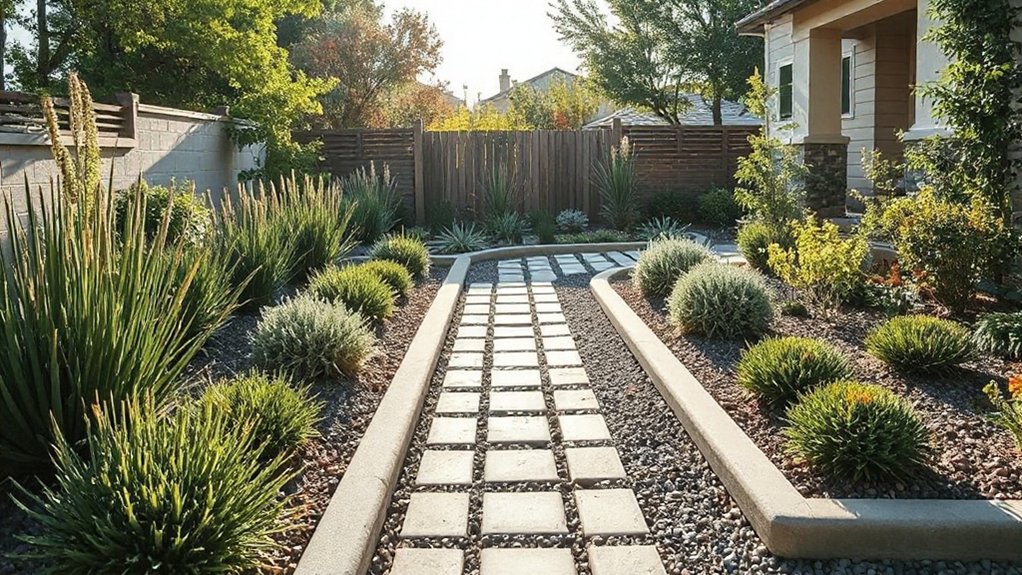
Low-maintenance hardscapes deliver instant impact with minimal upkeep. You choose compact, durable paving, permeable textures, and clean lines that guide movement without fuss.
Opt for modular systems that snap together, shorten install time, and reduce future repairs. Prioritize materials with low-maintenance finishes and UV resistance to keep colors crisp year after year.
Thoughtful spacing lets you add seasonal container accents without crowding footprints. Integrate soil amendments beneath beds to support long-term health, whether you’re laying gravel paths or stepping-stone patios.
Consider subtle urban wildlife-friendly touches—drainage swales, shallow microhabitats, and native groundcovers—that require little upkeep yet invite movement.
Keep tools minimal: a broom, a level, and a compact compactor. Your kerb appeal rises, while maintenance stays remarkably lean.
Outdoor Lighting That Works Overtime After Dark
- Pathway lights with warm LEDs
- Stair and step lighting for safety
- Accent uplights on focal plants
- Timed, dimmable controls and sensors
Color Theory: Curb-Appeal Palettes That Work
Color theory guides curb-appeal palettes by balancing contrast, harmony, and seasonal mood. You shape curb presence by prioritizing color psychology to evoke the right emotions—calm, confidence, welcome—without overwhelming your entry.
Begin with palette selection that reflects your home’s architecture and surrounding landscape, then test contrasts: a dominant neutral, an accent hue, and a unifying shade. Use warm tones to invite warmth or cool tones for polish and modernity; never clash attempts, keep gradual shifts smooth.
Consider light reflectance and texture alongside color, so plantings echo the hardscape rather than fight it. Document your palette, noting why each hue supports mood and curb legibility at a glance.
Refine with seasonal adjustments, ensuring accessibility and timeless appeal throughout the year.
Planting Plans for Year-Round Impact
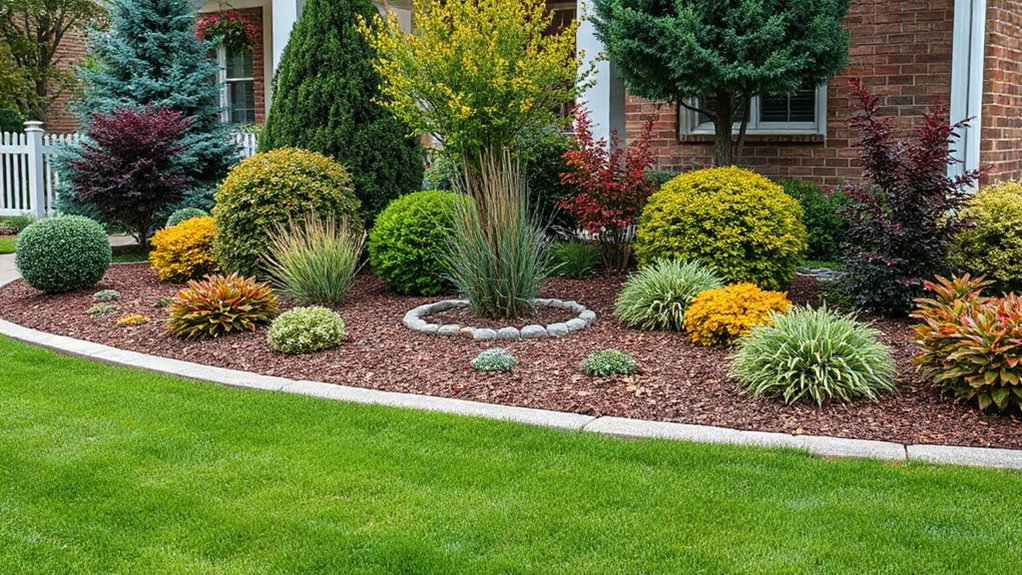
Planning a planting plan that delivers year-round impact starts with a clear structure: choose species that provide continuous interest across seasons, then layer color, texture, and form to reveal new focal points as the months change.
- Seasonal flower planting: select bloom windows that stagger color and fragrance, ensuring continuous curb presence through spring, summer, and fall.
- Native plant selection: prioritize species adapted to your climate for reliable performance, lower maintenance, and ecological benefits.
- Layering strategy: place taller specimens at the back, mid-height fillers mid-yard, and low groundcovers up front to create depth and seasonal surprises.
- Maintenance cadence: schedule pruning, deadheading, and soil refreshes to sustain vigor and fresh appeal year after year.
Texture and Form: Mixing Foliage for Depth
As you design for depth, mix foliage textures and plant forms to sculpt three-dimensional interest from curb to bed. Texture and form create contrast: pair bold, glossy leaves with fine, feathery tapestries, then interject verticals and mounding shapes to guide the eye through layers.
Choose evergreen anchors for year-round structure and seasonal accents for rhythm. In practice, vary scale and growth habits so front, middle, and back planes read distinctly.
Maintain balance by repeating color notes and leaf motifs, not exact duplicates. Implement seasonal pruning to sustain shape and health, removing spent stems to reveal form.
Integrate pest management proactively, selecting resistant cultivars and spacing to reduce pressure. Your composition should feel deliberate, cohesive, and instantly lift kerb appeal without sacrificing garden responsiveness.
Welcoming Entryways: Path Design and Porch Styling
A welcoming entry starts at the path and porch, where deliberate design guides visitors from curb to door with confidence. You shape approach with clear lines, durable materials, and seasonal texture, ensuring Welcoming entryways feel inviting from curb appeal to doorstep.
Path design should direct sightlines, integrate lighting, and accommodate accessibility, so every step feels intentional and secure.
- Define a clear axis using contrasting materials to highlight the route.
- Choose lighting that reinforces safety without glare and accents focal porch features.
- Use durable pavers or concrete with subtle texture for slip resistance.
- Add potted greenery and a seasonal bloom rhythm to frame the entry.
Edging and Boundaries That Look Intentional
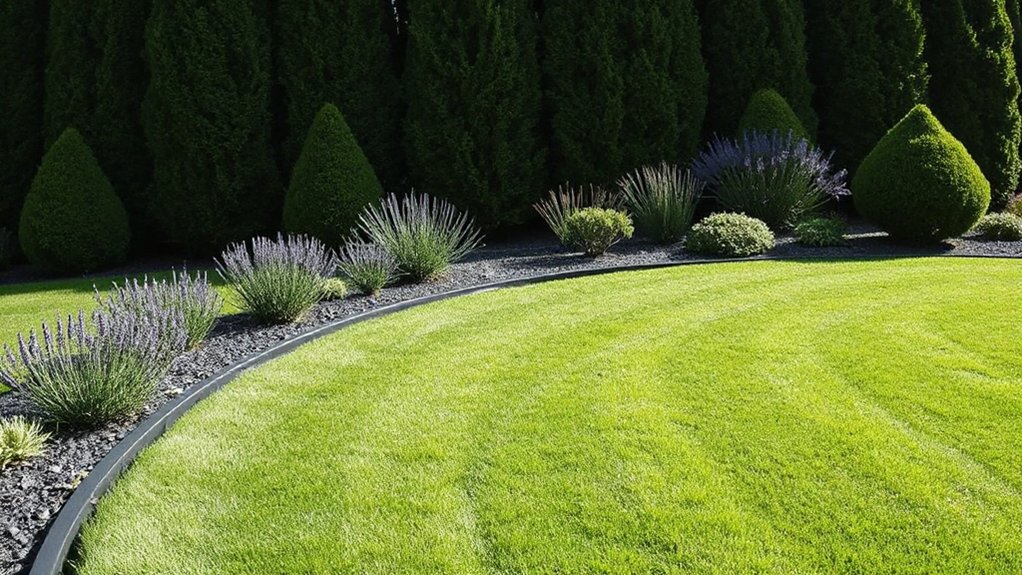
Edging and boundaries should read as intentional, not incidental, shaping how the garden is experienced from curb to stepping stone. You define edge lines that guide sightlines, circulation, and perception of space, creating a cohesive, curated experience. Choose garden edging that reinforces your overall aesthetic, whether crisp modern defines or softly natural blends.
Boundary design should signal function without feeling fortress-like; a clear delineation between lawn, bed, and path prevents drift and damage while maintaining openness. Materials matter: steel, stone, brick, or timber each convey a distinct tone—select to harmonize with structures and plant palettes.
Prioritize continuity in elevation and texture, offsetting strong geometry with plant mass, color, and seasonal interest. When executed deliberately, these boundaries elevate kerb appeal and invite deliberate exploration.
Smart Irrigation and Soil Care Basics
Smart irrigation starts with smart planning: set up a zone-based system, use soil moisture data, and tailor timing to your landscape needs.
Maintain soil health by feeding with organic matter, testing periodically, and avoiding compaction that blocks roots and water.
With clear watering schedules and proactive monitoring, you’ll conserve resources while boosting plant vigor.
Smart Irrigation Basics
Ever wondered how smart irrigation transforms a garden’s health and water bills? You’ll harness precise scheduling, soil feedback, and scalable controls to protect every leaf. Start simple, then optimize with automation that respects plant needs and rainfall patterns. Focused practices save water, reduce runoff, and boost resilience.
- Install soil sensors and weather data to tailor watering to current conditions.
- Create zones aligned with sun exposure, soil type, and plant water needs.
- Use Rainwater harvesting connections and smart controllers to minimize municipal use.
- Pair irrigation with native plant selection to maximize efficiency and low maintenance.
Soil Health Essentials
Healthy soil is the foundation of a thriving garden, and integrating smart irrigation with soil care guarantees your plants get exactly what they need when they need it. You’ll optimize growth by testing soil regularly, then applying targeted soil amendments to supply missing nutrients.
Use precise organic or mineral amendments to address deficiencies without overloading the system, and monitor outcomes with simple in-ground indicators. Balance pH levels to maximize nutrient availability; even small shifts yield big gains in vigor and color.
Align irrigation timing with soil moisture status to prevent leaching and root stress, preserving structure and microbial life. Prioritize pH balancing alongside amendments, and document results to refine your approach.
Your kerb appeal rises as healthy roots translate into lush, resilient beds.
Watering Schedule Strategies
Effective watering hinges on timing, soil moisture, and thoughtful irrigation design. You’ll optimize outcomes by aligning watering schedules with plant needs, microclimates, and soil texture, ensuring steady hydration without waste. Use smart irrigation to adjust for weather and season, and pair it with precise hydration techniques to sustain root systems.
- Establish a baseline schedule based on plant type, then fine-tune with soil moisture readings and forecast data.
- Group plants by water needs, applying targeted irrigation zones to minimize runoff and evaporation.
- Schedule deep, infrequent cycle watering to promote deep roots and drought resilience.
- Monitor soil moisture year-round, adapting watering schedules as roots expand and weather shifts.
This approach keeps kerb appeal high while conserving water and supporting soil health.
Budget-Smart Upgrades That Look High-End
Smart upgrades can transform a budget-friendly garden into a high-end retreat without breaking the bank. You’ll choose strategic elements that maximize impact with minimal cost, focusing on perception as much as function.
Begin with clean lines: crisp edging, uniform mulch, and a cohesive color palette to create instant order and polish. Install lighting that highlights paths and focal plants, using warm LEDs to evoke luxury without expense.
Use proportions and repetition—three to five plants per bed, staggered heights—to generate depth and rhythm. Opt for versatile, durable materials: composite decking, powder-coated steel, and treated timber that resist wear while looking refined.
Integrate container plantings for seasonal drama, swapping textures rather than investing in new specimens. Budget friendly choices can deliver high end illusions with disciplined design.
Statement Focal Points: Sculptures or Water Features
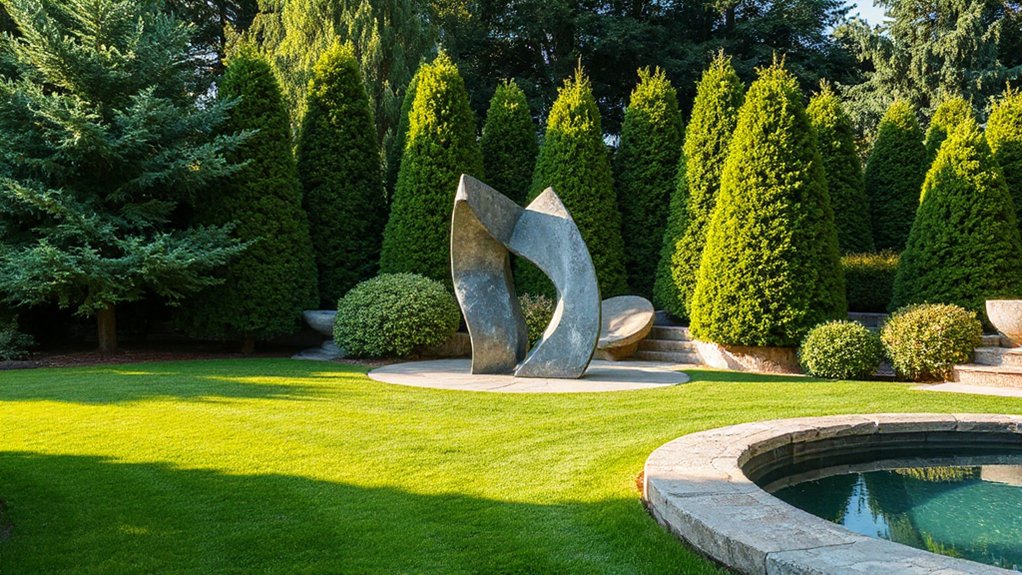
Sculptural focal points and water feature highlights command attention and set the mood at a glance. You’ll balance form and movement, choosing pieces that echo your garden’s style while guiding the eye through the space.
Start with a single, intentional feature and build around it for timeless impact.
Sculptural Focal Points
How can a single sculpture or water feature transform a garden into a dramatic, inviting space? You shape a scene with intentional placement, scale, and material, letting sculptural focal points guide the eye and mood. Use garden art to create a dialogue between structure, texture, and light, drawing in spectators and guiding movement.
1) Select a piece with bold silhouette and weathered patina for timeless impact.
2) Pair compact statuary with lush foliage to frame it, avoiding clutter.
3) Integrate lighting to reveal form after dusk and extend daily engagement.
4) Employ reflective surfaces to amplify presence without overpowering surroundings.
This approach elevates kerb appeal through precise, purposeful focal statements that feel curated, not coincidental. Sculptural focal points become anchors, elevating the garden with restrained elegance and confidence.
Water Feature Highlights
Water features serve as dynamic focal points that sculpt the garden’s mood and movement. You’ll choose water feature highlights that align with your overall design, ensuring the flow feels intentional rather than random.
Prioritize scale, texture, and sound to create a sensory signature you can repeat through planting and hardscape. A small, sculptural basin offers a quiet stillness, while a cascading stream adds kinetic energy and sound that anchors seating areas.
Balance reflective surfaces with dark stones to enhance depth. Plan for maintenance access and seasonal interest, so the feature remains striking year-round.
For aquatic plant selection, keep a tight palette and place plants where they’ll thrive with water depth and light. These choices sharpen kerb appeal and unify your landscaping.
Vertical Space: Living Walls and Trellises
Vertical space can transform a small or bland yard into a thriving living feature. You’ll leverage vertical elements to create structure, privacy, and seasonal interest with purpose. Focused choices in Living walls and trellis designs maximize impact while staying tidy and maintenance-conscious.
- Choose modular planters and lightweight panels for easy installation and flexibility.
- Pair evergreen backdrops with seasonal climbers to maintain year-round texture.
- Integrate irrigation and drainage to keep walls healthy and water-smart.
- Use durable trellis materials that complement your exterior palette and resist weather.
These strategies elevate kerb appeal by adding height, color, and focal points. By selecting appropriate plants and robust trellis designs, you create intimate micro-environments without crowding the ground plane. Your vertical garden becomes a living, evolving statement.
Mulch, Groundcovers, and Weed Control That Stay Tidy
Mulch protects soil and roots while keeping beds tidy, so you start with a clean, even layer and replenish as needed.
Implement simple weed-control tactics like timely mulching, shallow cultivation, and targeted edging to prevent spread without harsh chemicals.
Stay proactive with regular maintenance tips to maintain a neat landscape and maximize mulch and groundcover benefits.
Mulch Maintenance Tips
A tidy mulch layer protects soil, suppresses weeds, and keeps beds looking polished, so staying on top of maintenance matters. You’ll extend mulch life with timely replenishment, depth checks, and surface smoothing, ensuring even coverage and curb appeal.
Regular inspection helps you spot compaction, drainage issues, and exposed roots that affect soil aeration and plant health. By keeping mulch clean and weed-free, you promote pest control and reduce disease risk, while preserving a tidy, cohesive look.
- Replenish to a 2–3 inch depth and rake evenly to prevent air pockets
- Remove debris and control soil surface compaction for better water infiltration
- Refresh edges to maintain clean lines and fair water distribution
- Monitor moisture, adjust irrigation, and enhance mulch color for lasting appeal
Weed Control Tactics
Weed control that lasts starts with smart choices in mulch, groundcovers, and techniques that keep beds tidy without constant upkeep. You’ll select thick, organic mulch to block light, then layer 2 to 3 inches deep, replenishing annually.
Groundcovers fill gaps, suppressing weeds while adding texture and color. Choose low-growing, dense options suited to your climate, and establish them promptly to outcompete invaders.
Maintain tidy edges and remove seedlings before they root. Use weed barrier fabric only where necessary, and overlap seams to prevent infiltration.
Integrate composting tips by returning yard waste to soil; finished compost improves structure and fertility, reducing weed strength.
Prioritize pest prevention: healthy plants resist invasion, and resilient beds need less intervention.
Consistency is your ally—seasonal checks keep borders clean and curb appeal high.
Sustainable Landscaping That Adds Value
Sustainable landscaping adds value by reducing water use, cutting maintenance demands, and increasing curb appeal with native, drought-tolerant plantings and efficient irrigation. You’ll create a resilient, low-care landscape that thrives with less input, while safeguarding your property’s visual appeal.
- Choose native species to support local ecology and minimize care requirements.
- Group drought resilience plants into complementary zones to maximize water efficiency.
- Install smart irrigation with soil moisture sensors and weather-based controllers.
- Use mulch, permeable groundcovers, and thoughtful spacing to reduce evaporation and run-off.
This approach elevates kerb appeal through intentional plant selection and smart technology. You gain long-term savings, fewer maintenance surprises, and a landscape that ages gracefully.
Container Garden Tricks for Instant Polish
Container gardens offer instant polish by turning any compact space into a thriving focal point. You’ll maximize impact with smart pairings: a bold sculptural plant with a complementary color palette, and a tall vertical accent to draw the eye upward.
Choose containers that contrast texture and form, then layer depth with foliage of varying heights. Container garden tricks emphasize drainage, sun exposure, and seasonal flexibility—swap in blooming annuals for instant color or replace greenery with seasonally appropriate varieties.
Keep a tight onderhoud regime: prune, deadhead, and rotate plants to maintain vigor. Use evergreen anchors to anchor your design and punctuate with seasonal accents for instant garden upgrades.
Maintain clean lines, deliberate spacing, and purposeful plant choices to sustain curb appeal year-round.
Weekly Maintenance Routine to Preserve Curb Appeal
A weekly maintenance routine keeps your curb appeal sharp by guiding a quick mulch check, a targeted pathway weeding cadence, and timely lawn mower maintenance.
Stay on track with a simple schedule: inspect mulch depth, pull weeds along borders, and service your mower to prevent uneven cuts.
This focused rhythm preserves texture, color, and tidy edges, inviting ongoing pride in your landscape.
Weekly Mulch Check
To maintain curb appeal, start with a quick weekly mulch check: inspect all beds for bare spots, uneven edges, and signs of erosion, and replenish mulch where needed. You’ll protect soil moisture, suppress weeds, and maintain a cohesive look that supports plant arrangement and seasonal pruning strategy.
1) Inspect depth and uniformity, adding mulch to any thin areas to restore a tidy, continuous border.
2) Rake edges to sharpen lines, preventing surface runoff and exposing mulch underlayers.
3) Clear debris, then refresh color with a light top-layer for a crisp, deliberate appearance.
4) Reassess plant heights and spacing during the check to sustain balanced composition and curb-appeal rhythm.
Pathway Weeding Routine
Pathway weeding sets the tone for your entire landscape, so tackle it weekly and with purpose. You approach the task with a clear routine: inspect joints, cracks, and edges for any unwanted growth, then remove with minimal disturbance to surrounding mulch.
Prioritize vigorous weed species first, pulling by the root to prevent quick regrowth. Use a weeding tool to lever stubborn plants without dethatching the path surface.
After removal, sweep debris into a bin and apply a thin layer of mulch to disrupt seed germination. Emphasize weed prevention by sealing gaps and addressing soil compaction where weeds thrive.
This practice also supports pathway clearing, enhancing accessibility and curb appeal while reducing maintenance effort over time. Maintain consistency to preserve professional, pristine presentation.
Lawn Mollen Maintenance
- Inspect for signs of stress or disease, and treat promptly to protect turf health.
- Mow at the recommended height, and alternate patterns to avoid compacting soil.
- Sharpen blades weekly for clean cuts and faster recovery.
- Remove clippings or compost them to maintain a neat, professional appearance.
Frequently Asked Questions
How Long Does a Curb-Appeal Project Typically Take?
A curb-appeal project typically takes 2–6 weeks, depending on scope. You’ll install garden lighting and outdoor furniture as milestones, coordinating trades and permitting. You’ll see steady progress, stay on schedule, and reveal a transformed, inviting exterior.
What Is the Most Cost-Effective Quick-Win Upgrade?
Budget-friendly upgrades: start with fresh mulch, crisp edging, and a clean focal plant. Quick landscaping tips like white-painted edging or container accents can transform curb appeal without overspending. You’ll see dramatic impact, instantly and confidently.
Which Plant Combinations Tolerate Shade Well?
Shade-tolerant plants thrive in your shade; choose robust plant combinations like hosta with fern, astilbe with heuchera, and trillium with pulmonaria. You’ll create dynamic textures, color, and structure while maintaining a serene, luminous woodland mood.
How to Choose Durable, Weatherproof Hardscape Materials?
Durable, weatherproof hardscape choices rely on solid subgrades, architectural details, and proven materials. You’ll compare load ratings, slip resistance, and maintenance. When you pick, guarantee garden lighting and irrigation systems integrate, lasting through seasons and harsh conditions.
What Maintenance Schedule Keeps Curb Appeal Year-Round?
To keep curb appeal year‑round, you schedule monthly garden lighting checks and quarterly lawn aeration, plus seasonal pruning and mulch replenishment. You inspect irrigation, clean fixtures, and refresh plantings to maintain consistent color, texture, and structural appeal.
Conclusion
Stand back and watch your curb transform as color, texture, and light align like a well-composed melody. You’ll feel the rhythm of tidy beds, crisp edges, and a welcoming glow that never fades after dusk. Every plant pairing, every stone, every whisper of mulch works in concert, elevating value and mood with effortless clarity. Trust the process, stay consistent, and let your garden’s first impression speak volumes—quiet, confident, and utterly unforgettable.