
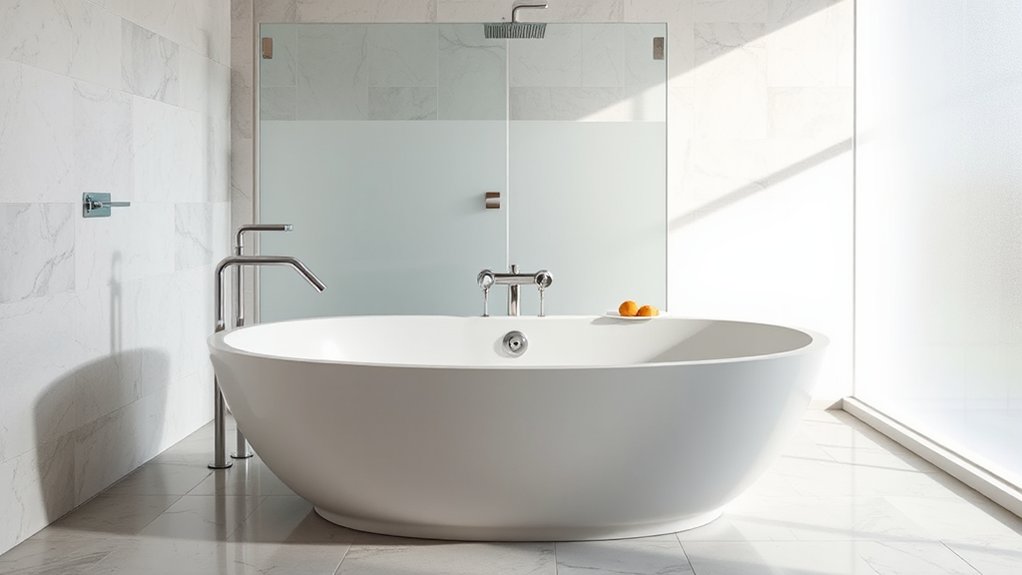

A bathtub choice hinges on your comfort, space, and plumbing, with soaking, whirlpool, and air bath options each offering distinct benefits. Soaking tubs prioritize deep immersion and simple maintenance, whirlpools deliver targeted hydromassage via jets and precise controls, and air baths provide soft, buoyant bubbles for a gentler circuit of relaxation. Consider dimensions, installation type, water efficiency, and material durability when selecting. Ready to refine your setup? See how these details translate to a tailored solution for your bathroom.
Key Takeaways
- Compare soaking, whirlpool, and air bath tubs by immersion depth, jet or bubble features, and user experience goals to pick suitable therapy and relaxation levels.
- Consider whirlpool performance: jet patterns, pump quality, controls, and safety features like anti-flood and filtration for reliable hydromassage.
- Evaluate air baths for gentle, quiet bubbles, sensory comfort, noise levels, and potential added benefits like aromatherapy and heat integration.
- Assess materials (acrylic, fiberglass, porcelain, cast iron) for durability, maintenance needs, and long-term appearance and repairability.
- Plan installation and space: measure room, confirm alcove/drop-in/free-standing fit, plumbing compatibility, and water-efficiency goals.
Bathtub Types at a Glance: Soaking, Whirlpool, and Air Baths
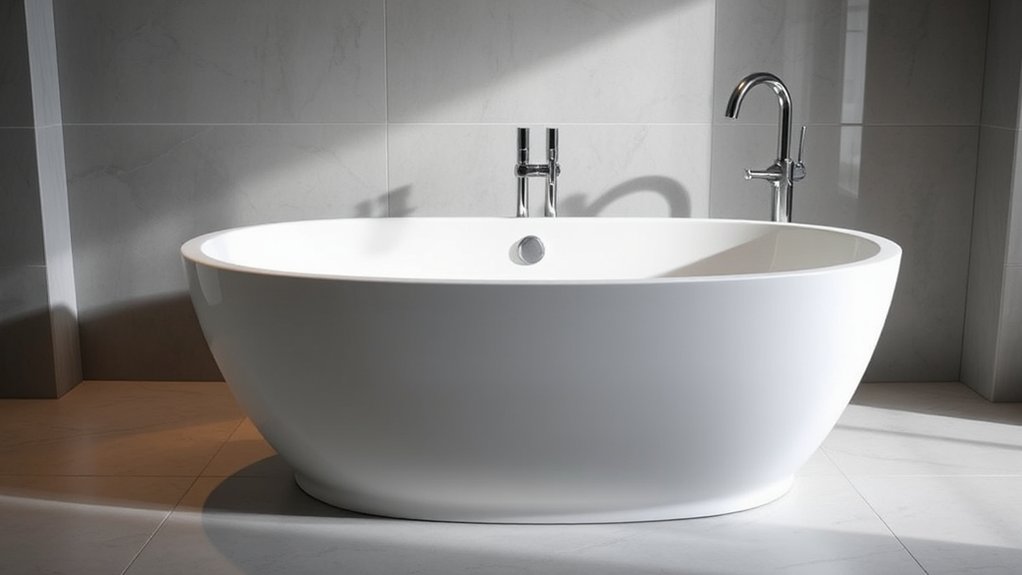
Different bathtub types suit different needs, so start with a quick overview of the three main categories: soaking, whirlpool, and air baths.
Soaking tubs prioritize depth and immersion, offering long, straight or sculpted lines for simple drain configurations and robust seal systems.
Whirlpool tubs add massaging jets positioned for targeted coverage, with flow controls and pump housings calibrated for efficiency and performance.
Air baths emphasize gentle bubbles via high-volume blowers, delivering a soft, enveloping feel and quiet operation.
Historical styles influence shape, edge treatment, and finish, while color options define integration with your bathroom’s palette and lighting.
Choose based on intended comfort, maintenance, and space constraints.
Verify compatibility with plumbing, installation clearances, and warranty coverage to minimize lifecycle costs.
How a Whirlpool System Delivers Hydromassage
A whirlpool system creates targeted hydromassage by cycling water through strategically placed jets driven by a dedicated pump and control housing. You control flow, pressure, and jet patterns via a user interface, tailoring treatment to muscle groups and comfort preferences.
Water is drawn from the tub, accelerated through pumps, then returned through nozzles to produce pulsing or steady streams. Pressure balance prevents overactivity in adjacent jets, ensuring consistent performance across zones.
Timers, heaters, and anti-flood safeguards synchronize massage duration with safety features, while filtration keeps water clear.
In practice, the system emphasizes efficiency: efficient pump design, optimized jet placement, and minimal energy loss. This integration supports bathroom decor goals and water conservation, delivering spa-like relief without excess consumption or clutter.
What Is an Air Bath and Why It Feels Different
Air baths rely on air infusion rather than water jets, delivering small bubbles through a dedicated air blower that softens water contact and creates a gentle, all-around massage. You feel a uniform, buoyant cushion rather than direct jet pressure, which reduces localized turbulence and surface agitation.
The result is a calmer sensory experience with minimal noise and lower risk of skin irritation from high-velocity streams. The air bubbles promote subtle convective mixing, enhancing contact time with body contours and improving circulation without aggressive force.
Aromatherapy benefits emerge from diffused scents and heat, while water temperature remains a key control for comfort and perceived pressure. Understand that this system prioritizes smooth, even coverage over concentrated jet action, yielding a distinct, soothing relaxation profile.
Choosing the Right Bathtub Type for Your Bathroom
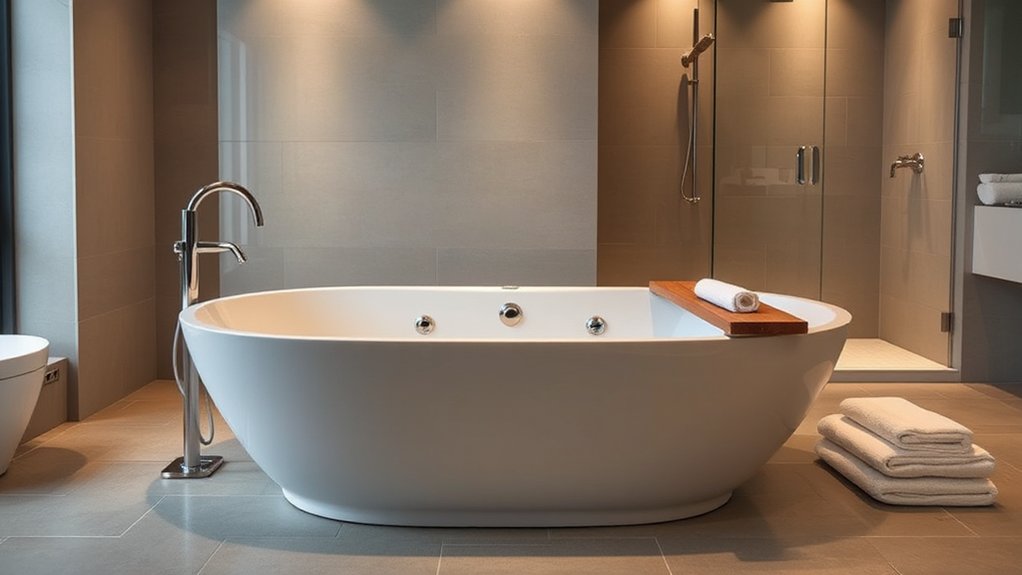
You’ll evaluate bathtub space, ensuring the chosen type fits your floor plan without compromising access or function.
Consider matched plumbing requirements early to avoid retrofits, and confirm fixture clearances and valve locations with your installer.
Finally, balance comfort and tone options—shape, depth, and finish—to align with your bathroom style and daily use.
Bathtub Space Considerations
When planning a bath, space constraints determine which tub type will fit and perform best in your bathroom. You’ll assess room dimensions, doorways, and floor load to prevent installation issues and costly revisions.
Start with a precise footprint: length, width, and the required clearance for surrounding fixtures. Consider alcoves, alcove-accessible models, and corner configurations to optimize space without compromising usability.
If you have limited depth, soprano or compact soaker variants may meet bathing needs while preserving lane access and maintenance space.
Material choice affects footprint and insulation; thicker acrylic can reduce usable tub width, while steel surrounds can demand additional clearance.
Prioritize bathtub aesthetics for visual impact and water conservation for ongoing efficiency, ensuring the selected tub integrates with existing plumbing and venting.
Matched Plumbing Requirements
To choose the right bathtub type, you must align plumbing rough-ins, supply lines, and venting with the tub’s design and mounting.
You evaluate plumbing compatibility by confirming inlet locations, trap configurations, and vent distances match the fixture’s footprint and depth. If constraints exist, opt for a model with compatible rough-in dimensions or plan rework before installation.
Consider supply-line sizing, pressure requirements, and gravity flow versus pumped systems to guarantee reliable venting and drainage performance.
Aesthetic considerations matter, but don’t overshadow functional fit; trim kits, surround compatibility, and access panels should align with wall space and cabinetry.
Document clear clearances for doors, hatches, and maintenance access.
Choose a configuration that minimizes retrofit work while delivering durable, code-compliant plumbing outcomes.
Comfort and Tone Options
Consider heat retention, acoustics, and ergonomic support that align with your posture needs and long baths or quick soaks. Color customization lets you tailor the tub’s finish to your space, while aesthetic design ensures the form complements fixtures and cabinetry.
For hydrotherapy and jets, verify control precision and noise levels to avoid disruption. Material hardness, gloss, and porosity affect maintenance and feel.
Choose a model that balances ergonomic comfort, durability, and thermal performance, then confirm installation compatibility with your plumbing layout and venting requirements.
Tub Dimensions: Sizing for Comfort and Fit
Tub dimensions directly impact comfort and fit, so choose measurements that reflect your body and bathroom layout. You’ll evaluate length, width, and depth to guarantee you can sit, recline, and step in without interference from walls, doors, or fixtures.
Prioritize a tub that accommodates your height and shoulder width, and consider knee clearance for comfortable seating. Account for ambient space needed for entry and exit, plus clearance for faucets and controls.
Color options matter visually, but ensure the tub’s interior dimensions align with your preferred soaking posture. For installation tips, verify substrate, built-in supports, and access to service panels match the chosen model.
Precision in sizing reduces post-install adjustments and improves long-term usability.
Core Materials You’ll See: Acrylic, Fiberglass, Porcelain, and More
Core materials define durability, weight, and finish feel across tubs. You’ll see acrylic, fiberglass, porcelain enamel, and composites chosen for balance of rigidity, heat retention, and surface smoothness.
Acrylic shines with consistent color, good impact resistance, and easier restoration of gloss. Fiberglass offers cost efficiency and lighter weights but softer impact on long-term rigidity.
Porcelain enamel presents hard, scratch-resistant finishes on steel or cast bases, yet can chip under impact.
Composite blends fuse strength with lighter mass, often enhancing heat upkeep and edge comfort.
Historical designs influence material choice; some vintage styles favor porcelain for authenticity, while modern luxury features push acrylic or advanced composites for seamless rims and integrated seating.
Consider how each option aligns with your space, usage, and desired luxury features.
Durability and Maintenance by Material
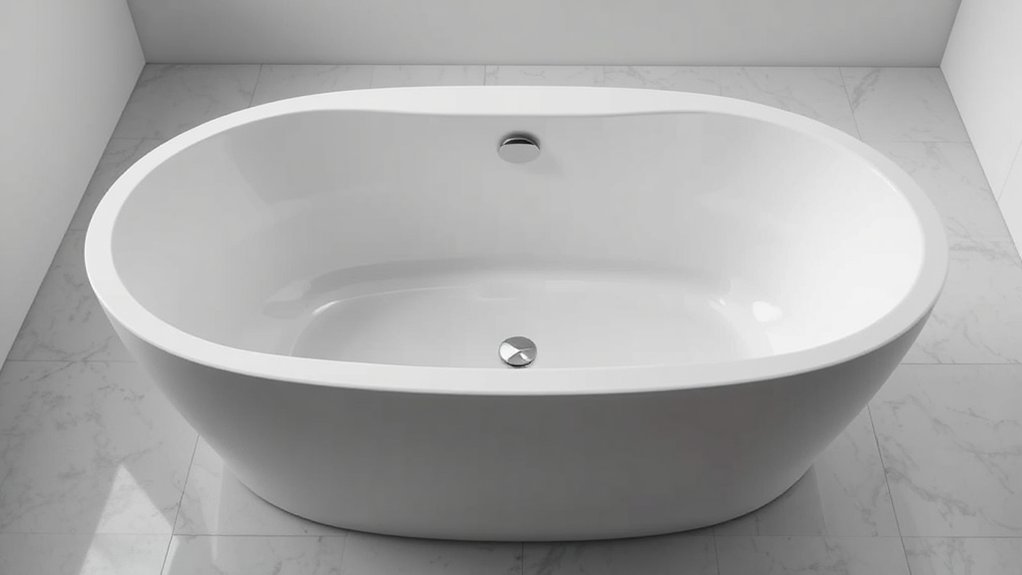
Material longevity varies by composition and finish, so you’ll want a clear read on each option’s performance over time. We’ll cover how resistant each material is to scratches, chipping, and staining.
Plus, we’ll discuss how maintenance routines impact durability. Expect practical tips on cleaning, sealants, and lifecycle expectations tied to the [POINTS].
Material Longevity Insights
Choosing the right material for your bathtub, whirlpool, or air bath hinges on longevity and maintenance needs; durability varies considerably across common options, so understanding each material’s behavior helps you select with confidence.
Material longevity insights focus on inherent wear resistance, surface stability, and long-term performance under typical bathroom conditions. Solid surface composites offer consistent color, repairability, and moderate impact resistance, while acrylic manifests excellent impact tolerance but may scratch more easily without proper care.
Porcelain enamel provides hardness and a glossy finish yet is prone to chipping around edges. Fiberglass blends deliver lightweight versatility but can yellow with age.
Materials history informs performance expectations, while environmental impact considerations guide sustainable choices from production to end-of-life disposal. Assess warranties, expected use, and replacement cycles to align with durability needs.
Care and Durability Tips
Care and durability differ by material, so understanding maintenance needs helps protect performance and longevity. You’ll apply material-specific routines to minimize wear, staining, and finish erosion.
For acrylic tubs, clean with mild detergents, rinse thoroughly, and avoid abrasive pads that mar surfaces. Sealants aren’t required but periodic polish helps preserve shine.
Fiberglass demands gentler cleaners and prompt repair of chips to prevent moisture intrusion.
Porcelain enamel requires non-abrasive cleaners and immediate spot repair of chips to avoid rust creeping underneath.
Cast iron with enamel benefits from routine wipe-downs and rust prevention around hardware. Regular checks on seals and caulk protect against leaks and mould.
Consider bathtub aesthetics and color options when selecting finishes, ensuring compatible cleaners.
Maintenance consistency sustains durability, reduces replacement cycles, and preserves resale value.
Jet Configurations: Soaker, Hydro, and Air Jets
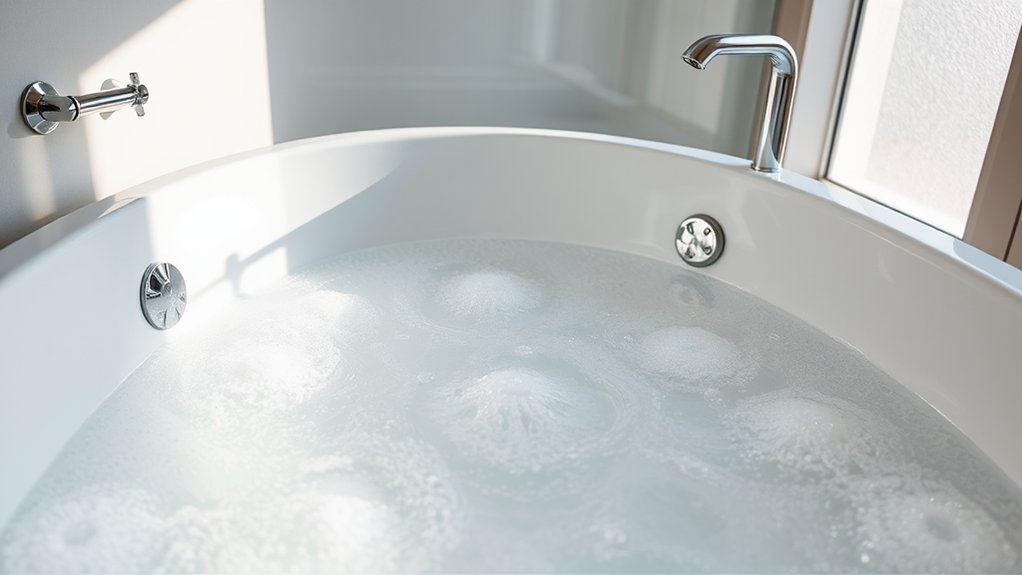
Jet configurations define how a tub delivers massage and ambiance, so understanding Soaker, Hydro, and Air Jets helps you match performance to your needs.
Soaker jets deliver broad, gentle pulses ideal for relaxation without intensity.
Hydro jets focus flow for targeted kneading and deep tissue work, great for muscle relief and faster heat transfer.
Air jets produce micro-bubbles for a soft, all-over effervescence and lighter pressure.
When selecting, assess installation space, jet count, and controllability to tailor experience.
Color schemes influence perceived ambiance and can affect perceived warmth; pair jet types with complementary finishes for a cohesive look.
Water temperature strategies matter: combine hydro or soaker outputs with stable, consistent heat to maximize comfort.
Prioritize modularity, ease of cleaning, and maintenance access to preserve jet performance and reliability.
Noise, Vibration, and Comfort: Evaluating Performance
You’ll assess noise levels across modes to identify true performance and bill-of-ownership impacts.
Next, you’ll apply vibration reduction techniques to quiet operation without sacrificing function.
Finally, you’ll balance comfort features against practical performance to guarantee a reliable, user-friendly experience.
Noise Levels And Modes
Noise levels and operating modes matter because they directly affect user comfort and perceived quality. You assess how pump and jet activity translates to audible output and mechanical feel, guiding a selection that minimizes disruption and maximizes relaxation.
Consider two performance pillars: sound insulation and vibration dampening. In practice, you’ll compare decibel ranges, peak vs. steady-state noise, and how mode shifts influence consistency.
The right unit blends quiet operation with intentional sonic cues for immersion.
- Sound insulation effectiveness across the cabinet and enclosure
- Vibration dampening techniques in mounts and housings
- Audible signatures by mode (quiet, massage, turbo)
- Decibel measurement points and real-world variance
- Installation impact on integrated acoustics and resonance
Vibration Reduction Techniques
Implement vibration isolation by mounting pumps on compliant supports, using elastomeric pads, and aligning hardware to reduce contact resonance. Incorporate dampers and isolation cushions between fasteners and panels to limit transferred vibrations.
Choose bathtubs with decoupled jet manifolds and quiet motor designs, prioritizing low-speed, high-torque configurations that minimize impulse events.
Soundproofing techniques, such as enclosing noisy components or adding insulating barriers, further reduce transmitted noise.
Evaluate resonance frequencies in the 20–200 Hz range typical of pumps, and verify that installed components don’t excite those modes.
Comfort Or Features Balance
Balancing comfort and features requires a clear-eyed assessment of how noise, vibration, and user experience interact with jet count, pump design, and control options. You measure performance by how subtly the pump operates at various water temperatures and how the jets deliver consistent coverage without harsh surges.
Prioritize smooth, quiet operation, reliable temperature control, and intuitive controls that don’t distract from the soak. Aesthetic appeal and Water temperature synergy define perceived value, so compare finishes and insulation against actual thermal stability.
- Quietness under full jet load
- Thermal stability and grid consistency
- Jet pattern customization vs. complexity
- Control responsiveness and feedback
- Aesthetic finish quality and ease of cleaning
Electrical and Plumbing Requirements for Installation
Guarantee shutoff valves, pressure balance, and anti-scald devices are in place, with clean, accessible supply lines to minimize leaks. For plumbing, confirm drain-waste-vent sizing and trap placement compatible with the unit’s hydrotherapy system.
Guarantee proper bonding and ground fault protection, especially in damp areas. Plan for service access and future maintenance.
When selecting finishes, consider historical styles and eco-friendly materials to harmonize with the bathroom, while maintaining code compliance and reliability.
Energy Efficiency and Running Costs
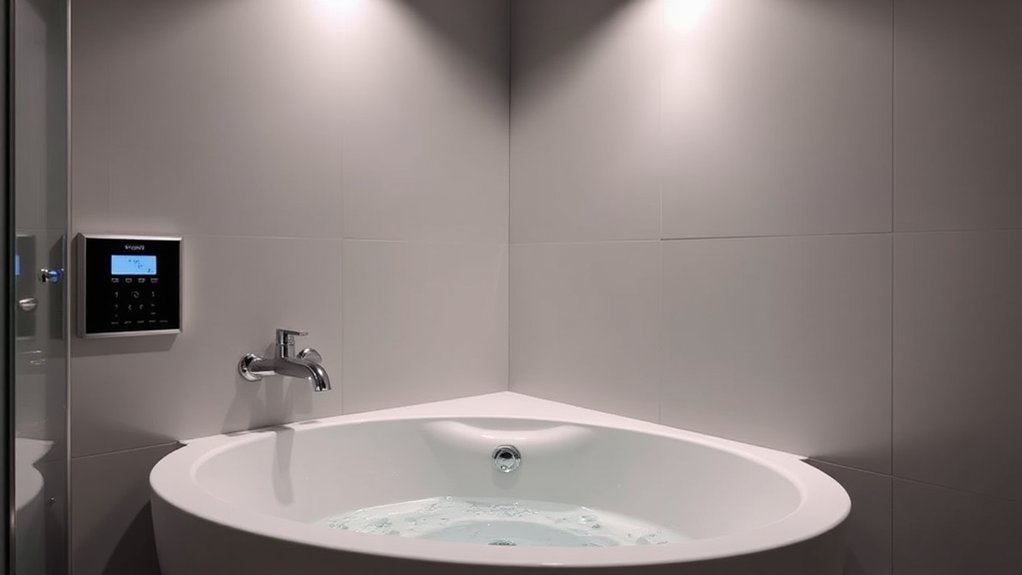
Energy efficiency isn’t optional when you’re sizing and using a bathtub, whirlpool, or air bath—it directly affects running costs and long-term reliability. You’ll maximize energy savings by selecting models with high insulation, efficient pumps, and tight seals.
Conduct a cost analysis that weighs upfront price against long-term operating expenses, including standby heat loss and pump efficiency. Favor systems with variable-speed pumps and insulated caverns to reduce consumption without sacrificing performance.
Monitor insulation, water usage, and heating cycles to avoid waste. Regular maintenance prevents efficiency loss and extends component life.
- Energy savings focus through insulation and pump efficiency
- Cost analysis balancing upfront vs. operating costs
- Variable-speed pumps for demand-adaptive performance
- Tight seals and minimal heat loss design
- Routine maintenance to sustain efficiency gains
Budgeting for Tub Types and Extras
When budgeting for tub types and extras, start with a clear classification of options and their total cost of ownership. You’ll compare upfront price, installation, maintenance, and expected lifespan across alcove, alcove-soaker, freestanding, and corner models.
Add-on costs matter: delivery, removal, trenching, and plumbing revisions can swing totals. Prioritize needs over preferences to prevent feature creep. Budget for essential, not optional, upgrades first, then luxury upgrades if ROI justifies it.
Include eco-friendly features such as low-emission motors, efficient circulation systems, and recyclable materials where applicable. Estimate operating costs by wattage, water usage, and filtration requirements.
Reserve a contingency fund for unexpected fixes. Document all assumptions, then review quarterly to adjust for price shifts and usage changes.
Essential Features: Contours, Backrests, and Grab Bars
Contours, backrests, and grab bars define comfort and safety in any bathtub, whirlpool, or air bath. You design for posture support and secure transitions, prioritizing Contouring comfort and precise Backrest design. Choose shapes that align with your torso and head height, guaranteeing continuous support without pressure points.
Grab bars should be strategically placed for entering, exiting, and mobility assistance, with slip-resistant surfaces and code-compliant mounting. In performance models, integrated contouring fosters even water distribution and reduced fatigue during long soaks.
Material choice matters: durable, easy-to-clean finishes withstand routine use. Guarantee accessibility features align with your space and personal needs, not just aesthetics.
- Contouring comfort alignment
- Backrest design optimization
- Integrated grab-bar placement
- Slip-resistant, durable grips
- Code-compliant mounting considerations
Installation Scenarios: Alcoves, Drop-In, and Free-Standing
Understanding alcove fit, drop-in space, and free-standing placement sets the baseline for proper installation. You’ll assess alcove dimensions, clearance, and surrounding tolerances.
Then verify that the drop-in basin recess and support framing meet weight and access requirements.
Finally, plan for floor and wall finishes in the free-standing setup.
This discussion initiates concrete criteria you’ll use to compare installation scenarios and guide your selection.
Alcove Fit Considerations
Alcove, drop-in, and free-standing tubs each demand a distinct fit approach to guarantee proper support, seal, and water containment.
In alcove installations, you’ll prioritize wall clearance, stud spacing, and alcove width to secure an even flank and reduce shrinkage gaps, assure a tight enclosure.
- Verify rough-in dimensions and confirm vertical access for plumbing
- Measure internal width and height for a flush, seamless fit
- Plan for a waterproof surround that complements alcove geometry
- Consider door or curtain options to preserve space optimization
- Confirm level flooring and consistent substrate for long-term stability
Alcove fit requires precise alignment, consistent materials, and tested sealants to maintain water containment and structural integrity.
Drop-In Space Requirements
Drop-in tubs need a precise, built-in surround and solid substrate to seal and support weight without shifting. In this installation scenario, you’ll align the tub with a framed opening and secure it to a rigid base, often concrete or reinforced plywood, to prevent movement under load.
Confirm levelness across the apron and curb so the finished surface sits flush with surrounding finishes. Space allowances must accommodate plumbing access and service clearances, plus venting for any deck-mounted controls.
Consider color options early to match surrounding surfaces and trim details, since alterations after install are disruptive.
Material comparisons matter for weight, durability, and substrate requirements; acrylic shells may require different backing than cast iron or solid-surface units.
Final decisions hinge on exact alcove dimensions, mounting method, and long-term maintenance needs.
Free-Standing Placement Tips
Free-standing tubs require solid, level flooring and a stable perimeter anchor to prevent movement and vibration. You’ll plan clearances for access, service, and ventilation, guaranteeing proper bathroom ventilation and unobstructed maintenance paths.
Position away from moisture-prone walls to reduce humidity transfer, and consider heat sources that won’t warp cabinetry or tile. Install a recessed or surfaced drain to minimize tripping and maintain floor integrity.
Use a rigid plinth or flange support to stabilize the base on imperfect subfloors. Make certain dedicated water supply lines and a vented trap near the tub to prevent siphoning.
- Check floor structure and subfloor rigidity before placement
- Verify vented drainage and accessible cleanouts
- Align with ventilation and moisture-control strategies
- Plan water-conserving fixtures and low-flow valves
- Confirm clearances for doors, panels, and access
Accessibility Options for Safe, Easy Use
Accessible design is essential for safe, easy use of bathtubs, whirlpools, and air baths. You’ll prioritize accessibility features that support entry, exit, and stable posture, such as low-threshold entry, textured non-slip surfaces, and grab bars placed at ergonomic heights.
Consider adjustable shower heads and rim heights that align with user needs, plus seating options or bath stools for tasks performed seated. Controls should be clearly labeled, reachable from seated positions, and illuminated for visibility.
Safety enhancements include slip-resistant floors, thermal controls to prevent scalds, and built-in emergency alert options where available. Guarantee installation complies with local codes and ADA guidance when applicable.
Evaluate product warranties, maintenance access, and repairability to sustain long-term accessibility performance.
Maintenance Routines to Extend Lifespan
Maintaining bathtubs, whirlpools, and air baths protects both safety features and performance. You’ll implement disciplined routines that minimize wear, preserve seals, and sustain efficiency. Focus on periodic inspections, proactive part replacement, and environment-aware choices that align with eco friendly options and respect vintage designs.
- Inspect seals and gaskets for cracking; replace promptly
- Run systems at recommended intervals to prevent stagnation
- Monitor pumps and motors for vibration, noise, or heat
- Use low-chemical, eco-conscious products compatible with metals and plastics
- Schedule professional service for critical components aligned with vintage designs
Adopt these practices to extend lifespan without sacrificing safety or aesthetics, ensuring consistent performance while honoring sustainable and retro-inspired options.
Cleaning Agents and Care Tips by Material
Different materials require distinct cleaning agents and care routines to protect finishes and performance. You should match cleaners to substrate, avoid abrasive pads, and test in an inconspicuous area first.
For acrylic tubs, use mild, non-ionic detergents and warm water; skip bleach and ammonia to prevent crazing.
Porcelain enamel warrants non-acidic cleaners and a soft cloth to prevent dulling; avoid scratching with metal tools.
Fiberglass benefits from gentle soap solutions and microfiber upkeep, with a periodic wipe-down to deter film buildup.
Cast iron enameled surfaces require pH-neutral cleaners and prompt drying to minimize rust risk.
Eco-friendly materials align with lower-impact products that still deliver sanitation.
Maintain finishes with routine polishing where advised by manufacturers, reflecting aesthetic design trends without compromising durability.
Troubleshooting Jet and Drain Issues
Start by checking jet flow to confirm each nozzle delivers even pressure, and adjust or clean fittings as needed.
If drainage sounds sluggish or backs up, inspect for blockages and clear traps or debris from the drain pathway.
For air bath noise, identify pressure imbalances or loose fittings, then reseat components or replace worn gaskets to restore quiet operation.
Jet Flow Troubleshooting
Jet flow issues in a whirlpool or air bath typically stem from clogs, air lock, or pump/fitting problems; addressing these root causes quickly restores ideal performance.
- Inspect intake screens for debris and clean if needed
- Purge air from lines to eliminate air lock
- Check pump seals and fittings for leaks or wear
- Verify impedance-free flow through jets and manifolds
- Test performance after reseating any loose components
Addressing these steps improves energy efficiency by reducing pump effort and lowers water consumption through precise jet operation. Maintain proper flow paths to maximize heat transfer and minimize cycles.
If jet noise or pulsation persists, recheck internal valves and flow restrictors. Regular maintenance enhances water conservation by preventing overfill and wasted reheating. Document findings to guide future troubleshooting and preserve optimal system performance.
Drain Blockage Fixes
If a drain backs up or drains slowly, start with a systematic blockage assessment to restore proper flow. Begin by inspecting the drain trap for debris, then remove any hair or soap scum from the strainer.
Next, check the cartridge or jets for obstructions, using a flexible snake to access the piping beyond the trap. Flush with hot water to dissolve localized buildup, and avoid chemical drain cleaners that can damage surfaces.
Test flow after each step to isolate the culprit, whether it’s hair, soap, or mineral deposits.
Maintain bathtub aesthetics by keeping fixtures clean and surfaces dry. As flow improves, monitor water temperature consistency, since improper temperature can mask drainage issues.
Document findings and timelines for maintenance or professional service if the blockage recurs.
Air Bath Noise Causes
Air Bath noise typically stems from jet and drain interactions that create banging, hissing, or gurgling sounds. You’ll identify root causes and apply precise fixes without overhauling your setup, preserving bathtub aesthetics and performance.
Prioritize balanced water temperature to prevent thermal expansion noises and guarantee jets run within designed ranges.
- Inspect jets for mineral buildup and clean with manufacturer-approved cleaners
- Check air intake lines for kinks or leaks and reseat them
- Verify drain trap and vent connections are clear and properly pitched
- Confirm pump housing is secured and doesn’t resonate with tub walls
- Test with gradual temperature changes to observe noise patterns
If noise persists, consult tech support to avoid compromising equipment and warranty.
How to Compare Warranties and Service Plans
When comparing warranties and service plans for bathtubs, whirlpools, and air baths, start by identifying what each covers, for how long, and under what conditions. You should then verify coverage scope (parts, labor, cosmetic vs. functional issues) and any exclusions that could limit claims.
Compare transferability, claim processes, and required maintenance steps to safeguard eligibility. Assess response times, service radius, and whether factory-certified technicians are used.
Evaluate the difference between limited, extended, and lifetime warranties, and how they interact with third-party components. For service plan options, consider preventive maintenance, annual inspections, and included labor rates.
Prioritize warranties that minimize out-of-pocket costs for major failures. Document all terms, deadlines, and required registrations to ensure a solid Warranty comparison and reliable Service plan options.
Quick Decision Framework: Which Bath Fits Your Ritual
To choose the bath that fits your ritual, start by mapping your daily routine to three core factors: immersion depth and waterline comfort, jet or massage capability, and ambient features like lighting, sound, and aroma. This quick framework guides precision choices without overspending or overthinking.
- Assess preferred water temperature stability and control
- Prioritize immersion depth that aligns with your posture
- Match massage intensity to your tolerance and routine
- Confirm spa ambiance elements (lighting, sound, aroma) are adjustable
- Verify delivery, maintenance, and service compatibility
Focus on those criteria to reduce decision fatigue. A bath that aligns with your ritual delivers consistent comfort, efficient warming, and a cohesive spa ambiance.
Ensure controls are intuitive, and confirm the unit maintains Water temperature within your target range.
Frequently Asked Questions
How Long Do Whirlpools and Air Baths Typically Last?
Whirlpools and air baths typically last 5–15 years, depending on maintenance and usage. You should monitor water temperature consistency and noise levels, address leaks promptly, replace worn components, and perform regular service to maximize lifespan and performance.
Do Jets Require Dedicated Electrical Outlets or Circuits?
Jets don’t require dedicated outlets, but they do need properly sized circuits and GFCI protection for circuit safety. Electrical requirements vary by model; consult the manual. You’re responsible for ensuring compatible wiring and load limits, not DIY guesswork.
Which Tub Material Offers Best Scratch Resistance?
You’ll find acrylic offers the best scratch resistance among common tub materials. Consider composite stone for premium aesthetics and durable wear. You should weigh aesthetic options and installation considerations to select the material that fits your space and budget.
What Maintenance Routine Prevents Mold in Jets?
Mold prevention starts with routine jet cleaning, and you keep it spotless when you run hot water with mild detergent weekly. You probe jets, scrub with a brush, then rinse—ensuring every cavity releases moisture and avoids dampness.
Are There Safety Features for Seniors or Disabled Users?
Yes. You’ll benefit from safety enhancements like grip surfaces and emergency shutoffs, plus accessibility modifications such as zero-threshold entry and bath rails. You can optimize safety features and accessibility options to reduce fall risks and improve usability.
Conclusion
In short, you now know how to pick between soaking, whirlpool, and air baths based on mood, space, and maintenance needs. Remember: whirlpools deliver targeted hydro-massage, air baths emphasize gentle agitation and warmth, and soaking tubs prioritize simplicity and soaking depth. An interesting stat: homes with jetted tubs see a 12–15% higher resale interest than non-jetted models. Use this guide to size, care, and compare warranties—so you choose a bath that fits your ritual and your bathroom.